← The Curbsiders Internal Medicine Podcast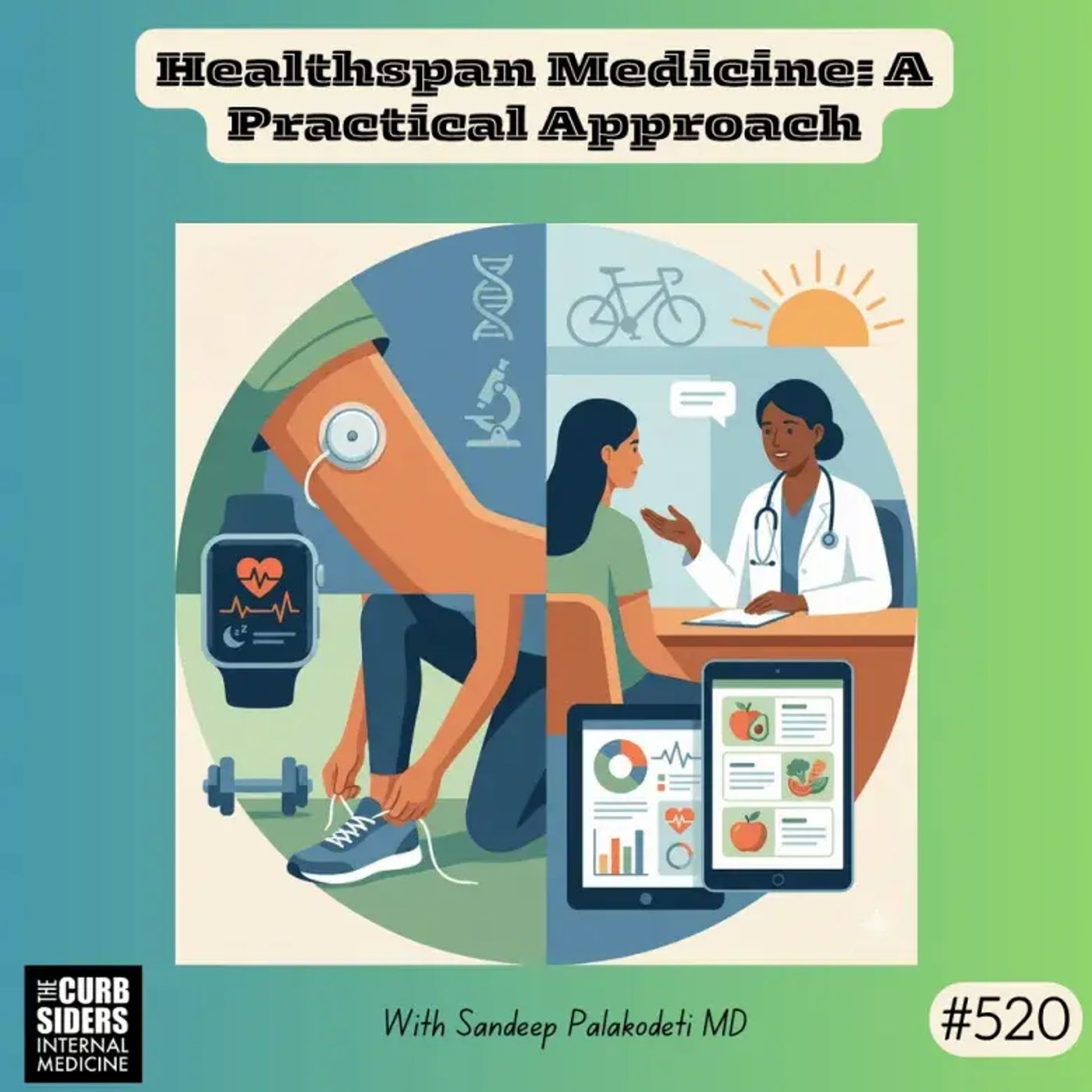
Loading summary
Transcript123 lines
- [00:00]
Dr. Matthew Watto
It's 2026 and we're about to have our three year anniversary of our patreon@patreon.com curbsiders. So to celebrate, we're offering the first 1000 members who sign up free house officer privileges for one month. That lets you get access to 70 plus bonus episodes where Paul and I recap high yield pearls, answer listener questions and give our picks of the week. It's a lot of fun, so check us out@patreon.com curbsiders or you can click the link in the episode description to sign up. So, Paul, we were eating dinner tonight and my daughter said to me, your glass is empty. Would you like another one?
- [00:44]
Dr. Paul Williams
You know, like, what am I gonna do with two glasses? Or I don't know.
- [00:46]
Dr. Matthew Watto
Yeah, exactly, Paul, what am I gonna do with two empty glasses? It was a dumb question. I sent her to her room.
- [00:56]
Podcast Disclaimer Voice
The Curbsiders podcast is for entertainment, education and information purposes only. And the topics discussed should not be used solely to diagnose, treat, cure or prevent any diseases or conditions. For the more, the views and statements expressed on this podcast are solely those of those and should not be interpreted to reflect official policy or position of any entity aside from possibly cash, like more hospital and affiliate outreach programs, if indeed there are any. In fact, there are none. Pretty much. We aren't responsible if you screw up. You should always do your own homework and let us know when we're wrong.
- [01:21]
Dr. Matthew Watto
Welcome back to the curbsiders. I'm Dr. Matthew Frank Wadd, here with my great friend and America's primary care physician, Dr. Paul Nelson Williams. Hey, Paul.
- [01:30]
Dr. Paul Williams
Hey Matt, how are you?
- [01:31]
Dr. Matthew Watto
I'm doing well, Paul. Cause you know, this is a topic that I love. We talked about like, you know, health span, longevity, whatever. What are we calling this? Paul Wertz will tell us. But anyway, it's branding. Together we talked about some new and exciting stuff. Paul, we talked about continuous glucose monitoring in people that don't have diabetes. And we talked about prescribing exercise. Cool stuff. But Paul, what do we do on the Curbsiders? Why are we here? And then you can introduce our co host.
- [02:03]
Dr. Paul Williams
Sure, Matt. So as a reminder to our audience, we are the internal Medicine podcast. We use expert interviews to bring you clinical pearls and practice changing knowledge as you have already let the cat out of the bag. We are joined by the better Paul, Dr. Paul Wertz, wunderkind, super producer who helped put this episode together. Paul, how are you?
- [02:21]
Dr. Paul Wertz
I'm doing great.
- [02:23]
Dr. Matthew Watto
And Paul, we're also joined by Ollie, who was like draped across your shoulder and has I should mention to the audience, Ollie, Paul's cat records every episode with us.
- [02:34]
Dr. Paul Williams
Yeah, well, he was weirdly silent for most of this recording to the extent that I was actually a little bit concerned that he was upstairs dead. But it turns out he is fine.
- [02:43]
Dr. Matthew Watto
I'm glad your cat didn't die during a podcast. That would be traumatic for all parties, especially you.
- [02:49]
Dr. Paul Williams
Yeah, well mostly me and actually primarily the cat to be sure. But other Paul, first of all, how are you? Did I ask that already before we. I don't want to will my cat's death. No existence.
- [03:01]
Dr. Paul Wertz
You did. Still doing great.
- [03:03]
Dr. Paul Williams
Great. Still glad to hear it. Why don't you tell us a little bit about who we talk to and a little bit about what we talked about.
- [03:08]
Dr. Paul Wertz
I would love to. So we have a fantastic conversation with our guest, Dr. Sandeep Palakku, MD, and MPH. Dr. Palakkadetti is a board certified physician with over two decades of experience in internal medicine healthcare. He has held academic research roles at Mayo Clinic and has served as Chief Population Health Officer at several university hospitals. In his current role as founder and CEO of Velocity Health, Dr. Palakodetti focuses on advancing personalized preventative care models that help high achieving individuals sustain long term health and performance. Tonight on the show he teaches us all about how to manage health span in primary care including diet, exercise, sleep and other core metrics. I'd also like to shout out his new book the Ultimate Asset. He also runs a podcast that goes by the same name. You can check out both of those to hear him talk more in depth on some of the topics that we mentioned today. So without further ado, let's get to it.
- [04:03]
Dr. Matthew Watto
Reminder that this and most episodes will be available for CME credit for all health professionals through VCUhealthcurbsiders.vcuhealth.org deep thank you so much for coming on the show. The audience has heard your full bio but they want to know what are you into outside of your job as a doctor?
- [04:25]
Dr. Sandeep Palakodetti
Well nowadays as a father of a three and two year old I am very into learning about the world through my toddler's eyes and understanding fun things like science through very small children. But I would consider myself a very poor amateur musician. I live out on a little farm and have a little recording studio down in the barn. So for those few moments I get away. It is nice to nice to be able to express some creativity that way.
- [04:55]
Dr. Matthew Watto
Paul Williams Surely you have follow up questions.
- [04:58]
Dr. Paul Williams
Multiple yeah. All right. So what so what, is there a particular instrument that you are gravitating towards? Because you can't be too much of an amateur if you have a recording studio. Yeah. What are you recording there?
- [05:09]
Dr. Sandeep Palakodetti
I think I tinker with the electronics. I like that part of it too. I played piano and guitar and I just got an electric drum set for the first time, which the kids love. So I would highly recommend for any parents, you can adjust the volume on those instead of a real drum set. So a little life hack there. But it's been fun, I guess. I was a kid when I started playing music and it's just been a creative outlet that I've thankfully had for many years now.
- [05:39]
Dr. Paul Williams
And are you doing this for consumption by others or just for your own satisfaction?
- [05:42]
Dr. Sandeep Palakodetti
Yeah, pretty much. I don't think many folks would enjoy that consumption, but at some point maybe I'll. I'll release a dad album or something under my.
- [05:52]
Dr. Paul Williams
Well, we'll connect you with our friend Ted Parks, an orthopedic surgeon who has a song that is like the Halloween theme song that achieved mild fame. So maybe we can get some sort of Curbsider guest collaboration going.
- [06:08]
Dr. Matthew Watto
Yeah, it's. It's kind of like it goes hand in hand with Monster Mash, basically his song. So yeah, if you have any holiday songs you want to send out, we could press that, send that out to our audience. All right, Paul, anything else you wanted to know or should we get to the case?
- [06:25]
Dr. Paul Williams
Why don't we get to the cases? That's almost as good as the usual advice or feedback question. But I'm excited to get into these Wirtz.
- [06:31]
Dr. Matthew Watto
Let's hear a case from Kashlak.
- [06:33]
Dr. Paul Wertz
Yeah, let's do it. We got Tony here in clinic. He's a 45 year old male. He's got hypertension, strong family history of type 2 diabetes, his BMI is 30. His labs show a pre diabetic A1C of 5.7%. His lipid panel shows us an LDL of 110, but his APOB is 115. He's been using a CGM and he sees that his glucose spikes to 180 after meals, which has scared him into a high saturated fat carnivore diet because it keeps his glucose line flat. So to set the stage, Tony is seeing these post meal spikes to 180 on his CGM. So in a non diabetic patient, what actually counts as an actionable signal versus just normal physiologic variation? And how do you use that to guide an early Insulin resistance plan.
- [07:20]
Dr. Sandeep Palakodetti
Well, thank you for setting that up. I think CGMs are obviously a big, growing trend. Now. You can get these over the counter, I think through Dexcom Stelo now they're available. So every one of us are having patients, whether we prescribe them or not, coming to us with CGM with data. I think it is very common to see this kind of fear, perhaps, or misunderstanding of how to interpret these numbers. I think the challenge in primary care always comes back to time. It's how much time do you really have to explain these concepts to patients and get into the depth of it when you do have that time? I think it's important to show people that before you get this cgm, you're educating them on what are the things that you're likely to see. First of all, why are we getting it? Is it just out of curiosity? Is it because we really are worried about, you know, some sort of consumption that is causing these real postprandial sustained spikes where our lifestyle change might impact that. You know, there's all sorts of reasons people might do it, family history of it, just curiosity. But regardless, people are going to come in, they have the information and the data. I think the first question is, how long are you spiking that high to 180? You know, post prandial, especially with simple carbohydrates like fruits, it is normal to spike. You should spike. You should be at 160 or 180. That's not uncommon. 140 or so is really what the American association of Clinical Endocrinology suggests. Post prandule in two to three hours. The sustained hyperglycemia is really where you start to worry that, okay, this is maybe an impaired glucose metabolism, right, not just a real spike. I think the other thing I often see patients come to me with is a big log of CGM where it's not even food related, right? They said, I exercised and I spiked, or I was really stressed and I spiked and I had a terrible night of sleep and I spiked. And great. Okay, these are really important teaching points for us to help understand normal physiology. Why would your blood sugar spike when you're exercising? Isn't that what we're supposed to do? Wouldn't your muscles and skeletal tissue need more fuel to power what your activity? Of course, right? And I think when the interesting conversations come to me are when people start to connect the dots of things like poor sleep or stress leading to chronic cortisolemia, leading to chronic hyperglycemia, and seeing that, oh, not only Is it my food? It's all these other things in my lifestyle that may lead to impaired metabolism. So all of that to say, you need to talk to Tony about what is normal and what is acceptable in these kinds of things. So the direct answer is no. A spike to 180 is not something to worry about as long as you're sort of coming back down. 180 is a bit high. I do think that it is perhaps a canary in the coal mine and invites a deeper conversation on what else might be happening here. And so I'm happy to go into what that might sound like as well.
- [10:40]
Dr. Paul Williams
Can I ask, you know, we're coming this from a framework. As a patient shows up, they already have the CGM and now they're asking us to sort of interpret the data they provided for us. I would like to hear. And deep. And then even actually from. You wanted to. Are there certain patients for whom you actually suggest they get ACGM who do not have a diagnosis of diabetes? Like, I guess, is that for everyone who comes to your practice when you're using this information to kind of gauge someone's metabolic health, like, who gets one, who doesn't, as it all comers. What is your initial approach, rather than me in primary care just reacting to someone showing up with a CGM log and trying to figure things out?
- [11:15]
Dr. Sandeep Palakodetti
Yeah, look, I think people are increasingly curious about the data around their body. So, you know, you have to kind of meet people where they are. We don't push CGMs on anyone, but I do think that they are important teaching moments for most people to see. I mean, look, most of us are. Are caring for a population who has a sort of poor understanding overall of what's driving our metabolic health. And seeing those things happening in real time with our own physiology is important. And I think people need to understand what does actually drive different spikes or physiology in their body. And so we suggest it for people who have strong family history of diabetes and who are displaying other sort of metabolic syndrome features. We suggest it for people who are actually diabetic and obviously anyone who's on insulin.
- [12:21]
Dr. Paul Williams
We.
- [12:21]
Dr. Sandeep Palakodetti
We believe that it's important, but, you know, ultimately it's an experiment for most people in our practice, at least, that folks are using it for 60 to 90 days, understanding as much as they can about their body, about their diets, about what's driving some of these spikes in numbers, and having detailed conversations with us and their team about how to impact their lifestyle from that. I realize that's not the luxury that many primary Care docs have. But, you know, we get 90 minutes with our patients and we have dietitians on staff and all these different things. But that's how we see it, specifically.
- [12:58]
Dr. Matthew Watto
Yeah. And I have a couple comments. So when I talk to patients about this, I think it's really. If somebody has a weird story. Paul. Paul Williams, you know, like, if you get that patient where their A1C is a little higher than you'd expect and you're not sure if you can trust the A1C for that person, and maybe their fasting blood sugar's a little high and you want to. Or maybe their fasting blood sugar is normal and their A1C is higher than you'd expect from the way they tell you they think they're eating. It can be helpful just to see what's going on the rest of the day with their blood sugar. So that's a time where I might prescribe it to somebody that doesn't necessarily have diabetes, but they either have impaired fasting glucose or an A1C that just doesn't quite fit the story. I think that can be helpful. And then you do have just like the, the interested hobbyist that's very healthy and they just want to see what their blood sugar does. There's that guy that's famous on TikTok or whatever that just eats things and shows his blood sugar. Right. That's a pretty. So I think that's a viable reason. But if you think about it, we get the A1C, that's a 90 day average roughly of the glucose. And we can get a spot check, which is a fasting glucose. And if maybe you get a fasting insulin with it, but we don't know what's really happening throughout the day. I think Colburn made that point. Right. Like, if your A1C is like 6%, we don't know if it's like your sugar's really high some of the day and really low the rest of the day. So that's kind of why I think they're there. And then the last thing I just wanted to say, Deep, you mentioned, like, people notice they exercise. And it spikes up in my experience because I've worn them for, you know, a month or two in the course of the past few years. And if you do a high intensity workout, it tends to spike because, like, your body thinks you're dying or you're like running away from like, you know, a tiger or something. And then if you do like a low or moderate intensity workout or just go for like a long walk, like brisk walk, your sugar tends to plummet because you know, you just, you're, you're kind of just using, you're using the blood sugar at a steady rate and your body doesn't. Your cortisol, your adrenaline, all that stuff is not activated is the way that I think of it. So I do tell people to watch out for that because they're going to be like, oh my gosh, I got to stop exercising. My sugar spiked up to 160, but it comes right back downif it's from exercise. So it's kind of neat. And I mean, for physicians, if you're going to be prescribing for patients, I would wear one yourself for a week or two and just see what happens.
- [15:33]
Sponsor Voice
This episode is brought to you by Mint Mobile. If you're like me, you like keeping your money where you can see it. Unfortunately, traditional big wireless carriers also seem
- [15:42]
Dr. Paul Williams
to like keeping your money too.
- [15:43]
Sponsor Voice
If you're sick of years of overpaying for wireless, fed up with crazy high wireless bills, bogus fees, and free perks
- [15:50]
Dr. Paul Williams
that actually cost more in the long
- [15:51]
Sponsor Voice
run, maybe consider switching to Mint Mobile. Stop overpaying for wireless just because that's
- [15:55]
Dr. Paul Williams
how it's always been.
- [15:57]
Sponsor Voice
Mint exists purely to fix that. Mint Mobile is here to rescue you with premium wireless plans starting at 15 bucks a month. All plans come with high speed data and unlimited talk and text delivered on the nation's largest 5G network. Bring your own phone and number, activate with ESIM in minutes and start saving immediately. No long term contracts, no hassle. Ditch overpriced wireless and get three months of premium wireless service for Mint Mobile
- [16:18]
Dr. Paul Williams
for $15 a month.
- [16:19]
Sponsor Voice
If you like your money, Mint Mobile is for you. Shop plans@mintmobile.com curb that's mintmobile.com curb upfront payment of $45 for a three month five gigabyte plan required. That's equivalent to $15 a month new customer offer for first three months only, then full price plan options are available, taxes and fees extra. See Mint Mobile for details. This episode is brought to you by Figs. Here at the Curbsiders, we're always talking about the latest medical breakthroughs. But if I'm being honest, there was one thing we weren't seeing any major advancements in and that's medical scrubs. Back when I was doing inpatient work, the scrubs I used to wear were stiff and itchy and boxy. They definitely didn't fit right. I got them out of a literal vending machine and then about Five years ago I noticed that my colleagues that wore scrubs were starting to look comfortable and good. And that is probably due to figs. Figs are made for all of us in healthcare. They are lightweight, breathable, antimicrobial and oh, they have pockets for your stethoscope, your pager, that parking ticket you forgot to valid, all of it. Watto owns five pairs of figs and he says he doesn't wear anything else. And while I think that's a dubious claim, I think he means that when he wears scrubs he is wearing figs. And we here at the Curbsiders have teamed up with FIGS. And now curbsiders listeners can get 15% off. Just go to wearfigs.com and use code FIGSRX, that's werefigs.com and use code figsrx for 15% off.
- [17:56]
Dr. Matthew Watto
Paul Wertz, what else do we have for Tony here? What else do we need to know?
- [17:59]
Dr. Paul Wertz
Yeah, so how do you make people not like over gamify this and develop data neuroses? Because you have somebody that's effectively trading like they're trading a high atherogenic sort of lipid rich diet for what may be healthy carbs. So how do you kind of counsel them through that, that data neuroses that may develop there?
- [18:24]
Dr. Sandeep Palakodetti
Well, two things there, Paul, I'd say one is, is the data neuroses. And one, you know, we definitely see this orthosomnia, this kind of over reliance on the wearables telling you how you should feel. I think it happens more often with sleep, frankly. Like people wake up and look at their sleep trackers and they allow that to tell them how they should feel for the rest of the day rather than noting how they feel and correlating that with what the imperfect tracker does. So people can certainly get in their heads about this stuff. I have a patient who's an ex MLS player, soccer player, and his hemoglobin A1C is consistently 5.6. And I think it's Matt like what you were saying before, he goes really hard on these workouts three times a day. He's doing high intensity stuff. So I think he's spiking very often. And then, you know, he's eating well and doing well overall, but he's watching this CGM constantly and he's texting and calling and saying, look what's I ate this thing and now I'm spiking. And you start to realize that he's gotten in his head a little bit too much with this thing. Like he's completely metabolically well and he's thin and healthy, doesn't have high blood pressure, his lipids are controlled and, and so now you're in a place where, okay, your stress and your cortisol are probably causing just as much hyperglycemia as any dietary stuff would here. So you have to have the conversation and I think it's right to trial people on it and have the experiment with them for a few weeks or we suggest two to three months. This is the experiment. If at any time we feel like it is, it is becoming something that we're perseverating on, let's just take a week off, let's see how we feel and journal and log things just how we feel rather than looking at the device. You know, I think you started to allude to Paul, something that people do and I sometimes see and you know, maybe is happening with our friend Tony here where he sees these spikes with the, with, you know, fruit or something like that. And so he cuts that out completely and he's like, I'm now going to eat carnivore only because I don't want to see these blood sugar spikes and I don't want to get diabetes. Okay, fair point. You don't want diabetes. There's a high hazards ratio with diabetes and downstream incident cardiovascular disease as well. So yeah, you don't want diabetes. But are you trading that for an apob of what did you say, 115 or something? Right. And laying down atherogenic particles now? Because you're overdoing it on a dietary lifestyle change in swing. I mean, my general guidance, and we may get into this later, is any diet that is either canonizing or demonizing one macro is probably not taking the full picture into account and is going to be hard to broadly apply to the entire population. And so can it work for some people some of the time? Absolutely. And have I seen a carnivore diet pull people back from all sorts of other types of risk? Sure. But is there a then sort of re. Analysis of sort of, where are we now? Right, like, okay, Tony, maybe you've lost some good weight, you've gotten in a good spot, but you now have this other risk that we have to mitigate. Maybe it's not so much carnivore red meat kind of stuff. Maybe there's a modified Mediterranean type diet here that can still focus on the lean, healthy meats and fish and fats and start to incorporate some of these other things and you start to experiment with that and Start to push people with that. And as long as you've given them the guidance and said, don't worry about the 180 spike, that's not the thing. We're going to monitor all these other things. Here's the real risk. It's a conversation that happens. Right. And that's why it's hard to do this in a 12 or 15 minute primary care appointment. And that's why you need these sort of long format discussions. But I'll pause there. That's how I would sort of see it with the trade offs there.
- [22:50]
Dr. Matthew Watto
And to point out, just for the audience, because the APOB is a relatively new lab that we've started talking about on the show. Apob, depending on which lab you look at, they might say less than 80 to 90 is considered like normal. I think some experts even want lower levels. But a level of 115 is kind of moderately high by a lot of the big national labs and over 130 or so is considered very high. And it's just another way to gauge how many atherogenic particles you have. Rather than just looking at ldl, which can sometimes be discordant with APOB and deep. Are you seeing with patients and maybe, I don't know if you've had a lot of experience with this. We've asked a bunch of our experts about this. The patient that goes on either a keto or like a carnivore diet, and their APOB or their LDL kind of just shoots way up high and kind of trying to figure out what to do there. Because I think that's a common situation that we're seeing. And I, I think maybe that's what the case is getting at a little bit like we have these people that they think because blood sugar has been so demonized, which I think is appropriate, we do need to make sure our blood sugar is regulated. But they're kind of sacrificing like, all right, I'm just gonna eat stuff that just keeps a flat blood sugar, even if it might have other risks. So that's kind of the issue.
- [24:16]
Dr. Sandeep Palakodetti
Yeah, we see that all the time. Are people making these trade offs, I think. And you know, the apob, I'm glad that you all are talking about it more. I had Dr. Steve Nissen on my podcast as well, and he's one of the leading experts in cardiology at the Cleveland Clinic and he taught us a lot about APOB and the atherogenic load that we need to understand. And most experts would say in RCTs and Mendelian trials would all show that time under the curve for APOB is very likely causal for cardiovascular disease. So these things are always a little trickier than the black and white because people will say, well, I don't want to see the spikes and sure, my APOB is elevated, but I'm pretty healthy otherwise. There's maybe one isolated archetype that I think is being studied more and more, which is you have low blood pressure, you are lean, you have no diabetes, you have no inflammation, you have no smoking history, you have, you're eating a keto diet and you have an isolated LDL C. Your isolated elevated apob. What is the cardiovascular risk in a profile of that kind of patient? I think it's tricky. There's all sorts of other imaging and things that you could backstop that with. But I would argue that in real clinical practice we see that almost never. Right. Like how many times does someone come in and fits that profile but then has this APOB of 130 and you're stuck with that. Right. Like I see that maybe once every few years. Like maybe. Right. So, yeah, that exists. But for most of us, you really need to focus on the big rocks that we, that we know are going to cause disease. And, and I do think diabetes is a huge one. I'm not saying don't focus on that, but the CGM spikes themselves don't necessarily play in one to one to your diabetes risk.
- [26:19]
Dr. Matthew Watto
Paul Williams, does that satisfy your questions about.
- [26:24]
Dr. Paul Williams
So I guess this is sort of built into the case, but I guess so. What are your big targets? I do think as we become more nuanced and accumulate more and more data and we're looking at sort of the APOB and we have the CGM data and I have patients obsessively checking their blood pressures and so we have wearable
- [26:42]
Sponsor Voice
devices and we're just massing all this data. How do you parse through what are
- [26:46]
Dr. Paul Williams
the big ticket items for someone to kind of really hone in on if you're just sort of starting broad and certainly, you know, you might want to get into the nuance of those later on. But like, what if there's like two or three things that you just have to focus in on that are take real priority?
- [26:57]
Dr. Sandeep Palakodetti
What are those for you on the CGM specifically?
- [27:00]
Dr. Paul Williams
No, no, I'm no. For like patient cardiometabolic health specifically, which is not specific at all.
- [27:05]
Dr. Sandeep Palakodetti
Yeah. Labs or sort of interventions.
- [27:07]
Dr. Paul Williams
Here it's choosy. Choose your intervention, my friend. Whatever. Whatever is important to you is Important,
- [27:13]
Dr. Sandeep Palakodetti
since we're talking about the labs a little bit, is that I think there's a growing body of biomarkers that most of us are just not used to sort of seeing in clinical practice yet, and despite them being recommended in clinical guidelines like the American College of Cardiology and the European Society. So APOB and lipoprotein A, I think, are very important ones. And measuring those in patients helps us quantify their risk. Lipoprotein A is a, is actually family, I think, under apob and it is by some measures six times more atherogenic than LDL particles. Many times when we have these patients who have a quote, unquote normal LDL and they still have a big heart attack, you're wondering why you should check the LPA and sort of see it's thought to be a genetic marker, can't be sort of modified. There are phase three trials going on right now for meds about this. So I think we'll see all sorts of interesting things. So from a cardiometabolic standpoint, I mean, understanding your risk for whether the biggest cause of death is going to kill you or not and on what timeframe is important. And so I think the APOB and LP potentially, I think there's probably a whole other conversation here around imaging like coronary artery calcium scans and CT angiographies. But putting that aside, the things that most people could have access to, we also believe that testing someone's true sort
- [28:53]
Dr. Paul Williams
of
- [28:55]
Dr. Sandeep Palakodetti
body composition and their cardiorespiratory status helps us push the plan forward in really important ways. So one being a DEXA scan. And most people, most of us think about that for bone mineral density, but we get these on all patients for looking at subcutaneous fat, visceral fat, and something called appendicular lean mass index, looking at muscle mass. And I'll explain why. And we also like to get something called a VO2 max on patients, which we can go into as well. But it's, you know, for the audience, if you've ever seen these athletes kind of running on a treadmill with a mask on their face, they're measuring actually the milliliters per kilogram per minute of oxygen used by the mitochondria to produce ATP. And there's all sorts of things that go into that calculation and why it's a good predictor of all cause mortality. But, you know, when we work up patients, we do a pretty broad and in depth analysis. And I'd say these kinds of things, while ubiquitous and available in every community, typically for 100 bucks or less. And you know, all these labs I just said are lab core and quest and pretty cheap. And in guidelines we tend not to focus on these kind of data points and just say to people, you got to exercise more, you gotta eat better. And while that's fine, a lot of my advice is going to circle back to that. I do think the conversations I have when informed with this level of personal understanding of you as a patient helps make it really real. All of a sudden, instead of saying, hey, your LDL is high, your A1C is high, it's like, hey, your AP, your LDL, your lipoprotein A, your insulin resistance score, your coronary CT angiography, your genetics, all of these things are pointing to really high risk. Like, this isn't just one thing. Let's take real action here. That tends to move the needle more than anything.
- [30:59]
Dr. Matthew Watto
Yeah. And deep. You mentioned DEXA scan for body composition and there's a lot of home scales now that you can get for a couple of anywhere from 50 to $300 range. And then it jumps up to the thousands of dollar range for in body scans and Tanita and there's a bunch of different brands of them that make scales. But short of adexa, are you looking at any of those things?
- [31:29]
Dr. Sandeep Palakodetti
I mean, honestly, frankly, the best data is around calipers or waste to height ratio. Really, when you're looking at just overall subcutaneous fat or visceral fat. And you know, the dexas are great, the inbodies and all these other things are fine. I notice a high degree of discordance between those home and gym based ones and a real DEXA scan. My typical spiel though is it doesn't really matter. Like, I think we don't need to make this a false precision thing. Right. Whether you're 16% or 17% body fat doesn't matter. Whether you're 35 or 18 matters. And what matters even more is where did you start and where are you going six months from now?
- [32:21]
Dr. Paul Williams
Right.
- [32:21]
Dr. Sandeep Palakodetti
Did using the same machine, did your fat go down and your muscle go up, yes or no? I think if you can answer that question, then you're probably making positive movement in the right way. So, you know, as long as you can get something reliable, you can only manage what you measure. And I think too many of us put our head in the ground and just hope that the numbers are going to be okay when there's real pathology happening.
- [32:44]
Dr. Matthew Watto
And the reason I bring it up is just because it's affordable now for patients to get it. Or for a clinic to get one of those cheaper scales and just use that and kind of follow. And as long as you're using the same scale, like you said, you're going to get some sense of are things moving in the right direction or not? If you get enough readings. And then the VO2 max. Similar line of questioning. I've done VO2 max tests when I was in college. They are very unpleasant. But all the wearable devices, now, if you kind of tell it you're going on a run, or if you tell it you're rowing, there are some tests, like there's the Cooper test for running. There's like a 2K row test. The Apple Watch will give you a estimated VO2 max. So I do go by some of that stuff just because a true VO2 max test is so unpleasant. And again, like we're saying here, if your Apple watch is telling you your VO2 max is going up, I would tend to believe that. But do you use some of these just to kind of supplement?
- [33:47]
Dr. Sandeep Palakodetti
Look, it's not easy. You can do it on a bike, a rower, a treadmill. It's usually 15 to 20 minutes long, the first 10 minutes or so or whatever. You're just walking or gently growing up. And then the last five minutes you feel like you're dying, like you're breathing through a straw while you're sprinting as fast as you can. And so it's very challenging. So there are other ways to test that and push that. You mentioned the Cooper's test. I think that's probably the easiest one. I think you just basically run as far as you can in 12 minutes and plug it into this formula and it gets X and age adjusted. There's another one where it's like you run a mile as fast as you can and you can plug that into the formula as well. The wearables and stuff are fine. The Apple Watch specifically I looked into at one point and the algorithm they used was based on a study of like 12 college aged, like white men at some point. And so how generalizable is it? I've seen a lot of discordance with Apple, but again, same thing. Like, is your cardiorespiratory fitness generally trending up or down on these wearables? That's the thing you care about more than anything.
- [35:02]
Dr. Paul Williams
Yeah, I was trying to find an office measurement of this, like an easy thing for me to do. And there's complicated formula. I'm sure that you know all this already where like you have someone try to do 30 squats in 45 seconds. Then you're looking at their heart rate and sort of the test and recovery rate. I guess there's things you can plug into formulas and things. It was well over my head in the time I had to prep.
- [35:19]
Dr. Sandeep Palakodetti
You know, the biggest driver of VO2 max. And there's a great chart on hazards ratios on VO2 max. And like having a low VO2 max versus a high VO2 max confers a 400%, like a hazard ratio 4 or something. Whereas, you know, smoking for example, or diabetes has a 1.4, which is still huge with 40% increase in all cause. Mortality is huge, but 400% is massive. And so is there a way for us to get a good sense of where people are? Stroke volume is the biggest driver of that. But it's also measuring your capillary bed and your pulmonary vasculature. It's measuring the strength and integrity of your endothelial health in your arterial walls. And again, it's really that mitochondrial use of oxygen per minute. And you know, it's interesting to think about VO2 Max because it's not something that changes quickly. You're not doing this once every few months. This is maybe a test you would do once every year, every few years. An interesting thing way to think about is, you know, developing mitochondria, mitochondrial biogenesis and tuning our cells to be as efficient as possible is a years long and decades long activity. That's why many hypothesize that you rarely see like a 19 year old marathon winner or world champion.
- [36:49]
Dr. Paul Williams
Right.
- [36:49]
Dr. Sandeep Palakodetti
They are all in their late 20s, early 30s or 40s, even people who have spent years and years and decades honing and building this cardiorespiratory capacity. So it will take time. One last thing, a comment I'll make on VO2 max. It's not just this stupid vanity metric. I actually use it to work backwards and I ask people, okay, you're 50 right now. Let's talk about your 80th birthday. What do you want to be doing when you're 80? Well, I want to dance at my granddaughter's wedding. Okay, well, dancing. Let's look at this chart that requires a VO2 max of somewhere around 25 to 30. At minimum, you're going to lose about 10% of your VO2 max per decade, even if you're staying pretty well trained. So where are you right now? You know, if you're at a 30 or 40 right now, you're not going to make it that there in 30 years. You will be winded walking up one flight of stairs. You'll be winded walking around a flat block of city. So think backwards on what you want to be doing and it makes it a little bit more concrete for people on why you need to actually push this. And we can get into how you might train for increasing that. But those metrics are things that we rarely get time for in primary care, right? Rarely have the opportunity to have these kind of conversations with patients. But will moving that will by far change their outcomes on their chronic diseases much more than whether we're initiating Metformin or clipizide?
- [38:26]
Sponsor Voice
This episode is brought to you by Continuing Education Co. Hey Curbsiders listeners, have you ever chosen a CME conference because of the destination only to be disappointed by the education once you got there? That's where continuing education company really stands out. They host conferences in places clinicians generally want to visit, like Hawaii, Alaska, the Florida Keys, Kiawah Island, Nashville and New Orleans. But they pair those destinations with education that actually delivers. Their meetings are structured as half day morning sessions so you get focused, practical learning without feeling overwhelmed. And because your afternoons are free, you have time to enjoy the destination and reflect on what you learned, which makes it far more likely to stick. That balance is why so many clinicians attend for the location the first time and then keep coming back for the education. By the way, if destination CME is on your radar, the folks at CEC recommend planning ahead since discounted hotel room blocks tend to sell out and if traveling isn't in the cards right now, Continuing education company also offers a wide variety of online CME options, including live webcasts, on demand courses and recordings from recent conferences. It's the same expert faculty and evidence based content just available whenever and wherever
- [39:32]
Dr. Paul Williams
it fits your schedule.
- [39:34]
Sponsor Voice
And for Curbsiders listeners, there's a special offer. Use promo code CURB30 for 30% off all online courses and webcasts. That's promo code CURB30for 30% off all online courses and webcasts. See for yourself why Continuing Education Company is considered a leading source for medical education. Visit cmemeeting.org curbsiders to learn more at cmemeeting.org curBSiders.
- [40:04]
Dr. Matthew Watto
I want to bring it back to our boy here, Tony, I believe is his name. So how would you talk to him about coming up with like a plan for his nutrition moving forward or just for his overall health moving forward based on what he's seeing. And just to remind the audience, he has strong family history of type 2 diabetes, his BMI is 30. His A1C was 5.7. And he has this elevated APOB.
- [40:30]
Dr. Sandeep Palakodetti
His biggest risk right now is cardiovascular, not his diabetes or metabolic risk. I think we need to make sure that we have that squarely in place. He's still got an elevated bmi. So from a nutrition standpoint, you know, I think the conversation is really about understanding what those spikes are, being okay with some of them and perhaps liberalizing a bit. You know, generally speaking, whole foods diet, not processed real foods, prioritizing protein and fiber, getting at least 30 grams of protein with every meal, not eating naked carbs. So if he really cares about these spikes, like, you know, eating a banana by itself will have a spike to 180. But eating a banana with almond butter with some fat and protein as well tends to blunt that response. And so consuming even small amounts of protein and fats with carbohydrates can prevent that moving right after you eat. I think that's one of the most amazing things I see patients tell me about when they wear the CGMs is, wow, I spiked to 160. And then I sat there and I sat on the couch and I felt terrible and I watched my blood sugar just slowly linger down to 140 and 130 hours later. But then the next day I took a 10 minute walk with my family afterwards and it went from 160 to 100 right afterwards. And I felt great. And those kind of reinforcing things I think are helpful. So the postprandial 5 or 10 minutes of movement can absolutely crush those glucose spikes, if that's what you're sort of really worried about. I think overall for Tony, outside of nutrition in the next 90 days, the biggest things are really probably getting his visceral fat down. We talked about focus on the cardiovascular risk here. He has an elevated bmi, has an elevated apob. I would suspect there's probably an elevated inflammatory component of visceral fat, high subcutaneous fat. Get his insulin sensitivity to a good place by instituting resistance training. Muscle acts as a glucose sink as well. And so to combat any of those spikes and to ensure that he has the strength he needs long into life, then we would put that into place and really focusing on that VO2 max. Like we said, there's a couple ways to really drive that by focusing on zone two and doing some high intensity work as well. So we can get into that later perhaps. But that's probably the biggest focus for him over the next 90 days are those lifestyle things. One other thing I'D maybe throw in there that most people don't focus on is sleep. I mean, it all starts with sleep for me, and especially with busy professionals and parents and people juggling a lot that can wreak havoc on our metabolic health. So I spend a fair amount of time talking about sleep first before we get into anything else.
- [43:45]
Dr. Paul Williams
So let's talk deep, let's talk about Anita. You mentioned sleep. So we have Anita here who is a 40 year old woman, she works a high stress job, she's trying to do everything right. But she's only getting about five and a half hours of sleep. And her wearable data shows low heart rate variability and constant strain alerts. Her labs show an A1C of 5.6%. Triglycerides are 190 and her blood pressure is slowly creeping into the 130s of her 80s.
- [44:08]
Sponsor Voice
How do you introduce a framework to
- [44:10]
Dr. Paul Williams
someone like Anita to address her kind of drifting in oncoming traffic of poor metabolic health? How can we frame her overall health picture before we dive into her sleep metrics specifically?
- [44:23]
Dr. Sandeep Palakodetti
Yeah, unfortunately, I see patients like Anita come to me all the time who went to their doc and got some labs and said, hey, you gotta work on your diet and exercise and you know, we'll come back in a year. And it's not, I'm not being disparaging about our physicians, right? Like my father's a family doc, I've been a primary care doc for a long time. I get it. It's just not set up to sort of deal with long term preventive care in a way that allows us to unpack all of these things before disease really sets in. But you mentioned all these data points on her, which to me would suggest, like you said, she is drifting into oncoming traffic. Right? Like 10 more years of this. And you have frank diabetes, you have frank cardiovascular disease, you have, you know, sleep issues that have wrecked your metabolism and inflammation. So, you know, she's here, she's asking the question, she doesn't feel great. Obviously. I think starting with sleep is an important place to, to re center people on the entire day. I mean, when I see executives and I see busy, stressed people like her sacrificing sleep for kind of everything else and then seeing them burnt out on all these other things, it's the other way around. They need to be focused on sleep so that they can give themselves the energy, the, the wherewithal, the even physiologic capacity to move through the days. And unfortunately, I think our modern life just doesn't Allow for that. So these conversations with people like Anita are all about. You are at your absolute prime right now. You are being asked to do incredible things, to be a parent, to be a leader, to take care of yourself. And while we also, you know, we're all in this phase of maximum contribution to society, the phase she's in, in her 40s and 50s, these are the same kind of patients I see every day that are kind of facing down the barrel of gun where the chronic disease is starting to finally catch up. And so having these long format discussions with people that it's not, in my opinion, okay to just follow lagging indicators and throw medication at you once you have a disease. It's our responsibility to promote wellness and salutogenesis. And part of that means understanding these, these leading indicators ahead of time and taking real action before we have a diagnosis. So with all that context, you start having the conversation with Anita. So, so happy to get into that.
- [47:12]
Dr. Matthew Watto
And deep, the book that you wrote has the core four in there. We've kind of danced around them, but so it's like it's sleep, fitness, nutrition and emotional resilience. Do I have those right? It seems like all those would be you kind of mentioning all of those with this case here.
- [47:30]
Dr. Sandeep Palakodetti
Yeah, absolutely. Look, a lot of it comes down to those things, right? No amount of, of medications or supplements or life hacks, whatever thing you're seeing on Instagram is going to help you. If you can't sleep and you are living a life full of cortisol and your relationships are terrible and you're eating like trash, all of these things don't matter. And I think we are living in this kind of wellness influencer type world as well. And it's a weird spot for clinicians to be in because there's a lot of wisdom in focusing on wellness and prevention and lifestyle. Like, obviously we should be talking about that, but that paired with the quick hit and the desire for, you know, the easy fix in our society, I think has made it a little bit challenging to just focus on the big rocks that matter.
- [48:35]
Dr. Matthew Watto
Well, let's get in. We talked a little bit about some of the stuff that we talked about body composition, we talked about VO2 max. I think one of the other things that's common now kind of in vogue is the grip strength thing. So maybe you can talk about that in your clinic. And then how do you use those things like measuring VO2 max grip strength, body composition to give an exercise prescription?
- [48:58]
Dr. Sandeep Palakodetti
Grip strength is a great metric for us to study because it's easy to study, right. Like basically everyone can come in and do this test and understand a proxy for strength, which is important. I mean if you are. We all know the stats on hip fractures, right? For example, over the age of 65, what is this 50%, five year mortality or something like that. Right. Like having functional strength to actually hold the railing or catch yourself or the balance for that is important. And so grip strength is important in that way. But I do think that we've kind of blown up grip strength to be a proxy of what we actually care about, which is overall muscle mass in one's body. You know, and I give an example of, of a patient I had who is exceptionally high grip strength, extremely low appendicular lean mass index, which is a measure of overall muscle mass, like 5th percentile. How could that be? Well, he was a mechanic and like the specific action he did was like doing this for 30 years where he's using a screwdriver and like has incredible forearm and grip strength. But his BMI was like 40 and he didn't have muscle anywhere else. So is that person strong in the ways that we want them to be? Not necessarily. Right. So you have to separate those two things. I think it's hard to study strength and have my mom go in and do squats or deadlifts in the gym. Right. And so figuring out what the right exercise is is challenging. I do think that there are these good objective measures. I mentioned the almi. Some people use the free fat mass index and it's what a normalized measure of how much muscle mass do you have on your skeletal frame? That's what we use is the ALMI. And we like to see our patients at the 75th percentile or higher for their age and sex matched cohort. And again, it's for functional independence.
- [51:14]
Dr. Matthew Watto
Right.
- [51:15]
Dr. Sandeep Palakodetti
We work backwards. Do you want to be able to stand up by yourself from a chair, from seated position in 30 years? Do you want to be able to put a 30 pound suitcase in the overhead in the plane as you're traveling in 30 years? If so, what muscle mass would you require in order to do that activity? Now let's work backwards. 30 years. Where are you right now? Are you there? Are you way under and we need to muscle you up? Are you way over and you've given yourself reserves. So you start with the baseline, right? And so we want our patients on strength as one of the vectors to have a 75th percentile ALMI or more. And again, that is for functional strength more than anything we have all sorts of patients who are athletes or ironman competitors or whatever, and they want to do all this stuff and we'll help them get there. But for most of us, we just want to do the things I kind of mentioned, right, like be functional for, for our, our later years. So, so how do you start to build that then if, if someone has finite time? You know, you mentioned the, the VO2 max and the, the muscle mass are kind of the two vectors of exercise that we're sort of watching. And so how do you build those things? I mean, the DEXA we mentioned has the subcutaneous fat and visceral fat. I'd say that's all part of the body composition stuff for most people. In order to move the needle on VO2 max, again, you need to put time in on that cardiorespiratory side. The best data that I've seen at least is at least 150 minutes of zone to cardiorespiratory work per week, meaning 60 to 70% of max heart rate. And a lot of people give sort of the singing test. You can talk but not sing at that voice. You're kind of out of breath and kind of have a conversation with someone, but you're not like sprinting, you're not gassed. You can maintain that. To my knowledge, there is no data to suggest that it needs to be broken up by every single day. You know, in fact, last year, I believe in Annals of Internal Medicine there was a good weekend warrior kind of, you know, so like you can bunch your time and probably still get a lot of the benefits of this. But 150 minutes, how are you going to do that? Is that going to be a two hour long bike ride and you know, 30 minute walk sometime else? Is it going to be 30 minutes of rucking every day? You can kind of figure out how you need to build that into your life. But some of these things have to be non negotiables for patients, right? And we have to be able to give them and paint them the picture for why and how to build that in and the capacity and resources for that. So that's from the cardiorespiratory standpoint. From a muscle standpoint, it we have to start with balance and posture first. And you know, I write about that in the book too. And that that's really step one is we can't have you injuring yourself. Especially as patients get into middle life and older. That's going to take them out for many more weeks and months potentially than anything else. And so, you know, really working on balance, proprioception, stability first before you start working with things like weights. And it does not need to be like going to the gym and pushing iron and pushing dumbbells. It's really resistance training. Anything that puts tension against your muscles and you move towards progressive failure. Meaning you do more and more in order to build that muscle group. So it can be body weight activities, push ups and squats and sit ups and dips and whatever. It can be resistance bands. There's a lot of ways you can build muscle without going to the gym, but it is a core component of everyone's fitness regimen in our practice.
- [55:27]
Dr. Matthew Watto
Yeah, and I like the concept of like saying, okay, we gotta look. If we wanna look and see what are you gonna be able to do when you're 80 or 90? We have to prepare for that now because like, if right now you're barely making it, then you're not going to magically be better. We know you're going to. Everyone's going to decline no matter what. So I do like that. And it's kind of like you could use like the analogy I've heard of like saving for retirement. Like, you know, if you're living paycheck to paycheck right now, if something happens to your body, like you're in a hospital bed for a week, you have no reserves there. So you're just trying to build up reserves for the future or if anything bad happens, both with your cardiopulmonary fitness and your physical fitness. Your.
- [56:10]
Dr. Sandeep Palakodetti
Absolutely. I mean, one of the reasons I started this practice, even wrote this book, is I kept seeing that archetype of professional person physicians. I mean, 20% of the patients in our practice are physicians and physicians. Oh my God, I love it. I absolutely love caring for my physician colleagues. And I'm honored and flattered and it's amazing. But, you know, we have all sorts of things on our plate and professionals have all sorts of competing demands and building in a system more than anything is what we need. And so by surrounding people with the right kind of team members and building this plan, then we can actually make real change.
- [56:57]
Dr. Paul Williams
All right, deep. Like we talked about before, again, we've got a lot of data to work with here. I did want to focus in on Anita to sleep. You mentioned, mentioned how we tend to deprioritize that. It's actually, I can't remember if I said this on the show or not, but it's been a New Year's resolution of mine to prioritize sleep. This year. And I will say now that I know what it feels like to get seven hours of sleep when I don't get it, I realize how awful I've been feeling most of the time. But anyway, this is not about me. I could do therapy elsewhere, but I did want to ask about this heart rate variability and the role of wearables in optimizing sleep. I'd love to hear your approach about that because this is completely alien to me. I don't even think I would know to ask about this. So what do you do with that number? How do you help patients use their wearable devices to kind of help optimize their sleep, if at all?
- [57:44]
Dr. Sandeep Palakodetti
Yeah, I think there's a few numbers I look at with sleep. There's just the overall sleep architecture is probably the bigger thing that I'm looking at is out of the amount of total time asleep, how much deep and REM sleep together, which would be your restorative sleep component, are you getting? And we typically want north of 30 to 40%. I have patients sometimes who are chronically fatigued and they tell me they sleep seven and eight hours. They don't remember waking up at night. But you start looking through some of their wearable stuff and you see that they're getting 20 minutes of deep sleep per night and they're in this kind of chronic cortisol state and low level, just alpha waves all night long and barely, barely even really asleep, just resting in a lot of ways. And so there's data there. But I have also found, I think I mentioned the orthosomnia people definitely get a little bit over the top with the wearables. I think some of the numbers are interesting sort of canaries there, heart rate variability. I know oura ring does this symptom tracker thing where they basically predict three or four days before you're gonna get sick. And in my experience with my patients, it's actually quite accurate to see someone's. From baseline, to see their heart rate variability go down and their resting heart rate go up tells you there's some sort of sympathetic overdrive going on. And, you know, for those that don't know, even the heart rate variability, it's an interesting thing. The way I've sort of heard it described is if you're in chronic sympathetic state, your pacemakers are like metronomes and you're just constantly on this beat, whether it's 80 or 100 or whatever. If you're needing to be at 120 heart rate, then you're at 120. And there's not much variability there. When you have activation of your parasympathetic nervous system as well, and there's a healthy balance between your inhibitory and excitatory nervous systems, then there is a lot more variability there. You might be at 65 beats per minute and then 40 beats per minute and then 85 beats per minute. And that tells you that there is a healthy balance of nervous system there, or so I'm told. And so the HRV is sort of the only metric we have to understand that. And there is a genetic component to it as well. So one of our clinicians in our practice, she's very keen on this and I don't know that we can measure it, but some people just live higher and lower. And so it is again, a directional thing more than anything. And I think that's what those symptom trackers are really looking at is a deviation from the baseline more than anything.
- [60:48]
Dr. Matthew Watto
Yeah. And I've heard Andy Galpin talk about the HRV and what he was saying he does with the athletes or whatever that he works with is he has people look kind of back at a month because day to day you could see a really wide variability. And so if you kind of know your average from month to month, that can kind of tell you if it's tracking in a way that's, that's different. But you have to wear it for a while. Just one reading. And then like you said, there's that some people you can't really compare like my HRV to yours, Deep, because we have our own sort of genetic set point maybe, and we're going to fluctuate around that. So make sure you're not just like comparing it to your, your friends at the gym. And then you think yours is terrible for you, you might be at your personal best. You don't know even if it's different, if lower than your friends. So yeah, HRV is one of those ones where I never even heard about it until the past couple years and I never really even looked into it until the past year or so. And I find that I still think that how you feel when you wake up in the morning, if you decide like, hey, I feel good, I'm ready to exercise, I don't really care what your HRV is. If it says it's bad but you feel good, then we're going to go with how you feel more so than what your HRV is.
- [62:08]
Dr. Paul Williams
I mean, exercise physiologists come at me, but like when you see these, these Young, healthy patients with sinus arrhythmia, which is my favorite thing to harass medical students and residents about. And like. And then sort of as a marker of fitness and sort of increased parasympathetic tone, like, it actually, this, this actually makes a little bit of physiologic sense to me, but maybe I'm misunderstanding.
- [62:25]
Dr. Matthew Watto
Yeah. And because the HRV is like, I think, Paul, I think it's trying to measure like the R to R interval and how that's changing. So it is kind of measuring like that, sort of like sinus arrhythmia. It's not like, you know, the difference between. It's not.
- [62:38]
Dr. Paul Williams
Yeah, that's beat to beat variability. Right.
- [62:40]
Dr. Matthew Watto
It's not the beat to beat. It's sort of the. It's that R to R variability. It's. Yeah.
- [62:47]
Dr. Paul Williams
And then deep. You said orthosomnia twice. And then I looked around the screen to see if everybody else was nodding and sagely and looking wise and then they did. So I was embarrassed to ask, but I'm just going to just go ahead because this is my role in the show anyway. What is orthosomnia? I don't know what that term means and how am I talking to patients about it?
- [63:02]
Dr. Sandeep Palakodetti
The unnecessary and pathologic obsession with achieving perfect sleep scores. And I think people try to engineer this and they try to, you know, they let the score kind of tell them again how they should be feeling. And, you know, you see the Brian Johnsons and people out there in the world, that's fine. I appreciate what he's doing to help push human biology forward. But I think there's a different type of neuroses there that sets in, that starts to become counterproductive to the conversations and the lifestyle discussions you're actually trying
- [63:39]
Dr. Paul Williams
to have with people and just checking in. You said 20% of your clientele are physicians.
- [63:45]
Dr. Sandeep Palakodetti
Yes.
- [63:50]
Dr. Paul Williams
Good luck, friend.
- [63:51]
Dr. Matthew Watto
All right, well, so we have Anita. So we said she's 40, she's got this high stress job she's worried about. Her sleep is only five and a half hours. Paul said she's got low HRV and her labs aren't looking great. Triglycerides, blood pressure's creeping up. So with her, we focus on the core four. You know, she's sleeping a little better, her fitness and nutrition have improved. She's kind of following the prescription that you gave her, doing some resistance training and some kind of zone two and HIIT training and then that stuff's looking better. But she still just feels like, she could feel better. Maybe she's got a little bit of brain fog once in a while and she just feels her energy could be better. She wants to know about peptides. She feels a little sore when she's working out. She heard BPC157 is great. What's your framework for this? When people coming in asking like, I want NAD infusions because I have brain fog. I want BPC157 or some other peptides because I think it'll help me, you know, age more slowly and recover better. How do you handle that?
- [65:03]
Dr. Sandeep Palakodetti
Carefully, with a lot of nuance and with care and time. I think most people want a clinician who will not make them feel stupid for asking the question, who will acknowledge that they are asking the question from a place of wanting to be better and find a way to feel better in some kind of way. And so. So I think it's incumbent on us to not sort of to do our best to meet people where they are and have these conversations and educate them on that there's a structured way to do it. I'd say I think about this in two different ways. One is, what is the evidence for the thing that we're actually talking about? What is BPC157? Why are we saying this in you? And two, there's the sourcing and administration of it, which is separate. So on the first one, which I think is maybe the bigger question, when someone's asking you, as a PCP, how do you think about BPC157? First of all, you gotta sort of know what that is and be able to, you know, if you don't, like, dance around it and talk about finding out more and let's schedule some another appointment to have that conversation, et cetera. Right? But what we did is we got so many of these questions overall, where we said, we need to have a much more organized framework for thinking about each of these compounds. And so the ones that we keep getting questions on, bpc, is a huge one for us. A lot of people come to us asking us about this for musculoskeletal complaints. So we created this, a couple different frameworks. One is the easy framework and then what we call the BHB matrix. So the EASI framework is ease, the evidence, strength, the alignment, the safety, and the impact. We score that from 0 to 3 on each vector and we give an overall score and we say, okay, if it's like above nine, this is pretty reasonable to try. I think we've given ourselves the gut Sense and done the work to say that this could be beneficial. If it's one or two. No, we're not doing this. There's nothing to say that this is going to be beneficial. That's going to harm you. If it's something in between. Let's have this shared sort of discussion together. We also, on the other side then create essentially like a risks, benefit, alternatives matrix. Right. Like what are we going to do if you start this thing that we don't have a long term RCT on? How are we actually going to monitor it? So let's talk about bpc, because I think that's a good one. Right. So let's just do the framework. So on the evidence base, there's no human RCTs for BPC 157. For those that don't even know, I mean, body protective compound 157 is something that's released by our natural bodies in our intestines. It's meant to drive angiogenesis in difficult to vascularize places like cartilage, like tendons. And so for people who have challenging musculoskeletal injuries, the theory is it's really just allowing your body to deliver more of your own natural anti inflammatory and healing NK cells, whatever are there to repair the tissue, but you need to have the actual blood flow to get there. So do we have evidence that this thing actually works? Well, we have a ton of rat studies, we have a ton of animal studies on it. And it seems to work for those kinds of things like tendon repair that I said. But the alignment, is there an alignment with this person wanting to take this sort of compound? I mean. Yeah, I think so. She's saying she's got the musculoskeletal complaints. We know we've got the evidence for this. There seems to be a match here. So, you know, on the evidence, let's give her a one on the app alignment, let's give her a two. On the safety, same thing. We don't have an rct, but there's a lot of human observational data on safety and there don't seem to be major safety signals on that. So we'll give it to you on that. On the impact, I don't know, but anecdotally a lot of patients have had a lot of impact from it. I cannot point to the study that shows you that at this dose, for this duration, at this protocol of BPC157, we had a 30% higher injury reversal rate or healing rate than placebo. We don't have that. But I can tell you these other things. So generally for her, you know, we're somewhere in that gray zone. Right? We're at a six or so. And so this wouldn't be a slam dunk. I wouldn't say, Anita, you can't take this like if she had a contraindication, for example, she has an active malignancy that is a contraindication to BPC157. It is angiogenic.
- [70:05]
Dr. Paul Williams
Right.
- [70:05]
Dr. Sandeep Palakodetti
You don't want a new tumor to have that. So we would score that as a zero and she'd kind of get kicked out of that. But that's not her. And I think a lot of patients kind of fall into this. But it is incumbent on us to kind of do the work and understand, okay, what is this compound? And so we talked to her about the benefits, the harms, what burden is there? Are you going to take it orally? Are you going to inject it? What are the uncertainties that we have? Where are you going to get it? How are you going to ensure that it's safe and not contaminated? Those are separate conversations that we have once we've made the decision to move forward. But that easy framework is really the conversation that we're having with patients and we try to document that as well. And for those evidence based sets, we've employed a research team of a physician, pharmacist and researcher to scour the data as patients are asking us these questions about nad, about bpc, about whatever. We can go create this data set for ourselves and at least inform our patients and ourselves on where our level of comfort is.
- [71:16]
Dr. Matthew Watto
Yeah, that's great. I love having a framework because I mean, it's a, it's a messy area. The whole peptide industry, the sourcing of it is one of my big concerns. And then the evidence and some of the safety concerns, just because we don't know. But it's. At least you have a framework and you're coming at it from an organized manner, which I really appreciated. And then you mentioned the benefit harm burden, the BHB matrix. Anything you wanted to say about that with regard to this one?
- [71:50]
Dr. Sandeep Palakodetti
Yeah, I mean, you know, in a lot of ways it's just our backstop for that easy framework. So we score it and we say, okay, let's move forward. But we're going to move forward under these kind of assumptions. So we assume that the benefit you're going to get from BPC 57 is that you're going to have improved healing and that nagging labral partial tear is going to subjectively feel better by x percent in Y days. Like a true smart goal around that we try to set and we also set the harms like if, you know, we know that generally speaking somewhere in the 5% range will have kind of an anhedonia or depressive kind of affect with BPC157. If that's not acceptable to you, we need to understand that and that needs to be one of our sort of stop rules. You know, the burden is Anita, where are you going to, how are you going to actually inject this stuff five times a week or whatever the protocol says for 30 days and then take a month off? And where are you going to get it? We guide people. You know, again these are not FDA approved compounds that people are putting their bodies in. We almost take harm reduction approach to it in a lot of ways. Like if you're going to do this, we're trying to inform you to do it in the safest possible way. Here's where we would get it because they provide a certificate of analysis where they do mass spectrometry on this and tell you exactly what's in it. They pull random samples from different lots and test it for LPS and contaminants. So you have relative assurity that they're doing pharma grade security there. But, but you don't know. Right. One thing I would offer is even in FDA approved manufacturing labs there have been all sorts of lawsuits and adverse events that have come from contaminants in kind of run in the mill medications. I'm not saying at least there's some liability there. I totally get that with the peptides. You have no idea. But I do think there's sometimes a false sense of safety that something you're getting from the pharmacy is like absolutely not going to be contaminated and something you get online is absolutely going to be where I'm not sure. It's just that black and white.
- [74:13]
Dr. Matthew Watto
Yeah, that's really helpful and probably we'd need to do like a whole episode digging into, digging into those kind of things. And you know, we didn't even touch on supplements in this episode. But I know there's, there's a lot of listener questions about that. I think our audience has been getting interested in this but maybe, maybe I'm Paul, maybe I'm projecting on them. But I do think it's an interesting area and people are coming in asking me about it. So we will keep exploring this. Paul Williams, anything else you wanted to get into before we get to take home points.
- [74:49]
Dr. Paul Williams
No, I think this has already given me a lot to chew on. I'm not sure my brain can handle anymore. So I think take home points are the right place to go.
- [74:56]
Dr. Matthew Watto
Okay, so deep, what are a couple take home points you want the listeners to remember?
- [75:02]
Dr. Sandeep Palakodetti
There are no more efficacious interventions in all of medicine than the core four, in my humble opinion. Sleep, diet, exercise, emotional resilience. One other thing I'll say is reps really matter. One thing I have been humbled by over and over is there is no one protocol, there is no one way, there is no one thing. And I think any of us who are honest clinicians who've been at this a while will notice that every single person presents differently, every medication is differently. Even when we have things like goal directed medical therapy where we know exactly what kind of meds we should get people on, there's a million factors that go into they are alive, the context of who they are, their culture, their access, all sorts of things that may or may not allow them to follow your exact prescription. So as clinicians, as we're out there giving people this guidance, having the humility based on the reps to have said, you know what, I think that this is the right answer. But I've seen this play out a hundred times and it could go a lot of different ways. And here's how we're going to prepare for those various outcomes. I think in especially in the kind of medicine that I do where there's a lot of unknowns and you're dealing in sort of the gray zone a lot, most of the conversation is before the test and the test result is confirming or denying something that you've already had a conversation about. So. So I wish we all had more time in primary care to have that depth of conversation with our clinicians, with our patients, I mean, but where you can at least do your best to lean in and give people that guidance and advice they need.
- [76:59]
Dr. Matthew Watto
In your case, it often is clinicians, as Paul keeps pointing out, that you're talking to. But deep, thank you for that. And what is something that you'd like to plug? I recommend you plug your podcast and your book, but you can plug whatever you want.
- [77:14]
Dr. Sandeep Palakodetti
Well, I would love the opportunity to plug the ultimate asset, which is my new book. It is out on Amazon and soon audible a playbook of sorts for precision medicine. Talking about the Core 4, but also many other things. We'll give you the EZ and the BHP frameworks in that book as well. We also have a podcast with the same great title. We really believe that especially in this day and age, there is no greater return on our investment than investing in ourselves, the ultimate asset. So please check us out on our podcast and the book. But really appreciate this conversation. Matt and the Pauls I know this is a growing space and there's a lot of questions, so I welcome the opportunity for another discussion and welcome any of the listeners. Please reach out and we'd love to have the conversation.
- [78:15]
Dr. Paul Williams
This has been another episode of the
- [78:16]
Sponsor Voice
Curbsiders bringing you a little knowledge food
- [78:18]
Dr. Paul Williams
for your brain hole.
- [78:20]
Dr. Paul Wertz
Yummy.
- [78:21]
Dr. Paul Williams
Thank you Paul.
- [78:22]
Sponsor Voice
Still hungry for more?
- [78:23]
Dr. Paul Williams
Join our Patreon and get all of our episodes ad free twice monthly bonus episodes@patreon.com curbsiders. You can find our show notes@the curbsiders.com and send us our mailing list to get our weekly show notes in your inbox. This includes our Curbsiders Digest which recaps the latest branch, changing articles, guidelines and news in internal medicine.
- [78:39]
Dr. Matthew Watto
And we're committed to high value practice, changing knowledge and we want your feedback so you can email us@askcurbsiders gmail.com a reminder that this and most episodes are available for CME credit for all health professionals through VCU healtherbsiders.vcuhealth.org A special thanks to our our writer and producer for this episode, Dr. Paul Wertz, and to our whole Curbsiders team. Our technical production is done by Podpaste. Elizabeth Proto does our social media. Jen Watto runs our Patreon. Chris the Chu Manchu moderates our discord. Stuart Brigham composed our theme music and with all that, until next time, I've been Dr. Matthew Frank Waddo.
- [79:15]
Dr. Paul Wertz
I've been Dr. Paul Wertz and as
- [79:18]
Dr. Paul Williams
always remain Dr. Paul Nelson Williams. Thank you and goodbye.
- [79:37]
Wix Harmony Advertiser
Ugh, I barely got any sleep last night.
- [79:40]
Dr. Sandeep Palakodetti
What?
- [79:40]
Wix Harmony Advertiser
Why? I spent hours fighting with AI. All because I was trying to make a website. It started out okay, but then I got stuck just trying to change one button. Okay, okay, relax. Just try WIX Harmony. What's that? It's wix's new website builder. Lets you switch back and forth between AI tools and hands on editing anytime. So I'm not just prompting and praying? Nope. Just try it for free@wix.com Harmony.