Podcast
The Curious Jew
Hosted by Yeshivat Orayta · EN
Judaism is a civilization built on big ideas—about God, morality, community, purpose, and what it means to live a meaningful life. But in a rapidly changing world, how do these timeless concepts speak to our modern reality?
The Curious Jew is a forum for thoughtful conversation, spirited debate, and intellectual exploration of Judaism’s most enduring questions and contemporary challenges. Through engaging discussions with leading rabbis, scholars, authors, and communal figures, we go beyond the surface to examine the core ideas shaping the Jewish future.
Hosted by Rabbi David Silverstein and produced by Yeshivat Orayta, our goal is not simply to provide easy answers, but to cultivate curiosity, challenge assumptions, and inspire a more thoughtful, self-aware, and committed Judaism for the twenty-first century.
Whether you're deeply learned in Torah text or just beginning your intellectual journey, The Curious Jew invites you to join the conversation. New episodes drop bi-weekly.
Questions? Feedback? Have a topic you'd like to hear discussed? Let us know: thecuriousjew@orayta.org
Intro music by Mykola Odnoroh.
12episodes
Episodes
Newest firstAll episodes
Has Modern Orthodoxy Abandoned Kiruv? A Conversation with R’ Steven Gotlib
Jul 1401:02:04Tap to summarizeAre we turning our backs on 90% of Klal Yisrael? If Modern Orthodoxy has the perfect vocabulary to engage the contemporary world, why has it abandoned the field of outreach?In this episode of The Curious Jew, Rabbi David Silverstein sits down with Rabbi Steven Gotlib to examine why the Modern Orthodox community so often struggles to prioritize active outreach (kiruv). Drawing on his own journey from a traditional Conservative upbringing in Fair Lawn through the high school worlds of NCSY and a secular path at Rutgers, Rabbi Gotlib shares a deeply personal perspective on transitioning into mainstream Orthodoxy.They confront a critical shift in modern Jewish life: why Modern Orthodoxy has largely focused inward on fortifying its own enclaves while ceding active outreach to Yeshivish and Chabad frameworks. Pushing back against demographic triumphalism and indifference toward assimilation, they critique the lack of an internal drive within Centrist Orthodoxy to engage the broader Jewish world. It is an urgent, candid call to reclaim our sense of collective responsibility for the future of the entire Jewish peopleAbout the Guest: Rabbi Steven Gotlib is a pulpit rabbi serving a diverse Jewish community in Philadelphia. A graduate of the Rabbi Isaac Elchanan Theological Seminary (RIETS) at Yeshiva University, he is a frequent contributor to The Lehrhaus, 18Forty, and writes regularly on his personal Substack.AMA: In an upcoming episode, R' David will respond to listener questions! Submit them to be considered here: https://forms.gle/EHknAEyZUVFXARWJ7Chapters00:00:00 - Episode Intro & Rabbi Gotlib's Personal Journey00:04:47 - Navigating the Conservative Movement & the Social Move to Orthodoxy00:11:47 - The High-Pressure Ultimatum & Leaving Observance Behind00:26:24 - Stumbling into Yeshivish Learning & The Intellectual Return00:39:15 - Arriving at RIETS: Confronting Triumphalism and Demographics00:47:14 - The Out-of-Town Enclave vs. Serving Diverse Communities00:50:08 - The Missing Theological Motivation for Outreach in Modern Orthodoxy00:55:07 - Activating Peer-to-Peer Campus Connections Beyond the Enclave00:59:45 - How Engaging the Secular World Forces an Intellectual Expansion
Transcribe →A Haredi Conception of Jewish Peoplehood: Rabbi Yehoshua Pfeffer on Brotherhood, Isolation, and Israel
Jun 2300:55:07Tap to summarizeRabbi David Silverstein sits down with Rabbi Yehoshua Pfeffer — dayan, author, and founder of the Iyun Institute — to ask one of the most charged questions in contemporary Israeli Jewish life: how does the Haredi world actually think about its relationship to secular and religious Jews who aren’t Haredi?The conversation opens with a viral protest video in which a yeshiva student questions a secular woman's Jewish identity, then uses it as a window into two thousand years of halakhic categories. Rav Pfeffer's provocative argument: the classic rabbinic frameworks — mumar l’hachis, mumar l'teavon, tinok shenishba — are largely just words. What's really happening beneath the surface is a return to the national, biblical model of Jewish identity that predates two thousand years of diaspora community life. R’ David pushes back: the vocabulary people absorb in yeshiva shapes how they actually see the world, and without new ideological language, the default categories always win. Together they map the internal Haredi struggle between isolationism and engagement, assess what thinkers R’ Kook, R’ Hirsch, and R’ Soloveitchik can and can't contribute, and ask whether October 7th has cracked open a space for Haredim to see themselves as part of a larger national story.About the Guest Rabbi Yehoshua Pfeffer is a dayan, author, and founder of the Iyun Institute, dedicated to developing a Haredi identity that engages deeply with Israeli society. He lives in Ramot, Jerusalem, where he is Rav of the “Ohr Chadash” community, with his wife Tamar and their eight children.Questions? Feedback? Have a topic you'd like to hear discussed? Let us know: thecuriousjew@orayta.org00:00 Welcome & The Protest Video That Started It All03:22 Two Thousand Years of Insider/Outsider: Chazal, the Rambam, and Tinok Shenishba16:04 The Deeper Story: It's Not Tinok Shenishba — It's a Return to Tanakh19:02 Does Language Actually Matter? A Pushback21:44 The Lived Haredi World: Every Jew Is Still a Brother27:56 Them and Us — But It's Sociology, Not Theology32:23 What Vocabulary Can Haredim Borrow? R' Kook, R' Hirsch, and R' Soloveitchik41:01 Building the Library: The Iyun Institute's Original Project49:10 Army Service, October 7th, and the Case for a New Language53:33 Closing Thoughts & Where to Find the Iyun Institute
Transcribe →Inside Peninei Halakha: A Halakhic Vision for Israeli Society with R' Avishai Lax
Jun 901:00:15Tap to summarizeIn the inaugural episode of The Curious Jew Podcast, host Rabbi David Silverstein sits down with Rav Avishai Lax of Machon Har Bracha to explore the grand enterprise of Rav Eliezer Melamed’s Peninei Halakha and its revolutionary impact on contemporary Jewish law. The conversation pulls back the curtain on the Machon's intensive collaborative workflow, revealing how a specialized team of scholars refines dozens of drafts to create an accessible code that intentionally weaves together foundational principles, conceptual Jewish thought, and modern reality. Together, they dive into the core pillars of Rav Melamed’s civilizational vision for Torat Eretz Yisrael. This includes rethinking the physics of modern kashrut, establishing a robust national policy for conversion (giyur), framing marital intimacy through a holistic and joyful lens, and analyzing a society-building framework that shifts the focus from individual questions to the national needs of the entire State of Israel. Finally, Rav Lax reveals the "hidden precision" of the series—exploring how complex layers of underlying halakhic authority are meticulously woven directly into the text's deceptively simple prose. About the Guest Rav Avishai Lax studied at Yeshivat Beit El and served as a community rabbi and educator in Toronto before returning to Israel. He currently lives in Har Bracha, where he works directly alongside his father-in-law, Rav Melamed, at Machon Har Bracha.Questions? Feedback? Have a topic you'd like to hear discussed? Let us know: thecuriousjew@orayta.org
Transcribe →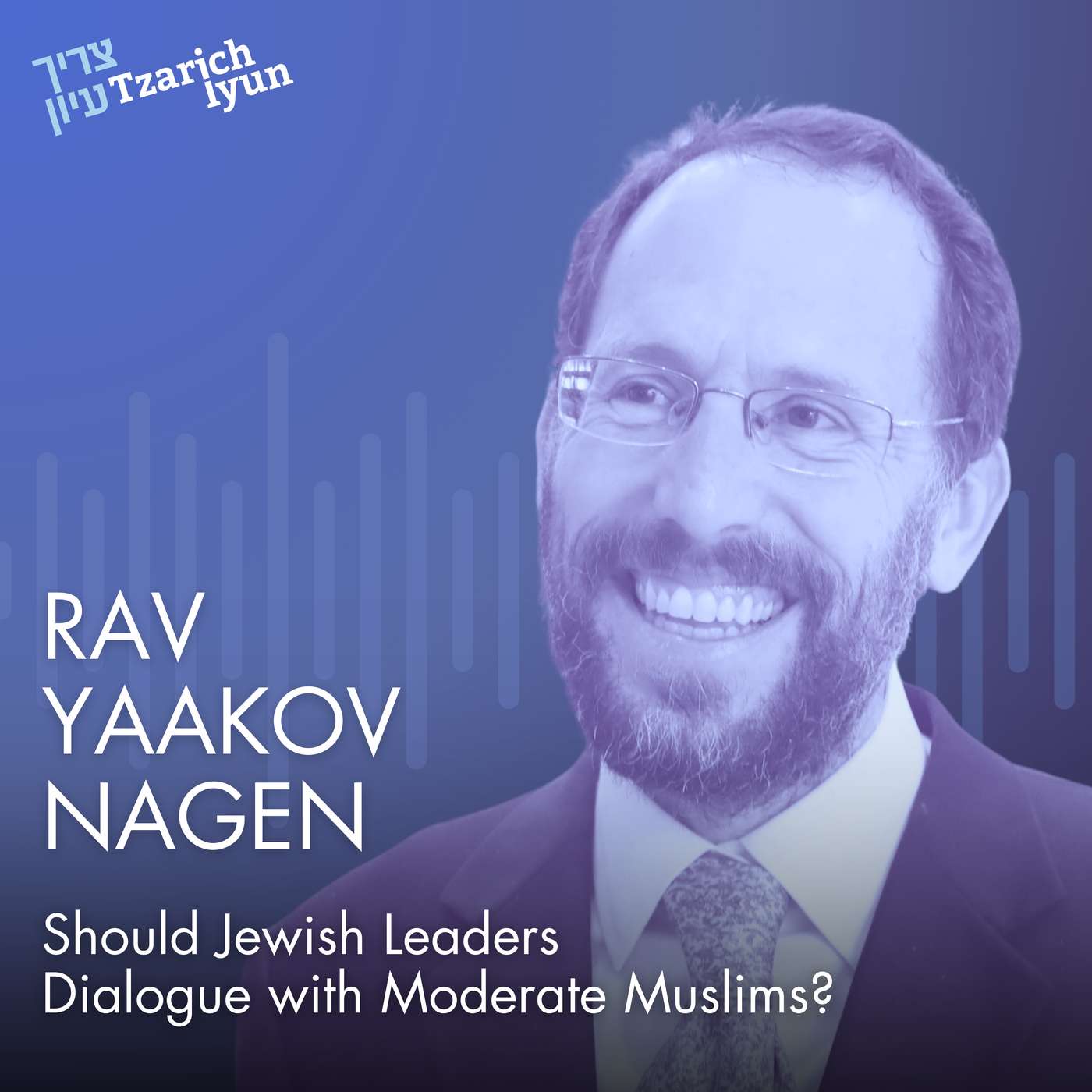
Should Jewish Leaders Dialogue with Moderate Muslims? with Rav Yaakov Nagen
Nov 3, 202400:50:07Tap to summarizeIs 'fundamentalist Islam' a misnomer? What Muslim voices authentically represent traditional Islam? In this episode Rav David Silverstein is joined by Rav Yaakov Nagen to discuss these issues as well the larger question of Jewish/Muslim interfaith dialogue.Rabbi Dr. Yakov Nagen is the head of Ohr Torah Stone’s Blickle Institute for Interfaith Dialogue and Beit Midrash for Judaism and Humanity, as well as the Executive Director of the Ohr Torah Interfaith Center. For 25 years, Rabbi Nagen served as a senior educator at Yeshivat Otniel. A prominent advocate of religion as a means for promoting peace, he has been a leading figure in interfaith dialogue, particularly between Judaism and Islam, for two decades. His new book, Ushmo Echad/God Shall Be One, is out in Hebrew now and English soon.Questions? Feedback? Have a topic you'd like to hear discussed?Email us at oraytapodcast@gmail.com and we look forward to "continuing the conversation."Music from "Ashreinu" by Omek HaDavarRecorded in the Old City of Jerusalem at Yeshivat Orayta (orayta.org) | Facebook | Instagram
Transcribe →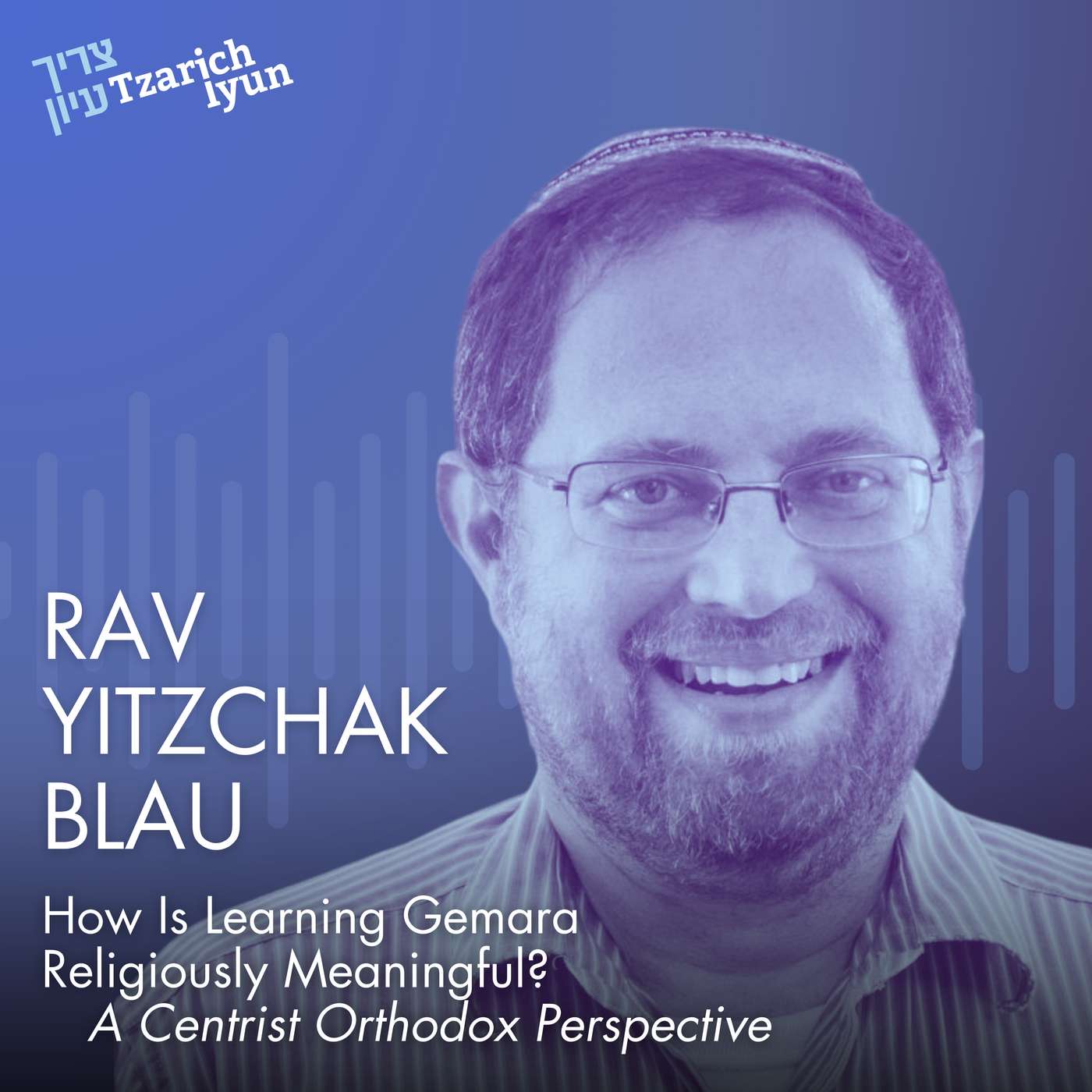
How Is Learning Gemara Religiously Meaningful? A Centrist Orthodox Perspective with Rav Yitzchak Blau
Oct 13, 202400:49:03Tap to summarizeGemara learning dominates the Centrist Orthodox Yeshiva curriculum. Do Centrist Orthodox Yeshivot approach Gemara differently than their Chareidi counterparts? Are there varied perspectives within the world of Centrist Orthodoxy? In this podcast, Rav David Silverstein is joined by Rav Yitzchak Blau to discuss these questions through the lens of Rav Blau's own experiences in both Chareidi and Centrist Orthodox Yeshivot.Rabbi Yitzchak Blau is Rosh Yeshiva of Yeshivat Orayta, the author of Fresh Fruit and Vintage Wine: The Ethics and Wisdom of the Aggada, and Tradition's associate editor. He has taught at Yeshivat Hamivtar, Yeshivat Shvilei Hatorah, and the Yeshivah of Flatbush and currently also teaches at Midreshet Lindenbaum. Rabbi Blau has a BA in English Literature from YU, an MA in Medieval Jewish History from Revel, and smicha from RIETS. Rabbi Blau lives in Alon Shevut with his wife and four children.Questions? Feedback? Have a topic you'd like to hear discussed?Email us at oraytapodcast@gmail.com and we look forward to "continuing the conversation."Music from "Ashreinu" by Omek HaDavarRecorded in the Old City of Jerusalem at Yeshivat Orayta (orayta.org) | Facebook | Instagram
Transcribe →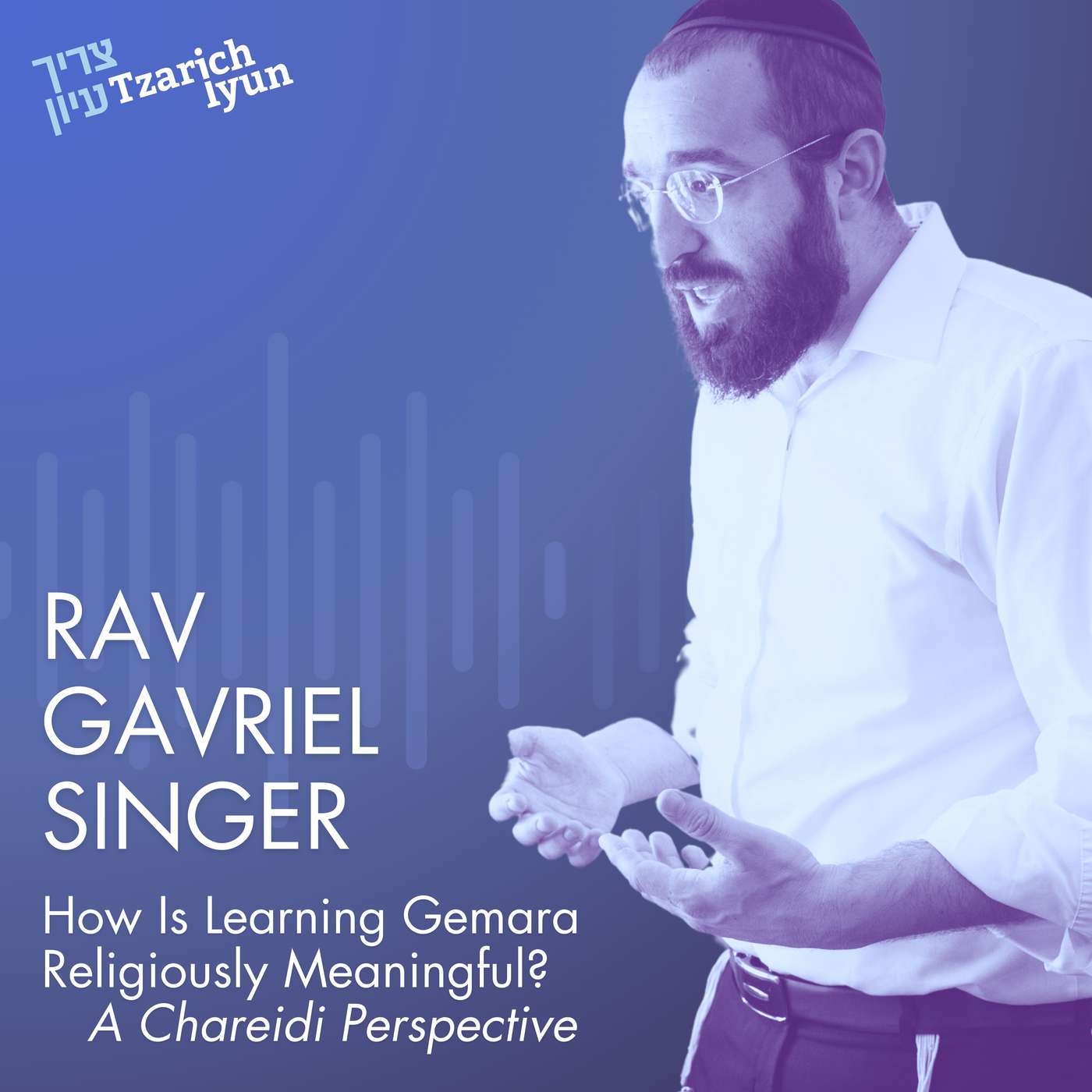
How Is Learning Gemara Religiously Meaningful? A Chareidi Perspective with Rav Gavriel Singer
Sep 15, 202400:49:42Tap to summarizeHow should we understand the central role of the Talmud Bavli in Chareidi communities? What are the goals of the 'Ivies' of the Yeshiva World? How does intensive focus on the Gemara create a certain student and society? Rav Gavriel Singer pulls back the curtain in conversation with Rav Dovid Silverstein in the Season 3 Premiere of Tzarich Iyun.Rav Gavriel Singer, Rebbe at Yeshiva Orayta, is originally from Philadelphia and currently lives in the Sanhedriya Murchevet neighborhood of Yerushalayim with his family. He studied in various yeshivot spanning from Netiv Aryeh, Mir Yerushalayim and Kollel Ateres Elimelech. He also published a sefer on Masechet Makkot, Metzius Ish, and served as a Rebbe at Yeshivas Shaar HaChaim.Questions? Feedback? Have a topic you'd like to hear discussed?Email us at oraytapodcast@gmail.com and we look forward to "continuing the conversation."Music from "Ashreinu" by Omek HaDavarRecorded in the Old City of Jerusalem at Yeshivat Orayta (orayta.org) | Facebook | Instagram
Transcribe →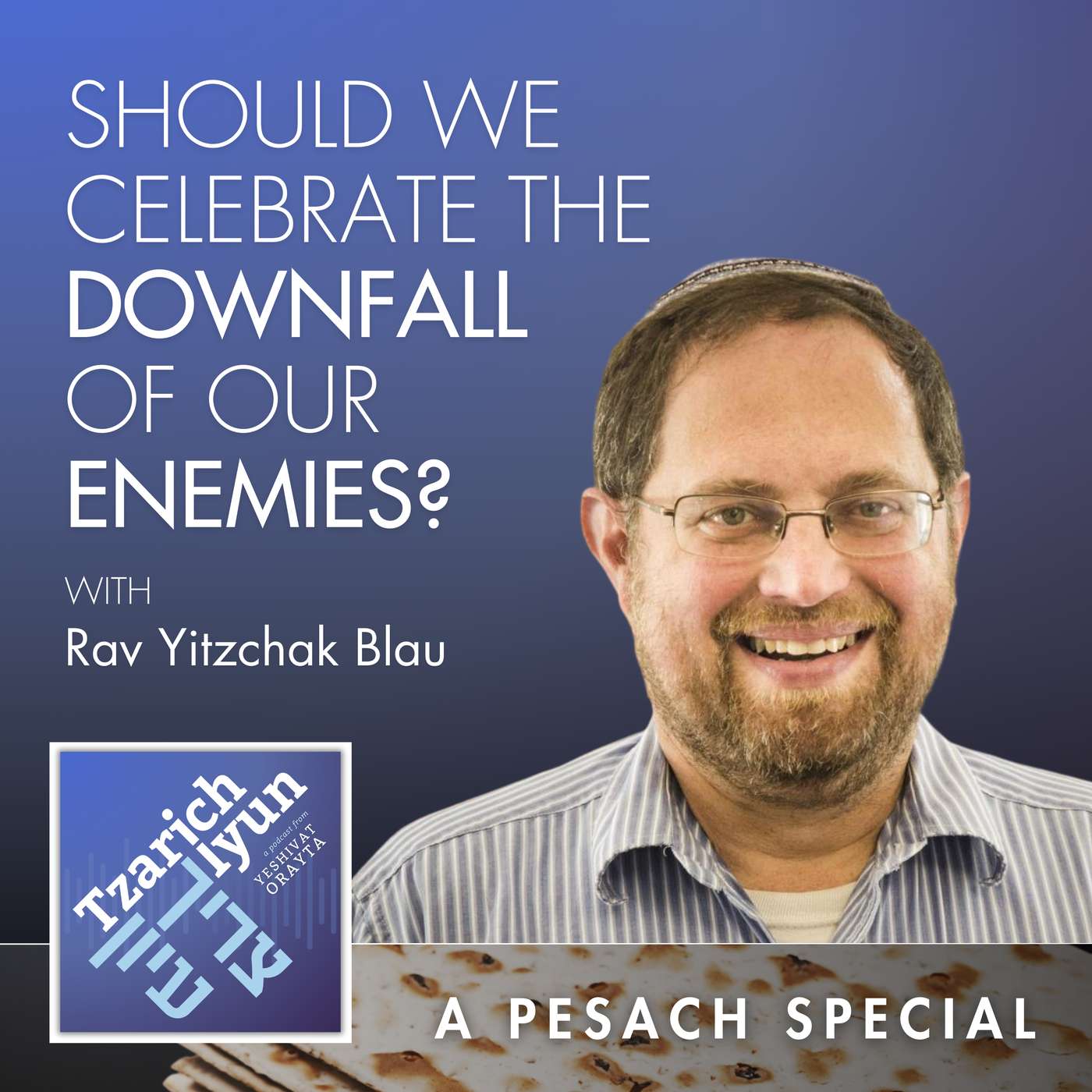
Should We Celebrate the Downfall of Our Enemies? A Special Episode for Pesach with Rav Yitzchak Blau
Apr 14, 202400:49:45Tap to summarizeMany observant Jews have a seder night custom to spill out some wine from their cups during the recitation of the ten plagues. What is the source of this custom? Does it reflect a Jewish instinct to mitigate happiness when one's enemies are killed? Or, is it part of a larger story about Jewish uniqueness and particularism? In this episode Rav David Silverstein is joined by Rav Yitzchak Blau to discuss the origin of this custom as well the larger question of rejoicing over the downfall of one's enemies.Rabbi Yitzchak Blau is Rosh Yeshiva of Yeshivat Orayta, the author of Fresh Fruit and Vintage Wine: The Ethics and Wisdom of the Aggada, and Tradition's associate editor. He has taught at Yeshivat Hamivtar, Yeshivat Shvilei Hatorah, and the Yeshivah of Flatbush and currently also teaches at Midreshet Lindenbaum. Rabbi Blau has a BA in English Literature from YU, an MA in Medieval Jewish History from Revel, and smicha from RIETS. Rabbi Blau lives in Alon Shevut with his wife and four children.Questions? Feedback? Have a topic you'd like to hear discussed?Email us at oraytapodcast@gmail.com and we look forward to "continuing the conversation."Music from "Ashreinu" by Omek HaDavarRecorded in the Old City of Jerusalem at Yeshivat Orayta (orayta.org) | Facebook | Instagram
Transcribe →
Is Hamas Amalek? A Special Episode for Parshat Zachor with Rabbi Dr. Shlomo Brody
Mar 20, 202400:47:35Tap to summarizeThis Shabbat, Jews across this world will read the Torah portion describing the requirement to eradicate Amalek. Does this mitzvah have any practical relevance nowadays? What about the moral challenges associated with this divine command? In this episode, Rav David Silverstein is joined by Rabbi Dr. Shlomo Brody to discuss these issues through the lens of Israel's current war against Hamas.Rabbi Dr. Shlomo Brody is the executive director of Ematai. He previously served as the founding director of the Tikvah Overseas Student Institute and co-dean of the Tikvah Online Academy, a senior instructor at Yeshivat Hakotel, and as a junior research fellow at the Israel Democracy Institute. A summa cum laude graduate of Harvard College, he received rabbinic ordination from the Israeli Chief Rabbinate, an MA in Jewish philosophy at the Hebrew University, and his PhD from Bar Ilan University Law School, where he continues to serve as a post-doctoral fellow. His first book, A Guide to the Complex: Contemporary Halakhic Debates (Maggid), received a National Jewish Book Award. His new book, Ethics of Our Fighters: A Jewish View on War and Morality, is available now in the US and Israel.Questions? Feedback? Have a topic you'd like to hear discussed?Email us at oraytapodcast@gmail.com and we look forward to "continuing the conversation."Music from "Ashreinu" by Omek HaDavarRecorded in the Old City of Jerusalem at Yeshivat Orayta (orayta.org) | Facebook | Instagram
Transcribe →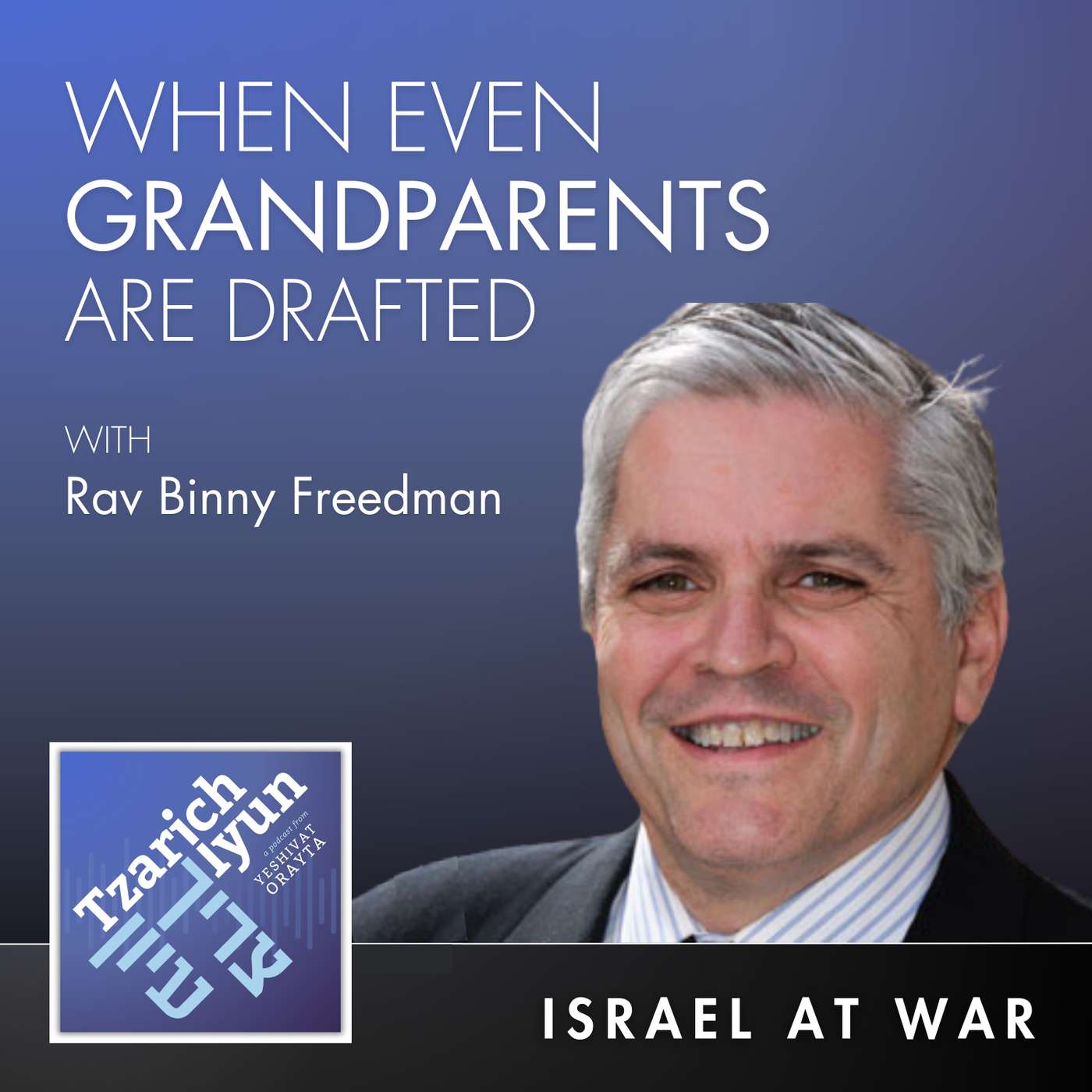
When Even Grandparents Are Drafted with Rav Binny Freedman [Israel at War, Part 8]
Feb 11, 202400:52:30Tap to summarizeAfter serving for many years as a Company Commander in the IDF, Rav Binny Freedman has experienced himself in a new role since October 7th—‘drafted,’ as a grandparent. Like hundreds of thousands of other families, the Freedmans have been navigating the complexities of the draft on the home-front, stepping in as their children have been called up to serve. In this episode, Rav Binny joins Rav David Silverstein to discuss how the war has affected the lives of kids, spouses, and parents of reservists and understand its toll on Israeli society at large.Rabbi Binny Freedman is founding Rosh Yeshiva of Yeshivat Orayta. Coming to Israel as a lone soldier in 1982, Rav Binny served as a Company Commander in the Israeli Defense Forces. Rav Binny received his Rabbinic Ordination from the Chief Rabbinate of the State of Israel while studying at Yeshivat Har Etzion under the tutelage of Rav Aharon Lichtenstein, and pursued his BA and MA studies in Education at the Herzog Teacher's College in Israel. He lives with his wife and their four children in Efrat.Questions? Feedback? Have a topic you'd like to hear discussed?Email us at oraytapodcast@gmail.com and we look forward to "continuing the conversation."Music from "Ashreinu" by Omek HaDavarRecorded in the Old City of Jerusalem at Yeshivat Orayta (orayta.org) | Facebook | Instagram
Transcribe →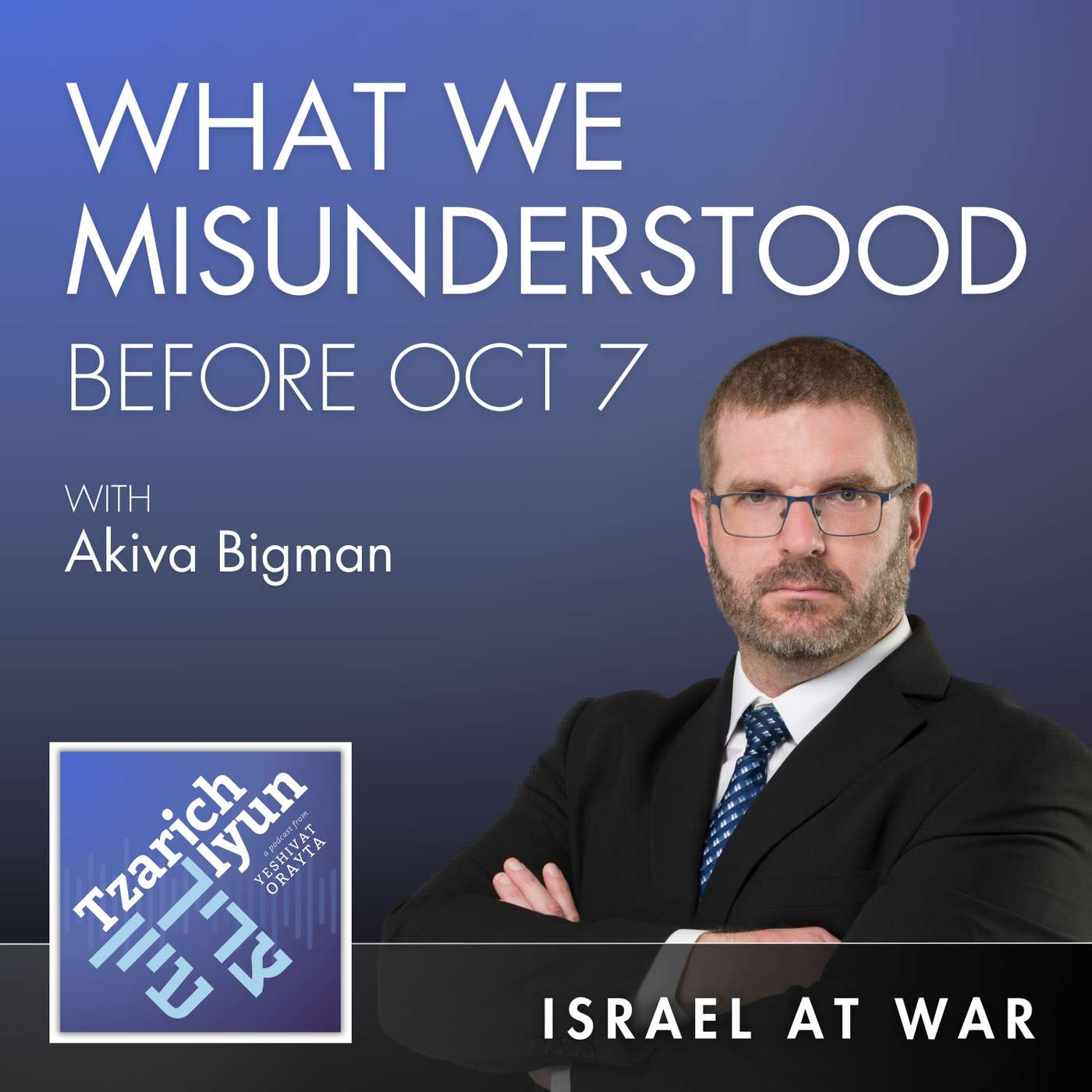
What We Misunderstood Before October 7th with Akiva Bigman [Israel at War, Part 7]
Jan 28, 202401:01:59Tap to summarizePrior to October 7th, the Israeli political and military establishment mistakenly thought that Hamas was deterred from attacking Israel. What other misconceptions lay behind Israeli thinking? How can the Israeli government rectify these errors moving forward? In this episode, Rav David Silverstein is joined by military strategist Akiva Bigman to discuss these questions and reflect on possible new paradigms for Israeli leaders to think about the war in Gaza.Akiva Bigman is the Chief Editor at Mida (Hebrew/English), an Israeli news and commentary website. He previously served as the Chief Investigative Journalist for Chanel 14 as well as a columnist for Yisrael Hayom. He holds a Master’s in Jewish history from Bar Ilan University and is currently pursuing his PhD in military strategy.Questions? Feedback? Have a topic you'd like to hear discussed?Email us at oraytapodcast@gmail.com and we look forward to "continuing the conversation."Music from "Ashreinu" by Omek HaDavarRecorded in the Old City of Jerusalem at Yeshivat Orayta (orayta.org) | Facebook | Instagram
Transcribe →