← The Big Impression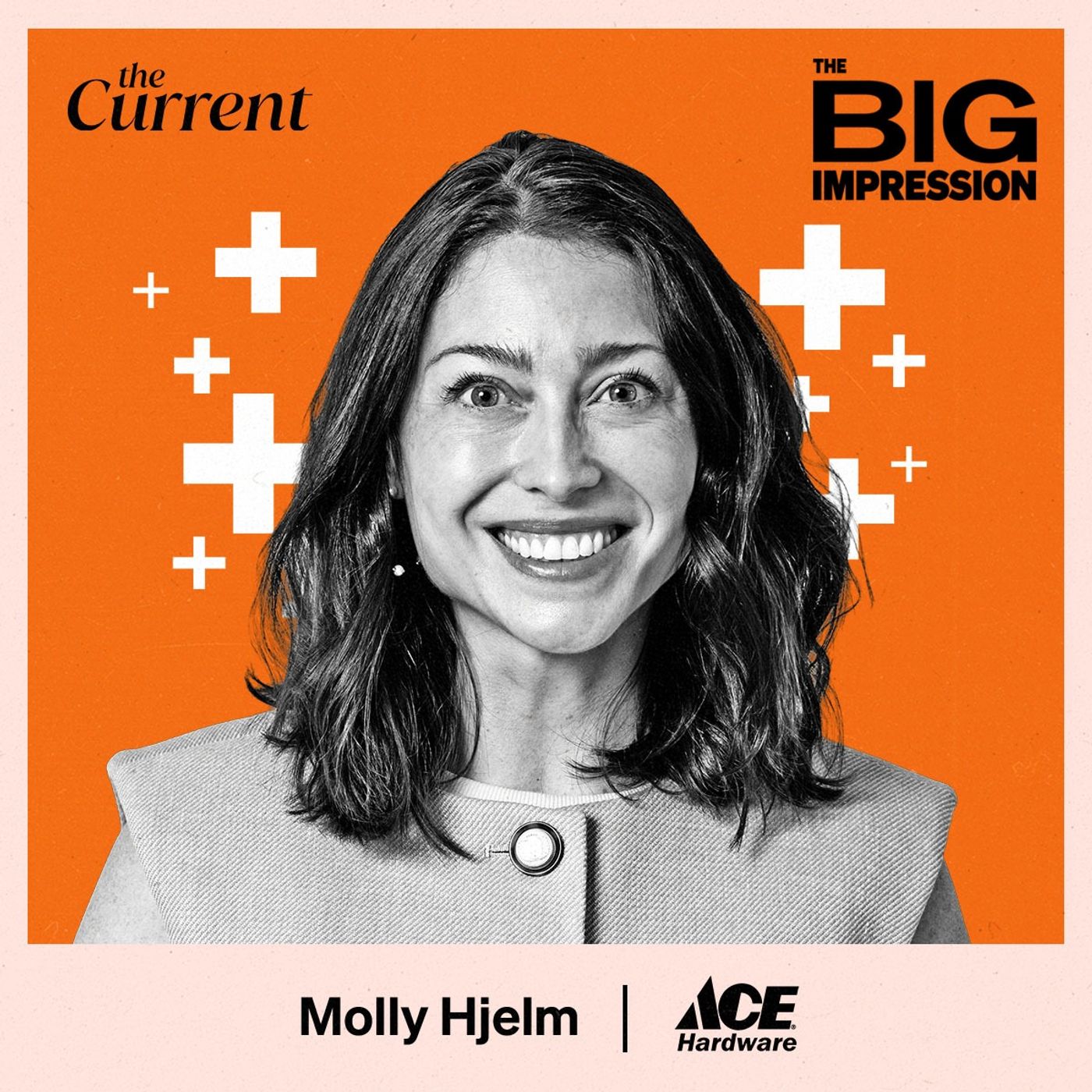
The Big Impression
Ace Hardware’s Molly Hjelm on bringing the retail back into retail media
00:24:39
Ace Hardware’s Molly Hjelm joins The Big Impression podcast to discuss why the future of retail media will depend on retailer relationships, local relevance and fully embracing the “retail” in retail media.
Loading summary
Transcript59 lines
- [00:00]
A
Damien. I'm Damian Fowler and welcome to the Big Impression. This week we're joined by Molly Jelm, head of retail media at ACE Hardware. ACE operates one of the largest networks of independently owned stores, and that changes how retail media works. Instead of optimizing for a single system, ACE works across thousands of unique environments, each with its own customers, inventory and context. The result is a model that leans heavily on local signals like weather, geography, and real time demand to create nuance. So today we're going to explore how a contextual approach can reshape how brands think about retail media. So, Molly, you launched your retail media network just about a year ago across 5,200 independently owned stores. What was the core challenge you set out to solve for both the brands and the merchants?
- [00:54]
B
So really what we were looking to do here is leverage the scale of ACE. We have 5200 stores across the US across all 50 states. We also have a really robust loyalty program with over 70 million lifetime members. And so retail media for ACE looks like an opportunity to lean into the things that are differentiating for us. The scale and also the service, the helpfulness, the hyperlocality that our independent retailers embody in order to help connect brands to our customers and drive them into our stores.
- [01:28]
A
Could you say a little bit more about the hyper locality element of it? Because this is the interesting nuance when it comes to the retail media network within the context of ace.
- [01:37]
B
Yeah. What's so unique about working at a co op, and for ACE in particular, is that our independent store owners have so much autonomy with what they bring into their stores. They can customize a large percentage of their assortment. And that's what makes ACE differentiated in the market from other DIY and hardware entities. It's that you can walk into your local ACE and that ACE will know and anticipate the needs of their individual community and have full ability to customize up to 20% of their assortment around that community.
- [02:16]
A
And then let's talk a little bit more in terms of a specific example you mentioned. We were talking before about SodaStream. What was the specific objective there? And how did you approach increasing conversion within the retail environment for that brand?
- [02:32]
B
Yeah, well, my background is in retail media, and retail media writ large is about connecting brands to customers. And so I was really surprised as I came in and got to know the ACE ecosystem and got to know our advertiser community that in almost every conversation I was asked whether we also had media tactics that could help connect them to our independent retailers. And so we went to Create a product that met that need and also create something that's totally novel within the retail media industry, which is media tactics that connect brands to retailers through their ordering platform. It also provides education to those retailers on the power of what those brands and those products can do in their store, whether they're basket building, traffic driving. And so this example example here of SodaStream, they partnered with us in our very early days. They came to us with the concept, they wanted to put investment behind it. And we worked closely with our merchants in order to develop a campaign that connected SodaStream to the retailers and ultimately drove a large increase in retail distribution for them.
- [03:40]
A
So it was kind of a B2B campaign before the B2C campaign.
- [03:44]
B
Exactly. And the beauty of it is that they combined both consumer facing elements alongside the distribution growing elements. So you had this awesome flywheel going of driving demand in markets that could be fulfilled via E commerce even if that store didn't carry that product. But also influence the retailer and give them information on why they should bring that product in through a retailer facing campaign.
- [04:09]
A
And you saw probably different demand in different locales.
- [04:13]
B
Right?
- [04:14]
A
It was certainly track that.
- [04:16]
B
Certainly. Yeah. There's a lot in a co op model. We're talking about some of the differences here. With so many different variants of assortment that can be in these stores. I have to give so much commendation to our digital team that has worked in our digital merchants that have worked to be able to translate those in stocks and out of stocks at an item level, at the store level, to be able to make our E commerce ecosystem work as well as our big systemic relationships with DoorDash. And we've just announced with Uber Eats as well.
- [04:48]
A
Now you described a two step model and can you break down how that works in practice?
- [04:52]
B
Definitely. So the two step model is really at A's. We have a merchant org that works side by side with brands in order to decide what assortment we should carry as a wholesale retailer in our warehouses. From there though, there's still an additional step to influence the retailers or try to try to increase orders among our retailers. There's not instant distribution that happens. And so that's what our campaign was designed to solve. And it's just the reality of doing business with Ace that there's that additional step that goes into the model.
- [05:26]
A
It sounds like a kind of a supply chain solution in lots of ways.
- [05:31]
B
Yeah, I think that's well said.
- [05:32]
A
A lot of retail media I know can feel almost templated and you've emphasized that your approach is not that it's not cookie cutter. What does customization actually look like for brands in your ecosystem?
- [05:46]
B
That's a great question. At first, at launch I looked at the scale of ace, the data that ACE had and I saw an opportunity also with the evolution in ads adtech partners to be able to kind of leapfrog the growing pains that more mature networks have had to go through by nature of when they launched and be able to launch at parity to market from day one. And so we did. We launched with a full funnel portfolio off site, in store and on site offerings. And so first step was get to parity, be the cookie cutter in some cases, but also set the standard among those retail media networks for real time measurement and for the offerings that you have. But lean into our differentiation from there which was we offered premium elements like our app scene, which is when you go into the app, your experience of our app is gated behind a marketing experience that's available to brands really heavily engaging. And getting our merchant org behind the media network is another area of just huge differentiation that now you're seeing more retail media networks lean into, but coming as one retail organization to the vendor in order to help maximize the impact of marketing. And then you're seeing the case study we were just discussing is absolutely an example of where we're leaning in to create solutions that make sense within the ACE environment are going to be helpful to our vendor community.
- [07:13]
A
Now you've also been experimenting and this is really intriguing to me with things like weather triggered, programmatic, you know, how do the real world signals play into this creating meaningful action at the local level.
- [07:25]
B
Yeah, that is something that's another area where we're thinking of as we launch retail media, what makes sense within our ecosystem and what's going to make the biggest difference. And ace's mission is to be helpful in our communities. And one of the ways that we do that is we're very intentional about how we stock product in advance of what might be major weather events so that we can be there for our community in time of need. And so the ability to message to customers in that time of need and drive awareness for the fact that we have product in stock that they can go and prep, whether it's for a hurricane, whether it's for a snow event. I know I have a personal experience of this because I needed ice melt right before unprecedented storms hit Cincinnati earlier this year. And ACE was the one that had it in stock and that could deliver it to my house as fast as possible. So it's really about an Extension of what it means to be helpful at ACE Hardware and giving vendors the ability to amplify and drive awareness for the fact that we are helpful.
- [08:22]
A
That's fascinating. We have been getting a lot of unprecedented weather events and I'm sure ACE is on the front lines of that on that point. How do you balance the sort of national brand goals with the realities of the independently owned stores? You know, in, in terms of like the different needs, you know, from Florida to Minnesota, let's say you different needs, different inventory, different customer base. How do you balance those brand goals in each locale?
- [08:52]
B
Yeah. The beauty of programmatic media is that we can be that hyper targeted, hyperlocal and that it's inherent to the tool. And so in offering it to our vendor community, we enable our independent retailers with assets that they can deploy individually on Meta. But this is an extension of helpfulness to our vendor community because it puts those tools in their hands, it allows them to connect with a known ACE customer and to do so at a hyper granular level and then to be able to measure down in real time omnichannel sales impact at a SKU level, at a brand level, at a brand halo level.
- [09:28]
A
Loyalty data.
- [09:30]
B
Yep. Our signals are our loyalty data, which it's amazing to have a longitudinal loyalty data asset in retail media for audience creation and also for measurement and then also our E commerce. We can recognize everybody that comes through our E commerce platform, whether they're loyal or not.
- [09:46]
A
Do you have any important outcomes that you could share from the, say the SodaStream campaign that we talked about in terms of measurable performance and what you've maybe learned from shopper behavior in store?
- [09:58]
B
Yeah, that campaign in particular was really compelling because there were many different facets of KPIs on it. We had the customers that we were looking to drive awareness and consideration with and then we also had stores that we were hoping to influence and drive consideration and then wholesale. So one of the most interesting things about that campaign is how many different angles there were to measure those KPIs of success. It was both consumer facing, it was retailer influencing. And as a wholesaler we were looking to see the impact to wholesale purchases as well and wholesale sales. And so we had to have different facets of measurement for that that don't necessarily all are things that you would think of in retail media. We had our real time measurement that allow us to see omnichannel sales and the impact of the off site media that was running. And so we had a clear real time ROAS that was Coming back as part of our off site campaign that we were running to consumers, saw over $8 in Lyft there and Roas there. And then we were also working with our merchants to understand how did retailer orders increase as a result of the campaign during that attribution window as well as wholesale purchases.
- [11:13]
A
What have you discovered about what actually drives conversion in retail media in the retail media environment versus what marketers think drives conversion?
- [11:23]
B
For so long in the wake of 2020 and with the rise of retail media, it's always, there's always been an adage of if you have a dollar to spend, spend it in search and you're always going to get that return because you're closest to the point of sale, closest to that point of influence. But at ACE and with our ecosystem, we're finding a lot of value in off site media. We are a retailer that has a lot of different types of products in our stores and that has a lot of variance in our assortment location by location. And so to drive consumer awareness and then consideration for the fact that these products they might not realize we carry, like Tide or pest control are available within our stores can be really powerful in driving sales lift.
- [12:05]
A
Yeah. Did you see sort of any variance in terms of how the signals played out locally across different regions?
- [12:14]
B
That's not actually something that we're measuring at this point. We do. ACE broadly does see a significant impact. And because we're looking at one to one deterministic individual individuals exposed to the media and then what do they come in to buy? It has been less focused on geographical lifts or control store tests.
- [12:35]
A
What have you learned about how to better support your merchants and not just the brands that are advertising with you?
- [12:41]
B
Yeah. One of the things that I'm most proud of as we've launched this network is doing it in close partnership with merch. And partnership can look like a push pull. It's been a very, we've had a very productive two way dialogue where I know that my role is to help educate on the world of retail media, on the precedent that exists. And their role has been to educate me as a newcomer into this environment on the ACE way. And so as we have made decisions, like I mentioned, we launched at parity with what other networks are doing. We've then carved back and made different decisions about what we want to do and how we want to position brands in order to be a brand building environment, maybe differently than some of the other pure play retailers.
- [13:26]
A
How has the data challenged any assumptions around how much influence retail media can have? At the point of sale.
- [13:33]
B
It's a great question. What has been most fun about bringing retail media to ACE is that in launching with our partner Epsilon Retail Media and their core ID solution, we were able to bring really precise real time granular omnichannel measurement into an environment that had not previously had that level of granularity or real time measurement.
- [13:57]
A
If another brand wanted to succeed in your ecosystem, what's one thing that you should really understand about working within a network of independent retailers?
- [14:08]
B
The beauty of what ACE has built is that our E commerce platform is a shared service. And so even though the vast majority of our sales happen in store, all stores are opted in to E commerce. If your product is in a warehouse at ACE as part of the wholesale relationship, then you have the ability to be for a shopper to purchase you. And so playing not only in a strong way in our in store environment, but also showing up in the right way in an E commerce environment is hugely important to be able to capture that demand awareness and even in some cases influence retailers to bring your product in because they start to see as they fulfill that E commerce demand, they start to see that there's demand in their area.
- [14:54]
A
Let's take a zoom out here and look at the big picture. Has been on tip of everyone's tongue for a couple of, well, maybe more than a couple of years now. I mean I've heard Retail Media 2.0 or Retail Media 3.0, but I'm interested to hear from you the role of independent retailers shaping the next phase of whatever that number is, retail media
- [15:15]
B
for us. I mean we are a one of one. I don't know that there's something here that many other retailers can replicate because we're such a unique retailer. I do think right now what it means to be mature in a retail media context and that that doesn't longer mean that you have to be in business for years and years and have gone through all the hurdles that many of the legacy players have that you can leapfrog to maturity with the right tech, with the right focus, which for us is omnichannel portfolio, real time measurement and integration within the broader org. And then secondarily this idea of really embedding retail in retail media and showing there has been so long in this industry that we've really been trying to position ourselves as a media companies and there's been a huge kind of push for that over the last few years. And that's not wrong. That was part of where we were in the context of the time that we were in, but now I think you're seeing a lot of retailers and I definitely fall in this camp. But you're seeing retailers embrace the full retail point of difference that they have with the ability to put merchandising decisions and promotions and just the broader advertiser and vendor context to work behind advertising in order to maximize that investment on behalf of a vendor. I definitely think this is an era that we're entering where we can fully embrace the fullness of what it means to be a retailer with a scaled media entity therein.
- [16:47]
A
Just wanted to pick up one thing you said. You mentioned the omnichannel experience. When you talk about omnichannel, what are you talking about?
- [16:53]
B
People use omnichannel in different contexts. When I'm talking about omnichannel measurement, I'm talking about the ability to show in real time in store impact and online impact. Measurement has been everything for us and I think it's a large part of why we've seen such rapid adoption and also support from our merchant community. When we launched in Q4 of last year, we launched with real time measurement and so the ability to bring what was working to our merchants and then to be able to show the advertisers what was working within just a couple days of their campaign launching was really transformative for thinking about the power of these solutions within ACE broadly, do you
- [17:34]
A
think we're moving into a more dynamic trigger based model of media versus traditional planning cycles?
- [17:40]
B
I think we're going to see so different applications of our first party data really come to the surface with a. With the rise of AI. And so I think there are so many new applications of old ways of working that we're going to experience. I think weather triggered programmatic makes sense for our ecosystem in our environment and it makes sense within the context of certain brands and certain campaigns, but it's certainly not the direction that the entire industry is leaning or even where we should be going with all of our activations. It works best as a layer in a broader brand and category strategy.
- [18:17]
A
And what role does personalization play when you're operating at both a national kind of level and you look at the big picture and then you also zoom right into that hyperlocal market.
- [18:26]
B
Yeah, personalization means is basically twofold at ACE in that we have the personalization that's inherent for use of retailer first party data and the connections and relationships you have, ability to personalize customer experiences that way, but also personalization as far as our hyperlocal assortment within the stores and the experience that you have when you're in there. And so what I think is really exciting and unique about our format is that when we execute out of store media and digital media and drive people into the store, you can trust that they're going to have a different type of experience than they might in other retailers. They're going to have an experience that's helpful, they're going to be guided down the aisle to the product. And so you have this kind of benevolent handoff that's happening there in the store that you can trust and that as a brand should make you feel really good about where you're advertising.
- [19:19]
A
It seems to me like trust is very much at the heart of this effort.
- [19:24]
B
Yeah, for me, having been in retail media for better part of a decade as we've built this there and we're thinking about what's differentiating versus cookie cutter here, it's the idea of putting these sophisticated tools to work and doing so in a way that delivers on customer trust, vendor trust, merchant trust, and also does what's respectful. And I use this word, which maybe is a little bit of a touchy feely word, but truly, like, I think it's the most respectful thing to do for a vendor partner to bring the full weight of a retailer behind what we're doing. That if they're going to invest in advertising, that they're doing it on top of the broader context of what they're looking to do with merch, the goals that they might have for the category, the promo that they have in Mercury and other initiatives that they're working.
- [20:15]
A
You may have just answered this next question, but as more networks come online, what's going to separate the ones that truly deliver value from the ones that maybe don't?
- [20:24]
B
Yeah, it's all about scale, geographical scale and reach. If you don't have those at your core, then you may not be able to go it alone. There's new research that's out now from SMG that I've just been looking at that just this talks about maturity and what it means to be a retail media network and what advertisers are looking at. And it has to do with, you know, how seamless are you to work with? You're going to be more willing to work with a retail media network that has all the options you want, that doesn't have any friction in the path to purchase for you, and really easy to work with and that's performant. And so I think everybody needs to lean into what's differentiating for them, but if you have those at your core, then you have a viable roadmap and path.
- [21:08]
A
Absolutely makes sense. We're on the last lap now, so I'm going to ask you some quick hot seat questions here. Here's first. What are you obsessed with solving right now in retail media?
- [21:20]
B
It's really for me about putting the embracing the retail and retail media. It's about bringing the fullness of retail to bear with it behind these really precise and powerful media tools.
- [21:34]
A
What's the most overlooked lever when it comes to driving in store conversion?
- [21:40]
B
I would say in store signage. And for me it doesn't have to be overly sophisticated, but it does have to reach the customer at that point of decision and have the ability to influence. And so I think that that's still a powerful lever.
- [21:57]
A
I love that. A bit of old school. Yeah. What's one assumption about retail media that you think is completely wrong?
- [22:06]
B
I think this idea, you know, many retail media networks launched within broader legacy retail orgs as startups, like on an island, some even existing in separate buildings from the retailer, some even existing in separate orgs or kind of launched within agencies. And I think the idea that you can scale and embrace your full value on an island within a retail organization is flawed. I think that to embrace the true power of what we can do, to put the power of data behind outcomes and advertising for brands, you need to be embedded within that org.
- [22:43]
A
And finally, if you could give CMOs one piece of advice about retail media today, what might it be?
- [22:51]
B
There's so much chatter in this industry and just distracting paths on measurement, standardization and almost like inability to see the forest for the trees. There, there's validity, there's a kernel of truth in those arguments. But I would just encourage them to recognize the progress that their teams are creating within the walls that they're engaging in and to push for that macro view in the terms of retail sales that they're driving and units and volume and distribution increases is good. And then also to recognize their team for the roas that they're improving upon and changing over time. I think it can be. Having worked side by side with advertisers for a long time, you can see how defeating it can be for them to feel that they've driven wild success and how efficient and effective their engagement with retail media can be, only to surface that up and have it shot down by their broader marketing org that's looking at stats. And so. So there's just this recognition of we may all to some extent be speaking slightly different dialects. But there's progress to be observed within, even in that different dialect that should be embraced and celebrated.
- [24:11]
A
And that's it for this edition of the Big Impression. This show is produced by Molten Heart. Our theme is by Loving Caliber, and our associate producer producer is Sydney Cairns.
- [24:19]
B
And remember, you can leapfrog to maturity with the right tech, with the right focus, which for us is omnichannel portfolio. Real time measurement and integration within the broader org.
- [24:31]
A
I'm Damian and we'll see you next time.