← The Big Impression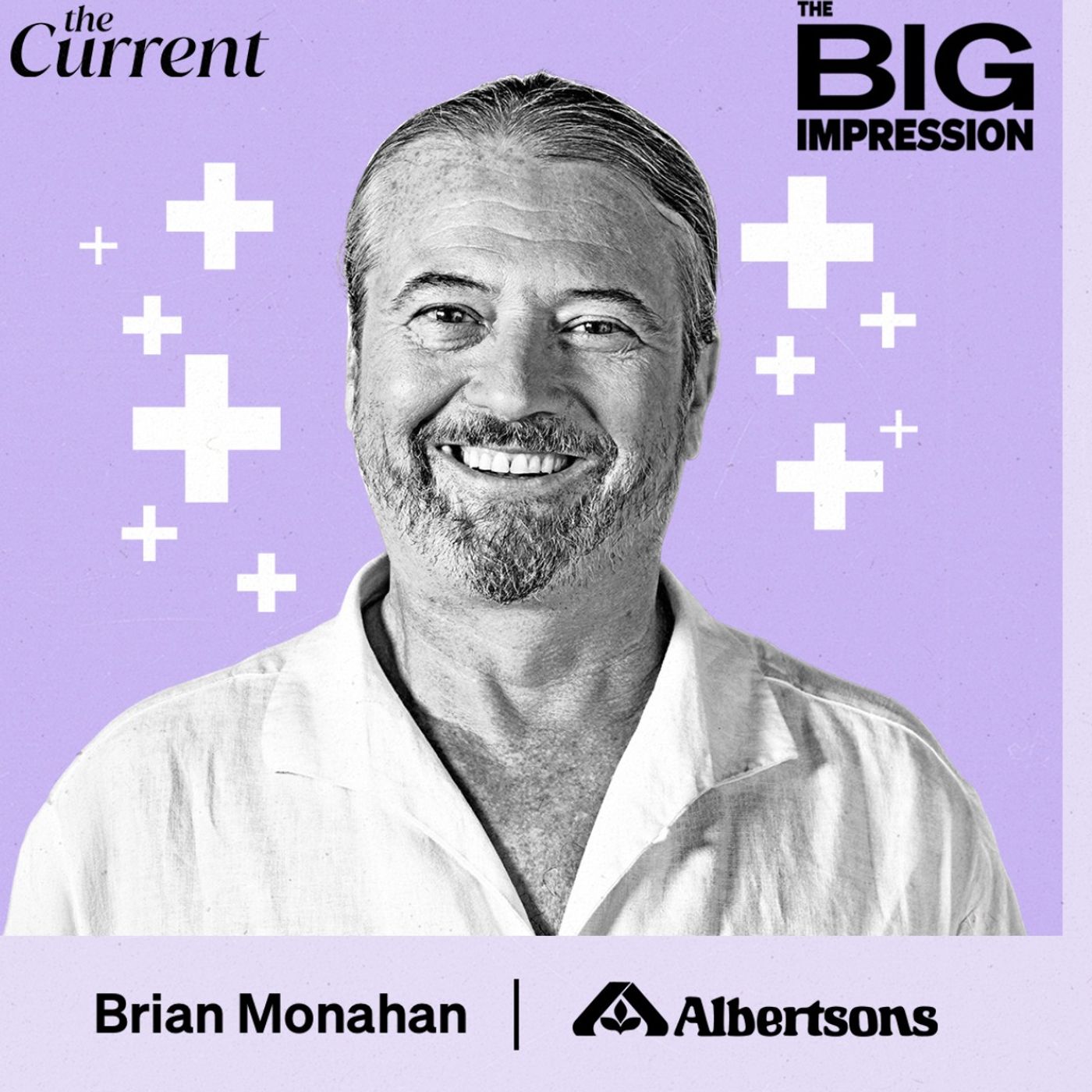
The Big Impression
Albertsons’ Brian Monahan on turning shopper data into retail media gold
00:29:34
In conversation with The Big Impression, Brian Monahan, SVP of retail media at Albertsons Media Collective, explores how shopper insights, creative storytelling and omnichannel strategies intersect.
Loading summary
Transcript76 lines
- [00:00]
A
I'm damian fowler.
- [00:01]
B
And I'm ilise lifring.
- [00:02]
A
And welcome to this edition of the big impression.
- [00:09]
B
Our guest today is Brian Monahan, senior vice president of retail media at Albertsons Media Collective.
- [00:16]
A
Brian joined the company in July to lead the next phase of his customer for life strategy, helping brands connect with shoppers in more relevant, data driven ways.
- [00:25]
B
If you follow retail media, you know Brian's a big name. He helped build Walmart Connect, led retail media innovation at Dentsu and spent time at Pinterest before joining Albertsons.
- [00:37]
A
So he's got a panoramic view of how retail media is evolving and what it takes to make these networks work smarter for brands.
- [00:44]
B
We'll dig into what's new at Albertsons Media Collective, how shopper data and creative intersect and where the category is headed next.
- [00:53]
A
So let's get into it.
- [00:57]
C
We aspire to help our advertising partners connect with our shared customers in ways that drive both of our businesses forward. And what I would share is the exciting thing that's happening with advertisers like Kraft Heinz and some others is they're getting smarter about how to use the tools that we offer to drive specific business goals that they have. So for Kraft Heinz, for example, we had a program with them that was essentially a lunch solution campaign, right? So your Kraft Heinz, you've got your condiment brands, you've got Oscar Mayer, right, You've got Lunchables, they've got a bunch of brands that are in this like meal solution, lunch solution space. And the campaign that we worked on with them was to basically sell them all together. So essentially looking at a basket, expanding opportunity of cross selling different SKUs against this meal solution idea, because of our data, we're able to track that overall conversion rate and we wound up with a 3x improvement over our ROAS benchmark. So our campaign average benchmark, 3x improvement by thinking intelligently about how we cross sell and bundle different products together.
- [02:16]
B
Oh wow. I haven't heard of that approach yet. Is that one that was like new to you as well?
- [02:23]
C
That was new to me. Another good one was some work we did with Bumblebee and their business problem was how do I attract new to category buyers? So for us we define them as people who hadn't bought their brands in the last 52 weeks. And what we found in that campaign is through a, a mix of touch points across the customer journey, we found different pockets that were more effective at finding those new to brand customers. For example, with Pinterest, Pinterest 60, I want to say 63% of the orders that we generated from our partnership with Pinterest were new to category buyers. Just another example of a smart advertiser learning how to twist our dials against a specific business goal that they're prioritizing.
- [03:20]
B
Wow. And what role would you say Shopper insights and that loyalty data or even brand partner feedback play in shaping those directions of those campaigns?
- [03:33]
C
Yeah, well, the insights really come down to how you're defining your different audience segments to go after in the first place and also trying to understand different trip types and needs. So the meal solution campaign that I talked about for Craft is interesting because we target at Albertsons. We not only target based on what you bought in the past and your demographics, we also map to trip type. Right. So we're a unique retailer. Right. We have 22 different banners. Six of them have been around for 100 years or more. Our real estate footprint is different. Right. We're not in the box store strip mall. We tend to be a little more urban. So we see a different type of trip. We see a lot of fill ins, a lot of nightly meal solutions. And by targeting against not just who and what, but like why they're looking like my mom's looking for a meal solution is a great way to drive results.
- [04:33]
A
We've been talking about the power of retail data now for maybe a couple of years. And I've heard various people say we're at, you know, retail media 2.0, retail media 3.0 in your assessment. And I know that you're new to this role. It sounds like, you know, brands are really getting it now. So, you know, is there an inflection point? Is there a kind of sense of understanding that wasn't there before that is there now?
- [05:00]
C
Yeah. Well, I'm new to the Albertsons role, but not new to the space. In 2014, I led the team that launched the retail media network at Walmart when we connected our in store traceable tender to our online ID so we could create audiences and chase them across the Internet. What I would say in the 11 years since that we've gotten better at is giving our advertisers more tools to get smarter, like give them more KPIs to optimize against more visibility into. So one metric that we are offering is a projected lifetime value of a customer that we can convert. So we're not just like, it's not just a roas hammer looking for roas nails. We've gotten better at the measurement that we can provide in partnership with our advertisers so we have buy in on the method. Right. We don't want to be grading our own homework. We want them to believe in the metrics as much as we do because we're trying to drive sales too. So we've given them more tools to optimize against and then just more touch points. So all of the, all of the off site partners that we've got, all of our in store media that we've lit up as well as all the different owned digital assets, we've got so much more than we did 10 years.
- [06:19]
A
Ago on that point. I read an op ed today on the current actually that said of retail media that we are now well beyond the honeymoon phase. Everyone's launched and we'll get into that in a minute. But we're also at an interesting point for retail media. Where are we going next? She defined it as we're in the murky middle. I don't know. Would you agree with that?
- [06:45]
C
Yeah, I think that was Claire Wyatt. Yes, Claire, Shout out, Albertson's media collective alumni. I mean, Claire's a real leader in our industry and I think she's right. I guess I would interpret that as being in the messy middle as we're trying to move beyond the trade and shopper budgets that we've really grown the industry on the back of to compete for national budgets and to basically have ad products that can go toe to toe with essentially infinite choice that an advertiser has. A shopper budget holder has zero choice. Right. They have to spend money with the retailer that their budget is allocated against. A national marketer has infinite choice. So we have to have the right solutions to win in the infinite choice world. What we're discovering is the answer lies in mapping full journeys and that when we reach a shopper in connected tv, in off site social, for example, in programmatic, across the open Internet, on our websites, in our stores, when we line all those up in aggregate, we see a lift. And I think that's how we're going to cross this, this murky middle.
- [08:05]
B
So you are offering brands like basically the whole feast of retail media, in essence, because retail media networks can be so layered and offer so many different things to consumers. So like, how do you feel about that?
- [08:21]
C
Yes. So we do have this feast, if you will. We're a food retailer, so we love food metaphors. So we offer a whole bunch of dishes to make a tasty meal for our advertising partners. But we're also trying to figure out how we can make, make those different levers if you will, or products available to our advertisers themselves to manage them directly. So for instance, we make our audiences available on the trade desk. So if an advertiser wants to work via the trade desk to target and test different audiences that we've got, they're free to do that. And we're gonna roll out more self service capability as we go. So we'll give our advertisers different options for how they wanna work with us.
- [09:08]
A
I wanted to dig in a little bit more about off site, you know, and why Claire was arguing that that is the next phase in the future. Is there still in terms of that media, in terms of the channels available? Why is off site that solution the next step for retail media?
- [09:28]
C
I mean, off site is the next step for retail media's ability to drive more sales. Because human beings don't make decisions in an instant. You know, we, we build brand preference, we build mental availability, we build purchase preference over time after repeated exposure to commercial messages. And that rings true. It's still, you know, you can drive a sale by having a great targeted e commerce search ad and a sponsored product ad. You will definitely pick up sales on the way to the cash register. But those are themselves informed by a brand predisposition to that is driven or caused by multiple exposures over time. And you have to go to where humans spend their attention and that's off site. They're, they're on our sites and in our stores for a limited part of their lives. We have to speak to them off site as well to build that brand preference and ultimately lift conversion at the point of sale.
- [10:27]
A
How has retail data allowed local producers, producers and brands a seat at the table, at the feast?
- [10:39]
C
So we have a number of small advertisers. We have like a whole SMB team that works with small advertisers who can order advertising on their credit card. Because in our chain, our divisions, our different banners have a lot of say on what goes on their shelf. So you know, you can be like a special. I wish I had a good example off my head. But a small, a small producer and you just get your product on the stores in Northern California and you can buy some of our targeted advertising that just targets those shoppers. You get a little momentum and all of a sudden that product can scale nationwide. So I think Albertsons in particular, by the nature of the way our business is structured is a nice on ramp for small businesses who are trying to get distribution nationwide.
- [11:37]
A
Yeah, that's really interesting because I've seen small brands Suddenly scale and where do they come from? And it baffles me sometimes, but it doesn't baffle me when to think about it.
- [11:48]
C
Yeah, it's usually some entrepreneur who had an idea and some merchant who saw it and was like, okay, I'll give you a shot. I'll give you one facing in one store. And if it just gets a little bit of momentum, then it can go.
- [12:01]
B
That's amazing. Albertsons plays primarily in the grocery sector. How does it differentiate itself in that sector as a retail media network? More when there's so many retail media networks now?
- [12:17]
C
Yeah, there's so many retail media networks, that's for sure. Grocers are the grand poobah because we see our customers weekly, so there's frequency to how often we see our customers. And we see a wide swath of household purchases for their food and their consumables and household needs. You know, Albertsons is second largest grocer in America, So we have 174 million Americans that live in the DMAs, where we're either the number one or number two grocer. We've got 100 million addressable IDs, 47 million people in our loyalty program. So we've got the scale, the scale and the frequency, and then the depth of interaction so we can build really robust profiles and sell a whole bunch of products.
- [13:07]
A
What's interesting to me is the, you know, connecting those dots between that brand lift that you talk about off site and then that moment of purchase. How do you guys think about measurement and the KPIs that you look at? And is there a plethora now of KPIs that you can offer brand marketers that they didn't have, say, two years ago?
- [13:28]
C
There definitely is a plethora of KPIs to offer. Probably too much. Right? And frankly, I think in our industry, we have a lot of different players who are labeling a KPI the same thing, but calculating them very differently. So, for example, Albertson's media collective released a white paper a few months back where we looked at ROAS return on ad spend. There's 11 different variables that go into how you can calculate ROAS. And depending how you set it, you get a swing of 30 to 60% of the number. It's the same campaign, same measure. Just how you calculate roas for us, frankly. I mean, I think part of the problem we've got in the industry is we present campaign reports, but our advertisers don't necessarily feel the overall sales lift in their overall business with a particular retailer. And so that causes a crisis of confidence and a lack of trust. We're really leaning into good old fashioned test and control. Right. Test and control of we've got one population that was exposed, another population that wasn't, what's the difference? And that's a good way to get to like what's real incrementality. Now we're getting fancy with synthetic controls and all sorts of other ways so we can do this experiments with smaller sample size so it's not so expensive, we can do it faster. But for us the gold standard is test to control. So we can get to incremental. Whether you're looking at new to brand or you're looking, looking at cross sell or just incremental roas to do it. Really looking at what's incremental, have you.
- [14:59]
B
Had any surprises in terms of where or how audiences are responding to these campaigns? Maybe whether it might be a specific channel or shopper segments even or brand category.
- [15:14]
C
I think a surprise we had, that's a good one. So an interesting one we had. It just speaks to, it's just a reminder, I think of our industry as a creative endeavor at heart. And yeah, we have all this data and all these. But insights are meant to be sparks for creativity. So Jimmy Dean was one of our partners, one of our advertisers. They had a campaign that was trying to get heavy buyers to buy more product, Right. Which is hard because your heavy user is kind of maxed out. But they did a fun campaign around spring cleaning, like, kind of like spring cleaning. Clean out your fridge, clean out your freezer, try, you know, get the frozen stuff. And they saw a 2x lift in our conversion rate over our benchmark. So it's just a surprise, just I guess a reminder that a really clever marketing insight and great creative, good media targeting like that's.
- [16:19]
A
Hand in hand with this is the great creative. And we've been coming across that this, this week, people talking about the absolute importance of creative, the creative and media. You know, they're not two separate silos. Right. That's absolutely fundamental to the success of these off site and on site campaigns.
- [16:38]
C
Yeah. And for us at the Albertsons Collective, retail media creative is an area we're going to really focus on because our banners have incredible equity with our shared customer, with our advertiser. So As I said, six of our banners are over 100 years old. Right. So Jewel Osco was founded in 1899. It was a, was a tea and coffee company. Acme was a found turned 130 next year. It was in Philadelphia. It was the first retailer where you didn't have to ask the clerk to grab the merchandise off the shelves behind them. Wow. Safeway turns 100 next year. Do you have any idea why Safeway is called Safeway?
- [17:21]
A
No idea.
- [17:22]
C
No. Safeway is called Safeway because they pioneered the cash and carry retail business model. The safe way to buy groceries. Because prior to that, the, the convention was credit.
- [17:35]
A
Right.
- [17:35]
C
You had an account with your grocer and you would go in and you would buy your groceries on credit and you would settle up at the end of the month.
- [17:42]
B
And that was just one level up from bartering.
- [17:45]
C
One level from bartering. So this is going into the Great Depression 100 years ago and families were going into debt to their grocer and losing the family farm trying to feed the kids. So Safeway, their innovation was cash and carry, don't get trapped in debt. And so anyway, we have these banners that have been feeding families for generations and there's equity there. If you live in New England, you are a Shaw's family. If you live in SoCal, you are a Vons family. And we need to figure out how we bring that equity into the creative along with Jimmy Dean and Bumblebee and Kraft Heinz and make the ads resonate more with our shared customers. Today we're just mostly tagging like available at. Or maybe we have a little bit of brand guidelines, but there's not much storytelling. It's, you know, it's really a job for generative AI, but it's an area of keen focus for us because we have so much equity in our banners. Yeah.
- [18:43]
B
So that's the future, is it?
- [18:44]
C
I think it's a big part of the future is storytelling, unlocking the creative. I think another big part of the future is just, you know, AI optimized outcome based black box media machines. Right. Same as you hear Google building with pmax or Facebook Advantage plus. Like we sit on incredible signal. Right? We sit on incredible signal, pure skill SKU level transactions. And you know, we talked about the feast of different tools that we offer advertisers. At some point it becomes overwhelming and it's really a job for a machine to learn very quickly of who to target, where to target, what the message is and just keep optimizing to that outcome. I think that's a big part of our future in retail media as well.
- [19:39]
A
Yeah, that's, that's interesting. That is something that AI could really, really hone in on.
- [19:44]
C
Right.
- [19:44]
A
At the same time as like using these kind of like human led legacy models of creative, you know, that you talk about across the spectrum.
- [19:55]
B
Well, I think it could also help on the measurement side of things, the back end. And after all of that, I'm curious what you think about that, especially now with like so many more offerings that brands can choose and take part in.
- [20:11]
C
Yeah. What I find interesting about AI's application to the measurement field, particularly for our business where we have such great transactional data and you can see a sale happen, so you're like, okay, X number of sales happened, you paid Y, your return is Z. Well, why did that happen? Was it the creative, was it the placement? Is there any. And that sort of chase for what was unique about that campaign that caused the outcome we saw, that's another good job for AI to look for compare patterns and the attributes signal of that campaign and that result to the thousands of other ones we've run in the past and help us figure out what were some of the drivers of the results so that we can inspire that human creativity going forward is like, aha. It's like mom when she's run out of an ingredient and she's running down to the acne market and that's the moment and that's when it happens. And so just great. Make a piece of creative that speaks to that need. Anyway, those, those insights are hard to find and I think it's a job for AI to parse through the, the raw numbers and give us the, the why behind it.
- [21:29]
B
Love that.
- [21:30]
A
You know, as you think about, and maybe this is something that AI can talk to as well, but as you think about big cultural shifts, you know, we're talking about, you know, maybe being in a market where inflation is an anxiety for consumers and affordability and then health and wellness. And how does retail data help Albertsons media collective become more agile and respond to customer needs at a time when, you know, there may be anxiety about affordability and inflation, things like that.
- [21:58]
C
Yeah, I mean our customers are juggling a lot as they're trying to think about how to manage their household budget and how to feed their, their family. And they got a lot of choices to make around that. I think what's exciting about retail media is the consumer is going to vote with her checkbook. Right. She's like, you'll see if you presented something useful or not based on if they bought something. And if you listen, they'll guide you. I think it's also helping us become. Those insights are helping Albertsons as a retailer become more nimble as we start to think about what else can we do to help those customers make choices at this moment in time. So for example, this fall we announced this BOGO program with our advertisers Buy One and Buy Impression through the albus's media collective. And we'll give you one impression from our enterprise funded campaigns.
- [22:57]
A
Right.
- [22:57]
C
Because we're a size sizable advertiser on our own accord and we're trying to drive people into the store, you know, football seasons around tailgating and meal occasions around football. That's a great trip driving message alongside a product ad that would come in through the collective. And if we compare those. Right. With the right frequency, we think we can help households discover stuff that they need to help navigate and they'll tell us if it's helpful because they vote with their pocketbook. Yeah.
- [23:25]
A
And that shows that you're tuned in to consumer needs in a very specific way, presumably regionally as well, tuned into their needs.
- [23:33]
C
And also true to our name at the Albertsons Media Collective, we are very clear from Susan Morris, our CEO, to Michelle Larson, our channel chief merchant, to Jennifer Saenz, our chief commercial officer, we are very clear that our media business exists to drive collective growth. Right. So what's good for our advertisers is good for our merchants because it's good for our shared customer. So if that means we can bring more value to the equation by putting our own dollars against helping a customer discover a new product, we're going to do it. We're not just treating the media business as like an ATM or something that's just trying to extract margin out of our suppliers. We're trying to grow both of our businesses together.
- [24:17]
B
I'm curious if you can briefly talk about shopper habits and consumer insights a little bit in terms of how, I guess, how have they even changed since you've been really growing your retail media network and discovering like new habits and consumer insights?
- [24:38]
C
Yeah, I think the shopper habits that are really exciting to us are really around like this omnichannel shopping behavior that we're seeing. So we've been putting a lot of energy at Albertsons into simplifying the shopper experience. Right. So. So going onto our app Shopping, our weekly circular, building a shopping list, clipping your coupons, getting shoppable recipes, taking a shopping list and turning it into a map so you can walk around your store and get your items. You know, we're experimenting with different options of how you can order some of your basket ahead of time and go into the store and Shop your fresh. When you pull up to our E Commerce or buy online pick up in store, we call it drive up and go. When you come up to a drive up and go and get your order, we promise that you'll get it within five minutes of checking in on your app. When you get there at the store, that's like an interesting moment. All of these new behaviors create new surfaces for us and the media company to share something interesting with the customers. Customers. So that's like a. That new behavior, right? That drive up and go behavior is interesting to me on the media side because now I've got like five minutes of attention of dead air and we should be doing like a casual game or a creator video or something. And so I get excited. These new behaviors, because of all the new touch points and surfaces, we can hang interesting experiences along the journey.
- [26:15]
B
So many more opportunities.
- [26:17]
C
It's more ingredients to the this awesome holiday feast, for sure.
- [26:21]
A
What's one thing that you're obsessed with figuring out in retail media right now?
- [26:25]
C
I'm obsessed with figuring out retail media creative and how to bring the power of our banner brand equity into the ad units on behalf of our advertisers.
- [26:40]
A
Wow, that is very specific, but I love it.
- [26:43]
B
Yeah, I think it's a good thing to be focused on.
- [26:46]
A
Yeah.
- [26:46]
B
Yeah, for sure. Outside of grocery, is there a brand you think is doing a great job connecting with culture and consumers?
- [26:56]
C
I think, you know, I've always admired what Mondelez and Oreo have done to really move at the pace of culture. They've got a great new innovation. It's like a mashup of a Reese's peanut butter cup and an Oreo cookie. And I think they just have this drumbeat of new innovation and responding to culture in a way that I really admire.
- [27:27]
B
If you had an unlimited budget, what would you do in terms of marketing?
- [27:35]
C
If I had an unlimited budget.
- [27:36]
B
Unlimited budget. All the money in the world.
- [27:40]
C
If I had an unlimited budget for the Albertsons Media Collectives, our media business, I would fly, drive, take the ferry. I would bring our buyers into one of our stores. Right. Like, you know, I grew up feeding my family at a Safeway. The Safeway, the corner of Miller and Camino Alto. It was every birthday party, every weekly grocery shop, every backyard barbecue. That's where we went. And it's the center of our little small town. It's where you would see the other parents from the kids in your class. It's where you see the kid that used to coach in CYO basketball. We have a union workforce. So we'd see the same checker for years. Right. You develop a relationship there and it's different. Right. These, these local grocers are really the pillars of communities. And there's equity and there's a relationship there that you don't get at some of the big national brands. And if I had unlimited marketing budget for my business, I would want to bring as many of my customers at the collective to experience that, what the core of our business is and why that's worth supporting.
- [29:00]
A
And that's it for this edition of the Big Impression.
- [29:02]
B
This show is produced by Molten Heart. Our theme is by Love and Caliber, and our associate producer is Sydney Cairns.
- [29:09]
C
And remember, a really clever marketing insight and great creative, good media targeting. Like, that's the key. It works. It works.
- [29:17]
A
I'm Damian.
- [29:18]
B
And I'm Alise.
- [29:19]
A
And we'll see you next time.
- [29:24]
C
Sam.