← The Big Impression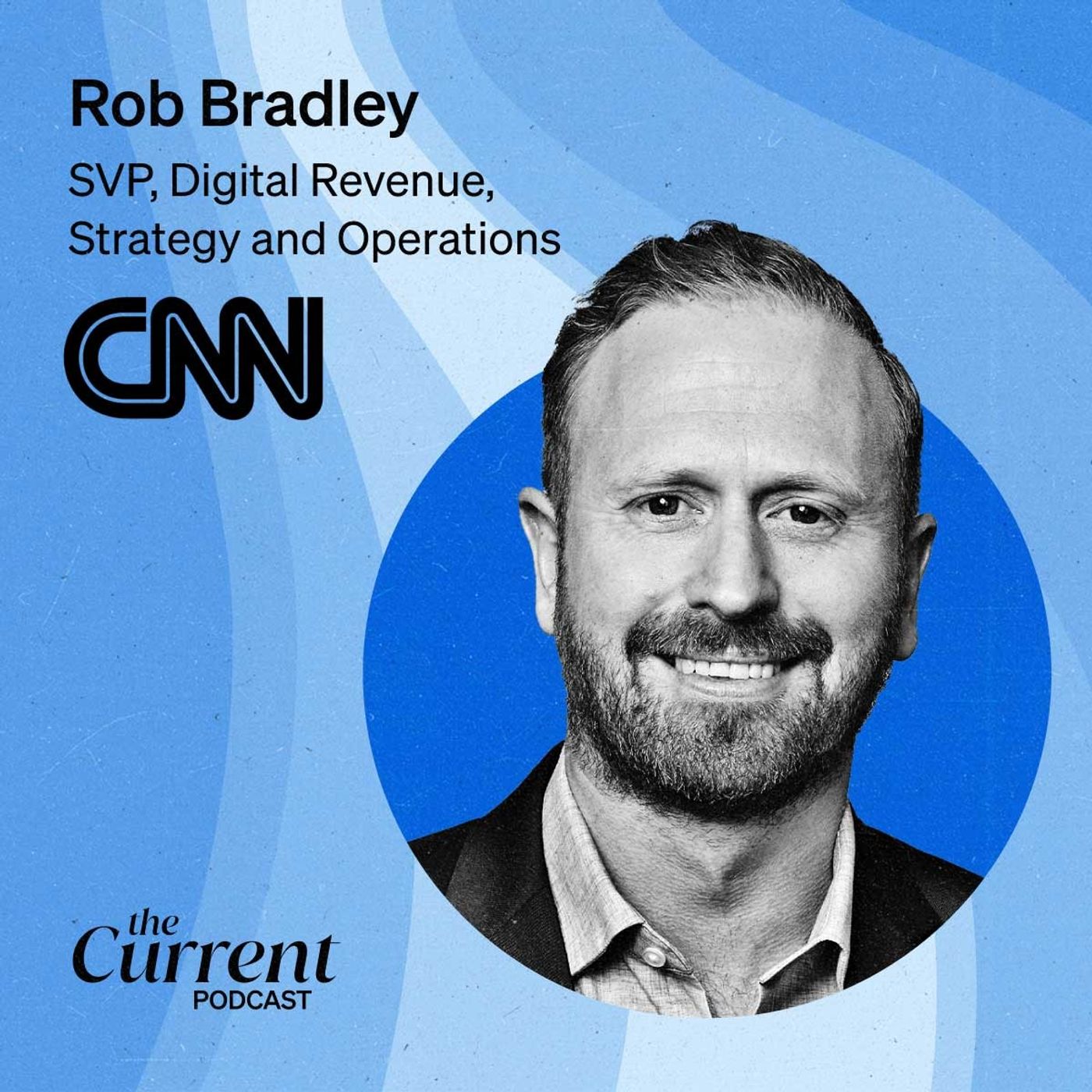
The Big Impression
CNN International Commercial’s Rob Bradley on evolving a legacy media company
00:28:32
In this episode of The Current Podcast, we’re joined by Rob Bradley, SVP of digital revenue, strategy and operations at CNN International Commercial. He shares how CNN has evolved far beyond its broadcast roots — and how it’s now helping brands tell more impactful stories across everything from connected TV (CTV) and free ad-supported television (FAST) channels to TikTok and LinkedIn.
Loading summary
Transcript58 lines
- [00:00]
Ilise Lafring
Damien.
- [00:00]
Damien Fowler
I'm Damien Fowler.
- [00:02]
Ilise Lafring
And I'm Ilise lafring.
- [00:03]
Damien Fowler
And welcome to this edition of the Current Podcast.
- [00:10]
Ilise Lafring
This week we're thrilled to be joined by Rob Bradley, the senior vice president of digital revenue strategy and operations at CNN International. Commercial.
- [00:19]
Damien Fowler
Now, Rob has played a key role in CNN's evolution over the last 10 years from a broadcast powerhouse into a.
- [00:25]
Ilise Lafring
Cutting edge digital platform that includes Launchpad, CNN's AI powered advertising tool that's been smarter, more targeted campaigns for nearly a decade.
- [00:36]
Damien Fowler
From global banks to tech giants like Samsung and even governments, Launchpad has helped brands show up on CNN's platform in ways that are both innovative and effective.
- [00:45]
Ilise Lafring
So in this episode we'll explore that journey, how Launchpad got its start, what it's become today, and how CNN is helping advertisers navigate a complex digital world using deep audience insights and data at scale.
- [01:00]
Damien Fowler
So let's get into it. So, Rob, let's start by talking about, you know, Launchpad. Not everyone's familiar with it, but it's been designed to help brands market themselves to CNN's audience. So I know it's eight years old. Can you talk about the tool and how it's evolved to this point?
- [01:20]
Rob Bradley
Yeah, I mean, to take a step away, media companies and news brands today need to be so much more than just a platform where someone can serve a traditional ad to reach an audience. Of course we do that and embrace that, but our audience exists to, you know, in a multitude of different environments. Now of course, O and O, which can be TV to digital assets, websites, but of course FAST and CTV now and of course they're all across social, which means that when we're working with brands today, we need to have tools that enable us to reach audiences in all of those environments. Essentially our clients expect that from us. So we have to innovate to be in those places. And also of course, by utilizing areas our audience exists in today, such as social, means we get a broader reach. So we try. And of course a lot of brands are nervous about social and of course we do compete somewhat, but I like to flip it on its head and think about how can we use audiences on off platform environments to our advantage. So Launchpad essentially is a good example of that. It's an in house social media agency, essentially utilizes latest talent. I would say I think people do come first that really understand the latest technology to help us understand our audiences both on and off platform that did launch really just reaching audiences in places like Facebook, but now it's across all the meta platforms. YouTube, LinkedIn, TikTok and more. And over the years that team, through utilizing technology of automated processes, we understand sentiment of what people are consuming, how they feel against our content that we distribute both on and off platform. And then we use those insights to indeed empower the next piece of creative, let's say. And it feeds into our brand studio, which is called CNN Create, which actually touches about 70% of our campaigns now. So it's all about the way we go to market, is really about selling stories and content and then utilizing the impressions and volume of scale we have around that in a smart way.
- [03:15]
Ilise Lafring
And today CNN parent company Warner Bros. Discovery has only massively grown since the launch of Launchpad and has so many touch points and audience insights. You have the entirety of the Harry Potter World and DC Comics to CNN News. How do you make sense then of all that data and how does it come together to benefit a Launchpad campaign?
- [03:41]
Rob Bradley
So first of all, I'd say there's still a job to do and an opportunity of gathering all that together because there's so many touch points that both can power the marketing of movies, let's say, as well as the targeting of campaigns. And those targeting of campaigns can of course be owned and operated environments. So again, we can push audience insights into social platforms to target through tools like Launchpad. But ultimately by understanding who our audiences are, means that we can do three things. We've launched a product called wbdaim basically which was actually born out of cnn, used to be CNN aim and it stands for Audience Insight Measurement. And really it means that of course we talk about targeting quite a lot, that's where the rubber meets the road. But really, as a severe successful media company today, you need to go to market with insight led sales to use that data to do it, to inform sales to the clients, proving up front why you've got the right audience and why they should trust you. And then of course there's the targeting the audience piece and then there's the measurement of proving what you have done has worked. And so that AIM piece all comes together as one kind of data play. And where we have had success of bringing that together so far internationally is CNN Eurosport D in the UK and TNT Sport in the UK now exists in one platform. And also of course that's really good for programmatic as well, because we can push those audience insights, put them into the marketplace and enable brands to buy programmatically against that so very much in the programmatic space. We're aiming at the more premium PG programmatic Direct marketpl.
- [05:16]
Damien Fowler
Can I just ask you off the back of that, do you see news as a sort of more as part of that whole package or it's not a sort of siloed separate piece of what you're offering?
- [05:28]
Rob Bradley
Yeah, that's a really good question. I think if you're a brand that wants an engaged audience, right. And you want to be part of a conversation that's happening today or drive a conversation, news obviously makes sense, but of course I wonder if this is where you're going. News environments are challenged at the moment in some respect. There is a prevalence of I think unfair news avoidance in the industry, particularly with very blunt keyword block lists that are being used which is pretty well covered in the press. And that is a major challenge. However, sports has a similar issue, right, because words like shoot and shot and attack are used all the time just as they are news. So actually sometimes people think of news straight away. But there's a broader issue with that. And the reason why I mention that because actually news and sports is both live. It's what's happening today, its audiences, certainly we sell. It can be sports enthusiasts across both platforms at the kind of broader end it can be business decision makers, it can be C suites, it can be high net worths bringing those audiences and ultimately linking it to what WBD has an abundance of is very premium, very trusted, very brand suitable environments you could say. And that marketplace of WBD and WBD Connect is the programmatic marketplace will keep, keep growing.
- [06:47]
Ilise Lafring
Now you talked about how you're bridging basically social to Programmatic. Have you seen one success in that so far and interest from the brands you've been working with?
- [07:00]
Rob Bradley
I think it's basically, you know, I was quite an early adopter of Programmatic in the belief that it enables the human led work of media owners to grow. And that has been proven in embrace technology to do what it does well. Highly scaled targeted impressions that started on the website that say ever increasing on CTV and fast for us joining all that together, putting our own data into those environments, trying to work at the premium end of it so that we get the yield up and really embracing a technology to do that married with, you know, what only we can do best, which is linking directly with a brand, understanding a brand on their agency. In many markets we go brand direct though, really understanding what their challenges are and what stories they've got to tell and then coming up with this multi platform strategy that can include Programmatic, maybe at the mid funnel or the performance end, but also Linking it to a full multi platform strategy which may include CTV, fast web and TV. And actually 80% of our direct campaigns include all of those platforms and include that social piece. And I think the reason why I've sort of spoken about social and is I think people often wonder about how we can utilize it to make money. But actually it's a really important part of our business where we're kind of using the best of what programmatic can offer, the best of what social can offer and then the best of storytelling.
- [08:27]
Ilise Lafring
Yeah, perhaps I would love to hear about a brand that perhaps you guys are have been working with and how you are really measuring that success and curious if any platform or audience perhaps outperformed your expectations.
- [08:43]
Damien Fowler
Sure.
- [08:43]
Rob Bradley
Well, I spoke about linking CNN storytelling that could have social impact in some way or drive conversations or change opinions. And that is when we have a really strong partnership with a brand. That's what we do for them really. It's about how can we change perhaps a view or, or input a view into someone's mind that they may not have had about a brand based on facts or something that brand is really genuinely doing to try and make the world a better place beyond just perhaps selling a product. So you know, CNN embarked on a really bold program with Samsung recently. It was exactly a campaign that I said truly multi platform, include tv, digital, social, so use Launchpad for off platform distribution. And it really highlighted how Samsung technologies are being used to make the world a better place. Everything from the way they trawl the ocean to dig up fishing nets and some of those fishing net parts are used in their mobile phones to a great story around how their TVs had access for the hard of hearing. Where we had a gentleman that was on stage with Beyonce who was doing sign language while she was performing, who went viral because he's an incredible character that really can literally make you hear the song using his hands. It's amazing with his movements. And he uses a Samsung TV at home because he feels it gives him what he needs considering that his hard of hearing challenges. So all those stories, it does involve a product, but really it's about a person. A human led story. We know that human LED stories cut through a cluttered Internet more particularly if they have some sort of emotional response that they offer ie can make you sad, happy. And ultimately the goal was to shift opinions about that brand. So looking at the data that we have, but 81% agreed that seeing the branded content that Samsung made made them think they were more a socially responsible company. 86% agreed that the branded content told them something about Samsung they didn't know before and 84% agreed the branded content showed the value of Samsung as being more attention grabbing. So there's these hearts and minds movements that these campaigns at the brand level kind of goals that they have and that's really what we did with this campaign.
- [10:53]
Damien Fowler
That was great. Yeah, that's an interesting kind of convergence of values and emotion and storytelling. But if we could sort of maybe look at some of the takeaways from the launchpad campaign and then get bigger from there. How did you measure success? I know you just mentioned some metrics right there for Samsung specifically but you know, did any platform or audience outperform your expectations?
- [11:20]
Rob Bradley
Yeah, I think we try to be platform agnostic somewhat when it comes to what the campaign goals are. So you know, take within social, if the campaign of course is reaching consumers, we're more likely to use meta talk environments, YouTube. However, of course if the campaign is more skewed towards a business audience, LinkedIn is more increasingly used. So it's not necessarily that one platform surprises because we set up the campaign at the start to meet those specific goals of that campaign. And within Samsung, of course this was a consumer campaign, so those consumer platforms were reached and actually for that TikTok did provide, I think it was one of the first times that they'd ever worked with TikTok with a media owner and they trusted us because of the relationship that we have to deliver that campaign on TikTok. So, so that did have, for one of the first times we've used it a really important play within our overall multi platform strategy.
- [12:15]
Damien Fowler
You mentioned insight led sales. That means you have a good view of audience segments. Could you talk a little bit more about that and how you think about audience and how you break it down. And then the second part of that I guess is was there any unexpected reaction or behavior response from campaigns from these different areas of viewership?
- [12:40]
Rob Bradley
Yeah, I think we've had to get really sophisticated with understanding audiences and linking who our audience is with our content. It touches on something I was talking about previously when it comes to the challenges around news and news avoidance and brand safety and brand suitability. But that doesn't mean that all politics content should be blocked, for example. So I suppose there's the traditional side that we have of understanding our audiences of okay, this is a someone that's interested in reading a lot of business articles around finance and then we can layer in personal identifying data where we have it and define and target that audience. But now we also add a layer in. We build a tool called sam, which is a sentiment analysis moderator, which also now kicks out a positive and negative sentiment score on our articles. So we know that if an article is about a scientific breakthrough, for example, that's a cure for a disease, that that may have innovation, technology may be very pos, but actually the word disease might have been blocked if you're using a more blunt keyword list. So with our clients, they trust us to use SAM to use more positive and negative targets. So we layer the kind of contextual element as well as the data element and that runs on pretty much every single one of our direct campaigns.
- [13:56]
Ilise Lafring
Very cool. It sounds like a use of AI right there, if I'm not mistaken.
- [14:00]
Rob Bradley
And it's an interesting one because we've had it for about five years and it is AI is machine learning. And the reason we built it is because ultimately it unlocks more impressions than perhaps some of the off the shelf tools do.
- [14:11]
Ilise Lafring
Very true. Because also you're not just selling content to, you're selling like a sustainable digital business. What would you say is your North Star when balancing that audience trust with monetization being CNN is such a storied publication and company with multiple digital touch points?
- [14:39]
Rob Bradley
Yeah, good question. I mean, look, first of all, CNN's a global brand that's built on trust. We have some of the world's greatest journalists here. And in a world that's growing in mis and disinformation, it's vital for society that they can rely on a trusted voice and reputable news organizations like cnn. So I suppose our North Star is to of course lead with that trust, but then make sure that we're essential for customers every day. So there's this sort of trust, but then there's also a premium environment and experience and that kind of goes hand in hand with advertisers going back to that storytelling piece or even putting an ad in an environment that has news. Brands want to be in a trusted place. So we really need to make sure that we're premium and that we're trusted first and foremost. But then also we need to embrace new ways of driving revenue. We can't just rely on advertising, which is why we're embracing this direct to consumer business model to succeed over long term, like linear and TV is still really, really important, as of course is web. But exploring new digital kind of monetization models that complement all those revenue streams are really important. So look fast is one of them and CTV Audio is one of Them we have CNN underscored in the US which is kind of product recommendations and review sites. So E commerce and of course you know as mentioned the subs business, this direct to consumer business we're building. So we have to kind of disrupt ourselves and embrace that to build a sustainable future.
- [16:10]
Damien Fowler
Rob, your role is, you know, you work for CNN International. So you look at the big picture obviously and this is about a big picture question here. You know, it's global but it's also personal. So how do you think about that interaction building digital products and content that both may be relevant at scale but also have to have local impact.
- [16:31]
Rob Bradley
I'll give you a kind of recent example. We announced plans to launch CNN Weather as our first standalone digital lifestyle product. Very recently the upfronts over in the US So it's about expanding our content beyond news I mentioned we already have travel, business style and tech and all of these different areas but essentially builds on what we're good at, which is best in class, live coverage of what's happening. Immense resources dedicated on the ground locally in this instance can of course be weather reporting and visual storytelling around weather. It's a way for CNN to bring these major weather events so it may happen locally. So relevant information locally but also huge interest globally. Think about the LA fires as a mass audience around the world, but also allows just simultaneously up to date weather forecast to help consumers get up to speed of what's going on there each day. And that's just a good example of something we've launched recently that has that both local, local, national and global relevance.
- [17:30]
Damien Fowler
I think it's always been a staple of good local news. You know, talking about that right here in the US right now there's some challenges to public broadcasting and one of the things that they have are these local stations that inform people about local weather events. And that's crucial especially in like the tornado belt for instance. So I think weather obviously is is key and it's interesting to hear you say that. You know, obviously this is a fast moving space, the digital kind of commercial space. As you look ahead, what are the biggest opportunities you see for CNN to lead here in this space? You know, I guess AI is one of those things, immersive content. What else are you thinking about?
- [18:10]
Rob Bradley
Well CNN's synonymous with video led journalism. Ultimately we're a video company that started on cable and is now in all these platforms that are ever expanding. But really we obviously want to continue and focus on that legacy if you like. So you know, expanding our current subscription offering in the fall, as you guys say over there, autumn, as we say across the pond in the uk, essentially the launch of a new streaming product that's due ultimately in the US then, but will soon be rolled out internationally as well. Providing a kind of individual one stop place where audiences can access our journalism. Original programming. They can choose from live channels, catch up on features and video on demand. And it'll be on all platforms for mobile apps, CCTV and the.com websites. And it's going to be part of a new subscription which is called CNN's All Access subscription. So an example of embracing streaming video layers alongside the other channels and of course embracing the fact that our audience exists on mobile. Vertical video has been a huge investment for us. It's what consumers want. We understand their behavioral patterns. So we've basically grown our vertical video capabilities across our platforms and will be a key pillar, you know, as we continue. I also think it's about fostering direct relationships with audience, which is something that social does really well. Actually, we've already established some of these areas. Take Anson Cooper's All There Is podcast, which is fantastic. It's around grief, but literally has led to thousands of voice notes and interactions with Anson himself. So much that he built. And we built an online grief community which essentially is where you can hear voices and other stories of people respond to comments and stories of their own grief. And there's a really engaged community around that. And then of course podcasts and audio exists in audio, but more and more they're being recorded. And actually if you look at all there is podcast as well as the assignment of Audie Cornish and chasing life with Dr. Sanjay Gupta. They're all video now as well and available there. So. So I think you're gonna see news brands like seeing and leaning into this kind of personality led kind of opportunities as well.
- [20:18]
Ilise Lafring
Yeah, that's really exciting. The streaming space has exploded obviously and I'm curious how CNN All Access is going to differentiate itself enough or stand on its own in order to get those subscribers.
- [20:39]
Rob Bradley
Yeah, it's not necessarily a part I manage directly, to be honest with you. But you know, I say, you know, cnn, it goes into another, something we spoke about previously, which is around, you know, the history of the brand, the legacy of the brand, the power of a brand. Right. No one can deny that CNN is a brand that doesn't touch all corners of the world and it's still highly, highly relevant. And it's funny when you look at sometimes when you use the, you know, a legacy brand or traditional media it's almost used in some sort of negative connotation. Stay with me because you asked me a question. I'm going in a different direction. But like the, you know, sometimes it's using this kind of negative connotation. But if you look at like other areas like luxury, Hermes or Rolex, legacy has a value. Auto, Rolls Royce technology, I would say even like IBM or Apple, even their legacy is important because that brand stand something as, as it does for cnn. So you know, those brands also innovate and make sure they're relevant, you know, for today. And I'd say streaming is just an example as well as podcasts as well as what we're doing. Launching the weather app is an example of CNN disrupting itself, making sure it's relevant today, but as well not giving up on that legacy of who we are because that brand stands for something. So how are we going to stand out is having some of the best journalists in the world, you know, having one of the biggest brands in the world and making sure that what we do is authentic, fact driven and trust based.
- [22:16]
Damien Fowler
That's great. So we've got a few quick questions here to hit you with to close this out. So, all right, first off, what brand or publisher is doing something unexpected that you admire?
- [22:30]
Rob Bradley
Arnold Schwarzenegger's Pump Club. What?
- [22:34]
Ilise Lafring
Love that.
- [22:38]
Rob Bradley
You should have seen my comms team's face when I said I was gonna say that.
- [22:44]
Ilise Lafring
He's like, yes.
- [22:47]
Rob Bradley
He firstly, I know this is an audio recording, not a video recording. I'm not, if you can see me, I'm not someone that is a bodybuilder but I do really, I don't know, I do really like Arnold Schwarzenegger and actually you know his Pump Club, I use it for the emailers but there is a podcast as well. He's got an emailer. He's utilizing, you know, an ever growing medium, let's say from sending out email news. He uses his personal brand to form a relationship with an audience. His heritage in fitness, the rise of emails, as I said. And he shares really valuable information to a defined audience. It's like it's really fact driven, it's really science driven today. Which proves we do read it. He was reading basically sharing a study on potassium and the benefits of increasing your potassium intake and how it can have on the heart. So he's got lots of links to real studies. The commercial model does mean he's trying to sell you a few things along the way as well. But I find it genuinely interesting and I think it's a great use of someone using all these tools that are available today to connect with an audience.
- [23:53]
Ilise Lafring
Yeah, that's a fun one. I like to.
- [23:54]
Damien Fowler
I love that there's one guy who knows how to connect to an audience. It's Arnie.
- [23:57]
Rob Bradley
Yeah. And you know what, I saw him in New York last time I was there and he was sitting two meters away from me for at least two hours. And I didn't have the guts to say I was happy just being in Arnie's presence. Yeah.
- [24:11]
Ilise Lafring
Amazing. If you could fast forward five years, what would you want CNN's digital presence to. To feel like to a 25 year.
- [24:22]
Rob Bradley
Old, I mean, look super relevant, you know, both from a personal point of view to also giving that individual information they need to know or should know about what's happening in the world. I think that, you know, you don't want it too personal so that people are in their record chambers. Let's say it should be video, led and of course it should be accessible on the platforms that that person wants. It should be ubiquitous, but it also should be predominantly on owned and operated platforms. It's important that we continue to invest in the core. And I know we spoke about social. It'd be important to invest in the core. So it should be owned and operated platforms that CNN has predominantly.
- [24:59]
Damien Fowler
And finally, late night breaking news alerts or morning deep dive newsletters. What's your personal preference? Or should we say news ritual?
- [25:08]
Rob Bradley
It was a good, you know, it sounds like a question as a news kind of person, I should think about all the time, but I've realized I go so deep in the mornings I'm like, you know, within 15 minutes I've checked obviously CNN. I've probably checked BBC, the Guardian, New York Times. I check Fox News to see how they're approaching a story. And then I'll, and then I'll go into podcasts on the way to work and then I'll probably check things like the Economist and, and things like that to go deeper, you know, as I've got more time. So it's kind of, I kind of utilize everything and I go pretty deep, but it probably tails off towards the end of the day. I think I've had enough by the evening and that's more when I want to chill out of a glass of wine and watch a movie and have some nice food.
- [25:52]
Damien Fowler
So I. Elise, what was your, so what was your take? What was your big impression from that conversation with Rob?
- [26:00]
Ilise Lafring
Yeah, you know, my big impression was really how. And this isn't Surprising from cnn, but how they lead with storytelling when it comes to their managed brand campaigns. I love the example that he gave with Samsun who found when they managed their campaign across multiple digital touch points, they found that the audience, 86% agreed that branded content told them something new about Samsung that they didn't know before. And that's really powerful when you're a brand like Samsung.
- [26:35]
Damien Fowler
Yeah, I thought that was very telling. And I think, you know, even more the idea that CNN is really looking at audience and audience reaction not just in terms of its own content, but in terms of the branded content. I thought that was also very interesting when we asked him about campaigns that have kind of caught them by surprise. And that idea that CNN International had launched a campaign that was targeted specifically at young Democrats, a young affluent demographic in the city of London. But actually when they looked at the back end, looked at the measurement, it was hitting beyond London, outside of London, to empty nesters whose kids had already left home. Which was a surprising insight, but also allowed him to kind of pivot the campaign to target that group. So I think the idea of audience strategy being nimble with audience strategy and the fact that the digital kind of frame allows a brand like CNN International to be much more nimble right now, I guess that's, that's an interesting takeaway for me.
- [27:39]
Ilise Lafring
Also it helps that you have the breadth of data that a company like Warner Brothers Discovery does have across its multiple properties.
- [27:52]
Damien Fowler
And that's it for this edition of the current podcast.
- [27:54]
Ilise Lafring
This series is produced by Moulton Heart. The current podcast theme is by Love and Caliber. The current team includes Cat Fesse and Sydney Cairns.
- [28:03]
Damien Fowler
And remember, if you look at like.
- [28:05]
Rob Bradley
Other, other areas like luxury, Hermes or Rolex, legacy has a value. Auto, Rolls Royce technology, I would say even like IBM or Apple, even their legacy is important because that brand stands for something as it does for cnn.
- [28:21]
Damien Fowler
I'm Damian.
- [28:22]
Ilise Lafring
And I'm Ilise and we'll see you next time.
- [28:25]
Rob Bradley
It.