← The Big Impression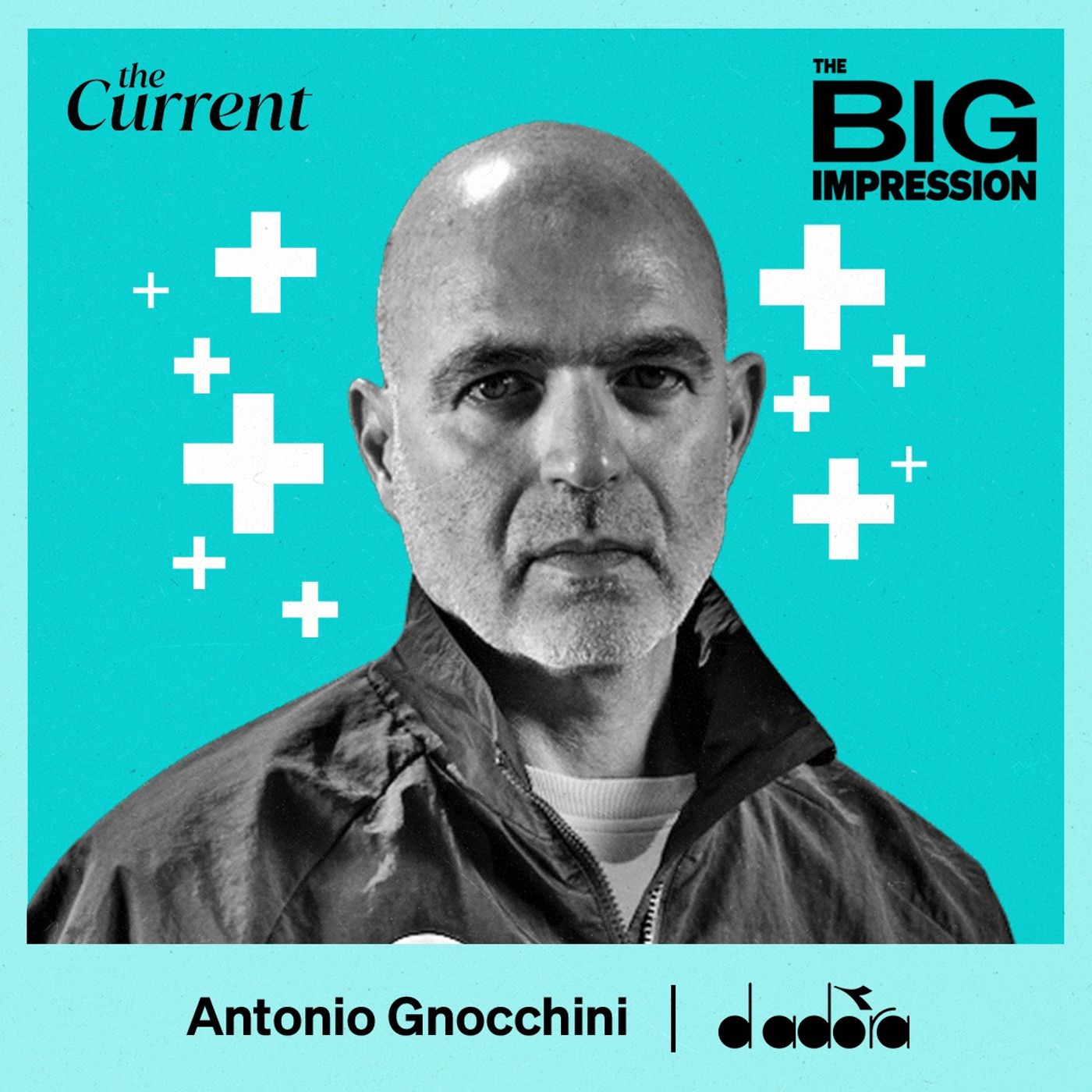
The Big Impression
Diadora’s Antonio Gnocchini on the power of discovery
00:29:24
Diadora CMO Antonio Gnocchini joins The Big Impression to discuss winning the Paris 2024 Olympics as a challenger brand and why “discovery” beats heritage in modern sports marketing.
Loading summary
Transcript38 lines
- [00:00]
A
I'm Damian Fowler and welcome to this edition of the Big Impression. Today we're looking at how a heritage sportswear brand carved out its own spotlight at the Paris 2024 Olympics without being an official sponsor. My guest is Antonio Gnocchini, chief marketing officer at Diodora, the iconic Italian brand known for its made in Italy craftsmanship. In the lead up to Paris, Antonio and his team launched a global brand campaign built around Diodora's roster of Italian athletes from track style, Larissa Yappacchino, defensors and speed skaters. All while showcasing innovations like the Atomo running shoe. That's the first high mileage running shoe made in Italy in three decades. We're going to break down how d' Adora timed its campaign to maximize the Olympic moment, how it differentiates itself from giants like Nike and lvmh and what this strategy says about, about building awareness in a crowded, high stakes marketing landscape. So let's get into it. Antonio, can you tell us about why the Paris Olympics was such an important moment for Diodora, you know, as it sought to elevate its brand name again?
- [01:18]
B
So if you are a multi category sport brand, Olympics is certainly, you know, the big event, the main event, your main catwalk of the main show and you prepare for it for a long time because you need to be in one of the most competitive environment with the best product, competitive athletes, everything needs to be perfect. And it's also one of those moments in which you can go deeper with attention with, with, with messages. If you are serious about sport and you want to communicate sport brand values, what you really stand for. It's not easy, especially today in, in moments in which the attention is not much, few seconds from everybody channels are very fast and flatten messages very easily. The Olympics is a moment in which for a few weeks you have the attention, you have people connected and engaged, you have people who care. And so it's a perfect environment to talk again about what you stand for. And so going back to the Olympics was a statement to say we actually are a competitive sport brand, a performance brand, not only lifestyle of it. And so yeah, it was such an important environment for us also. This Olympics was maybe one of the first one that I've seen since I started doing this job when you could see some challengers, brands activating and being visible. In the past this was really an event only for main sponsors and official sponsors mostly. Now this is a moment of challenges and if you find the right way and if you had a good connection with your Athletes you could be doing a successful marketing campaigns and actions.
- [03:35]
A
That's really interesting to hear you say that and I think and I'm curious to hear your thoughts on this is the kind of media environment that we exist in now. Does that make it possible for, for challenger brands to find a way to reach audiences that they otherwise might not have been able to find? You know, back when it was, you know, the main TV channels and you know, big glossy mags. There are more niches now in many ways.
- [04:01]
B
There's a very interesting report that you know, business of Fashion and McKinsey release every year and the most recent one was a study from McKinsey in which they were showing displaying how the sport market which was dominated by only few incumbents and you could see that at Olympics still today, the most recent one, the usual suspects are dominated most of the sports. But in these past few years there is a change going on in which incumbents are really under pressure from challengers brand in the sport industry. They're gaining momentum, challengers are gaining space, gaining market share and also visibility. And you can say that maybe this is linked to the explosion of running as a global movement. But it's not only that. Running certainly has contributed because running is one of those categories that is really extremely democratic. And yeah, sure, track and field main athletes, famous names help, but you can become a successful running brand without having only, you know, the most amazing 100 meters runners. You can be successful by working in other ways and you, you see brands starting to become more visible in, in through running in the sport industry.
- [05:48]
A
What's interesting about Diodora is that it has this very significant legacy as a sports brand. I mean, I think back to my childhood when I used to absolutely love Bjorn Borg. And as soon as I saw the name d', Adora, I remember, you know, Borg and of course there's other soccer legends like Roberto Baggio or Francesco Totti, but in, in recent years it's been a little bit maybe eclipsed by bigger brands that you, you just mentioned. So you know, you're a challenger brand, but you're also a legacy brand. You know, could you sort of explain a bit more of the context around the history of the brand?
- [06:24]
B
If you are passionate about sport, when you, when you land at the Adora and you visit the museum, it is a kid in a candy store. That was my experience. The museum is. You could see in real life the objects of desire of your youth. You know, in my bedroom I had posters of all these heroes and there's a moment There's a scene in King Richard with Will Smith in which you hear for a moment in the movie, you hear Venus and Serena Williams coach telling Richard Williams to wait on the Nike offer. Because the perfect offer for any tennis player at the time was the one Jennifer Capriati was getting from d'. Adora. When I watched the movie, I was like, wow. So we were really the tennis brand and the granddad was in relation with athletes, especially tennis athletes. We were the tennis athletes brand. What happened? I think that the brand the company really focused for few decades on product, product marketing, sports marketing contracts, traditional marketing actions. While in the meantime other brands, other sport brands have become very sophisticated, very innovative in their marketing strategies. Films were Nike's main language and they were exciting product of their marketing department. I think the brand here, Teodora has been focusing on other things and lost the engagement with consumers globally. And then for a few years, as I was saying, the focus have been really on capitalizing on its legacy and becoming more of a lifestyle brand. But in reality the market can tell you that if you're not serious about sport, you lose your credibility as a lifestyle of sport brand.
- [08:43]
A
Yeah, so the kind of the new campaign or the more recent campaign is about reasserting that that sports connection. How else would you define the brand as it is now?
- [08:57]
B
I think that what we needed to do. So the first thing that I wanted to do is to prove that the sensation, the feeling that we had was correct. So we run a long and insightful brand health monitor study. And the results of that study was showing that yes, we were a legacy brand. People recognized the name, but they couldn't really link it any longer to specific performance product and they were not buying performance product any longer from the Adora. So we were also associated, linked to values like being Italian. But at the same time it was this idea of romantic, Italian, quaint, Italian, traditional. If you want to be successful in sports, you have to talk about innovation. You have to be recognized for your capacity of being a technological advanced company. And so the main effort for us in the beginning was to go back into making sure that our research and development center was up to speed and that the marketing department was capable of telling these type of stories. Because these stories were in fact very important for our consumer, for our focus consumers. The focus of our target, a younger consumer that wanted to talk about sport and wanted to be capable also of discovering innovative brand sports. So even if you were not one of the main incumbents, by being authentic in sport, especially in running and in other Categories. By being authentic, we could engage with this young consumer who was interested in discovery new brands that have an innovation angle that was really relevant.
- [11:12]
A
Yeah, that absolutely makes sense. I'm interested to hear you talk a bit more about that audience group that you really wanted to reach and the profile of that group. And presumably there's an element of, like, conquesting going on because you've got to, like, get them from some of the bigger names that we've already talked about.
- [11:29]
B
Yeah. As I was saying, the. In running has become one of those category, goes beyond just track and field, goes beyond the daily jogger, goes beyond. It is really something that touches wellness. Fashion is playing into running a lot. Everybody is doing running collections today, not just the usual suspects. We wanted to make sure that in this environment in which you had a lot of noise, we could be recognized as authentic, as separate from the noise. So we wanted to talk with a niche and then make sure that that authentic young athlete was putting the mileage. So it wasn't talking about running, but putting also the miles and the sweat in running. Those consumers that were scheduling all their weekends around the run, around the race, so the real authentic runner could recognize that we weren't distracted by all this running noise. We were serious. So our messages were. We run a campaign that is called normalized eye mileage. It was directed only to that type of consumers that could recognize the acts and the gestures and the typical struggle of that type of runners, even if that meant alienating for a little bit a wider audience. Because we know that with the wider audience, we had less capacity of, you know, reach. We didn't have the muscle for them. But we see today that when you're authentic and strong with a that type of niche, that niche creates expansion and creates influence. And then you start to resonate also in other. In other markets and in other. And with other type of consumers.
- [13:39]
A
Yeah. Can you talk a little bit more about how you set the stage, you know, leading up to Paris, to build that buzz that's going to resonate across all these different outlets?
- [13:51]
B
Yeah. We decided, as you can imagine, getting attention is extremely difficult, especially today. The new channels are flattening everything, and everything is so few fraction of a seconds between your thumb and in your face. It's very hard to go deeper with messages. And if you want to go deeper, you need to find ways in which you. You can. And for us, our strategy was, okay, we need to stop their attention, stop their eyes for longer.
- [14:35]
A
You know, I'm curious now to see, given the kind of media Exposure that you started to establish what, what did it, how did it play out during and after the Olympics and how did you capitalize on it?
- [14:48]
B
Essentially, so we monitor during the main events at the Arsenale, we made sure that all the guests and all the people, all the stakeholders of sport were well informed and also capable of giving the right message out with the proper information. Then we started collecting and amplifying this type of information, then feed them also to our partners in the market, retailers, key accounts. All of this helped us make sure that the product was properly displayed and also was selling out in the right moment in time. And by being nimble and agile and fast, we had a great success on this. Our main, the content that we had created, we noticed that they were getting a completion rate of 97, 98%. We never had completion rates so high. So we knew that we had something that was resonating. We only needed to be insisting on it and fasting the reaction by feeding athletes, giving the same content to them, and that's it.
- [16:07]
A
And you know, how did you. And you mentioned that 97% completion rate on videos and things like that, that's obviously a, an important metric. What else did you do to kind of measure brand buzz? And then maybe then how did you connect that to sales?
- [16:22]
B
Every year we do a brand study, a brand health monitor, in order to understand the feeling and how our values are perceived by consumers. If there is any change in what we're doing that is affecting their point of view on the brand, then we do social monitoring on a daily basis, especially when we post and when we have athletes performing our.com and a good connection with key accounts get us data on results and how what we do resonates on the market. That's pretty much what keep us informed and get us a good understanding of what we're doing.
- [17:06]
A
How did this push around Paris help define the current market right now? And what does it also tell you about where you should build next?
- [17:16]
B
It is a confirmation that it is a challenger moment. It is a confirmation that if you establish a conversation with your consumers, you can expand and you can gain market in a market that was completely polarized and dominated by only a few brands. It is also confirmation that if you are authentic at times, maybe even very vertical in your attack to the market through the category. You know, we don't do every sport. We only are focusing now on few sports, but to do them with authenticity. This is also resonating a lot. And you have to be ready for sport moments, which means every sport moment not only Olympics, even minor sport moments, if you're capable of being ready and capitalize on it with your athletes, it's a great tool.
- [18:20]
A
You talked about using innovation, being on the cutting edge to kind of reach a new generation of fans. But do you also still infuse that with some of the golden age narrative that d' Adora has?
- [18:33]
B
Yes, we do. We balance, we try to balance the messaging in that sense. But I think what I've learned in these past few years here is that this is no longer the sneaker culture generation where you could go and have long session and education and talk about the history of that space specific model and you would have this passionate nerd of sneakers that would then storytell the whole thing to all his friends. And everybody were buying into it. Everybody was buying into it. I think every time we preach about art history, every time about we try to give lessons, especially the younger generation doesn't seem to be interest and doesn't like it also. But what we see that they like is what they discover. So we have to be ready with the right information. We have to give them a story that is compelling in terms of product, in terms of innovation, and then let them discover the history behind it, the art, let's say the origin of the whole story. And where is this coming from? So maybe one thing that I'm seeing that it's also learning is the fact that brands, I've seen brands just trying to capitalize on the fact that one product story has to be successful because it's linked to this specific moment in time and you consumer should know about it and should buy about it because of that. It doesn't really resonate to consumer any longer. You need more than that. And so yeah, I love that. I think it's.
- [20:31]
A
So interesting to hear you say you can't preach to consumers, but you can allow them the opportunity to discover. I think that's such a great insight. I think that goes for any storytelling, to be honest.
- [20:45]
B
I think you're right. But I think it's specifically more valid now in which I believe that you need to have your story perfect and you need to have your. The details of your story needs to be really well done. People think that you can simply post every second and be very fast in making sure that consumers will see fresh things every second, digest it very quickly and then post new ones. Especially for us, this doesn't prove to be right.
- [21:24]
A
I had a good guest on this podcast a few editions ago who talked about how brand messaging is in everything the tactile element of the brand. He used Harley Davidson as an example. You know, it's not just a bike. It's everything you encounter, you know, in the, in the, in the showroom, the kind of like the quality of the materials. And I'm getting that sense when I look at Diodora and Diadora, the Diodora site, that their brand messaging comes through in the product line.
- [21:56]
B
This is very val. Very true and very valid. Again, if you want to be serious in your relationship, in your conversation with that niche audience, it means that every touch point, every single touch point need to tell something about that story. Otherwise they will immediately perceive that it's not authentic any longer.
- [22:22]
A
So let me ask you, you know, big picture here. So for marketers listening, what's the lesson here? You know, that you can tell you came from Nike, but you now you at Diodora. So you've seen what the big, you know, heavyweight brand has done and can do. But how can a smaller brand, like kind of, what can, what can a smaller brand learn from your experience? I guess, you know, whether it be about future forward channels like CTV or retail media or programmatic or social. How are you kind of. Sorry, let me just ask you a simple ask that more simply, what can a marketer learn from your experience trying to market this, bring this brand back into view?
- [23:05]
B
I think the most important thing for us has been to be capable of focusing on. On doing few things and do them perfectly, or at least as perfectly as we could do. You are challenged to be very active and be reactive and also try to capitalize on every single product you have in the line. And every sport that is played is an opportunity of doing something. The reality is, if you want to start to resonate, you need to establish a valid conversation with your core focus consumers. And to do that, you need focus. And this means also at times being capable of saying no to things that you could be doing or that you get pressure from anybody or everybody in the company to do and also the pressure from the market many times. Again, let's remember that this was a market in which you were supposed to drop a new product every few weeks. So we don't do that. And we try to talk about innovation only when we have real innovation to communicate. And then when you do build an authentic story and a strong story with every touch point connected in the right way. This to me proved to be successful.
- [24:44]
A
Going back to Paris, that was obviously a huge high watermark for sport last year. As you look ahead to next year, is there anything that's on your calendar. That's kind of like one of those moments where brand and moment kind of have that synchronicity.
- [25:01]
B
Olympics is not something that you prepare the season before. So next Olympics is already something that we are studying, preparing for, sweating about. We have to prepare all our innovations, we have to be ready with the right messaging, we have to find the right athletes and we have to have a strategy on what type of messages we want to focus on. So LA Olympics is certainly something that we look at and we dream of.
- [25:40]
A
Let me turn to the last section here and just ask you some quick fire questions, if I may. One of the things I wanted to ask you is is there a sports marketing trend that you think is overrated?
- [25:51]
B
Maybe there is something that is a bit underrated, which is the fact that some lesser known sport events and maybe not the main athletes, but the local athletes, they are underrated. You can build excellent, engaging campaign through those.
- [26:18]
A
What matters more in the next five years? Heritage innovation or cultural storytelling?
- [26:25]
B
If I may try to put them in order, I would say cultural storytelling for me, then innovation and then heritage. If you do cultural storytelling well, I think your legacy, your heritage is probably already well told in there. But I think that you again, it's a moment in time which I will never stop stressing the fact that you need to be capable in storytelling properly.
- [26:57]
A
Is there anything missing in the ad marketplace today that you perceive data that.
- [27:03]
B
Goes beyond just the reach of a campaign and even the reach at times is not really. Not everything is so perfect and reliable. If you could find a way. You remember what you were studying marketing and the sentence from Wanamaker, I don't know which half of my money spent is wasted. I go back to that. You know, I've been promised by these new tools and these new digital tools that I would know better. But it seems that to be capable of really reading through the noise and getting valuable data that goes just beyond reach, it's still hard and it's still at times not that reliable. And then the other thing is I see an inflation in the attention economy that makes me think that I need to find new ways and new channels. And not only finding great storytelling. The reality is my stories, if I even have a great way of telling, even when I have a great story, at times I need to change it and distort it in order to be played in these new environments, in these new digital channels. These channels at times distort the values of my brand and I want that not to happen. So I need to find better ways and better channels.
- [28:55]
A
And that's it for this edition of the Big Impression. This show is produced by Molten Heart. Our theme is by Loving Caliber and our associate producer is Sydney Cairns.
- [29:04]
B
And remember, I think the most important thing for us has been to be capable of focusing on doing few things and do them perfectly.
- [29:16]
A
I'm Damian and we'll see you next time.
- [29:18]
B
Time.