← The Big Impression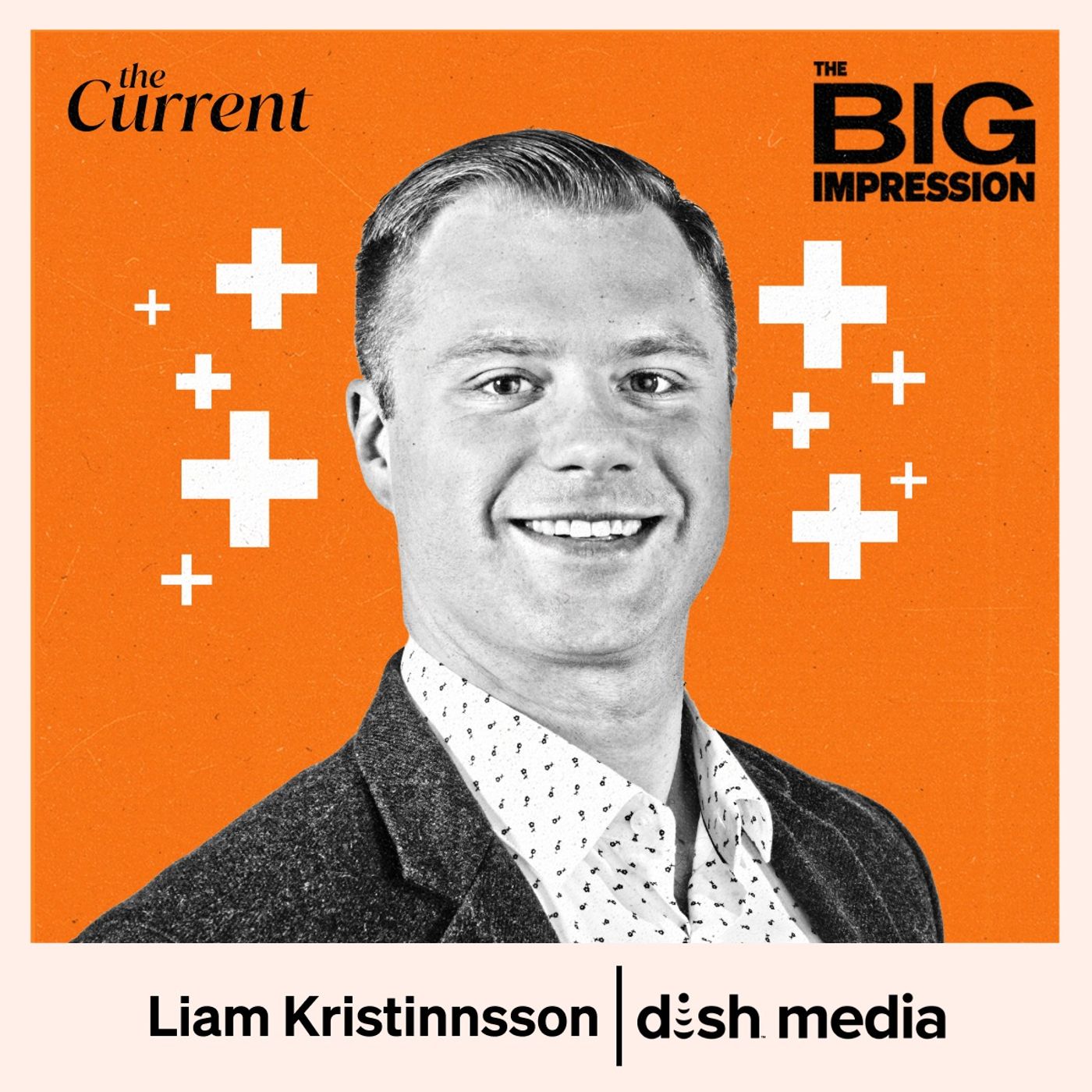
The Big Impression
Dish Media’s Liam Kristinnsson on how linear and programmatic TV are converging
00:27:41
As Dish Media’s new head of programmatic partnerships, Kristinnsson is helping turn advanced TV into a single, addressable marketplace.
Loading summary
Transcript59 lines
- [00:00]
A
I'm damian fowler.
- [00:01]
B
And I'm ilyce lifring.
- [00:03]
A
And welcome to this edition of the big impression.
- [00:09]
B
Today we're joined by Liam Christensen, head of Programmatic partnerships at Dish Media, where he's helping shape how the company connects advertisers with premium audiences across both linear and digital environments.
- [00:23]
A
Dish has been pushing hard into the Programmatic space from Dish Connected, its addressable solution across the ecosystem, to Advantage, which links programmatic buying with linear inventory in real time. It's all part of a broader move to bring automation and accountability to advanced tv.
- [00:40]
B
We'll talk with Liam about how Dish is tackling fragmentation, what premium really means in a mixed screen world, and where the next phase of programmatic growth is headed.
- [00:51]
A
So let's get into it.
- [00:57]
C
Dish Connected has really revolutionized our product in the marketplace. We've been able to convert an additional 4 million to 5 million households into tangible CTV devices across real time bidding systems all over the across the industry. And it's kind of given us a leg up against some of our more linear competition where we now have full autonomy over our inventory and can enable and provide transparency downstream to any client.
- [01:29]
A
That's amazing. I mean, there was a moment there where, you know, there was a sort of either or linear or ctv, but. But this is something that's kind of connected, connecting those two worlds.
- [01:40]
C
I think this is the start of the convergence. I know it probably truly started post pandemic, I would say. But the reality is now that what is perceived as underutilized impression based audiences are now becoming tangible and kind of overlapping with their traditional legacy linear purchases. And there's much more value to it because we are not enabling people to find attribution in a more roundabout, extrapolated way, but we can provide meaningful real time results to third party attribution vendors or measurement vendors.
- [02:20]
A
And that brings us to Advantage, which you introduced in May to program to power programmatic and Linear at the same time. Could you tell us a little bit more about that?
- [02:31]
C
Yeah. So, you know, the beauty of Advantage is it really expands upon what we've already built for Programmatic in disconnected, but it provides solutions across the whole suite of products we have. Our addressable business can tap into real time kind of innovations, real time optimizations against audiences ensure that we are better delivering across the target audience and finding that incremental reach that in the past may have been next to impossible to verify. And now, you know, we have all that inventory in one place. It's kind of like a grocery store when I think the industry has Become accustomed to going to a bodega. That's very New York of me. I understand. I like that. But, you know, sometimes bodegas have eggs, they have a deli, they might have milk, but they might not always have milk and seltzer and all the little things that you want on a day to day basis. And the reality is there's something lacking when it comes to you being able to actually fill your fridge. Now we have all those components that the customer or the client is looking for.
- [03:40]
A
I like that analogy.
- [03:41]
C
It's a good one.
- [03:42]
B
Yeah, I like that. And now, Liam, I'm curious about the advertisers you're working with. Is there a new segment of buyers that programmatic is really opening the door to here? What is like basically your sense of that cohort?
- [03:58]
C
Yeah, I think it really has grown overnight. Programmatic in general, but I think it allows us to have expanded exposure across all clients that are looking for that, you know, more meaningful kind of results. I think we are seeing a lot of success and generating a lot of traction across the CPG world, the direct to consumer world. And I think, you know, we're finding a nice overlap from a category perspective of what we traditionally looked at as direct IO or addressable business. But maybe not all those brands or clients in maybe like a pharmaceutical vertical would tap or earmark dollars for commitments earlier, you know, early in their planning phase. Now they have the liberty and the luxury to, to find that right audience and enable dollars downstream where we're just not hunting in that lane. And now we can kind of, instead of spreading ourselves thin, the technology can enable us to really kind of tap into all those brands, whether it be the CPG or the pharmaceuticals. Now, on the CPG side, I would double down further, I think, you know, because in the linear world, traditionally there's a level of fragmentation when you were to buy linear and you're only getting a percentage of the marketplace. Now the transparency and data that we're passing downstream really changes that. Right. Because now these CPG brands are looking to trade off their kind of gross rating points. But, you know, kind of understand, all right, am I serving a family that would buy my products? And now we're freeing up the inventory, making it available to those brands that maybe were not always keen on addressable or, you know, linear didn't provide enough eyeballs. We're compensating for that with the data we're providing.
- [05:50]
B
Do you have an example of a brand you're working with?
- [05:53]
C
Yeah. So, I mean, more specifically, even though that wasn't in some of the categories I called out. There was one or two major financial brands that we've been able to elevate our profile quite significantly with and then partner with them around some of their initiatives on the back end. And you know, I think it kind of shows some of the flexibility that, you know, a publisher can now provide. Brands that I don't think they ever associated with a conglomerate or a media company like, like ourselves on that point.
- [06:24]
A
You know, there is a perception that the space is fragmented and that there's linear here and then there's, you know, streaming here. Do you think that that is changing that perception? You know, maybe thanks to some of the work that you're doing?
- [06:36]
C
I think that's a lot of our goal. I think that we are simplifying the process and enabling a household or a device level. Right. And the device level to be at the unique user level. And you know, we have the ability to kind of triangulate that and make sure that we're providing good and strong data down to our partners. I think as a marketplace, holistically, I think the fragmentation has changed and I think a lot of that's around some, you know, consumer behavior that has changed or specifically around, you know, the way consumers are watching more free content or you know, there's pockets where there aren't being. They're not required to provide a subscription. And I think that, you know, there's still a gap there. And you know, we do have some front porch access to our apps, but we are looking on our end to continue to develop and enable through advantage how we can kind of provide those, specifically those returning viewers that clean look to the advertisers on the back end and you know, really kind of leveraging deterministic data and first party signals to really define that audience more cleanly in some ways that competitors of ours maybe can't do.
- [07:54]
B
Overall, how are you, how would you describe your measuring the success of these programmatic partnerships?
- [08:00]
C
Yeah, so I think that that's a really unique place because that's something that has been our bread and butter. We have a, we have our own, you know, targeting and attribution team. They've worked very diligently on the direct IO side. I think a lot of the legacy information that they've been able to provide clients and you know, the insights and the ways that they've been, we've been able to either cut our inventory or kind of group our. The target audiences for these clients have helped demonstrate the programmatic partners the value and not just our audience, which I think, you know, is somewhat being underserved because Dishes tends to be middle America. And, you know, maybe they have less apps than that or maybe they leverage less apps. So, you know, they have been underserved. We have a legacy of success around specific verticals, and we're able to kind of provide that to these brands. I think the challenge is it's a little bit of a black hole sometimes of how they tie it back to each other. And I think there needs to be a little bit more assistance on our end. And by us, I mean the royal we across the industry of, like, providing some of those insights that I kind of alluded to earlier. Whether it's, are we targeting and talking about unique users, are we looking at success at a household level? And, you know, there is some innovation that's required there in the industry. But, you know, I think what we're doing is really at the forefront of enabling that.
- [09:24]
B
Are there any particular channels that have surprised you in terms of performance or even advertiser adoption?
- [09:31]
C
Sure. I mean, you know, I think. I imagine everybody talks about the success of sports. Sports has been, you know, a real catalyst to the boon of CTV enablement in general. But I think that I'd be remiss not to call out that, you know, a lot of our entertainment brands have shined, but not in the ways that traditionally they've been leveraged. Right. Even though, you know, certain pockets of inventory is not super desirable in the marketplace at times like news, there is a. Right. There are a ton of clients that we've seen a lot of traction there and like, you know, pick up incremental success and really drive reach by anonymizing the content that they buy and focusing on the audience.
- [10:21]
A
That's interesting. Is there still some resistance to the idea of being around current affairs and news?
- [10:26]
C
Yeah, I think, you know, I myself came from the website world years ago and, you know, I saw firsthand when, you know, a certain brand would be next to a certain type of content. And I understand the, you know, the urgent need to not expose a valuable legacy luxury brand to something that may or may not be, well, bad. Right.
- [10:52]
A
Yeah.
- [10:53]
C
But the reality is often there is a disconnect from the content being consumed and the pod of commercials that is, that. That's watched. Right. And, you know, while we often. I'm sure we. My mother certainly will. Will watch news for hours and hours upon day, which is maybe not healthy for her lifestyle. But, you know, I think what's. What's great about it specifically, when she goes to sit down, she is glued in to the tv. And that's something I think that, you know, a lot of people are trying to figure out. You know, are people watching? Are they tuned in? Are they walking away? And that's the black box of advertising. But I know that people that watch news are glued into the TV and consuming the content between segments. It's kind of like sports, right?
- [11:43]
A
Yeah, I think that's true. And I think that's true across all channels, as far as I know. You know, you know, people reading digital news as well. But I don't want to go off on a massive digression about news. But anyway, but yeah, can we pull back and look at the big picture a little bit? And we were wondering if there were any precedents or points of inspiration, you know, or inside or outside of media that inform how you think about programmatic partnerships at dish.
- [12:11]
C
Sure. I mean, like, I think that back to, you know, what I was saying about evolution, I think often in the media industry we look at things like baseball teams are run today. Not to use a sports analogy, I know you guys are probably sick of.
- [12:27]
A
Them, but sports analogies here nearly said the trade day.
- [12:33]
C
But, you know, like, the reality is these days people want home run hitters. And I think back in the day, that's a little bit of a cyclical history. You know, people always want home run hitters and like, like big stats. But you win championships with diversity. And I think what partnerships means today is not what it maybe meant 12 or 13 years ago. I think there's a, you know, we're becoming a world where people, we're all playing Tetris and there's a way to make it all fit together if we cooperate and enable each other. So, you know, it's, it's not one size, fit all fits all. I think there's a lot of small partnerships and that's good for the competition of the industry, and it doesn't take away from the value of these big partnerships. And I think, you know, I don't think in my time in TV there's ever been more opportunity there than there is today.
- [13:28]
B
You know, something we often write about at the current is the value of like premium content versus maybe like user generated, for instance. What would you say is the importance of premium? And I guess what kind of premium content is most popular? I mean, you, you brought up sports, but are there any others?
- [13:50]
C
Yeah, I mean, I think premium content, I'm sure many people discuss across the course of ad week or Just in the industry in general, how valuable, unique and you know, it's deemed as traditionally primetime TV is. But the reality is it's even more valuable than that because you are, you are in a lot of ways demanding an eclectic audience to watch your spectrum of content. And you can't always guarantee that in other places. There is also, sure, there's some oversaturation for specific channels and you know, maybe the product that they air. But the reality is it is not what everybody is consuming these days. Right. You know, it's Halloween. Everybody can find a bunch of great horror movies or Halloween's coming up, I should say, everybody could find a bunch of great horror movies across the board. Can't always guarantee, you know, what is in that content, how glued in they are versus just kind of like, oh, it's in season. I think with premium content specifically around live TV, there's 365 days a year of people competing against each other from a content perspective. But it demands eyeballs. And I think, you know, we're also starting to see a surprising jump in the youth getting app fatigue. I suppose that is better enabling that premium content to ensure eyeballs there. But they're, they're paying attention and I cannot stress that enough. In a world of a short attention span, they want to know what's going on and they consume it.
- [15:29]
A
I would almost say it's short form content fatigue. You know, to a certain extent it's like, oh, I'm tired. There's something nice about a long form, you know, you know, a game.
- [15:41]
C
Yeah.
- [15:41]
A
A football game, a soccer game or.
- [15:43]
C
A movie to that point. Right. Like I was probably part of the problem with TV from a consumer point of view. I became like a cinephile, which didn't help companies ability to monetize myself. But you know, the more enmeshed I get into the industry and the more, I don't know, popular I get, the less time I have to go find Akira Kurosawa film. Right. The more time I have to maybe watch drama about women in New York. And I will watch the rerun that I just saw the week before at 8 o' clock in anticipation of what's gonna happen at 9 o'. Clock. But really, because I want to see the reunion or the interview at 10 o'. Clock. Yeah, right. So now I'm consuming the same content twice, but I'm even more engaged in the live tv. And there's something afterwards that is actually may not maybe taped, but it feels live. Right.
- [16:38]
A
And that's the proposition that dish is getting into, you know, do want to ask you, how is Dish Media building on the momentum that you've already created?
- [16:46]
C
Yeah, I think right now it's, it's what more can we do and how can we keep providing and enabling inventory for the right providers? I think that the assumption in the marketplace for any new product that comes out is, wow, this is it, it's here, 100% of it's enabled. That's never the case. Right. It takes a year to ramp up typically for the average product, sometimes as much as 3. For us we've been hitting the gas and I think now we're about to go from fifth to sixth speed and really kind of enable our inventory holistically to the marketplace. So for us it's a little bit of crawl walk run from an enablement perspective. And with that comes even greater insights into what are they consuming, what's the audience, how do we help define and clean up that audience downstream and then let others, you know, maybe do what they do best. But we are really in a great position to keep kind of growing that and exposing net new insights about users that I'm not sure everybody's contemplating.
- [17:56]
A
Yeah, I'm sure.
- [17:57]
C
Very cool.
- [17:59]
B
You know, I have a question here about the economy. And as you know, and everybody does, it's on kind of shaky ground, you know, you don't know. How do you see spend evolving in the programmatic space at this time?
- [18:16]
C
Well, I'm glad you asked that. I think there is marketplace concerns about what is happening on the demand side. And a lot of them are valid, a lot of them are maybe being overthought perhaps, but you know, I think there's some rocky roads ahead for specific industries, but it presents a unique opportunity. And I think from a publisher perspective, maintaining the value of inventory and the premium content that they have is absolutely a must because we are going to continue to provide insights and improve products that ultimately will provide better outcomes for back end users. If we kind of enable knee jerk reactive spend, I think that actually goes against the grain of supply path optimization and increasing outcomes holistically under the guise of potentially lower rates or you know, what have you. But you know, I truly believe that if one category is down, another needs to go up. And I think advertising is like a mutual fund like that where, you know, I have lived in Europe in the past and you know, there's a phrase in Scandinavia that like, you know, no matter what happens to our small economy, people will advertise beer because somebody will buy it. Right. And I Think that's much more universal than just in a few select small countries. And you know, I think in a lot of ways we saw that in the pandemic, right. Direct to consumer brands, a lot more variety of entertainment companies or hardware products or TVs were able to kind of put their best foot forward and give the consumer options. Right. And I think it's some of their responsibility to provide those options. What, what we, the publishers can do is enable and ensure they're getting the, the right results for the content and fitting them in the content or audiences that they really can get the best out of them, right?
- [20:28]
A
Absolutely. Okay, we're going to bring this home now with some quick fire questions, right. And here's the first one. What are you obsessed with figuring out right now?
- [20:38]
C
Well, this might be a little divisive, but I am obsessed with continuing to improve supply path optimization. But I believe that comes with the slow sunsetting of linear. When I got to dish, you know, we were still primarily while our bread and butter was addressable, we were still primarily from a percentage basis, linear. Right. Since then, you know, we've completely flipped the script. We are by far and away mostly impression based on. And the reality is, I think that we are leveraging too many legacy tools to tell and provide stories on outcomes that are not always as accurate as they should be. We live in a world where transparency is key. Maybe not full transparency all the time, but enough transparency where I, the client or brand should be getting a return on our investment or understanding why the audience or the content I was targeting is not working for me. And I think that that's, those are the pockets we need to start exploring and understanding. Not so much the how do I understand foot traffic on a day to day basis but not convert that to sales when I'm extrapolating out 32 families. Right. So that's really, really what I think needs to happen. And I think there's a lot of work to be done there and it's not going to happen overnight, but it starts here and starts with an advantage. Really.
- [22:07]
A
Wow.
- [22:08]
B
And why do you think that the slow death of linear as you, as you said has to happen for that.
- [22:15]
C
I shouldn't say it has to happen. I think there is a time and a place for it. Right. I think if, if I'm going to a bodega and I think I want a soft drink, that's their goal is to make sure that the first thing I think of is whatever the product is. But I think that time and a place is Actually creating a lot of noise downstream and creating a lot of challenges for folks on the attribution and measurement side to actually understand and holistically look at their media purchases. And I think, you know, it's okay to have gross in terms of volume ways of looking at how media should be purchased and leveraged. But, But I believe nine out of 10 clients, really, they deserve the insights and the understanding of who is buying their products and how we can figure out how to kind of tie that together and improve into the next year. That's how their products are going to build. Especially with some of this like, you know, in certain categories there's maybe too many brands or too little. Right. You know, better data will inform beyond individual clients, but it'll enable people to start unique businesses that can compete in an area where there's clearly a lot of eager consumers. Right.
- [23:36]
B
Very cool. What's one piece of wisdom you'd pass on to other media leaders? Navigating the shift to programmatic.
- [23:43]
C
Yeah, so I hate to say the same thing twice, but if I were to give one piece of wisdom as value your inventory, that is going to be the future of your business. And there are ways that you can improve your product and enable and improve a third party client or vendor's product. But racing to the bottom for what is happening tomorrow will not enable you next year. And you know, it's a real concern in the marketplace, but my concern is actually twofold, that it doesn't actually just hurt publishers, but it ends up ultimately hurting the brands and the people buying the inventory because they are going to receive exponentially more noise. Right. And I think that as an industry with a lot of noise, we should, we should really think about like how we can kind of isolate it into and harness it into, into actual meaningful outcomes.
- [24:49]
A
If you could pick one brand that's really nailing programmatic right now, who would it be?
- [24:53]
C
Without explicitly calling out a unique brand. But I'll give you two types of folks that are really nailing programmatic. One I think is second tier auto brands where they are unlocking and I really think disconnected plays a great role here. They are unlocking and understanding how they can better access inventory for the right audiences, period. That could be isolating and understanding how I could serve ads to from a reach perspective across the city of Des Moines. Or it can be somebody looking for blonde haired men that have two boxer dogs. Secondly, and I think, you know, this is a part of the paradigm shift across the industry, I think there's quite a number of cpg brands that legacy wise have really had outstanding success reaching mass eyeballs, whether it's through billboards, radio, traditional linear television. But now, again, like, they are able to fill a void across the whole ecosystem by getting better, more dynamic insights into the audiences that they're selling to. But also they're actually getting insights, period.
- [26:13]
A
Retail data.
- [26:14]
C
You talk retail data? Yes. And I think, you know, if, if I'm a chip brand, sometimes I want people to know my name first. And that's great. There's a need for that. But eventually you have to start focusing on how you can get money back from that. You know, like, like it's not just about getting your name out there or it could be diversified. Maybe your name is out there, but now other names have come in. Right now. How do you leverage the dynamic component of Programmatic to diversify your creative and your ability to deliver to the same audience? It'll change the way we think and look at maybe traditional frequency capping or traditional exposure. But now the brand through Programmatic can really lead the new age of creative storytelling and how people understand or change the way people think they know products.
- [27:13]
A
And that's it for this edition of the Big Impression.
- [27:16]
B
This show is produced by Molten Heart. Our theme is by Love and Caliber and our associate producer is Sydney Cairns.
- [27:22]
C
And remember, we're also starting to see a surprising jump in the youth kind of getting app fatigue. I suppose that is better enabling that premium content to ensure eyeballs there. But they're, they're paying attention.
- [27:38]
A
I'm Damian. And I'm Elise and we'll see you next time.