← The Big Impression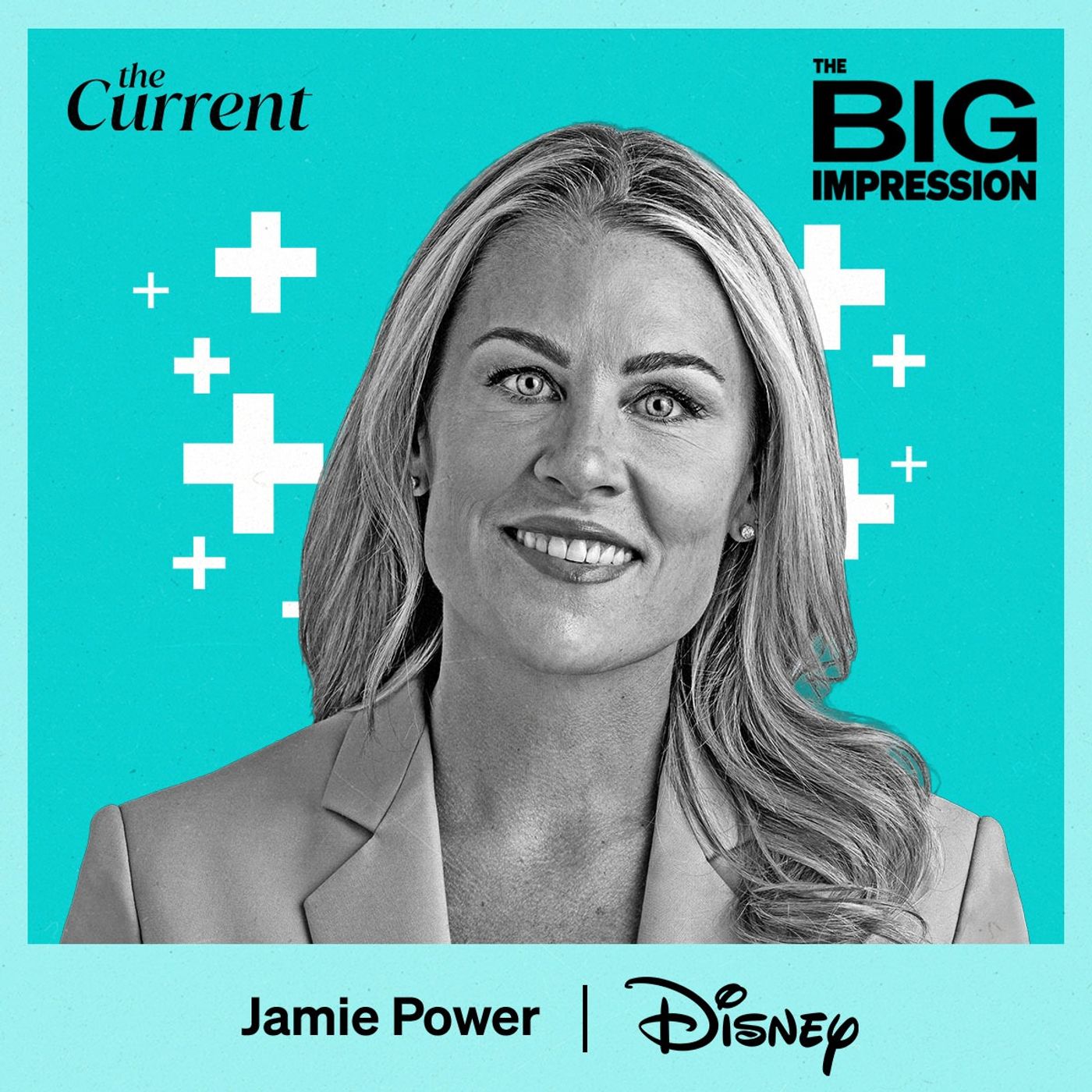
The Big Impression
Disney’s Jamie Power explains why advertisers are buying audiences, not shows
00:15:03
Disney is reinventing advertising across its streaming ecosystem. On this edition of The Big Impression, Disney’s SVP, Addressable Sales, Jamie Power explains how advertisers can now buy audiences seamlessly across Disney+, Hulu, ESPN and more — and why more brands are choosing biddable to transact their upfront commitments.
Loading summary
Transcript47 lines
- [00:00]
A
I'm damien fowler.
- [00:01]
B
And I'm ilyce lafren.
- [00:03]
A
And welcome to the big impression.
- [00:09]
B
This week we're joined by Jamie Power, senior vice president of addressable sales at Disney.
- [00:15]
A
Now, Disney's at the center of some of the biggest shifts in media right now. As audiences move between Disney, Hulu and espn. Advertisers are looking for better ways to understand and reach them.
- [00:25]
B
And streaming isn't just about replacing linear TV anymore. Live sports are booming, audience based buying is taking off and AI is changing how advertising gets bought and sold.
- [00:36]
A
And Disney's right in the middle of it all, bringing together audiences across entertainment and sports while building the tech behind modern advertising. I know in my household we watch my children watch Bluey on Disney and I might watch something on Hulu or Monday Night Football on espn. Given that range of content across all the different channels you have, what could Disney understand about the power of audiences today that it didn't say even five years ago?
- [01:07]
C
Well, you're not alone. Because Bluey is one of our most streamed properties. We understand the viewer and how they're viewing across all the different screens. Disney built an identity graph 10 years ago, so we've been able to understand the viewing patterns across all of our properties. But I don't think that is a competitive advantage alone because you have to add the identity of with the activation. So now that we finally have everything on a unified ad server, everything's on one stack. So now we understand the user, what they're viewing across all our different properties and we can activate in terms of
- [01:40]
A
advertisers, what does that mean for, for advertisers? That unified sense of the viewer and audience.
- [01:48]
C
It allows us to be a little bit more thoughtful with how we message. It allows us to not focus on just, you know, you're not buying programs and streaming, you're buying audiences. And you know, you mentioned a couple of the shows that you watch. I'm sure I watch a different set of shows. So. So I think that is, you know, what having identity and having that as the backbone of our stack brings us to.
- [02:13]
B
Those are good choices. I'm also, I would say a Gilmore Girls fan myself. Would you say Disney is becoming as much of a technology company as it is a media company today with its whole ecosystem.
- [02:29]
C
Like people are always going to come for the content, but I think having the technology there to enable and create more value for our viewers, create more value for advertisers. So we are unique in that Disney has built our entire tech stack. I think it's Interesting, because a lot of other companies have used ad servers that are built to do something else. We have a purpose built stack that is built for streaming.
- [02:52]
A
Yeah.
- [02:53]
B
And you know, for years advertisers bought programs. Today they're increasingly buying those audiences that are so coveted. How would you say that has changed the way Disney thinks about its ad business?
- [03:07]
C
I mean 95% of campaigns that are brought on streaming have an audience assigned to it. I think, you know, like we talked about the content, the IP is what brings people to Disney, but the depth of the portfolio is what days and keeps them engaged. You know, we are thinking about it as how do we create value. So if someone wants to reach one audience or if someone wants to buy on one identity framework, we want to make sure that all the pipes are connected and that we're fully interoperable with the market.
- [03:36]
A
Can you talk a little bit about the underlying tech that stitches all of these things together?
- [03:41]
C
Yeah, I mean if you even take like espn. So ESPN was one of our last properties to move onto the Disney ad server. So we have Hulu and Disney was on one ad server and then ESPN was on a third party ad server. When we finally moved ESPN over the Disney ad server, we finally could do things like enable biddable across sports. The reason why we couldn't do it when I was on a third party server was that there was latency and it was just, it would be a bad experience to serve like we'll be right back and those slates. So once it was on our own stack, it enabled the technology caught up to the viewing experience and we were able to deliver a better experience.
- [04:18]
A
And where does Compass play into this?
- [04:22]
C
So we recognize that people don't like a marketer doesn't wake up in the morning and say I want to buy Disney. They say I want to reach an audience across the entire marketplace. Compass is important because it's our, it's our data collaboration system. It's the way that we get data across the ecosystem. So if an advertiser wants to measure a campaign in a DSP in the trade desk, we're able to send our first party data there. If an agency wants to use our first party data for measurement, we send that to them. So if every publisher sends their first party data to agencies, then they're able to get that deduplicated reach across the entire marketplace. And that's what you're, that's what they're looking for. So it's a holistic buy, unified audience and then the ability to measure it in a consistent way so they understand all the pieces and not just what's happening on Disney.
- [05:11]
B
That first part, data is so valuable to marketers. We're talking about automation too, and AI. Can you give us maybe a practical example of how marketers are using that today?
- [05:23]
C
So when you look at like automation, automation doesn't, at Disney doesn't mean just programmatic, like we're removing friction and that's what we're trying to do and make it easier for Disney to be bought and sold. If you look at us from a programmatic standpoint, more and more advertisers are choosing to transact their deals that way. At the beginning of the year when the upfronts launch, they say, here's how much money we're going to spend with you. And then they can transact however they want. So way more than half of our $5 billion streaming business is transacted programmatically. We also are automating workflows across the entire business. So to make sure that that intelligence is there and we're delivering plans faster, that they're smarter and we're just making it a better experience to work with
- [06:10]
A
Disney, you mentioned up front, and I'd like to just quickly touch on that as well. What does it mean now that you have this tech here? What are the implications for upfront buying? Does it change the way marketers feel?
- [06:24]
C
It just gives more flexibility. Biddable actually is like the fastest growing way that clients are choosing to transact their upfront commitments. So, you know, they'll negotiate the floor and then they'll come in and it'll count towards their commitment. I think that they don't know what's going to be happening throughout the year. And if you, if you're spending it biddable throughout the year, you're able to like connect with those cultural moments and come in at different times.
- [06:49]
A
Do you think in terms of cultural moments throughout the year, do you have a sort of cultural calendar, you know, for advertisers?
- [06:56]
C
So yeah, we have a cultural calendar. We have a ton of content, you know, across entertainment and sports. I think too like one of the advancements in technology that I personally find interesting is you can now buy based on an audience. You can also buy based on contextual targeting. So if you're a QSR and you want to find moments that families are sitting around a table eating meals, like you can serve an ad there. We also have a way that when there are heightened moments of attention. So like if you're take like the NBA Finals, right, the Ratings were the highest that they've been since 1998. That was an unexpected spike, spike in traffic. So when there are moments like that and you see an unexpected spike in impressions and the engagement is up, we send a signal in the bid stream, letting programmatic buyers know like something's happening, audiences are leaned in and you might want to show up here because we know in like those moments, those emotional moments, like they're going to remember your ads and they're going to connect.
- [07:53]
B
And on that point, like live events are so key these days to gathering that live audience and especially bringing new audiences in. And streaming used to be built all around, like binge watching, I would say. Would you say that's shifting or continuing to shift around more of these live sports or live events moments?
- [08:14]
C
Well, I think streaming, when it started, like everyone would say that streaming is the best of digital and television, you know, brought together. I don't know that it actually truly was because it was really just focused on binge behavior. Now that you, you're bringing live in, I think it's the best of both worlds and I think now it truly is the best of television and digital brought together. But like I said, I think the technology had to catch up to the consumer, like viewing behavior and we're, you know, we're there.
- [08:42]
A
So people aren't thinking in, you know, of linear and streaming as two separate.
- [08:47]
C
No, they're thinking, I just want to find the content that's interesting to me.
- [08:50]
A
And Disney's already ahead of the game on that in many ways. I also want to touch on Disney's move towards gaming. And I know Disney had some significant investment in epic games. And we've been thinking about like a future of entertainment that's more interactive. Where does advertising sit in a world where consumers don't just watch content, but they're actually participating in it?
- [09:14]
C
I mean, Disney, across the entire company is about creating fandom and, and we want to engage consumers when they are engaging with our brands. So I think that's just another extension. It's looking out how do you take in real life experiences and then connect them to digital worlds to like create the fandom around all of our ip and that's, that's what we're trying to do.
- [09:34]
A
We've been hearing a lot about fandom and communities and in some ways we're wondering, I'm wondering if it's a kind of like, related to the idea of kind of a sort of pushback against AI and that people are seeking communities through fandom and certainly Disney has a ton of IP around which it can create those communities.
- [09:55]
C
Yeah. I mean, I think if you look at too, like, our shows and you even look at like, social extensions, like, ESPN is one of the biggest brands across social networks. Right. And if you look at even, like, one episode of Ahsoka creates tens of thousands of minutes on YouTube. So we're looking to, like, surround the fan. We're looking to meet them where they are. But nothing is a linear experience, and you have to show up in different moments. I mean, we have. We partner with brands in, like, different ways, and if we have a corporate alliance partner, you know, they're showing up all the way, like, in our parks, they could show up in across some of, like, our movies. Like, if you look at even, like, the campaigns that we just did with the Devil Wears Prada, like, the way that brands showed up, like, across the entire process is pretty incredible. And then what's nice about it is, like, you have a big moment in the, you know, a studio moment, and then we're able to, like, carry it through all the way to the streaming window and engage the audiences in different ways.
- [10:49]
B
Jamie, if you could maybe, like, fast forward like, three years, what do you think would look completely different around how advertisers are buying, like, streaming inventory today and just interacting with consumers and audiences?
- [11:04]
C
I think we've probably spent, like, the last 10 years making streaming inventory addressable. I think over the next three years and beyond, we'll see it be more intelligent. So you'll start to see, like, more personalization at scale. You'll start to see a more relevant ad experience. You'll start to see the ability. We're already doing things like sequential storytelling. So you're not just running one impression. Each impression builds and you're able to tell a story. Like with the messaging, I think, like, the optimization tools, the ability to action in real time and not just wait for a campaign to be over to, like, be able to continue to make the campaign more engaging and relevant to the viewer.
- [11:42]
A
Many people talk about convergence. What is converging today and what is further away than people think?
- [11:53]
C
Like, I, like, you are the community in the fandom, right. Converging, that's like something that you're unifying. I think it seems like it's. Everything is starting to be like, you're having more cultural moments happen that are shared, right? So it's like there is. Everyone's tuned into the same show. Like, we had a show, Love Story, and, like, it felt like everywhere you go, everyone was talking about it. When you have a big sports moment like that, when you have the Oscars, like all of that like sort of coming together. And like we said before, it's not about serving them an ad, it's how am I creating value, how am I creating an experience, how are they experiencing the brand in a different way? And we want to make sure that there's storytelling from us that we are, you know, speaking, having a conversation, you know, with the consumer. Yeah. And then streaming too. Like it used to be that everything in streaming would drop at one time and now you're seeing more and more streamers, have you wait a week and come back and come back and come back. And I think that's what's creating that shared kind of experience versus people going in and just binging the whole series in the first day.
- [12:57]
A
Other new advertisers and different kinds of advertisers that see this as an opportunity, as an entry point for them.
- [13:04]
C
Well, I think that technology is making it easier for advertisers that have never run in streaming to be able to like go through a self service platform use targeting smaller campaigns, having, you know, some help build creative. So I think the barriers and the friction are going away and we're making our inventory sort of available. The self service platform that I have is always interesting to me because it's like really small advertisers. Like it's like someone that owns a bakery or someone that owns like a local car repair shop and they don't ever think that they would be able to see their brand in streaming. So it just makes it accessible. And that guy is like, oh my God, did I just see my ad on Hulu?
- [13:42]
B
You know, Jamie, you said you are predicting that ads on Disney's platform are just going to increasingly get more personalized. If you had to kind of gauge the percentage of marketers that are maybe already doing there, is there a percentage you can point to?
- [14:01]
C
I mean, I think we're getting better. I think there's a long way to go. But I think with the advancements that we're seeing in the market right now, it's going to go faster. I think like the next three years things will change more. I mean they, I mean, I think change like each week. Right. Like the conversation we're having now could be irrelevant next week because the market's moving so fast. I think that there really is anything is possible if you put the work in now. But I don't think we're seeing personalization to the level that we will over the next couple of years.
- [14:34]
A
And that's it for this edition of the Big Impression.
- [14:37]
B
This show is produced by Molten Heart. Our theme is by Love and Caliber, and our associate producer is Sydney Cairns.
- [14:44]
C
And remember, so now that we finally have everything on a unified ad server, everything's on one stack. So now we understand the user, what they're viewing across all our different properties, and we can activate.
- [14:55]
A
I'm Damian.
- [14:56]
B
And I'm Ailee.
- [14:57]
A
And we'll see you next time.