← The Big Impression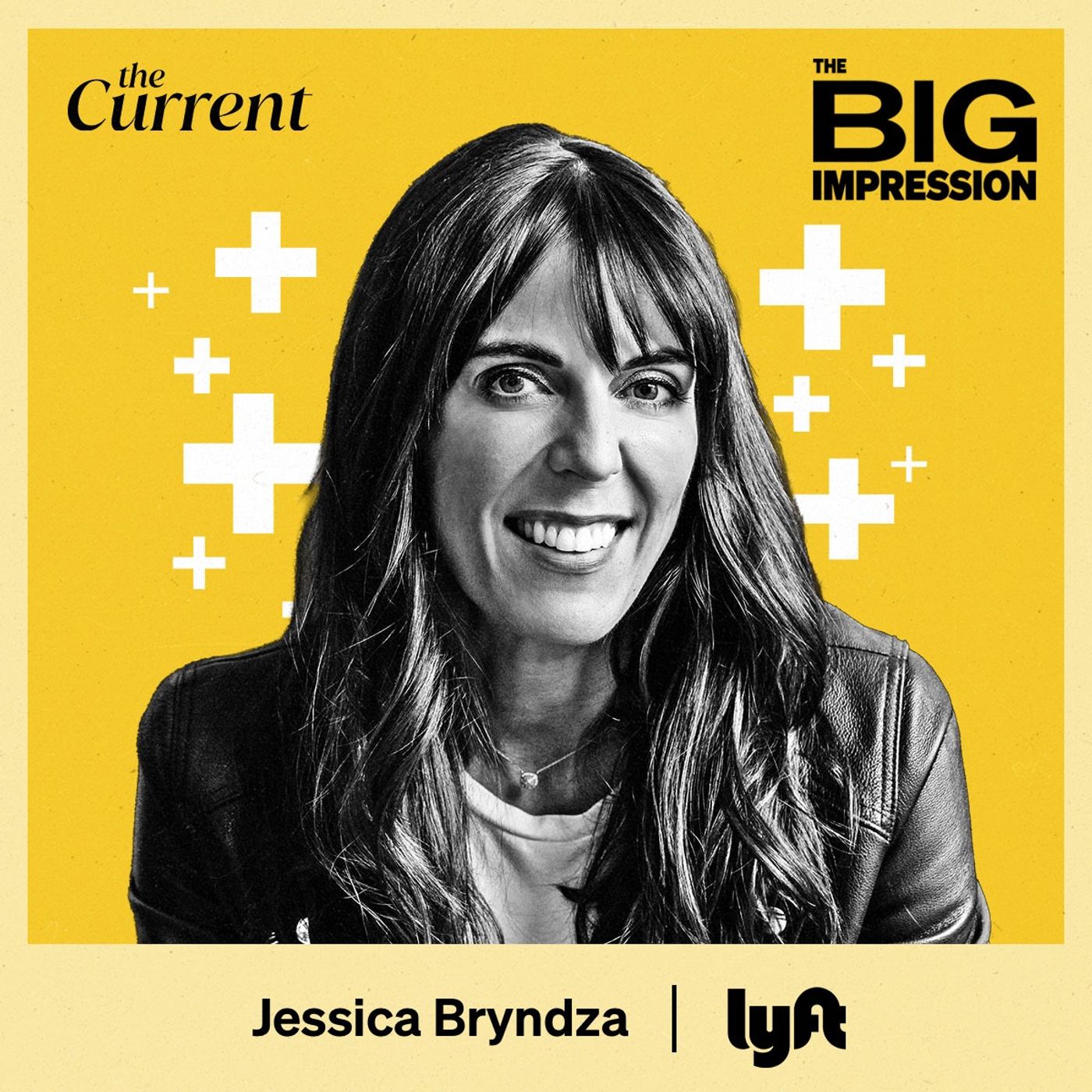
The Big Impression
Former Lyft brand leader Jessica Bryndza on humanizing mobility in the age of AI
00:26:07
Editor’s note: This episode of The Big Impression was recorded prior to Jessica Bryndza’s departure from Lyft. For years, ride-hailing has been optimized for speed, price and efficiency. Jessica Bryndza believes that’s only part of the story. During her tenure as Lyft’s vice president of brand marketing, she focused on reminding people that getting from Point A to Point B can still be personal — shaped by emotion, culture and the everyday moments that happen along the way. That philosophy is at the heart of Lyft’s new “Check Lyft” campaign, which launched last fall in San Francisco and New York City. The work reframes transportation as something human and choice-driven, not just transactional. Bryndza argues that the future of mobility won’t be defined solely by technology, but by how intentional and human the experience feels when you’re actually inside the ride. “I’ve cried in the back of Lyfts; I’ve laughed with friends,” she says on The Big Impression. “We have this ...
Loading summary
Transcript66 lines
- [00:00]
A
I'm damian fowler.
- [00:01]
B
And I'm ilise lefring.
- [00:03]
A
And welcome to this edition of the big impression.
- [00:10]
B
Today we're joined by Jessica Brinza, vice president of brand marketing at Lyft. She's here to talk about the company's new check lift campaign, a reminder that getting from point A to point B can still be personal, thoughtful, and even joyful.
- [00:25]
A
In an industry often defined by efficiency and algorithms. This campaign puts the focus back on people, the riders, the drivers, and the everyday moments that make shared mobility part of urban life.
- [00:37]
B
We'll talk with Jessica about how her team is weaving together digital outdoor and in app storytelling, what they're learning from the Lyft community, and how brand marketing fits into the future of mobility.
- [00:52]
C
You know, I love company origin stories, and I think origin stories really do bleed into and continue in the culture of a company, right? And a brand is nothing but the people that work there, right? So when you think about the origin story of Lyft, it was John Zimmer and Logan Green started this kind of carpooling company while they were in college. They called it Zimride, right? And so it was about a friendly get a ride to class, go back and forth. You sit in the front seat, right? The pink mustache, it was all a very kind and kind of friendly brand, as opposed to the origin story of our competitor, which you can research on your own time. And so I think that, that, that provides the foundation, right, as to this iconic color pink that we use as our kind of hero color, Lift pink, as we call it. Things like that set up the foundation for really anything you do at a company, from your people processes all the way to advertising campaigns. So Checklist, which we just launched about six weeks ago in San Francisco and New York, really came from this realization that we had to remind people that they had a choice, right, that there are two players now with our, Our. Our, you know, friends at Waymo, you know, we just launched a partnership with Waymo in Nashville. We'll be providing the platform for rides in Nashville next year. You know, we. We want to be the first choice for more people more often. And we think that the way we do business, right, the values that we have as a company, the way we listen to our customers, we. We want to invite people in and ask them to check us. This is a behavior that people are already doing. They're already checking Lyft for time or price, and we're rolling with that, and we're asking them to check us.
- [02:37]
B
Transportation can sometimes feel just like utility how did you land on the creative tone and the underlying messaging that makes this work feel more emotional and human rather than just purely transactional?
- [02:53]
C
Yeah, I love this question. First, I spent the first 11 years of my career at American Express, right? And there's probably no more transactional business than a credit card, right? You just whip it out now with Apple Pay, you know, it's just boom, boom, boom. And so I think my foundation of understanding how to make that feel emotional just personally brought a different flavor, right, to this work at Lyft. I think it starts with our purpose, right? And our purpose is to serve and connect. We reframed our purpose in August of last year, August, September of 2024. And the idea was to do just what you're saying, Elise, which is to remind people that, you know, getting to where you need to go, you know, the experience, one in a car, you know, I've cried in the back of lifts, I've laughed with friends, right? We had this, like, spectrum of emotions. And not only that, but then when you get to your destination, sometimes it's a happy occasion, sometimes it's, you know, you're commuting to work, which, depending on if you like your job or not, I won't judge whether that's happy or sad. But, you know, we really wanted to kind of click into that. And so Serve and Connect is, I think, about this beautiful, like, foundation that we have of our, of our purpose. And then what we did with that is we thought, okay, if our purpose is to serve and connect, how do we do that? And we created this brand archetype which we call the Purposeful Rebel, right? So this is sort of like the ethos of who Lyft would be at a dinner party, like, kind of like changing things up, not just to be disruptive, but for a purpose for good. And so Purposeful Rebel is like the undercurrent. And so when we say things like order pancakes for the table, because checklist for wait and save, right? Because you can wait 10 more minutes, you save a little bit of money, and you can sneak in a couple bites of pancakes, that's like us understanding what it's like to be a 27 year old in Brooklyn, right? And how our product can kind of fit into your life. So that kind of like inspired a lot of the creative positioning. And then we had a lot of fun with it in both markets to make the campaign feel very city specific.
- [04:49]
B
On that note, how did the role of, like, cultural listening, writer, feedback, things like, really touching in on what the Driver community is thinking about help shape the direction of the campaign.
- [05:03]
C
Yeah. You know, thanks for bringing up our drivers because we love our drivers. We have, you know, millions of drivers in the platform, and our drivers prefer to drive for a Lyft. All of the data that we have says this, and we do a lot, right, to really make sure drivers know that we care about them and care about their earnings and the experience they have in the platform. I think when it comes to listening for this particular campaign, it was really about a little bit more of a narrow focus on what we call young working adults. Again, this campaign is San Francisco and New York. So living in the. Around the city centers. You know, they're going out, they're going to dinner with friends, they're going to shows. You know, they're using Lyft to. And so we wanted to really understand what are the things that really resonate with them. We also use the campaign to promote products that are not necessarily young working adult focus. One I'll mention is Liftsilver. So we launched Liftsilver in May of this year. May, June of this year of 2025. And it's a product simple. It's kind of a simplified app for older, independent adults. Right. And because we found that they wanted a simplified experience, so we thought, well, how can we promote Lift Silver? But through the lens of this campaign. So one of my favorite executions is in San Francisco on Lombard street when you're coming in from Marin. And the billboard says, hey, Daddy, check Lyft for Lift Silver. And we had so many young people that were like, okay, Lyft. Like, I love that you kind of understood the fun and how young folks are, like, really close with their grandparents. Right. Intergenerational relationships are really important now. So we think about it not just, like, market things to young people. Our market, you know, lifts over to older people. It's how do we show all people, Right. That we have products and services for you, whether you're 18 or, you know.
- [06:52]
A
98, taps into that, how people communicate, you know, across generations, inside families. And it shows a kind of nuanced understanding. Yeah, right.
- [07:01]
B
So.
- [07:01]
A
And that's. And that's really important.
- [07:02]
C
I agree. And another challenge we have with this campaign, which when I first joined Lyft last October, I was consulting for about six months. Then I came in house happily. I became obsessed with our bike business. We run bike shares in New York City. We own Citibike Divi in Chicago. Bike Town in Portland, Boston. This is incredible business, particularly in a city like New York City. And so we thought, how do we build that into the check lift campaign as well? So we talked. I think one of the executions is like two wheeled lifts. Imagine that. Right. So really making sure people know when they check lift, not just for rideshare, it's for our micro mobility business as well.
- [07:41]
A
Yeah. And then speaking of these different audiences, we're talking, you know, from. From the younger folks. You talking about urban people who are going out to, you know, their grandparents, you. That has to be therefore, then a multi channel experience. The way you roll out this campaign. Can you talk about how you connect up all those different dots?
- [08:00]
C
Yeah, you know, it's. It was really fun to plan the media for this. Right. Because we're also planning it as things are changing. I mean, I was on vacation last week and I feel new AI tools were launched, like just in the 5, 7 days I was out of the office. So we're constantly evolving. For this campaign, we really thought twofold. One is we wanted to use out of home. Right. We think out of home is still such an amazing way. We had a billboard, we have a billboard in Times Square, executions in Brooklyn, in all different neighborhoods in San Francisco. So we thought about also using our at home. We thought about the personalities of those neighborhoods. So if you know, San Francisco, the Marina is a very young, you know, early 20s kind of neighborhood. The executions we put there are very different than the ones that are in, like downtown where people are commuting. So we really got really specific about who we were talking to. So at home is really important. We also looked at online video. You know, some executions we had were about, you know, skipping ads or, you know, you have to watch this ad 15 seconds, but you could have decided to have a wait and save. So we really thought about the media environment and the messaging. That worked well. Social, my social team is, if I may, I think they're pretty fantastic. And so paid social and organic social, huge opportunities for us. We work with influencers. Kareem Subway takes in New York and a woman named Taryn in San Francisco. And again, just telling our story through the lenses of other folks.
- [09:32]
B
Yeah. And we all know that a single ride is not really just a moment, but loyalty is built over time. So multiple rides all the time. How are you connecting that brand's storytelling element to the broader consumer journey from the moment they download the app to the next time they need a ride?
- [09:55]
C
Yeah, I think this is a challenge for many companies, right? Connecting a funnel, a flywheel, whatever framework you like to use. Lyft Traditionally has spent a lot of, a lot of our time mid and lower funnel. Mostly mid. Right. I'd say in the past six months or so we've spent more up top of funnel to really build the brand. Right. And again, I keep saying that, remind people they have a choice. The way we're doing that kind of through the line really brings in our internal teams and product marketing. So again, we think about ways to. I'll use an example for liftsilver. You know, we did some, you know, top, top of funnel advertising, but then really thought about how do we market to our existing base, how do we market to caregivers. Right. So they know they can have this option for their, their family, their loved ones and those that they are in relationship with. So we're always thinking about how to, how to, you know, get people through on loyalty. You know, this is a place we're spending some time right now thinking about what does it mean? We have certain things that, you know, loyalty is both a scheme and also a strategy. Right. It's a. And again, I spent 11 years in American Express. They have membership rewards is probably one of the best loyalty programs. We are thinking about it also in how do we build features that keep you loyal? So for instance, we have a lot of product partnerships. Chase, we announced a product partnership with United. You know, Doordash, you can link your accounts and get all these benefits that keeps people one saving money and also really loyal to the Lyft platform.
- [11:27]
A
Just one thought you mentioned, you know, the competitor, the big competitor we won't name on this podcast, but do you.
- [11:34]
C
Think I worked for Uber for a.
- [11:35]
A
Couple of years back in.
- [11:36]
C
Back a long time ago. So it's okay.
- [11:38]
A
I was going to do the Harry Potter thing, but yeah. Do you see Lyft in some ways as kind of a challenger brand?
- [11:47]
C
Absolutely. I mean, it's really fun to work for a challenger brand.
- [11:50]
B
Are there ambitions to go as global as Uber is?
- [11:54]
C
Great question, Elise. We just acquired a company in July called freenow. They are the Europe's number one taxi provider. I think there are nine markets. And so we just announced the acquisition back in July and now we're starting to work with the teams to figure out what does Lyft mean in Europe. They're running a great business and we're going to help support them. Now it's called Free now by Lyft. And we're going to think about as we head into next year where the Lyft platform kind of steps forward. And then again, thinking about this as A one customer view. You know, one of our. Like many companies, but one of our values is around customer obsession. I prefer customer care. Right. Really thinking about and caring about your customer. You know, when I go to. I just was in Europe, it's. It'll be great when I can gain all the same benefits, you know, in Amsterdam that I can, you know, here or in, you know, Barcelona. So, yeah, we definitely are launching in. Currently into Europe. Yeah.
- [12:49]
A
That's great. So the campaign's been in market since early September. I mean, it may be early doors to say this, but are there any signals or early reads that you're getting from the campaign?
- [12:59]
C
Yeah, I mean, you know, without giving out the exact statistics, it's doing really well. We're exceeding our benchmarks and some industry benchmarks. The early. Early reads are always social, digital, you know, things like that. We're gonna see. What I'm really interested in is the brand metrics. We work with a company called Barra where we kind of measure brand love. We're going to be seeing that probably in November, December. But early signals are good, which is always a great thing.
- [13:26]
B
Excellent.
- [13:27]
A
Yeah, yeah.
- [13:28]
B
Have there been any surprises in terms of what you might expect from any of the channels that you're experimenting with or maybe how it's taken off in a particular city or partnership?
- [13:41]
C
You know, no surprises with this particular campaign. Although I'll say, you know, New York City and San Francisco are incredibly different markets. I lived in tri state area, New York my entire life until about 12 years ago. So I know this inherently. And capturing attention is always a challenge, particularly in this world. I was talking to someone yesterday. Our brains aren't built for this Hyper on Mary Oliver says attention is the beginning of devotion. And so it's like what we pay attention to is what we're devoted to. And I think that every brand I talked to, everyone I've spoken to at Adweek this week is thinking about how to have empathy for folks as we navigate this multi, touchpoint, multimodal kind of world. And also know we have to drive business metrics for our shareholders. And so I think we're balancing that. So I think the challenge is also always how to be innovative and creative to earn the attention and not just like get in front of people.
- [14:45]
A
Mm, yeah. I like that thought, though, about empathy. That's definitely a kind of philosophical insight into where we are in this marketing landscape, you know, in the battle for attention.
- [14:56]
C
Yeah. And I think that there's an, you know, I was saying, you know, Sora launched last week When I was on vacation. There's so many tools that are at our fingertips and will continue to proliferate. And I think that our jobs as marketers and human beings. Right. Is to think about what's additive. You know, there's a lot of, you know, I heard the term very often this week, AI Slop. Right. There's a lot of slop out there. How do we respect our customers enough to not put crappy work in front of them? Right. And I think that's what we think about at Lyft. Our creative bar is really high. Yeah. And we want to, again, respect and empathize with our customers because it is.
- [15:31]
B
Probably really easy to do that, though, to move down.
- [15:35]
C
Yeah. I think that. Listen, this entire campaign is text based. Right. It's phrases. It took a lot of work to nail it just. Right. Right. And, you know, results will show whether we did. But the care that went into every line to make sure the tone was right, that we weren't shouting at people, that we're inviting people in. Right. Even check lift, like that can be like check lift. Right. It's not instructional, it's invitational. Right. And that's. To do that, you. You need to care and you need to be a human.
- [16:06]
A
I think zooming out a little bit, you know, as you think about the big cultural shifts, you know, and there's, you know, especially around mobility, there's a lot of talk about sustainability and then how we live in cities. We were talking just before this podcast about getting to the airport, things like that, you know, affordability, the future of mobility. Does this campaign in any way kind of signal where Lyft might go next as a brand?
- [16:30]
C
Yeah. You know, I don't know if the campaign does per se, but I'll say one is, you know, the importance of our bike business. Right. I'll just say that especially in urban markets, it's an incredible way to get around a city. Right. Maybe not this morning when it was raining, but luckily we have rideshare, so you can do. You know, you can take a lift if it's raining, but it's an incredible way. And it's also fun, like when you think about, like, just like being a human in the world, it's really fun to ride a bike, even if you're commuting to work. We hear that all the time. Right. So one is our micro mobility business, and I love the folks that work on that. The second is, you know, we're. We're very clear in shifting our. We're not shifting and Increasing our focus to be a hybrid AV model so where drivers in an AV live side by side. We have a pilot in Atlanta right now with May Mobility. Again, we launched a partnership or announced a partnership with Waymo in Nashville that's going to be launching next year and others to come and Baidu next year in Europe. So again, I think the forefront for Lyft is really being this hybrid platform and being really human centered as we think about AV moving forward.
- [17:41]
A
Yeah, that makes a lot of sense.
- [17:43]
B
Along those lines of innovation and tech. There's everything from AI and personalization these days to connected mobility, retail media. And Lyft has lift Media, Lift ads.
- [17:59]
C
We just announced it. The new name is Lift Ads. So my friends, my friends there will be happy that I'm saying it right now. Yeah, the lift ads business is amazing.
- [18:09]
B
So, yeah, you guys have lift ads. How are you equipping your team to create experiences that feel both relevant and responsible in today's age?
- [18:20]
C
You know, first I'll say the. I'll take it out of digital for a second. Talk a little about some of the partnerships that we do because I think that when you. I talked about empathy. Right. And also being kind of culturally relevant. We've done a few things this year that I'm really proud of and I think speak to where the brand is and where it's going. First is we partnered with, we have deals with the New York Liberty and the Golden State Valkyries, two incredible WNBA teams. The Valks, their, you know, premier, their first season. Our coach won Coach of the Year, Natalie Nikase, which is so shout out to Natalie if you're listening. You're probably not, but maybe I'll send it to you on Instagram and, and the New York Liberty, who are just, you know, icons here in New York. And so I think being part of those teams at a time when the WNBA is capturing, you know, attention not just in sports media, but in media in general. And this conversation around Fair Pay, like partnering with those two teams was incredible. We sponsored the New York Liberty Pride game. You know, Lyft still invests in pride this year when a lot of companies step back again, living our values of we belong. Right. So that's one example. The other is we really wanted to show up at festivals this year. We are such an integral part of big music festivals, both on bike share and rideshare. So this year with Gov Ball in New York City and Outside Lens in San Francisco, you get the message. SF and New York are important to us. We sponsored both of these Festivals and created experiences at each that really were additive to the experience. So if you go to Govball, you know, it's in Flushing, these are one lane roads, it takes a minute to get out of there. So we had a really big kind of, you know, lounge where you could get some water, touch up your makeup, you know, get some deodorant. It was a million degrees, you know, really have a place to sit down and relax. And so we always want to figure out how can we. Back to my, my comment about serving Connect and this purpose. How do we serve people in that way? And then outside lands, we had lift pink branded golf carts that got people around and we had discounts on getting to and from the festival both on bikes. So things like that where again you're. We're living our purpose of connecting people with what they love, but doing it in a way that's good for the customer and good for us.
- [20:33]
A
Yeah, we had a really good conversation earlier this year with Unilever and Dove because they teamed up. They had an idea of, you know, getting that new body deodorant into like these big concerts, pop concerts I should say.
- [20:49]
C
Well, if anyone from Dove is listening, LinkedIn, request me because we should talk. The Lyft ads business is the perfect example of how we partner with brands. So we do deals where, you know, you'll advertise on the Lyft platform and then value add could be, you know, co sponsoring a festival with us. We did a partnership with Sephora earlier this year. I believe it was in July, June. It was around Sephora wanting to go up against Amazon for Prime Day. It's funny to think about Sephora as a challenger brand beauty space, but they kind of are, even though they're owned by lvmh. Amazon's such a behemoth, right. So they came to us, they advertise on, you know, in app advertising we had little cars that were like Sephora and customers, riders got, I think it was 20 off to basically they can order online at Sephora and take a lift to go pick up their stuff. So a really fun way to promote the best of Sephora. Being beauty experts, right? They are beauty insiders. They, they understand this business really well and then us providing that again that connection to get, get you your, your new serum or your lipstick or whatever.
- [21:54]
B
Very cool. Well, we have some rapid fire hot seat questions for you. Yeah, first one, what is one thing you're obsessed with figuring out in mobility? The rideshare space marketing right now, obsessed.
- [22:10]
C
With is a strong word. But I'll say how as a marketer to move with people's attention span, how they're relating to the world, how to balance that line between being disruptive and additive. We're in a precarious time in this country, I'll just say. And I think how to balance that with our customers. Lyft is an on the ground business. Right. We are not in the cloud. Well, I guess we are technically, but you know, we are operating a business that is in people's lives every single day. You know, it's, it's real. And that's why I love rideshare. I think it's an incredible business to work on. So. So figuring out how to do that, where it's like really respectful for the, for the audience and then always how to balance short term results with long term vision, that's something we're always thinking about.
- [23:01]
A
Yeah, absolutely. Is there anything missing in the marketplace that you're in today that you'd like to see? You know, that would help?
- [23:09]
C
You know, I think that we're, we are. I'm excited about using AI to better service our customers, both riders and drivers. Right. And I think. And we're investing in tools to do that, you know, real time communication using the best of what agents, AI agents can do. I think is a really interesting space for us. I wouldn't say it's missing. I think it's just a little bit more nascent. But it's getting there.
- [23:31]
A
Right.
- [23:32]
C
The other interesting thing about the rideshare business is it is very, very hyper local. Right. So your experience in a Lyft in N. Nashville is very different than your experience in a lift in la than in Dallas, like the drivers. It's so it's, again, I said we're on the ground kind of business. It's so under the undergirding of it is such the community in which those riders and drivers exist. And so, you know, again, if you go to Nashville, I used to work for another company. I spent a lot of time there. And you know, it's like every driver is a musician, right. And it's super fun. You talk to people. So. So I think that we want to celebrate that where possible, but also know that scale and efficiency is critical as well. So again, that's the balance of this business that I find is very different than other businesses.
- [24:16]
A
So outside of ride sharing, is there a brand you think is doing a great job connecting with culture today?
- [24:22]
C
Yeah, I love this question. I think, again, regardless of your politics, I have to say Zoran Mamdani. I mean, the way he has completely captured all people in New York, at least those who are. Who are motivated and driven by him. I am so impressed with his campaign, his messaging, his humor, you know, the way his social media team. So I would say him and I had to throw in the Golden State Valks because they're an incredible team, an incredible brand. And from their purple, you know, color to Vi, our mascot who has glasses and is so cute. Jess Smith, who's the president, has done an incredible job with that team. So those would be my 2.
- [25:01]
B
If you could take a Lyft ride with anybody, who would it be?
- [25:07]
C
It would have 100% be prince. I mean, rest in peace. He's my forever love. Anyone that knows me knows he's my forever love. My birthday party a couple years ago was the theme. The dress code was. If Prince was there, what would you wear? So just. You can imagine.
- [25:23]
A
Oh, I like that. That's good.
- [25:24]
C
Yeah. So, yes, it would be Prince. Although I'd probably be so nervous I would just cry sitting next to him. But, yeah, that'd be my. He lives through every artist throughout time. I mean, he lives through Beyonce. He lives through Janelle Monae. I could go on and on.
- [25:35]
A
Yeah, no. Incredible.
- [25:36]
C
Usher, Anderson, Paak. Okay, I'll stop.
- [25:43]
A
And that's it for this edition of the Big Impression.
- [25:46]
B
This show is produced by Molten Heart. Our theme is by Love and Caliber, and our associate producer is Sydney Cairns.
- [25:52]
C
And remember, there's a lot of slop out there. How do we respect our customers enough to not put crappy work in front of them?
- [26:00]
A
I'm Damian.
- [26:01]
B
And I'm Alys.
- [26:01]
A
And we'll see you next time.