← The Big Impression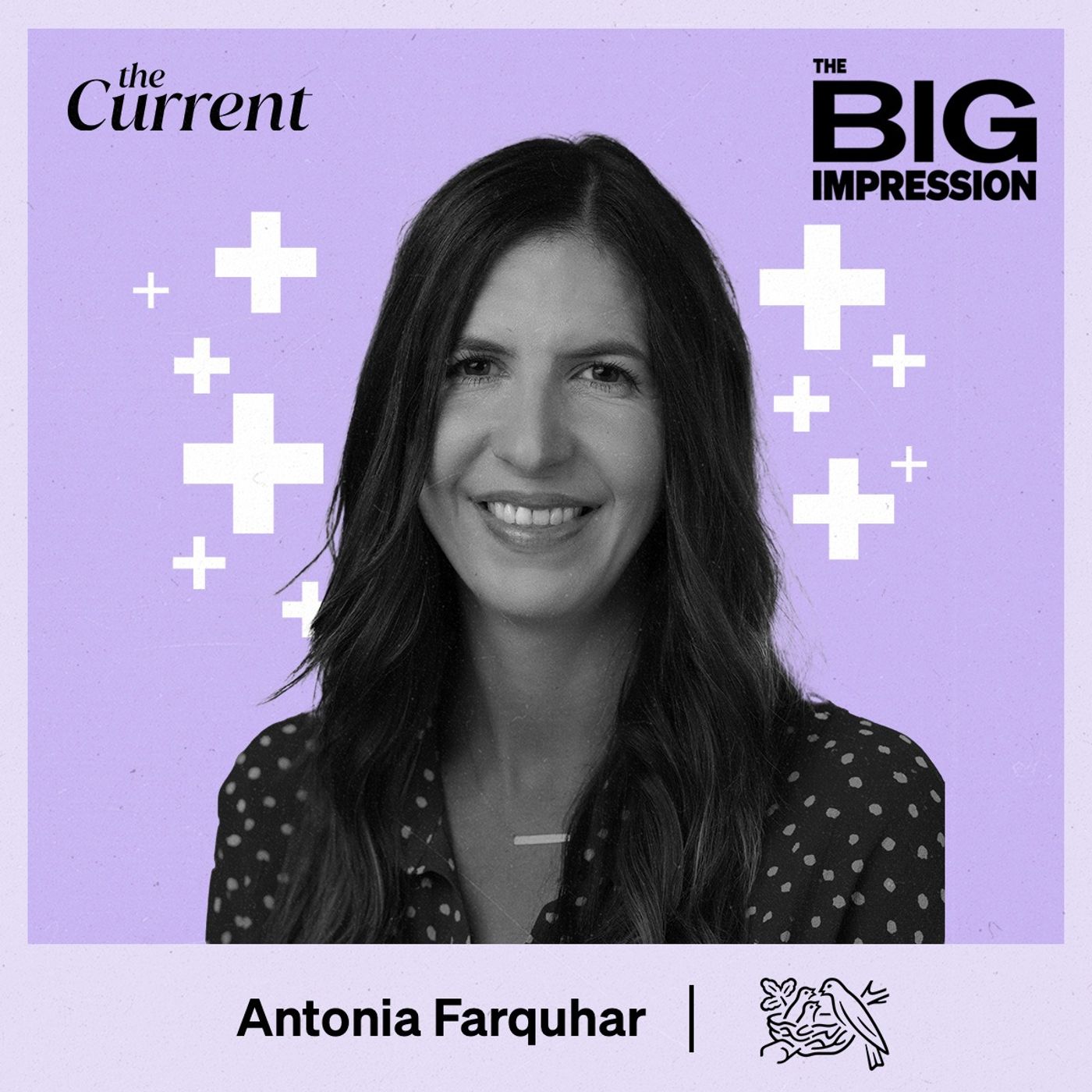
The Big Impression
Nestlé’s Antonia Farquhar on why KitKat and F1 joined forces
00:20:54
On the latest episode of The Big Impression podcast, Nestlé Global Head of Media and Partnerships Antonia Farquhar talks about KitKat’s potential to reach new audiences through live cultural moments like F1 races.
Loading summary
Transcript56 lines
- [00:00]
A
Damien.
- [00:00]
B
I'm Damian Fowler.
- [00:01]
C
And I'm Ilyce Lefring.
- [00:03]
B
And welcome to this edition of the Big Impression.
- [00:09]
C
Today we're spotlighting one of the most ambitious shifts happening in brand marketing. Nestle's global push to redefine performance in a world where reach, relevance and streaming now go hand in hand.
- [00:21]
B
Our guest is Antonio Farker, global head of media and partnerships at Nestle. Antonia has been at the forefront of Nestle's pivot towards connected TV and long term brand building across categories, continents and.
- [00:34]
C
Campaigns from Formula one to Gen Z coffee drinkers. She's helping Nestle rethink what media performance really means in a CTV first world and how brands can use new tools and data to close the loop between awareness and action.
- [00:50]
B
Let's get into it, Antonia.
- [00:54]
C
So I understand that you guys are sponsoring Kit Kat's Formula one. Mm. I'm very curious to learn more about that.
- [01:03]
A
Yeah. One of the reasons that the KitKat team put that sponsorship together was to really, they've got an existing brand strategy, have a break, have a KitKat right, which is decades and decades old. I think it's way over 75 years old. That consistency of brand message is there and it's really part of the foundations of that brand. But you know, the break is more important than ever in a, in a busy world that we all live in today. And so it was really putting the brand at the heart of also everybody needs a break. How can we capitalize that? And F1 has gone from being very much, I think known as a petrol head sports to, to really bringing in a different audiences so younger, more, more diverse across the genders and so, and it's global and KitKat is a major global brand of ours. So it's an exc opportunity to really bring together the brand in a. And I guess, you know, wouldn't have been an expected place and then to capitalize on that, on giving people a better break as well.
- [02:09]
C
Can you give me a little bit of background about why sports and why Formula One?
- [02:16]
A
I think for me sports is one of the last truly appointment of you live viewing. You know, you do not want to miss the race, you do not want to miss the final, you do not. You know, there's so many of those moments now where it is also people are talking about it, you know, who won, how's the lineup, where is it, et cetera. So it's part of cultural conversations and really the opportunity for our brands is to connect into what's happening, you know, making sure we are injecting our brands with freshness and bringing in that new conversations and I think sponsorship like the F1 and we also did Coffee Mate and the super bowl early this year, again to really capitalise on where's the real excitement happening and how do we inject our brands in a distinct way. Obviously being true to their brand codes, to new and different audiences.
- [03:13]
B
A sort of 30,000 foot view. You look across the landscape and you're like, well, these are the moments where.
- [03:19]
A
We need to show up for sure. I mean one of the role within the team is to really inspire and provoke and drive that distinctiveness for our brands. We are privileged to have a lot of huge global brands, but we're also over 150 years old as a company. So it's how do you inject that freshness? How do you stand out in an increasingly fragmented media landscape? So I think this is where we want brands to really lean in and as I said, it's holding on. What is your brand new territory? Where is that strategic? You know, foundations that hold true and need to be consistent. But how do you punch and become a little bit more maybe unexpected, you know, unexpected places is clearly one of the themes that I'm seeing in the industry lately that, you know, it drives that attention.
- [04:21]
B
When you talk about unexpected places, could you say a bit more about that?
- [04:26]
A
I mean, we all know we're living in a very attention, you know, the second you wake up the phones, the amount of apps on your phones, you know, it's increasingly hard and I think it will continue to get harder to really drive connectivity to brands with, with people. And so I think doing something a little bit different and perhaps you wouldn't, it's not predictable for that brand to be in that particular place or speaking in a, you know, in, in a different environment. I think that's an opportunity going forward and I think when you look at a lot of the award winning work globally this year, that's one theme that I really see coming through and I kind of love it. It's bringing a bit of fresh, it's bringing an edge and I think it's pushing people and brand experiences to a different level to where they were before. So yeah, and you know, it's fun. Exactly. It's fun and it's, I feel like it's almost. There's different areas where, you know, different brands have different tone of voice and so it's working out really. What is that? And then perhaps tapping into a community, really engaged in a particular community and how can you link your brand and derive some insights from that behavior to speak in that way.
- [05:46]
C
Certainly. Now I know you were talking about using sports to tap into that audience around appointment tv. Are there other channels that you guys are particularly leaned into at this time? Are there ones that you're experimenting with? How is that going?
- [06:03]
A
Yeah, so I think the more you know about, you know, marketing science, I'm quite a nerd when it comes to marketing science. But the more channels you're in, the higher your effectiveness. So again it's, it's about how do we do fewer, bigger, better campaigns and media activations to really, you know, get that consistent cut through. But in terms of channels, when you look at where the growth is at the moment, retail digital media is growing at an increasingly fast rate year on year. But connected TV is another one that I, I'm really excited to discover the future of that particular medium. I mean even in the last few years, the amount of ads that we serve on those on connected TV devices has more than doubled. Like the, the adoption rate is, is huge. And it's from, you know, where you'd expect the more advanced markets where, where most of the streaming service is for like the US and the uk but also markets like India, the Philippines, Australia, like the, the viewing habits are really sh. Covid drove that acceleration and we all spent a lot more time at home and people probably spent money on better TVs because there wasn't as much to do outside. And so yeah, that's, that's one I'm excited about.
- [07:29]
C
And I would imagine for a brand like Nestle that the, the intersection of CTV and retail media and E commerce is really exciting now that you can practically like shop through your TV too.
- [07:43]
A
Yes. Yeah, it's, it is. I think it's a great opportunity. I love the fact that that medium is, is back in the living room but, but advanced. Right. And it's now how do you, how do you make sure you're able to do a brand building experience and, and build an emotional connection but also give people the, the prompt to yeah, buy perhaps through a QR code or through the retailer websites. And obviously the audience piece is super attractive as well when you're really trying to nudge people to close the sale. So yeah, I think it's very exciting.
- [08:23]
B
I was interested in what you said just then about fewer, bigger, better, which is easy to say but perhaps not easy to execute. What kind of sort of mindset shifts were needed to get your teams kind of like to rally behind that concepts and how does it kind of show up.
- [08:42]
A
Yeah, Fewer, bigger, better is a phrase I feel like I say every single day in the office. We started on a journey a few years ago and it's all about the focus, right? So you know, focusing on the brands, ensuring they are well fed with the right amount of investment because we know that's one of the key factors of marketing effectiveness. But so you know, from where do we invest, how many briefs, etc. But actually also through to our agency partners as well. So how do we. We've done a big transformation across lots of parts of the globe to really consolidate our agency model, which has been a mindset shift to your point around, okay, if we scale and standardize then we free up more time and brain power to really create outstanding media activations and planning. And so we are in the, in the transformation area of that at the moment. But yeah, I'm, you know, it's bringing a lot of great benefits. Good talent, better work and a more we can scale faster. We're a huge organization. We operate in 188 markets and so therefore scaling information and driving that best practice is going to go so much faster through the, through the consolidation.
- [10:13]
C
When it comes to ctv, are there specific brands that Nestle owns that kind of fit that target audience a little better?
- [10:25]
A
I think it's a great question. I think it fits a lot of our brands. But to your point, it depends on where that behavior is happening. Often it can be younger audiences, but we are seeing it growing to really broad audiences as well. And especially the move we've had in the industry from really subscription to the ad model piece allows that large access as well. What I also am interested in this space is the type of content as well. So there's obviously a huge diversity in terms of super high production, you know, Netflix style content all the way through to, you know, sort of the UGC and that type of content as well. So again going back to the point earlier about different audiences and their interests, to me that brings a really thoughtful opportunity about are there different types of content that we, that makes sense for different brands to your point, versus doing a one size fits all. So I think that's, that's super interesting as we see the, the, well, the more and more content that comes out and the consumption increase as well.
- [11:38]
B
And what's also interesting, I guess is the global differences. I mean I know the APAC market is very mobile first and then different markets, more mature markets. The US CTV is strong. I wonder from your perspective, where do you see the big growth opportunities around.
- [11:57]
A
The world from a media, from a.
- [11:59]
B
Media perspective.
- [12:03]
A
Like you say in Asia, we see huge growth of shopping online. It's seamless and you can really go from discovering a product to buying it within 10 seconds. And so that, that is challenging, you know, some of the norms about the, the amount of time that people need. So yeah, again, it depends on the category and the, the purchase cycle there. But I think that's a great opportunity. Things like WhatsApp I think will be increasingly utilized by brands as a way, a more seamless way of connecting with shoppers as well. But, but I think social, retail media and connected TV are the three areas that we really focus on. But then the important ask within that is how do we do it in a way that is quality, culturally relevant with the right context, so we're able to cut through in an effective way.
- [13:07]
B
So you're working closely with different agencies in each of those distinct markets?
- [13:12]
A
Yeah, yeah, exactly, exactly. To, to find the right opportunity. And, and, and, and yeah, what are the local opportunities there too?
- [13:21]
B
There any surprises, you know, from your point of view? And I just want to say, like, I grew up in York and, and that was the home of Roundtree, Macintosh, which where Kit Kat started.
- [13:30]
A
Yeah.
- [13:31]
B
And then, you know, over the years we've seen KitKats show up in different places. Like in Japan, I think there's a version of the green tea or green. So that's an interesting kind of way.
- [13:41]
C
To collect them from around the world.
- [13:43]
B
Yeah, I think it's remarkable how the brand, sort of KitKat brand has kind of like scaled across the world, but it's still kind of true to that chocolate bar that I knew in York. When I used to wake up, you could smell the cocoa. So I'm just, it's, you know, are you kind of thinking about things like that?
- [14:02]
A
I think for me it's an, you know, with the brand team, it's about staying true to those foundations. Right. Have a break, have a Kit Kat and that core, you know, bar that you, you grew up smelling. Yeah, but how can you, how can you flex into those local regions, opportunities, flavors, tastes and I think that's an exciting opportunity. And obviously Japan, in fact, yesterday someone was saying about how they flew to Japan to buy the different types of KitKats. Right. Clearly a lot of people get excited about that. But, but we also have factories all over the world, so it allows us to diversify and, you know, able to deliver to some of the nature, some of the local taste preferences. But for me, you know, it's about Staying core to that, that brand really, because that's the foundation behind the piece. But yeah, you can also have fun with it with different flavor rotations too.
- [15:05]
C
Is there any advice that you would give marketers looking to make the same shift as you guys are doing from short term return on investment to long term brand building?
- [15:16]
B
Fewer, bigger, better. Right.
- [15:18]
A
Fewer, bigger, better.
- [15:19]
B
Is that what you say?
- [15:20]
A
Rallying cry. I'm going to have it on a T shirt. Exactly. But no, you should sell those too. Exactly. I think it's about focus. Right. And it's about really focusing on where are the areas of the greatest opportunity. I'm also a big believer in having data points at hand. So whenever we're challenged around some of the decisions that we're aiming to drive across the business having that the audience is actually growing by 50, 60, 70 or whatever percent and it's no longer just teens. It's a very broad audience and we, our products are super broad and it allows us to connect with people. Daily, Weekly. You know, it's again, it's that consistent piece that I think is really attractive there.
- [16:12]
B
What are you obsessed with figuring out right now?
- [16:17]
A
So many, many things at the moment. I, you know, just thinking about the conversation that we were having about quality of media and connected tv. I would love more understanding on the impact of ad loads. As I said, it does vary hugely across the different providers from sort of six minutes an hour to I don't know, probably 35 minutes an hour. Right. And again, I'm a big believer in you get what you pay for. So if you are, you know, if it is a higher cost, then the effectiveness is, is hopefully and likely higher. But again, proving the out I think would be, would be really interesting as well and what effect what it has on the effectiveness of that.
- [16:59]
C
Yeah. So what would you say is missing from the CTV marketplace as it stands today?
- [17:05]
A
I would love more unification to manage, this is a very technical media answer, but to manage reach and frequency more consistently. I think that's been a bit of a downfall of the growth of things like B Broad and ctv. That ability to effectively manage and not feel like you're wasting or annoying people with too many ads. So the unification of that across many devices would be my, my dream to be able to do and that, you know, that was never, it was never possible to unlock on linear TV for very obvious reasons. But as we are in a much more, you know, digitized world, you know, it does feel possible. I'm not, I'm not sure we'll get there but yeah, any, any unification that a lot of the DSP fees offer, to me they are, they're incredibly valuable to ensure we're, we're being more efficient and effective with our, with our investment.
- [17:59]
C
Very cool. Now, you know, I actually do have a follow up to what you said before about effective reach and cost. Do you feel like there are, do you feel like most marketers still have the mindset that they want to buy in at the cheapest they can, no matter what the effectiveness, or is that changing?
- [18:23]
A
Do you think it's changing? I think it is changing. I do. I'm a believer that the more great effective research and the more case studies and that sort of part you read, it's not about that. To me, these are soft metrics in terms of did the campaign deliver what you signed for on your media plan? But really we're here to drive business and brands and, you know, whether it's, you know, cross between equity and sales and category growth. So to me, you have to come back to is it driving business results, making sure you're able to measure and manage those effectively? Because, yeah, if you can't, if you can't measure it, you can't manage it and you can't go back and say, well, we reached this many people, but did they convert? Did they do anything? Do they feel differently about your brands? These are the questions I'm really interested to answer, I guess.
- [19:16]
B
Final question. What's one of your favorite Nestle ad campaigns, past or present?
- [19:21]
A
This is a tough question to answer because as a, as my role is global, you know, the brands are equal. I have to say some of my, some of my favorite. Well, I think it's timeless is the, you know, the George Clooney and Nespresso pieces as well. The art direction there, I always think is, is beautiful. And I'm a, I'm a big, big Nespresso fan, I have to say, from a personal perspective. And also in, in Australia, New Zealand and Asia, there's a brand called Milo and that is all about sport being, you know, a great way of bringing together people to learn and play and have fun and, and they've done some fantastic ads throughout the time, really showing that resilience and the grit as well that it comes to, you know, what sport can teach you to do. So that's some of my favorite ads that we've done.
- [20:29]
B
And that's it for this edition of the Big Impression.
- [20:31]
C
This show is produced by Molten Heart. Our theme is by Love and Caliber and our associate producer is Sydney Cairns.
- [20:38]
B
And remember.
- [20:39]
A
Yeah. Fewer, bigger, better is a phrase I feel like I say every single day.
- [20:43]
B
I'm Damien.
- [20:44]
C
And I'm Elise.
- [20:45]
B
And we'll see you next time.