← The Big Impression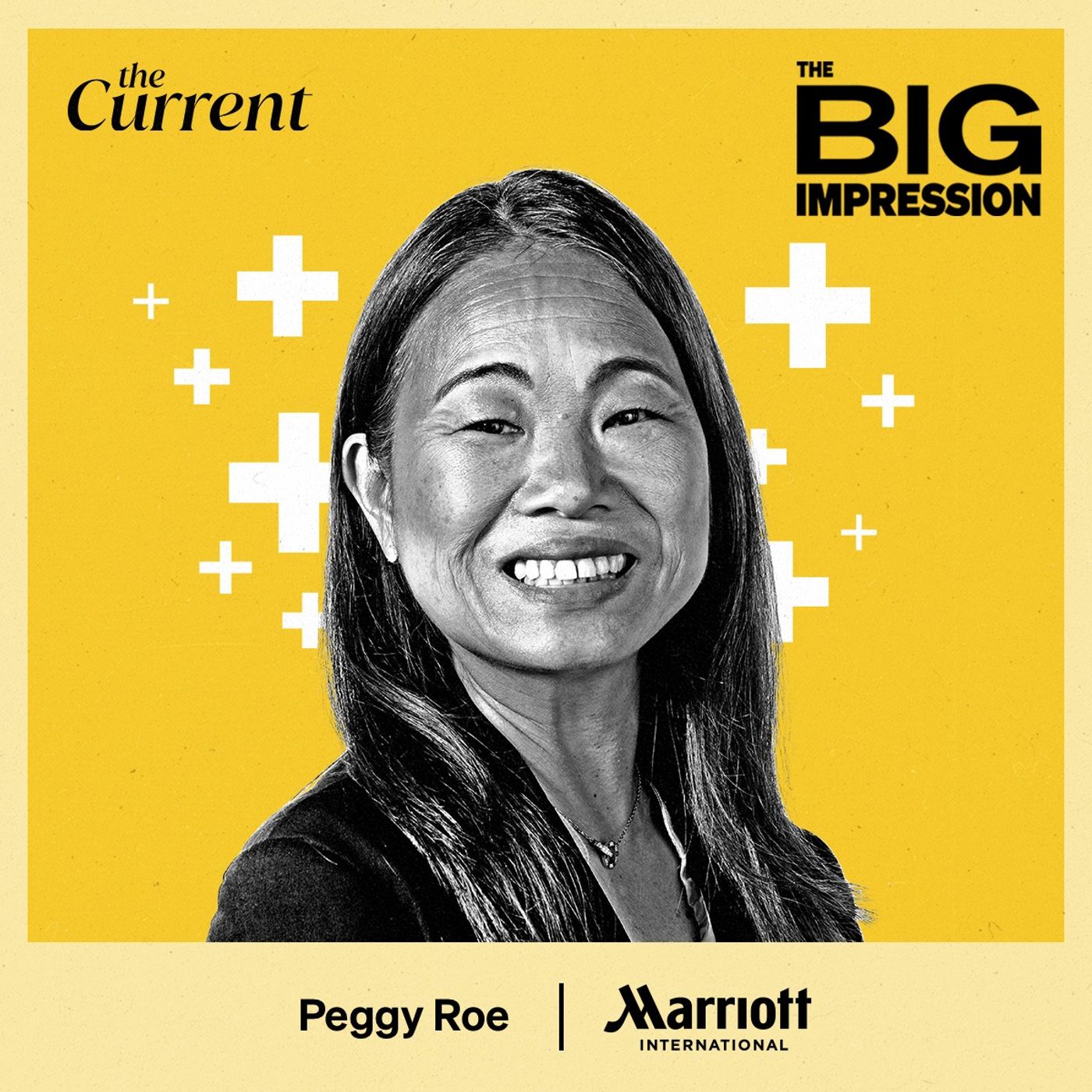
The Big Impression
Peggy Roe on redefining the travel journey — from loyalty to living a life well-traveled
00:26:04
Discover how Marriott International is transforming travel through personalization, commerce media and its new Media Network. EVP Peggy Roe shares insights on helping guests live a life well-traveled.
Loading summary
Transcript74 lines
- [00:00]
A
I'm Damien Fowler.
- [00:01]
B
And I'm Ily Slifring.
- [00:02]
A
And welcome to this edition of the Big Impression. Today we're joined by Peggy Rowe, Executive Vice President and Chief Customer Officer at Marriott International. Peggy leads Marriott's global customer strategy across more than 9,700 properties worldwide. She's here to talk about two big the launch of the Marriott Media Network, the first of its kind in hospitality and a brand new campaign that taps into travelers passion for the outdoors. You know, Marriott recently launched its media network, so making you the first major hospitality company to step into commerce media. What makes your approach unique compared to retail or airlines?
- [00:49]
C
You know, I think we see the opportunity to bring brand partners to the travel journey and for customers to see those brands and products from a different lens. And I think that's where we see the opportunity and I think a lot of it stems from, you know, I've been at Merit for 20 over 20 years, but really thinking a lot about what's in the heads of a head of a traveler when they're thinking about the journey. Everything from the moment in which you start planning all the way through the end of your trip when you're reliving your memories. And if you think about what's in someone's head during that time, it's not just about the stay itself. There's a lot of thoughts that are happening and permeating around that time that you plan a journey. So we think that there's a lot of opportunity for different brands and products to play a role in influencing that whole time.
- [01:43]
A
Yeah, there's definitely a long arc between that first thought, oh, I want to go somewhere. I mean it can be months or.
- [01:51]
C
Year and you're often planning multiple trips at one time and then coupled with that's a single trip or journey. We're also thinking about keeping our travelers over a lifetime right with our loyalty program. And so if you think about the role we play in helping people live a life well traveled, then think of all the products and partners that could play a role in that.
- [02:13]
A
It is about the customer experience, but it's also an advertising opportunity and it's also about personalization. Could you talk to those points as well about the media network?
- [02:23]
C
And actually it's a good example of how a media network stems from our core business and understanding the membership base that we've built over time. And in the past we started as a hotel company marketing our brands to travelers, hoping that you would understand each of our brands. We now have over 30, so we've had to Flip our strategy and understand who you are, what you care about. Passions and preferences is where we focus. And understanding those passions and preferences is what allows us to create an audience with over 400 attributes and the media network that allows so many brands to take part of the actual travel journey. And all of it feeds on each other. Right. So the more we understand you, the partners that you like, the products that you like, the more we can deliver on a better experience, even when you're staying or traveling with us.
- [03:13]
B
And speaking of those brands, I know you partnered with brands like Pepsi and Visa. What has been the reaction from advertisers and then what excites them about this opportunity the most?
- [03:24]
C
Yeah, we're actually really appreciative of some of our core partners who jumped in with us and said, sure, let's try it. Right. And so both Pepsi and Visa were those partners. And, you know, at first we were really testing and learning. So Pepsi said, we'd love to talk about Gatorade. And we said, great, we sell Gatorade in the hotels. Let's try it. And I think at first brush, we were sort of just putting a Gatorade message in the channel. And quickly we said, well, you know, why don't we actually talk about hydration on travel? Because that's the pain point for travelers, is staying hydrated. So let's take Pepsi's products and their expertise around hydration, and let's put that in the network. Right. And so we started creating links to a hydration survey and then positioning products that were focused on that at different points in the journey. And then we saw an uplift in Gatorade, Gator Light, and hydration products in the actual hotels.
- [04:22]
B
Wow. So it sounds like it can be like a very customizable experience.
- [04:25]
C
Very customizable. And what I love about it is test and learn. Right. You can iterate. We had the first version up for a week. We changed it the week after, and then we could see very measurable results right away. And, and for our media network, one of the things that we're very focused on is the measurement.
- [04:42]
A
So the media network is obviously one part of that customer journey. But we also want to talk about your latest campaign, which taps into how people are reimagining travel, and that's a big focus on the outdoors. Could you talk about this and why it was the right time to sort of focus on nature based travel?
- [05:00]
C
Absolutely. Well, in general, our strategy has been to elevate Merit Bonvoy to be the brand that gives you access to people Places and passions. And those passions, as we've been studying them post Covid, are, you know, people are traveling for music and culinary and sports and the outdoors. And when we talk to our own community, we found that over 80% of the community was planning a trip for the outdoors in the next 12 months. And one of the pain points they had, though, is a lot of people discovered the outdoors during COVID because they wanted to spend more time outside. And they said, well, they were more likely to plan a trip to go camping if there was a bed and a bathroom, which. Fair, right. But we discovered new products, and we recently acquired postcard cabins and a brand called Trailborne. And these brands facilitate an outdoor experience, but you get a nice bed and a bathroom along the way. And so we leaned into both of those brands at the same time. We decided that as we looked in our database, that people's passions around the outdoors cut into seven categories. And so we wanted to frame the existing properties that we had 450 hotels already today that are facilitate an outdoor experience. So we started categorizing. We have over 100 properties that will give you a great ski experience. We have over 300 properties that facilitate camping and hiking. And then we added on 50,000 homes and villas and thousands of moments, experiences and tours, activities that go alongside. And we launched it last week. And the reception has been very positive. And what people are saying is, well, I didn't really know Marriott had all these things for skiing. And now I can find it more easily within the portfolio, I guess.
- [06:54]
B
How are you finding those consumer insights through this campaign and then perhaps even from your retail media network? How are you stepping back almost and looking at the whole picture when it comes to the data? And how are you planning on using that moving forward?
- [07:12]
C
Yeah, I think that's been such a flip for us because we, you know, as a hotel company, we're very focused on marketing the brands and the hotels to fill the destinations, which we still are very focused on. But the flip has been looking at the audience and the source markets that drive travel, and then understanding each of those audiences better. And then for a specific person, the insight is that an individual takes multiple trips. And based on who they're traveling with and why they're traveling, they start to become very multidimensional. Right. So you have to understand the individual at the end of the day. And so we look at both. We have a community of 10,000 members who kind of give us their insights on demand. Right. We'll throw out a question, and in a few Days, we'll find out how they feel about something. At the same time, we're looking at the data around preferences and passions that people are giving us every day as they click on things in our ecosystem or tell us outright.
- [08:13]
A
You've also got a really clever kind of part of the campaign called the Drop Pin Challenge and wanted to know how does that encourage travelers to think differently about how they plan trips?
- [08:23]
C
Yes. We have Dylan Efren as our ambassador and he's dropping these pins, 20 of them, around the world in outdoor destinations. And we're encouraging members to get outdoors and to go find the pin. And so if you find the pin and you scan it, you can get win 10,000 points. And so it's a, you know, it's a campaign to get people out to go to school, discover these locations and also find the hotels.
- [08:52]
A
Has anybody found them yet?
- [08:53]
C
I don't know. I haven't actually heard anyone. But there's plenty of social posts where Dylan is kind of giving hints to where the people are. So I do. And you can actually find out where they are on the website and go find them.
- [09:06]
A
Good to know.
- [09:07]
B
So diving into AI really quickly because AI is reshaping everything, but one of those things is travel and trip planning. How is Marriott embedding itself into the way travelers and make decisions?
- [09:22]
C
Yeah, I actually am really excited about this because for years the industry has forced consumers to put in dates and a location to then figure out, you know, what are the hotels available? And I always scratched my head, like, why are we limiting people to just having to know a location and a date? Because actually, most people can't name the destinations necessarily that they want to go to. Right. Discovery is about, hey, take me to a place that, you know, can give me X. Right.
- [09:53]
B
And that's part of the fun, part of the journey.
- [09:55]
C
That is part of the fun. So when AI came onto the scene, generative AI, and it opened up the opportunity for people to just say whatever they wanted. I was like, this is a great opportunity. We started testing it. This is almost two years ago now. It was interesting because people were kind of frozen. Like we, we tested on homes and villas. We just gave you a box. And people didn't know what to ask because they were so conditioned to put in location and dates. So we started prompting, hey, ask about where you can take your dog. Ask about where you can be close to ski or hear music or near a beach for your family. And so we had to train people. And then all of a sudden we saw the floodgates open. And people just started telling us all the things that they cared about and wanted to know and even some personal things, too, which is great for data. But I'm excited because I think it does reshape how you enter the conversation with us and what's possible in terms what you could ask Bonvoy for in the future. Right? You could ask us anything. Like, how many points will it take to go to Italy? Like, where could I go to discover surfing? Just it's. It's endless in terms of what you could ask. And we have a portfolio of 9,000, over 9,000 hotels, destinations, experiences that we can connect you with.
- [11:12]
A
It is a conceptual shift in the way people think about travel. I think, you know, technology is making that possible. But one of the things, you know, great marketing like this also has to move the needle. So I wanted to ask you about how you're tracking results and what's surprised you so far.
- [11:27]
C
I mean, the outdoor campaign just launched. Right. But we still focus on four KPIs. When we think about marketing, for us, it's about consideration. Right. Do you know Merit Bonvoy and our brands? And are you considering us when you think about the next trip? And then we're after incremental room nights, Right. Our distribution itself does pull business, but at the end of the day, we want more, right? We want more share. So we're looking at incremental room nights. The third metric would be growing the membership base. Right. We want to have, I think there are 1.4 billion travelers out there in the world. We've enrolled over 250 million. But we want more. Right. Like, we want to create the most valuable customer base in the world across price points. And then lastly, we want to deepen loyalty with customers. So we want you to stay with us over a lifetime. Our most valuable guests today stay with us for over 14 years in the program. We hoping to lengthen that even longer. And we're looking at the spend that you have with us over a year and over a lifetime.
- [12:34]
B
Wonderful. Is there a specific demographic you're trying to go for here, or is it across the board?
- [12:40]
C
It's really across generations, if you think about travelers. Right. They're traveling across and even younger today. So we're looking at how we first impact you when your parents take you on a trip. Right. And we make that impression for you all the way through when you actually enter our program, which is generally today. Right. Probably your college years or before even right before you start ramping up, when you start working. And then you really get into different levels of using our portfolio. And even for many people who've retired, they're even living with us today, they're traveling more because they have more time and they're living with us in residences. And so we're extending the portfolio, both lower price point to get more of the growing middle class and longer term for you to enjoy life.
- [13:30]
B
I also read an interesting article recently about how more people are traveling by themselves, single travelers, and how brands and companies have to almost look back at their playbook and come up with different access points for them and deals for them specifically.
- [13:51]
C
Yeah, there are a lot of female travelers traveling solo, you know, early in their either careers or, you know, before marriage and. Or even a lot of females are not even getting married. And so there are a lot of girls trips that are planned, friends trips, and then just solo travelers who are looking for other communities to connect with.
- [14:13]
A
That's interesting to think about the kind of range of audience that you have to appeal to. And that would imply also a range of channels and tactics. Are there any that you kind of like have been drawn to or surprised you in the way that they've drove this meaningful connection with these different groups?
- [14:28]
C
Yeah, I think because we are looking at the different channels and mediums around the world, and it's actually quite different country by country. So it is a bit of a challenge to have a focus strategy. But that's why we create a centralized platform for merit. Bonvoy. You know, by positioning the brand as a brand that could give you access to people, places and passions over a lifetime, really opens up the opportunities for our marketers around the world, even for our individual hotels and brands to target a segment that they think is most relevant. And then for channels, we're everywhere and we're talking to People, sometimes through SMS, sometimes through WeChat, sometimes through WhatsApp, sometimes through the website or the mobile app, which is the most effective. Most of our most loyal customers are using the mobile app and then being here this week at Advertising Week, we've talked to a lot of creators and I think I'm most intrigued by that because the next generation is really most influenced by those creators. My own children, 14 and 17, are telling me about my own hotels through the creators that are influencing them today.
- [15:40]
B
I would love to zoom out and, and talk about the bigger picture a little bit, both in hospitality and in your own career. Travel obviously has gone through huge shifts, as you mentioned, loyalty programs to personalization. Travel expectations are always changing. How have traveler expectations evolved during your Career.
- [16:03]
C
Yeah. I have seen a lot in over 20 years. And when I first joined Marriott, this will date me. But it was free WI Fi, right? Beds. Beds were very popular. The Western Heavenly Bed launched and people were really, surprise, surprise, focused on sleep in the hotels. And that was a new aha moment. And so I remember my first campaign was actually to help roll out the new beds in all of our brands. The Merit bed, the Western. You know, looking at the. It was before we had Starwood, so it was a Western Heavenly bed and that was really like an innovation. And then it was free WI fi. Right? We should have free WI fi in the hotels today. That is staple, right? Like you have to have WI fi in the hotels. And so. And then fast forward, like for Marriott, we were very focused on business travelers because that's where the frequency of travel came from. That's how the loyalty program was established. And then if you fast forward. I spent a lot of time outside of the US so I saw us grow very globally. And to start to take experience like Marriott, that stands for consistency and service and quality, and to see that come to life around the world was very powerful. And then we acquired Starwood. And so then to expand the number of brands where we could do that across port price points and our presence across the world. You know, the members at first were like, well, I don't know, like, I really love svg. Is Merit going to be able to do the same? And today travelers tell us they're just so happy that there's so many options that they can find that stand for quality and consistency and service around the world. But there's so many permutations of how that comes to life and how local that can be. And then post Covid, of course, we saw a massive shift leisure during COVID and afterwards. And so now our portfolio is really focused and blended on business travel, leisure travel. And then as I've talked about, the evolution of us being really a brand and a platform that can help you enjoy travel over a lifetime. And so we've moved into experiences, you know, since then. People are traveling for their passions. You never used to leave your hometown to go to a concert. You waited for it to come to you. And now you're traveling for your favorite band multiple times a year, as we saw with Taylor Swift and that sponsorship. And so we've just seen the evolution of travel become more a central point to your life. And that's why we want to, you know, help people live a life well traveled.
- [18:41]
B
Yeah, yolo as the kids say, yes.
- [18:44]
C
Exactly.
- [18:44]
A
That is a good point about concerts that people do now. Like if they can't get a ticket, especially when the tickets are really hot, like the Taylor Swift eras tour. Like I know a lot of people who went with their kids international.
- [18:57]
B
Yeah.
- [18:57]
A
To London.
- [18:58]
C
Yeah. Well one, because they could get a better price. When they look at the total cost of their experience. They could get a better price and even with airfare, then they could discover a new location. And so that combination of go after music or culinary and discover a new destination has been the new vacation. And it's even flipped because we spend a lot of time with artists now. Artists are trying to spend more time in one location. It's obviously more efficient for them. Right. To stay for a couple weeks, to have a residency and then have people come to them.
- [19:30]
B
Interesting.
- [19:31]
C
Yeah. A lot of different shifts in the industry.
- [19:33]
B
Definitely. It's wild. And it's such a competitive space as well. How do you keep that like momentum going and what's next for Marriott as you build on the media network and the outdoors campaign?
- [19:46]
C
Yeah, look, we're always pushing forward, growing. There's so, so much room to actually we already big but to grow more hotels, more brands around the world to really satisfy the different price points and experiences that people want around the world. So you'll see us continue to grow with new brands and experiences. At the same time we're growing the audience. Right. We were after those 1.4 billion travelers and we want to more deeply understand them. And all of that helps both the media network and our core business and our owners of our hotels at the same time.
- [20:22]
B
Yeah. And obviously after Covid, like you mentioned, there was this massive push for people to go outside and experience new things. Do you see that slowing down or is that just going to continue in your eyes?
- [20:34]
C
I think that, you know, because people are discovering their passions through travel and vice versa, we're just going to see that become more and more a part of how people think about their living their lives. And you know, for us, for the outdoors, I think we're only scratching the surface. We just started figuring out how to merchandise against seven different passions. We're, we're going to deepen that with partnerships. And if, if skiing or fishing or hiking is really something you love. Right. We're really going to be able to deliver on that for you.
- [21:06]
B
Exciting.
- [21:07]
A
Yeah. So I guess what I'm hearing from you is despite whatever, you know, people have anxieties people have about inflation and the economy, the state of travel is strong.
- [21:17]
C
Absolutely. I mean, if you look at how people are spending their money. Right. While inflation might be affecting their purchases, it's happening more in the physical things and not in the experiences. Maybe the more tactical travel. Right. In the short term. But they're still saving their money to go after those concerts. Right. You don't see ticket prices changing.
- [21:39]
B
No, you don't.
- [21:40]
A
Yeah. I think experience is. People have come to value that more than ever. I think the premium on that is. Is there.
- [21:47]
B
Let's do a quick lightning round of questions for you. What is one traveler trend you are obsessed with right now?
- [21:55]
C
Packing. Packing efficiency. Right. And I think for me, because I don't like to check bags unless I really have to, I start with the shoes because the shoes are the problem with packing.
- [22:10]
B
Right.
- [22:10]
C
You get too many pairs of shoes and then you have to check a bag. And so if you decide that you're gonna wear the black pair of shoes and then you can plan from the bottom up, then you become much more efficient.
- [22:21]
B
That is very wise.
- [22:22]
A
That's so good. I do that.
- [22:25]
B
I feel like a lot of people wouldn't necessarily think about that, though.
- [22:28]
C
Yeah, you guys.
- [22:29]
B
So true.
- [22:30]
C
And if you're gonna work out, right. So you need one pair of shoes that you can wear for the week to work, and then you have your workout shoes, and then you stop there. Right.
- [22:38]
A
Because workout shoes can take a lot of space. Well, mine do anyway.
- [22:41]
C
Well. And I'm always thinking about what are the most efficient workout shoes I can bring, depending on the kind of workout. And are they going to be light or heavy? Right. Yeah, it's a whole thing. There's a whole science to it.
- [22:51]
B
What is your favorite Marriott memory, either as a guest or from your career?
- [22:58]
C
I've spent a lot of time around the world, and I think sometimes. Sometimes consumers don't know this about us, but we're really in service of enabling communities around the world. We are a hotel, and that's how we manifest ourselves. But the owners of our hotels and the associates that work in our hotels are really part of every country and fabric and culture. And for me, having spent a lot of time around the world, to see a Marriott hotel come to life in different parts of the world, particularly I went to Rwanda recently, and to see a Marriott experience in Rwanda show up was just really something special for me. It's like. It's the combination of the owners, the banks, the associates, and then the consumers that come to travel there. And to see that dynamic come together says something to me about what we've been able to create all over the world. That doesn't appear necessarily just off the cuff.
- [23:59]
A
So that's amazing. Yeah, I hadn't thought about that. The extensive, like archipelago, as it were, of properties you have and franchisees, there's so many.
- [24:08]
C
We're in so many countries around the world and we employ so many people around the world. We give owners the opportunity to bring our brands to life. And a lot of people don't know this too, but in every community around the world, the general managers of the hotels get together to form a business council and they're often doing community service together with the associates for that community. And that's, we call it internally part of our good travel program and how we build love travels around the world as a result. And so we're doing a lot of that behind the scenes, which I hope to bring more to the forefront as part of our purpose as our company that we can share with our consumers.
- [24:53]
A
I've got one more quick question just because you gave me an idea then, because you have this extensive range of properties around the world, like in places that people may not initially consider, are you seeing travelers experiment with more exotic locations or locations they perhaps wouldn't have gone to? You know, obviously there's the big staples, you know, people would go to, but beyond that.
- [25:13]
C
So I see the aspiration to do that. And this is where AI is going to crack this wide open, right? Because once you can start asking us for more recommendations, we can actually start telling you because we have a lot of first, second, third tier, fourth tier cities where we've built amazing hotels. Nobody knows how to call those destinations by name. And so again, like we did ourselves a disservice by forcing you to put in a location and a date where now we can tell you about those third and fourth tier cities. So.
- [25:49]
A
And that's it for this edition of the Big Impression.
- [25:51]
B
This show is produced by Molten Heart. Our theme is by Love and Caliber and our associate producer is Sydney Cairns.
- [25:58]
C
And remember, test and learn, right? You can iterate.
- [26:01]
A
I'm Damian. And I'm Elise and we'll see you next time.