← The Daily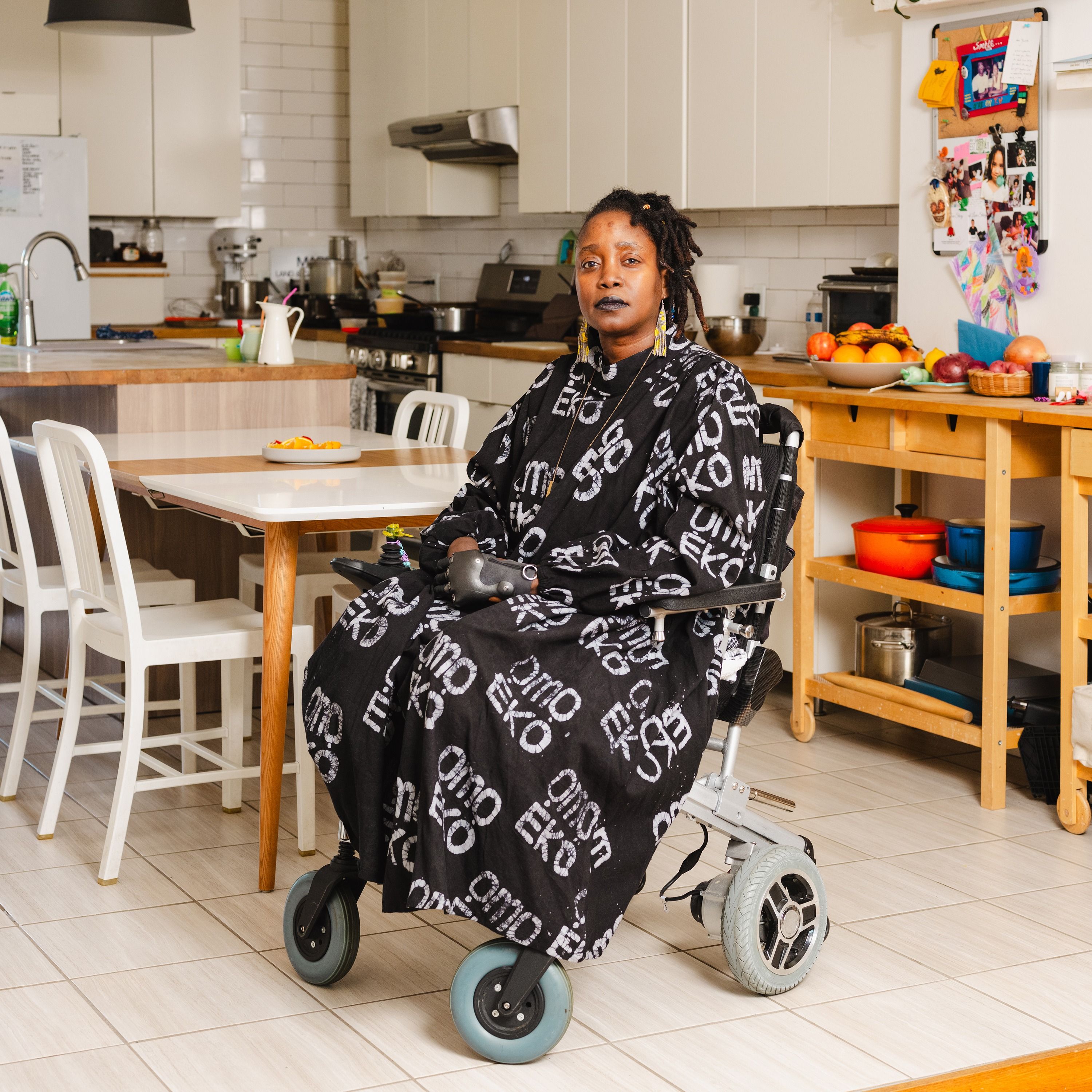
The Daily
After Losing Her Limbs, Our Cooking Columnist Returns to the Kitchen
00:31:29
For decades, the kitchen was the centerpiece of Yewande Komolafe’s life. She spent long hours there, first as a restaurant cook and later as a recipe developer. But though she loved the often-intense culinary world, she had to navigate it with certain limitations: She was born with sickle cell disease, an inherited blood disorder, which required her to carefully manage her working life. She did so successfully, becoming a celebrated cookbook author and food writer for The Times. A medical crisis in December 2023 changed all of that. Komolafe ended up in a coma for six weeks, and after emerging learned that both her legs and her fingers would need to be amputated. In this episode of “The Sunday Daily,” Komolafe tells Rachel Abrams about what happened and how, after everything, she made her way back into the kitchen.
Loading summary
Transcript145 lines
- [00:01]
A
From the New York Times, I'm Rachel Abrams and this is the Daily on Sunday. Yoande Comolafe is a cooking columnist here at the Times. She's worked for many years in restaurants. She's known for translating complicated restaurant dishes into recipes for the home cook. Her cookbook, my Everyday Lagos, was nominated for a James Beard Award. But almost three years ago, Comolafe's life took a dramatic turn when she nearly died in the midst of a sickle cell crisis. When she woke up from a weeks long coma, she learned that her body would be profoundly altered by multiple amputations. Now Yande is back to work creating recipes and writing again. Today, Yande spoke with me from her kitchen in Brooklyn about what it has been like to return to her life after this crisis and how cooking and food played an essential role in her Recovery. It's Sunday, August 2nd. Yande, welcome to the Sunday Daily.
- [01:06]
B
Thank you for having me.
- [01:08]
A
Before we talk about everything that you've been through, I wonder if you can explain what sickle cell disease is and how it affects the body for our listeners who are not familiar with this disease.
- [01:18]
B
Yeah, so sickle cell is an inherited blood disorder. I was born with it. I've always known I've had it. And so the shape of normal cells are spherical. And in that way, normal cells are able to pass through your arteries, your veins, your capillaries. But sickle cells are literally sickle shaped. And it's almost like that's like half of them missing. And in that way, when they try to pass through your artery, your veins, your capillaries, they sometimes get clogged. And that could result in a very painful crisis of like the joints. And it almost feels like a pain that you can't quite touch.
- [02:11]
A
What do you mean by that?
- [02:12]
B
It's like an internal pain. And I've grown up with this disease. I've always known I've had it. And I would also credit my family and my mom for teaching me how to take care of myself, both using natural medicine and using Western medicine.
- [02:34]
A
How did all of that affect how you worked in the restaurant industry? Like, what kind of adjustments did you have to make in order to have the jobs that you did?
- [02:43]
B
You know, it's, it's interesting because I never thought of sickle cell as something that would hold me back. I understood that if I was able to take care of myself, literally drink a gallon of water every day, do things like that, pace myself through the work, get enough sleep and get enough rest, I can manage my disease. And so If I worked a long shift, I knew that I needed like three to four days to recover from that. And so it was a lot about. It was a lot of like just understanding my body to an extent where I knew that if I did go ahead and push myself to that limit, you're not going to see me for like 10 days because I'll be sick.
- [03:35]
A
That sounds really challenging.
- [03:37]
B
Yeah. And so it took a lot of coming to terms with the fact that I have it, even though it's easy for me to talk about now. But it wasn't always easy for me to say or highlight that, oh, like I have this disease. And I think I was also in a position where I looked normal, like compared to everybody else I looked at. Like I was normal, whatever normal was.
- [04:07]
A
When you say normal, I'm curious what your life looked like when you were a recipe developer. I wonder if maybe you could just walk us through a typical day for you before this medical crisis happened.
- [04:18]
B
Yeah, I, I feel like an average day for me would start by writing the recipes and then sourcing the ingredients. So like going around to different grocery stores, go to the markets and like feel and touch and see the vegetables that I was getting and then start preparing them however the recipe specified.
- [04:37]
A
Sounds like you were running around a lot.
- [04:39]
B
Yeah. And usually like it would be depending on what I'm working on. I would be stove side or like in the kitchen between like one to. I would say I sometimes went until like 8pm but I'm always thinking about food. So it's, it's never really like there's like a turn on and turn off switch. It's like I dream about food. I dream about creating recipes, you know, and in my excitement sometimes I wake up and like jot that down or take notes if I remember my dreams.
- [05:13]
A
Oh wow. So you dreamt about food. I can imagine that means that you have been quite passionate about it for some time. Where do you think that interest came from?
- [05:22]
B
I think, I mean, I would say that my mom definitely like was the catalyst for that.
- [05:26]
A
How so?
- [05:27]
B
So I, I grew up in Lagos, Nigeria and my mom was a food scientist and she worked for Cadres Chocolates. But she also would bring things home to sort of like test out on us as kids. Okay. So I remember this about my childhood is that we always had like a five pound bag of all sorts of candy and it was usually stuff that she was working on. She was particularly working on how to develop a chocolate that's like shelf stable in the Nigerian heat that doesn't completely collapse and dissolve and, like, she would try out the different tests on us. I saw it my entire childhood. And so moving here, I first signed up to be a biochemist like, like her. And did not. That did not happen. But I had actually encountered a pamphlet from the CIA while I was living with.
- [06:25]
A
Yeah, oh, wait, you're the Culinary Institute of America.
- [06:28]
B
Yeah,
- [06:32]
C
not.
- [06:32]
B
Not that CIA. Like, the culinary institution was about to
- [06:35]
A
take a weird turn.
- [06:37]
B
Yeah, I had come across a pamphlet and I was, like, intrigued. I was like, oh, wow, you could go to school to be a chef. And so I sort of like put that in my back pocket. And I went to college and I felt like that was for my parents. And going to culinary art school was. Felt like the first decision that I made for myself.
- [06:56]
A
Eventually transitioned from being in restaurant kitchens to being in your own kitchen. Of course, writing about food, writing about not just cooking, but adapting recipes, it's one of the things that you have been known for. Can you tell us a little bit about what your life was like in November 2023, right before you got very seriously ill?
- [07:17]
B
Yeah, it was great. I had just finished my first book and I was in the middle of my book tour. I had done a few events. I had gone to Lagos, I had gone to all the New York events, and my husband, my two kids and I went to Paris for Thanksgiving. And we came back, we were all sick. We all had, like, contracted something, like, either in the airport or like, just by flying, like with the flu or a cold. Yeah, well, we didn't know. We didn't know what it was, but we knew that we were all sick. Eventually. That weekend I decided that I was in too much pain to try to treat it at home.
- [08:01]
A
You mean sickle cell pain?
- [08:03]
B
Yeah. So I went to the emergency room. We found out I had influenza A, which is actually very deadly for people who are immunocompromised. And so I got dropped off at the ER by my husband. He took the kids back home. I only remember through several text messages that I sent both to my husband as, like, an update of the status. And what I kept saying was that I'm in a lot of pain. I'm still in a lot of pain. And I can tell from that that my pain wasn't being managed.
- [08:50]
A
But you don't remember this period?
- [08:51]
B
Yeah, I don't remember this part, but I know what to ask for when I go to the hospital. I'm like, I need oxygen, I need fluid, like IV fluids, and I might need a blood transfusion. And I need pain medication. Those are the four things that I asked for. And this time it felt like the things that I asked for were not given to me. And there was a whole series of errors that happened and weren't corrected. And that's why things escalated in the way that it did.
- [09:23]
A
So what happened after that?
- [09:26]
B
I woke up in a different hospital, completely different hospitals. And everybody's faces look worried. I was told that I was in a coma for six weeks. Yeah, I was in a coma for six weeks. Wow.
- [09:43]
A
So when did you realize that this was more serious than previous episodes that had sent you to the er?
- [09:50]
B
I think in the weeks after I woke up, starting to look at all the scars on my body, the nurses would try to get me to do different things in stages and then realizing, like, oh, I can't quite lift up my arm. Oh, I can't quite, like, lift my leg. Like, what's going on? I also could. I couldn't see my legs because they were really wrapped up, but I could see my fingers, and my fingers had turned black, like, completely. And so parts of my body died while I was in a coma, and there wasn't enough blood flow to certain parts of my body to continue circulation in a normal way. And so the decision was made to amputate those parts of my body.
- [10:48]
A
And just to be clear, can you explain which parts?
- [10:52]
B
Well, it was. So it was the fingers on both hands and the legs below the knee. And so I got amputated nine fingers. I still have my thumb, and also both legs below the knee.
- [11:14]
A
Do you remember what you were thinking and feeling?
- [11:18]
B
Yeah, I, I, I would say I was definitely shocked, but I also sort of, like, took a deep breath and was like, okay. Like, I don't know that I processed it then. I think that I'm processing it now. It almost felt like I was in go mode, which it's sort of like a restaurant term where I was like, okay, like, we're going to get through this. Let's go. Let's do this.
- [11:55]
A
Like, the same mentality of being a chef.
- [11:57]
B
Yeah, it's like the same mentality of, like, being a cook. It's like, go mode. Like, let's do this. Like, service has been great. Like, service is going on. It's super busy. Let's do this. Like, we put our heads down. It felt like it was another step towards my survival. Yeah. And I wanted to survive.
- [12:20]
A
We'll be right back.
- [12:31]
C
Tell me if any of this sounds familiar. Eating meat is the key to good health. Nicotine can boost brain function. GLP1s are a miracle drug. I'm Dani Blum. I'm a health reporter at the New York Times. We're bombarded pretty much constantly with claims about how to live better and feel better. And it's really hard to separate fact from fiction. That's what really differentiates my reporting and the Times is that I am scouring the science. I am speaking with leading experts. I am making sure that everything I write is rigorously researched, reported, and that I can back it up. And when the science isn't clear, sometimes that is the story that we don't know the answers yet. And that's a level of nuance and depth you're not going to get just floating around the Internet. That's what you get when you subscribe to the New York Times. If you already subscribe, thanks. If you'd like to go to mytimes.com subscribe
- [13:29]
A
Yuanda, you were in the hospital for a very long time. You were navigating all of these incredibly difficult things. I think anybody facing the kind of new reality that you were was probably not immediately thinking of food. But in your case, you have written about how returning to food played such a big role in your recovery. Tell us a little bit about how it did that.
- [13:50]
B
So I couldn't eat because I was intubated. And then later, when I was feeling a little better, I had a trach inserted into my throat. And I had this, like, ravenous appetite in my head. But I could not experience it in, like, a way where I was, like, experiencing food because I could not eat. And that felt, like, even more harmful than anything else because, like, it almost feels like food is, like, an assurance that I'm alive. And then when I got to the point where I could eat, I was only allowed, like, very mildly seasoned things. And that, again, felt like a type of punishment where it's like, I only get to eat applesauce, and I can't eat anything with flavor, which is just, like, the worst.
- [14:41]
A
Not what you were craving?
- [14:42]
B
Not what I was craving at all. But I did start out slow. I started out with, like, ice chips. Like, can you swallow an ice chip without, like, coughing? So it was mostly, like, bread and just jello and applesauce for a while.
- [14:56]
A
What were you craving?
- [14:58]
B
Gosh, I was craving, like, the foods that heal me. I was craving, like, foods of my childhood. I was craving spicy food. I remember a friend came in and, like, mentioned something about jollof rice, and I instantly woke up. I was like, jollof rice can you
- [15:13]
A
just describe jollof rice for people that don't know. Just describe it quickly for us.
- [15:16]
B
Of course, jollof rice is. It's essentially a rice cooked in, like, a tomato, onion, and pepper sauce. And it comes out looking like bright orange, which is, like, delightful. And it's a very popular dish across West Africa. And then when I got cleared for being able to eat more things, I was well enough to start ordering my own food to the hospital. And just, like, having someone meet the delivery person downstairs and bring me food, and I started ordering, like, the most insane things.
- [15:51]
A
Like what?
- [15:52]
B
I started ordering, like, pepper soup from the Nigerian food cart that I knew that was on 42nd Street. I started ordering carbonara daily almost. And I started ordering a lemon poppy seed muffin with a crumble of lemon poppy seeds on top. It was the most decadent reintroduction to food, and I was craving a decadence in the way that I had never really done before. Like, I don't wake up and eat 10 croissants, but it felt like if someone was coming over and I knew that, oh, you're coming over from the outside world. Bring me 10 croissants. Because all my friends remembered that I loved pastry, and I still do love pastry. And so they will bring different types of pastries for me to try in the hospital, which was, like, such a delight.
- [16:45]
A
What did they bring you?
- [16:45]
B
I remember. Well, this isn't a pastry, but I remember I would always ask Melissa to bring a salmon bagel.
- [16:53]
A
Is that Melissa Clark?
- [16:55]
B
Yeah.
- [16:55]
A
Our food writer.
- [16:56]
B
Yeah. She would always bring me a smoked salmon bagel with capers and cream cheese and scallions. Cream cheese. And it was wonderful. And because I didn't have mobility in my fingers, she would actually cut it up into, like, little pieces and sometimes even feed me to just get me to eat, because I couldn't do it for myself.
- [17:19]
A
How did it feel to have somebody feeding you? I. I assume that this is the first time that's happened.
- [17:26]
B
Yeah. I mean, as an adult. Yeah. I think in those days after I woke up from the coma, I had been poked and prodded and not received a friendly, tender touch in a while. And so whenever my friends would come visit, I would hold their hands and they would sit with me and, like, beside me or, like, with me in bed. And it felt like I was craving not just foods, but I was craving just, like, a closeness.
- [18:02]
A
Yeah.
- [18:02]
B
And it felt. Felt like an intimate love.
- [18:06]
A
Yeah.
- [18:07]
B
Yeah.
- [18:08]
A
When you were finally able to get home, what. Can you describe the new reality that you were now faced with. And in those early days, what were some of the adaptations you had to make?
- [18:21]
B
I began to understand what happened to me. What I could do for myself has completely changed. I can literally open my eyes and sit up in bed. And that's the extent of it. Like, this has completely shifted our reality as a family and how I'm able to show up as a member of my family.
- [18:52]
A
Can you give an example or two of what you mean by that?
- [18:56]
B
Yeah, I think in the mornings. So Mark handles everything.
- [19:02]
A
Mark, your husband.
- [19:03]
B
He gets the kids up, he gets them dressed, he makes them breakfast, he packs the school lunch. And I'm able to only observe. I can't participate.
- [19:18]
A
How does that feel?
- [19:21]
B
It feels like grief. It feels like I've lost a lot. Like we've lost a lot. That's how it feels. This feels like the reality is hitting. Like the aftermath of it is where the grief is. Not necessarily like the thought about having amputations, not necessarily like understanding like all parts of my body died. But the impact is in the everyday
- [19:51]
A
of our life now, when you're actually experiencing the loss in real time.
- [19:56]
B
The loss in real time.
- [20:05]
A
We'll be right back.
- [20:20]
B
Introducing Meta glasses. Hey, Meta, any last minute tables for two tonight?
- [20:27]
C
Sure. There's a great Italian restaurant 15 minutes away.
- [20:30]
B
Hey, Meta, where's the nearest flower shop?
- [20:34]
C
Five minutes away. Straight down Broadway, past the bodega. Their lilies are trending on Instagram. Just saying.
- [20:41]
B
Hey, Meta, am I forgetting anything else?
- [20:43]
C
How about setting a calendar reminder for next year?
- [20:46]
B
Meta glasses. Available in more than 20 styles. The new York Times app has all this stuff that you may not have seen. The way the tabs are at the top with all of the different sections, I can immediately navigate to something that matches what I'm feeling. I go to games, always doing the mini, doing the wordle. I loved how much content it exposed
- [21:05]
C
me to things that I never would have to turn to a news app for.
- [21:09]
B
This app is essential. The New York Times app. All of the times, all in one place. Download it now@nytimes.com app.
- [21:21]
A
So, Yoanda, you've been home for some time now?
- [21:24]
B
Yes, it's been two years and you are now.
- [21:27]
A
I understand Learning to use prosthetics. How has that been for you?
- [21:31]
B
I remember when I first got them, they felt like props and it was like, oh my God, these are so cool. But how do I use them? So I have upper body and lower body prosthetics and I liken it to watching a baby learn to move. Their limbs. I have to sort of, like, retrain my nervous system to. To sense that, okay, this is the step that I want to take. I want to move my leg forward, and there's all these, like, muscles. And, like, I now have to do, like, stretches, like, 40 minutes every day. Stretches, like, tummy time. And with my upper limb prosthetics, they're like fingers, and I have to, like, place, put them in a specific way or shape to pick something up.
- [22:22]
A
And you're also back to work now?
- [22:24]
B
I am, yes.
- [22:26]
A
Okay, so how did you go about doing that? Where did you start?
- [22:29]
B
So I have a caregiver that comes every morning to get me up and get me into a wheelchair. And I actually started talking to my caregivers, like, where are you from? What kind of food do you make? And they'll be like, oh, I make a goat curry. I'm from Trinidad. And I was like, ooh, can we make that together? So I would order all the ingredients, and we would cook together in the kitchen. And, like, what I would do, it could be as, like, little as, like, whisking something that they hand me in a bowl. It felt really good to engage in that way and to see that my ability has changed. But again, like, my. My love and my passion for food is the same. I understood while I was in the hospital and afterwards that, like, cooking for me is innate. It's something that I'm both compelled to do and also something that I love to do. And I feel like nothing could take that away from me and made me think that, okay, I just have to figure out how to do this in my new life. So I spoke with my editor, Emily Weinstein. I told her that I figured out a way that I could come back to work. And of course, she asked me what. And I was like, I'm gonna need assistance to help me through the process of, like, submitting a recipe. And she said, okay to that.
- [24:11]
A
One of our producers, Tina Antolini, came to your home to spend a morning with you and your cooking assistant. Hello.
- [24:18]
C
Hi. How are you?
- [24:19]
A
Good.
- [24:20]
C
I'm Tina.
- [24:20]
A
Tina, as you worked your way through a recipe, just really just sort of observe what that process is now like for you.
- [24:26]
B
We are frying mushrooms today.
- [24:29]
A
When you have a recipe that you want to test with an assistant, how does that process start?
- [24:35]
B
Okay, so first I come up with an idea, either by something that I've experienced before or something I've imagined. And on the day that Tina came, we were working on this interesting concept that I had for a Fried mushroom sandwich. But I wanted the mushrooms to sort of get the fried chicken treatment, where they are crunchy and crisp as a sandwich, and they sort of shatter when you bite into it.
- [25:03]
A
Delicious.
- [25:04]
B
I think we have a variety of mushrooms, like oyster mushrooms, and then there's, like, really skinny ones. Next, I write it all down in a recipe format, and to do that, I actually just talk to my computer. I send a copy of it off to my assistant. Hi, I'm Ongi.
- [25:22]
C
I use they.
- [25:23]
B
Them pronouns. What background do you bring to doing this work with Yolande?
- [25:27]
C
I have worked in restaurants since, like, 2018.
- [25:31]
B
And I do tattoos. Did my tattoos. So they make sure I get the ingredients that I need for that specific day. Romaine in the fridge.
- [25:44]
A
Thank you.
- [25:46]
B
And every day starts at my kitchen table. The sandwich, the bread's gonna be soft. That's why I'm not toasting it. It's just, like, soft. Where we sit down together, go through the recipe. For this recipe, we're gonna caramelize the onions first, go through each of the steps, because I kind of want that, like, oniony flavor in the oil while we're frying the mushrooms. Oh, sick.
- [26:07]
C
Wow.
- [26:07]
B
Big break. Make sure that we each understand what's going on in the recipe. Then we can fry the mushrooms, and then we move to the kitchen. So my assistants do the chopping, the slicing. You actually don't need it that fine. They see you mincing and, like, you don't need to mince. Roughly chopped. Roughly chopped. They do the blending. They do the pureeing. They also lift things onto the stovetop. Remove things from the stovetop. They lift things from, like, cabinets that I can't reach. I'm gonna start frying, heating up the oil. They also, like, bring oil up to temp. They tear apart, like, mushroom pieces. So this is, like, a big clump of mushrooms. Will you break that up or.
- [26:58]
A
Yes.
- [26:58]
C
Then by doing it by hand, you
- [27:00]
B
get all of these irregular ridges. That tastes so yummy. They also drop things into, like, a bubbling vat of oil. If the process is to fry something, it's like walking through each step of the recipe step by step, according to how it's written. Wanna taste it? So while they're working, it tastes good. I am tasting as they go. I like the sharpness and the garlicky flavor. I'm, like, taking my wheelchair over to the stovetop to check out what they're doing, how they're stirring, how they're folding. I'm listening out for whisking to listen to how A sauce is solidifying with the whisk. I'm sort of like, an active observer. Say that that's.
- [27:53]
A
That's good.
- [27:54]
C
Okay.
- [27:54]
B
It's, like, caramelized, and, I mean, deeply brown in spots. I'm very much present in the kitchen, and even though I'm not actively cooking the steps as they are, I'm actively listening and also taking notes. Like, sometimes I pause the cooking process. So, like, I'm like, let me jot that down before I forget.
- [28:17]
C
When you say shaved instead of shredded,
- [28:20]
B
I'm thinking that, like, when you shred it and, like, grab a handful and, like, drop it, it should just sort of, like, collapse, like, in a. Like. I don't want to say hair. Yeah.
- [28:34]
C
Okay.
- [28:34]
B
All tinseled. I love that. And so it's about both of us, both me and my assistant, communicating a lot about the recipe, about the cooking process, and about what's going on stove side. And so it's a lot of back and forth and communication. I would move it to a plate or, like, a board and cut it right through. I mean, it looks delicious. Like, I definitely want to eat that at the very end. We both taste the dish together. We talk about it. We talk about what works, what doesn't.
- [29:12]
A
Look at that.
- [29:14]
B
And it's sort of like we go back to the drawing board to see what we made actually follows the format that I imagined. See, that's an obnoxious sandwich. That's a whole meal.
- [29:26]
A
Do you guys ever disagree? I just sort of imagine for somebody like you, maybe it was not super easy to hand over the actual cooking part to somebody else.
- [29:36]
B
Yeah. I think working together with someone else in my kitchen, especially in the step where I'm creating a recipe, the disagreements that we've had have been mostly about, like, whether or not the way it's written will work. And what we're doing is trial and error. It's, like, different ways of, like, doing the same thing.
- [30:02]
A
It sounds like it requires a lot of patience from both of you.
- [30:05]
B
A lot of patience. Yes. Yes. A lot of patience. Yawande's patience, you know, because, like, it's their, like, vision, their dream. You know, they're. They have an idea of how they want to do it. And then, because, you know, we're not the same person, there's so much patience that they have to, like, make sure
- [30:25]
C
that it's going the way that they want it.
- [30:27]
A
Yeah.
- [30:28]
B
But, you know, it also requires you listening to me. Like, I don't do this without them, you know? And, like, it's it's humbling. And I think patience has, like, this period of my life has, like, taught me so much patience with, like, learning to use my prosthetics. Like, I just have to be patient with myself, to be patient with other people.
- [30:57]
A
And that's also allowed you to go back to doing what you love.
- [31:01]
B
Like, sometimes I. When I'm in the kitchen with an assistant, I would put on my prosthetics to, like, lip cream just to see if I can do it. And those minutes or those, like, times are actually quite thrilling because it feels like me leaning into my former self and actually seeing the cream come together. Like, the heavy cream come together in, like, a soft whipped cream. And, like, that's like, oh, my God. I did that with a prosthetic hand. Like, that's amazing.
- [31:34]
A
Food is sort of like this continuum between your old self and your present self, it sounds like.
- [31:41]
B
Yeah, I love that. A continuum. Yeah. Because now I'm able to experience food that I had before that I'm having now. Sort of like the immigrant story where, like, I've had a mango in Nigeria and it doesn't taste the same as a mango here, but now I'm able to, like, eat a mango and, like, close my eyes and, like, remember, like, oh, my God, like, this is a mango of my childhood, you know? And that feels like a through line in my story where, like, food has just really helped me see the through line in my story.
- [32:18]
A
Yande, thank you so much for all of your time.
- [32:21]
B
Thank you so much, Rachel. This was wonderful.
- [32:44]
A
Today's episode was produced by Tina Antolini. It was edited by Wendy Doerr and had production assistance from Dahlia Haddad. It contains music by Alicia Ba Itupe, Marian Lozano, Rowan Demisto, and Dan Powell, and was engineered by Rowan Niemisto. Special thanks to Angie Yawande's cooking assistant. That's it for the Daily. I'm Rachel Abrams. See you tomorrow.
- [33:28]
B
Introducing Meta Glasses. You have questions. They've got answers. Hey, Meta, what's the capital of Peru?
- [33:36]
C
Lima.
- [33:36]
B
How do you say where's the restroom in Spanish?
- [33:40]
C
Dondes Talvano.
- [33:42]
B
Hey, Meta. Is a hot dog a sandwich?
- [33:45]
C
Technically, no. Spiritually, yes.
- [33:48]
B
Hey, Meta, what should I do with my life?
- [33:50]
C
That's one of life's biggest questions. What do you think?
- [33:54]
B
Ask anything with the new Meta glasses.