← The Daily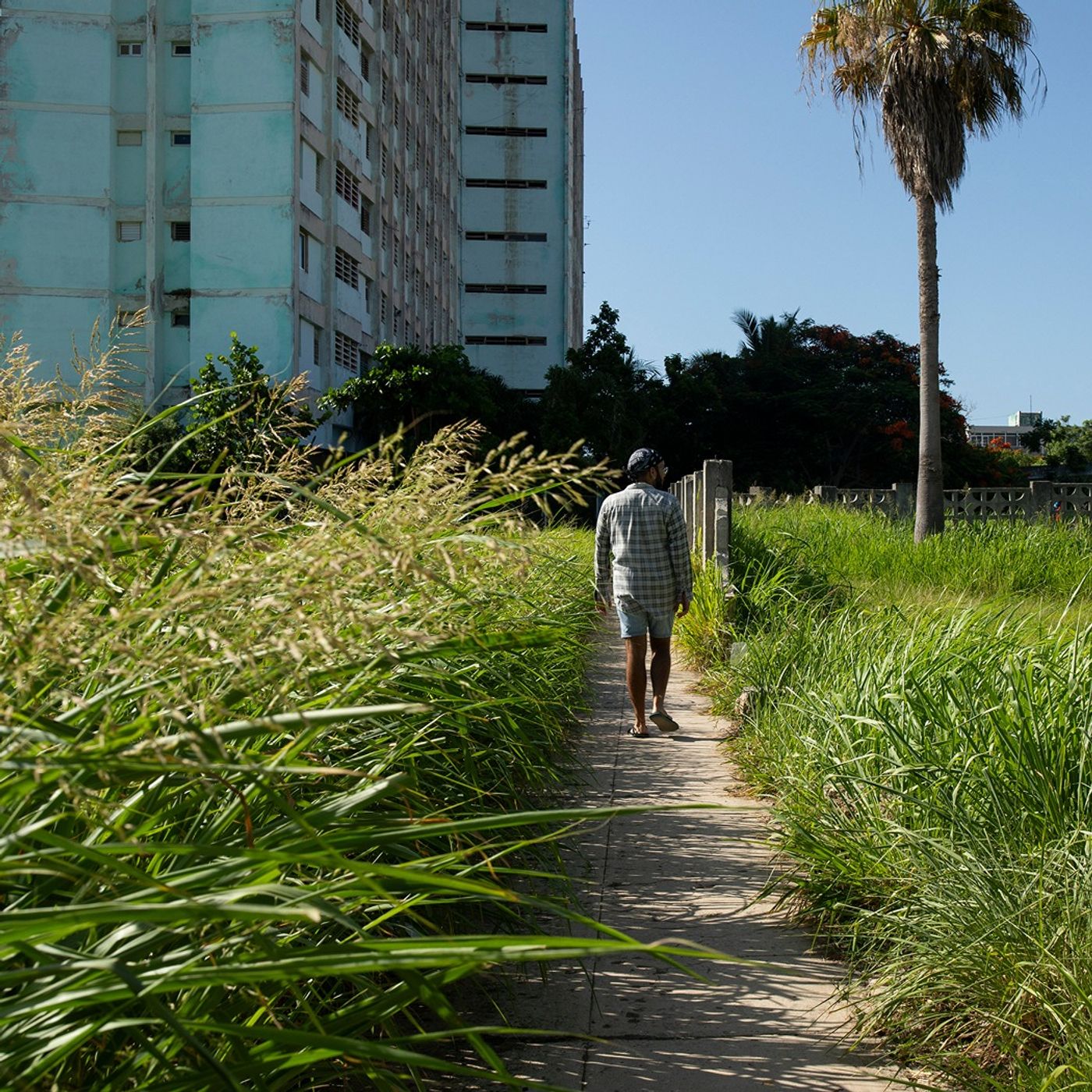
The Daily
Cuba Under Siege
00:47:24
In January, after the capture of President Nicolás Maduro of Venezuela, the Trump administration turned its attention to Cuba. In the months since, the White House has used every tool at its disposal to unseat the Communist government. In May, sparking fears of a humanitarian crisis, Cuba reported that it had officially run out of oil as a result of the U.S. oil blockade. Today, Lynsea Garrison, a senior producer for “The Daily,” talks with one Cuban about how his life has transformed under President Trump’s pressure campaign, and what the future holds for Cuban people.
Loading summary
Transcript186 lines
- [00:00]
TikTok Narrator
On TikTok, entire communities are turning curiosity into connection. History lovers share stories that bring the past into focus. Scientists and educators break down big ideas with experiments and insights that make discovery feel approachable. And across art, language, and everyday tips, people on TikTok give fresh perspectives on the world we share. TikTok is a place for curiosity where learning is fun, connection is meaningful, and discovery is never stops.
- [00:29]
Natalie Kitrowev
From the New York Times, I'm Natalie Kitrowev. This is the Daily.
- [00:33]
Amy Lawrence
Is the Cuban government the Trump administration's next target?
- [00:36]
Natalie Kitrowev
Mr. Secretary, for the past six months, the Trump administration has been carrying out a maximum pressure campaign against Cuba.
- [00:45]
Paul Tanorio
Well, the Cuban government is a huge problem. Yeah, the Cuban government is a huge problem, first of all.
- [00:49]
Natalie Kitrowev
So is that a yes?
- [00:50]
Gustavo Torres Armas
I think they're in a lot of trouble.
- [00:52]
Paul Tanorio
Yes. Yeah.
- [00:53]
Anonymous Commentator
Cuba's going to be next. Cuba's going to be. Cuba's a mess. It's a failing country and they're going be next.
- [01:00]
Natalie Kitrowev
That campaign has included an oil embargo, selling oil to Cuba, an indictment against the country's former president, and economic sanctions.
- [01:10]
Paul Tanorio
What we're seeing now is a whole
- [01:12]
Gustavo Torres Armas
new level of punishment.
- [01:15]
Paul Tanorio
Will you make a public commitment today to rule out US Regime change in Cuba? Regime change, yes.
- [01:21]
Bank of America Advertiser
Oh, no.
- [01:21]
Paul Tanorio
I think we would love to see the regime.
- [01:23]
Wirecutter Show Host
No change.
- [01:26]
Natalie Kitrowev
And as Cuba's oil has dried up. Island wide blackout. The country's blackouts have gotten longer and longer.
- [01:33]
Gustavo Torres Armas
Cuba is a country running on fumes.
- [01:36]
Interviewer
The country will run out of aviation fuel today.
- [01:40]
Natalie Kitrowev
And fears have grown about a spiraling humanitarian crisis.
- [01:44]
Paul Tanorio
The island nation's power grid completely collapsed today, leaving the country with little to no access to basic services like water,
- [01:51]
Movie Trailer Narrator
food and medical care.
- [01:52]
Natalie Kitrowev
Doctors here say across the country people
- [01:54]
Gustavo Torres Armas
are dying because of the fuel crisis.
- [01:55]
Natalie Kitrowev
No power has led to women delivering babies in dark hospitals. And then earlier, Cuba's energy minister said the island had completely run out of fuel oil and diesel. Cuba reported it had officially run out of oil.
- [02:09]
Gustavo Torres Armas
Cuba has essentially run out of oil.
- [02:11]
TikTok Narrator
Not essentially, they have run out of oil.
- [02:16]
Anonymous Commentator
Cuba's at the end of the line. They're very much at the end of the line. They have no money. They have no oil. Cuba's in its last moments of life. I do believe I'll be the honor of having the honor of taking Cuba. That's a big honor.
- [02:37]
Paul Tanorio
Taking Cuba.
- [02:38]
Anonymous Commentator
Taking Cuba in some form. Yeah, taking Cuba. I mean, we. Whether I free it, Take it. I think I could do anything I want with it.
- [02:48]
Natalie Kitrowev
Today, my colleague Lindsey Garrison talks to one Cuban about how his life has been Completely transformed under Trump's pressure campaign and what the future holds for the Cuban people. It's Friday, July 10th.
- [03:13]
Interviewer
Gustavo Torres Armas is 25 years old. He lives in a residential neighborhood in Havana, just across the bay from the Capital Center. He lives in an apartment with his mother and father, and every day he commutes to his job at a contemporary art gallery in the city. He told me the pay is pretty bad, but he loves the work. So he writes articles about Cuban art on the side for real money. We could have talked about so many things. We could have gone back generations through his family story and Cuba's decades old conflict with the US or we could have talked about how Cuba's energy crisis, which started around the pandemic, has only gotten worse since the US blockade in January. But instead of going back years or even months, Gustavo thought the best way to explain this current crisis was to walk me through a single typical day in a city under siege.
- [04:13]
Gustavo Torres Armas
Yeah, so basically I wake up early in the morning, maybe I have water, maybe I don't. So if I have water, I can get ready like normal and go to the bus stop. And if I don't have water, I have two choices. So if I don't have water, it's more likely than not that I have some stored water. Right. Because whenever we get water, we quickly store it and we're always prepared. But in the rare case that we didn't prepare water, I basically have to carry water. So I live in fifth floor in a building, and if I don't have water, I have to go all the way down the cistern. It's like, like the water tank? Yeah, it's like the building's water tank.
- [04:58]
Interviewer
Okay.
- [04:58]
Gustavo Torres Armas
And there's usually like a person in the building that takes care of it. So I ask him, hey, can you open the cistern? I have no water. And there's usually like not enough water to pump into the building, but enough water that you can throw a bucket and bring it up as if it was a well.
- [05:16]
Interviewer
Okay.
- [05:17]
Gustavo Torres Armas
So he'll tell me, oh, it's empty, or no, we have some. And if we have some, he will open the cistern, I will throw a bucket, and I will bring it up to the fifth floor. And I repeat the process at least five times so I can have enough water for that day.
- [05:34]
Interviewer
Have you ever gone down there and the person who kind of mans the tank says, we don't have any today.
- [05:40]
Gustavo Torres Armas
Yeah, but in that case we're just like, oh, well, I mean, what can you do? And Just get ready with what we can or try to get ready in other ways. You know, right now everybody here is struggling more or less in the same way. So if I go to my job and I couldn't wash my teeth, I'm going to tell him, listen, I couldn't wash my mouth in my house. Can I do it here? And he's to be like, oh, sure. And I just wash my mouth in my job. If I have water in my job, maybe I don't have water in my job. Maybe my building doesn't have any water, but maybe a neighbor does and he'll lend me some water so I can wash my mouth.
- [06:18]
Interviewer
I see.
- [06:19]
Gustavo Torres Armas
But basically, as you can imagine, it's kind of, let's say, annoying having to carry five buckets of water to your fifth floor house just to wash your mouth, your face and get ready to go to work. But we do that.
- [06:35]
Amy Lawrence
How.
- [06:35]
Interviewer
How often would you say that you wake up without water? Like in an average week, how many
- [06:44]
Gustavo Torres Armas
days out of seven days of the week? Maybe six.
- [06:48]
Interviewer
Wow. Okay. That's a lot.
- [06:49]
Gustavo Torres Armas
Yeah, I basically never. I open and have like actual water coming out in the mornings.
- [06:54]
Interviewer
Okay. Wow.
- [06:56]
Gustavo Torres Armas
And, you know, everything in Cuba is. There's usually more than it seems at first sight. So in the case of water specifically, it is a combination of, you know, we're in the middle of a drought, so basically we don't have, you know, the rains that fill the water preserves. And that's one issue. Another reason is that the piping, the underground piping that pumps the water to the buildings and the houses. This piping system is extremely old. It's very fragile. It hasn't been properly maintained since from the 30s, the 40s, you know, like long time ago. And so another thing that affects this, and this is more relevant to the whole Trump thing, all of this water piping, like the pumping of the water needs electricity. And if we have like an energy crisis, when you have 24 hours or 20 hours with no power, you can't pump water because you have no energy. So all of these things combined, you know.
- [07:59]
Interviewer
Yeah.
- [08:02]
Gustavo Torres Armas
And so after all of this, to get ready to work, I got to the bus station. So the problem is, and this is like a specific problem to me and people who live where I live has basically, in Havana, we have kind of like an underground tunnel that connects the main city with the rest of the city. Right. That tunnel, you can't cross it by walking, and you can cross it in, like a bike. It's illegal to walk in the tunnel because the tunnel doesn't have the infrastructure for regular people walking. You can only cross it on a car, on a bus, not even a motorbike. It can only be one of those two things.
- [08:44]
Interviewer
Got it.
- [08:45]
Gustavo Torres Armas
And the problem is, since we have a fuel crisis and we have no buses and we also have no cars, how do you cross the tunnel? That's like my main everyday struggle to go and to come back of work. I cannot cross the tunnel walking. A little pause. But Cubans tend to exaggerate to make a point. So when I told you that we have no cars, it's an exaggeration. We do have cars. You will see cars. But it's very low traffic.
- [09:20]
Interviewer
Okay, got it.
- [09:23]
Gustavo Torres Armas
Now, the problem is that the only bus that we actually see, because, I mean, this is not an acceleration now. We do not have any buses. Like, there is no public transportation. That system has basically collapsed since January. You don't see any bus. Never. So we have a bus in this side of the city. In Spanish, it's called the cyclo bus. So the cyclo bus. And this bus exists at least since the 90s, and it's not for people, it's for bikes. It's basically like a hollow bus that carries the motorcycles and the bikes through the tunnel.
- [10:07]
Interviewer
So this is the one bus that comes to that bus station.
- [10:10]
Gustavo Torres Armas
Yes, that's the thing that I take every day to go to work.
- [10:14]
Interviewer
Okay. Are these buses crowded when you get into them?
- [10:18]
Gustavo Torres Armas
Yes, yes. Is very crowded. But I mean, it's not crowded to the point that it won't be able to close the doors.
- [10:26]
Interviewer
Okay.
- [10:26]
Gustavo Torres Armas
But it is crowded. So when I get into the bus, the cyclo bus, and in my everyday commute to work, it's like you're getting into the bus with zombies. The human people look so drained, you know, and again, I probably have looked like that at some point too. People are just so, so, so tired. You can see a lot of people with, like, you know, hollow faces, eye bags, you know, the woman don't wear makeup. And I'm not saying this to be like, yeah, it sounds like women have to wear makeup or whatever. I'm just saying it in, like, you know, people just stop caring. Or you see that people are, like, very, very irritated. You know, something that in another moment would have been just like, you know, a small misunderstanding could turn into a whole fight because they suddenly got very angry. You know, they just had problems. And they taking it on that day with, you know, it's like that.
- [11:38]
Interviewer
Yeah.
- [11:41]
Gustavo Torres Armas
So it usually takes me like the whole ride, usually like a half an hour. And I really like looking through the window in that specific bus ride because it's mostly just empty road with coast area. Because I live very, very, very close to the coast. And so that bus ride is like, I don't know, maybe 15 minutes of going through an empty road that only has a lot of palm trees and coconut trees, the grass, the rocks and the sea. So it's a really pretty view. I really like it. And then you get into the tunnel, which is like darkness. And when you emerge from the other side of the tunnel, it's like walking through a portal. There is so much trash. So much trash. So after every block, you will see a huge landfill. Basically, we have so many. There is so, so, so much trash. Trash to the amount that it covers the street. This is because there is no fuel for the, the garbage truck. So the garbage truck can't come and collect the trash. So we're just drowning in it. And one of the things that you notice in this, this actually really shocked me. So in the part of the city where I live, it is very common to just burn the trash.
- [13:10]
Interviewer
Okay.
- [13:11]
Gustavo Torres Armas
So the neighbors would put all the trash in this huge landfill and they will just burn it. But this is very common in this side of the city because again, it's very open. So if you light a fire, it will burn all the trash die out and nothing will happen.
- [13:26]
Interviewer
I see.
- [13:27]
Gustavo Torres Armas
But something that I really noticed is that right now they are also burning the trash in the city. And it's awful. It's so awful because you have all of these cramped apartments and very narrow streets with burning trash and smoke everywhere. And it is like this very pungent trash smoke smells. It stinks so bad. And it is actually like really bad for your health. Like a lot of people are having like breathing problems because of it. And this is something that. It really shocked me when I saw it because I didn't thought that people would get to the point of burning trash in the main city. But what choice do they have? Like if they don't burn it, the trash is going to eat them. There are so many mines, there's so many mosquitoes. You know, Cuba has like a whole menagerie of mosquito related diseases, like mainly chikungunya. We have a lot of dengue.
- [14:25]
Interviewer
Yeah.
- [14:26]
Gustavo Torres Armas
I mean, we just got out of basically a pandemic of mosquito related viruses that, you know, it doesn't get reported because who cares about us? But basically, if you didn't get sick, you knew at Least five people who were sick.
- [14:44]
Paul Tanorio
Wow.
- [14:44]
Gustavo Torres Armas
It's. Yeah, it was really difficult. And now we have no medicine. There's no pills anywhere and no fuel for like, you know, the exterminators. Like, you know, there's no fuel for the garbage truck. There's not going to be fuel for the machine that kills mosquitoes.
- [15:05]
Interviewer
Oh, my goodness.
- [15:11]
Gustavo Torres Armas
Keeping with the whole my everyday experience, I take my little bus and I walk to my job. And my job is relatively close, so it's not like a long walk. I just walk through the streets. And this is like the historic side of Havana. So they are usually like rather tight streets. It's like a small maze or like a labyrinth because if you aren't familiar with it, you may get lost. So, yeah, I just walk through all of these alleys. And you usually hear, like, when you're walking down the street, Cuban music, you know, like salsa, charanga, reggaeton and. Well, some people will tell you that, you know, salsa is not Cuban music. Salsa is Puerto Rican, but the bass is Cuban anyway. And then I get to like the alley in which the gallery is. And the gallery is a huge, very modern style gallery. You know, like, very tall ceiling, great open space, great lighting, white walls. And at work I do. My work is kind of office related, but I also have other parts of my job, basically giving tours to the gallery. You know, the visitors come, they may have questions, I answer, but we have no tourists. We have like maybe one or two a day, which again, I don't know how it is over there, but here in Cuba, we usually would have way more visitors. But right now we have no foreigners who were like another main source of income. Like, there are some businesses that are very, very dependent on tourism that are like, basically, basically have been destroyed because of the crisis. So we don't have anyone.
- [17:19]
Interviewer
What is that like for the gallery to be so empty? What does that make you feel?
- [17:27]
Gustavo Torres Armas
Well, at least for me, the first feeling that you feel is that you're there for no reason. Right. You know, like, I have so much difficulties going on in my house, in my everyday life, the commute and, you know, I went through all of that to just sit all day here doing nothing because we have no visitors, because maybe the office work that I am doing in the gallery, I could have done it at my house. So you kind of get like this frustrating feeling of like, I came to work for no reason today. But the one visit that you had at the day, like the one and only that you have.
- [18:08]
Interviewer
Yeah.
- [18:08]
Gustavo Torres Armas
Will usually thank you for being open they will be like, oh, you're like the only gallery that is like open every day. Because that's the other thing. We are basically one of the few galleries that are open basically every day. Most galleries are opening like once a week. And I kind of, it did make you feel like at least you did something with your day. Maybe not much, but you know you did something. It wasn't all for nothing, but it, it only makes you feel, let's say good for like maybe an hour because the rest of the day still went on and nobody else came. And then at the end of the day when I finished doing whatever I was doing at work, I have to do like the real struggle of going back home because that's the difficult part, not going to work.
- [19:19]
Natalie Kitrowev
We'll be right back.
- [19:23]
Gustavo Torres Armas
This podcast is supported by bank of America Private Bank.
- [19:26]
Bank of America Advertiser
You're cut from a different cloth and with bank of America Private bank, you have an entire team tailored to your needs, with wealth and business strategies built for the biggest ambitions like yours. Whatever your passion, unlock more powerful possibilities@private bank.bankofamerica.com what would you like the power to do? Bank of America Official bank of the FIFA World Cup 2026 bank of America Private bank is a division of bank of America, NA member FDIC and a wholly owned subsidiary of bank of America Corporation.
- [19:57]
Paul Tanorio
I'm Paul Tanorio. I cover soccer for the Athletic.
- [20:00]
Amy Lawrence
And I'm Amy Lawrence. I cover football for the Athletic.
- [20:03]
Paul Tanorio
Whatever you call it. The biggest competition in the sport is happening right now and the Athletics World cup coverage, everything you need to follow the tournament.
- [20:11]
Amy Lawrence
There's 48 countries taking part from the tiny island of Curacao to the five time champions Brazil. Even if you don't know your offside from your onside, if you're eager to know more about the teams, the matches, all the stories on and off the pitch, we've got you sorted.
- [20:26]
Paul Tanorio
Maybe you're the kind of person who's already up early every weekend waking the neighbors when your favorite club scores. We'll make sure you get equipped with more information, more insight than anyone you know.
- [20:36]
Amy Lawrence
We've got more than 70 obsessive reporters on the ground covering the ins and outs from every game.
- [20:41]
Paul Tanorio
I almost forgot to mention the best part, Amy. Free access to the Athletics World cup coverage in our app.
- [20:47]
Amy Lawrence
Download the Athletic app and see you there.
- [20:54]
Gustavo Torres Armas
So going back home, that's the difficult part. Not going to work. So if I end work at like 5pm at that hour I just go to the bus station for the cyclobus But a lot of the time, maybe the cyclobus is so filled with people, or sometimes there is a bus in the morning, but there is not a bus in the afternoon because they run out of fuel midday.
- [21:21]
Interviewer
Oh, really?
- [21:22]
Gustavo Torres Armas
So there is no Cyclobus. Or maybe after work, I decided to visit a friend, or maybe I decided to go to a new art show. And that is something that impacts your everyday life because you have to be like, well, do I visit my friend or do I go to my house? Because, you know, it's not sure that I could get into the bus if I visit my friend Now I see.
- [21:42]
Interviewer
Yeah, because you might end up stranded somewhere, depending on the choice you make.
- [21:46]
Gustavo Torres Armas
Yeah. And there's people that I haven't seen in months. Like, there's a feeling that a lot of young people have that you're wasting your youth, you know, because you can't really do the stereotypical things that someone your age would do. But anyways, so for whatever reason, I can't get into the bus. I have to improvise. I will basically hitchhike.
- [22:17]
Interviewer
Oh, wow.
- [22:19]
Gustavo Torres Armas
So I go to the street light that is, like, in a very busy area. And there's usually quite a few people who are doing the same. You know, we are just there, all of us hitchhiking. And most of the cars that go through that street light are probably crossing the tunnel because they're going to the other side and they don't charge you or anything. You know, it's just hitchhiking.
- [22:41]
Interviewer
Because how much? Just to compare it, how much would a taxi be like if you took a taxi home? How much would that cost you?
- [22:50]
Gustavo Torres Armas
To put it into perspective, my monthly salary is 3,600 in Cuban peso. Now, a taxi that crosses the tunnel, if I take it during the day, it will charge me 700, and if I take it after 7pm it will be 1,000.
- [23:13]
Interviewer
Oh, wow.
- [23:15]
Gustavo Torres Armas
So basically a third of my salary. So that's like the last choice. Because after the measures that Trump took, that same car ride costed me 300.
- [23:27]
Interviewer
Wow.
- [23:28]
Gustavo Torres Armas
And suddenly in January, it's a thousand.
- [23:31]
Interviewer
Is that when you started to hitchhike, like around that time? Were you doing that more often?
- [23:36]
Gustavo Torres Armas
Yeah.
- [23:37]
Interviewer
Wow.
- [23:38]
Gustavo Torres Armas
Yeah, I don't really like hitchhiking.
- [23:42]
Interviewer
Yeah.
- [23:43]
Gustavo Torres Armas
Because, you know, you're basically counting on the charity of strangers, and it's kind of humiliating for you. You know, it's kind of like begging. Do you feel that way sometimes right now? No. I felt like that in the past, you know, when things were better. But right now things have gotten so low, so bad that I'm just like, you know, whatever. I have to do, whatever it takes. And by the way, the drivers right now see how everything is, and they are like genuinely trying to help you.
- [24:16]
Interviewer
I see.
- [24:18]
Amy Lawrence
And.
- [24:19]
Interviewer
And when you get home, what does that look like normally?
- [24:24]
Gustavo Torres Armas
Well, I mean, something that you have to understand throughout this whole story.
- [24:28]
Interviewer
Yeah.
- [24:29]
Gustavo Torres Armas
Is that my house? Because I just realized that I didn't tell you my neighborhood is in a part of the city that has power all the time. It's not because some, like, important person lives there or whatever. It's because the electric system is underground. And a lot of places here in Cuba have, you know, electric posts. And so those get power outages constantly. But the underground systems that are very few need to consistently have power because if you cut the electricity to that system, it can get moist from the ground. And when you put it back, it creates an electric cut and it could destroy the whole system. And to repair the system, it would be so insanely expensive and difficult that it genuinely is more effective for the government to just let them have power all the time.
- [25:34]
Interviewer
Got it. Interesting.
- [25:35]
Gustavo Torres Armas
Okay, so we technically always have power. That makes me like extremely privileged right now in Cuba. And I'm telling you this because there is people that wake up with no power, get ready to work, and they will come back to work. There is no power. I mean, my aunt lives in Kamawe, which is like, you know, a different province of Cuba. And on average, my aunt has two hours of light a day.
- [26:07]
Interviewer
Wow.
- [26:07]
Gustavo Torres Armas
By the way, this is not like a rigid thing, I tell you. Two hours. Because that's on average, sometimes she has four hours, sometimes she only has one. It has happened that she has none. So sometimes she has been like 24 or 48 hours with no power.
- [26:24]
Interviewer
Oh, wow.
- [26:25]
Gustavo Torres Armas
But in those two hours, which, by the way, they're not like scheduled, she doesn't know when the light is going to appear. And it has happened that she has been sleeping and the light suddenly comes at 2am and at that hour she gets up and she started washing her clothes. You know, she puts the washing machine and she start doing her stuff because she has to take advantage of whenever she has power. So, yeah, it's really bad.
- [26:57]
Interviewer
Are you, are you pretty close with your aunt? You sound. You sound like you're pretty close.
- [27:02]
Gustavo Torres Armas
Yes, yes, yes. I am very close to my aunt. She's like my. I mean, she is my godmother, you know, by the church and stuff like that. And so, yeah, honestly, and this is going to sound a little bit depressive, but I'm kind of thankful that my grandmother died before all of this because it would have been so difficult for her and for my aunt to go through all of this, you know.
- [27:36]
Interviewer
When did she pass?
- [27:38]
Gustavo Torres Armas
In 20, 21.
- [27:41]
Interviewer
It just would have been too hard.
- [27:45]
Bank of America Advertiser
Yeah.
- [27:45]
Gustavo Torres Armas
I mean, with how difficult it is to get medicine and stuff like that, it would have been really difficult for us. It would be very hard in general. So depending on how tired I arrived, like, at my house, sometimes I have to do something. Like, sometimes you get from work and your mom is like, quickly, they deliver the rice. We have to go buy it. So this is one of those things that I have to explain. So basically, you know, we have our bodega, and right now you're seeing that there's always a product that is missing. And some of these products, like rice, for example, are delivered to the store randomly and late. Like, extremely late. It could be that you didn't see any rice in January or in February or in March. So you will see that there are people waiting for the rise. Like, we live literally, like, across the street from the bodega. So we can see when the truck bringing the deliveries arrives. Sometimes my mom just watches through the window. Oh, did the truck deliver? Oh, no, not yet. And, you know, after years of doing this, housewives become kind of, like, good at it. Like, they know at which times of the month usually the truck arrives. So, you know, they will listen to a truck noise, and you'll be, oh, could it be. And she'll be, lo, not yet. It's next week. And, yeah, she'll be, right, it's next week, not now. So, you know, she'll see that the truck is there, and she start, like, calling all the neighbors, like, oh, Juanita, the rice is here. Tell this other person. And, you know, it's a whole. A whole event. And my role in the grocery shopping area is basically, I help my mom, like, carrying the shopping.
- [30:04]
Interviewer
You go with her to carry?
- [30:05]
Gustavo Torres Armas
I go with her. Yes. And so we go and buy those stuff, if we can find them.
- [30:09]
Interviewer
I see.
- [30:10]
Gustavo Torres Armas
And rice is not so much of a problem because in general, rice is pretty cheap, and most people have rice, like, saved up. So you can usually get a neighbor to loan you some rice or to sell it to you or to just gift it to you. But there are some products that you use a lot, like cooking oil, that if it gets lost like that, then you really feel it because you have to spend a lot of money buying it from A private business.
- [30:40]
Interviewer
Do you know how much cooking oil is costing people?
- [30:44]
Gustavo Torres Armas
Well, cooking oil specifically, I can't really tell you right now. I don't know. I can tell you how much is sugar right now.
- [30:51]
Interviewer
Oh, okay.
- [30:52]
Gustavo Torres Armas
Because my dad had to buy some sugar literally today, and it actually increased price. It's more expensive now than it was last week. So remember my salary that I told you, like 3,600 peso. Yes, that's my salary. My dad's is like 4,000.
- [31:14]
Interviewer
Okay.
- [31:15]
Gustavo Torres Armas
And my mom's is 6,000.
- [31:18]
Interviewer
Okay.
- [31:19]
Gustavo Torres Armas
Because my mom works as a. A chemistry and biology teacher in sports school.
- [31:26]
Interviewer
Oh, cool.
- [31:27]
Gustavo Torres Armas
So basically one pound of sugar is 800 pesos. So for sure to be 800 pesos is like, pretty expensive right now compared to other fat stuff.
- [31:42]
Interviewer
I just did the math. It's roughly like 6% of your total household income, you know?
- [31:48]
Gustavo Torres Armas
Yeah, it's quite a bit like. And that's like. That's just sugar, you know, like, maybe oil. I don't have to think how much is oil right now. But, you know. Yeah, without cooking oil, you can't cook. So it's. It's like my household, usually by the end of the month, it's still okay. Like, we, we are not like maybe the last week of the month, we can't eat anymore. We are not that bad, but we are very much like, ready for the next pay soon. Because food is really, really expensive here in Cuba. It's really expensive.
- [32:23]
Paul Tanorio
Yeah.
- [32:24]
Gustavo Torres Armas
There's people who pick food from the trash can. There's people who having a very, very hard time right now.
- [32:30]
Interviewer
Do you see people pick food out of trash can?
- [32:32]
Gustavo Torres Armas
Yes, yes. And it is something that shocked me a lot because maybe you won't believe this, or maybe your audience won't believe this, but 10 years ago, it would be really, really difficult to find a beggar, a homeless person, somebody eating out of a trash can, stuff like that. That's like unconceivable 10 years ago. And so imagine going from never seeing a homeless person in your life to seeing, like, people, like lots of people. Okay. Like 10, 20 people sleeping in the ground in the night, picking food out of a trash can and eating it. That's really shocking because you never saw that before. And that's what we're seeing right now. So, yeah, food is really expensive. There's a lot of people who don't eat. And again, there is always some product that is missing. Cigars, for example, are missing not cigars, because you guys call cigars two other things. Cigarettes are Missing. Yeah. Right now is the worst time to have any kind of buys here in Cuba coffee. And here in Cuba, we drink, like, black, hard coffee. We don't have, like, you know, the. The whole Starbucks thing, like the lattes. Yeah. No. Most of the people that I know and certainly myself hate American coffee. Like, it's so watery for us, for our taste. Some people here, they'll tell you that, oh, American coffee is ass water because it's just like some brownie water that tastes like nothing. We drink, like, black, strong coffee. That is. You have to drink a little because a lot of it is, like, bad for you and coffee is missing. And a lot of people miss their coffee, especially older people, because other people are used to drink a lot of coffee.
- [34:28]
Interviewer
Yeah.
- [34:29]
Gustavo Torres Armas
And, you know, it's kind of People will be probably more capable of resisting all of this if you at least had the little things, you know, because you're like, oh, well, I. I can't even drink my little cup of coffee that I'm used to doing for the last 50 years. Like, I know old people who tell you that they're okay with not eating yesterday, but that they are missing their coffee. It is always the little things that hurt you the most. So after that, we all get together in the kitchen. So I will get home, I will change, and I help my mom cooking if she needs it. And in the case of cooking, like, this is one of the areas where the privilege is the most evident. Because since we usually have power, we usually have electricity here, we just use our electric oven for cooking. But there are many people who are feeling it. A lot of people are basically cooking with wood, you know, with, like, firewood. It's like a very primitive thing. You have to cook in the street, or you have to cook in, like, your backyard using, like, a campfire, basically, and you put your, like a cooking pot on top of it. It's.
- [35:53]
Interviewer
Yeah.
- [35:53]
Gustavo Torres Armas
And I know a lot of people who are like that. Like, one of my co workers, he has a house, so he basically uses the backyard to create this kind of campfire, and that's where he cooks. And he also uses the campfire to heat water for bathing or for boiling the water to drink it. But yeah, you know, people are saying that we are devolving to, like, Neanderthal times. And then my dad goes watch the news, my mom start making the dinner, and we all have dinner. Like, this is not, like, necessarily like a Cuban tradition or whatever is more like a. My household tradition that, you know, we set the table and everyone Sits down at the table and we eat together. And my mom is very strict with that. So.
- [37:01]
Interviewer
Do you ever talk about with your family why this crisis is the way it is? Like, who. Who or what you blame?
- [37:10]
Gustavo Torres Armas
Yeah, we usually talk a lot about the crisis because it's something that is like an everyday thing. You know, on the one hand, my family in particular, it's very like, anti Trump because Cuba and the United States were starting to have kind of like, better relations. We were starting to see a light at the end of the tunnel with Obama, and Trump blocked that. And so, you know, it was kind of sad because a lot of people thought that, you know, maybe we will see relations with Cuba and the United States. But this is, like, by far the worst crisis that Cuba has had in, like, its existence. For me, at least. It feels worse than anything that I have ever lived. And most importantly, unlike many other crisis, we don't really see, like, a solution or an endpoint to this one. Yeah, like, in the past, people were like, well, you know, maybe we have this small fuel crisis right now that will get solved when we get more fuel. Right. So with this one, it's like, we don't see that we'll get more fuel. Like, we had recently some fuel donations from Mexico, some from Russia, and it's like, that's great, that's fine. But that's only going to last for a while. After that, we're going back to the beginning. So we don't see an end to this. And most people feel, me included, feel rather hopeless about it. We're like, things are only going to get worse from here. There's no way out. So, you know, maybe we'll end up like Haiti, you know, like, completely collapse. People don't really see an end to this. I don't know. But I would say that most people here in Cuba, even if they understand that Trump is making the crisis worse, a lot of people think that the problem at the end of the day is the human government, not Trump. And that's why some people say, oh, Trump should bomb us. Some other people are like, maybe we should sell the country to China or to Russia. But people just in general feel like there is no future with this government. And I see, you know, I understand all of these positions. Like, I get it.
- [39:46]
Interviewer
Where. Where would you say you fall?
- [39:51]
Gustavo Torres Armas
I don't know. Because, you know, one thing is what you think is right, and another whole thing is what you think is possible or more likely to happen.
- [40:00]
Interviewer
Yeah.
- [40:01]
Gustavo Torres Armas
Honestly, the ideal thing for me would be that the United States leaves the embargo, leaves the blockade, and the Cuban government gets completely changed. Like, completely changed. Some new government comes around and we finally have some form of democracy. I don't know. At the end of the day, it's kind of difficult to be thinking in this kind of, like, higher things like democracy and all of that, when you have more pressing things to be thinking about. Right. So a lot of people are like, listen, I don't care about dictatorship or democracy. I want food and water to live a little. You know, when you have been in a crisis with a lot of scarcity for 67 years, there's a point in which you're like, let's do whatever it takes for us to finally breathe and have things.
- [41:00]
Interviewer
Yeah.
- [41:11]
Gustavo Torres Armas
So at. Around maybe, I don't know, 10pm if basically faith has been generous with water. Like, if we have water to spare, I would take a bath to go to sleep, you know, and my room is kind of windy because we're pretty high, you know, the fifth floor. From my window I can see the sea. And right now I have, like, my windows open to get some wind, which is. That's like a blessing. But. Yeah.
- [41:57]
Interviewer
And when you, when you go to sleep, do you. Do you have anxiety about the next day or is it something you don't even think about because it's normal or like.
- [42:05]
Gustavo Torres Armas
Yeah, I think it's the later.
- [42:06]
Interviewer
Yeah.
- [42:07]
Gustavo Torres Armas
Because at some point all of these difficult things that we're going through become normal. You just get used to them and they get normalized, you know? So for a lot of Cubans, it's kind of hard to give you a detailed what's going on in Cuba thing, because for us, it's like, as normal as it is to you to just go to Walmart and grab a soda, for us, that's normal. Is normal to not have power. It's only when you stop and you, like, look at it. It's like you say, oh, wait, this is not how most people live. This is like, not normal. But for all of us, struggling is normal. Like, I go to my work, for example, and you know the. The doorman, the guy that works at the door of the gallery.
- [42:57]
Interviewer
Yeah.
- [42:58]
Gustavo Torres Armas
I will go to work and the doorman will tell me, oh, thank God you came, because, you know, I feel like fainting. I couldn't eat anything yesterday. It's normal. I will be like, oh, that sucks. If I have some money, I try to buy him something, but if I don't have any money, I can't do anything. I can Just say, oh, well, you know, maybe sit. I can't even tell him to go home because the walking back home is going to be really tiring, so he just has to wait. And. And, you know, I'm like, talking to a friend, and the friend will tell me, oh, you know, we have to pay like, X amount of money to get some medicine for my grandma. And I will be like, oh, wow, that's. That's really bad. You know what I mean? It sounds like I'm an insensitive person, but it's just basically that we are extremely used to this. It's normal. If somebody tells you, I couldn't feed my child yesterday, obviously you feel bad for that. But also, you're used to it. And if you have a child, you know how difficult it is. So you're basically saying, oh, yeah, no, I hope I know who that is too. Like, it's. It's. We're constantly sharing stories of this, which is kind of. Kind of crazy when I see sometimes like this. Well, not TikToks, because we don't have TikTok, but the Instagram reels of, like, Americans saying things like, you know, like, cut out that friend that is always complaining you have to take care of your own, you know, like, mental health and stuff like that. And I'm like, that's. That is so impossible for us. I can't cut the person that comes to me venting every day because I will cut every person in my life and they will probably cut me out, too. We are constantly complaining. It's the only way that we can let go of steam. But, yeah, instead of being like this dramatic thing of like, oh, my goodness, it's basically. No, it's like an everyday conversation that you have at the bus stop with a stranger.
- [44:57]
Interviewer
You know, your small talk is basically like, I didn't eat yesterday.
- [45:02]
Gustavo Torres Armas
Yeah, basically. Basically, yeah, basically the small talk is benting. But again, you're kind of used to it here. You know, for us, that's normal. So, yeah, I go to sleep. Like, yeah, I don't have trouble sleeping because right now there is a lot of heat in Cuba. It's a very hot and humid climate that we have right now. So I at least can put on, you know, my fan and open my windows and sleep. I may have to buy another fan soon because this one is, you know, he has. He has been at least 10 years, but, you know, at least I have one. Who am I to complain, right?
- [46:26]
Natalie Kitrowev
On Monday, Cuba suffered its third nationwide blackout since January. Protests broke out in the streets of Havana. And the country's energy minister said officials were working to restore power to the island. The darkness has hit Gustavo's home, too. His building is now experiencing blackouts that stretch 12 hours at a time. We'll be right back.
- [47:03]
Movie Trailer Narrator
On July 17th comes the new film the Odyssey. Written and directed by Christopher Nolan, the mythic action epic is the first movie shot entirely with IMAX film cameras, making it an immersive and expansive cinematic experience meant to be seen on the biggest screen possible. Starring Matt Damon, Tom Holland, Anne Hathaway, Robert Pattinson, Lupita Nyong' o. With Zendaya and Charlize Theron. The Odyssey, the Epic arrives in theaters July 17th. Get tickets now.
- [47:34]
Paul Tanorio
I'm Paul Tanorio. I cover soccer for the Athletic.
- [47:37]
Amy Lawrence
And I'm Amy Lawrence. I cover football for the Athletic.
- [47:40]
Paul Tanorio
Whatever you call it. The biggest competition in the sport is happening right now and the Athletics World cup coverage has everything you need to fall follow the tournament.
- [47:49]
Amy Lawrence
There's 48 countries taking part from the tiny island of Curacao to the five time champions, Brazil. Even if you don't know your offside from your onside, if you're eager to know more about the teams, the matches, all the stories on and off the pitch, we've got you sorted.
- [48:03]
Paul Tanorio
Maybe you're the kind of person who's already up early every weekend waking the neighbors when your favorite club scores. We'll make sure you get equipped with more information, more insight than anyone you know.
- [48:13]
Amy Lawrence
We've got more than 70 obsessive reporters on the ground covering the ins and outs from every game.
- [48:18]
Paul Tanorio
I almost forgot to mention the best part, Amy. Free access to the Athletics World cup coverage in our app.
- [48:24]
Amy Lawrence
Download the Athletic app and see you there.
- [48:32]
Natalie Kitrowev
Here's what else you need to know today.
- [48:34]
Gustavo Torres Armas
Did he talk about what he had done? Didn't go into detail.
- [48:39]
Interviewer
He just.
- [48:40]
Gustavo Torres Armas
I just asked him in person if what he said was true the night before, and he said it was during
- [48:46]
Natalie Kitrowev
a preliminary hearing for Tyler Robinson, the man charged with killing Charlie Kirk. Prosecutors presented evidence showing that Robinson had told his then romantic partner that he regretted what he'd done.
- [48:59]
Gustavo Torres Armas
He started crying a little bit and said he wishes he hadn't done it.
- [49:03]
Natalie Kitrowev
The prosecutor's evidence included messages that Robinson had sent to his friends confessing to the crime, saying, quote, look at the photos from the surveillance footage. It was me. Robinson hasn't yet entered a plea and he could face the death penalty. And on Thursday, the Department of Homeland Security said that the Mexican man that ice agents had killed during a traffic stop this week was not the target of their investigation. The agents were actually looking for two people from Guatemala, and they thought that one of them was in the van driven by Lorenzo Salgado Araujo, the man that they shot in Houston on Tuesday. Araujo had lived in the United States without authorization for 35 years. Homeland Security officials said that he tried to use his vehicle as a weapon, though no vehicle or other evidence has emerged to back up that claim. Today's episode was produced by Lindsey Garrison. It was edited by Michael Benoit, Fact Checked by Susan Lee and contains music by Marian Lozano, Leah shaw Damarin, Pat McCusker, Elisheva Itupe and Diane Wong. Our theme music is by Wonderly. This episode was engineered by Alyssa Moxley. Special thanks to Emiliano Rodriguez, Mega and Elda Cantu. That's it for the daily I'm natalie kitrowev. See you on Sunday.
- [50:49]
Gustavo Torres Armas
This week on the Wirecutter show, smart devices aren't just for the techie folks.
- [50:55]
Natalie Kitrowev
They can make your home more accessible for all kinds of needs.
- [50:59]
Wirecutter Show Host
So that's disabled people, but that's also people aging in place, people with new babies. I've talked to a friend who said it erased all arguments with her husband about who had to get up when they were already in bed to go turn off the light. It's saving marriages out here.
- [51:14]
Natalie Kitrowev
Find out how on the Wirecutter show. Wherever you listen.