← The Daily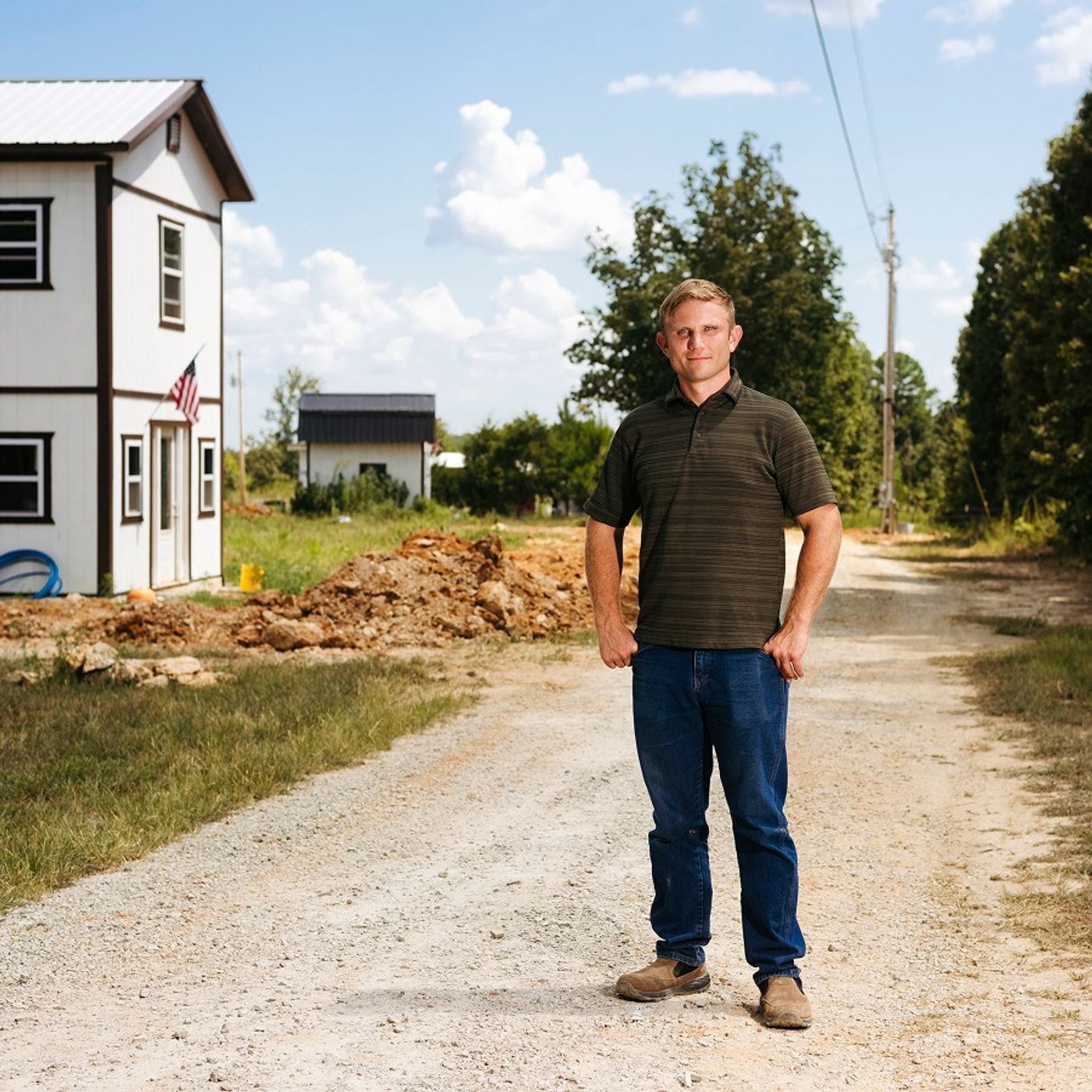
The Daily
One Town's Blueprint for Resegregating America
00:34:22
A real estate investor’s pursuit of cheap land has prompted a lawsuit against a compound in Arkansas that will test whether civil rights laws can stop a whites-only town from existing in America. Today, Debra Kamin, a New York Times investigative reporter, discusses the community and why its members are convinced that in this political climate, no one is going to stop them.
Loading summary
Transcript208 lines
- [00:00]
Capital One Announcer
This podcast is supported by the Capital One Venture X Card. Venture X offers the premium benefits you expect, like a $300 annual capital one travel credit for less than you expect. Elevate your earn with unlimited double miles on every purchase, bringing you one step closer to your next dream destination. Plus, enjoy access to over 1,000 airport lounges worldwide. The Capital One Venture X Card. What's in your wallet Terms apply. Lounge access is subject to change. See capitalone.com for details.
- [00:31]
Reporter (possibly a journalist from The Daily or NYT)
Did you understand who these people were and what they believed in?
- [00:36]
Michelle Walker (Real estate broker suing the community)
Not as well as I thought I did.
- [00:40]
Reporter (possibly a journalist from The Daily or NYT)
Who did you think they were?
- [00:43]
Michelle Walker (Real estate broker suing the community)
They call it return to the land. So I thought they were, you know, a community of people wanting to return to the land. You know, gardening and communal type of living and things like that. And if you would become a member of their club, you were able to purchase land for $1,000 an AC, which as a real estate investor is extraordinarily appealing because that's way under market and
- [01:08]
Reporter (possibly a journalist from The Daily or NYT)
your husband's black, correct?
- [01:10]
Michelle Walker (Real estate broker suing the community)
Yes. They wanted to have a whites only community. So initially I wasn't really thinking about applying, but then as time went on, the appeal of the investment opportunity, I just couldn't shake it.
- [01:27]
Reporter (possibly a journalist from The Daily or NYT)
Okay, so I'm gonna love it with you.
- [01:28]
Michelle Walker (Real estate broker suing the community)
Yeah.
- [01:28]
Reporter (possibly a journalist from The Daily or NYT)
I mean, you're clearly a very smart person. So I just want to make sure we understand what the motivation was here. And that's fin.
- [01:34]
Michelle Walker (Real estate broker suing the community)
The motivation was the investment. Maybe there's other white supremacists that want to vacation there. Not my land.
- [01:41]
Reporter (possibly a journalist from The Daily or NYT)
It's like the ultimate experience in capitalism for me.
- [01:45]
Michelle Walker (Real estate broker suing the community)
A good investment's a good investment. Doesn't matter to me who I'm buying it from or who's in that area. This is America. There are people that are white supremacists every place in this country.
- [02:04]
Rachel Abrams (Host of The Daily)
From the New York Times, I'm Rachel Abrams, and this is the Daily. A real estate investor's pursuit of cheap land has triggered a lawsuit against a compound in Arkansas that'll test whether civil rights laws can still stop a whites only town from existing in America. Today. New York Times investigative reporter Deborah Kamen on the community that thinks it's got a blueprint for modern day segregation and why they're convinced that in this political climate, no one is going to stop them. It's Friday, June 5th. Deborah, when I first read your piece, my initial reaction was just I could not believe how emboldened these people were to start a whites only community. You've covered real estate, you've covered discrimination, you've covered housing law for Many years. So where should we begin? The story of this particular group?
- [03:03]
Reporter (possibly a journalist from The Daily or NYT)
I saw a news report about this community last summer. They're called Return to the Land. Sky News had visited them and also the Forward had done a short article. They're a small community in the Ozark Mountains of Arkansas, and at first glance, they read like a story about any other group of fringe extremists. But the more I read about this community, the more I was struck by the. The language they were using was something different. They were actually saying, we know what the laws are in America. We know what the civil rights rules say, and we have found a loophole, and we are going to not just build a community here, but use it as a blueprint that can be expanded across the country.
- [03:40]
Rachel Abrams (Host of The Daily)
I am sure that sounds quite shocking to people that thought that the idea of discrimination was a matter of settled law at this point.
- [03:46]
Reporter (possibly a journalist from The Daily or NYT)
Yes, exactly. And it's not that they were trying to go around the law. They were trying to use the law to prove that they had a right to be there. And they're very confident with their ability to continue doing this and not just live in this one community in Arkansas, but actually create other communities exactly like them all across the country. And that raised a very urgent question. Can they get away with this? Is it legal? And if so, what does that mean for other communities who want to do the exact same thing? So my instincts as a reporter were, well, if they're saying this, I need to go see it for myself.
- [04:21]
Rachel Abrams (Host of The Daily)
So tell me about what you found, what the place is like, what you saw there.
- [04:25]
Eric Orwell (Co-founder of Return to the Land community)
This area up here, this is my spot.
- [04:28]
Reporter (possibly a journalist from The Daily or NYT)
And then so to get access to this community, I called Eric Orwell. He's one of their two co founders.
- [04:35]
Eric Orwell (Co-founder of Return to the Land community)
Like community property.
- [04:36]
Reporter (possibly a journalist from The Daily or NYT)
You can photograph that, and he was relatively welcoming.
- [04:40]
Eric Orwell (Co-founder of Return to the Land community)
If you want, we can continue down into the back half of the property where there aren't any home sites or anything, but there is.
- [04:46]
Reporter (possibly a journalist from The Daily or NYT)
They have a big gate at the front on this dirt road that padlocks. He opened it for me. We came in and he gave me a limited tour of the community. Show me what you want to show
- [04:54]
Rachel Abrams (Host of The Daily)
us and I'll ask you what I want to ask you.
- [04:55]
Reporter (possibly a journalist from The Daily or NYT)
And we'll go from there.
- [04:56]
Eric Orwell (Co-founder of Return to the Land community)
Sure.
- [04:56]
Reporter (possibly a journalist from The Daily or NYT)
If you've got questions for us, we'll take them, too. So the community is in this very small town called Raventon, Arkansas. It's a community of about 400 people. One road, one barbecue restaurant. Very small town. The closest airport is in Memphis or in Little Rock. It's an hour plus Change from the nearest city.
- [05:15]
Eric Orwell (Co-founder of Return to the Land community)
I mean, it was all just raw land. There were a couple trails cut in. We bought it from a logging company. So there were logging roads, but they were very deteriorated. You couldn't really drive on them.
- [05:26]
Reporter (possibly a journalist from The Daily or NYT)
The community itself right now is roads that they bulldozed themselves into stone. A couple cabins. This is your home?
- [05:34]
Eric Orwell (Co-founder of Return to the Land community)
Well, no, I'm not able to live here yet because they don't have septic and water ready to go. There is water on this lot, but not like plumbed and everything.
- [05:44]
Reporter (possibly a journalist from The Daily or NYT)
It's not that much to look at.
- [05:45]
Rachel Abrams (Host of The Daily)
It doesn't seem like a really big, robust community.
- [05:48]
Reporter (possibly a journalist from The Daily or NYT)
It doesn't seem like a big, robust community. And at first glance, it doesn't feel that threatening.
- [05:52]
Eric Orwell (Co-founder of Return to the Land community)
Yeah, I mean, you want to see the goats? It's a little trek down there.
- [05:55]
Reporter (possibly a journalist from The Daily or NYT)
Yeah, let's do it.
- [05:56]
Eric Orwell (Co-founder of Return to the Land community)
Okay.
- [05:56]
Reporter (possibly a journalist from The Daily or NYT)
Listen, I flew here. I'm here for as much as you want to show me. Is Peter open? There are about 40 residents, a handful of kids. All the kids who live on this compound are homeschooled. And this community, they're homesteaders, they're conservative. Most of them are Christian. They have old fashioned traditional views. And like their name says, they want to live off of the land. And of course, there's nobody there except for straight white people. Hmm.
- [06:24]
Rachel Abrams (Host of The Daily)
And tell us more about Eric. Like, what's his backstory? How did he end up here?
- [06:28]
Reporter (possibly a journalist from The Daily or NYT)
Eric, can you give me some of your background? I know that you're not originally from Arkansas, and I know that you. So Eric Orwal had a very typical American childhood.
- [06:37]
Eric Orwell (Co-founder of Return to the Land community)
Yeah, well, I mean, I was raised in Southern California, where he grew up
- [06:42]
Reporter (possibly a journalist from The Daily or NYT)
in La Mirada, California, which is near Los Angeles. Middle class background.
- [06:46]
Eric Orwell (Co-founder of Return to the Land community)
I was more like libertarian leaning in
- [06:49]
Reporter (possibly a journalist from The Daily or NYT)
high school, he says when he was in high school, he was a libertarian like that.
- [06:54]
Eric Orwell (Co-founder of Return to the Land community)
I have a lot of friends of different races and I still think it'd be fine.
- [06:58]
Reporter (possibly a journalist from The Daily or NYT)
He had friends from across the spectrum of diversity.
- [07:02]
Eric Orwell (Co-founder of Return to the Land community)
I went to college for music. Really what you're thinking of doing, French horn in orchestra.
- [07:07]
Reporter (possibly a journalist from The Daily or NYT)
He studied music in college at a very prestigious conservatory on the east Coast. And at one point he actually played in the pit orchestra for Shen Yun.
- [07:15]
Eric Orwell (Co-founder of Return to the Land community)
I liked a lot of how they did things, though. They're very efficient.
- [07:21]
Reporter (possibly a journalist from The Daily or NYT)
And he says he considers they were a cult. But he also was intrigued by the way they had their own community and they lived together and they shared a philosophy that everybody who was part of the community ascribed to.
- [07:33]
Eric Orwell (Co-founder of Return to the Land community)
It was interesting, you know, having a. A compound like they have, where they have common meals and like, they have really nice architecture and I liked it up there, you know.
- [07:47]
Reporter (possibly a journalist from The Daily or NYT)
In addition to being a pit musician for Shen Yuan, he also studied Greek and Latin philosophy on his own recreationally,
- [07:53]
Rachel Abrams (Host of The Daily)
just like on the Internet.
- [07:54]
Reporter (possibly a journalist from The Daily or NYT)
Yeah.
- [07:54]
Eric Orwell (Co-founder of Return to the Land community)
So I would make videos about philosophy.
- [07:56]
Reporter (possibly a journalist from The Daily or NYT)
Uhhuh.
- [07:57]
Eric Orwell (Co-founder of Return to the Land community)
And then I'd get a lot of comments from people who were more on the identitarian side of things.
- [08:01]
Reporter (possibly a journalist from The Daily or NYT)
He just started reading and informing himself and started making YouTube videos where he shared his views. Kind of like a homegrown philosopher.
- [08:10]
Eric Orwell (Co-founder of Return to the Land community)
Just pointing out the rapid demographic change in America, in America and Europe.
- [08:17]
Reporter (possibly a journalist from The Daily or NYT)
And a lot of people on those YouTube videos started making comments about ideas that are very prevalent within the white nationalist community. One of them being the Great Replacement Theory, which is the idea of that whites are actually going to be replaced by people of color and Jews and non whites based on sheer numbers and demographics and birth rates.
- [08:37]
Peter Siri (Partner at Return to the Land community)
I saw Eric's video. He was like, well, we're gonna meet up and do some building project at my place. Maybe we'll try to.
- [08:42]
Reporter (possibly a journalist from The Daily or NYT)
And one of the people who commented was this guy named Peter Siri, who is now his partner at Return of the Land. They struck up a relationship online, like so many of these conversations are, and the two of them, they become convinced that the Great Replacement Theory is true. They use the term white genocide.
- [08:59]
Peter Siri (Partner at Return to the Land community)
It mirrors the way they do it in Iranian and South Africa, which is like a Dutch Afrikaner only community.
- [09:05]
Reporter (possibly a journalist from The Daily or NYT)
And Peter Siri is very, very obsessed with this community in South Africa called Irania. It is a community that was created under apartheid for whites only, which I'm
- [09:17]
Peter Siri (Partner at Return to the Land community)
sure has also been called like a racist white supremacist community by the media.
- [09:20]
Eric Orwell (Co-founder of Return to the Land community)
But it's.
- [09:20]
Reporter (possibly a journalist from The Daily or NYT)
The government of South Africa has said that it's not exactly legal, but they've pretty much just ignored it. And he holds it up as a model that can be followed in the us A place only for whites to, quote, unquote, preserve their culture, to live without anyone else around them.
- [09:35]
Peter Siri (Partner at Return to the Land community)
And because it's very logical, you form an organization, the organization owns the land. It's really not uncommon in a number of communities have been set up that way.
- [09:44]
Reporter (possibly a journalist from The Daily or NYT)
And they believe that if they can figure out a way legally, within the confines of the US to create a community that is similar, they can succeed the same way Afrikaners have in creating a place that's just for them.
- [09:56]
Rachel Abrams (Host of The Daily)
So what's their plan exactly?
- [09:57]
Reporter (possibly a journalist from The Daily or NYT)
They decide to create it using a private association for members only.
- [10:03]
Rachel Abrams (Host of The Daily)
Just like a country club.
- [10:04]
Reporter (possibly a journalist from The Daily or NYT)
Just like a country club, but just like a country Club can screen you. They screen you for being sufficiently white.
- [10:10]
Rachel Abrams (Host of The Daily)
And what does that mean to them to be like, what qualifies a person as white to this community?
- [10:15]
Reporter (possibly a journalist from The Daily or NYT)
So, Rachel, I asked Eric that exact question and he was hesitant to give a straight answer. I was just asking how you verify whiteness.
- [10:25]
Eric Orwell (Co-founder of Return to the Land community)
I asked you hold up a picture of Nick Fuentes and say, are they whiter than Nick? And if they are, they're in love
- [10:31]
Reporter (possibly a journalist from The Daily or NYT)
that you have a sense of humor about it. No, I actually have a questionnaire. And if they decide that they want to potentially interview you, you will get
- [10:38]
Eric Orwell (Co-founder of Return to the Land community)
the questionnaire to join Return to the Land. It's just a. Basically an interview, a questionnaire, a picture or video chat. That's it. And then if you want to buy into a community, then we actually have to meet you face to face, you know, spend some time with you, and then also do a background check.
- [10:59]
Reporter (possibly a journalist from The Daily or NYT)
They were not willing to share it with me when I was there, but Eric did say they have a set of questions they ask people.
- [11:04]
Eric Orwell (Co-founder of Return to the Land community)
Well, I mean, we ask them about their ancestry, what they know of it. So it's self report. Beyond that, verifying whiteness. We look at the person, we ask, you know, how they, how they identify. That's basically it.
- [11:22]
Reporter (possibly a journalist from The Daily or NYT)
They're like gut check questions about being, quote, unquote, sufficiently white. I'm actually making quotes with my fingers here. But really, their terminology, sufficiently white actually means sharing a mindset on a bunch of different issues.
- [11:35]
Rachel Abrams (Host of The Daily)
A mindset?
- [11:35]
Reporter (possibly a journalist from The Daily or NYT)
A mindset about culture, about religion, about social topics that are touchy, like abortion, about all the things that are dividing society right now. They want people who fall in line with a very specific type of thinking.
- [11:48]
Peter Siri (Partner at Return to the Land community)
So we prefer to live around people who have very similar views to us. We prefer to live in an echo chamber, so to speak. We also want to raise our kids around people who have similar views. We don't want to be competing with whatever crazy thing they're teaching in public school nowadays.
- [12:02]
Reporter (possibly a journalist from The Daily or NYT)
To them, being sufficiently white means not just having the right ancestry, coming from a specific European background. It also means thinking the right way about all of these issues.
- [12:13]
Rachel Abrams (Host of The Daily)
You will believe X, y or Z, right?
- [12:14]
Reporter (possibly a journalist from The Daily or NYT)
And if you don't, you're actually not pure enough, for lack of a better word.
- [12:19]
Rachel Abrams (Host of The Daily)
So obviously we have civil rights laws in the United States that prevent discrimination in housing. So how on earth is any of this legal? Or maybe the better question is, why do Peter and Eric think this is legal?
- [12:33]
Reporter (possibly a journalist from The Daily or NYT)
It all comes down to what is essentially in their mind, a loophole in the Fair housing Act.
- [12:38]
Rachel Abrams (Host of The Daily)
Of 1968 and remind us what the Fair Housing act is.
- [12:41]
Reporter (possibly a journalist from The Daily or NYT)
So the Fair housing Act of 1968 is one of the bedrock civil rights laws in the United States. Before we had the Fair Housing act, whites only neighborhoods in parts of this country were the norm. They were expected. And what it says in its most distilled form is, you cannot discriminate in housing. If you are a person who provides housing, whether you are a landlord or a realtor or a bank providing a mortgage, you cannot say, someone will get this housing and someone won't based on factors like color of skin, like gender, like religion, like sexual orientation, all of that is off the table. Housing access has to be fair. However, like every law, it has a bunch of specific language. And there is this one sentence in the Fair Housing act that Eric and Peter have really honed in on that mentions that people who are part of a membership association can provide housing specifically for their members. There's a reason this language is in the law. It's so, for example, if you are a church and you want to have a house on the property of the church for clergy to live in, you're allowed to do that. If you're a country club and you happen to have a house for the groundskeeper to live in if he has to work late hours, that language is in the law to allow for those things. It is, of course, not meant so people can create whites only communities. But they are convinced, based on consultations they say they've done with lawyers. And they also told me they spent a lot of time with ChatGPT.
- [14:03]
Rachel Abrams (Host of The Daily)
They used ChatGPT to come up with this.
- [14:05]
Reporter (possibly a journalist from The Daily or NYT)
They did. Wow.
- [14:06]
Rachel Abrams (Host of The Daily)
Okay.
- [14:07]
Reporter (possibly a journalist from The Daily or NYT)
They are convinced that this line in the Fair Housing act protects them based on the model they've created with the membership association.
- [14:12]
Rachel Abrams (Host of The Daily)
I was going to say it is starting to make sense now why they might have structured this like an llc. It sounds like this is directly related to the loophole argument that they are making.
- [14:20]
Reporter (possibly a journalist from The Daily or NYT)
Exactly. And they decided that here is a place that ostensibly is a weakness in the law that we can manipulate if we structure ourselves this way. So they created the membership association. They created the llc, and they say, we are not selling land. We are not real estate developers. We are offering shares in an LLC to our members. And it just so happens that those shares come with three acres of land.
- [14:48]
Rachel Abrams (Host of The Daily)
And how does that work exactly? What does that mean? A private association?
- [14:52]
Reporter (possibly a journalist from The Daily or NYT)
So if people are admitted into the membership association, their membership gives them shares in the LLC and the shares are around $6,600 in exchange for that $6,600 share, you get 3 acres of land where you can then build a house, raise your kids, do whatever you want if you are in the community.
- [15:13]
Rachel Abrams (Host of The Daily)
Got it. So they aren't landlords. They are, as they say, a membership club. And as a membership club, they're allowed to give preferential treatment, such as housing, to their members, even if it means explicitly discriminating against non white people. Because, just to think this through, if they were just normal landlords, they would be subject to the provisions of the Fair Housing Act. That said, you absolutely cannot discriminate.
- [15:33]
Reporter (possibly a journalist from The Daily or NYT)
Well, they are still subject to the provisions of the Fair Housing Act. They believe that they are not because they are not landlords. That's what they've really cast every aspect of this community on, that belief. Right.
- [15:44]
Rachel Abrams (Host of The Daily)
So how solid is their argument?
- [15:46]
Reporter (possibly a journalist from The Daily or NYT)
The best way to answer that question is for someone to file a lawsuit. When the laws are actually tested, when people have to actually argue for and against this loophole that they've staked this entire community on, then we will know how solid it actually is and if it can stand up. But the thing is, they want that lawsuit to come.
- [16:05]
Eric Orwell (Co-founder of Return to the Land community)
There may be an administration in the future or judges or a state government in the future that is hostile to what we're doing, and I would rather the discussion is had while there's a relatively favorable cultural and legal climate for it.
- [16:22]
Reporter (possibly a journalist from The Daily or NYT)
They wanted to come right now because they understand the same way you and I do the political moment that we're living in.
- [16:28]
Eric Orwell (Co-founder of Return to the Land community)
So if we're gonna fight this battle, and it's a battle that's going to be fought at some point, you want
- [16:32]
Reporter (possibly a journalist from The Daily or NYT)
to do it under Trump. You want to do it under Trump is what you're saying?
- [16:35]
Peter Siri (Partner at Return to the Land community)
Yes.
- [16:36]
Reporter (possibly a journalist from The Daily or NYT)
Because you believe the far right is surging in the United States, and the founders of Return of the Land are reading the same headlines that you and I are reading. They believe that there are people at the highest levels of government and the Justice Department who are very sympathetic to the ideas and grievances that they say are really problematic for white people in the US and they feel that if there's ever been a time for a lawsuit to be successful, it is right now. And just a few weeks ago, they got their first lawsuit.
- [17:20]
Rachel Abrams (Host of The Daily)
We'll be right back.
- [17:25]
Capital One Announcer
This podcast is supported by the Capital One Venture X Card. Venture X offers the premium benefits you expect, like a $300 annual capital one travel credit for less than you expect. Elevate your earn with unlimited double miles on every purchase, bringing you one step closer to your next dream destination. Plus, enjoy access to over 1,000 airport lounges worldwide. The Capital One Venture X Card what's in your wallet Terms apply. Lounge access is subject to change. See capitalone.com for details.
- [17:55]
Eric Orwell (Co-founder of Return to the Land community)
This podcast is supported by TNT Sports.
- [17:59]
TNT Sports Announcer
Tennis season is heating up and TNT has you covered for every point of Roland Garros. Tune in as the second major of the year serves up all the high flying, heart pumping action from those iconic clay courts in the middle of Paris. Keep up with the biggest stars of the tennis world, including Jannik Sinner, Novak Djokovic, reigning champion Coco Gauff and so much more as they battle for the ultimate glory. Watch coverage of Roland Garros now through June 7th on TNT and stream on HBO Max.
- [18:28]
Reporter (possibly a journalist from The Daily or NYT)
This podcast is supported by bank of America Private Bank.
- [18:32]
Bank of America Private Bank Announcer
You're cut from a different cloth and with bank of America Private bank, you have an entire team tailored to your needs, with wealth and business strategies built for the biggest ambitions like yours. Whatever your passion, unlock more powerful possibilities at private banks. Bankofamerica.com what would you like the power to do? Bank of America Official bank of the FIFA World Cup 2026 bank of America Private bank is a division of bank of America, NA member, FDIC and a wholly owned subsidiary of bank of America Corporation.
- [19:04]
Rachel Abrams (Host of The Daily)
Okay, so Deborah, the founders of this whites only compound, they got their wish. They got sued. Tell us who sued them and why.
- [19:11]
Reporter (possibly a journalist from The Daily or NYT)
The woman who brought this lawsuit, her name is Michelle Walker and she actually agreed to talk to me right before she filed. My goal today is really just to know a little bit more about you and who you are and why you're doing this.
- [19:23]
Michelle Walker (Real estate broker suing the community)
I am a real estate broker.
- [19:25]
Reporter (possibly a journalist from The Daily or NYT)
You're a real estate broker? She is a real estate agent in St. Louis. She's in her late 40s and she's also been investing in real estate for more than 20 years. And last summer when I visited Return of the Land and a bunch of other media followed, she saw a news report about the community. Do you remember where you first heard about them?
- [19:42]
Michelle Walker (Real estate broker suing the community)
I think it was honestly on the 5 o' clock local news and she
- [19:46]
Reporter (possibly a journalist from The Daily or NYT)
heard everything about them. But what struck her as a real estate agent were the hard dollar signs when it comes to buying land in this compound. How much would land cost if you were buying it on the open market?
- [19:58]
Michelle Walker (Real estate broker suing the community)
At least five times that.
- [19:59]
Reporter (possibly a journalist from The Daily or NYT)
So she did the math and she was like, that is way below market value. That is a deal. And if I can get this land, I can potentially put an investment property on it in a place That I know people like to vacation and I can make money. And she also really loves the part of the country where Return of the Land is. So Return of the Land, of course, only allows white people to purchase land. Michelle considers herself white. If you look at her, she looks white. She is a practicing Christian, but by blood, she's Jewish. Her mom's family is Jewish. According to the Return of the Land, she is not a Christian. She's a Jew. And in addition, Michelle is married to a black man, and they share three biracial children.
- [20:39]
Rachel Abrams (Host of The Daily)
So they are very much not who Return to the Land wants as members completely.
- [20:43]
Reporter (possibly a journalist from The Daily or NYT)
Not at all. But she didn't think it was going to be a big deal.
- [20:45]
Michelle Walker (Real estate broker suing the community)
There was never a plan for my husband and children to go there. I'm bold, but I'm not stupid.
- [20:52]
Reporter (possibly a journalist from The Daily or NYT)
She figured she, Michelle Walker, would pass and be able to buy the land,
- [20:56]
Rachel Abrams (Host of The Daily)
but she wanted to live there.
- [20:58]
Michelle Walker (Real estate broker suing the community)
No, My hope was that I would be able to maybe build like an A frame on it, do Airbnb with it or something.
- [21:05]
Reporter (possibly a journalist from The Daily or NYT)
She didn't want to live there.
- [21:06]
Rachel Abrams (Host of The Daily)
Okay, but she was fine owning this land. Had she gotten in?
- [21:09]
Reporter (possibly a journalist from The Daily or NYT)
She looked at it with a mindset of hard dollars and cents. And she even said to me when I met her later, she doesn't care if the people who end up coming to her this investment property are white supremacists, because she believes there's all different kinds of people everywhere. It didn't matter to her.
- [21:23]
Rachel Abrams (Host of The Daily)
She thought it'd be a good deal. Yeah.
- [21:24]
Reporter (possibly a journalist from The Daily or NYT)
She saw it as a real estate investment, pure and simple. So in November 2025, Michelle actually went through the steps of applying to become a member of Return of the Land and be able to purchase. That would give her access to the land. And finally, through this process, we actually now have a window to what the screening looks like to determine who is sufficiently white.
- [21:45]
Rachel Abrams (Host of The Daily)
In other words, we understand the criteria that they're using.
- [21:47]
Reporter (possibly a journalist from The Daily or NYT)
We know the questions that they're asking. We've actually seen them now, finally, I
- [21:51]
Michelle Walker (Real estate broker suing the community)
was stunned when I saw the questions on the application.
- [21:56]
Reporter (possibly a journalist from The Daily or NYT)
And we can tell how they determine who is and who is not eligible to purchase land in this community.
- [22:01]
Michelle Walker (Real estate broker suing the community)
I was just shocked they were even asking the questions they were asking.
- [22:05]
Reporter (possibly a journalist from The Daily or NYT)
And the questions are pretty wild.
- [22:07]
Michelle Walker (Real estate broker suing the community)
I mean, it was, who are my family members? What are their ethnicities? What is my ancestry?
- [22:15]
Reporter (possibly a journalist from The Daily or NYT)
They say, where is your family from? What is your background? What is your religion? What is your political beliefs?
- [22:21]
Michelle Walker (Real estate broker suing the community)
Those are things that you don't need to ask. They're irrelevant.
- [22:25]
Reporter (possibly a journalist from The Daily or NYT)
These are all Questions, by the way, that according to the Fair Housing act, you are not allowed to ask. They are against the law when it comes to housing, but they ask all of them. So as Michelle is going through this questionnaire, she is realizing that it might be a little bit harder than she anticipated to really pass in this community. So she makes a decision with herself that she's just gonna tell the truth. She's not gonna lie. She doesn't wanna misrepresent herself. And if she gets accepted, great.
- [22:49]
Michelle Walker (Real estate broker suing the community)
I support gay marriage. I said, yes. I have friends that. That's very important to me, that, you know, I support transgenderism. I'm neutral. It doesn't impact me in any way. Foreign immigration, Neutral. Covid masks and vaccines. Neutral.
- [23:03]
Reporter (possibly a journalist from The Daily or NYT)
They also asked questions about things like gay marriage. They asked her what her thoughts are on the COVID vaccine. They asked her how she feels about abortion.
- [23:10]
Michelle Walker (Real estate broker suing the community)
I support abortion. Neutral. I support segregation.
- [23:13]
Reporter (possibly a journalist from The Daily or NYT)
No.
- [23:14]
Michelle Walker (Real estate broker suing the community)
I support procreation. Yes. I support multiculturalism. There were three options there, and I selected. I prefer a community with a variety of different ancestral origins. And then how often do you think of the Roman Empire? And I said, never.
- [23:30]
Reporter (possibly a journalist from The Daily or NYT)
They even asked her what her thoughts are on the Roman Empire.
- [23:33]
Rachel Abrams (Host of The Daily)
Why do they need to know what she thinks about the Roman Empire?
- [23:35]
Reporter (possibly a journalist from The Daily or NYT)
So I asked the same question too. The Roman Empire, in the world of white supremacy, is considered the pinnacle of civilization. When we talk about how often men think about the Roman Empire, and this
- [23:45]
Rachel Abrams (Host of The Daily)
is like a meme. I've heard this meme. I didn't think it was a real thing.
- [23:48]
Reporter (possibly a journalist from The Daily or NYT)
Memes take off often because there are seeds of truth, and the seed of truth is here. In the Return of the Land questionnaire for men like Eric Orwell and Peter Siri, they about the Roman Empire a lot because it's a model of a civilization that they would like to see return. And she also emphasized that she was applying as an individual throughout the whole process. She believed that would be sufficient to get accepted.
- [24:10]
Rachel Abrams (Host of The Daily)
So what happens after she fills out the questionnaire?
- [24:12]
Reporter (possibly a journalist from The Daily or NYT)
They want to do an interview where they can see her face and talk to her. On the day of her interview, the video actually doesn't work. So they say to her, since we couldn't see you, please send us a video.
- [24:22]
Michelle Walker (Real estate broker suing the community)
You want to see it?
- [24:23]
Reporter (possibly a journalist from The Daily or NYT)
I do. I'm fascinated by this.
- [24:26]
Michelle Walker (Real estate broker suing the community)
This was two days before Christmas. Hi, Elizabeth, this is Michelle Walker. We just had our interview. Just wanted to say hello. Merry Christmas.
- [24:33]
Reporter (possibly a journalist from The Daily or NYT)
And she makes this video on her living room couch.
- [24:36]
Michelle Walker (Real estate broker suing the community)
I seem pretty white, but you see what's behind us.
- [24:39]
Reporter (possibly a journalist from The Daily or NYT)
And Right behind her is a photograph of her mixed race family that's hanging on the wall.
- [24:43]
Rachel Abrams (Host of The Daily)
And how did they react to that?
- [24:45]
Reporter (possibly a journalist from The Daily or NYT)
Well, dead silence is how they reacted. So a month passes, she hears nothing. So she reaches back out and she says to them, what's the status of my application? And they write back and they tell her she should not expect an approval.
- [24:57]
Rachel Abrams (Host of The Daily)
And did they give her a reason why?
- [24:59]
Reporter (possibly a journalist from The Daily or NYT)
No.
- [24:59]
Rachel Abrams (Host of The Daily)
But she knows that it's probably because she's Jewish and her husband is black, because she knows what the rules were.
- [25:04]
Reporter (possibly a journalist from The Daily or NYT)
That's right. I think it's that she did not fit the criteria for this community. So she decides that she's gonna sue for discrimination because she believes by being rejected from this community, her civil rights have been infringed upon.
- [25:17]
Rachel Abrams (Host of The Daily)
And how strong is her argument?
- [25:20]
Reporter (possibly a journalist from The Daily or NYT)
The legal experts that I've spoken to say that her case is extremely strong for a number of reasons. Primarily being she's not just suing under the Fair Housing act, she's also suing under several of the nation's civil rights laws that predate the Fair Housing act from the 1800s when slavery was abolished. And all of those are being applied in this lawsuit as evidence for discrimination.
- [25:40]
Rachel Abrams (Host of The Daily)
So basically, she's making an argument that isn't just about whether they have a correct interpretation of the loophole, the so called loophole. And she's accusing them of all kinds of other discriminatory practices.
- [25:50]
Reporter (possibly a journalist from The Daily or NYT)
That's right.
- [25:51]
Rachel Abrams (Host of The Daily)
So if she has a really strong case, then what are the stakes of this actually? Like, what happens if she wins?
- [25:56]
Reporter (possibly a journalist from The Daily or NYT)
I mean, if she wins, it sets a precedent that will hopefully be very influential in other cases, but it doesn't stop other communities and other districts from popping up. This is not going to be the end of what Return to the Land represents. In fact, they say, and there's no way to verify this, but they say their membership numbers have tripled since last summer when I visited. And they also say that there's at least one other community somewhere outside of Arkansas that's now also being built. They won't say where it is, and they're not willing to give any more information, but according to them, they are definitely growing.
- [26:27]
Rachel Abrams (Host of The Daily)
Wow. So what has Return to the Land's response been to this lawsuit?
- [26:32]
Reporter (possibly a journalist from The Daily or NYT)
I reached out to them when they were first sued and I actually let them know about the lawsuit. They were not yet aware of it. They said they remain very confident that they're on solid legal ground because they believe everything they said about the Fair Housing act and the quote unquote loophole. That they found they believe that it will hold. And they also told me that the First Amendment and the freedom to associate will also be something they can lean on in court that will help them win. That being said, they've been very active on social media over the past few weeks, talking about Michelle Walker, about how it's a Jew who tried to infiltrate them, talking about her black husband, talking about how they need to raise money for their legal fund. They understand that this is a real challenge that they need to fight in hopes of maintaining the community they've created.
- [27:16]
Rachel Abrams (Host of The Daily)
So we have been focusing in this conversation on the court system and this civil lawsuit and how the decision in the civil lawsuit could impact this community. Communities like it. But there are other means of enforcement when it comes to policing housing discrimination. Like there are departments within the federal government and on the local level that oversee housing, and they protect civil rights. So where are they in all of this?
- [27:37]
Reporter (possibly a journalist from The Daily or NYT)
Rachel, if we were having this conversation two years ago, I would tell you that they're active and they're paying attention, but many of those guardrails have really been chipped away at over the past couple years.
- [27:46]
Rachel Abrams (Host of The Daily)
And what are those guardrails?
- [27:47]
Reporter (possibly a journalist from The Daily or NYT)
So there's three. The first guardrail is the state in Arkansas. The attorney general could ostensibly decide to sue this community if he decides that it is not in line with the law. As of this week, he says he is still looking into it, and his office will not comment further. The second guardrail is at the local level. They are local fair housing nonprofits. Prior to the Trump administration, they existed all over the country, and they were groups that worked in tandem with the federal government to help people who believe they've been discriminated against. But those groups have lost a ton of funding over the past couple years. They've lost grants, and they're just operating on barely a shoestring at this point.
- [28:25]
Rachel Abrams (Host of The Daily)
Okay, got it. So the local groups are slammed. The state is. We don't know how much progress they're making, but it seems like they're staying sort of quiet. That leaves us with one last guardrail. What is that?
- [28:34]
Reporter (possibly a journalist from The Daily or NYT)
The last guardrail is the Fair Housing Office within the Housing and Urban Development Office. HUD in the US Government, that is the agency that has always act as the police force to make sure that laws are followed.
- [28:47]
Rachel Abrams (Host of The Daily)
Explain what you mean by that.
- [28:48]
Reporter (possibly a journalist from The Daily or NYT)
Essentially, the fair housing laws in the US Only work if they're enforced.
- [28:53]
Rachel Abrams (Host of The Daily)
Of course, like any law, the Office
- [28:55]
Reporter (possibly a journalist from The Daily or NYT)
of Fair Housing within HUD has always acted as the enforcement arm that keeps people in check and keeps them from discriminating. They have lawyers who work there. They break lawsuits. They make sure that if people say they've been discriminated against, those claims are investigated, and people who are found to be discriminating are held accountable. That office has been gutted significantly since the beginning of the Trump administration. Doge cuts cost federal offices about 10% of their staff across the board. But at the Fair housing office and HUD, their staff has been reduced by over 70%. Wow. They've really been gutted. There's very few people working there. And the ones who are working there are either not allowed to investigate cases because rules have changed, or they simply don't have the manpower to do so. And the cases they want to take up have to be approved by the Trump administration. So with this administration, diversity and discrimination have become conflated. And there has been a directive that's come down from the top that within housing, diversity is a type of discrimination. And therefore, they are not able to investigate these cases the way that they used to. There are dozens of cases affecting hundreds of people across America, people who are already expecting relief or discrimination, and now they're either stalled or they're going to fizzle out, or they're simply just not gonna move forward because the people who work there have either been fired because of DOGE or they're not allowed to investigate them.
- [30:15]
Rachel Abrams (Host of The Daily)
Wow.
- [30:15]
Reporter (possibly a journalist from The Daily or NYT)
Whereas this office, in the past, maybe hypothetically, would have brought a case. The way to actually see if return of the land are gonna be allowed to circumvent the Fair Housing rules is to go like Michelle did, with a private attorney. That is the best way to get this case into a courtroom in front of a judge.
- [30:34]
Rachel Abrams (Host of The Daily)
So basically, a case like Michelle's is acting like de facto enforcement.
- [30:37]
Reporter (possibly a journalist from The Daily or NYT)
Yes, absolutely.
- [30:39]
Rachel Abrams (Host of The Daily)
If they prevail, what does that do to the idea that you cannot deny housing to somebody based on race, religion, sexual orientation, or gender?
- [30:48]
Reporter (possibly a journalist from The Daily or NYT)
It would take a law that has been on life support and essentially unplug it. The Fair Housing act is barely succeeding and barely being enforced at this point because of all the cuts, because of the climate of this country. And if we're. If a case this high profile and a case of discrimination, this blatant, is granted the right to proceed, it would essentially be the end of the Fair Housing act in the U.S. you know,
- [31:17]
Rachel Abrams (Host of The Daily)
the idea that you cannot discriminate against people in housing, I think that that is an idea that for many people in our lifetime, they've taken for granted. Like, it's always been there for a lot of people. And the issues that you've described that are cropping up now, it's not because the law has changed, but it's because the power of the law has effectively changed. What I keep thinking about is not just the changes at the Supreme Court, the environment we are in, the Trump administration, hud, but the fact that the person bringing this lawsuit is a person who fundamentally, like, would have been totally happy to get a great deal.
- [31:51]
Reporter (possibly a journalist from The Daily or NYT)
Yeah, she would have been.
- [31:52]
Rachel Abrams (Host of The Daily)
And I wonder sort of what you make of that.
- [31:55]
Reporter (possibly a journalist from The Daily or NYT)
Give me a second to, like, think about how to answer. It's such a good question. You know, we talked earlier about how these ideas have trickled down from the federal government all the way down to the state and the local level and the cues that people are taking about what's acceptable and what's not. And if there's anything I've learned from reporting on this story, it's that it's not just about the Erics and the Peters and the people at the front of the movement. It's also about the Michelles and all the people who know about it, who are willing to invest, who are willing to look the other way. And in this case, she decided to stop herself and to do something.
- [32:30]
Rachel Abrams (Host of The Daily)
Well, she also didn't get in.
- [32:32]
Reporter (possibly a journalist from The Daily or NYT)
She didn't. But what I can tell you is now she is standing behind this lawsuit. She has been subject to horrific threats from the right, and there is a part of her that understood the stakes before she filed the suit and she chose to go forward anyway. When it comes down to it, if this community is allowed to thrive, it's going to be a blueprint for segregation across the United States. It's going to be a model for unraveling what has been one of the foundational laws that has shaped our country and shaped all of our lives in ways we don't even realize. When you segregate a community, you're not just picking your neighbors, you are deciding who's going to get a chance in life and who's not. Because where you live determines nearly everything else about how life shakes out for you. It determines where your kids go to school. It determines what kind of jobs are available to you. It determines if there's healthy food available to you. It determines how hot it gets in the summer because communities that are low income are significantly hotter and are experiencing climate change at a rate that higher income communities are not. So without the Fair Housing act, without the ability to enforce it, we are saying that there's going to be a two tier level of citizenship, people who have access to social mobility and people who don't. And that's what makes the stakes so high in this one lawsuit.
- [33:59]
Rachel Abrams (Host of The Daily)
Deborah Kamin, thank you so much.
- [34:01]
Reporter (possibly a journalist from The Daily or NYT)
Thank you for having me.
- [34:12]
Rachel Abrams (Host of The Daily)
We'll be right back.
- [34:18]
Capital One Announcer
This podcast is supported by the Capital One VentureX card. VentureX offers the premium benefits you expect, like a $300 annual Capital One travel credit for less than you expect. Elevate your earn with unlimited double miles on every purchase, bringing you one step closer to your next dream destination. Plus, enjoy access to over 1,000 airport lounges worldwide. The Capital One Venture X Card what's in your wallet? Terms apply. Lounge access is subject to change. See capitalone.com for details.
- [34:48]
Eric Orwell (Co-founder of Return to the Land community)
This podcast is supported by TNT Sports.
- [34:52]
TNT Sports Announcer
Tennis season is heating up and TNT has you covered for every point of Roland Garros. Tune in as the second major of the year serves up all the high flying, heart pumping action from those iconic clay courts in the middle of Paris. Keep up with the biggest stars of the tennis world, including Yannick Sinner, Novak Djokovic, reigning champion Coco Gauff and so much more as they battle for the ultimate glory. Watch coverage of Roland gavrous now through June 7th on TNT and stream on HBO Max.
- [35:21]
Reporter (possibly a journalist from The Daily or NYT)
This podcast is supported by bank of America Private Bank.
- [35:25]
Bank of America Private Bank Announcer
Your ambition leaves an impression what you do next can leave a legacy at bank of America Private Bank. Our wealth and business strategies can help take your ambition to the next level. Whatever your passion, unlock more powerful possibilities@privatebank.bankofamerica.com what would you like the power to do? Bank of America Official bank of the FIFA World Cup 2026 bank of America Private bank is a division of bank of America, NA member FDIC and a wholly owned subsidiary of bank of America Corporation.
- [35:58]
Rachel Abrams (Host of The Daily)
Here's what else you need to know today. John Bolton, who was national security adviser to President Trump in his first has reached a tentative deal to plead guilty to mishandling classified information, according to two people familiar with the matter. The charges involve more than a thousand pages of notes that Bolton compiled for a book that was harshly critical of the president. An investigation into Bolton was initially pursued under the Biden administration when US Intelligence agencies gathered what former officials have described as troubling evidence. Under the terms of the plea deal, which still require approval from a judge, Bolton could face a fine and potential prison time of up to five years. If he had gone to trial and lost, he could have faced decades behind bars. The plea would provide President Trump with perhaps the most significant victory in his campaign to prosecute his perceived enemies, which so far has largely floundered once cases hit the courts. And an American brokered ceasefire agreement between Israel and Lebanon appeared to have had limited, if any, effect. On Thursday, just hours after it was announced, Israel battered southern Lebanon with rounds of strikes, and the leader of Hezbollah, who was not part of the talks, rejected the deal as Hezbollah fighters fired rockets at Israeli forces in Lebanon. Lebanon's government has little control over Hezbollah, which is a significant political force in the country, and Israel has been reluctant to stop fighting even as the Trump administration is pushing them to do so. Today's episode was produced by Shannon Lynn Mooch Zaidy and Caitlin o'. Keefe. It was edited by Liz o' Behlon with help from Lisa Chow, and contains music Music by Pat McCusker, Felicia But YouTube and Dan Powell. Our theme music is by Wonderly. This episode was engineered by Alyssa Moxley. That's it for the Daily I'm Rachel Abrams. See you tomorrow for a special Saturday episode of the show, Brought to you
- [38:16]
Capital One Announcer
by the Capital One Savor card. With Savor, you earn unlimited 3% cash back on dining, entertainment and at grocery stores. That's unlimited cash back on ordering takeout from home or unlimited cash back on tickets to concerts and games. So grab a bite, grab a seat and earn unlimited 3% cash back with the saver card. Capital One what's in your wallet? Terms apply. See capitalone.com for details.