← The Daily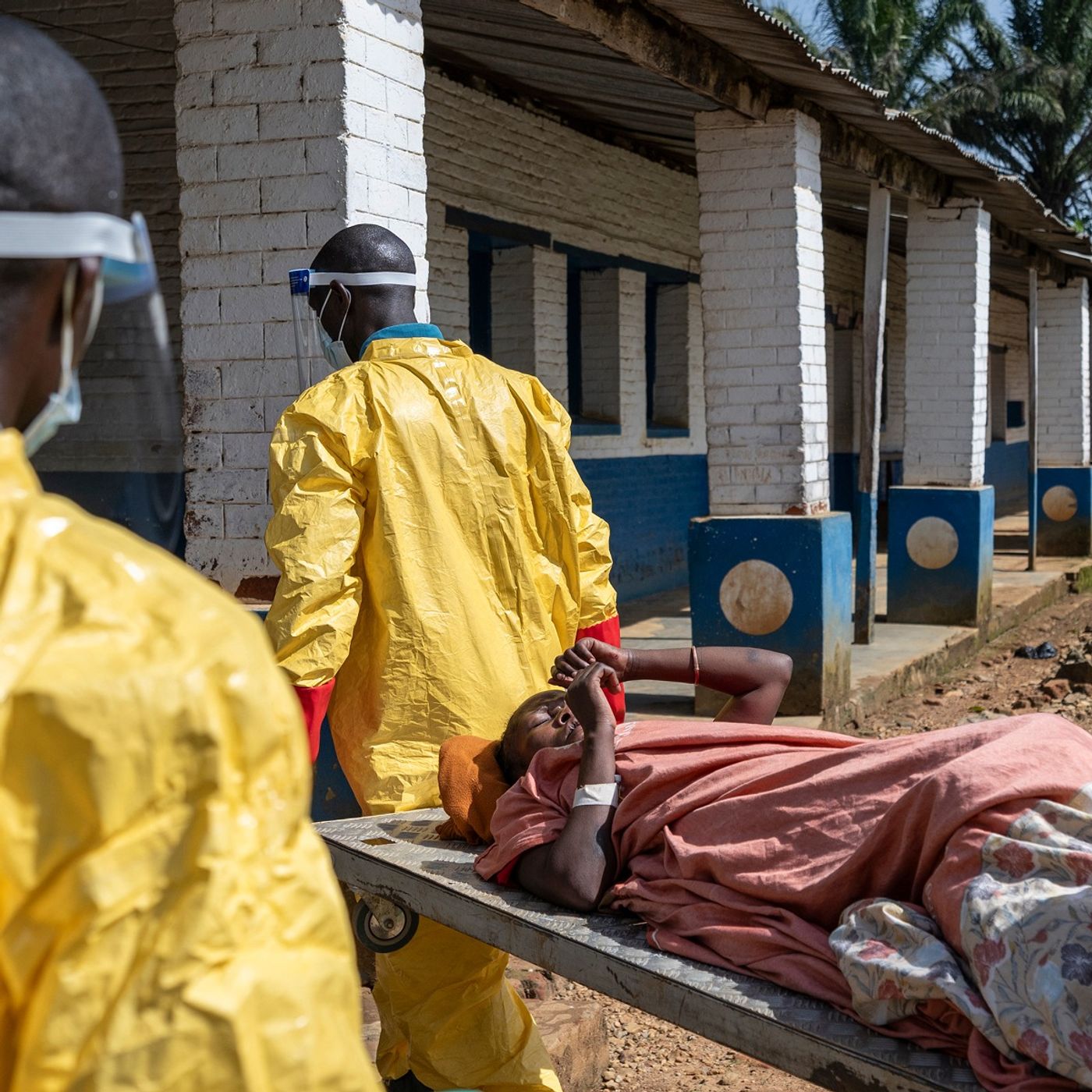
The Daily
Why the Ebola Outbreak Has Been Nearly Impossible to Stop
00:30:32
At the center of the Ebola outbreak in the Democratic Republic of Congo, the front line is completely overwhelmed.
Loading summary
Transcript80 lines
- [00:00]
Declan Walsh
This podcast is supported by TNT Sports. Tennis season is heating up and TNT
- [00:06]
TNT Sports Announcer
has you covered for every point of Roland Garros. Tune in as the second major of the year serves up all the high
- [00:12]
Declan Walsh
flying, heart pumping action from those iconic clay courts in the middle of Paris. Keep up with the biggest stars of the tennis world, including Janik Sinner, Novak
- [00:21]
TNT Sports Announcer
Djokovic, reigning champion Coco Gauff, and so
- [00:25]
Declan Walsh
much more as they battle for the ultimate glory.
- [00:27]
TNT Sports Announcer
Watch coverage of Roland Garros now through
- [00:29]
Declan Walsh
June 7th on TNT and streamed on HBO Max.
- [00:34]
Natalie Kitroeff
From the New York Times, I'm Natalie Kitrowev. This is the Daily. At the front lines of the Ebola crisis in Central Africa, badly equipped health workers with little outside support are losing the fight against one of the worst outbreaks in history. Today, my colleague Declan Walsh takes us to the epicenter of the virus to understand why so far its spread has been nearly impossible to stop. It's Wednesday, june 3rd. Declan, thank you so much for doing this. Where are you right now?
- [01:23]
Declan Walsh
I'm in Bunye, a city in the northeast of the Democratic Republic of Congo.
- [01:28]
Natalie Kitroeff
Okay, so you've been in the DRC for about a week and a half covering this horrific Ebola outbreak. So just tell us what you're seeing, what it's been like on the ground.
- [01:39]
Declan Walsh
It's a really dire situation here right now. This outbreak was only detected just over two weeks ago, but the virus was probably spreading for two, some groups are saying even three months before it was detected. And so we just don't know how deep, how wide it has gotten into the population in these areas. And that's really hampered efforts not just to treat the people affected by the disease, but to contain its spread.
- [02:08]
Natalie Kitroeff
And in terms of numbers, cases, deaths, where do things stand?
- [02:12]
Declan Walsh
So far, about 250 people are confirmed to have died. There are about another 1,100 suspected cases. But the true spread and extent of this virus is thought to be much, much wider than that. And I don't think it's an exaggeration to say that the virus, the virus is way ahead of the response at this point. Already this is the third largest Ebola outbreak on record, and there are groups saying that it has the potential to become the largest ever. Now, that's a very high bar. The largest Ebola outbreak was between 2014 and 2016 in West Africa. That killed 11,000 people. We're far off those numbers, but the fact that the response is so far behind the curve makes it obviously much, much harder to start to push it back.
- [03:04]
Natalie Kitroeff
So what do we know about how this started and how it went undetected
- [03:08]
Declan Walsh
for so long because of that huge delay. There's so much we still don't know. But one thing that seems to be almost certain is that this outbreak started in this gold mining town called mongbolou, that's about 50 miles north of Bunya of the regional capital. And so a couple of days after I got here with our photograph, Arlette Bashizi, we got in a car and we drove to Mongwa Lu to find not just the town where it started, but also what the response looked like in this place where as far as we had heard, there was the greatest number of infections.
- [03:47]
Natalie Kitroeff
And what did you find?
- [03:49]
Declan Walsh
Well, first, the road to get there was quite difficult. It was really a road, just a name. It was made of mud. It was extremely rough and bumpy. But all along that road, we passed these Congolese military checkpoints, and that was because we were passing through territory where at least three or four different militias were known to operate. So that was complicating the response and also preventing aid workers from getting to this town. And when we got to Mongbolog itself, we went straight to the public hospital, which we knew was the center of treatment efforts. We were expecting really to see the architecture of an Ebola response that you classically think of. For some of us, it's maybe a Hollywood reference, like movies like Outbreak and so on. These large white tents, lots of people walking around in sealed suits.
- [04:46]
Natalie Kitroeff
Right.
- [04:47]
Declan Walsh
But there was almost nothing. And we went into the actual Abulu wards themselves. We put on the full protective equipment. We spoke to the staff. We found a doctor who wanted to take us inside. And there, honestly, it was pretty shocking. Apart from the doctor who brought me in, the ward was just full of people who had come to help the Ebola patients. So he has three sisters. These ones, these two, these two, and this lady over here. Usually relatives who had come to bring food or water because those things aren't provided by the hospital. But they were wearing almost no protective equipment. And at the end of the room in the corner, we found this young boy, five year old boy called Emmanuel, who was lying on this bare mattress on his own, hooked up to a very simple drip. And his dad was standing over him, looking so concerned. And we got speaking in French. He told me that his son had been going to school just a few days earlier when the teacher sent him home. Apparently he had a headache and a fe. The family tried to look after him for the first few days, but he got worse. And then he said that the night before, Emmanuel started to bleed uncontrollably out of his nose. And so they rushed him to this hospital. And when he was lying there, he had this tissue stuffed up his nose to try and staunch that bleeding. And what was even more striking was that just a couple of yards away, two beds down there, was lying the body of a 21 year old woman called Christine Bahati, who had died just hours earlier. The doctor said that she had been doing fine in the evening, and then Suddenly, at about 2 in the morning, she fell into a coma. Yeah, it was the fox. And died very quickly. He said they were unable to revive her. Her shoes were still under the bed where she had left them. Her belongings were in a bag. But what was so disturbing about that is that the body of a person who has just died of Ebola is extremely contagious. And yet the remains of this poor woman were just covered by this thin sheet. And people were walking in and out of this ward with very little prot? Including, it has to be said, the dad of this boy. This just seemed to go against every precaution that you could take against Ebola.
- [08:01]
Natalie Kitroeff
And did you get a sense of why this was happening? Did you talk to the doctors, what was going on? I'm sure they didn't want that to be happening either.
- [08:09]
Declan Walsh
No, the doctors were very well aware of the risks, But they said, look, what can we do? This is the space we've got available to us. These are the resources that we have. We only have a certain amount of protective equipment. We can't give it to all of our staff because simply we don't have it. And frankly, they also said we're not really trained for this. We didn't receive any special training for this. We were suddenly hit with this declaration of an outbreak and we are making do as best as we can. But you know, this young doctor who was bringing me around, He was angry at his own government because it took the authorities so long to discover this outbreak two, possibly three months after it started. And he was also angry more broadly at the international system of Ebola response, that architecture of experts and aid groups and so on, because so few of them had reached this town where it started and where the greatest number of cases were. Even though he was wearing the protective gear, I could see in his eyes and hear in his voice his intense frustration. And as we were looking at this scene, at one point, he turned around to me and he said, we are 12 days into this outbreak. Is this the best we can do.
- [10:02]
Natalie Kitroeff
Well. Okay. To this doctor's question, Declan, why has the response been so slow? What have you come to understand about that?
- [10:11]
Declan Walsh
Part of the reason is to do with the virus itself, or rather with this strain of the virus. Ebola is this highly contagious hemorrhagic disease, which is spread, not like COVID 19, through respiratory means, but it's spread through touch, usually by touching bodily fluids of a person who is infected. Now, this particular strain of the diseases called Bundibudio, it's named after, in fact, a town in western Uganda about 60 miles from here across the border, where it first occurred in 2007. And like all the viruses that cause Ebola, it's thought to reside in the fruit bat population. And it just happens that there is a large fruit bat population that roosts in the trees in this region, but it is an incredibly rare strain of the virus. This is only the third Bundibugio outbreak ever. What that means is that as yet, there is not a vaccine or a cure for this disease. On top of that, when Ebola spreads into a population, it often presents in people initially with symptoms that are very similar to malaria or typhoid. Now, they happen to be extremely common diseases in this area. And in a town like Mongolu, people are very used to getting these. And when they do, they typically don't go to the hospital. In fact, sometimes they don't even go and see a doctor. Many poor people, they tend to go to traditional healers or they'll go to some local small clinic. All of that combined means that people in Moung Bualu were really only going to the hospital for medical help when they were approaching the last stages in the disease.
- [12:00]
Natalie Kitroeff
So people are delaying treatment basically because it seems like they may think that they have one of these more common illnesses. They just don't know how serious it actually is.
- [12:10]
Declan Walsh
That's right. And then the other issue the doctors brought up was with testing because it's this very rare strain. Initially, there wasn't even a test in this entire region for Bundibudjo when they first detected what they saw as this mysterious wave of deaths in this town that happened all through the month of April and then into early May. They sensed samples off to the regional lab to get it tested, and it came back negative for Ebola because they were testing for an entirely different strain, the much more common strain, which is called Zaire, and that it was only eventually, when health officials sent a sample to the capital, Kinshasa, that they tested it for this rare Bundibugio strain. And then that came back positive, and they identified the disease. So since the outbreak has started, there's been this chronic shortage of testing kits to identify, identify who's got Budi Bhudio. And that just makes treatment at the hospital really hard because the doctors told us that they would send off a test and not get a result for four, five, six days. Oftentimes, they said by the time the test result came back, the patient was already dead.
- [13:23]
Natalie Kitroeff
So all the elements are in place for this disease to fester in this place that, as you said, is very remote, far from a major city, difficult to get to.
- [13:34]
Declan Walsh
Yes. And you'd think that that isolation would prevent the spread of the disease. But in fact, there are several factors that in some respects made this town an ideal place not just for the disease to take off, but also to spread across the region. So it's this gold mining town that has a huge population of migrant laborers. And because mining has money, it brings trader, it brings gold smugglers, it brings sex workers. And these are all people who move in and out of the town as well. That also, incidentally, has possibly been a factor that provided vectors for the disease to spread elsewhere.
- [14:17]
Natalie Kitroeff
I want to ask, we've been hearing a lot about the Trump administration pulling back on foreign aid. How much of an impact did that have in the spread of Ebola in this case?
- [14:29]
Declan Walsh
Well, if you speak to people in the aid community, for them, there's no doubt that if USAID and American aid more generally were still in place, that this virus would have been detected sooner than it was. The other point that aid workers brought up is that the US Was providing a lot of funding for general humanitarian aid in the Congo. And some of that money went to funding small Congolese groups. And they weren't all necessarily working in health. They might have been just community organizations. But the fact of their existence provided a network that could be activated at short notice in response to a crisis. And now that network really just wasn't available when it was needed this time.
- [15:15]
Natalie Kitroeff
And did things change once this was declared an outbreak, once it became clear just how fast Ebola was spreading? Like, did the US or other international aid groups step.
- [15:27]
Declan Walsh
Yes. I mean, the aid machine has started up and the experts are coming into this area. Aid is starting to arrive. But then it turns out that there is another obstacle to pushing back this outbreak, and that's the fact that many of the people in some of the worst affected communities have a deep mistrust for the people who are trying to save them.
- [15:56]
Natalie Kitroeff
We'll be right back.
- [16:03]
TNT Sports Announcer
Summer it's when we share more time, more memories and more photos. And at, at and t, the iPhone 17 Pro is your summer essential. Its center stage front camera auto adjusts the frame to fit everyone into group selfies. You don't even have to turn your phone and AT and T makes sharing those pics with everyone easy. Right now at, at and t ask how you can get iPhone 17 Pro on them with eligible iPhone trade in any condition requires trade in of iPhone 15 or higher excluding iPhones 16 and 17. E requires eligible plan. Terms and restrictions apply. Subject to change. Visit att.comiphone or visit an ATT store for details. Brought to you by the Capital One Savor card with Savor, you earn unlimited 3% cash back on dining, entertainment and at grocery stores. That's unlimited cash back on ordering takeout from home or unlimited cash back on tickets to concerts and games. So grab a bite, grab a seat, and earn unlimited 3% cash back with the Savor card. Capital One what's in your wallet? Terms apply. See capitalone.com for details.
- [17:03]
Advertisement Narrator
This podcast is supported by bank of America Private Bank. Your ambition leaves an impression what you
- [17:10]
Natalie Kitroeff
do next can leave a legacy. At bank of America Private bank, our wealth and business strategies can help take
- [17:16]
Declan Walsh
your ambition to the next level. Whatever your passion, unlock more powerful possibilities@privatebank.bankofamerica.com what would you like the power to do? Bank of America Official bank of the FIFA World Cup 2026 bank of America Private bank is a division of bank of America, NA Member, FDIC and a
- [17:34]
Natalie Kitroeff
wholly owned subsidiary of bank of America Corporation. Okay, explain what you just said. That people have this distrust of aid groups, of the people trying to contain this virus. What's going on there?
- [17:51]
Declan Walsh
Look, a huge obstacle to fighting this outbreak has been the fact that a lot of people in these communities are still in denial about the virus. Either they don't accept that it exists at all, or they see it as somehow a curse, or they see it as a conspiracy theory. When we were there, we heard so many stories about how people saw this disease as some sort of conspiracy between doctors in the local hospital and these foreign aid groups who they thought were bringing this disease to the community. In fact, there was a story that we heard that Doctors Without Borders, which had jeeps that have extremely high antennas sticking out of the roof, that Doctors Without Borders were using those antennas to somehow spread the disease among the community. Now there is, strangely enough, I think a sort of logical explanation for this. And that goes like this. This community had been grappling with this wave of mysterious deaths until this outbreak was finally detected and declared. And so by the time we had an explanation for it, which was Ebola, there were already hundreds of cases. So this community is faced with this tidal wave of infections and deaths, and people are searching for an explanation. They're going to the hospital too late to get treatment. By the time they get there, many of them are dying. And so people, in a certain way, logically, are starting to associate the hospital as a place where people go not to have their lives saved, but to die. And so I think that really is partly at the root of some of these wild conspiracy theories that were going around. But what that meant in practice for the medical staff at the hospital is that they not only were grappling with this incredibly dangerous disease and chronically under equipped to fight it, but they were also dealing with this intense hostility from the community.
- [20:00]
Natalie Kitroeff
And what did that hostility actually look like? How did it play out? How did you see it?
- [20:05]
Declan Walsh
So when we got to Mongboualu, the huge issue was how to deal with the body of this popular pastor who had just died the night before. His name was Sylvester. He was this charismatic Catholic preacher in the town who had a pretty big following. And when we arrived at the hospital, the director told us that his followers had gathered at the gate of the hospital and they were demanding to get his body so that they could bury it in the traditional Congolese fashion. Now, the hospital director refused because he said that would have been a disaster for the spread of the disease in the town.
- [20:45]
Natalie Kitroeff
Why?
- [20:46]
Declan Walsh
Because traditional burial practices in the Congo involve large numbers of mourners touching the body of a deceased person.
- [20:56]
Natalie Kitroeff
Oh, no.
- [20:56]
Declan Walsh
And so a funeral can become a super spreader event. And that, in fact, has been a problem in previous outbreaks.
- [21:04]
Natalie Kitroeff
Okay, makes sense.
- [21:05]
Declan Walsh
But the refusal to give up this body by the director enraged his supporters who didn't believe his explanations about why this was an incredibly unsafe thing. And so the day before, they had stormed into the hospital compound, and the director told me he had been chased through the compound with people throwing rocks at him. And if I parked outside his office, I could see his vehicle, which had a hole in one of the windows where he said people threw rocks that didn't hit him, but they hit his car.
- [21:39]
Natalie Kitroeff
They're literally attacking the hospital director.
- [21:43]
Declan Walsh
They are literally attacking him in order to get this body. They refused. And then he said that the security forces were called to try and bring peace. Then we turn up the next day, then that evening, we went back to our hotel in the town, and just as we were settling in after dark, we hear these gunshots going off. And it turns out that a crowd of over 100 young men, again supporters of this cleric, had converged on the hospital yet again in an effort to spring out this body.
- [22:16]
Natalie Kitroeff
My God.
- [22:17]
Declan Walsh
The police and the soldiers were firing their weapons in the air to try and disperse them. Then this crowd of people went around the back of the hospital, tried to attack it from another side. And this running battle went on for five hours, all through the evening, until 11 o' clock at night, when the police finally got the situation under control. And then the next morning, after careful negotiation with the church authorities, the body was escorted by a line of soldiers from the hospital down to the local cemetery where it was safely buried.
- [23:00]
Natalie Kitroeff
Okay, so this sounds like a particularly extreme incident. How common is this reaction to the hospital workers, to the aid workers, to the people who are directly working on the front lines of the virus?
- [23:17]
Declan Walsh
Well, I would say this incident was exceptional because it involved this very prominent local figure who had a huge following. But the dynamic, unfortunately, is very common because across the city, Red Cross workers who were trying to carry out these, what they call safe burials of these bodies. In other words, instead of allowing a lot of people to come and touch the body, the body will typically be disinfected. It will be placed in a sealed bag. And these work will ensure that while there is a dignified burial, it's not going to turn into an event where many other people become infected. So the teams of Red Cross workers trying to carry out these burials often run into the same kind of resistance. They've been threatened, they've been attacked, because people effectively don't believe the virus exists, or else they don't believe that it poses a threat to them. Or frankly, I think they just feel overwhelmed by the scale of the calamity that has befallen their community. And so they take it out again on the people who are trying to ensure that this disease doesn't spread even further.
- [24:30]
Natalie Kitroeff
And do you have an understanding from your conversations with health officials of just how big of an obstacle this is in the effort to get the outbreak under control? Like, how much is it actually stymying the response, do you think?
- [24:46]
Declan Walsh
It's huge. When you talk to health officials or aid workers and say, what do you need to push this back? The first thing, of course, they say is, we need equipment. We need protective equipment, we need medicine, we need funds. The second thing they say is, we need education. We need an immediate, urgent effort to communicate to people about the nature of the danger that they face.
- [25:08]
Natalie Kitroeff
We have some experience with this kind of thing from COVID Even in the United States, there were a lot of conspiracy theories. There was a lot of mistrust of the medical establishment, of hospitals. It strikes me that this is a harder thing to solve than even perhaps getting the resources to where they need to be. I mean, building trust is not an easy or a quick thing.
- [25:35]
Declan Walsh
It's very challenging. But there is precedent. I mean, in previous outbreaks in West Africa. In 2014, 2015, in the second largest outbreak, which was also in Congo, health workers ran into similar problems. And so there are tools, there are techniques, there are ideas for combating this problem, but it really does take a concerted, intensive effort. While we were in Mongbalu, I went to see the local parish priest, the Catholic priest, because this preacher who had just died was a Catholic. And I said, what are you doing to try and address this problem? And he said. He said at Mass last Sunday, in my sermon, I appealed to people to carry out safe burials, to adhere to the correct practices. But he said, until now, people are not listening. He said, it's going to take a much bigger and more intensive effort to try and convince these communities about what they need to change in their own lives in order to keep themselves safe.
- [26:40]
Natalie Kitroeff
Declan, what do we know about how far it's spread outside of the DRC at this point?
- [26:47]
Declan Walsh
There has been one death in neighboring Uganda, and I believe about eight or nine suspected cases at the moment. There are great fears that it is also spreading into South Sudan. But for now, this virus has, for the large part, remained confined in Ayturi Province, and there have been some cases in two other Congolese provinces as well. But again, I gotta stress that we just don't know enough about the extent of this virus just yet. And that brings us to another key part of the effort to fight the virus that they haven't, frankly, even started on in earnest yet, which is called contact tracing.
- [27:26]
Natalie Kitroeff
Right, contact tracing, meaning trying to understand where everybody who is infected has been, who they may have seen, touched, been in contact with.
- [27:35]
Declan Walsh
That's right. The problem is that because this is such a rare strain and because there are such limited testing facilities, they've barely started the work of tracing those contacts yet. And all the experts in this field say that until you trace the contacts, you cannot cut the chain of transmission and you can't really expect to contain the spread of the disease.
- [28:00]
Natalie Kitroeff
Okay. Obviously, there is a lot of uncertainty here. There are a lot of unpredictable factors at play. But from your reporting, Declan, what is your understanding of the best case and the worst case scenario for containing the spread right now?
- [28:17]
Declan Walsh
Well, the worst case scenario is that this outbreak goes on for several years and that the numbers soar, not just the numbers of people affected, but that the death toll rises possibly to the level that we saw back in West Africa in 20. But, you know, it doesn't have to be that way. There is an outcome here where the scale of international assistance rises to meet the challenge of this outbreak. So I think it's still an open question about which way we're going to go, because don't forget, we are very early into this outbreak. That's kind of, in a way, what's so worrisome about. It's only been two weeks since it was officially declared and I've been speaking to people on the ground here and they say it already feels like they've been at this for months because it's been such an intense start. Most Ebola outbreaks start with a handful of cases and then it spreads. The challenge with this one is that from day one there were hundreds of suspected cases and many deaths. And those numbers are just going up and up at the moment.
- [29:29]
Natalie Kitroeff
Declan, I can't stop thinking about Emmanuel, the five year old boy who you met in the clinic with his dad. Do you know how he's doing?
- [29:40]
Declan Walsh
I do. I've been in touch with his dad. He's been sending me messages every day. And a couple of days ago he sent me a message and he said that his son had been sitting up, had been drawing numbers because he'd just been learning to count and that he was asking for his toys.
- [29:59]
Natalie Kitroeff
Amazing.
- [30:01]
Declan Walsh
And then today he said that Emmanuel's been discharged and he's gone home.
- [30:10]
Natalie Kitroeff
Wow. So one moment of hope at least in all this. Declan, thank you so much. We really appreciate your time.
- [30:20]
Advertisement Narrator
Time.
- [30:21]
Declan Walsh
Thank you, Natalie.
- [30:29]
Natalie Kitroeff
We'll be right back.
- [30:31]
TNT Sports Announcer
Summer, it's when we share more time, more memories and more photos. And at, at and t, the iPhone 17 Pro is your summer essential. Its center stage front camera auto adjusts the frame to fit everyone into group selfies. You don't even have to turn your phone. And AT&T makes sharing those pics with everyone easy. Right now. @, at and t ask how you can get iPhone 17 Pro and them with eligible trade in requires eligible plan terms and restrictions apply. Subject to change. Visit att.com iPhone or visit an AT&T store for details. Protecting your home shouldn't be a headache. Most security companies make it one, trapping you in expensive multi year contracts and requiring service appointments. Simplisafe is better with comprehensive 24. 7 professional monitoring for a fraction of the cost. Customize your system online in minutes and set it up in under an hour. No drilling stress and no long term contracts. SimpliSafe award winning security that earns your business every day. Right now get 50% off your system@simplisafe.com TheDaily that's half off@simplisafe.com the Daily there's no safe like SimpliSafe.
- [31:37]
Advertisement Narrator
Our healthcare professionals keep us healthy every single day and they deserve the best starting with their uniform. Enter figs. These scrubs are engineered for performance with lightweight breathable fabric, four way stretch, antimicrobial and pockets in all the right places. And with so many colors and styles to choose from, you'll look, feel and perform your best all shift long. If you're in healthcare or know someone who is, you can get 15% off your first order at wearfigs.com with the code FIGSRX. That's wherefigs.com code figsrx
- [32:14]
Natalie Kitroeff
here's what else you need to know today.
- [32:16]
Declan Walsh
Look, we're not moving forward with the fund, Period.
- [32:19]
Natalie Kitroeff
The Trump administration is abandoning plans to create a $1.8 billion fund for people who said they were victims of unfair government prosecution, including January 6 rioters. The fund had drawn fierce opposition from the courts and Congress, including congressional Republicans. During testimony before a House committee on Tuesday, Acting Attorney General Todd Blanche, who just days ago advocated for the fund, told lawmakers that it was now dead,
- [32:51]
TNT Sports Announcer
not moving forward ever, correct?
- [32:53]
Natalie Kitroeff
Oh, there's no more fund then?
- [32:56]
Declan Walsh
Well, to the extent there was a fund. And remember, the fund wasn't set up yet.
- [33:00]
Natalie Kitroeff
And President Trump signed an executive order on Tuesday asking tech companies to give the government oversight of new AI models before releasing them. Under the order, tech companies would give the government 30 days to review their models before making them available to the public, and the Treasury Secretary would study security vulnerabilities discovered by the models. This is the administration's biggest step toward regulating AI, and it marked a change in approach for trust, who had previously promoted a hands off stance toward the technology. Today's episode was produced by Claire Tennisketter, Stella Tan and Chris Benderev, with help from Adrian Hurst. It was edited by Chris Haxel with help from Mark George, and contains music by Leah Shaw Dameron, rowan Niemisto, Pat McCusker and Sophia Landman. This episode was engineered by Alyssa Moxley. Special thanks to Brad Kimbrough. That's it for the Daily I'm Natalie Kitroweth. See you tomorrow.
- [34:21]
Advertisement Narrator
This podcast is supported by BetterHelp. Summer can feel like a sprint. Kids home, trips to plan, routines flipped upside down. It's easy to slip into survival mode just trying to get through it. Then suddenly it's over and you're wishing you enjoyed the days just a little bit more. Therapy can help you slow down and actually be present for the moments that matter. With BetterHelp, you can connect with a licensed therapist from anywhere on your schedule. Don't just survive this summer thrive. Visit betterhelp.com thedaily.