← The Daily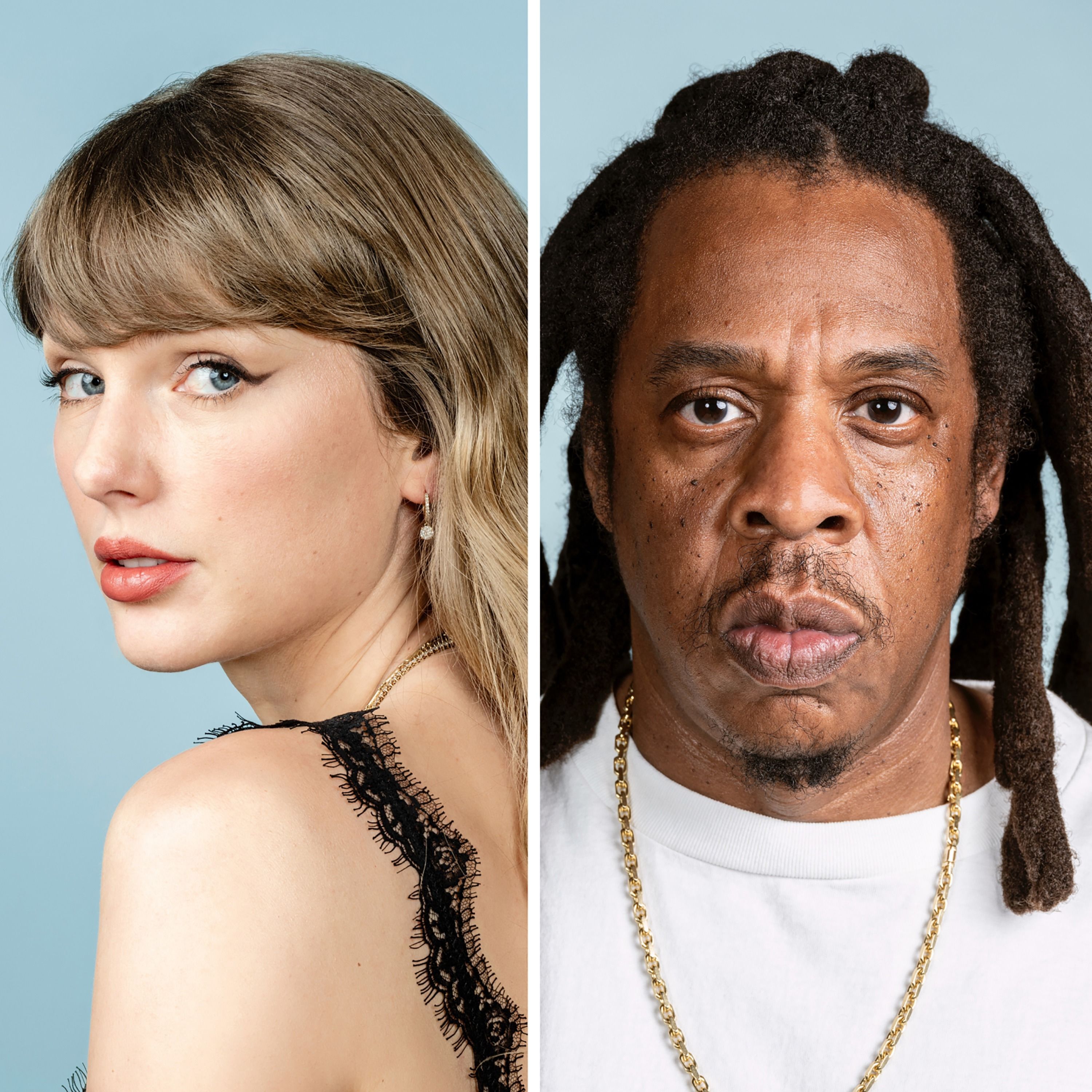
The Daily
The 30 Greatest Living American Songwriters
00:43:21
Roughly a year ago, a team at The New York Times Magazine set about tackling a nearly impossible task: creating a list of the greatest living American songwriters. But how to take the tens of thousands of songwriters working in this country and narrow them down to a digestible list? The answer involved thousands of voting ballots, hundreds of music industry insiders and a series of closed-door meetings among a small group of music experts. The result, The Times’s list of the 30 greatest living American songwriters, was published this week. Today, Michael Barbaro talks with Sasha Weiss, a deputy editor of The Times Magazine, who oversaw the project, as well as Joe Coscarelli and Jody Rosen, two members of the cadre of critics assigned with compiling the final list. They discuss the list-making process, what defines a great songwriter and why Billy Joel didn’t make the final cut. We also hear from some of the songwriters featured on the list, including Taylor Swift, Nile Rodgers an...
Loading summary
Transcript258 lines
- [00:00]
Chase Sapphire Reserve Advertiser
A Sapphire Reserve story from Ella Langley.
- [00:03]
Ella Langley
I kind of say my first concert ever was for cows. I would climb up to the top of the barn and just perform. Now I still do that listening to Apple music, which I get through my Sapphire reserve card. And when moo can sound very close to boo, it toughens a girl up.
- [00:17]
Chase Sapphire Reserve Advertiser
Sapphire Reserve now comes with Apple Music. Chase Sapphire Reserve now even more rewarding. See More rewards@chase.com Reserve IT cards issued by JP Morgan Chase Bank, NA Member FDIC subject to credit approval terms apply. Apple and the Apple logo are trademarks of Apple Inc. Registered in the US and other countries.
- [00:33]
Michael Barbaro
From the New York Times, I'm Michael Balbaro. This is the Daily on Sunday. Over the past year, under a veil of secrecy, my colleagues at the New York Times Magazine have been arguing over a list of the best living songwriters in America.
- [00:55]
Jody Rosen
Good.
- [00:56]
Jay Z
Stupid. What type effects.
- [01:01]
Michael Barbaro
Across all genres of music. Famous lyricists, sonic pioneers, hit machines, And beloved storytellers. Today, Times journalists explain how this list was made. And we hear from the artists themselves about how they created some of the greatest songs ever written. It's Sunday, May 3rd. Sasha Weiss. Michael Barbaro, you must be exhausted.
- [02:02]
Sasha Weiss
We've had some late nights here.
- [02:04]
Michael Barbaro
Yeah, but fun ones.
- [02:06]
Sasha Weiss
Really fun.
- [02:06]
Michael Barbaro
And just to explain, you are the deputy editor of the Times Magazine and you were deeply involved, along with a vast crew, in creating this list. And I wonder, how do you even begin to create a list as ambitious as this?
- [02:28]
Sasha Weiss
Well, we decided to draw on the wisdom of the crowd.
- [02:33]
Taylor Swift
And.
- [02:33]
Michael Barbaro
But not just any crowd.
- [02:34]
Sasha Weiss
Not just any crowd. We wanted to really canvas a lot of different music experts from all walks of life. So we sent ballots out, of course, to working musicians and songwriters, but also to producers, to label executives, to many generations of music critics, to top editors of music magazines, to scholars, to authors, to DJs, to music supervisors. So we really tried to go wide. And in the end, the list that was generated by that balloting process had over 700 individual names.
- [03:06]
Michael Barbaro
Wow.
- [03:07]
Sasha Weiss
What followed the balloting process was a second part of the process, which was inviting Times critics and sometimes affiliated critics to come to the Times for a long day of debate and just kind
- [03:22]
Michael Barbaro
of slug it out.
- [03:24]
Sasha Weiss
To slug it out.
- [03:25]
Michael Barbaro
Were you in the room?
- [03:25]
Sasha Weiss
Oh, yeah.
- [03:26]
Michael Barbaro
What was it like?
- [03:28]
Sasha Weiss
Passionate, contentious, sometimes heated. You know, I mean, there were some people who were obvious shoo ins. They balloted high above the rest. Stevie Wonder was one. Dolly Parton was another. Bob Dylan was another. Carole King.
- [03:44]
Michael Barbaro
So hold your fire. Those guys are in.
- [03:46]
Sasha Weiss
Those guys are in. And that was Part of our rules and. And sort of the lower down we got in the balloting, the more they had to reach consensus. So there was a lot of debate. There was a lot of playing music in the room. But when they couldn't get agreement, sometimes they had to move on.
- [04:00]
Michael Barbaro
Crushing.
- [04:01]
Sasha Weiss
It was crushing. I mean, I think at various points, different people in the room felt crushed. You know, part of what we were trying to do here was to complicate the image of a kind of singer, songwriter, bard that a lot of us have in our heads and that, you know, some of the kind of usual suspects represent. That's one mode of songwriting, a very important one. But it's actually relatively new. You know, it was really in the 60s that Bob Dylan, among others, kind of inaugurated that kind of songwriting, you know, and we wanted to represent these other traditions. So how do we do that? So who to include from Nashville? That was a big question. And how to arrange that. You know, how to. How to explain that to readers.
- [04:39]
Michael Barbaro
Well, let's talk about who ultimately got left off. Because so much of our conversation today is gonna be about who makes it. And I'm gonna go first here. Okay. Cause I've had a chance to evaluate your list, and just off the top of my head, Billy Joel.
- [04:55]
Sasha Weiss
Sure.
- [04:56]
Michael Barbaro
You left off Billy Joel, the poet laureate of New York, the man who turned dinner at an Italian restaurant into an opera.
- [05:03]
Sasha Weiss
You're not alone there, Michael. Many commenters on our project have been lamenting the absence of Billy Joel.
- [05:10]
Jody Rosen
Yeah.
- [05:11]
Sasha Weiss
Now, Billy Joel, everybody in the room would agree. I think at least most of them would agree, that Billy Joel belongs on a list of great songwriters. But when you're making a list of 30 and you're rooting it in a balloting process, you have to make hard choices. And there were people who were higher than he was. And, you know, there were also people representing the piano man. Schmaltz tradition.
- [05:36]
Michael Barbaro
Schmaltz, sure.
- [05:39]
Sasha Weiss
Schmaltz meant in the best sense, emotionalism, opera, you know, a kind of, like, bigness of storytelling, which is a venerable tradition in American song and represented on the list. But Billy Joel, some people argued in the room, as a lyricist, if you're kind of putting him up against a Springsteen and a Dylan, people who he admires and I think pays homage to some people argued he's not quite there. And there are others who are better. And we do have to represent the piano men. They're there. But the piano man himself ultimately is not. Is not.
- [06:14]
Michael Barbaro
I wonder what you see and. Or hear when you look at the final list of 30.
- [06:22]
Sasha Weiss
I think it's a list that reflects the world that we move through. I think it reflects the way that American music comes out of everything from, like, a speaker at a bar mitzvah, you know, a dance floor at a bar mitzvah, to. To what you see on TikTok,
- [06:47]
Taylor Swift (singing)
to,
- [06:48]
Sasha Weiss
like, the thing that you'd sing at karaoke that everybody would know. We have people who are layering in production and a kind of sound that threads its way through popular R and B and soul and hip hop. We have schmaltz and we have avant garde indie, you know, weirdness.
- [07:19]
Taylor Swift (singing)
I spread like strawberries, I climb like peas and beans.
- [07:25]
Sasha Weiss
You know, we have all of it. And we really wanted to show a range and to show that songwriting is not just one kind of songwriting. So the list tells several stories about that.
- [07:36]
Michael Barbaro
And I'd argue best of all, for our purposes, is that because this list of 30 songwriters required them to be alive, we can actually hear from them.
- [07:50]
Sasha Weiss
Yes. So that was sort of the third step in the process once we went through the very difficult work of winnowing this list. And by the way, it wasn't just one session. It was many, many sessions over weeks to get to where we got. We wanted to go to these practitioners of song and how do you do what you do?
- [08:09]
Michael Barbaro
And for the rest of this episode, we're actually gonna hear from a couple of our colleagues who helped create this list and did these interviews with these living songwriters. And we're gonna start with a colleague who spoke with arguably the biggest name in music today. And we're actually gonna hear from her in the great tradition of schmaltz. I'm gonna use a pun here. We're going to hear from her quite swiftly.
- [08:36]
Sasha Weiss
Excellent.
- [08:36]
Michael Barbaro
We'll be right back.
- [08:40]
Chase Sapphire Reserve Advertiser
This is a vacation with Chase Sapphire Reserve, the butler who knows your name. This is the robe, the view, the steam from your morning coffee. This is the complimentary breakfast on the balcony, the beach with no one else on it. This is the Edit, a collection of handpicked luxury hotels you can access with Chase Sapphire Reserve and a $500 edit credit that gets you closer to all of it. Chase Sapphire Reserve now even more rewarding.
- [09:04]
Learn more@chase.com Sapphire Reserve cards issued by JPMorgan Chase bank and a member FDIC subject to credit approval.
- [09:11]
Taylor Swift
Some songs that I've written, I started on the piano. That happened with All I Want for Christmas is yous.
- [09:17]
John Caramanica
If you couldn't tell, that is Mariah Carey. I'm John Caramonica, one of the critics behind the New York Times 30 Greatest Living American Songwriters project. We interviewed some of the songwriters on our list, including Taylor sw, who hasn't sat for a video like this in a long time. These are not ordinary conversations. You're gonna watch these videos and learn about intimate approaches to craft in ways that you rarely have access to.
- [09:44]
Jay Z (voice)
My mom had got me this notebook and I was just writing it really small cause I didn't want anybody to read what I was writing.
- [09:51]
John Caramanica
Okay, Jay Z's teenage notebooks. I need to see those. Watch all the video interviews for free. And check out the entire 30 Greatest Living American Songwriters project at NY 30 Greatest or in the app. And let us know if you agree with our picks. I bet you won't.
- [10:11]
Michael Barbaro
Joe Coscarelli. Hey, welcome to the Sunday Daily.
- [10:15]
Joe Coscarelli
Thank you for having me.
- [10:17]
Michael Barbaro
You cover pop music for the New York Times. You co host a show podcast. You were one of the journalists who helped winnow this wisdom of the crowd that Sasha mentioned. Down to the 30 best living American songwriters. And most relevantly, for our purposes, you
- [10:36]
Joe Coscarelli
interviewed the queen, not Beyonce, the other queen, not Madonna.
- [10:45]
Michael Barbaro
Taylor.
- [10:46]
Joe Coscarelli
Yes.
- [10:47]
Michael Barbaro
Pretty big deal.
- [10:48]
Joe Coscarelli
Yeah. Fun, fun. One good assignment.
- [10:50]
Michael Barbaro
Mm. Tell me why Taylor Swift made the list.
- [10:54]
Joe Coscarelli
How could she not? That's my stance. I think there's a lot of hemming and hawing over Taylor's omnipresence as a celebrity, as a cultural figure, her sort of imperial reign over pop music, especially in the last five plus years. The fame is one thing, but the music is at the core of the fame. And I think that ultimately is the reason for everything else. It's the songs.
- [11:21]
Michael Barbaro
And that's what puts her on the list of best living songwriters. You're a student, maybe even, dare I say, a scholar of Taylor Swift. And you've been studying her work for how long?
- [11:35]
Joe Coscarelli
I mean, I've been listening to Taylor Swift since I was a teenager, which
- [11:40]
Michael Barbaro
is when she was a teenager.
- [11:41]
Joe Coscarelli
Yeah, we're about the same age. She's 1989, as we know. I'm 1988. We've grown up in parallel. She's always been there as a soundtrack to my own adolescence and young adulthood. And then I've been covering her as a journalist for 15 years now, 12 of which are here at the Times. I interviewed her before for my songwriting series on YouTube called Diary of a Song. That was in 2019. And then after that interview, she essentially goes dark from speaking with reporters about her work until. Until now.
- [12:17]
Michael Barbaro
Alrighty.
- [12:17]
Joe Coscarelli
We're good.
- [12:18]
Jody Rosen
Yeah. Ready to Rock.
- [12:19]
Taylor Swift
Oh, absolutely.
- [12:21]
Joe Coscarelli
Thank you so much for doing this. What a treat.
- [12:23]
Taylor Swift
Thank you for inviting me to talk about songwriting.
- [12:26]
Joe Coscarelli
I have a million.
- [12:27]
Michael Barbaro
Where do you start this conversation with her about her songwriting process?
- [12:34]
Joe Coscarelli
You know, I actually started with the first line of the first song of her first album she ever released called Taylor Swift in 2006. That song is called Tim McGraw.
- [12:45]
Taylor Swift (singing)
He said the way my blue eyes shined but those Georgia stars to shame that night I said, that's a lie.
- [12:55]
Joe Coscarelli
We used that to get into all of these little songwriting tricks that she still does today. That started with her initial schooling in what it means to make a record.
- [13:07]
Taylor Swift
There was almost this tradition of sort of breaking the fourth wall, making the song, then a part of the song or the writing of the song becomes a part of the song.
- [13:16]
Joe Coscarelli
And one of the tricks I've always loved that Taylor Swift uses, which is a very country music thing to do, is this sort of plot twist, this perspective shift at the end of a song.
- [13:27]
Taylor Swift
And I did that in a song called Tim McGraw, where, you know, I'm singing about this kind of love lost
- [13:33]
Taylor Swift (singing)
and there's a letter left on your doorstep and the first name that you read.
- [13:40]
Taylor Swift
And then in the bridge, it's revealed that I wrote this, and I hope he hears it.
- [13:44]
Joe Coscarelli
This is something she was doing on that first album on songs like Tim McGraw and our song.
- [13:50]
Taylor Swift
The song, our song, which I still love so much. It's all about this romance and this relationship. And then in the end, it says, I grabbed a pen and an old napkin and I wrote down our song. So I loved doing that. I still kind of love doing that. The kind of just, like, edit was me.
- [14:08]
Joe Coscarelli
And then she drew the thread all the way, years and years later to a song on her album Folklore, called the Last Great American Dynasty.
- [14:17]
Taylor Swift (singing)
Rebecca rode up on the afternoon train it was sunny.
- [14:23]
Taylor Swift
It is just so much fun to, like, tell this story about this real woman who lived in history and she defied the social norms and she drove people crazy, and she had a marvelous time ruining everything. And you talk about the house she lived in on the coast, and basically then in the end, you're like, you know, she moved away from Holiday House. It sat quietly on that beach, free
- [14:50]
Taylor Swift (singing)
of women with madness and men in bad habits.
- [14:53]
Taylor Swift
And then it was bought by me. And then it was bought by me. And you're like, every time I get to that part, when I would sing it on tour, I just, like. I wanted my grin to go from here to here. But that looks crazy. So it's Like, I had to, like, taper down my own excitement that, that, that that hook happened.
- [15:12]
Michael Barbaro
As you two are discussing the early phases of her career, she mentions a musical influence that I had not quite expected. Emo. Breathe in for luck. Breathe in.
- [15:26]
Taylor Swift
I was intensely impacted by emo music, right? Dashboard Confessional Chris Carrabba, Fall Out Boy Pete Wentz's lyrics, Am I more than you?
- [15:40]
Joe Coscarelli
This was a real light bulb moment for me because Taylor and I are about the same age, we grew up on the same MySpace era music. And so when I asked her about this thing she's always loved to do, which is playing on idiom and even cliche, she drew it directly back to these sort of maligned, at the time, youth culture bands who were known for putting a sort of clever twist on an expected film phrase.
- [16:16]
Taylor Swift
They take a common phrase and then they just twist the knife of it, right? Like I'm just a notch in your bedpost, but you're just a line in a song. Drop a heart, break a name. I'd be reading those lyrics and I'd just finish reading a line and just go, oh, my God.
- [16:34]
Joe Coscarelli
And that got her talking and thinking about all these little language tricks she likes to lean on.
- [16:39]
Taylor Swift
I really gravitate towards juxtaposition and polarity in a line, right? So, hey, what could you possibly get for the girl who has everything and nothing all at once? Our coming of age has come and gone.
- [16:49]
Joe Coscarelli
She talks about these little rules she has for herself. Like she doesn't like one word to end on the same letter, that the
- [16:56]
Michael Barbaro
next word starts with a really funny bugaboo.
- [16:59]
Taylor Swift
For example, in the song, our song, it was supposed to be when you're on the phone and you talk real low, but I was like, I don't like the real low. So it's turned into when you talk real slow.
- [17:18]
Michael Barbaro
Taylor is famous for her bridges in songwriting, and here I'm just gonna confess, I don't think I've ever really understood what a bridge is, but I know you guys talked about it.
- [17:29]
Joe Coscarelli
I think an easy way to think about a bridge is that it's a standalone part of the song that comes near the end. And you've never heard it before and it probably doesn't repeat. I knew I had to talk about bridges with her because Taylor has made a point to really make the most out of this part of pop songwriting structure.
- [17:48]
Taylor Swift
I think the importance for me of a bridge, it just feels like we're painting a picture, we're setting a scene. You can start, like, painting the Picture in the verse. You can get to the heart of it at the chorus. But then the bridge can be where you zoom back, you walk 20ft back, and you see what this entire painting was supposed to be like. You've seen brushstrokes, you've seen the color tones, but the bridge can be when you step back and you feel everything that that piece of art was supposed to make you feel. That's just how I feel about bridges.
- [18:24]
Joe Coscarelli
And she zeroes in on something she likes to do that she calls the rant bridge.
- [18:29]
Taylor Swift
We love these rant bridges, where it's basically like stream of consciousness, endless, pouring out of emotion.
- [18:37]
Taylor Swift (singing)
I'm drunk in the back of the car and I cried like a baby coming home from the bar.
- [18:42]
Taylor Swift
Intrusive thoughts, like, blended with metaphor, with discussion, with shouting.
- [18:51]
Taylor Swift (singing)
He looks up, grinning like a devil.
- [18:54]
Taylor Swift
You want this rant bridge to feel the most intense of what that feeling is that you're trying to establish over the course of the song.
- [19:10]
Michael Barbaro
My favorite moment in the interview, in case you wondered, is when Taylor Swift describes to you how an entire song just starts to come to her. And that has always felt like the divine in the songwriting process. And she recounts a recent example of that.
- [19:29]
Joe Coscarelli
Yeah, she's talking about the song Elizabeth Taylor.
- [19:34]
Taylor Swift (singing)
Elizabeth Taylor. Do you think it's forever?
- [19:40]
Joe Coscarelli
She's talking about this really sort of mundane moment of being on vacation with her boyfriend, now fiance, Travis Kelce.
- [19:47]
Taylor Swift
I go on and on and explaining to Travis, like, why I love Elizabeth Taylor so much. She fought for artists rights. She was exploited in so many ways. And yet she.
- [19:55]
Joe Coscarelli
You can just imagine Travis, you know, in the driver's seat or whatever it is just sort of like, okay, interesting, you know, learning all about Elizabeth Taylor.
- [20:05]
Taylor Swift
I was just going on and on. I'm like, her eyes were violet. Some people said they were blue. Some people said they were violet. I think they were violet. And we arrive, we get home, he gets out of the car, and I'm just in my head, I'm like this intrusive melody of like, I'd cry my
- [20:18]
Taylor Swift (singing)
eyes violet Elizabeth Taylor.
- [20:21]
Taylor Swift
And I'm just like scrambling to open my record, like, app on my phone.
- [20:27]
Taylor Swift (singing)
I cry my eyes violet Elizabeth Taylor.
- [20:32]
Joe Coscarelli
For somebody who is writing songs constantly, I think a conversation easily becomes art.
- [20:39]
Taylor Swift
But that's like one of those spontaneous places where it floats down like a cloud in front of you and all you have to do is grab it and the song transpires from there. It comes as if from nowhere.
- [20:54]
Michael Barbaro
I was struck, Jo, by how Taylor Swift thinks about her own reputation as a songwriter.
- [21:01]
Joe Coscarelli
I see what you did there.
- [21:02]
Michael Barbaro
She's exceedingly sensitive, and she tells you this to the idea that other people
- [21:10]
Joe Coscarelli
have written her songs totally. And that's something that started very early in her career. Taylor's third album, Speak now, is one that she wrote entirely alone, with no other co writers.
- [21:22]
Taylor Swift
When I wrote Speak Now, I was 18 and 19, and I was coming from this big, massive moment that I had with an album called Fearless, and it had one album of the year at the Grammys, and it was this big. It was the first time there was, like, this big debate over whether I deserved to be there. There are always gonna be.
- [21:44]
Joe Coscarelli
After Fearless, her second album blew up, you had a bunch of people coming out of the woodwork saying, like, ha, ha, cute. Look at this little girl who's writing her songs.
- [21:53]
Taylor Swift
I was like, these discussions can lead to a really bad place if I don't do something to counteract them and to prove that, no, it wasn't my co writers that did all this work. And, yes, I am the author of this entire body of work that I was very proud of.
- [22:11]
Joe Coscarelli
And I think that's something she's had to return to over and over again throughout her career. This idea that. No, no. She, in fact, is the chief architect and author of everything she makes, even if she works with some of the biggest songwriters on earth.
- [22:27]
Taylor Swift
I'd written so many songs alone, and I love collaboration. I love co writers, but it's not something that I needed.
- [22:33]
Joe Coscarelli
It's one of the things I've always loved and respected about Taylor is that you can tell she is in tune with the conversation around her, even as she's gotten to this level. And if you pay close attention, you can hear her in this interview responding to different lines of criticism.
- [22:53]
Taylor Swift
I do kind of like it when people challenge me on something because I never want to be in the room with creators who are afraid that if. If they have a better idea, like, they can't. They can't argue with me because it must be my idea that makes it through. I'm never gonna grow that way.
- [23:09]
Joe Coscarelli
When she says something like, when I am collaborating, it's the best idea wins in the room, AKA I'm not surrounded by yes men, which is something, again, that a lot of people have said, oh, Taylor, songs are slipping because she's so famous, because no one in the room with her can tell her when she has a bad idea. So she does this thing where she not only internalizes the criticism and responds to it in a forum like this, but also responds to it in the music and in the songs and in the way she makes them.
- [23:40]
Michael Barbaro
Right. I'm glad you brought this up. She talks with really bracing frankness about the concept of criticism and about how she thinks you're supposed to best use it in songwriting and how you're not supposed to use it and the balancing act of that.
- [23:59]
Joe Coscarelli
I thought that was maybe her savviest and most wise section of this interview.
- [24:05]
Taylor Swift
Yeah, criticism has been a huge fuel for me. It's been a huge jumping off point, like a creative writing prompt or something.
- [24:12]
Joe Coscarelli
She says basically, like, dip into it, get a taste of it, and then use it in your art as fuel.
- [24:19]
Taylor Swift
There are so many songs in my career that would not exist. Like, Blank Space would not exist if I hadn't had people be like, here's a slideshow of all her boyfriends. And then Anti Hero is a song that I'm so proud of.
- [24:37]
Taylor Swift (singing)
Still, like, sometimes I feel like everybody is a sexy baby and I'm a monster on the hill.
- [24:45]
Taylor Swift
That song doesn't exist. If I don't get criticized for every aspect of my personality that people have a problem with. My. My favorite thing when I sit down with new artists or songwriters is I'm like, why are you reading your comments? Like you're. You're inundating yourself with too much criticism that doesn't really have a focus, but I think a little bit of it. You gotta just be like, this is part of it.
- [25:16]
Taylor Swift (singing)
You with your words, like knives and swords and weapons.
- [25:20]
Taylor Swift
Don't make this make you stop writing or make you edit yourself or whatever. If it's an interesting point to you to kind of respond to, then that's a gift for you to be able to write something. Maybe you wouldn't have written something that day.
- [25:35]
Taylor Swift (singing)
Picking on the weaker man.
- [25:38]
Taylor Swift
Don't like God. Don't go to the Notes app and post it. Write about it. Make art about this. Don't respond to trolls in your comments. That's not what we want from you. We want your art.
- [25:49]
Taylor Swift (singing)
What you don't know. Someday I'll be big enough so you can't hate. At least not all you're ever gonna be is me. Why you gotta be so mean?
- [26:07]
Michael Barbaro
Joe, a final question. Maybe even a curveball. Did you vote for or against Billy Joel?
- [26:20]
Joe Coscarelli
Putting me on the spot. I voted against Billy Joel.
- [26:24]
Jody Rosen
Why?
- [26:26]
Joe Coscarelli
I find Billy Joel to be schlocky. I think just because people want to sing your songs at karaoke or a bar, that's one ingredient to a great songwriter, but I don't know that the catalog itself stands up when you put a little more pressure on it. Well, Joe, thanks for all the hate mail.
- [26:49]
Michael Barbaro
Michael, in advance, thank you for most of this conversation, maybe not the very end. Really appreciate it.
- [26:57]
Joe Coscarelli
Thanks for having me.
- [27:06]
Michael Barbaro
We'll be right back.
- [27:09]
Chase Sapphire Reserve Advertiser
A Sapphire Reserve story from Ella Langley,
- [27:12]
Ella Langley
my guitar players from Australia. We kind of have a little bucket list going of things we want to do when we get to go over there, hold a koala shark dive and I want to surf. The one problem I have is literally the country of spiders. So I'm packing a pair of cowgirl boots for running away from said spiders. And I'm bringing my sapphire reserve card so I can spend anywhere, spend anywhere
- [27:32]
Chase Sapphire Reserve Advertiser
in the world with Chase Sapphire Reserve now even more rewarding. See More rewards@chase.com Reserve IT cards issued by JP Morgan Chase Bank North America member FDIC subject to credit approval terms apply.
- [27:40]
Michael Barbaro
Hey, it's Ben Fruman, editor in chief of Wirecutter. We put together the ultimate moving guide and I wanted to find out a few of our writers favorite tips.
- [27:48]
Sasha Weiss
When you're first moving into your home,
- [27:49]
Michael Barbaro
make sure that you change the batteries
- [27:51]
Jody Rosen
in your smoke detector by mattress bag.
- [27:53]
Michael Barbaro
You can carry a mattress more easily
- [27:55]
Jody Rosen
because the handles are built in and it's going to protect your mattress from the truck and the street.
- [27:59]
Ella Langley
Make sure you have towels on hand. You don't want to end up taking
- [28:01]
Taylor Swift
a shower and using a dirty sock to dry off.
- [28:04]
Sasha Weiss
Yeah.
- [28:04]
Michael Barbaro
If you're getting ready to move, let Wirecutter help you make a plan@nytimes.com Moving Jody Rosen, welcome to the Sunday Daily.
- [28:14]
Jody Rosen
Thanks, Michael. Great to be here.
- [28:15]
Michael Barbaro
You're one of the esteemed critics, I would argue, shucks, deeply involved in this songwriting project. And we just spoke to Joe Coscarelli about his conversation with Taylor Swift. Just so you know where you're entering here, that's one kind of songwriting tradition when it comes to this list. That wasn't the tradition you focused on.
- [28:42]
Jody Rosen
No, I actually wrote about, had conversations with songwriters who represented a bunch of different other styles, idioms, traditions, vibes, if you will.
- [28:53]
Michael Barbaro
Well, let's start with rap with hip hop and who you focused on there.
- [29:01]
Jody Rosen
Yeah, so I went out to Los Angeles and had a conversation with a New Yorker, that is with, with arguably the New Yorker or at least one of them, Jay Z, who of course is Brooklyn born and bred.
- [29:14]
Jay Z
Yeah, yeah, I'm up at Brooklyn now. I'm down in Tribeca, right next to
- [29:19]
Jody Rosen
Mullarthy's the writer, rapper behind arguably our great New York anthem of the 21st century, Empire State of Mind, among many other songs
- [29:29]
Michael Barbaro
beyond Billy Joel's, obviously. Yeah,
- [29:34]
Jody Rosen
yeah. I think of him as sort of a. More of a bridge and tunnel bard, but moving on. So Jay Z, of course, chronicled his life, his kind of hardscrabble upbringing in Brooklyn in a lot of his music.
- [29:50]
Jay Z
Whoever said illegal was the easy way out couldn't understand the mechanics and the workings of the underworld.
- [29:56]
Jody Rosen
His kind of mythic journey from street corner hustler to famous rapper to now mogul.
- [30:03]
Jay Z
And yep, I bought some artwork for 1 million billionaire. Two years later, that shit worth 2 million.
- [30:12]
Jody Rosen
Jay Z, of course, a master storyteller, but also kind of a legendary technician.
- [30:17]
Jay Z
H to the ISO, V to the
- [30:19]
Jody Rosen
is a just a true genius when it comes to writing rhymes, Finding rhythmic pockets and flows.
- [30:27]
Jay Z
Not guilty. He who does not feel me is not real to me. Therefore he doesn't exist.
- [30:32]
Jody Rosen
So poof. V, son of just one of the. The great practitioners of. Of his art form ever.
- [30:39]
Michael Barbaro
What was the most revealing thing he said to you about his songwriting process?
- [30:44]
Jody Rosen
Well, it was really fascinating speaking to him about sort of how songs start for him.
- [30:49]
Jay Z (voice)
Most times, I come up with the flow first. You may have heard, like, people, like, he does his Rain man in studio. Cause I'm just like. I'm trying to work out the pockets, and then I'll fill it with words.
- [31:01]
Jody Rosen
Jay Z is famous for hearing, coming to the studio, hearing a beat, and kind of writing very quickly in the studio to that beat.
- [31:09]
Jay Z (voice)
These are the ingredients I got to work with. I'm making this type of meal, and I have these sort of things. And that's it. You take one of your arms and you tie it behind your back. That's a challenge. But it's a challenge as a writer that you relish and you want.
- [31:23]
Jody Rosen
So if you listen to, like, a great early song of his, like, Dead
- [31:26]
Jay Z
Presidents two who want to better stab, we don't touch letters, stack cheddar's forever live treacherous all, et cetera.
- [31:33]
Jody Rosen
What you hear there is intricately rhymed lines with double entendres, triple entendres, puns, wordplay, all that, you feel me.
- [31:44]
Jay Z
Infections from the other side would love to kill me. Spill three quarts of my blood into the street, let alone the heat.
- [31:50]
Jay Z (voice)
For me, that's where I really thrive. Like, when I'm challenged to, like, do a thing to make a word mean more. Triple entendre, quadruple entendre. That's when I feel Like, I'm at my best.
- [32:02]
Jody Rosen
So Jay Z had to be on this list because he is just a master practitioner of this great art form, which maybe not enough people recognize as central to songwriting itself.
- [32:16]
Michael Barbaro
Now, from Jay Z, you then veered into a kind of songwriting tradition that in my mind is kind of unheralded and to a certain degree, unseen. And that is a group of writers in Tennessee.
- [32:33]
Jody Rosen
Yeah. So I wrote about the three honorees on our list who are probably the least well known because they operate mostly behind the scenes. Not entirely behind the scenes. Cause one of our three, Brandi Clark, is herself a hallowed singer songwriter. But she does a lot of work behind the scenes, coming out of the tradition that is referred to by the Catch All Music Row, which of course refers to the kind of row of song publishing offices in Nashville that has been the epicenter of the country music business and songwriting tradition for decades. Generations. The other two people who are in this little collective that we chose to recognize is a songwriter named Shane McInally and a guy named Josh Osborne. Collectively between them, they have written dozens and dozens of hits over the past decade and a half. But they represent this tradition of writers who approach songwriting as a 9 to 5 job. They get together, have what they call co writes, little sessions that last for a couple hours. Usually it starts at 11 in the morning. And then they ping pong ideas, chord changes, melodies back and forth. And they tend to produce a lot of songs, like many songs, over the course of a week. And of course, these writers aren't the ones, generally speaking, whose names go on the record. You know, they kind of shop their songs to stars, to performing artists. It's a different mode of production than, you know, okay, the singer songwriter who's pouring out his or her heart, you know, in a kind of like Byronic, romantic mode. These people are trying to write hits and trying to place songs.
- [34:12]
Michael Barbaro
What are some of the hits that this collective of three songwriters have made?
- [34:17]
Jody Rosen
Yeah, so this group are notable because while they operate out of this Music row tradition, they're also kind of, I would say, subverters of tradition. That is, they came in and kind of innovated a little bit. They kind of teamed up with some of the more progressive stars down in Nashville. So artists like Casey Musgraves.
- [34:35]
Taylor Swift (singing)
If you save yourself from marriage, you're a bore. You don't save yourself yourself for marriage, you're a horrible person.
- [34:45]
Jody Rosen
She's some about smoking weed, about being who you are, no matter what your sexual preference.
- [34:50]
Michael Barbaro
Follow your arrow.
- [34:59]
Jody Rosen
That was a Song that was written by Brandy Clark and Shane McInally.
- [35:03]
Taylor Swift (singing)
Mama sucked on Mary Kay Brothers Hooked on Mary Jane and Daddy's Hooked on Mary Two doors down.
- [35:13]
Jody Rosen
Another great Casey Musgrave song. Kind of her debut single, I Believe, a song called Merry Go Round, which is written by Josh Osborne, Casey Musgraves and Shane McInally. And that song is a kind of gritty look at small town life in I believe, East Texas, where Casey is from.
- [35:31]
Taylor Swift (singing)
We think the first time.
- [35:40]
Jody Rosen
It looks at things like adultery, dead end lives in a unvarnished way, that was very surprising. You've got a cold heart and cold heart truth. Shane McEnally and Josh Osborne have written a lot of songs with Sam Hunt, who's a big star down there these days and who is another kind of innovator. He really has brought an R and D sound and sensibility to country music. Bark Syndrome looks at me like, pony up, man, we're closing down. I paid the tab. I turned around.
- [36:11]
Michael Barbaro
Well, talk about your conversation with them and what you learned about how this trio. And I know it's sometimes in different formations, three or just two, how they do this work.
- [36:22]
Jody Rosen
Yeah. So I went down there and interviewed them in a place called the Bluebird Cafe, which is a legendary songwriter's hangout. They spoke a lot about how they're kind of constantly writing and how that even impacts their everyday lives.
- [36:35]
Michael Barbaro
There's this great scene in the movie Block Horror where Dewey Cox, his wife and he, are having this big fight and he says, all right, that's fine.
- [36:46]
Jay Z
I get it. You're innocent and I'm guilty. Guilty as charged.
- [36:50]
Michael Barbaro
I'm guilty as charged.
- [36:51]
Jody Rosen
Guilty as charge.
- [36:53]
Taylor Swift
Don't you dare write a song right now, Dewey.
- [36:56]
Michael Barbaro
And that's exactly how my husband feels. Because he'll be talking and I'll glaze over and he'll be like, are you writing a song? This is our life. But that's how it happens.
- [37:09]
Sam Hunt
It's scary how accurate that is.
- [37:11]
Jody Rosen
Another thing they said about their dynamic is how they kind of function as a support group for one another. Osborne and McAnally were talking about the process of working with Sam Hunt on one of his very first psalms, a great song called Take youe Time.
- [37:27]
Nile Rodgers
I don't know if you were looking at me or not.
- [37:28]
Jody Rosen
You probably smile like that all the time. I don't mean to bother you.
- [37:31]
Sam Hunt
Sam and I had a co write set up with an established older writer that had had some hits. We were both very much in awe of this person, admired this person, really excited to Be in the room with them.
- [37:41]
Jody Rosen
Sam Hunt brought that idea into a session and there was an older writer there.
- [37:45]
Sam Hunt
Sam said, I have this idea for a song. I think it would be really interesting in this day and age if you had a song where in the verses, I was literally talking to the girl.
- [37:55]
Jody Rosen
And that idea landed with a thud.
- [37:58]
Sam Hunt
And the older writer started laughing. And he said, I don't think anybody's gonna wanna hear that on the radio, Sam. And he left the room to get some coffee.
- [38:07]
Jody Rosen
But Osborne and McInally knew that it was a great idea.
- [38:10]
Sam Hunt
The second he walked outta the room, I said, don't tell that to anybody else. We're gonna play that for Shane. Cause I knew Shane would get it.
- [38:18]
Sasha Weiss
He got the last laugh.
- [38:19]
Michael Barbaro
He did get the last laugh, but, you know, changed his career.
- [38:22]
Jody Rosen
And I think it's really interesting because, you know, these guys are, again, they're trying to write hits. It is different than, you know, the kind of confessional tradition that we associate with singer songwriters who operate more as, you know, kind of lone creators.
- [38:37]
Michael Barbaro
Finally, Jodie, you spend time with a songwriter on this list of 30 whose creations, in my mind, feel like they kind of belong to all of us. Somebody who wrote dance anthems in particular, that are so ingrained in our lives that we. And here, I mean, me. Forgot to ask who actually wrote them.
- [39:03]
Jody Rosen
Yeah, I spoke to Nile Rogers, who is co founder, bandleader of Shelter chic, the great 70s, early 80s disco band. He is a legendary guitarist. When you hear his guitar sound, if you don't, off the top of your head, know what Nile Rogers guitar sound sounds like, trust me, you know it. Just listen to, for instance, the song Good Times, Good times.
- [39:32]
Michael Barbaro
These are the good times.
- [39:40]
Jody Rosen
He's written songs like I'm Coming out, the Diana Ross song We Are Family. He's the greatest dancer, Sister Sledge songs, Le Freak Freak Out.
- [39:59]
Nile Rodgers
Mm.
- [40:00]
Jody Rosen
Forgive me. These songs are. What I love about them is, you know, they sound like glossy products of a very sophisticated recording studio environment. But they also sound like songs that were found under a rock, because they sound like they have always been and should always have been.
- [40:17]
Michael Barbaro
Yeah, they're talmudic.
- [40:19]
Jody Rosen
They like they've always been there, but of course, they haven't always been there. They came out of a very particular moment, cultural and historical moment. And that's what's so great about talking to Nile Rogers.
- [40:28]
Nile Rodgers
I went to this club called the Gigi Barnum Room.
- [40:31]
Jody Rosen
He talks about, for instance, writing the great song I'm Coming Out.
- [40:35]
Nile Rodgers
And that particular night was not just A heavy trans night. But for some reason, I guess they were having a Diana Ross look alike kind of night. So I was standing there.
- [40:47]
Jody Rosen
No, I was at a club downtown, in the bathroom at a urinal.
- [40:52]
Nile Rodgers
I just happened to look to my left and see like six or seven deep Diana Ross's. And I look to my right and I see six or seven deep Diana Rosses.
- [41:02]
Jody Rosen
And sort of like a lightning bolt, it hit him.
- [41:05]
Nile Rodgers
I ran outside and I called Bernard up because, you know, it was the days of payphones, we didn't have cell phones yet.
- [41:13]
Jody Rosen
He called his co writer, co founder of Chic and partner, the great bassist Bernard Edwards.
- [41:19]
Nile Rodgers
I said, wake up, wake up. Write this down. He said, what? I says, write down, I'm coming out. He says, what? I says, right, Donna, I'm coming out because I know I'm gonna get drunk and forget.
- [41:31]
Jody Rosen
Now, what struck him at that moment was it was both a bolt of inspiration, artistic inspiration, and a commercial lightning flash.
- [41:43]
Nile Rodgers
I'm telling you, if we do this, the gay community alone will buy a million records. To have Diana Ross come,
- [42:08]
Taylor Swift (singing)
Jodi, you
- [42:08]
Michael Barbaro
have the distinction, or I guess you have the burden of being the last word on this list of the 30 best living American songwriters. So when you look at this list, all the names on it, from Taylor to Jay Z to Niall, and recognizing, of course, how imperfect the creation of any list inevitably is, what wisdom do you extract from the project?
- [42:36]
Jody Rosen
It's obviously a list that represents all kinds of genres, traditions, eras.
- [42:43]
Michael Barbaro
No pun intended.
- [42:44]
Jody Rosen
Oh, yeah. But what I hear is a kind of grand tradition that pulls us way back through the mists of history. American popular song has lots of strains, lots of streams. So you can go all the way back to West Africa and follow the kind of griot tradition that West African enslaved people brought to this country through field haulers, spirituals, the blues, up through jazz, the great traditions of African American music. You can look at the music that came from the British Isles and found its way into Appalachian folk song and country music. You can look at the music that Eastern European and Western European immigrants, lots of Irish people and Jews brought to New right here in New York City. All these different strains fed into the music of the individuals on our list,
- [43:44]
Taylor Swift (singing)
and it's too late, baby.
- [43:47]
Jody Rosen
So when you listen to a Brill Building songwriter like Carole King or even Paul Simon, who began his career as a very young man in the Brill Building, you're hearing stuff that came out of that Tin Pan Alley tradition.
- [44:04]
Jay Z
Crazy.
- [44:06]
Jody Rosen
It's the same for everyone on this list, whether you're listening to Willie Nelson sing Crazy or whether you're listening to Stephen Merritt, the kind of quirky indie songwriter who updates Tin Pan Alley in all kinds of mischievous way, When you're listening to Smokey Robinson. Or someone like Missy Elliott, whose music sounds like it's from outer space or Stevie Wonder. So what I hear is maybe not a single tradition, but maybe a grand tradition, one big tradition that brings together all these different strains but represents a kind of hive mind, a kind of something that can be called American music, you know, an E Pluribus Unum way of song.
- [45:13]
Michael Barbaro
Well, Jody, thank you so much. Appreciate it.
- [45:16]
Jody Rosen
Thank you, Michael.
- [45:27]
Michael Barbaro
Today's episode was produced by Luke Van Der Plug and Alex Baron. It was edited by Wendy Doerr. Our production manager is Franny Carr Toth. This episode was engineered by Sophia Landman. Contains original music by Diane Wong. If you want to watch extended video interview of some of the artists we talked about today, including Taylor Swift, Jay Z, the Nashville Three and Nile Rogers, visit nytimes.com 30Greatest that's nytimes.com 30Greatgest that's it for the Daily I'm Michael Balbaro. See you tomorrow.
- [46:22]
Chase Sapphire Reserve Advertiser
This is the table, the one with the view. This is how you reserve exclusive tables with Chase Sapphire Reserve. This is your name on the list. This is the chef sending you something he didn't put on the menu. This is 3 times points on dining with Chase Sapphire reserve and a $300 dining credit that covered the citrus pavlova and drinks. And the thing you didn't think you liked until you tasted it, Chase Sapphire Reserve now even more rewarding.
- [46:46]
Learn more@chase.com Sapphire Reserve cards issued by JPMorgan Chase bank and a member FDIC subject to credit approval.