← The Daily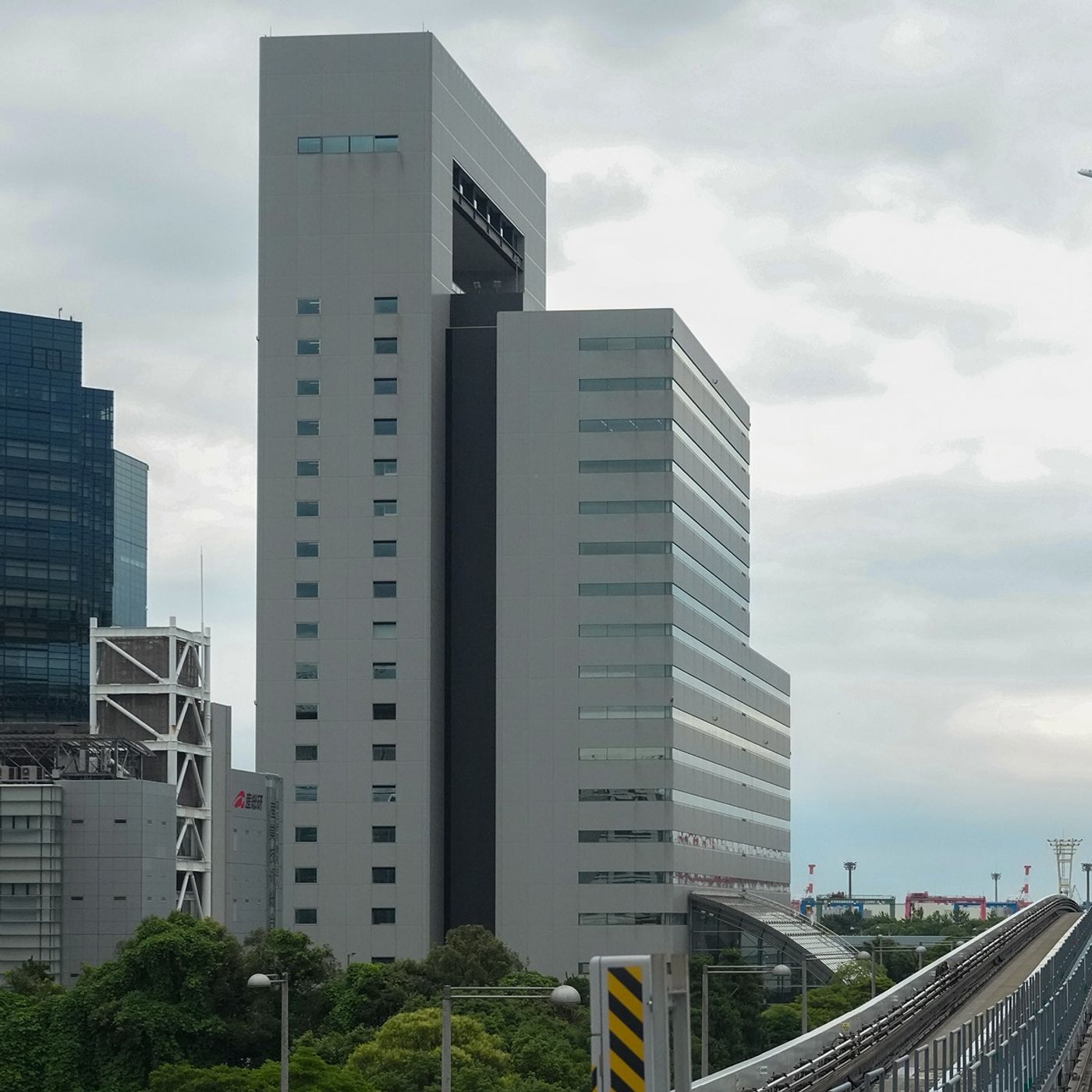
The Daily
The Secret Spy Network Feeding Russia’s War Machine
00:31:01
Russian spies set up shop in Tokyo, using Japan as a base for routing critical electronic components back home to Russia — after being expelled by Western leaders from their capitals.
Loading summary
Transcript117 lines
- [00:00]
ZS Representative
ZS is a global consulting and technology firm that partners with companies to improve life and how we live it. With over 1700 customers in more than 170 countries, ZS helps businesses connect data, technology and human ingenuity to drive impact. ZS helps clients in healthcare, consumer goods and retail, travel and hospitality, and more. By putting our deep expertise to work ranging from AI and analytics to strategy and transformation, we ready to connect impact that matters. Visit ZS.com today. That's ZS.com
- [00:35]
Rachel Abrams
from the New York Times. I'm Rachel Abrams and this is the daily. For years now, Russia's been the target of Western sanctions designed to keep it from building advanced weapons. And yet it's continued to batter Ukraine with high tech missiles and drone attacks. But how it's managed to do that has largely remained a mystery until now. Today, our colleague Jane Bradley explains what she's uncovered about the network of spies keeping the Kremlin's war machine running. It's Friday, august 14th. Jane Bradley, welcome to the Daily.
- [01:30]
Jane Bradley
Thanks for having me.
- [01:31]
Rachel Abrams
So Jane, I remember at the beginning of Russia's war with Ukraine, there were all of these stories that basically made it seem like Russia was not equipped to wage a modern war, right? Like they were rolling out these sort of mothballed Cold war era tanks, for example. And yet here we are all these years later and we're watching Russia continually hit Ukraine with these really sophisticated weapons. So I guess my first question to you is how have the Russians seemingly advanced so much from where they at least appeared to be when the war started?
- [02:05]
Jane Bradley
Yeah, it's a good question. I mean, in the early days of the war, the old school equipment, the tanks you described, things like that worked because it was largely an old school
- [02:14]
Dan Tabursky
war, trench warfare between Ukrainian fighters and
- [02:17]
ZS Representative
Russian forces as close as 15ft apart.
- [02:21]
Jane Bradley
So think soldiers with guns in trenches and bunkers.
- [02:25]
ZS Representative
The soldiers fire a rocket propelled grenade.
- [02:28]
Jane Bradley
Often they were separated by, you know, just a few hundred meters.
- [02:32]
ZS Representative
But now there's a problem. A Russian drone is overhead.
- [02:37]
Jane Bradley
But over the last couple of years, the war in Ukraine has gone really high tech.
- [02:42]
Kamikaze Drone Sound
This is what a kamikaze drone attack sounds like.
- [02:46]
Jane Bradley
Reports of waves of explosive laden drones striking Kyiv and setting residential buildings there on fire. Ukraine firing the first American made long range missiles into Russia. And it shifted from artillery battles to drone warfare and ballistic missiles. And this is where Russia has a problem because it doesn't make this type of technology that it needs to build these kinds of high tech weapons. And we're talking about things like semiconductors and Microchips that act as the brain of drones and ballistic missiles and help direct them to their targets. And in the early days of the war, Western countries, allies of Ukraine, imposed these sweeping trade restrictions, these sanctions designed to keep exactly this type of technology out of Russian hands.
- [03:42]
Rachel Abrams
And yet, obviously, those sanctions have not worked. Right. Because just in the past few months, we have seen Russia strike Kyiv. It's struck other cities and towns inside Ukraine. There have been these incredibly devastating consequences. Hundreds of civilians have died this year.
- [03:54]
Jane Bradley
Exactly. It hasn't worked. So Ukraine has been investigating and trying to figure out how is Russia getting its hands on the technology, the parts it's supposed to be cut off from.
- [04:07]
Rachel Abrams
How does one even go about trying to trace the component parts of a missile or a drone and where they came from?
- [04:14]
Jane Bradley
So every time there's a major attack in Ukraine, investigators from Ukraine's military intelligence service comb through. They dig through recovered components from these weapons, these drones, these missiles.
- [04:28]
Rachel Abrams
They're actually digging them out of the ground.
- [04:30]
Jane Bradley
Yes.
- [04:31]
Rachel Abrams
Okay. Wow. Okay.
- [04:32]
Jane Bradley
Yes. Literally combing through, digging it with their own hands, and they're trying to find microchips and other weapons components. And in 2024, these Ukrainian investigators started to notice something. A lot of these weapons components that they were finding were actually coming from Japan. And this was really surprising. Japan's been a close ally, a really vocal supporter of Ukraine. It was one of the first countries to issue sanctions against Russia on the very first day it invaded Ukraine. And this really shocked and concerned the Ukrainian officials that I spoke to. And actually, when I first received a bunch of documents from Ukrainian sources, which included, you know, lists of this equipment, pictures of this equipment, I was actually speaking to my source and asked, can you give me an idea of how many are being found on the battlefield in Ukraine? And he corrected me. He was like, this is not the battlefield. All of these parts are being found in civilian attacks. And in May earlier this year, when these Ukrainian investigators were trawling through the debris of this awful attack on a residential building in Kyiv that had killed 24 people, including children, they found Japanese components inside a missile that had destroyed the building.
- [05:56]
Rachel Abrams
Wow.
- [05:56]
Jane Bradley
And the Ukrainian government estimates that 90% of Russian weapons, drones, missiles contain Japanese components. So Japan is a critical supplier of the Russian war machine.
- [06:18]
Rachel Abrams
Okay. So clearly, for the Ukrainians, the question is, if Japan has these sanctions, how are its parts nonetheless ending up in Russian weapons that are being used to attack its cities and its civilians?
- [06:30]
Jane Bradley
Exactly. That's the question that Ukrainian investigators had. That's a question we had when we first started reporting this story out. Obviously, Japanese companies are banned from trading with Russia. So the question is, how are they getting around these export rules? How is Russia getting its hands on these Japanese parts if it's not through legal routes?
- [06:49]
Rachel Abrams
How do you even begin to answer a question like that?
- [06:52]
Jane Bradley
So my colleagues and I, Michael Schwartz and Adam Goldman, started this investigation last year after we got a tip from an intelligence source. And that tip eventually led to our conversations with five different Western intelligence agencies. And what we found out is that the Russian intelligence service, the military service, the gru, actually has a specialized spy unit that's entirely dedicated to evading Western sanctions and smuggling the parts, the technology that Russia needs for its war machine. That unit is called the 20th Directorate. And one of the big breakthroughs we got in our reporting was finally being able to identify the spy, the Russian spy leading its operations in Japan, a guy by the name of Maxime Fulchenko.
- [07:43]
Rachel Abrams
Wow. So you are uncovering, not just this secret, massive spy operation, the name of it, but you've actually gotten the name of one of the spies. What do you know about him at this point?
- [07:53]
Jane Bradley
So at this point, we know that he's a veteran GRU officer. He's fluent in Japanese, Russian and English.
- [08:00]
Rachel Abrams
Wow.
- [08:01]
Jane Bradley
And he began his second tour of Japan back in 2024 when he was posted there, on paper, as an employee of Aeroflot, the Russian state airline.
- [08:12]
Rachel Abrams
So the COVID for the spy, to be clear, is airline executive.
- [08:17]
Jane Bradley
Yes, exactly. And what's interesting about that is, in intelligence circles, for years, Aeroflot has been known to be a cover for Russian
- [08:26]
Rachel Abrams
spies, basically, while also being a legitimate airline. Like this thing is like a cover for spies, but also flies people commercial.
- [08:33]
Jane Bradley
Yeah, exactly. So who knows who you could be sat next to?
- [08:37]
UnitedHealth Group Representative
Certain.
- [08:38]
Rachel Abrams
Yeah.
- [08:38]
Jane Bradley
And it's worth noting that Aeroflot is entirely state owned. So Russian intelligence services have for years, years, looked for state owned entities that they basically control, where they can plant spies today, like Filchenkov.
- [08:52]
Rachel Abrams
And what did you learn about what Filchenkov was doing under the COVID of Aeroflot?
- [08:58]
Jane Bradley
So we spoke to our Western intelligence sources to try and figure that out. And what they told us is that he was sent to Tokyo to basically develop relationships with a network of logistics companies, importers, that could be useful for them in smuggling these weapon parts to Russia.
- [09:19]
Rachel Abrams
And what are these companies doing for Filchenkov?
- [09:21]
Ollie Dog Food Advertiser
Exactly.
- [09:21]
Rachel Abrams
Like, can you just explain that?
- [09:23]
Jane Bradley
Yeah. So Filchenkov needs these companies to do a few things for him. The first thing is to actually buy the components that he needs because of sanctions, Japanese companies are not allowed to sell these components to Russia or Russian companies right now. And so Filchenkov needs a middleman company to basically buy this equipment, equipment for him. And then once he has the equipment, these components, he needs help shipping it out of Japan to Russia.
- [09:52]
Rachel Abrams
Why can't he just fly them, though? If he ostensibly works for Aeroflot, I
- [09:56]
Jane Bradley
mean, that would be a lot easier for him. But the sanctions imposed on Aeroflot by Japan and others means Aeroflot is effectively grounded in Japan, so they can't actually fly in and out of the country. And so Filchenkov needs to find these logistics companies in Japan who will essentially book passage for him on other airlines which are allowed to fly out of Japan. And because it's effectively illegal to fly this equipment directly to Russia, what these logistics companies will do is arrange transport from Japan to a third party country like Sri Lanka or Vietnam, and then Aeroflot will charter one of their own planes from Vietnam or Sri Lanka, say, to get the goods from there to Russia.
- [10:50]
Rachel Abrams
And so how is he identifying the kinds of companies that he can turn for Russian purposes?
- [10:55]
Jane Bradley
So Filchenkov is part of a much wider network in the 20th directorate, and he will have DiU colleagues sat in Moscow at a desk who are looking for companies in Japan and elsewhere, which could make good targets for Velchenko to try and identify and build up relationships with. And they tend to target these kind of mid sized logistics companies, small or mid sized ones that don't attract much attention, which are registered in Japan, but they tend to have someone Russian in a senior position.
- [11:31]
Rachel Abrams
Wait, I'm sorry, How, how big is the universe of obscure Japanese companies run by Russians who are sympathetic to the Kremlin?
- [11:39]
Jane Bradley
You know what? Way, way too big, as I found out at this stage of the reporting. But what was helpful is that if you go on the Aeroflot website, they list their official partners in every country. So we had the names of two logistics companies, and then when I looked through the corporate filings, I found that, lo and behold, there was a senior Russian in each company, or a Japanese business person with strong connections to Russia, which is kind of the wider profile they're looking at. So that gave us a really good lead. And then we took the names of those companies back to our intelligence sources and asked them, are these companies worth digging into? And they basically said, yes.
- [12:22]
Rachel Abrams
But just to go back to the spy Filchenkoff for a second, if all of these places are involved in the Supply chain like Vietnam, Sri Lanka, as you mentioned. Is there a reason that he's in Japan specifically? Because again, Japan is a Western ally.
- [12:35]
Jane Bradley
He's in Japan for two reasons. One is that Japan makes the high tech technology that Russia needs. And sure, China makes some of it, some of the microchips, etc. But Japan really specializes in particular machine tools, things that drill, that cut, that they basically need to make these parts for Russian weapons. And the second thing is that Japan is known and has been for years as a spy paradise. Japan, Japan, a spy paradise. And it has this long history of that dating back to World War II, when its once kind of fierce intelligence capabilities were dismantled by the war's winners, the Americans. And it's never really recovered since. You know, it has no foreign intelligence agency at all. In fact, it doesn't have any centralized intelligence agency. It's kind of split between these five, six different departments within different government agencies. So to answer your question, Japan has the technology that Russia needs. And it's much easier for Russian spies to operate and base themselves from Japan. And it's not just Filchenkov. Our sources told us that dozens of Russian spies fled to Japan, Japan, as Europe and the west expelled hundreds as Russia invaded Ukraine, they found a safe haven in Japan.
- [13:58]
Rachel Abrams
Okay, so clearly very easy to be a spy in Japan is what you're telling us. So at this point, Jane, you have a name, Phil Chenkoff. You've identified some of the Japanese companies working with him. What do you do next?
- [14:09]
Jane Bradley
It's one thing to have a bunch of information from anonymous intelligence sources, but we needed to prove or at least corroborate what they told us ourselves. So the next thing we did was hunt for addresses for Filchenkov for the network of logistic companies we'd been told is helping him. And my aim was to try and speak with Filchenkov and as many of those business owners as possible to try and find out what's going on. And so I booked my tickets to Tokyo in the hope that I could get some of them to talk to me.
- [15:01]
Rachel Abrams
We'll be right back.
- [15:08]
Ollie Dog Food Advertiser
Close to one third of Americans are magnesium deficient. That can affect sleep, mood, digestion and workout recovery. Magnesium breakthrough combines seven forms of magnesium designed for better absorption. Here's the try it for 30 days and check how you feel. Better sleep, calmer days, improved recovery. You may notice a real difference. Go to bioptimizers.com thedaily and use code DAILY15 for 15% off plus bonus gifts. These statements have not been evaluated by the Food and Drug Administration. This product is not intended to diagnose, treat, cure, or prevent any disease.
- [15:40]
ZS Representative
This podcast is supported by Audible.
- [15:42]
Dan Tabursky
Hey, Dan Tabursky here. I'm a podcast host, a journalist, and now with my newest project, the author of my own manifesto. Well, it's a manifesto about manifestos, my search for inspiration in a world that feels more infuriating, more out of its freaking mind with each passing hour. Manifestos are a call to action, an artful scream. They capture our anger and they try to do something with it. This is my attempt to take the manifesto back from mass shooters and nihilists and return it to its rightful place with the warriors, the visionaries, the regular folks with just the right amount of crazy. I compare notes with radicals, secessionists, Internet trolls out for a laugh, and punk singers screaming their guts out, all trying to turn their anger into the world they want to see. Listen to Manifesto wherever you get your podcasts. Audible subscribers can binge all episodes of Manifesto early and ad free right now, join Audible in the Audible app or by subscribing on Apple Podcasts.
- [16:42]
Rachel Abrams
So, Jane, at this point you are headed to Tokyo. You're on the trail of this Russian spy. What's the protocol for something like this? Like, can you just knock on his door like any other source?
- [16:52]
Jane Bradley
I'm not sure there is a protocol for trying to hunt down a GIU officer in Japan. I, I didn't know of one and honestly, I had no idea what to expect. And when I got there, Filchenkov was the first person on obviously to try and get to speak to me. So I rocked up at the Aeroflot office with my translator. It's like a sparkling 22 story plus tower block by this old shrine. And we just walked in, we just walked in. It was this huge.
- [17:28]
Rachel Abrams
You didn't get stopped by security?
- [17:29]
Jane Bradley
There was no security, there was no reception desk. I guess Tokyo is such a safe city that you can just walk straight into the lift and go up to the 22nd floor. And the doors opened and I was taken by surprise because the Aeroflot office door is literally right there. And I knocked on the door and middle aged woman with a Russian Orthodox cross around her neck answered the door. She looked really surprised to see me, so I just introduced myself with my name and asked if Mr. Filchenkov was in the office. She again, still looking quite surprised, said he wasn't and that we would need to make appointment. And over the next three days we were in this kind of almost comedy like Cat and mouse chase with him. So every time we knocked, me again, yes, hello. She would say, come back at this time. I would come back at that time. He's not now for adult. He's not at the office.
- [18:32]
Dan Tabursky
Yes.
- [18:33]
Jane Bradley
She kept telling us he wasn't around. And then it got to the day before my flight. Sorry to bother you, I have to fly back tomorrow. I just wanted to see if Mr. I said, please, can we speak to Mr. Filchenkoff? I should ask him. And she says, I'm sorry, Mr. Filchenkoff never wants to speak with you.
- [18:59]
Rachel Abrams
Oh, wow. Rude.
- [19:00]
Jane Bradley
Yes, rude. There was no pretense at that point. I've come back another time. And we never got in front of him, despite us trying to contact him for three days and him having our numbers and clearly knew who we were. But we then set off on the trail of trying to track down business associates who had met him and did know what he was doing at Aeroflot.
- [19:24]
Rachel Abrams
And how did that go?
- [19:26]
Jane Bradley
So one of the people we knew that Filchenkoff worked with was a guy called Takahiko Miki. And he was the owner of a company called Prokoair, which is this logistics company which helps organize cargo getting from A to B. And we tracked him down to this high rise in Tokyo's industrial port neighborhood. And his wife answered the door and they eventually invited us in. And when you walk in, you see these model planes. There was an Aeroflot plane, there was a certificate to Procoair for its excellent service to Aeroflot. And we followed him into his own office, this kind of dim, windowless room. And he's really not what you would imagine someone accused of helping a Russian spy procure sanctioned goods to Russia would look like. He's got this real earnest manner and sources had described him to me as this kind of teddy bear like figure. And that is how he comes across. He seemed like he really wanted to help and he answered all my questions and he really just was very insistent that yes, he works with Araflot, yes he works with Filchenkov, but no, he does not ship any sanctioned goods to Russia and that he would never do that.
- [20:50]
Rachel Abrams
So what is he telling you that he's shipping if he's being so open about the fact that he actually ships stuff?
- [20:55]
Jane Bradley
Yeah, so he claimed that he only ships medical equipment and a few cosmetics, and there are exemptions allowed for medical equipment sanction carve out. So he said that this was all above board. There is no way he would ship sanctioned goods or his business would shut down. And honestly, like, I don't think I'm gullible or naive, but he did come across as very earnest and almost convincing in that I could imagine him being a bit negligent and not carrying out the checks, the due diligence checks he should have done.
- [21:29]
Rachel Abrams
How is that possible, though? Exactly like you said that. That maybe he's not doing his due diligence, but, like, how would he not know what he's shipping, basically?
- [21:35]
Jane Bradley
Yeah, I mean, that's a very good question. And I guess I've reported on sanctions, Russian sanctions, for years. And one of the defenses I would often hear is that, oh, we didn't know Russia was the final destination. Right. We thought this was just going to Vietnam or Sri Lanka.
- [21:48]
Rachel Abrams
Right.
- [21:48]
Jane Bradley
And then the other defense is that, oh, I just took the paperwork at face value, and I didn't know these were actually sanctioned goods. And the paperwork was all bogus. And one of the defenses he relied on was just like, I'm just booking cargo Lego space right, on these planes. I'm not the manufacturer, I'm not the supplier. And I played a little dumb and asked him if he could show me an example of an invoice. And he then gestures to his wife to fetch the nearest invoice from the top of a pile in the office. He brings it back to me, and before he gives it to me, he attempts to redact identifying information. So who's shipping it.
- [22:31]
Rachel Abrams
But what do you mean redact? Like he's just striking things out with a pen.
- [22:35]
Jane Bradley
Yeah, exactly. He just got a black marker pen and crossed out the details he didn't want me to see. And I left that interview with that piece of paper in my hand. And when I got back to the hotel and held it up to the light, the redactions didn't work. You could completely see who.
- [22:52]
UnitedHealth Group Representative
Who?
- [22:52]
Jane Bradley
The receiver. Who he was shipping this equipment to.
- [22:56]
Rachel Abrams
Oh, my God.
- [22:57]
Jane Bradley
Honestly, it was one of those reporting breakthrough moments. That is really exciting.
- [23:02]
Rachel Abrams
What did you see? Where was he shipping it to once you held it up to the light?
- [23:06]
Jane Bradley
Yeah. So I could see that the company he was supplying, that he was shipping to was a Russian pharmaceutical company called RPharm. And its founder had actually been sanctioned by the UK, by Canada, by Australia for his extensive ties to Vladimir Putin.
- [23:27]
Rachel Abrams
Wait, okay, so does that mean that when you were in his office, he was lying to you and he said, oh, I don't know what's in it. And what I do know, it's all legal and above board.
- [23:35]
Jane Bradley
That's what the evidence suggests.
- [23:36]
Rachel Abrams
Okay.
- [23:37]
Jane Bradley
And when I got back from Tokyo, we actually spoke to two people who told us that Mr. Meeki had specifically asked for help shipping prohibited items that he acknowledged were banned from being exported to Russia.
- [23:53]
Rachel Abrams
Okay, so maybe not just a guy who was negligent with his paperwork.
- [23:57]
Jane Bradley
Right, Exactly.
- [24:01]
Rachel Abrams
I want to go back to how this whole reporting journey started, because if you are able to piece this together, the Western intelligence sources that tipped you off, presumably they knew all of this already. Right. Why did they tip you off in the first place? Like, what do they need from you?
- [24:17]
Jane Bradley
They tipped us off in the first place because they were both baffled and frustrated about Japan's lack of response. So let's be clear. Both Ukrainian officials and foreign governments had warned Japan that this was happening, that Russian intelligence officers were operating in Tokyo and procuring this Japanese technology, and that this Japanese technology was repeatedly being found on the battlefield in Ukraine and being used in civilian attacks.
- [24:47]
Rachel Abrams
Where Ukraine is basically telling Japan everything that Ukraine thinks it needs to know to take some kind of action.
- [24:53]
Jane Bradley
Exactly. They think they could take action to cut off the supply of Japanese parts to Russia if there was the political will to do so. So I spoke to a Ukrainian official who said that in the early days of the war, they were finding a lot of parts from Germany in Russian weapons, up to 20%, actually, in the early days. And. And they warned the Germans, and Germany almost immediately cut off the supply of German components to Russia. And Japan has it done the same. So that's one example that they point to. Say if the political will is there, they can choke the supply chain, but Japan has not done that.
- [25:38]
Rachel Abrams
But as you pointed out, Jane, Japan does not have the intelligence apparatus that Germany does. Right. And that's what's made them, as you have explained, this spy paradise, for lack of a better term. So where does Japan stand on this sort of bigger problem of not having that intelligence operation that they might need to counter all of this?
- [25:57]
Jane Bradley
Yeah. I think the first thing to say is that Japan acknowledges it has a problem when it comes to espionage. Right now, today. And actually, when I sat down and talked with a senior lawmaker in Japan's government and asked about what they knew about the spies operating in Japan, he said that, look, we have a sense of crisis about the situation. We don't have an exact number on the spies operating in Japan in Tokyo, but we know there are a lot. And more broadly, Prime Minister Takaichi is really trying to build up Japan's intelligence capabilities. She's trying to build under this New legislation that's being passed. Japan's first centralized intelligence agency. But, but if it succeeds, if Japan succeeds, this is going to be a long term project and not something that is going to happen overnight.
- [26:48]
Rachel Abrams
How does this get solved then? Like, where does that leave everything?
- [26:52]
Jane Bradley
Well, in the days after we published our investigation, we heard from sources that the Japanese government had begun investigating Filchenkov and Mr. Miki of Proko Air and were kind of looking into what was going on here. And we got some news recently that Filchenkov, the GIU spy, has actually fled Japan the day after we published our story.
- [27:19]
Ollie Dog Food Advertiser
Oh, wow.
- [27:19]
Jane Bradley
Yeah. So it seems like putting the spotlight on him and this wider problem Japan has has had the effect that our sources wanted it to, in that Filchenkov has been burnt, his identity is now out there, and Japan seems to have been embarrassed into some kind of action. Though we need to spend a bit more watching it to see how substantive that is.
- [27:42]
Rachel Abrams
Basically this guy's cover was blown, so he can't really act like a spy anymore. He flees. I wonder, Jane, where does his departure leave this giant sanctions busting operation that he's helped set up? Like the supply chain that has been very well underway, funneling parts to Russia?
- [27:59]
Jane Bradley
Yeah, I think Filchenkoff is an important player for Russia, for the 20th directorate, but he's still only one player. So him fleeing has definitely made it harder for Russia to get the technology it needs from Japan. But there are many other players. We know there are dozens of Russian spies in Japan alone, so there will be others that can take his place. So unless something drastically change in Japan, whether it's the espionage laws, whether it's a crackdown on the manufacturers, the companies that are part of this supply chain, then somebody else is just going to pop up and replace Filchenkoff and the supply chain will continue.
- [28:36]
Rachel Abrams
I wonder, Jane, let's just say that, that Japan is able to crack down on all of this and does so tomorrow, expels all the spies, stops the technology, ends everything. How meaningful would that actually be to Russia's war effort in Ukraine?
- [28:50]
Jane Bradley
It would be incredibly meaningful. The pipeline of these Japanese components to Russia is absolutely essential for Putin to keep waging his war against Ukraine. If that supply was cut off, Russia would not be able to maintain its weapons, to build new weapons, particularly, you know, drones, ballistic missiles, all this high tech equipment that the war has now become more dependent on. So Japan's playing a really high stakes game here. If Japan takes meaningful action in a way that is bigger than just one spy, however important he is fleeing Japan. It has this real opportunity to change the course of a war that has raged on for four years now. The question now is whether Japan's going to take the chance to do that.
- [29:49]
Rachel Abrams
Jane, I have to ask, now that Filchenkoff's cover has been blown, what does he do now?
- [29:54]
Ollie Dog Food Advertiser
Like what?
- [29:55]
Rachel Abrams
What can a spy do once everybody knows who they are?
- [29:58]
Jane Bradley
Well, he's almost certainly back in Russia and his foreign intelligence career is without a doubt over. You know, his face is out there, his name is out there. He won't be able to work as a spy abroad again. What often happens with these spies whose covers are blown is that they get a hero's welcome back in Russia. Often they get a medal or they they get appointed to a spy school to train the next generations. So the cycle starts.
- [30:32]
Rachel Abrams
Jane Bradley, thank you so much.
- [30:34]
Jane Bradley
Thanks for having me, Rachel.
- [30:39]
Rachel Abrams
Jane Bradley, she's an investigative reporter for the New York Times. And you can get even more reporting. Jane Bradley's reporting other people throughout the newsroom by downloading the New York Times app. If you're not already a subscriber, we want to mention right now, you can download the app and get one month of completely free access to everything in there. Download it and we'll be right back.
- [31:09]
Jane Bradley
This episode is supported by Building Better Health, a podcast from UnitedHealth Group.
- [31:14]
ZS Representative
Building Better Health is a new conversation series from UnitedHealth Group that explores healthcare's most significant challenges and how we can fix them.
- [31:22]
UnitedHealth Group Representative
The the people that we serve, people that this is all about, are now asking the right questions. They're pressing for answers and quite rightly, their expectations are getting higher and higher. And that's a good thing because what that is doing is it's pushing the system towards increased transparency as we all work together to answer those questions.
- [31:44]
Ollie Dog Food Advertiser
Matching outfits, extravagant birthdays, many nicknames, a few classic moves of a dog obsessed parent. Ollie is obsessed with how obsessed you are with your pup. So they strive to give your dog the best. From fresh human grade dog food to in app health, check ins to track your dog's well being. You could say Ollie feeds the obsession. Visit ollie.com daily and use code daily to get 70% off your welcome kit. Ollie, Feed the Obsession.
- [32:15]
Kamikaze Drone Sound
This podcast is supported by Bombas. Are tired and achy legs slowing you down? Bombas compression socks are soft, supportive and help keep legs feeling fresh all summer long. Whether you're flying to a wedding, working a double or just hitting the gym, relief is here and has never looked better. Head over to bombas.com NYT and use code NYT for 20% off your first purchase. That's b o m b a s.com NYT code NYT at checkout.
- [32:49]
Rachel Abrams
Here's what else you need to know today. On Thursday, a federal judge in Boston dismissed the Trump administration's anti Semitism lawsuit against Harvard, dealing a blow to the White House's efforts to force the school to make a deal with them. The Trump administration had accused the university of turning, quote, a blind eye to anti Semitism and discrimination against Jews and Israel Israelis after the war in Gaza began. The lawsuit was part of a broader pressure campaign to force the university to comply with a variety of demands relating to its handling of anti Semitism and race and admissions. The judge said the anti Semitic incidents cited by the administration were too isolated and episodic to show that Harvard was breaking the law. And the board of the Kennedy Center, Washington, D.C. voted on Thursday to put President Trump's name back on the side of the building beneath the main sign. That's according to two people with knowledge of the matter. The president's name had been added to the building last year, but a judge had ordered that it be taken down, finding that only Congress had the authority to change the institution's name. The move by the Trump Aligned Board of the Kennedy center is an aggressive test of the judge's decision. Today's episode was produced by Shannon Lynn, Jessica Chung and Olivia Natt, with help from Adrienne Hurst. It was edited by Annie Minoff with help from Maria Byrne, Chris Haxel and Michael Benoit. Contains Music by Alicia Ba iToub, Diane Wong and Dan Powell. Our theme music is by Wonderly. This episode was engineered by Alyssa Moxley. That's it for the daily I'm rachel abrams. See you on Sunday.
- [34:44]
ZS Representative
This podcast is supported by the American Petroleum Institute. Energy security affects how Americans live, work, travel and stay connected. America has abundant oil and natural gas, but resources alone are not enough. The country needs modern infrastructure like pipelines and transmission lines that can affordably and safely bring energy to families, communities and businesses. That's how to build a stronger, more reliable energy system for the future. Learn more@energysecurityframework.org.