← The Daily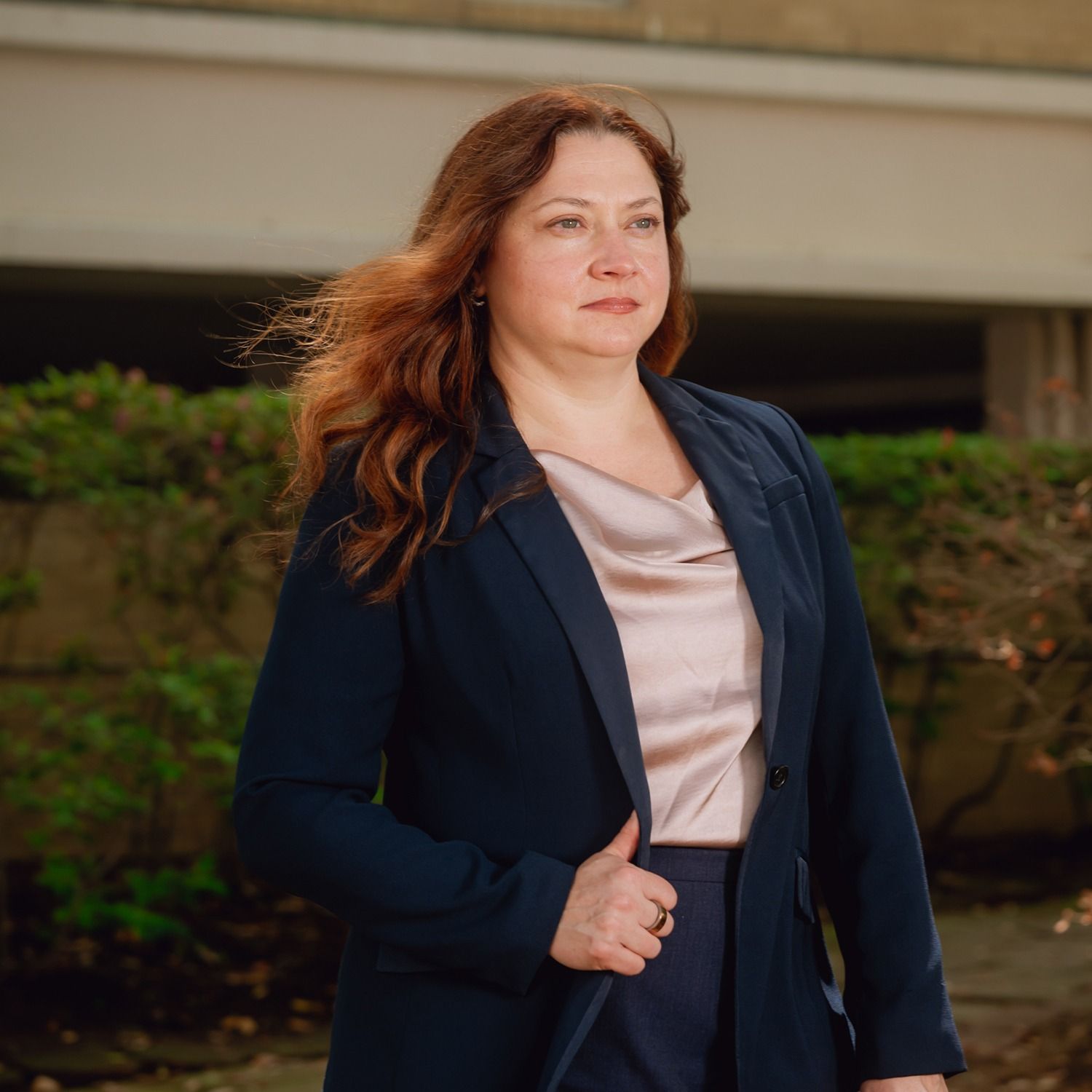
The Daily
As Trump Purges Immigration Judges, One Speaks Out
00:35:41
Judges are coming under significant pressure from the administration to carry out deportations or risk losing their jobs.
Loading summary
Transcript169 lines
- [00:00]
Judge Holly DeAndre
This podcast is supported by Meta.
- [00:02]
Meta Advertisement Voice
People are building things here in America again. And this moment calls for the best of America, our people. Introducing America's Workforce Academy, built by Meta, a program helping to train the next generation of welders, fiber installers, crew leaders and more. Paid training, a job and a path to America's future. Because the future is for everyone. Learn more@meda.com AmericasWorkForceAcademy
- [00:34]
Michael Barbaro
from the New York Times, I'm Michael Balbaro. This is the Daily. Throughout his second term, President Trump has been blocked over and over by federal courts, except that is, for a little known court system that oversees immigration. Today, my colleague Nicholas Nehemas brings us the inside story of how the president has systematically pressured the judges in that system to carry out his agenda and speaks with one of those judges about the fallout. It's Tuesday, june 23rd. Nick, welcome to the show.
- [01:29]
Nicholas Nehemas
Thanks for having me.
- [01:30]
Interviewer
Nick, talk for a moment about why in this moment you decided to spend so much time reporting on the judges of the United States immigration court system.
- [01:43]
Nicholas Nehemas
Well, I think that when most Americans think about President Trump's immigration crackdown, they picture the shock and awe campaign that dominated the headlines for months. The images of federal agents being sent into US Cities to do mass raids and arrest as many immigrants as possible.
- [02:03]
Interviewer
Right. Generated a huge amount of outrage, consumed the country for weeks.
- [02:08]
Nicholas Nehemas
Exactly. But what we found is that while that was sucking up most of the attention, the administration was also engaged in a quieter, much more meticulous overhaul of a hugely consequential part of the immigration system. And that's the immigration court system. That's basically the process that decides an immigrant's fate and can order them removed from the country or decide to keep
- [02:34]
Interviewer
them in the country.
- [02:35]
Nicholas Nehemas
Yes. Right. And our reporting shows that the Trump administration's strategy for overhauling the immigration court system has been extremely effective. And it's essentially turned the courts and immigration judges in particular into their number one tool for achieving mass deportations.
- [02:55]
Meta Advertisement Voice
Hmm.
- [02:55]
Interviewer
Well, just describe the immigration court system and how it works and how that maybe explains why the administration has been able to so fundamentally change it and turn it into an instrument of mass deportation.
- [03:09]
Nicholas Nehemas
Yeah. So first off, it's really important to understand that immigration courts work completely differently than how we think about, say, criminal courts. If you cross the border illegally and you're detained, whether that's inside the country or at the border, you get a court date. And on that date, you have to show up to immigration court and make the case for why you should be allowed to stay in the country. Why? You qualify for some sort of legal protection like asylum, and you're not guaranteed a lawyer. So if you can't afford one, you're there on your own, arguing your own case. And who you're arguing against is the federal government, which acts as the prosecutor trying to deport you, and there's no jury. So the person overseeing the whole process, weighing all the evidence and making the final decision about whether someone should be deported or not, is the immigration judge. And what's so unique about this system is that the courts and the judges are not part of the judicial branch. They are part of the executive branch. So although they wear robes, they're called judges. Ultimately, they are employees of the executive branch, and they report up to the attorney general and by extension, up to the president,
- [04:39]
Interviewer
Which is fascinating, because when we think of federal judges, we tend to think of Supreme Court judges, appeals court judges. They are, by design isolated from political pressures because they have lifetime appointments within the judicial branch and become essentially unfirable. They get appointed by the executive branch, but then they live outside of it in the judicial branch. But you're saying that's not the case with these immigration judges?
- [05:12]
Nicholas Nehemas
Totally. Yeah. Immigration judges are appointed by the attorney general, and they can be fired by the attorney general. And that's just a function of how this system was initially created in the 80s. And what it also means is that immigration judges have a lot less freedom to make their decisions based just on the law. Because. Because they ultimately have to follow the policy that's being put forward by the administration. So they have to obey immigration laws. Yes, but the way they interpret those laws has to follow the administration's policies.
- [05:51]
Interviewer
Right. You're saying there's a real tension there.
- [05:53]
Nicholas Nehemas
Totally. And so that can mean, depending on who's in power, they can interpret the immigration laws more strictly or more generously, more loosely. And previous presidents have exerted a lot of influence over this system. But still, no administration has done what President Trump is doing in imposing his will on the immigration courts. It's really been unprecedented. Hmm.
- [06:20]
Interviewer
Well, talk about that. What did you find in your reporting about how exactly Trump 2.0 has overhauled this federal immigration court system?
- [06:31]
Nicholas Nehemas
So we talked to dozens of judges, immigration attorneys, administration officials, asylum seekers, reviewed data on millions of cases. And we found that the administration put really systematic pressure on judges to deport more people and do it faster. They have really tried to turn this court into a deportation assembly line. And judges right now are granting asylum in fewer than 10% of cases, which is the Lowest it's ever been for the 20 years we could examine data for.
- [07:10]
Interviewer
And just how much has this changed the lives and the work of the judges who are in the middle of this system?
- [07:18]
Nicholas Nehemas
So this is completely upended the way judges operate in their courtrooms. Now, unfortunately, the judges can. Can't talk to us on the record because they're employees of the Justice Department. But we did find one judge who, because of her unique situation, was able to speak with us on the record and put her experiences out there. Hi, Holly.
- [07:43]
Judge Holly DeAndre
Hi.
- [07:44]
Nicholas Nehemas
Nice to see you again.
- [07:45]
Judge Holly DeAndre
Hi. Good to see you, too.
- [07:47]
Nicholas Nehemas
She is Judge Holly DeAndre, and she hears cases at an immigration court in Texas. She is also the president of the national association of Immigration Judges, which is a labor union that represents these judges, and she was able to speak to us in that capacity.
- [08:07]
Interviewer
You found a workaround?
- [08:09]
Nicholas Nehemas
We did.
- [08:10]
Judge Holly DeAndre
You don't hear from the judges who are ultimately the experts in immigration law and what's going on in the immigration system very often, unless the judge is fired or happen to be the president of the national association of Immigration Judges. And I'm speaking today in that capacity. In that capacity. Nothing that I say.
- [08:27]
Interviewer
So tell me about this judge and the story that she tells you.
- [08:32]
Nicholas Nehemas
So she has a really interesting perspective on all this, which started long before she became an immigration judge.
- [08:41]
Judge Holly DeAndre
Before becoming an immigration judge, I was a federal prosecutor. And the reason I'd become a federal prosecutor was pretty much because I'd grown up in Oklahoma City, and I was very moved by the Oklahoma City bombing and then 9 11. And I really wanted to keep my country safe from all those who might hurt it. And if the immigration system doesn't work well, it opens a hole in the system to allow for national security issues.
- [09:05]
Nicholas Nehemas
She becomes a federal prosecutor on the southwest border and really sees the ugly side of immigration.
- [09:12]
Judge Holly DeAndre
I investigated smuggling organizations. I prosecuted people for being here illegally.
- [09:19]
Nicholas Nehemas
And she is working on the border during the Obama years, when thousands of unaccompanied children were showing up and turning themselves over to border patrol.
- [09:31]
Judge Holly DeAndre
And I remember walking into the border patrol station one day and seeing border patrol sitting there with baby bottles and watching Disney movies with the kids.
- [09:39]
Nicholas Nehemas
And she's seeing people both exploit the system and be exploited by it. So basically, she decides that prosecuting cases isn't enough.
- [09:49]
Judge Holly DeAndre
And I ultimately became an immigration judge because what other job really carries the weight of the world for the favor of the United States?
- [09:57]
Nicholas Nehemas
That she wants to be the one who makes a final decision about who gets to stay and who has to leave the United States, you literally listen
- [10:05]
Judge Holly DeAndre
to the stories of people from all over the world to determine who will be our neighbors and who is going to be your coworker and who is not going to be able to come to the United States and who is here to harm the United States. You know, it's both there as a national security issue and also something that defines who we are as Americans. And I think that's a beautiful thing to be involved in, in being able
- [10:28]
Nicholas Nehemas
to gets that chance. In Trump's first term, when his Justice Department sees the work she's done prosecuting cases on the border and appoints her to be an immigration judge.
- [10:40]
Interviewer
And what does she find once she is now inside the system?
- [10:44]
Nicholas Nehemas
So she finds a system that's facing just an extraordinary backlog of cases. At that time, there was a huge number of migrants crossing the border and claiming asylum. So many that it really made it difficult for judges to keep up.
- [10:59]
Judge Holly DeAndre
So, like, for asylum, you have to show that somebody's been persecuted.
- [11:03]
Nicholas Nehemas
And on top of that, these cases are not cut and dry. To qualify for asylum under U.S. immigration law, you have to meet a very specific set of criteria.
- [11:14]
Judge Holly DeAndre
Maybe like proof of genocide going on in another country or proof of a country being war torn.
- [11:22]
Nicholas Nehemas
And while some of the people coming before these judges meet that criteria, most do not. Many people are coming for economic opportunity, but they're claiming asylum because that's pretty much their best shot at getting to stay in the US So the process of hearing all those claims takes a really long time.
- [11:43]
Judge Holly DeAndre
Some judges in the United States have dockets an upwards of 12,000 cases per judge. So that's an astronomical amount of cases. If you've got 12,000 cases set, then you're gonna be setting cases out five, ten years from now.
- [12:00]
Interviewer
So this is the context in which she's becoming an immigration court judge. The system is overwhelmed, it's backlogged. And of course, President Trump, whose administration appoints her, is promising it's gonna clean this system up. Yeah.
- [12:14]
Nicholas Nehemas
And the administration did take a series of drastic steps to stop illegal immigration. You had family separation, travel bans, right?
- [12:23]
Judge Holly DeAndre
Well, obviously, there was very strong enforcement. Donald Trump is very well known for strong enforcement.
- [12:28]
Nicholas Nehemas
But when it came to the immigration courts, they actually really didn't change all that much about how they were operating.
- [12:35]
Judge Holly DeAndre
There was a focus, I think, on criminal immigrants coming into the country.
- [12:39]
Nicholas Nehemas
There were some shifts, but they were kind of standard for a Republican administration, you know, being more critical about who should get asylum. And for Judge DeAndre, that made a lot of sense. To her, she described herself, to me as having a conservative judicial philosophy.
- [12:57]
Judge Holly DeAndre
Prior to Donald Trump, the entire immigration system was a lower priority. And when he came into office, it actually became one of the top priorities for the nation, and that may have been necessary at the time.
- [13:09]
Nicholas Nehemas
And so how did that change when Joe Biden took office?
- [13:13]
Judge Holly DeAndre
Well, when Biden took office, obviously, there was a polar opposite policy base that came in, from the stronger enforcement to a more lenient enforcement of the immigration laws.
- [13:26]
Nicholas Nehemas
But then Trump leaves office, Biden comes in, and things totally change.
- [13:33]
Judge Holly DeAndre
Like, this is a whipsaw by politics in the immigration courts every four years based on the politics of whichever executive is in office.
- [13:42]
Nicholas Nehemas
At the time, the emphasis was much more on interpreting the law to grant asylum to people who were asking for it.
- [13:50]
Judge Holly DeAndre
Broadly, the message was to be more lenient, but you're still bound by the law. But I can say that under the prior administration, there was more pressure on the judges to be more lenient and to grant more as opposed to deny the cases as often.
- [14:09]
Michael Barbaro
Right.
- [14:09]
Nicholas Nehemas
So, I mean, it sounds like there was a pressure from above to grant asylum.
- [14:15]
Judge Holly DeAndre
Yeah, there was a pressure from above to grant asylum. It was like, you're kind of soft pressured to grant more cases.
- [14:23]
Nicholas Nehemas
What does that soft pressure look like? Like, what's an example of soft pressure? How did you feel it?
- [14:29]
Judge Holly DeAndre
How did I feel it? I mean, you just feel it.
- [14:31]
Nicholas Nehemas
And so, you know, that soft pressure that Judge deandre describes, it does actually seem to bear out in the numbers, because we ran a data analysis of all asylum claims during this time, and what we found is that asylum was being granted at a much higher rate during Biden than it had been during Trump 1. Under Trump, 1, maybe 1 in 3 people were getting asylum. Under Biden, that crept up to more like 1 and 2.
- [15:02]
Meta Advertisement Voice
Wow.
- [15:03]
Interviewer
So under President Biden, something like 50% of immigrants seeking asylum before these judges are being granted that asylum, which is a pretty substantial number.
- [15:16]
Nicholas Nehemas
Yeah, it is.
- [15:18]
Interviewer
So, Nick, when President Trump wins back the presidency, I have to imagine for this judge, it's whipsaw time all over again. But now it's headed back in the other direction. Away from leniency.
- [15:32]
Nicholas Nehemas
Exactly. She expected the typical back and forth.
- [15:37]
Judge Holly DeAndre
I think that everybody just assumed we would probably go back to Trump one and a lot of judges, actually, now
- [15:41]
Nicholas Nehemas
we're going from a Democrat back to a Republican. The policies are gonna change. It's gonna be how it was during Trump won.
- [15:50]
Judge Holly DeAndre
And so we knew where the policies were going, and we just adjusted like we would normally do. And honestly, we were pretty much right for the first couple.
- [16:00]
Nicholas Nehemas
Very quickly she found that that was not the case. And the moment that became clear to her was when judges all around her started being fired.
- [16:12]
Judge Holly DeAndre
So I think a lot of the judges thought like, oh, we're a part of immigration. We have a 3.2 million case backlog. Why would they fire any of us? They need us. All right, well, we were wrong.
- [16:26]
Michael Barbaro
We'll be right back.
- [16:38]
Judge Holly DeAndre
This podcast is supported by Meta.
- [16:40]
Meta Advertisement Voice
People are building things here in America again. And this moment calls for the best of America, our people. Introducing America's Workforce Academy built by Meta, a program helping to train the next generation of welders, fiber installers, crew leaders and more. Paid training. A job and a path to America's future. Because the future is for everyone. Learn more@meta.com Americas Workforce Academy I'm Dani
- [17:11]
Dani Blum
Blum, a journalist at the New York Times. I spend a lot of my time reporting on GLP1 medications. People call them weight loss drugs. They are doing so much more in the body and there's a lot of hope pinned on them. I am spending part of truly every single workday making sure that I am up to date on the latest science. I really want to make sure that I am talking to the leading researchers keeping an eye on trial results and that I'm talking to people who are on these medications to learn more from them, to translate the really messy and murky and shifting science into a way that people can understand. It's really important to have evidence based answers to some of the questions that people have, especially about something as vital as a medication they're taking. That's what you get when you subscribe to the New York Times. If you already subscribe, thanks. If you'd like to go to mytimes.com subscribe
- [18:08]
Interviewer
so, Nick, tell us about these firings and about how Judge DeAndre experiences them.
- [18:16]
Nicholas Nehemas
The firing started with the people at the top of the courts.
- [18:19]
Judge Holly DeAndre
Well, the first firings were of the higher ups and I think most of the people at that time were kind of like, well, it's the director and the chief judge, like, like that's kind of your highest people in the organization. It's not really unusual for a president,
- [18:33]
Nicholas Nehemas
which wasn't totally unexpected with a new administration coming in.
- [18:38]
Judge Holly DeAndre
But I think judges started to get scared when Tanya Neamer was fired.
- [18:43]
Nicholas Nehemas
But then a rank and file judge got fired.
- [18:46]
Judge Holly DeAndre
You know, at that point I think we were still trying to reason through things, but we saw this all the
- [18:50]
Nicholas Nehemas
time and then more rank and file Judges got fired.
- [18:54]
Judge Holly DeAndre
The first mass firing, I think everyone was like, what just happened?
- [18:57]
Nicholas Nehemas
And more rank and file judges got fired.
- [18:59]
Judge Holly DeAndre
Just like shock, you know, like.
- [19:02]
Nicholas Nehemas
And that suddenly started to seem like a five alarm fire.
- [19:06]
Judge Holly DeAndre
And then after that, it was like every couple weeks we were getting mass firings of judges, 6, 7, 8, 9, 10 judges at a time. And a lot of those judges, like, walked off the bench in the middle of the day. So they were locked out of the computer systems, so they couldn't get.
- [19:22]
Nicholas Nehemas
Some of these judges told us that they were fired while they were making decisions from the bench and had to tell the lawyers and the respondents that they couldn't finish a case because they had been told they were no longer an immigration judge.
- [19:37]
Dani Blum
Wow.
- [19:38]
Nicholas Nehemas
Had you ever seen this kind of mass firing before?
- [19:43]
Dani Blum
No.
- [19:44]
Judge Holly DeAndre
And I think the total number now I think we're at 115 total judges.
- [19:49]
Nicholas Nehemas
So in total, about 15% of judges have been fired by this administration. And that's not even counting the ones who quit or retired because they saw the writing on the wall.
- [20:03]
Interviewer
Well, what did you find out and what did the judge come to understand about why the administration was firing all these rank and file judges? Because it would seem at odds with the larger goal of the Trump administration to get more migrants deported in the system.
- [20:22]
Nicholas Nehemas
The administration never explained why it was firing these judges, but the top official in the immigration court sends out a memo telling judges essentially that it's come to the administration's attention that some of them are tolerating bias in favor of an alien and against the government. And judges clearly take that as a sign that they could be disciplined if they rule against the government.
- [20:55]
Judge Holly DeAndre
I think that the judges are fearful for their jobs. So now, instead of looking at the policy and just looking at the law, they're weighing things very, very carefully because they're scared that if they accidentally favor the respondent a little bit in a case because the respondent presented more evidence or something, that they're going to get fired. Or even so much as asking DHS to file a brief on something could maybe be considered as bias, Suddenly it
- [21:25]
Nicholas Nehemas
felt like she and her colleagues had targets on their back where they would lose their jobs unless they did what the administration wanted, which was to deport
- [21:36]
Judge Holly DeAndre
more and more people every single day. There is kind of this looming. You could be fired at any time hanging over the judges.
- [21:44]
Nicholas Nehemas
And our data analysis found that the firings followed a pattern. Many of these judges had been appointed by Democrats. Many had previously worked as immigration attorneys representing immigrants in immigration court. Many had higher rates of granting asylum than judges who kept their jobs.
- [22:08]
Interviewer
Well, Nick, I want to linger on that for just a moment because your own data suggests that judges were granting asylum at a higher rate under Biden. So isn't it, well within the Trump administration's right to correct for that?
- [22:27]
Nicholas Nehemas
Well, yeah, and that's exactly what the Trump administration says. They believe these judges were essentially letting too many immigrants stay in the country, and they accused them of not following immigration law as it was written. And to be clear, the Biden administration also fired some immigration judges, about six or so during his presidency.
- [22:51]
Interviewer
So far, far fewer than Trump.
- [22:54]
Nicholas Nehemas
Far fewer. And to Judge DeAndre, these firings represent a new level of pressure being put on immigration judges that she's just never seen before. You know, in previous administrations, you described a soft pressure that judges felt. Is the pressure in Trump too soft, or is it something else?
- [23:14]
Judge Holly DeAndre
Well, I mean, when you're looking at losing your job, that's no longer soft pressure. That's a much stronger pressure on each of the judges because their livelihood is at risk based on how they decide the case that's sitting in front of them.
- [23:28]
Interviewer
Beyond these firings and the pressure that that brings to bear, is there anything else the administration is doing, Trump 2.0 that stands out to Judge DeAndre?
- [23:41]
Nicholas Nehemas
Administration officials are not being subtle about what they want. These judges already work very quickly, but the pressure to move even faster grows and grows and grows.
- [23:58]
Judge Holly DeAndre
They've required certain judges to hear a certain amount of cases each day, which is, I mean, in theory, it sounds good, but if you have a really complex asylum case that's going to take a full four hours, you know, and then you have another asylum case stacked right after that, that's going to take another four hours. That's your entire day. And that's two cases.
- [24:18]
Nicholas Nehemas
The administration starts to set caseloads that Judge DeAndre says are unrealistic.
- [24:27]
Judge Holly DeAndre
So when you're saying that a judge has to hear five cases in a day, you're asking a judge to rush through a bunch of asylum cases without fully hearing the entire testimony or skirting through the evidence quickly. It's very difficult. In fact, I've talked to some judges who are working, you know, 14 hour days and on weekends to just be able to meet the minimum requirements to prepare for their cases. And it's taking a real mental toll on them and even with their families.
- [24:56]
Nicholas Nehemas
So if immigration judges are hearing cases on the bench all day, when do you write your decisions and do that kind of stuff?
- [25:04]
Judge Holly DeAndre
Lunchtime? Lunchtime or the 30 minutes before you go into the court.
- [25:14]
Nicholas Nehemas
And what my colleagues have found in some of their follow up reporting is that the administration is actually sometimes putting many as 100 hearings on a judge's calendar per day, which is not practical. Yeah. And the idea is basically that you flood the zone and a judge has to move so quickly that they're ordering deportations, perhaps because the immigrant hasn't been given a heads up on the fact that the hearing is happening and they don't show up, or that they don't have a lawyer and can't properly defend themselves. And so this new practice raises all sorts of question about due process and whether the administration is moving to circumvent it.
- [25:56]
Interviewer
So the message quite clearly is don't be caught being lenient, don't be caught being slow. Deport more people more quickly. Which when you're being faced with the number of cases that the administration is asking these judges to handle, would seem to be the natural default. But. But how are these judges supposed to do this with so many fewer of them on the bench because of the firings?
- [26:26]
Nicholas Nehemas
Well, it's become a real challenge. And so the administration starts hiring dozens and dozens of new judges.
- [26:34]
Judge Holly DeAndre
Well, a lot of the new judges have not had an immigration law background in particular.
- [26:38]
Nicholas Nehemas
And for a lot of these judges, they don't have a ton of experience with immigration law, which lawyers say is a really complicated area of practice.
- [26:49]
Judge Holly DeAndre
They put out an ad and actually we thought it was a joke at first. I actually sent an email up because someone thought they had made a spam page to hire judges, but they didn't. It was real.
- [27:01]
Nicholas Nehemas
In hiring for these roles, the administration actually put out an ad specifically saying they were looking to hire, quote, deportation judges.
- [27:11]
Interviewer
Not subtle, I mean, literally changing the definition of the job.
- [27:14]
Nicholas Nehemas
It's very in your face. And for Judge DeAndre, that new definition of the job and the lack of experience of these new judges are a problem because it could lead to bad rulings and worse outcomes.
- [27:27]
Judge Holly DeAndre
Anybody is able to eventually learn something, but it's kind of like taking a pediatrician and throwing them into general surgery. That person is going to eventually maybe learn what they do. They have the basic skill set to learn what they're doing, but like, you know, a lot of people are going to die in the process while they learn what they're doing. Now that's not to say that any of these people that have just been hired, I don't know if they're good judges or not. We don't know anything about them. Yet. But, you know, there are concerns about training. They've cut the amount of training that judges have before they actually take the bench.
- [27:59]
Nicholas Nehemas
Wow. So, I mean, extending the, you know, the doctor analogy you made, it sounds like you're suggesting there could be a real impact on the immigrants coming before those new judges as they get up to speed.
- [28:10]
Judge Holly DeAndre
Right.
- [28:10]
Nicholas Nehemas
I mean, she sees the changes that are happening during the second Trump administration as really bad for everyone involved, judges and immigrants.
- [28:20]
Judge Holly DeAndre
As far as bias goes, you don't want anybody who's biased to deport any more than you want somebody who's biased to Grant. And, you know, it's. It just kind of puts out there what the emphasis is on. Like, we want you to deport people. Like, it's sending that message.
- [28:36]
Interviewer
So this is how the Trump administration, in its second term, it would seem, gets the percentage of asylum cases granted down to something like 10%, which you mentioned earlier from a high of, I think, something like 50% at the beginning of the Biden administration.
- [28:56]
Nicholas Nehemas
Yeah. And on top of that, the Trump administration is locking up so many people in detention centers, people who in previous administrations would have been free to wait their cases out on the outside. People are just giving up.
- [29:13]
Judge Holly DeAndre
Nobody wants to be detained in a prison, like, setting. They definitely don't want to be detained for years and years that it might take, you know, for some people to hear their cases. There's been due process issues with that. And so I think that people are like, this is frustrating. And so I'm just gonna leave.
- [29:27]
Interviewer
They're deporting themselves.
- [29:28]
Nicholas Nehemas
They're deporting themselves.
- [29:30]
Interviewer
To me, anyway, this appears to be the story, and it's a familiar one for our listeners, of President Trump and those around him discovering in this second term that the legal system lets them exert far more power than anyone realized, and that that power was always there for a previous president, but nobody had ever dared to exploit it. And when Trump does use that power in this case, and in many cases, it's extremely effective in realizing his agenda. But unlike in a lot of areas where Trump 2.0 has tested the law, this one feels very much his prerogative to do. And it looks very much within the bounds of the law and the existing US Immigration court system. So what is the problem? Becomes the question.
- [30:25]
Nicholas Nehemas
Well, yes, you're right. And the Trump administration will say that everything they're doing is absolutely legally within their power to do, and they're happy with the results. Now, a few judges have sued over being fired, but even if they were to win, that's not gonna derail the larger project that Trump is pushing through the immigration courts. And in fact, these changes have led to a reduction in the enormous backlog of cases. And when our story came out, the White House actually put out a press release touting it as evidence of how much its policies are working.
- [31:01]
Interviewer
They're proud of it.
- [31:02]
Nicholas Nehemas
Exactly. But to Judge DeAndre, who very much thinks the system needs fixing, this is just not the right way to do it.
- [31:11]
Judge Holly DeAndre
I think that the way we do things matters. Right? It matters. And, you know, you can do something quickly, but it's not sustainable. And I think that in this circumstance, like we've done something quickly, but it isn't long term sustainability that the court needs to maintain that same pattern of keeping the backlog down.
- [31:33]
Nicholas Nehemas
Because at this point, the cat is out of the bag. And presidents from both parties could now treat this immigration court system as a purely political tool to execute whatever their agenda is. And the fact that Trump is mostly operating within the system is a sign to her of what's fundamentally wrong with the system.
- [31:55]
Judge Holly DeAndre
Right. The system is working the way it's designed, but its design is dysfunctional. So this is a structural issue with the immigration court. It's not so much a policy issue. It's not so much an issue with the law, it's an issue with the actual structure of the immigration court. And when you take the immigration court out from underneath the executive influence, you have long term stability, and you, you have a better court system that's more fair for everybody involved in it.
- [32:22]
Nicholas Nehemas
And what she and many other judges have come around to is advocating for a system that is more independent of the executive branch than we've ever seen before.
- [32:34]
Judge Holly DeAndre
We're getting to a point now where it's just getting more and more necessary to have that full separation of power and have the immigration court separate from the Department of Justice, take the policy influence away from the courts so the courts can just enforce the law. That's all any of the immigration judges want. We want to be able to enforce the law and not be subject to just the policies.
- [32:57]
Interviewer
So she's clearly concluded that the legal interpretation of our immigration laws should not be at the whim of whoever happens to be at the White House. And the answer is to insulate judges like herself from being pressured by putting them in the judicial branch. But is that practical? Is that actually ever going to happen? What would ever motivate a president to give up this power?
- [33:26]
Nicholas Nehemas
That's a great question. And there has been legislation put forward in Congress to accomplish this. But you're right, it would require a president to give up a tremendous amount of power that they have over immigration policy. And.
- [33:41]
Interviewer
Right. Just to use the example of President Trump, the only real counterweight to his presidency in the second term has been the judicial branch, these unfirable lifetime appointed judges from both parties who have repeatedly ruled against him as he has tested the bounds of his power.
- [34:02]
Nicholas Nehemas
Exactly. Yeah. He has very little incentive to empower more obstacles to his policy goals. There's no other legal system in the United States that operates like this where judges, on the one hand, are having to make, you know, really life and death decisions for people about who gets to stay in the country, about who might be a danger to others in the country while facing down this political pressure from above.
- [34:40]
Judge Holly DeAndre
In this moment. It is incredibly hard to be doing this work.
- [34:44]
Nicholas Nehemas
But it's also incredible to Judge DeAndre. This is not why she became an immigration judge.
- [34:52]
Judge Holly DeAndre
You know, the testimony that immigration judge listens to sometimes involves torture. It sometimes involves people who have committed serious crimes or people who really want to hurt people in the United States.
- [35:04]
Nicholas Nehemas
She became an immigration judge to keep the country safe and to give people who deserve it the chance to become an American. And right now, she doesn't see that kind of impartial justice being carried out.
- [35:23]
Judge Holly DeAndre
It's a very, very difficult job to begin with. And to be doing it right now with the extra pressure doesn't help the situation at all. In fact, it makes the job a lot more hard.
- [35:40]
Interviewer
Well, Nick, thank you so much.
- [35:42]
Michael Barbaro
We appreciate it.
- [35:43]
Nicholas Nehemas
You're welcome.
- [35:52]
Michael Barbaro
We'll be right back.
- [35:57]
Judge Holly DeAndre
This podcast is supported by Meta.
- [35:59]
Meta Advertisement Voice
People are building things here in America again. And this moment calls for the best of America, our people. Introducing America's Workforce Academy. Built by Meta, a program helping to train the next generation of welders, fiber installers, crew leaders, and more. Paid training. A job and a path to America's future. Because the the future is for everyone. Learn more@meda.com AmericasWorkForceAcademy
- [36:30]
Nicholas Nehemas
I'm Jonathan Knight and I'm the general manager of New York Times Games. Our puzzles are human, made every day with the standards you'd expect from the New York Times. And this matters because when you choose to spend time with our games, it should be time well spent solving puzzles handcrafted for you. We think that's something worth investing in and something worth paying for.
- [36:51]
Judge Holly DeAndre
Subscribe now for a special offer on
- [36:54]
Michael Barbaro
all of our games@nytimes.com joingames here's what else you need to know today.
- [37:04]
Nicholas Nehemas
The question my party is asking now
- [37:08]
Interviewer
is whether I am best placed to
- [37:10]
Nicholas Nehemas
lead us into the next general election. I have heard the answer of my parliamentary party to that question and I accept that answer with good grace.
- [37:26]
Michael Barbaro
British Prime Minister Keir Starmer announced his resignation on Monday following a rebellion against him inside the Labour Party. It was the latest evidence of the country's decade long political turmoil, which began when it voted to leave the European Union in 2016. Britain has now had six different prime ministers over the past decade. Starmer's resignation paves the way for Andy Burnham, the Labour Party's most popular politician, to become the country's next leader. Today's episode was produced by Nina Feldman with help from Chris Benderev. It was edited by Rachel Quester, contains research help from Susan Lee and music by Dan Powell, Pat McCusker, Marion Lozano and Elisheba Itub. Our theme music is by Wonderly. This episode was engineered by Alyssa Moxley. Special thanks to Diana Wynne and Steven Richard. That's it for the Daily I'm Michael Balboro. See you tomorrow.
- [38:45]
Judge Holly DeAndre
This podcast is supported by Meta.
- [38:48]
Meta Advertisement Voice
People are building things here in America again. And this moment calls for the best of America. Our people. Introducing America's Workforce Academy built by Meta, a program helping to train the next generation of welders, fiber installers, crew leaders and more. Paid training, a job and a path to America's future. Because the future is for everyone. Learn more@meda.com AmericasWorkForceAcademy.