← The Daily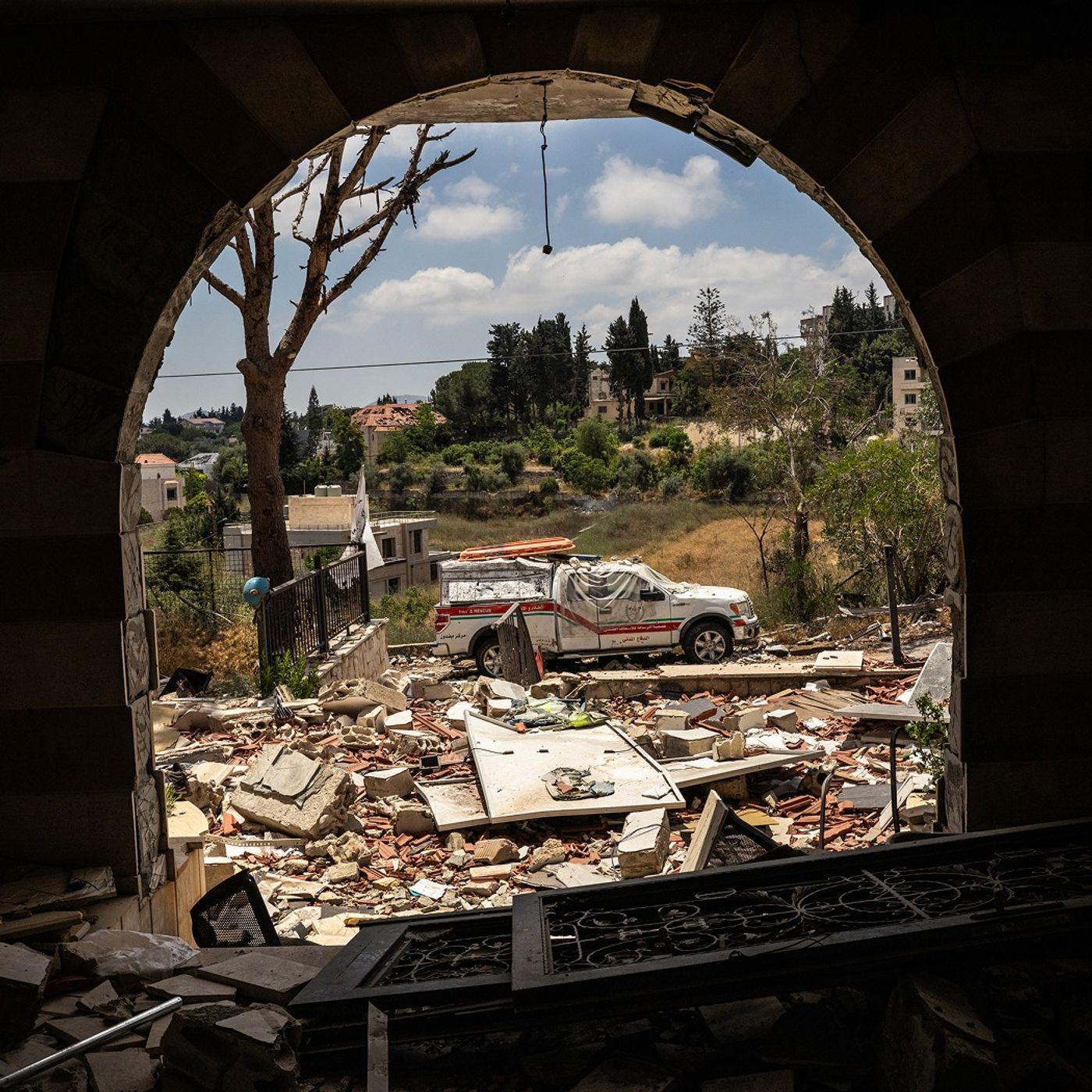
The Daily
How the Iran Deal Is Testing the U.S.-Israel Alliance
00:29:31
The conflict between Israel and Hezbollah in Lebanon poses a threat to U.S.-Iran negotiations to permanently end the war in Iran.
Loading summary
Transcript123 lines
- [00:00]
Sponsor/Advertisement Voice
This message is brought to you by Apple Card. Spring always feels like a reset, clearing things out, simplifying what you don't need. Apple Card is built with that same idea in mind. No annual fee, no late fees, and no foreign transaction fees. No fees, period. Get started and apply in the Wallet app on your iPhone today. Subject to credit approval. Variable APRs for Apple Card range from 17.49% to 27.74% based on creditworthiness rates as of January 1, 2026. Existing customers can view their variable APR in the Wallet app or@car.apple.com Apple Card issue by Goldman Sachs Bank USA Salt Lake City branch terms and more@applecar.com from
- [00:37]
Natalie Kitroeff
the new York Times, I'm Natalie Kitroweff.
- [00:40]
Podcast Host (Natalie Kitroeff)
This is the Daily.
- [00:46]
Natalie Kitroeff
As the US And Iran try to reach a lasting end to the war, a major threat has emerged the volatile conflict in Lebanon. President Trump needs Israel to stop attacking Hezbollah there in order to get Iran
- [01:02]
Podcast Host (Natalie Kitroeff)
to agree to a deal.
- [01:04]
Natalie Kitroeff
But many supporters of Israeli Prime Minister Benjamin Netanyahu feel betrayed by Trump's actions. Today, my colleagues Ronan Bergman and Mark Mazzetti explain the growing tensions between the United States and Israel and how this moment is testing a decades old Alliance. It's Wednesday, June 24.
- [01:31]
Podcast Host (Natalie Kitroeff)
Ronan, Mark, welcome back. It's great to have you both here again.
- [01:35]
Mark Mazzetti
Thanks, Natalie.
- [01:36]
Ronan Bergman
Pleasure being here. Thank you.
- [01:38]
Podcast Host (Natalie Kitroeff)
So in the last several days, we have seen a stunning break between the US And Israel who entered this war in Iran as partners and are now very clearly at odds over how it ends. And this is a split that you both said was already developing in April the last time you were on the show.
- [01:58]
Natalie Kitroeff
And so I want to start by
- [01:59]
Podcast Host (Natalie Kitroeff)
asking, how big of a deal is the rupture that we are seeing over this new ceasefire and peace negotiation?
- [02:07]
Ronan Bergman
I think, Natalie, there is no at least not in my vocabulary, not in English and not even in Hebrew. There are not enough words to describe the magnitude of what we are seeing from the point of view of Israeli politics, of Netanyahu's legacy, his present chances to be reelect, and of course, from the point of view of the Israeli public. Three times he was able to convince Trump to allow him to strike in Iran. Then he convinced Trump to join him in June. And then he convinced Trump to fulfill his life dream, a joint US Israeli strike together in order to topple the regime. So until then, everything went very well for him and this overnight shift of the American administration is the undo of everything for him.
- [02:58]
Podcast Host (Natalie Kitroeff)
Yeah. Is it fair, Mark, to say that now the Strength of that alliance between the US And Israel is in question now that we see the terms of this MoU between Iran and the United States.
- [03:12]
Mark Mazzetti
Yeah, Natalie, it's not only fair to say it. I think it's also even potentially an understatement. These two countries knew how to get into a war, but they had no idea how to get out of it. They were on, or they are on, two totally different pages about the outcome of this war. And once the war didn't go according to the most wildly optimistic outcomes that they hoped it would in the first few days, things began going off the rails. The relationship started to fracture. And this is where we are today.
- [03:44]
Podcast Host (Natalie Kitroeff)
So walk us through how we arrived at this point.
- [03:49]
Mark Mazzetti
So let's go back to when the MOU was signed last week, and where things stand right now. Iran's regime is still in place. Iran's ballistic missile force is diminished, but still intact. Iran's nuclear program, which was ostensibly the biggest reason for carrying out this war, is very much diminished, but the future of it is sort of for a later negotiation. They've sort of punted that issue. So the main goals of the war haven't been achieved. Even President Trump said, sir, you shouldn't
- [04:26]
Mark Mazzetti (additional commentary)
let them have any missile.
- [04:27]
Mark Mazzetti
When asked about Iran's missiles, Trump said, well, I said, well, they're allowed to have them.
- [04:32]
Mark Mazzetti (additional commentary)
What am I going to do? Am I going to let Saudi Arabia have missiles but they can't have them? Yes, sir. Doesn't work that way.
- [04:40]
Mark Mazzetti
You know, implying that if other countries like Saudi Arabia, like Israel, have them, why not Iran?
- [04:46]
Mark Mazzetti (additional commentary)
Missiles aren't the problem. Missiles are. They hurt a little location, but they don't blow up the planet.
- [04:55]
Mark Mazzetti
And of course, there is the sort of central issue of Hezbollah and Lebanon and the fact that this new agreement restrains Israel's movements. Freedom to hit Hezbollah is now restricted. And this is, I think, as we talked to the last time we were on the show, a fundamental issue for Netanyahu politically, because he's made this pledge that he will protect Israel from Hezbollah.
- [05:22]
Podcast Host (Natalie Kitroeff)
Right.
- [05:23]
Ronan Bergman
Israel wanted to have these two issues, two fronts, totally separated to get the Hezbollah issue and the Lebanese issue out of the agreement, that the agreement will only deal with Iran, the US Nuclear, et cetera. Iran wanted to make the connection because they felt they are in debt because Hezbollah intervened to help them. Now they need to help Hezbollah. Iran won.
- [05:47]
Podcast Host (Natalie Kitroeff)
So Israel is in this kind of extraordinary position where, because Iran just had so much leverage in these negotiations and the US Agreed to these terms, Israel, Israel's ability To fight Hezbollah is now restricted, even though Israel was not at the negotiating table and they wouldn't have wanted this, Trump signed the deal anyway.
- [06:09]
Mark Mazzetti (additional commentary)
That's right.
- [06:09]
Mark Mazzetti
And so we ended up on ground where Iran came out with the better end of the deal.
- [06:17]
Podcast Host (Natalie Kitroeff)
So what has the reaction been in Israel?
- [06:20]
Ronan Bergman
So usually the massive machine of mouthpieces for Prime Minister Netanyahu in the Israeli media, the radio stations, and mainly in channel 14, there's a TV station. I think maybe it can be equivalent to Newsmax on steroids. Very, very supportive of Netanyahu. Doesn't matter what Netanyahu does. He can flip and turn and he can say one thing and the next day or the other they will support him. And also, until last week, they also supported Trump. Their admiration, their compliments, their flattering to the President was second only to their attitude towards Prime Minister Netanyahu. But the second it came clear that Trump is going to sign the agreement, they flipped all of them. And they started a slender campaign. They said that Trump betrayed Israel. They turned on the Vice President Vance. They called him anti Semite. They said that he is the legitimizer of terrorism, the legitimizer of Hezbollah.
- [07:48]
Mark Mazzetti (additional commentary)
Wow.
- [07:50]
Ronan Bergman
And I think the worst was what they said against Kushner and Witkoff. And one of the main anchor person for Channel 14 said they did that because they are Jewish. I know it sounds unbelievable, but in the Israeli television, they said that they are Jewish Jew boys, you know, slander terms about Jews. They said that they received bribe from Qatar. Once they identified the enemy, Vice President Vance and the two advisors, they don't care. They just lashed on them.
- [08:44]
Podcast Host (Natalie Kitroeff)
Ronan, can you just decode that? Because it sounds really difficult honestly to parse. These are Israelis who are lobbying anti Semitic attacks against Jared Kushner and Steve Witkoff. Like what is happening there?
- [09:02]
Ronan Bergman
These people, they don't care about anything except one thing, which is to support Prime Minister Netanyahu. Someone I know called them the Zombibi, meaning they do everything Prime Minister want them to do and support any of his policies. The other thing is that they always look for a scapegoat. Whatever goes wrong for Netanyahu, they look for someone to blame. Now, they cannot blame the head of the military or the head of Mossad, the head of Tishin Bet or the Attorney General. So the only person they can blame is President Trump.
- [09:35]
Podcast Host (Natalie Kitroeff)
You're saying essentially that they'll sink to any level in order to defend Netanyahu, even if that means perpetuating these anti Semitic tropes.
- [09:44]
Ronan Bergman
They will do everything they believe can assist Prime Minister Netanyahu in schlepping the blame on someone else, even if this includes anti Semitic phrasing, and ruin the relationship with someone who might be the next president of the U.S. now, the ministers Netanyahu tried to keep on a short leash, they were a little bit more disciplined. They didn't went down to this level. But they did say Israel is going to defend itself, whether against Iran or against Lebanon. They say, and if the situation is so bad and we are all alone, there's only one person who can take care of the situation and knows how to handle a situation. Of course, Prime Minister Netanyahu. Whatever the truce agreement, MOU says Israel will continue to do whatever it believes it's necessary, or Netanyahu believes it's necessary. Israel will continue. And this what is basically led to an ongoing more friction and more clashes between the Israeli and the American administration.
- [11:09]
Podcast Host (Natalie Kitroeff)
These government figures are essentially saying we will defy the truce when it comes to fighting Hezbollah in Lebanon. Which is pretty amazing.
- [11:19]
Ronan Bergman
Yes.
- [11:19]
Podcast Host (Natalie Kitroeff)
As that happens, that elicits a reaction from the vice president, from J.D.
- [11:24]
Natalie Kitroeff
vance.
- [11:25]
J.D. Vance
If I was in the cabinet of the Israeli government, I might not be attacking the only powerful ally that I have anywhere left in the entire world.
- [11:34]
Podcast Host (Natalie Kitroeff)
Talk to me about that.
- [11:35]
Mark Mazzetti
Yeah. Vance comes out publicly and is extraordinarily blunt. He said to Israel, effectively, we're your only friend in the world.
- [11:44]
J.D. Vance
Two thirds of the defensive weapons that have protected your homeland have been built by American hands and paid for by American tax dollars.
- [11:54]
Mark Mazzetti
And you should be grateful because we're keeping you afloat, we're defending you.
- [11:59]
J.D. Vance
And anybody in Israel who thinks their biggest problem is the President of the United States needs to wake up and smell the reality of the situation that country is in.
- [12:09]
Mark Mazzetti
Be careful in your criticisms because we always have the ability to cut off the things that help defend Israel. So it was this veiled threat of cutting aid, cutting military equipment, which of course, Israel does desperately need from the United States. But it's sort of playing this card, which you have not seen a senior American official, certainly American vice President, do, perhaps ever.
- [12:39]
J.D. Vance
You've seen people in their system, Ben GVIR and Smotrich, who've attacked the deal. And I guess my response to them would be, what is your exact proposal?
- [12:47]
Podcast Host (Natalie Kitroeff)
And then Vance also talked to our colleague Ross Douthit and said that these two hard right ministers in Netanyahu's cabinet, Ben GVIR and Smotrich, should not be attacking this deal without offering any other way out of the war.
- [13:01]
J.D. Vance
You're a country of 9 million people. You can't just kill your way out of solving every single national security problem
- [13:09]
Podcast Host (Natalie Kitroeff)
that you have taken together. This was just quite a remarkable set of direct criticisms of Israel from the vice president.
- [13:19]
Mark Mazzetti
Yes. And then late last week.
- [13:21]
Podcast Host (Natalie Kitroeff)
We're starting off with some breaking news this morning as you're taking a live look right now at the Israel Lebanon border.
- [13:29]
Mark Mazzetti
Hezbollah attacks into Israel, which elicits an Israeli military response on Beirut.
- [13:35]
Podcast Host (Natalie Kitroeff)
Israeli strikes on southern Lebanon killed at least seven people, including two children, hours after reports emerged of a ceasefire agreement
- [13:43]
Mark Mazzetti
creating this flare up that once again really imperils this very fragile deal.
- [13:49]
J.D. Vance
This is not a reality we can accept.
- [13:51]
Ronan Bergman
And this is exactly why the IDF
- [13:53]
J.D. Vance
continues to operate in southern Lebanon.
- [13:56]
Mark Mazzetti
And in that way, Lebanon is sort of looking like the center of the question of whether this will hold or not.
- [14:04]
Podcast Host (Natalie Kitroeff)
Right. Iran said briefly that the strait had been closed. Again and again it seemed like maybe this whole deal was off. This was really a moment where everyone looked and said, oh no, Israel and Hezbollah are possibly going to sink this entire peace negotiation.
- [14:23]
Mark Mazzetti
That's right. And I think that's really where the danger is right now, is that Hezbollah has moved from the periphery to the central front in the future of peace between Israel, Iran and the United States. And to this question of control,
- [14:44]
J.D. Vance
just
- [14:45]
Mark Mazzetti
how much Iran can keep Hezbollah in check so it doesn't blow up the deal, and how much the United States can restrain Israel from attacking Hezbollah also, which might potentially blow up the deal.
- [15:08]
Podcast Host (Natalie Kitroeff)
We'll be right back.
- [15:16]
Sponsor/Advertisement Voice
This podcast is supported by American Beverage. When it comes to what your family eats and drinks, you know, facts are the first ingredient. That's why America's beverage companies are sharing clear information about the ingredients in their beverages. @goodtokonofacts.org for over 140 ingredients, you can find common uses, alternative names and safety assessments from food safety authorities around the world. GoodToNoFacts.org is meant to be a first stop to learn more about your favorite beverages. No spin, no judgment, just facts. Visit goodtonofacts.org this podcast is supported by
- [15:47]
bank of America Private Bank.
- [15:49]
Your ambition leaves an impression. What you do next can leave a legacy. At bank of America Private bank, our wealth and business strategies can help take your ambition to the next level. Whatever your passion, unlock more powerful possibilities@privatebank.bankofamerica.com what would you like the power to do? Bank of America Official bank of The FIFA World Cup 202026 bank of America Private bank is a division of bank of America NA member, FDIC and a wholly owned subsidiary of bank of America Corporation.
- [16:19]
Capital raising is being redefined in real time. From macro disruptions and shifting investor expectations to AI driven demand and the rise of private credit. When headlines can tilt markets overnight, how can companies stay on course? Strategic Alternatives the RBC Capital Markets podcast explores how corporates and investors are navigating new pathways to raise capital through create value and drive growth. When conditions change, alternatives matter. Listen to Strategic Alternatives available wherever you get your podcasts.
- [16:54]
Podcast Host (Natalie Kitroeff)
Okay, so the stability of a deal here hinges on whether the fighting in Lebanon stops, which in turn hinges on how much control Iran and the US have over their allies.
- [17:06]
Mark Mazzetti
That's right.
- [17:06]
Ronan Bergman
Correct.
- [17:07]
Podcast Host (Natalie Kitroeff)
So, Ronan, let's start with Hezbollah. How much control does Iran have? Because as we saw, Hezbollah continued to send drones over the border to Israel after this deal was signed. That attack provoked a response.
- [17:22]
Ronan Bergman
Iran has the full control over what Hezbollah is doing. I suspect that the drones were sent as part of the Iranian tactics to improve their position in the negotiation, because from their point of view, it's a win win. If Netanyahu reacts or the IDF to react, then he gets himself into another confrontation with Trump. If he doesn't, then he gets into a confrontation with his own constituency at home, his base. Because they say you're not reacting to what Hezbollah is doing.
- [17:52]
Podcast Host (Natalie Kitroeff)
What you're saying is that what we saw in terms of the attacks was Iran potentially intentionally baiting Israel here because if they didn't want Hezbollah to attack, they wouldn't have.
- [18:04]
Ronan Bergman
Yes. And more. Iran, I think, believes it can control the level of the fire without jeopardizing the deal, but leading to further friction between Prime Minister Netanyahu and President Trump and at the end to an anger of the president that would lead to forcing Israel not just to a ceasefire, but to a total withdrawal from Lebanon.
- [18:26]
Podcast Host (Natalie Kitroeff)
In a sense, trying to set up a pitched battle between Trump and Netanyahu stirring the pot. Does that feel right to you, Mark?
- [18:35]
Mark Mazzetti (additional commentary)
Yes.
- [18:35]
Mark Mazzetti
I think there's a dangerous game here that Iran might be playing and they recognize that. Right. They do not want a return to full scale war. They have locked in an agreement right now that is very favorable for them.
- [18:50]
Mark Mazzetti (additional commentary)
Right.
- [18:50]
Mark Mazzetti
Effectively all they had to do was open the Strait of Hormuz and now they've got a lot of money coming to them in what were frozen assets. Right. So a return to a full scale war imperils that deal, but also brings a lot more violence to the country of Iran. So to Ronan's point, I think there's this question of if they can keep the sort of temperature at the right level where it can continue to imperil the relationship between Netanyahu and Trump without going back to a full scale war. And that's the sort of danger here. But thus far, they've been playing it quite well.
- [19:25]
Podcast Host (Natalie Kitroeff)
And it seems like the bet Iran is making right now is that Israel will react really forcefully to any attack from Hezbollah by, for example, attacking Beirut.
- [19:37]
Natalie Kitroeff
And that kind of response has gotten President Trump's attention recently.
- [19:42]
Mark Mazzetti (additional commentary)
I think they could do better in a bad way with respect to Hezbollah.
- [19:46]
Podcast Host (Natalie Kitroeff)
Right?
- [19:46]
Mark Mazzetti
That's right.
- [19:47]
Mark Mazzetti (additional commentary)
When two drones are shot into the desert and drop harmlessly, you don't have to knock down buildings in Beirut. They could behave better.
- [19:58]
Mark Mazzetti
So Netanyahu has framed these attacks as defensive. Right. We are responding to Hezbollah attacks on Israel and we have a right to def ourselves. So we're going to hit into Beirut. That is also a card that Netanyahu will continue to play to see how far he can push Trump and test Trump's patience. Right. Knowing, as we said earlier, Netanyahu has this sort of political situation where he has to deal with the security of northern Israel for his own political future, but also he can't entirely blow up his relationship with President Trump. So he's going to see how far he can push it.
- [20:37]
Podcast Host (Natalie Kitroeff)
Okay, I want to turn to the question of how much Trump can do to keep Netanyahu in check, because obviously, whatever the incentives and reasons that Israel has for attacking Hezbollah in this way, those kinds of strikes are precisely what threatens a deal that Trump seems to care very much about preserving.
- [20:58]
Ronan Bergman
Yeah, I think that since Trump became president again, Netanyahu showed high sensitivity not to cross that line, not to force Trump to outcast him publicly. And when he felt that Trump is just about to explode, he said, okay, I obey. But something is different now. Netanyahu maybe has now a different calculus. The calculus is the coming elections. And he believes that if he is just obeying Trump, he will come up something very, very weak who cannot stand up to an American president and is trying to say to his constituency, I am not obeying President Trump when it comes to national security. And this road might lead to further friction between them.
- [21:53]
Podcast Host (Natalie Kitroeff)
So that, in a sense, tells us that Netanyahu may be thinking he has more to lose in obeying Trump than to gain from it.
- [22:02]
Ronan Bergman
Prime Minister Netanyahu, I think, is deliberating between obeying Trump or going against him and supporting a much stronger war in Lebanon. I don't think that he already made a call but his call will not just impact the relationship between him and Trump, it will also impact the deal between the US And Iran.
- [22:25]
Podcast Host (Natalie Kitroeff)
And, Mark, how is Trump responding to this test of just how much his ally in Netanyahu will really follow his lead?
- [22:36]
Mark Mazzetti
Well, so publicly he is flexing. He's basically pointing out how much he kind of controls Netanyahu. He said, in fact, a direct quote, that Netanyahu will do whatever I want him to do. Okay. I think he's also willing to give Netanyahu some space to a point, but anything that is going to blow up this deal that Trump desperately wants, that's the breaking point.
- [23:02]
Podcast Host (Natalie Kitroeff)
It sounds like, for Trump, the core tension is how much does he care about preserving this special relationship with Israel versus how much does he care about preserving this deal with Iran and how far he's willing to go to make sure that it doesn't fall apart?
- [23:22]
Mark Mazzetti
I think President Trump has shown that, in his view, alliances are dispensable if they get in the way of something he wants. In this case, what he really wants is an end to this war and a deal and moving on before the November elections. He's thinking about his own political future.
- [23:43]
Podcast Host (Natalie Kitroeff)
Obviously, Mark, the big thing President Trump could do is make aid conditional on this ceasefire, sticking beyond rhetoric. That is the actual leverage the US Has. Would Trump use that?
- [23:59]
Mark Mazzetti
Well, I think it's still unlikely that President Trump would take that drastic step to make aid absolutely conditional. And, of course, he's not the only player here. Right. Congress has a role, but that was certainly the threat that J.D. vance was. Was raising when he told Israel, you know, back off. We're your only friend, and we're the only one keeping you all safe.
- [24:24]
Podcast Host (Natalie Kitroeff)
Right?
- [24:25]
Mark Mazzetti
But the fact that this is all being discussed now, that there's these real questions of, you know, might the United States actually condition aid or pull aid like, we are in uncharted territory in the sense that just a few months ago, we were talking about this close US Israel partnership on the Iran war.
- [24:46]
Podcast Host (Natalie Kitroeff)
But if it's unlikely that the US Actually would pull aid or make it conditional on the ceasefire sticking, is it possible that Netanyahu may just say, okay, I'm going to call President Trump's bluff?
- [24:59]
Ronan Bergman
I don't think that Netanyahu would like to go down this road. He has already lost so much in the Israeli public opinion that accelerating the clash with the presidency would only damage him more towards the elections. I think that the Israelis don't understand how much damage Netanyahu's moves in the last six months. And the way that it's seen that Netanyahu has convinced the President to go to this adventure where the President thought maybe this is going to be just another Venezuela and found himself and the US found itself in the quicksands of the Persian Gulf. And the damage of that will last for very long time.
- [25:52]
Mark Mazzetti
And Natalie, let me just add that we talked about Netanyahu always sort of saying his great superpower was his knowledge of American politics and his ability to play American politics. And so it's sort of a great irony here that, that the legacy ultimately might be driving a bipartisan consensus between Democrats and Republicans against Israel and sort of driving this relationship ultimately into the ditch by the guy who said he always knew more about American politics than anyone else in Israel.
- [26:23]
Podcast Host (Natalie Kitroeff)
Right. And the other irony is that Iran may end up being this key factor that really drives a wedge between the US and Israel, theoretically their common enemy.
- [26:36]
Mark Mazzetti
Something that Netanyahu for decades has been trying to get an American President, any American president to do would be to attack Iran. And he gets this moment and he gets this opportunity and this is where it ends up.
- [26:51]
Podcast Host (Natalie Kitroeff)
And when you think about where this has ended up, how bad is the damage to this relationship? Can it be smoothed over if the ceasefire ends up holding, if the fighting dies down? Or has there been more permanent harm done here, something that could lead to a fundamental reshaping of this decades long alliance.
- [27:15]
Ronan Bergman
I think the future of the relationship depend on what would happen with Iran and what would happen with Hezbollah. Because now Israel is sort of handcuffed by the agreement. And if the agreement ends up with Iran having nuclear capability of sort, having the high range uranium, nothing would happen to the missiles. They would continue to support the proxies. Then the Israelis would have a difficulty with that. But this is for the future and for the negotiation with Iran. I think besides that, the Israelis would be happy to forgive, would be happy to put this away. Israel likes the US more than any other country in the world by far. And this friction, the Israelis would be happy if this is over.
- [28:01]
Podcast Host (Natalie Kitroeff)
And Mark, on the US side, I
- [28:04]
Mark Mazzetti
think in the short term things can survive in terms of the aid continuing, fences can be mended, things can appear on the surface to be basically normal. However, I do think that there is this fundamental shift in American opinion that has played out over time, but it's been particularly acute in the last two and a half, three years since October 7th. The Gaza war, two Iran wars, the war in Lebanon. There's this view especially among younger people, but not entirely among younger people who associate Israel with Netanyahu and they don't see the benefits of America's alliance with Israel. In fact, they see more negative. And that is a political shift that it's hard to see reversing given where American politics are going, where not only the Democrats but the Republican Party is going. And so this I think is sort of reflects what Ronan is talking about, the fear in Israel, even if it hasn't sort of sunk in yet in Israel, that they're losing America. And I think that's a very real phenomenon and that could in the end be one of the real lasting legacies of this war and of this moment.
- [29:35]
Podcast Host (Natalie Kitroeff)
Well, Mark Ronan, thank you both so much.
- [29:38]
Mark Mazzetti
Thanks, Natalie.
- [29:39]
Ronan Bergman
Thanks so much.
- [29:54]
Natalie Kitroeff
We'll be right back.
- [29:58]
Sponsor/Advertisement Voice
This podcast is supported by Doctors Without Borders.
- [30:01]
Today, more than 117 million people are displaced worldwide, uprooted by war, conflict and political upheaval when people are forced to leave everything behind. Doctors Without Borders provides independent care where it's needed most. Their teams are on the ground responding to emergencies and providing essential medical aid. Without borders, you can help save lives. Donate today at doctorswithoutborders.org thedaily.
- [30:31]
J.D. Vance
FX's the Bear the Emmy Award winning series returns for its final season. With no money, the threat of a sale and a torrential storm in their way, the team bands together to achieve one last service. Can they finally earn that coveted Michelin star? FX is the bear. The final season premieres June 25 on FX. All episodes streaming on Hulu.
- [30:54]
Sponsor/Advertisement Voice
This podcast is supported by bank of America Private Bank.
- [30:58]
Your ambition leaves an impression. What you do next can leave a legacy. At bank of America Private bank, our wealth and business strategies can help take your ambition to the next level. Whatever your passion, unlock more powerful possibilities@privatebank.bankofamerica.com what would you like the power to do? Bank of America Official bank of the FIFA World Cup 2026 bank of America Private bank is a division of bank of America, NA Member, FDIC and a wholly owned subsidiary of bank of America Corporate.
- [31:31]
Natalie Kitroeff
Here's what else you need to know today. On Tuesday, the House overwhelmingly passed a landmark housing bill, clearing the way for President Trump to sign the most significant piece of housing legislation in more than three decades. The measure aims to tackle the housing crisis by boosting supply in an effort
- [31:50]
Podcast Host (Natalie Kitroeff)
to deal with the acute shortage of homes in America.
- [31:54]
Natalie Kitroeff
The Senate already passed its version of the same bill, and a White House official said that Trump was expected to sign it into law on Wednesday. And the Senate adopted a resolution instructing President Trump to end the war in Iran or seek congressional authorization to keep it going. Trump never sought approval from Congress for the war, and this was the most significant bipartisan rebuke of the conflict yet. The resolution doesn't have the force of law, but it did represent a symbolically important break with the president by some in the GOP. The measure passed 50 to 48, with four Republicans joining Democrats in favor. Today's episode was produced by Ricky Novetsky, Caitlin o' Keefe and Jessica Chong. It was edited by Paige Cowett and Liz o' Bailey and contains music by Dan Powell and Elisheba Itup. Our theme music is by Wonderly. This episode was engineered by Alyssa Moxley. That's it for the Daily I'm Natalie Kitroweff. See you tomorrow.
- [33:14]
Sponsor/Advertisement Voice
This podcast is supported by Doctors Without Borders.
- [33:17]
Today, more than 117 million people are displaced worldwide, uprooted by war, conflict and political upheaval. When people are forced to leave everything behind, Doctors Without Borders provides independent care where it's needed most. Their teams are on the ground responding to emergencies and providing essential medical aid. Without borders, you can help save lives. Donate today atdoctors without borders.org thedaily.