← The Daily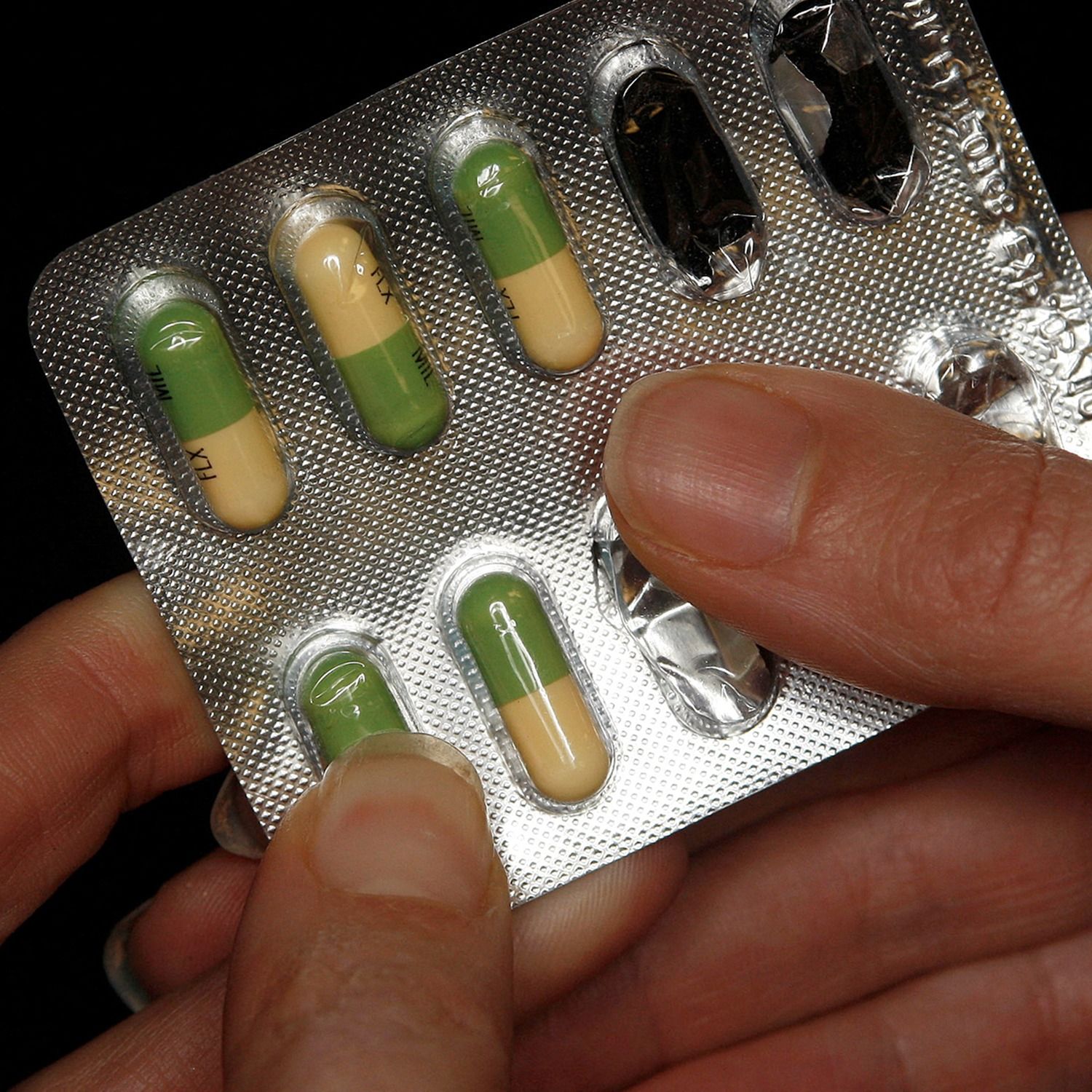
The Daily
R.F.K. Jr.’s Newest Mission: Getting Us Off Antidepressants
00:31:35
The process of “deprescribing,” in which a doctor helps a patient taper off a psychiatric medication, is now being considered in the development of federal health policy.
Loading summary
Transcript116 lines
- [00:00]
Advertisement Voice
This message is brought to you by Apple Card Spring always feels like a reset, clearing things out, simplifying what you don't need. Apple Card is built with that same idea in mind. No annual fee, no late fees, and no foreign transaction fees. No fees, period. Get started and apply in the Wallet app on your iPhone today. Subject to credit approval. Variable APRs for Apple Card range from 17.49% to 27.74%, based on creditworthiness rates as of January 1, 2026. Existing customers can view their Variable APR in the Wallet app or@car.apple.com Apple Card issue by Goldman Sachs Bank USA Salt Lake City branch terms and more@applecar.com from
- [00:37]
Michael Barbaro
the new York Times, I'm Michael Balbaro. This is the Daily in his latest public health crusade, Robert F. Kennedy, Jr. Is asking why millions of Americans have been taking psychiatric drugs for far longer than ever intended.
- [00:55]
Patient 1
I have been on Zoloft since I was 8 years old.
- [00:59]
Patient 2
I've continuously been on antidepressants since I was 27 years.
- [01:02]
Michael Barbaro
I've been on Luvox 30 years.
- [01:04]
Patient 2
I've been on them longer than I've not been on them.
- [01:07]
Michael Barbaro
In the process, he's highlighting an open secret in medicine that doctors are much better at starting drug treatments than at stopping them.
- [01:18]
Patient 1
I was told to take it daily, and I never questioned that.
- [01:21]
Ellen Berry
I don't really think I even asked or thought about how long I would be on it. I did not know that I was going to be on them for the
- [01:28]
Michael Barbaro
rest of my life and that patients who want to end their treatment are increasingly taking matters into their own hands.
- [01:36]
Patient 1
All of a sudden, I felt so strongly that my brain was like, you need to get off this medication.
- [01:44]
Michael Barbaro
Today, Ellen Berry takes us inside the growing movement to deprescribe. It's Monday, June 22nd. Ellen, nice to have you on the show.
- [02:07]
Ellen Berry
Thank you for having me.
- [02:08]
Michael Barbaro
Let me just start by asking how you came to this topic of deprescribing. And for the uninitiated, can you just define that phrase?
- [02:18]
Ellen Berry
Deprescribing is the art and science of carefully tapering off a psychiatric medication or reducing a psychiatric medication. I first heard the term, really from patient groups. There has long been a sort of a subculture of people who talk to each other on the Internet about being harmed by medication or feeling that their medication isn't working anymore, who sort of compare notes on how to get off them. And those communities, that's nothing new. They've been out there for decades, really, since the early days of social media. But what's new is that this group, largely of patients, now has a seat at the table as federal health policy is developed. And that's because of RFK Jr.
- [03:10]
Robert F. Kennedy Jr.
I want to thank President Trump for entrusting me to deliver on his promise to make America healthy again.
- [03:17]
Ellen Berry
Secretary Kennedy made it clear during his confirmation hearings that one of the things he was looking at would be curbing the use of psychiatric medications in the
- [03:28]
Robert F. Kennedy Jr.
US 15% of American youth are now on Adderall or some other ADHD medication.
- [03:36]
Ellen Berry
He talked specifically about antidepressants in those hearings, that these medications were sort of dependence forming, that we prescribe them too freely.
- [03:45]
Robert F. Kennedy Jr.
Even higher percentages are on SSRIs and benzos. We are not just over medicating our children, we're over medicating our entire population.
- [03:54]
Ellen Berry
And what he was talking about was the most widely used category of psychiatric medications, SSRIs.
- [04:02]
Robert F. Kennedy Jr.
Listen, I know people, including members of my family, who've had a much worse time getting off of SSRIs than people have getting off of heroin.
- [04:11]
Ellen Berry
He said that SSRI antidepressants are harder to quit than heroin.
- [04:16]
Michael Barbaro
Huh. Is that true?
- [04:17]
Ellen Berry
No. There's no evidence supporting that. SSRIs are used by probably around 35 million American adults. These are selective serotonin reuptake inhibitors like Prozac or Zolaft or Lexapro. They're considered so safe to prescribe that overwhelmingly, they're prescribed by family doctors or GPs rather than psychiatrists. And they're used for sort of an ever expanding array of different problems, not just for depression, but also for all kinds of anxiety disorders, obsessive compulsive disorder, social anxiety, ptsd. And that list, you know, has just continued to get longer.
- [05:10]
Michael Barbaro
Right. And here he is assailing and questioning the most widely used medication in basically all of mental health.
- [05:19]
Ellen Berry
Right. So after the confirmation hearings at the beginning of 2025, I think we were all watching closely to see what was he actually planning to do. And at the beginning of May, Secretary Kennedy appeared at a summit on overmedicalization that was held by the MAHA Institute and Inner Compass Initiative, which is a support organization for people going off mental health medications. The thesis of the entire day was overuse of SSRIs. And at the end of that day, he announced a set of regulatory changes that all kind of aimed to encourage clinicians to help patients get off SSRIs.
- [06:02]
Michael Barbaro
Hmm. So he's beginning to articulate a kind of federal regulatory vision for deprescription. What specifically is he Proposing, he sent
- [06:12]
Ellen Berry
a Dear Colleague letter, which is direct communication to hospitals and doctors. And the Dear Colleague letter essentially said, don't default to using medication for depression and anxiety. Look at other modes of treatment. And we know that lots of things are effective treatments for depression and anxiety. Psychotherapy is probably the number one alternate mode, but also sleep and exercise and diet and lots of other things. So that is sort of common sense advice. It wasn't controversial.
- [06:46]
Michael Barbaro
And just to be clear, he's not a doctor, RFK Jr. But he's basically writing a letter to colleagues in the world of public health and the medical community.
- [06:55]
Ellen Berry
Correct. And then he introduced a billing code that would allow Medicare and Medicaid providers to be reimbursed for helping patients get off medications.
- [07:06]
Michael Barbaro
And why is that important?
- [07:08]
Ellen Berry
It's important because it can be complicated and time consuming to help people quit a psychiatric medication, especially if they've been taking it for a long time or they're taking a complicated cocktail of four or five psychiatric medications. It takes a lot of time, and usually psychiatrists are reimbursed for 15 minute med checks every month. That's just not enough time.
- [07:32]
Michael Barbaro
So he's financially attempting to incentivize doctors to participate in deprescribing.
- [07:38]
Ellen Berry
Yes. And another thing he set in motion is what's called a technical expert panel to develop guidelines for tapering off SSRIs. And this panel would create a new set of recommendations for healthcare providers on how best to do this.
- [07:55]
Michael Barbaro
Ellen, what's the reaction to these proposals to this speech from the Secretary of Health and Human Services, from the world of medical experts out there?
- [08:08]
Ellen Berry
Yeah, I was really curious about that because it was noticeable that there were no medical organizations involved in putting together this sort of day of policymaking around the use of SSRIs. And when I reached out to them, I think there was a degree of alarm that they had somehow been excluded from this process, which sort of drives it, you know, one of the central functions of psychiatry. And I had an opportunity to find out a little bit more about that because the American Psychiatric association held its annual meeting 10 days later.
- [08:42]
Michael Barbaro
That is extremely convenient. Journalistically. I'm gonna assume you went, what did you find?
- [08:47]
Ellen Berry
What I found was kind of twofold. Some people that I talked to were worried that this was just the first step in a much more ambitious plan on the side of Secretary Kennedy that would lead to a bigger discrediting of psychiatric treatments.
- [09:03]
Michael Barbaro
So their fear is that whatever this is, it's just the beginning, maybe a side door into greater government. What Perhaps restrictions on these drugs.
- [09:14]
Ellen Berry
So a lot of doctors who I interviewed in the hallways, outside Sessions at the APA said that SSRIs are the foundation of their practice, that they are so safe that they've been using them for so many years, and that they turn people's lives around. They make the difference between being able to get up in the morning and get dressed and get to work and not being able to do those things. So a lot of them were kind of passionate about saying what they have seen with patients. And I think the worry is that people are going to be driven away from taking medications or that somehow their access will be restricted.
- [09:57]
Michael Barbaro
How many doctors at this conference were open to or even in agreement with what RFK Jr is talking about here when it comes to deprescription?
- [10:09]
Ellen Berry
Yes. So there was a second big takeaway that I had from this gathering, which is that a substantial number of doctors there agreed that this is an area where we could do a lot better. That is, training of psychiatrists focuses a great deal on putting people on medications, but much less on what it means to take them off and what a challenge it can be. And a number of people I interviewed expressed frustration over that. In one of the panels that I attended, a doctor, Ronald Winchell from Columbia University School of Medicine, said that when he looked back at his long career, one of the things that he most regretted is not taking patients off medications until later than he should have. That is hesitating for various reasons, even when he thought that the medication was no longer needed or no longer effective.
- [11:09]
Michael Barbaro
It sounds like the second group of doctors you're talking to feel like RFK Jr. Has identified a problem in their world that everyone should be more focused on.
- [11:19]
Ellen Berry
Yeah, I think there was a lot of discussion of deprescribing at this conference. There was a number of panels on deprescribing different classes of medications. There was a new deprescribing handbook, and it was selling a lot. Downstairs in the exhibition hall and in conversations with doctors, a number of them acknowledged that this is an area where we could do a lot better at supporting patients.
- [11:48]
Michael Barbaro
One thing we haven't talked about here is objective research that would clarify the questions we're discussing. If Ellen, the assumption now is that doctors aren't talking enough about getting off these drugs. That's certainly the case. RFK junior's making. Some doctors are making it too. The implication is that people are on these drugs for too long. So what does the research tell us about long term use of SSRIs the
- [12:20]
Ellen Berry
reality is that there isn't all that much research on that. Most of the clinical trials we have on these drugs are efficacy trials and they're shorter term, like six to eight week trials that are necessary for FDA approval. There's some longer term work, but very little that tells us what happens after three years or five years or 10 years. And I think when SSRIs were first introduced in the 1980s, it wasn't anticipated that people would be taking them for years and years. The clinical guidelines say once someone's symptoms are in remission, that you should discontinue the medication after 6, 9, 12 months and just go back off. But I think we see in reality that for a lot of people that's just not happening. So one study found that the median duration of treatment with an SSRI is five years. And for many it's a lot longer than that.
- [13:21]
Michael Barbaro
That amazes me, to be honest, that we don't have much of any long term research on what has become for so many people, long term treatments. I mean, if millions and millions of people are taking these prescription drugs for years and years and years, it's deeply surprising that we're don't know clinically what the impact of that is.
- [13:45]
Ellen Berry
Right. That kind of research just hasn't been a priority.
- [13:49]
Michael Barbaro
So in the weeks since RFK Jr introduced these ideas, and once the medical health world began to absorb them, what has actually happened to these proposals?
- [14:03]
Ellen Berry
Well, the incoming president of the APA is going to have a seat on one of the technical expert panels that will be developing guidelines in this area. There's also a psychiatrist from the American Society of Clinical Psychopharmacology. So there are gonna be representatives of sort of major professional groups at the table.
- [14:24]
Michael Barbaro
Got it. So a lot of these medical experts decided that even if they were skeptical of RFK Jr. S agenda here, that they wanted to be a part of it. If you can't beat em, join them, shape them.
- [14:38]
Ellen Berry
They wanted a seat at the table. I mean, as this deprescribing project gets off the ground, it's involving both establishment mainstream psychiatry and across the table, representatives of a totally different group that has been watching psychiatry critically from the outside for a long time. And that includes patients who are saying, how long are we supposed to be on these things? And why haven't we been having these conversations with our doctors the whole time?
- [15:15]
Michael Barbaro
We'll be right back.
- [15:23]
Advertisement Voice
This podcast is supported by Doctors Without Borders.
- [15:27]
Doctors Without Borders Narrator
Today, more than 117 million people are displaced worldwide, uprooted by war, conflict and political upheaval when people are forced to leave everything behind. Doctors Without Borders provides independent care where it's needed most. Their teams are on the ground responding to emergencies and providing essential medical aid. Without Borders, you can help save lives. Donate today at doctorswithoutborders.org thedaily.
- [15:57]
LifeLock Narrator
Lots of places can expose you to identity theft. That's why LifeLock monitors hundreds of millions of data points a second for threats to your identity, which is way more than anyone can do on their own. If we find anything suspicious, like new loans or changes to your financial accounts, we alert you right away, all through text, phone, email, or the LifeLock app. Save up to 30% your first year. Visit lifelock.com Daily terms apply.
- [16:23]
Robert F. Kennedy Jr.
I'm David Sanger. I cover the White House and national security at the New York Times, and I try to explain what decisions made in Washington mean for you wherever you live. This is why the Times sends me to the Oval Office when the President is making a major decision or has me ride along on Air Force One on critical trips. And I talk to foreign leaders, exploring why they're so often at odds with the United States. We live in a world of misinformation and disinformation. It's never been more important to have reliable sources of on the ground repression. If you want firsthand reporting on how U.S. policy affects the world, consider subscribing to the New York Times.
- [17:12]
Michael Barbaro
Ellen I want to turn to this world of patients who have been eager for this deprescription conversation to reach the point that it now has, where the federal government is broaching it and medical experts are now joining the conversation. And in particular, I want to better understand the specific reasons that patients are giving for wanting to get off these medications and the specific experiences that lead them to that decision.
- [17:45]
Ellen Berry
Well, you know, whenever I write about this subject, we really get inundated with personal stories and people have different reasons for wanting to get off a medication.
- [18:00]
Patient 2
I just thought if I get off the antidepressants, I can see what life is without this numbness.
- [18:05]
Ellen Berry
Sometimes they feel like their emotions have been kind of muffled. I wasn't having these anxious thoughts, but I also wasn't experiencing, like, as much high good emotions either.
- [18:19]
Michael Barbaro
There was, like, delayed sexual side effects.
- [18:23]
Ellen Berry
Sometimes they have side effects. Sometimes they feel that the medication just isn't working anymore. Maybe it's the classic thing, oh, I feel great. I must not need my medication anymore.
- [18:34]
Michael Barbaro
By then, I had been on the medication for about 25 years, and I was just curious, what would my life be like without this.
- [18:42]
Ellen Berry
And I've heard from a lot of people who said, you know, I started taking this medication when I was a teenager, and maybe that's what. To get through that period. But now many years have passed, and I've entered adulthood not exactly knowing who I was.
- [18:59]
Patient 1
Right.
- [18:59]
Michael Barbaro
Who you would be without those drugs.
- [19:03]
Ellen Berry
Exactly.
- [19:04]
Patient 2
It's fomo. It's like, what am I missing out on? I want to live in real life. I don't want to live in black and white. I want to live in color.
- [19:09]
Ellen Berry
You know, like those intense emotions that can feel so uncomfortable, especially when you're a very young person. They're also part of your personality. And I hear from people who say, like, I want to know who that person is.
- [19:26]
Michael Barbaro
Once these people you're hearing from decide that they're going to try to stop taking these medications, how have they actually technically been doing that and who is guiding them through that process?
- [19:41]
Ellen Berry
I mean, I think some people work with their doctors in getting off or tapering a medication, and some people don't.
- [19:49]
Patient 1
I went in and they were like, hey, you want a refill of your Zoloft? And I was like, yes, I guess if I still need to be on it. And they were like, cool.
- [20:00]
Ellen Berry
A lot of the people we hear from say this conversation about how to get off isn't happening with their doctor, or if it is happening, it isn't satisfying. Or for others, they just don't see their doctor often enough to get the kind of robust support that they need.
- [20:16]
Patient 2
I'm not going to say all doctors, but I don't know if how many doctors really grasp what it is to be on antidepressant. Like, if you go in there and you're feeling depressed, they say, all right, then you just raised the medication. Some are better than others. But I never really go to them to get off it. I did that myself.
- [20:32]
Ellen Berry
And in some cases, people just lose trust in their doctor if they think that the medication that they've been prescribed is making them worse.
- [20:41]
Patient 1
I'll be honest, I, at this point, because I had been dismissed about everything else, I was like, I don't trust these people. I can make my own health decisions.
- [20:50]
Ellen Berry
And those people have been talking to each other now for years and years with a lot of frustration towards organized medicine.
- [20:59]
Michael Barbaro
And for those folks who have been trying to do essentially diy, what has been their playbook, for lack of a better word, what does it look like?
- [21:11]
Patient 1
I use Dr. Google and I look at forums on Reddit and stuff like that, and people are like, if you do Cold turkey. It can really destabilize you a little bit.
- [21:20]
Ellen Berry
So the kind of subculture around tapering and withdrawing from medications has been out there since the early days of social media. One example is a site called Surviving Antidepressants. And what you would find there is people exchanging their withdrawal protocols. And it got incredibly technical. People would be talking about reducing their dosage by a single bead within the capsule, or liquefying it, or using pharmaceutical scales. And over time, that network has sort of matured into a real marketplace of support.
- [22:02]
Michael Barbaro
And that's presumably to avoid the side effects of abruptly taking yourself off of one of these drugs. But even when people are very careful and very gradual, what are the side effects of ending these treatments?
- [22:18]
Ellen Berry
The side effects that you most often hear about are vertigo, nausea, or flu like symptoms. I completely stopped sleeping. Insomnia, something that they call brain zaps, electricity in my head, which are like a twinge or a sense of a feeling, of a sort of a shock like sensation in the brain.
- [22:45]
Michael Barbaro
It's like this kind of thing.
- [22:49]
Ellen Berry
And there's some portion of people who describe the process of withdrawal is really intolerable, like jumping out of their skin. And it is its own kind of debilitating crisis.
- [23:03]
Patient 2
I would, like, watch a movie, I'd cry. I'd watch commercial and cry. I'd read a book and I'd cry. I was listening to the Beach Boys Pet Sounds album and just tears coming down my eyes. It felt good for a while, but then it was like going like having emotions that were like a dripping faucet to like a fire hose. It was too much.
- [23:21]
Ellen Berry
But what doctors generally say is that for most people, these symptoms really only last for a few weeks. And then if after that you're feeling dramatic mood changes, you might be experiencing relapse.
- [23:37]
Michael Barbaro
Essentially, the conditions that may have prompted you to first go on these drugs,
- [23:42]
Ellen Berry
yes,
- [23:50]
Michael Barbaro
However severe these side effects are, they would seem to buttress the argument that the best version of deprescription is a medically supervised one where you're not trying to do it yourself and you're not determining dosages and tapering, and where the same doctor who prescribed the drug is the one helping you get off of them and aware that you're trying to do it and helping you manage the what could be a brain zap or a resumption of symptoms. It feels like something that should not be diy.
- [24:25]
Ellen Berry
That's certainly the view from within medicine that one of the reasons that you need supervision, if you're doing something like this is just to guard against the possibility of a relapse.
- [24:36]
Michael Barbaro
And this would seem to make the case for the conversation that RFK is pushing the medical world to have.
- [24:45]
Ellen Berry
Right. I think there is some acknowledgement that prescribers aren't putting the same amount of care and attention into landing the plane as taking off.
- [24:58]
Michael Barbaro
Well, Ellen, here I want to acknowledge that the conversation that RFK is trying to have and that we're having here is not theoretical for me anyway. And here I'm going to shake my Lexapro. I've been on Lexapro as an anti anxiety medication for at least a decade. It was prescribed by a psychiatrist, but then just became part of my relationship with my general practitioner. I just kind of get it renewed, and I've not really been asked to think about how long I should be on it. And now suddenly having this conversation with you is making me ask that question. How long am I supposed to be on it? What would happen if I stopped taking it? Would all the white noise of anxiety that made me want to go on Lexapro, would that return? Or 10 years later, have I outgrown that? And I just don't know it because I've never tried to taper myself off this to find out who I would be if I weren't me on Lexapro. I mean, it's not a simple question.
- [26:04]
Ellen Berry
I hear so many people asking that kind of question, like, is there some authentic self that I want to go back to? You know, what would life look like if I took this medication away? I just think that question is percolating. And I feel like what's a little bit more complicated is if you think it works for you, you become sort of, I don't know, psychologically attached to them. And you think, if I quit this, am I going to spiral? Am I going to feel bad again? And we know that the placebo effect is a huge part of the picture with these medications. And I think it's the same when you go off. They call it the nocebo effect, which is, if you think it's essential to you, you may be just afraid of stopping, afraid of finding out what that's like, and that could sort of contribute to your feeling bad. Michael, in your case, what did you conclude about stopping me?
- [27:04]
Michael Barbaro
I. I don't know that I've ever gotten far enough along in the conversation with myself to stop. I just know that on the occasions when I have failed to reliably take Lexapro, I have experienced some really crippling headaches, which I Needed a doctor to tell me were from not taking my Lexapro reliably. But there was no deeper conversation. There was no, is it time to think about whether you should be tapering? How long have you been on it? And it was just an accepted fact in my conversation with a doctor that I was on it, and then I'd probably still be on it for as long as I'm gonna be on it.
- [27:43]
Ellen Berry
And do you think that that conversation should have happened when you first went on?
- [27:49]
Michael Barbaro
I wonder now. But now I'm asking myself the question of, are we all infantilizing ourselves in the face of medicine? Should I be asking this question myself? Why should I be waiting for a doctor to ask it? It's getting a little existential now.
- [28:02]
Ellen Berry
Mm. I mean, some people have multiple remissions. And what I hear from physicians is, if you've had, like, three episodes of depression, then you probably are gonna take an SSRI for indefinitely as a maintenance treatment. And if it's fewer than three, then no. Then you should try to get off if you want. But I don't think there's a lot of energy around having that conversation.
- [28:30]
Michael Barbaro
Right. I mean, we're talking about deprescription here, because that's the conversation that RFK Jr. And those around him want us to be having. But there's also a possibility that people are gonna hear this conversation, and instead of just deprescription, they're gonna hear, maybe I shouldn't ever get a prescription. And I wonder if that's a risk that RFK Jr. And the medical experts who are now joining him in this conversation are thinking about.
- [29:07]
Ellen Berry
I mean, because I cover psychiatry, mental health, I have been doing interviews all over the country about people's use of this kind of medication. And I'll tell you that, like, they're reaching parts of society that just wouldn't have gotten any kind of mental health care in the past. So I remember talking to. I think he was an auto mechanic, and I was doing interviews in a school parking lot, and he said, you know, like, my father was an angry drunk, and because I take an antidepressant, I know I'm not gonna go that way. And there are groups within our society that are only now, for the first time, getting access to a treatment for depression or a treatment for anxiety or. I mean, I think if you look at the numbers, white people take antidepressants at a rate that is twice as high as any other racial category and, like, five times as high as Asian people. So there's just a Huge discrepancy. Some groups take these a lot. Some groups really don't have much access.
- [30:11]
Michael Barbaro
In other words, because of the demographics of who takes these mental health drugs, there are plenty of people who perhaps could benefit from them who have never been introduced to them or are just starting culturally to accept the idea that they can and will be on them. And the over prescription deprescription conversation isn't necessarily the right one for them to be having right now.
- [30:35]
Ellen Berry
Yeah, I think that's right. I mean, it may be that there is no one message that is appropriate for our entire. So I think RFK Jr. The secretary, has to be very careful about encouraging this conversation about stopping medication when it's appropriate without driving people away from the idea of treatment completely.
- [31:02]
Michael Barbaro
Right. It's one thing to have a conversation about deprescription. It's another to intentionally or not stigmatize ever getting a prescription.
- [31:11]
Ellen Berry
Yeah, I think both of these conversations need to happen. How to access treatment that people really desperately need and also how much is enough and how to stop.
- [31:27]
Michael Barbaro
Well, Ellen, thank you very much. We appreciate it.
- [31:29]
Ellen Berry
Thank you.
- [31:36]
Michael Barbaro
We'll be right back.
- [31:50]
Advertisement Voice
This podcast is supported by Doctors Without Borders.
- [31:53]
Doctors Without Borders Narrator
Today, more than 117 million people are displaced worldwide, uprooted by war, conflict, and political upheaval. When people people are forced to leave everything behind. Doctors Without Borders provides independent care where it's needed most. Their teams are on the ground responding to emergencies and providing essential medical aid. Without Borders, you can help save lives. Donate today at doctors without borders.org thedaily.
- [32:23]
LifeLock Narrator
Lots of places can expose you to identity theft. That's why LifeLock monitors hundreds of millions of data points a second for threats to your identity, which is way more than anyone can do on their own. If we find anything suspicious, like new loans or changes to your financial accounts, we alert you right away, all through text, phone, email, or the LifeLock app. Save up to 30% your first year. Visit lifelock.com Daily terms apply.
- [32:49]
Ellen Berry
Hi, I'm Solana Pyne. I'm the Director of Video at the New York Times. For years, my team has made videos that bring you closer to big news moments. Videos by Times journalists that have the expertise to help you understand what's going on. Now, we're bringing those videos to you in the Watch tab in the New York Times app. It's a dedicated video feed where you know you can trust what you're seeing. All the videos there are free for anyone to watch. You don't have to be a subscriber. Download the New York Times app to start watching.
- [33:22]
Michael Barbaro
Here's what else you need to know today as a new round of peace talks started between the US And Iran on Sunday, the conflict between Israel and Hezbollah in Lebanon threw a wrench into the negotiations. Fighting between Israel and Hezbollah prompted Iran to claim it was once again closing the Strait of Hormuz, a threat U.S. officials said had not been carried out. Iran has demanded that fighting in Lebanon end immediately, but ceasefires there have been declared broken and reinstated several times over the past few weeks. And problems with President Trump's $14 million renovation of the Lincoln Memorial Reflecting Pool, timed for America's 250th birthday next month, have become so severe that Trump said he will have to partially drain the pool for repairs. Over the past few days, the pool's new coat of dark blue paint, applied by a company that has never before worked for the federal government, has begun to visibly peel, and green algae has spread across the pool, likely because the renovation project does not fix the pool's malfunctioning filtration system. Today's episode was produced by Alex Stern, Jack Desadoro, Claire Tennisketter and Stella Tan, with help from Anna Foley and Olivia Natt. It was edited by MJ Davis Lynn, with help from Brendan Klinkenberg, and contains music by Pat McCusker and Dan Powell. This episode was engineered by Elizabeth Moxley. That's it for the Daily I'm Michael Balbara. See you tomorrow.
- [35:28]
Advertisement Voice
This podcast is supported by Doctors Without Borders.
- [35:31]
Doctors Without Borders Narrator
Today, more than 117 million people are displaced worldwide, uprooted by war, conflict and political upheaval. When people are forced to leave everything behind, Doctors Without Borders provides independent care where it's needed most. Their teams are on the ground responding to emergencies and providing essential medical aid. Without Borders, you can help save lives. Donate today atdoctors without borders.org thedaily.