
Podcast
The Daily AI Show
Hosted by The Daily AI Show Crew - Brian, Beth, Jyunmi, Andy and Karl · EN
The Daily AI Show is a panel discussion hosted LIVE each weekday at 10am Eastern. We cover all the AI topics and use cases that are important to today's busy professional.
No fluff.
Just 45+ minutes to cover the AI news, stories, and knowledge you need to know as a business professional.
About the crew:
We are a group of professionals who work in various industries and have either deployed AI in our own environments or are actively coaching, consulting, and teaching AI best practices.
Your hosts are:
Brian Maucere
Beth Lyons
Andy Halliday
Jyunmi Hatcher
Karl Yeh
151episodes
Episodes
Newest firstAll episodes
Gemini Builds Files, Codex Pets Arrive
May 501:04:57Tap to summarizeShow SummaryBeth Lyons and Andy Halliday open with a quick check-in and a brief note on Sam Altman’s public praise of Greg Brockman before moving into a rapid-fire set of AI stories. The panel discusses Anthropic’s findings on relationship-advice bias, paid influencer campaigns around China AI fears, Codex’s new desktop pets, and Gemini’s new ability to generate full files directly from chat. Later, Gareth Hood joins to talk about AI tutoring and classroom learning, followed by discussion of agentic commerce, AI-driven cybersecurity risks in legacy systems, and updates on Meta robotics and xAI’s newest Grok model. The episode closes with a community announcement about a follow-up Q&A with Gareth.Key Points Discussed00:01:19 Sam Altman, Greg Brockman, and OpenAI Speculation00:03:30 Anthropic on Relationship Advice Bias00:06:22 Paid Influencers and China AI Fear Campaigns00:09:14 OpenAI Codex Pets and Workflow Alerts00:19:25 Gemini Generates Docs, Sheets, PDFs, and More00:29:17 AI Tutoring, Guided Learning, and Classroom Outcomes00:41:05 Stripe, Agent Commerce, and the Future of Buying00:48:47 UK Cyber Warning on AI-Accelerated Exploits00:55:20 Meta Robotics Move and xAI Grok 4.3 UpdateThe Daily AI Show Co Hosts: Beth Lyons, Andy Halliday, Gareth Hood, Karl Yeh
Transcribe →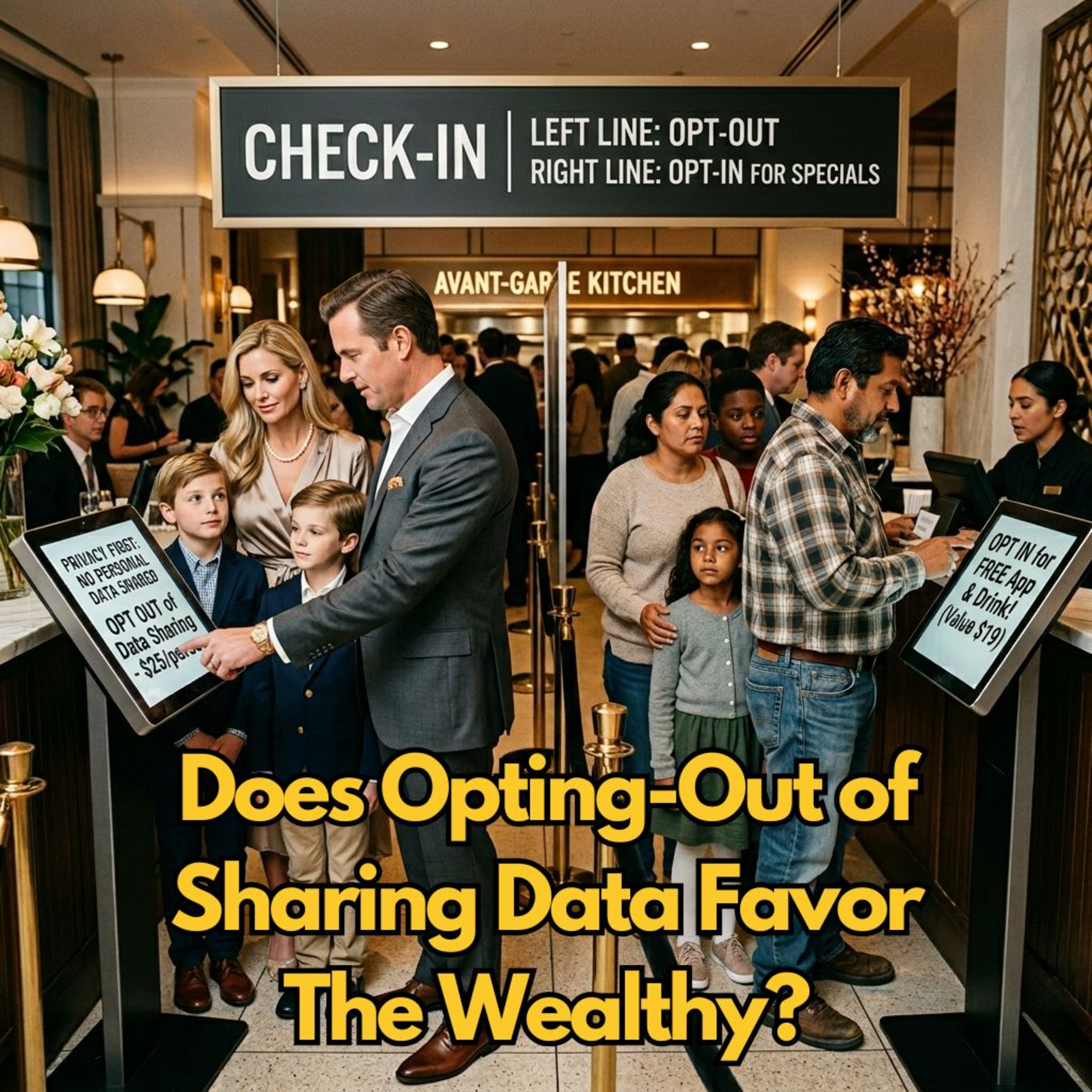
The Opt-Out Tax Conundrum
May 200:25:39Tap to summarizeAs AI systems spread through healthcare, insurance, education, banking, and transportation, they will not just make services faster. They will make them more coordinated. The system works better when it can see more, predict more, and route people into cleaner patterns. Share your data, accept automated decisions, stay inside the optimized flow, and life gets cheaper and easier.That creates a problem for anyone who wants out. The person who does not want constant monitoring. The parent who resists algorithmic education plans. The patient who refuses predictive health tracking. The driver who will not hand over behavioral data. Institutions will say these people are still free to opt out. They will just have to pay more, wait longer, or accept fewer conveniences because serving them now costs more.The conundrum: That logic is not obviously wrong. If most people accept the AI layer, why should everyone else subsidize the higher cost of serving those who refuse it? But there is another cost hiding underneath. Once opting out becomes expensive enough, it stops functioning like a meaningful right and starts functioning like a luxury good. The right still exists on paper, but in practice only people with money, status, or special leverage can use it.So once AI makes coordinated life cheaper and smoother for everyone inside the system, what should carry more weight: a real right to opt out on equal terms, or the right of institutions to charge the full cost of serving people who refuse the infrastructure everyone else now depends on?
Transcribe →Anthropic, Codex, and AI Skills
May 201:00:52Tap to summarizeShow SummaryBeth Lyons, Andy Halliday, and later Gareth Hood covered the Musk-OpenAI court fight, including discussion of reported model distillation and the legal nuances surfacing in testimony. They then spent significant time on Anthropic’s security positioning, White House pressure, Claude’s reported Jupiter pipeline, and OpenAI’s competing Codex and cyber efforts. The back half of the episode moved through ChatGPT 5.5’s self-hosted party idea, malicious AI skills used for crypto mining, Nimbalyst as a visual agent workspace, ElevenLabs’ new music tools, Manus Cloud Computer, an AI therapy chatbot study, and 1X’s humanoid robot factory plans.Key Points Discussed00:03:13 Musk, OpenAI, and Grok Distillation00:11:16 Anthropic, Mythos, and Claude Jupiter00:19:52 ChatGPT 5.5 Party and Codex Submissions00:22:58 Malicious AI Skills and Crypto Mining00:28:34 Nimbalyst Visual Agent Workspace00:43:24 ElevenLabs Music and AI DJing00:46:34 Manus Cloud Computer for Always-On Agents00:52:37 MindSurf AI Therapy Chatbot Trial00:57:25 1X Neo Humanoid FactoryMentioned in the show:https://nimbalyst.com/https://github.com/Nimbalyst/nimbalystToday's Daily AI Show Co Hosts: Beth Lyons, Andy Halliday, Gareth Hood
Transcribe →Google Cloud, Cursor, and Voice AI
Apr 3001:01:27Tap to summarizeShow SummaryBeth Lyons, Andy Halliday, and Gareth Hood open with Google’s strong Q1 results, focusing on AI-driven cloud growth, Gemini enterprise usage, and Waymo’s autonomous ride scale. They then cover Mayo Clinic’s RedMod system and its early detection performance for pancreatic cancer in retrospectively reviewed CT scans. The conversation shifts into AI coding workflows, including plugins, PRDs, Cursor’s new agentic harness, and OpenAI’s “goblin” persona issue. The episode closes with a discussion of voice AI and a live demo of Gareth’s local voice agent, Jasper.Key Points Discussed00:01:23 Google Q1 Earnings, Gemini, and Waymo00:11:49 Mayo Clinic’s RedMod for Pancreatic Cancer Detection00:25:25 Favorite Coding Plugins and AI Build Workflows00:27:56 PRDs, Build Better, and Framing the Problem00:32:37 OpenAI’s Goblin Persona Problem00:37:08 Cursor’s Agentic Harness and Amazon Quick00:46:26 xAI Voice Models and Voice Assistant Tools00:49:23 Gareth’s Jasper Local Voice Agent DemoThe Daily AI Show Co Hosts: Beth Lyons, Andy Halliday, Gareth Hood
Transcribe →AI Designs a New Antibiotic
Apr 3000:55:03Tap to summarizeShow SummaryThe episode opens with Jyunmi and Andy’s roundup of Anthropic’s surging valuation and its new workflow integrations across major creative tools, followed by a discussion of NVIDIA’s Nematron Omni model and the broader shift toward mixture-of-experts efficiency. The hosts then pivot to Talkie, a model trained only on pre-1931 public-domain material, using it to explore whether AI can generalize beyond its training data. A longer nuanced debate follows with Beth and Andy discussing Google opening its models to classified government use, Anthropic’s resistance to military deployment, and the ethics of AI in warfare. The show closes with Jyunmi's signature AI-in-science segment on a newly designed antibiotic that cleared MRSA in mice, plus a lighter wrap-up on vintage sci-fi and a moon-hotel startup pitch.Key Points Discussed00:00:18 Show Opening and Episode Intro00:01:13 Anthropic Valuation and Claude Tool Integrations00:15:42 NVIDIA Nematron Omni and Mixture-of-Experts Models00:20:03 Talkie Model and AI Generalization From Old Texts00:22:11 Google’s Classified AI Contract and Military Ethics Debate00:33:51 AI in Science: New Antibiotic Clears MRSA in Mice00:43:27 Reactions to AI-Driven Antibiotic Discovery00:50:18 Jupiter’s Moon Side Discussion00:53:11 Y Combinator Moon Hotel Pitch Teaser00:54:46 Show Wrap-UpThe Daily AI Show Co Hosts: Jyunmi Hatcher, Andy Halliday, Beth Lyons
Transcribe →China Stops Meta’s Manus Deal
Apr 2801:13:48Tap to summarizeShow SummaryBeth Lyons and Andy Halliday open with the latest OpenAI-Microsoft agreement and what it means for the abandoned AGI clause. They then dig into China blocking Meta’s Manus acquisition, followed by a longer discussion about rumored OpenAI phone hardware and what AI-native devices might look like. Later, they examine the Claude/Cursor database deletion story as a cautionary example of agent permissions, backups, and sandboxing. Karl Yeh joins for an extended conversation about workplace agents, why businesses still think in legacy workflows, and how AI may shift from efficiency tools to systems that reshape operations.Key Points Discussed00:00:51 OpenAI-Microsoft Deal and the AGI Clause00:05:29 China Blocks Meta’s Manus Acquisition00:11:10 Rumors of an OpenAI AI Phone00:29:32 Claude, Cursor, and the Database Deletion Debate00:46:41 Karl Yeh on Personal Computers and Workplace Agents01:04:15 Workspace Agents vs. Zapier, N8N, and WorkatoThe Daily AI Show Co Hosts: Beth Lyons, Andy Halliday, Karl Yeh
Transcribe →Codex, Claude & Open AI Safety Debate
Apr 2700:57:43Tap to summarizeShow SummaryBeth Lyons opens the episode with Andy Halliday and guest Gareth Hood, and the group begins by discussing how different AI models can be used together instead of treated as one-winner-takes-all tools. They examine Anthropic’s Project Deal, AI-assisted stock trading ideas, and Deel’s internal AI app marketplace as examples of AI creating practical business value. The conversation then shifts to a broader roundup on DeepSeek V4, GPT-5.5 hallucinations, Google’s relationship with Anthropic, and on-device AI. In the final stretch, Karl joins as they discuss Series, a new AI-powered campus networking platform, before closing on Elon Musk’s case against OpenAI and the ethics of reporting violent-risk users.Key Points Discussed00:00:18 Show Opening with Beth, Andy, and Gareth 00:01:21 Using Multiple Models and Anthropic’s Project Deal00:11:26 AI Stock Trading as a Future Show Topic 00:15:38 Deel’s Internal AI App Store 00:19:00 AI News Roundup: DeepSeek, GPT-5.5, Google, Anthropic, and On-Device AI 00:32:31 Karl Yeh Joins the Conversation 00:39:28 Series and AI-Powered Campus Networking 00:49:47 Musk v OpenAI and the Debate Over Reporting Safety RisksThe Daily AI Show Co Hosts: Beth Lyons, Andy Halliday, Karl Yeh with Guest Host: Gareth Hood
Transcribe →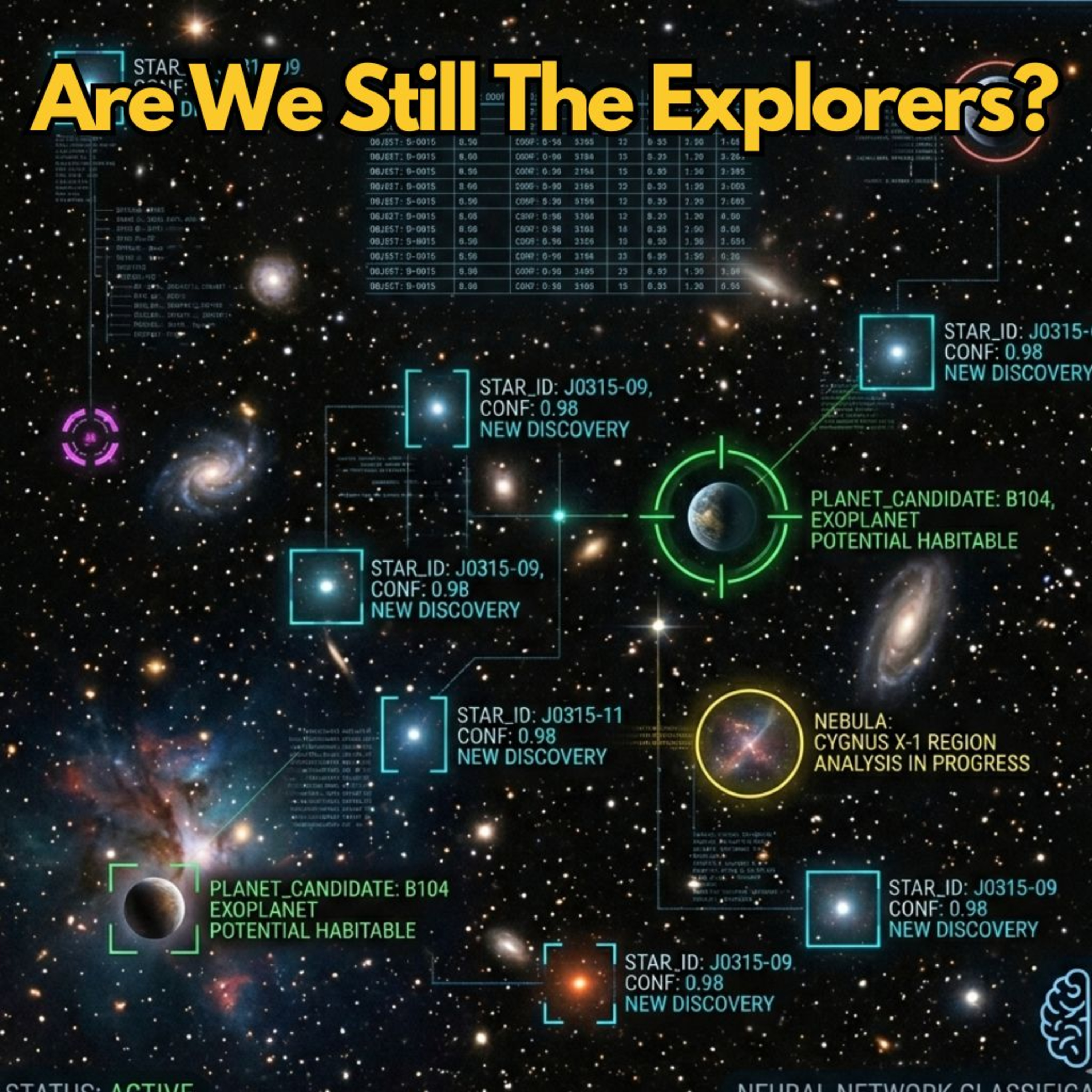
The Chosen Anomaly Conundrum
Apr 2500:25:48Tap to summarizeSpace exploration has always depended on scarcity. There is never enough time, bandwidth, human attention, or instrument capacity to examine everything. That was manageable when the stream of possible discoveries was still small enough for scientists to review by hand. But that era is ending. Telescopes now generate oceans of data. Rovers see more terrain than teams on Earth can parse in real time. Future missions will only widen that gap.AI looks like the obvious answer. It can scan signals, rank targets, flag strange patterns, and decide what deserves a closer look before the moment passes. Without that help, science teams risk drowning in their own data and missing discoveries simply because no human got to them in time. In that sense, AI does not just make exploration faster. It makes modern exploration possible.But once AI becomes the system that filters what humans notice first, exploration starts to change in a subtler way. The universe we study is no longer just the universe our instruments capture. It is the universe that survives a machine’s first pass. That may be a huge advantage when the model catches weak patterns no person would have spotted. It may also mean the frontier gradually bends toward what machine systems are best at recognizing, while the truly strange, noisy, low-confidence anomalies get pushed aside because they look too messy to trust.The conundrum: If AI becomes the first judge of what in space deserves human attention, then the tradeoff is no longer just efficiency. It is about what kind of exploration we are willing to become.One path says we should embrace that filter. Discovery at scale now depends on machine triage, and refusing it would mean letting extraordinary signals die unseen in overwhelming data. In that view, AI expands human curiosity by helping us notice more of the universe than we ever could alone.|The other path says the cost is deeper than it appears. Some of the most important discoveries in history looked ambiguous, inconvenient, or easy to dismiss at first. If AI becomes the layer that decides what gets surfaced, then humanity may get better at finding the patterns it already knows how to value while getting worse at noticing the anomalies that force it to rethink reality.So as exploration moves deeper into a universe too large for human attention alone, what should matter more: using AI to ensure we miss less, or protecting room for the kinds of strange signals that a machine might be least prepared to recognize?
Transcribe →GPT-5.5, DeepSeek 4 and Hermes
Apr 2400:57:21Tap to summarizeShow Summary The episode opens with reactions to GPT-5.5, including benchmark comparisons, pricing pressure on Anthropic, and what the new model enables in practice. The hosts then look at DeepSeek 4’s frontier-level open-weight performance and Brian’s one-prompt demo that turns a show transcript into a rich web recap page. In the second half, the discussion shifts to agent memory, OpenAI’s expanding agent platform, security concerns around Anthropic and Mythos, and how privacy features can also be misused. The show closes with local AI on phones through Google Edge Gallery and Google’s new Deep Research upgrades. Key Points Discussed 00:00:47 GPT-5.5 Release and Early Benchmarks 00:06:27 DeepSeek 4 Enters the Frontier Race 00:12:58 Brian’s One-Prompt Show Page Demo 00:29:02 Anthropic’s Perfect Memory and Hermes Discussion 00:39:05 OpenAI Predicts Faster Capability Gains 00:42:29 Anthropic Desktop Permissions and Agent Security Risks 00:44:55 OpenAI Privacy Features and Dual-Use Concerns 00:46:03 Mythos, GPT-5.5, and Firefox Security Audits 00:51:56 Local Gemma Models on Phones 00:53:40 Google Deep Research and Deep Research Max The Daily AI Show Co-Hosts This episode features Beth Lyons, Brian Maucere, and Andy Halliday as the co-hosts. Brian leads the early discussion on GPT-5.5 and demonstrates a one-prompt workflow for turning transcripts into a structured web recap, while Beth and Andy dig into agent memory, security, local AI, and the broader implications of rapidly advancing AI systems.
Transcribe →ChatGPT Agents and Claude Dashboards
Apr 2400:57:35Tap to summarizeThis episode opens with Beth Lyons, Gareth Hood and Brian Maucere having a discussion about alleged unauthorized access to Anthropic’s Mythos system and what it says about security, release practices, and company maturity. From there, the hosts dig into Anthropic’s temporary coding-access confusion and then shift into early hands-on impressions of ChatGPT Agents, including using agents to help build other agents. The conversation expands into Claude live artifacts, dashboard creation, and the growing role of AI as a personalized interface for work, health, and everyday decisions. The conversation expands into Claude live artifacts, dashboard creation, and the growing role of AI as a personalized interface for work, health, and everyday decisions. They close on personal agent memory, the Hermes open-source agent, and a new interactive project called Flipbook.Key Points Discussed00:01:31 Mythos Access and Security Debate00:13:06 Anthropic Code Access Confusion00:15:49 ChatGPT Agents First Impressions00:24:46 Claude Live Artifacts Dashboards00:32:33 AI Breaks, Wearables, and Health00:43:47 Jarvis Memory and AI Presence00:47:42 Hermes Agent and Local Setup00:53:49 Flipbook Interactive VisualsThe Daily AI Show Co-Hosts: Beth Lyons, Brian Maucere, Special Guest: Gareth Hood
Transcribe →