
Podcast
The Daily AI Show
Hosted by The Daily AI Show Crew - Brian, Beth, Jyunmi, Andy and Karl · EN
The Daily AI Show is a panel discussion hosted LIVE each weekday at 10am Eastern. We cover all the AI topics and use cases that are important to today's busy professional.
No fluff.
Just 45+ minutes to cover the AI news, stories, and knowledge you need to know as a business professional.
About the crew:
We are a group of professionals who work in various industries and have either deployed AI in our own environments or are actively coaching, consulting, and teaching AI best practices.
Your hosts are:
Brian Maucere
Beth Lyons
Andy Halliday
Jyunmi Hatcher
Karl Yeh
151episodes
Episodes
Newest firstAll episodes
Cursor Deal with SpaceX Shakes AI Coding
Apr 2201:06:23Tap to summarizeThis episode opened with Andy’s breakdown of the reported SpaceX/xAI and Cursor deal, including what GPU-backed partnerships could mean for AI consolidation and developer tooling. Brian then reviewed ChatGPT’s new image model, focusing on its improvements in text rendering, hyper-realism, editability, and multi-step prompt handling. Later, the conversation shifted to Meta’s planned layoffs and reports of internal employee tracking tied to model capability initiatives. The second half of the show focused on an Earth Day AI-for-science story about renewable energy forecasting, climate targets, and whether bursty innovation could still help the world hit 1.5°C.Key Points Discussed00:00:44 SpaceX and Cursor Partnership Structure00:12:04 ChatGPT Image Two Review00:35:24 Meta Layoffs and Employee Monitoring00:43:45 Earth Day Climate Forecasting Model00:58:45 Can Innovation Still Hit 1.5CThe Daily AI Show Co Hosts: Andy Halliday, Brian Maucere, Jyunmi Hatcher
Transcribe →Was Reese Witherspoon Right About AI?
Apr 2101:12:46Tap to summarizeThis episode opened with a long discussion of Reese Witherspoon’s AI post, the backlash it triggered, and the broader tension between AI literacy and valid concerns about jobs, IP, and the environment. The hosts then shifted into OpenAI’s new image model, rumors around more agentic features, and how fast Claude Design and Claude Code are changing what individual builders can make. Later, they discussed Apple leadership succession, Sergey Brin’s push to improve Google’s coding capabilities, and Carl’s logistics-focused video experiments built from prompt remixes. The show closed with a discussion of Codex Chronicle, computer-use memory, and the security risks of prompt injection.Key Points Discussed00:00:46 Reese Witherspoon’s AI Backlash00:25:08 OpenAI’s New Image Model00:32:52 Claude Design and Claude Code Workflows00:40:02 Apple Leadership and AI Hardware Questions00:48:14 Sergey Brin Pushes Google Coding00:58:34 Seed Dance Logistics Video Experiments01:05:39 Codex Chronicle and Prompt Injection RiskThe Daily AI Show Co Hosts: Brian Maucere, Beth Lyons, Anne Murphy, Karl Yeh, Andy Halliday
Transcribe →OpenClaw Origin Story, MCP Updates, and Meta’s AI Shift
Apr 2000:54:59Tap to summarizeThe episode opened with a discussion of two videos: a TED talk on the origin of OpenClaw and a talk from Anthropic’s David Soria Parra on the future of MCP. From there, the hosts dug into why “skills” may matter more than standalone agents, how Salesforce’s MCP direction changes enterprise workflows, and how Claude Design plus Claude Code are accelerating internal app creation. Later, they discussed Meta’s AI-driven reorganization, executive departures and product focus at OpenAI, and what recent robotics demos suggest about where humanoid systems are heading. The show closed with notes on Claude Code 4.7 permission controls and a new Runway contest for AI-generated show trailers.Key Points Discussed00:01:24 OpenClaw TED Talk and Builder Origin Story00:05:24 The Future of MCP and Skills Over Agents00:11:54 Salesforce, MCP, and Enterprise AI Access00:17:41 Claude Design Rebrands an Internal Tool00:25:32 Meta Layoffs and AI Pod Reorganization00:30:18 OpenAI Leadership Exits and Model Focus00:36:33 Robot Half Marathon and Real-World Mobility00:45:00 Meta Glasses Review Concerns and Home Robots00:50:33 Claude Code 4.7 Permission Updates00:52:24 Runway Contest and Subscription PromoThe Daily AI Show Co Hosts: Karl Yeh, Beth Lyons, Brian Maucere, Andy Halliday
Transcribe →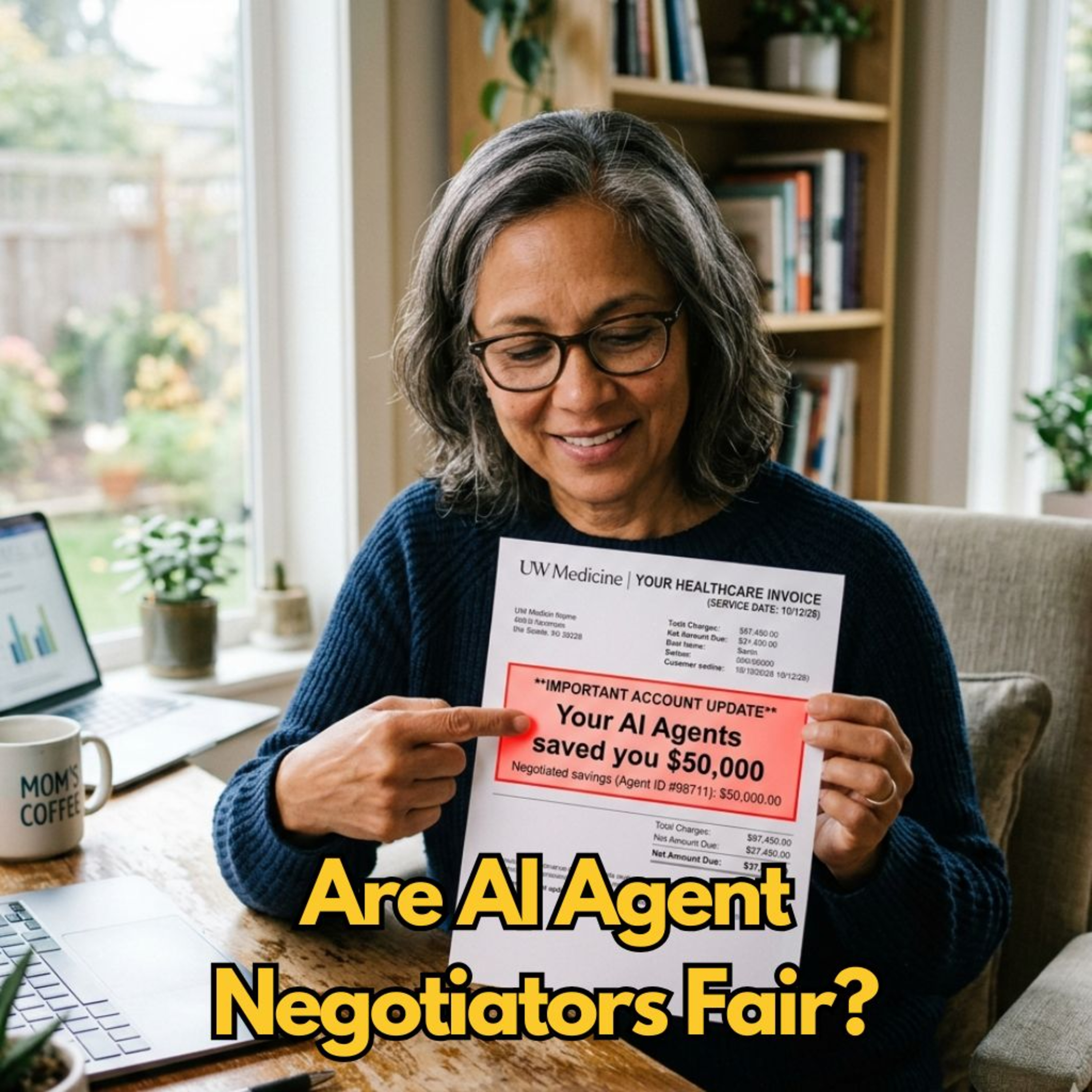
The Invisible Discount Conundrum
Apr 1800:23:50Tap to summarizeFor years, most markets have worked on a simple social fiction: the listed price is close enough to the real price. Some people negotiate better than others, but most of us still live in a world where the number on the page means roughly the same thing for everyone.AI agents break that norm. Once personal agents can negotiate your rent renewal, challenge hospital bills, rewrite vendor contracts, squeeze lower insurance premiums, and scan for hidden fees in real time, the posted price starts to matter less than the quality of the software fighting on your behalf. The people with the best agents will quietly save money everywhere. The people without them will keep paying the default rate, often without knowing how much they are leaving on the table.The conundrum: On one side, this looks like progress. If AI can help ordinary people negotiate like elites, why should anyone defend a world where institutions profit from people who are too busy, too polite, or too uninformed to push back? But on the other side, once constant negotiation becomes normal, shared pricing starts to collapse. Fairness becomes private. Transparency gets weaker. And the people who cannot afford strong agents, or do not know how to use them, end up subsidizing everyone else.So what should society protect once AI turns negotiation into an invisible layer beneath everyday life: the freedom to let agents fight for every possible advantage, or the expectation that the price on the page should still mean roughly the same thing for everyone?
Transcribe →Can Agents Replace the Web?
Apr 1701:09:53Tap to summarizeThe hosts open with Anthropic’s Claude Opus 4.7 release, discussing Mythos, higher token usage, stronger visual understanding, and what a more agentic model means in practice. From there, they move into Anthropic’s growing tension with government access, speculation about a Figma competitor, and OpenAI’s push to make Codex a broader desktop and workflow tool. The middle of the episode focuses on Google’s AI mode, Gemini desktop possibilities, and how browser control and computer use could reshape product design. In the second half, they pivot to Google’s Disco, Luma’s virtual filmmaking workflow, Perplexity Personal Computer, Salesforce going headless for agents, and Allbirds’ strange compute pivot.Key Points Discussed00:01:33 Claude Opus 4.7 and Mythos00:08:56 White House Access to Mythos00:12:12 Anthropic, Figma, and AI Design Tools00:18:34 OpenAI Codex for Everything00:24:41 Google AI Mode and Gemini Desktop00:37:17 Google Disco and Agentic Research00:40:38 Luma, Wonder Project, and AI Filmmaking00:51:07 Perplexity Personal Computer00:59:47 Salesforce Headless and the Agent-First Web01:03:39 Allbirds Pivots to ComputeThe Daily AI Show Co Hosts: Karl Yeh, Andy Halliday, Beth Lyons, Brian Maucere
Transcribe →Claude Opus 4.7 Is Here For the Crown
Apr 1601:03:19Tap to summarizeBeth Lyons and Andy Halliday open with Google’s new Gemini desktop app, comparing its current limitations and strengths against Claude and ChatGPT while also debating whether users will ultimately live inside AI apps or pull models into their own preferred workflows. The discussion expands into Mac versus PC hardware, Gemini CLI, Codex, and how desktop, terminal, and IDE experiences are beginning to merge. In the second half, Beth shares a hands-on test of Perplexity’s tax-document workflow and what it revealed about falling compute costs and growing trust in computer-use agents. The episode closes with Anthropic’s surprise release of Claude Opus 4.7 during the live show and a playful but revealing look at Higgsfield and Seedance for AI-generated marketing videos.Key Points Discussed00:01:06 Gemini Desktop App Launch00:05:31 AI Apps vs Preferred Interfaces00:15:56 Gemini CLI, Codex, and IDE Workflows00:25:45 Claude Routines, Tasks, and Loops00:33:01 Perplexity Checks Tax Documents00:41:47 Claude Opus 4.7 Drops Live00:59:51 Higgsfield and AI Marketing VideosThe Daily AI Show Co Hosts: Beth Lyons, Andy Halliday, Karl Yeh
Transcribe →Can AI Help Save Earth?
Apr 1600:54:27Tap to summarizeJyunmi Hatcher and Andy Halliday open with Anthropic’s Claude desktop update, focusing on the new built-in terminal and what it means for Claude Code workflows. They then move through Meta’s expanded Broadcom chip partnership, token maxing, Chrome skills, and Google’s Gemini Robotics ER. In the second half, Jyunmi shifts into an Earth Day science segment about GoFlow, an AI system for mapping ocean surface currents from satellite imagery. The episode closes with a longer discussion about AMOC, climate risk, Mars as an escape plan, and whether AI could eventually help humans make more ethical collective decisions.Key Points Discussed00:00:47 Claude Desktop Becomes a Full IDE00:07:00 Meta and Broadcom Expand AI Chip Plans00:10:32 Token Maxing and Compute Limits00:18:41 Chrome Skills and Agentic Browsing00:25:06 Gemini Robotics ER and Embodied Reasoning00:26:26 Earth Day, GoFlow, and Ocean Monitoring00:36:07 AMOC Collapse and Climate Consequences00:42:33 AI, Responsibility, and the Lemmings Question00:45:42 Mars, Extinction Risk, and AI EthicsThe Daily AI Show Co Hosts: Jyunmi Hatcher, Andy Halliday
Transcribe →Sam Altman Attack, AI Index, Claude Code
Apr 1400:56:39Tap to summarizeThe hosts begin with the reported attacks on Sam Altman’s home and broaden the discussion into anti-AI sentiment, public fear, and where criticism turns dangerous. They then spend much of the episode on Stanford’s 2026 AI Index, covering AI-assisted research, the gap between expert and public opinion, adoption metrics, data centers, and China’s growing strength in open and closed models. Later, they pivot to Anthropic’s Claude Code ecosystem and the difficulty ordinary users face when trying to work across its different interfaces and workflows. The episode closes with reactions to an OpenAI internal memo leak and a look at Mudra, a wrist-based neural interface for gesture control.Key Points Discussed00:01:20 Sam Altman House Attack and Anti-AI Extremism00:06:58 Stanford 2026 AI Index and AI Reading Tools00:15:07 AI Experts vs Public Opinion00:17:38 What Counts as AI Adoption?00:21:20 Creative Backlash, Job Fear, and AI Inevitability00:26:01 Data Centers, Open Source, and China’s AI Rise00:35:02 Claude Code Epitaxy and Usability Problems00:45:55 OpenAI Memo Leak and IPO Spin00:49:30 Mudra Wristband and Gesture-Based AIThe Daily AI Show Co Hosts: Brian Maucere, Beth Lyons, Andy Halliday, Anne Murphy
Transcribe →Has AI Killed the Job Search?
Apr 1300:59:12Tap to summarizeThe hosts open by discussing the discourse around Anthropic’s Mythos, separating the model itself from the media and IPO-style spin surrounding it. They then move into AI security, Anthropic’s managed agents beta, Claude Code upgrades, and why multi-model workflows still matter. In the second half, the conversation turns to the shrinking entry-level job market, whether college remains the best default path, and the broader macroeconomic disruption AI may bring. They close on Tesla’s ambitious Optimus production plans and Alberta’s claim that internal teams used AI to replace government systems at dramatically lower cost.Key Points Discussed00:02:07 Mythos Hype, PR, and Security Concerns00:09:35 AI Security Jobs and Jevons Paradox00:14:50 Anthropic Managed Agents Beta00:16:53 Claude Code Desktop and Coordinator Mode00:28:23 AI, Hiring, and Entry-Level Job Pressure00:42:16 The Macroeconomic Future of AI Work00:47:42 Tesla Optimus Production and Real-World Use00:53:28 Alberta Government Systems Built With AIThe Daily AI Show Co Hosts: Brian Maucere, Andy Halliday, Beth Lyons, and Karl Yeh
Transcribe →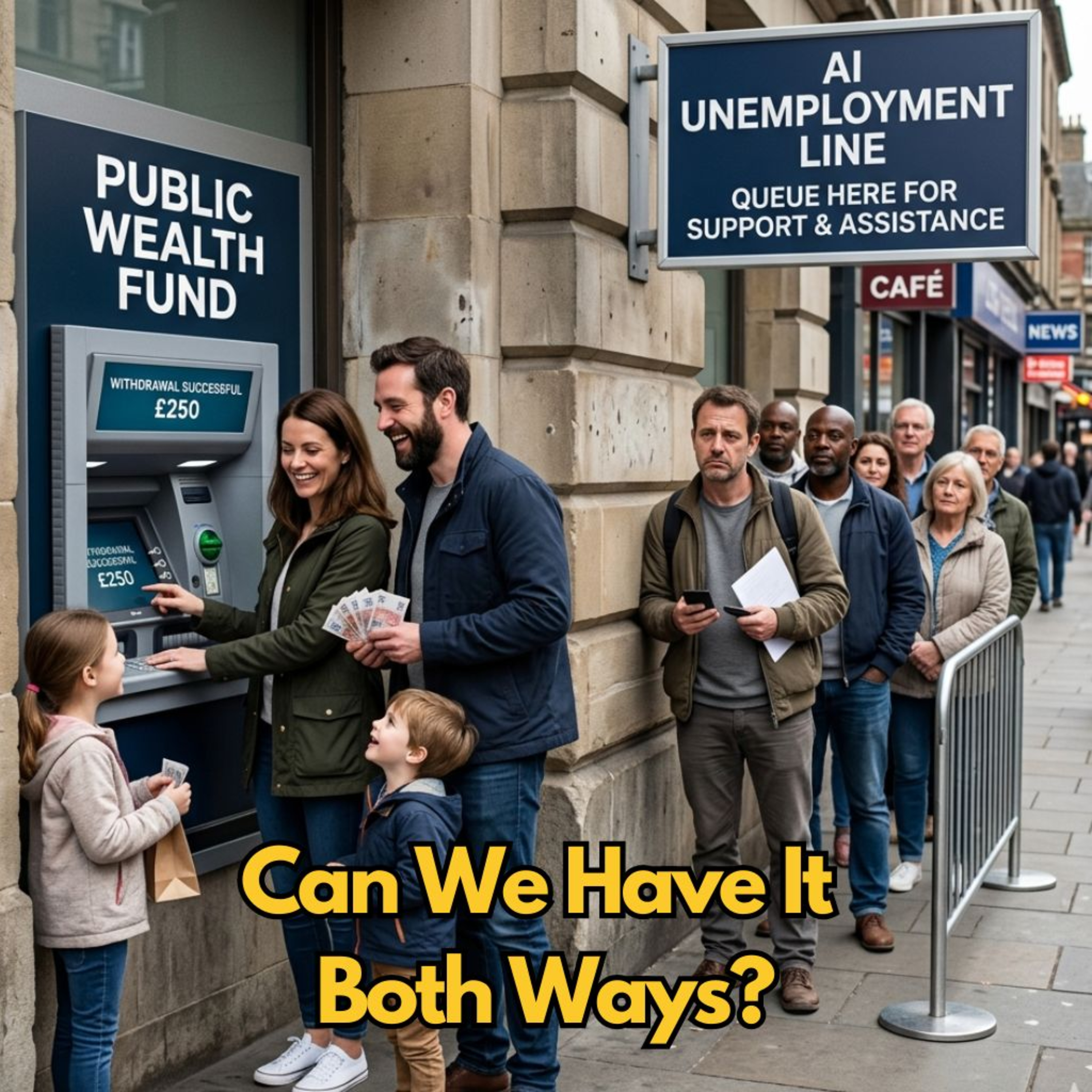
The Public Wealth Fund Conundrum
Apr 1200:31:02Tap to summarizeIn its new paper, OpenAI floats a striking idea for the intelligence age: a Public Wealth Fund. The premise is simple. If advanced AI creates enormous economic gains, those gains should not flow only to founders, major firms, and investors. A public fund could give every citizen a direct stake in AI-driven growth, with returns distributed broadly rather than captured narrowly. Paper: At first glance, the idea feels like a serious answer to one of AI’s biggest political problems. If AI makes the economy more productive while also disrupting jobs, reshaping industries, and concentrating power, then a shared fund offers a new kind of social contract. If the country gets richer from AI, ordinary people should feel that wealth too. But the idea does more than spread money around. It changes the emotional and political relationship between the public and the system causing the disruption. Once your household, your retirement, or your community starts benefiting from AI-driven returns, automation no longer feels like something happening over there. It starts to feel like a system you are partly invested in.That is where the deeper tension begins. A public dividend could make AI growth more legitimate and more broadly shared. But it could also make it harder to resist the damage AI causes, because the same system hollowing out a profession, reducing bargaining power, or thinning out a community is also sending value back to the public.The Conundrum: If AI wealth is widely shared through a public fund, society may finally solve one of the ugliest parts of technological change: a small group gets rich while everyone else is told to be patient. A shared dividend could make growth feel legitimate, reduce backlash, and give ordinary people a real stake in national prosperity.But it could also weaken one of the few forces that still slows bad transitions down. If the public is paid from the upside of automation, then layoffs, institutional thinning, and regional decline become harder to oppose cleanly. The question is no longer just whether change is fair. It is whether people can still judge that change clearly once they are being compensated by it. If AI can make every citizen a shareholder in disruption, should we see that as long-overdue shared prosperity, or as a system that quietly buys away the pressure to challenge what automation is doing to public life?
Transcribe →