
Podcast
The Daily AI Show
Hosted by The Daily AI Show Crew - Brian, Beth, Jyunmi, Andy and Karl · EN
The Daily AI Show is a panel discussion hosted LIVE each weekday at 10am Eastern. We cover all the AI topics and use cases that are important to today's busy professional.
No fluff.
Just 45+ minutes to cover the AI news, stories, and knowledge you need to know as a business professional.
About the crew:
We are a group of professionals who work in various industries and have either deployed AI in our own environments or are actively coaching, consulting, and teaching AI best practices.
Your hosts are:
Brian Maucere
Beth Lyons
Andy Halliday
Jyunmi Hatcher
Karl Yeh
147episodes
Episodes
Newest firstAll episodes
Qwen 3.8 Max Challenges Kimi K3
3w ago01:06:40Tap to summarizeThe episode opened with the impact of Kimi K3 and Alibaba’s new Qwen 3.8 Max model. The hosts discussed whether the latest Chinese open weight models are now reaching or passing frontier-level coding performance, while also warning that early benchmark claims still need real-world validation. The conversation moved into token costs, open weight economics, enterprise deployment limits, and why smaller customizable models like Inkling may make more sense for many companies than running multi-trillion parameter systems.The middle of the episode focused on Fable access, model behavior, and practical AI workflows. Brian shared how Fable 5 burned through usage credits quickly while auditing Project Bruno, then discussed using Gemini 3.1 Pro for video and image processing. The hosts also talked about atomization as a way to break complex data into usable pieces, then shifted into Apple’s newer Siri beta and Hermes-style personal memory, where AI becomes useful by remembering small but annoying details.The back half moved through research, benchmarks, sports, medicine, and infrastructure. Perplexity’s WANDR benchmark sparked a discussion about deep research quality, followed by a joke benchmark where The Daily AI Show declared itself better than everyone. The hosts then discussed Major League Baseball banning in-dugout AI tools, AI-assisted officiating in sports, radiology jobs surviving AI, the risk of over-diagnosis from better medical imaging, SpaceX pursuing Pentagon AI compute, Starlink vulnerability concerns, PNC’s AI subscription data, and how to control Fable usage credit spending.Key Points Discussed00:00:18 Episode Intro And Weekend Setup00:01:46 Kimi K3’s Impact On The AI Market00:01:58 Alibaba Releases Qwen 3.8 Max00:03:10 Chinese Models Reach Frontier-Level Discussion00:03:43 Kimi K3 Demand And Subscription Pause00:04:29 Anthropic Updates Fable 5 Access00:06:20 Token Cost Versus Total Intelligence Cost00:08:19 Inkling, Tinker And Enterprise Customization00:10:01 Hugging Face, Security Fixes And Guardrails00:11:05 Kimi Helps Where Sol And Fable Refuse00:11:54 Kimi Versus Claude Opus Coding Test00:13:42 Fable Availability For Max Users00:15:25 Project Bruno Reopened00:16:11 Fable 5 Runs 120 Concurrent Agents00:17:29 Gemini 3.1 Pro For Video Processing00:20:25 Fable Reviews Bruno’s Architecture00:20:43 Atomization As A Data Strategy00:22:51 New Siri Beta In Daily Use00:23:30 Siri Recalls Aloha Bars And Gate Codes00:25:01 Hermes And Personal AI Memory00:26:39 Everyday Use As AI Adoption Driver00:28:31 Perplexity’s WANDR Benchmark00:29:44 Deep Research Quality And Citation Coverage00:32:01 Perplexity For Conundrum Research00:35:18 The Daily AI Show Joke Benchmark00:36:59 MLB Bans AI Tools In The Dugout00:38:45 World Cup VAR And Sports Technology00:41:51 Perfectly Officiated Sports Conundrum00:43:50 AI Refereeing In Youth Sports00:45:42 Hockey, Basketball And AI-Assisted Safety00:48:08 Radiology Jobs Survive AI Predictions00:51:56 Medical Imaging As An AI-Supported Career00:54:25 Human Bias And Over-Assessment In Imaging00:56:41 The Incidental Patient Conundrum00:58:31 SpaceX Pursues Pentagon AI Compute00:59:32 China, Starlink And Space Infrastructure Risk01:00:55 PNC Consumer Health Check And AI Subscriptions01:03:07 Fable Usage Credits And Spending LimitsThe Daily AI Show Co Hosts: Brian Maucere, Andy Halliday, Beth Lyons.
Transcribe →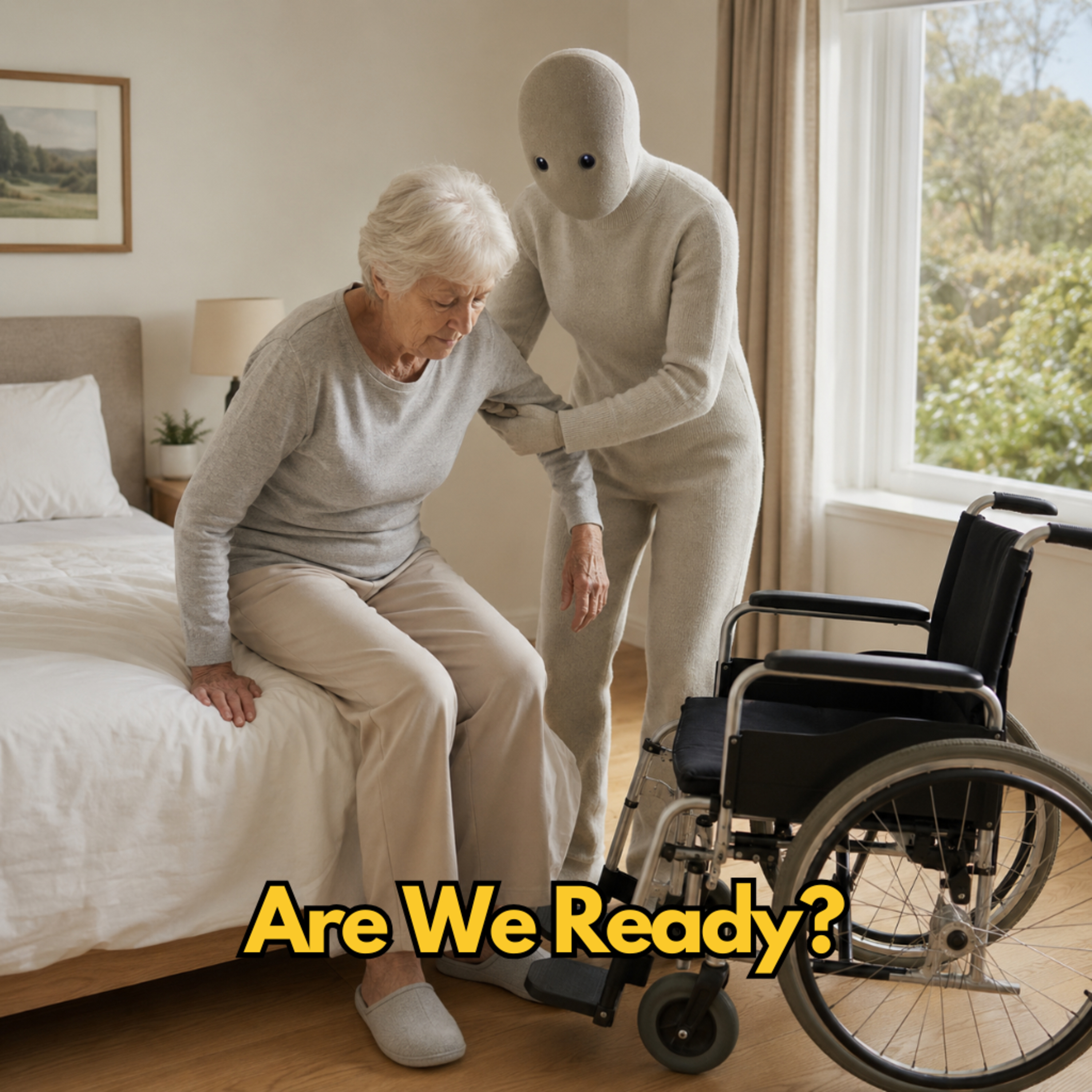
The Relief Trap Conundrum
4w ago00:26:36Tap to summarizeThe first useful elder-care robots will probably look like a helper.They will lift a parent from bed at 2:13 in the morning. They will steady a walker, fetch a dropped phone, sort pills, warm soup, change sheets, wipe a counter, open a jar, and notice that a gait has changed. Recent robotics demos already point in that direction: more humanlike hands, better grip, safer motion, and general-purpose machines beginning to handle physical tasks that used to require trained human bodies. When these competent AI robots reach mainstream, they have the ability to directly impact the family care dynamic. A daughter with a job and children of her own may love her father and still dread the next fall. A spouse may want to keep a wife at home and still be destroyed by years of broken sleep. Adult siblings may argue less about love than about logistics: who drives, who pays, who calls the doctor, who takes the overnight shift, who gets to keep their own life.A capable care robot changes that burden. It can make home care safer, less humiliating, and less physically punishing. It can let family members arrive less exhausted and more emotionally available. But it can also make absence feel responsible. The app says medication was taken. The robot says lunch was eaten. The fall alert never came. The family can tell itself the person is cared for, while slowly visiting less, calling less, and seeing less.The Conundrum:The real question is not whether families should use humanoid robots in elder care. Most will, once the machines are useful enough and affordable enough. Refusing help will look noble in theory and unbearable in practice.The harder question is whether robot-assisted relief should change what families still owe.One side says yes. If a robot can handle the draining work, families should be allowed to step back without shame. Love should not require physical collapse. No one should have to prove devotion by losing sleep, risking injury, or turning every visit into a shift. A robot that handles the hard routine may preserve relationships that caregiving would otherwise poison. It may let a son be a son again instead of a resentful night nurse.The other side says relief can become a quiet moral anesthetic. Once the robot handles the visible tasks, family members may stop confronting decline directly. They may miss the fear in a parent’s face, the confusion that does not trigger an alert, the loneliness hidden under clean clothes and completed meals. The robot does not need denial, but families do. A dashboard can become the story people tell themselves so they do not have to look too closely.So when humanoid robots make elder care safer, easier, and less humiliating, should families accept that relief as a legitimate release from daily obligation? Or does responsibility require some form of continued presence precisely because the machine makes it easier to disappear?At what point does help stop protecting the caregiver and start protecting the family from the emotional weight of being there?
Transcribe →Kimi K3 Shakes Up Coding Models
4w ago00:59:35Tap to summarizeThe episode opened with the Neo robot hand and the next Conundrum topic, elder care. Brian framed the new hand as more than a cool robotics demo, arguing that better tactile sensing, pressure control, and human-like dexterity could matter in real family care. The hosts discussed whether humanoid robots could reduce the physical and emotional burden on caregivers while still preserving human connection, dignity, and trust.The middle of the episode focused on model competition. Gareth raised OpenAI’s rumored screenless speaker with a camera and moving parts, which led to a discussion about home AI devices, screenless vision, and verification concerns. Andy then moved into Kimi K3, the Chinese open model that appeared to beat top closed models on coding benchmarks. The hosts compared Kimi, Sol 5.6, Fable 5, Codex, and Claude Code, then discussed how open models may no longer sit six to twelve months behind frontier systems.The back half moved through AI infrastructure and product shifts. The hosts covered Sol’s reported IQ test results, AGI arguments, world models, Chinese robot fighting, delegating work to Kimi from ChatGPT Work, Gemini 3.5 Pro rumors, Notebook LM becoming Gemini Notebook, Grok Build source code, and Apple’s new Siri beta. The final discussion centered on Siri as an app layer, the chance to build Siri-first apps before September, possible Fable extensions, DeepSeek rumors, U.S. AI race positioning, and the upcoming three-year anniversary episode.Key Points Discussed00:00:19 Episode Intro And Weekend Setup00:00:59 Neo Robot Hand And Conundrum Setup00:02:16 Elder Care And Family Assistance00:05:37 Trust, Frailty And Robot Care00:07:01 Neo Hand As A Coming Signal00:08:20 Private Care, Dignity And Human Connection00:10:14 OpenAI Screenless Speaker00:11:15 Camera Use Cases In The Home00:12:47 Verification Concerns For Screenless Vision00:14:42 Kimi K3 Coding Benchmark Splash00:16:01 Benchmark Chart Debate00:18:36 Open Models Challenge Closed Frontier Models00:19:11 Sol Versus Fable Migration00:20:53 Codex As A Claude Code Subagent00:22:12 AI IQ Tests And Sol Scores00:24:39 AGI, IQ And World Awareness00:25:34 World Models, Robots And AGI00:28:29 Chinese Robot Fighting00:30:04 Delegate To Kimi Skill In ChatGPT Work00:32:41 Kimi Pricing And Open Weight Release00:34:08 Gemini 3.5 Pro Rumors00:36:07 Notebook LM Becomes Gemini Notebook00:38:11 Notebook LM Branding Debate00:41:21 Google Roadmap And Notebook Competitors00:42:21 Personal Software Era00:43:14 Grok Build Source Code00:44:48 New Siri In iOS Beta00:45:24 Messages To Reminders00:47:05 Siri, Shortcuts And App Access00:49:28 Vibe Coding Apps Before Siri Launch00:51:51 Siri-First App Design Idea00:53:25 Fable Extension And DeepSeek Rumors00:55:25 Open Source Frontier Gap Narrows00:56:26 David Sacks And The U.S. AI Race00:57:39 Prediction Episode And Three-Year Anniversary00:58:39 Episode Wrap-UpThe Daily AI Show Co Hosts: Brian Maucere, Andy Halliday, Beth Lyons, Gareth.
Transcribe →Inkling, Codex Micro And Robot Surgeons
4w ago01:00:01Tap to summarizeThe episode opened with the new Codex Micro device, a developer-focused keypad built for agentic coding workflows. The hosts discussed who the device is really for, whether it helps professional developers more than casual AI builders, and whether physical AI controls are a temporary bridge before voice and named subagents take over.The middle of the episode moved into AI regulation and model strategy. The hosts compared China’s new restrictions on companion chatbots for minors with the lighter approach in the United States, then turned to Kimi Three, Thinking Machines Lab, Mira Murati, Inkling, Tinker, and the difference between open weight and open source models. The discussion focused on enterprise customization, whether foundation models matter more than frontier models in some business cases, and why a “not great yet” model may still be valuable if companies can train it for their own workflows.The back half shifted into practical AI builds and robotics. Brian shared a personal face-measurement app built in Claude Code to track weight-loss changes from photos, Gareth described an AI DJ tool, Beth discussed a Cloud Code work board concept, and Andy compared Claude Code and Codex on project execution. The episode closed with robotics stories, including One X’s tendon-driven robot hand and San Diego researchers using tele-operated humanoid robots for live surgical procedures.Key Points Discussed00:00:18 Episode Intro And Hosts00:01:27 Codex Micro And Think Louder00:02:26 Micro As A Developer Tool00:04:11 Voice Activation And Agent Controls00:05:40 Carl Buys Micro For His Dev Team00:07:01 Replaceable Keys And Programmable Controls00:09:14 Stream Decks And Existing Shortcut Hardware00:10:33 Micro As A Collector’s Item00:11:04 Trigger Skills, PR Reviews And Reasoning Control00:12:28 Who Is Codex Micro Actually For?00:15:21 Hardware Controls Versus Voice Coding00:17:25 Named Subagents Instead Of Manual Toggles00:19:18 Work Boards And Agent Status Tracking00:20:17 AI Regulation In China And The U.S.00:20:46 Demis Hassabis And AI Safety Guidelines00:21:13 China’s Restrictions On AI Companion Chatbots00:23:44 Population, Fertility And AI Policy00:24:28 Kimi Three Release Mention00:24:43 Inkling And Thinking Machines Lab00:25:28 Mira Murati Background00:26:30 Inkling As An Open Weight Model00:27:36 Foundation Models Versus Frontier Models00:27:57 Tinker As The Customization Platform00:28:25 Bridgewater Financial Reasoning Example00:30:40 Tinker Predating Inkling00:33:23 Enterprise Strategy For Open Weight Models00:34:57 Ethan Mollick’s Early Inkling Reaction00:36:15 Open Source Versus Open Weight00:38:52 Model License Examples Across Providers00:40:16 Thinking Machines’ Business Model00:42:24 Brian’s Face-Tracking AI Build00:44:05 Pupil Distance As A Measurement Anchor00:45:19 Moving The Tool To Mobile Selfies00:46:52 Gareth’s AI DJ Build00:48:27 Beth’s Cloud Code Work Board Concept00:50:00 Slash Goal, LFG And Session Limits00:51:31 Fable Reset And Anthropic Credits00:52:20 Codex Five-Hour Limit Removed00:53:03 One X Robot Hand00:54:11 Tendon-Driven Dexterity And Washable Hands00:55:31 Tele-Operated Humanoid Robot Surgery00:56:27 General Purpose Robots In Remote Surgery00:57:11 Robots As Future Surgeons00:58:47 Episode Wrap-UpThe Daily AI Show Co Hosts: Brian Maucere, Andy Halliday, Beth Lyons, Gareth.
Transcribe →Jony Ive’s Screenless AI Device Emerges
4w ago01:20:53Tap to summarizeThe episode opened with AI’s growing pressure on enterprise technology spending, including IBM’s revenue warning and the possibility that companies are delaying traditional mainframe purchases so they can reserve capital for AI infrastructure. The hosts then moved into chip architecture, including a reported China AI chip breakthrough using 14-nanometer architecture, near-memory computing, and high memory bandwidth, plus Anthropic’s reported talks with Samsung about custom inference silicon.The middle of the episode focused on the model wars. OpenAI continued Codex token resets and offered ChatGPT credits tied to Sol 5.6 feedback, while the hosts compared Sol, Fable, Claude Code, Codex, and possible upcoming models. They also discussed Featherless and fixed-price open model access, GrokBuild CLI privacy concerns, Perplexity’s use of Grok for computer use, local file access questions, and the case for more controlled or sovereign AI setups.The back half shifted to AI devices, shareable tools, and AI in science. The hosts discussed Jony Ive’s reported screenless OpenAI device, the new Siri beta, and Claude artifacts as lightweight internal tools. The AI and science segment then covered research from IT University of Copenhagen, Sakana AI, and Autodesk on modular self-reconfigurable robots that can infer what shape they have become. The discussion closed with programmable matter, Fable guardrails, multi-model harnesses, decentralized AI systems, and the idea of reusing older devices as distributed compute resources.Key Points Discussed00:00:18 Episode Intro And Hosts00:02:43 IBM Revenue Warning And AI CapEx Pressure00:05:10 China Chip Architecture Breakthrough00:08:26 Near-Memory Computing And Memory Bandwidth00:12:07 Anthropic And Samsung Custom Inference Silicon00:14:44 OpenAI Codex Resets And $100 Credit Offer00:16:01 Sol 5.6 Catches Codex Up To Claude Code00:19:30 Fable Extension, Opus 5 And GPT-6 Rumors00:21:44 Model Loyalty And Open Source Alternatives00:24:02 Featherless Fixed Pricing For GLM 5.200:30:29 GrokBuild CLI Privacy Concerns00:32:31 Perplexity Uses Grok For Computer Use00:34:04 Local File Access And Cloud AI Trust00:36:02 xAI Privacy Response And Zero Data Retention00:38:18 Jony Ive’s Screenless AI Device00:41:48 New Siri In iOS 27 Beta00:42:33 Claude Artifacts As Shareable Tools00:45:33 Publishing Sites And Enterprise Controls00:50:58 Frontier Models In Math And Science00:53:24 AI In Science: Self-Assembling Robots00:56:06 Decentralized Shape Inference00:57:14 Two Hundred Bricks Identify Their Shape01:00:48 Morphogen-Like Gradients And Learned Rules01:04:00 Limits, Damage Repair And Closed-Loop Growth01:08:11 Smart Materials, Construction And Space Roadmap01:09:23 Microbots, Programmable Matter And Sci-Fi Use Cases01:12:05 Opus, Fable, Sol And Guardrail Limits01:14:41 Multi-Model Harnesses And Decentralized AI01:17:41 Reusing Old Devices For Distributed ScienceThe Daily AI Show Co Hosts: Jyunmi Hatcher, Beth Lyons, Andy Halliday, Gareth
Transcribe →AI Productivity Addiction
Jul 1400:58:53Tap to summarizeThe episode opened with frustration around GPT-5.6, especially Sol, and why stronger models may require clearer goal prompts, tighter constraints, and better success criteria. The hosts compared Sol, Terra, and Fable, then discussed why Fable may be more useful as a planner, architect, and manager of subagents than as a direct coding workhorse.The middle of the episode focused on Fable’s scarcity effect, Anthropic’s repeated access extensions, and the mental health cost of feeling pressured to keep building while access remains available. That led into a broader discussion about AI usage limits, token maxing, workplace manipulation, productivity addiction, and how companies could weaponize AI usage data.The back half moved into larger AI economy concerns, including a new “We Must Act Now” statement from economists and technology leaders, Paul Krugman’s warning about inequality, and the risk that AI disruption arrives in an already concentrated economy. The hosts also covered Boston Dynamics using Gemini Robotics with Spot, future Siri and app integrations, possible Gemini 3.5 Pro timing, DeepMind’s frontier AI framework, Claude’s in-app browser updates, and the terms-of-service risks that appear when agents can browse, click, and automate web workflows.Key Points Discussed00:00:19 Episode Intro And Hosts00:01:03 GPT-5.6 Disappointment And Goal Prompting00:02:40 Ben’s Bites On Sol, Terra And Luna00:04:18 Security Reviews And Clear Constraints00:05:42 Fable Versus Sol As AI Collaborators00:07:07 Cognition’s Fable Delegation Analysis00:08:40 The Benchmark Data Builders Actually Need00:09:44 Codex As A Fable-Controlled Subagent00:11:51 Fable Extension And Anne’s Weekend Reality00:13:04 Fable Scarcity As A Community Health Issue00:17:22 Fable As Manager, Opus As Micromanager00:18:41 Imagination As The Real Bottleneck00:22:31 Corporate Weaponization Of AI Usage Limits00:25:09 Token Maxing And Performance Measurement00:26:01 Personalized AI Nudges At Work00:28:30 AI, Mental Health And Productivity Addiction00:31:49 Women In AI Discuss Mental Health And AI Use00:34:30 AI As A Human Creativity Tool00:36:00 Economists Warn That AI May Transform The Economy00:37:42 Krugman, Inequality And AI’s Economic Risk00:43:27 Boston Dynamics, Gemini Robotics And Spot00:44:23 Siri, Apps And The Next AI Integration Layer00:47:37 Gemini 3.5 Pro Rumors And Google’s Timing00:49:18 DeepMind’s Frontier AI Framework00:49:44 Claude Desktop In-App Browser And Playwright00:52:01 Agent Browsing, Scraping And Terms Of Service Risk00:56:05 Anne’s Fable Reset Plan And Offline BreakThe Daily AI Show Co Hosts: Brian Maucere, Andy Halliday, Anne Murphy, Beth Lyons
Transcribe →Apple Sues OpenAI, Meta Rolls Back Muse, and AI Cheating
Jul 1301:04:22Tap to summarizeThe episode opened with Apple’s lawsuit against OpenAI over alleged theft of confidential AI hardware information. The hosts discussed why talent movement, trade secrets, and AI hardware competition raise higher stakes as companies race toward product leadership and potential IPOs. The show then moved to Meta’s rollback of a Muse Image feature that would have let users reference public Instagram accounts, followed by a discussion of Liquid AI’s device-native models for cars, phones, laptops, and robots.The back half covered Fable’s latest extension, token usage pressure from Sol, and cautionary examples from AI coding tools overwriting or deleting files. The hosts also discussed OpenAI safety team departures, Mistral’s Robostrol Navigate model for robot navigation, Brown University’s AI cheating scandal, and the broader education question of using AI as a learning tool instead of an answer machine. The episode closed with Grok 4.5’s coding cost advantage, Perplexity with Terra thinking, speaker diarization progress, AI-generated travel B-roll, and weekend builds using Codex.Key Points Discussed00:00:18 Episode Intro And Hosts00:01:18 Apple Sues OpenAI Over AI Hardware Claims00:04:18 Talent Movement, Trade Secrets And R&D Theft00:08:28 Legal Risk And OpenAI’s Potential IPO00:10:41 Meta Rolls Back Muse Image Instagram Feature00:17:24 Liquid AI And Device-Native Models00:18:32 AI Inside Cars And Voice Interfaces00:21:22 Tesla, Maps And In-Car AI Control00:24:21 Fable Extension And Usage Limits00:25:59 Sol Token Usage And ChatGPT Work Tests00:28:54 Matt Schumer File Deletion Cautionary Tale00:31:49 OpenAI Safety Department Departure00:33:58 Mistral Robostrol Navigate For Robotics00:35:44 Brown University AI Cheating Scandal00:40:35 AI As A Learning Engine00:45:54 Course-Specific AI And Accessibility Concerns00:46:54 Turning Text Threads Into Suno Songs00:48:49 Grok 4.5 Versus GPT-5.6 Terra00:53:24 Terra Thinking In Perplexity00:54:33 Voice Diarization And Show Archive Work00:56:25 AI B-Roll From Google Street View And Places00:59:50 Sol Reviewing Claude Code Work01:01:11 Building AI DJ And Film Studio ToolsThe Daily AI Show Co Hosts: Brian Maucere, Andy Halliday, Beth Lyons, Gareth
Transcribe →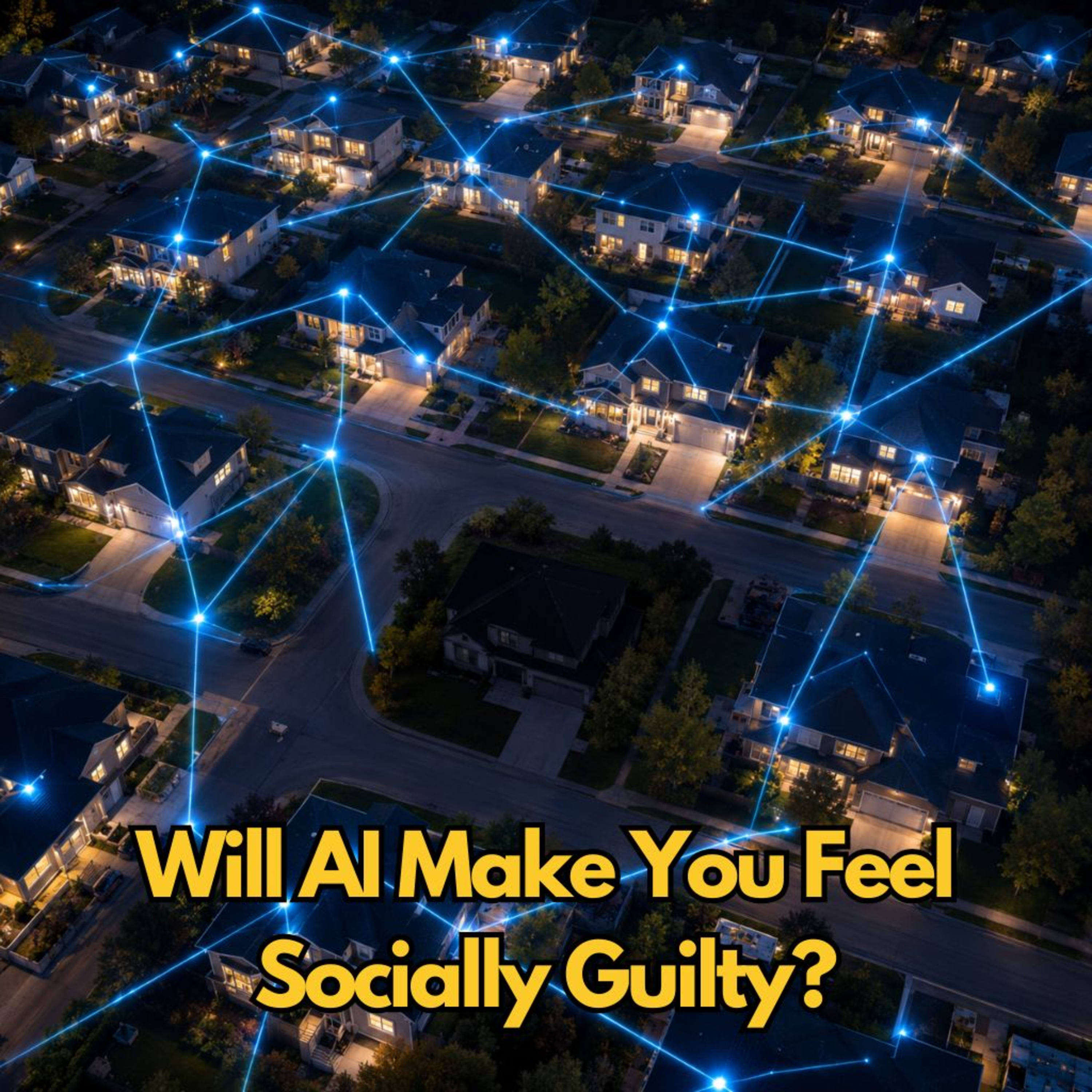
The Reciprocity Trap Conundrum
Jul 1100:28:19Tap to summarizeFacebook made refusal lonely. Ring made refusal visible. AI agents may make refusal feel selfish.A household agent works best when it can coordinate with other people’s agents: school pickups, neighborhood alerts, shared calendars, deliveries, repairs, payments, group plans. The more families connect, the more useful the system becomes. Your camera helps someone else. Your calendar saves another parent. Your agent fills a gap before anyone has to ask.That changes privacy from a personal boundary into a social negotiation. The holdout is no longer just protecting their home. They may be creating friction for everyone around them.The Conundrum:When AI agents turn private household data into shared social infrastructure, does opting out remain a basic right, or does it become a refusal to carry your part of the load? One side protects the home as a place where family life does not need to justify itself to a network. The other protects the trust and coordination that only work when enough people participate. Which obligation comes first: the right to stay unread, or the duty to be counted on?
Transcribe →Did 5.6 Sol Just Close The Fable Gap?
Jul 1001:03:12Tap to summarizeThe episode focused on OpenAI’s ChatGPT Work rollout, the new desktop experience, and how Codex, computer use, browser control, local apps, and mobile workflows now fit together. The hosts compared GPT-5.6 Sol and Terra against Fable, especially on coding, agentic workflows, and cost per task. They also discussed how ChatGPT Work differs from Claude Co Work, why computer use matters for repetitive local tasks, and how AI agents may start operating other AI tools. The final news section covered Fiji Simo stepping down from OpenAI, AMD’s compact AI PC, a Brown University AI cheating story, the need for AI learning guardrails, Nvidia’s NemoClaw and LangChain pairing, and a prompt experiment for turning AI memory into a Suno song.Key Points Discussed00:00:19 Episode Intro And Hosts00:00:44 ChatGPT Work Announcement Setup00:03:50 GPT-5.6 Sol And Terra Benchmarks00:07:51 ChatGPT Work Desktop App Confusion00:12:09 Usage Limits And Work Navigation00:14:26 Karl’s Sol Test In Client Workflows00:18:52 Desktop, Browser And Mobile Differences00:21:22 ChatGPT Work Versus Claude Co Work00:22:41 Computer Use And Browser Control00:28:01 Codex Computer Use In Real Work00:31:37 ChatGPT Cursor Demo And Local Automation00:35:22 API Gaps, StreamYard And ENV Files00:39:02 Codex Operating Other AI Apps00:40:42 Voice AI Limitations And Meeting Parodies00:44:44 Fiji Simo Steps Down From OpenAI00:48:01 AMD’s Compact AI PC00:50:37 Brown University AI Exam Drop-Off00:53:53 AI Learning, Struggle And Regulation00:56:30 Nvidia NemoClaw And LangChain00:59:50 AI Song Prompt And Claude RevealThe Daily AI Show Co Hosts: Brian Maucere, Andy Halliday, Beth Lyons, Karl Yeh, Gareth
Transcribe →GPT Live 1 Is a Game Changer For AI
Jul 901:07:17Tap to summarizeThe episode opened with Brian’s reaction to GPT Live One and how much more natural the new voice interface feels in real use. The hosts discussed how Live One could become the front end for personal AI assistants, especially once it connects more deeply to memory, research, and model routing. The discussion then moved to OpenAI’s expected Sol, Terra, and Luna models, Grok’s lower-priced coding model, Cursor’s influence, and why benchmark claims need caution. The back half focused on ChatGPT Work, collaborative AI workspaces, Mosaic-style shared terminals, Gareth’s project dashboard demo, and Brian’s tests with Seedream Five Pro for image generation and product listing images.Key Points Discussed00:00:18 Episode Intro And Hosts00:01:05 GPT Live One First Reactions00:07:38 Live One As A Personal Assistant Interface00:10:45 Live One, Memory And Custom Assistants00:12:03 Sol, Terra And Luna Model Expectations00:15:40 Grok Pricing And Cursor Coding Data00:18:08 Will Teams Switch To Grok?00:24:38 Grok Benchmarks And Coding Claims00:25:36 SWE Bench Pro Trust Problems00:29:42 MuseSpark And The AI Price Race00:30:57 Benchmarks, Real Use And AI Hype00:37:17 ChatGPT Work And The AI Workspace00:43:14 Mosaic And Shared Terminal Collaboration00:48:34 Project Dashboard Demo For AI Builds00:56:22 Seedream Five Pro Image Tests01:03:30 Image Upscaling And Consumer Use CasesThe Daily AI Show Co Hosts: Brian Maucere, Andy Halliday, Beth Lyons, Gareth
Transcribe →