
Podcast
The Daily AI Show
Hosted by The Daily AI Show Crew - Brian, Beth, Jyunmi, Andy and Karl · EN
The Daily AI Show is a panel discussion hosted LIVE each weekday at 10am Eastern. We cover all the AI topics and use cases that are important to today's busy professional.
No fluff.
Just 45+ minutes to cover the AI news, stories, and knowledge you need to know as a business professional.
About the crew:
We are a group of professionals who work in various industries and have either deployed AI in our own environments or are actively coaching, consulting, and teaching AI best practices.
Your hosts are:
Brian Maucere
Beth Lyons
Andy Halliday
Jyunmi Hatcher
Karl Yeh
149episodes
Episodes
Newest firstAll episodes
Pope Leo’s AI Warning
May 2501:05:09Tap to summarizeBeth Lyons and Andy Halliday open with a long discussion of Pope Leo’s newly released AI encyclical and what it says about human dignity, accountability, and autonomous weapons. They connect that theme to OpenAI’s original mission, AI safety funding, and broader questions about whether “AI for humanity” really includes everyone. The conversation then shifts to Anthropic’s reported valuation, competitive pressure from China and Google, and the economics of frontier AI. In the back half, they cover Google DeepMind’s AlphaProof Nexus math results, Beth’s overnight experiments with G-Brain and Hermes, Jasper-style personal agents, and a viral AI-generated song.Key Points Discussed00:00:20 Pope Leo’s AI Encyclical00:11:54 OpenAI Mission and AI Safety00:17:18 What “All Humanity” Means00:33:13 Anthropic Valuation and AI Economics00:46:20 AlphaProof Nexus and Math Reasoning00:50:39 Beth’s G-Brain and Hermes Setup00:57:36 Personal Agents, Hermes, and Jasper00:59:05 Viral AI Music AcceptanceThe Daily AI Show Co Hosts: Beth Lyons, Andy Halliday
Transcribe →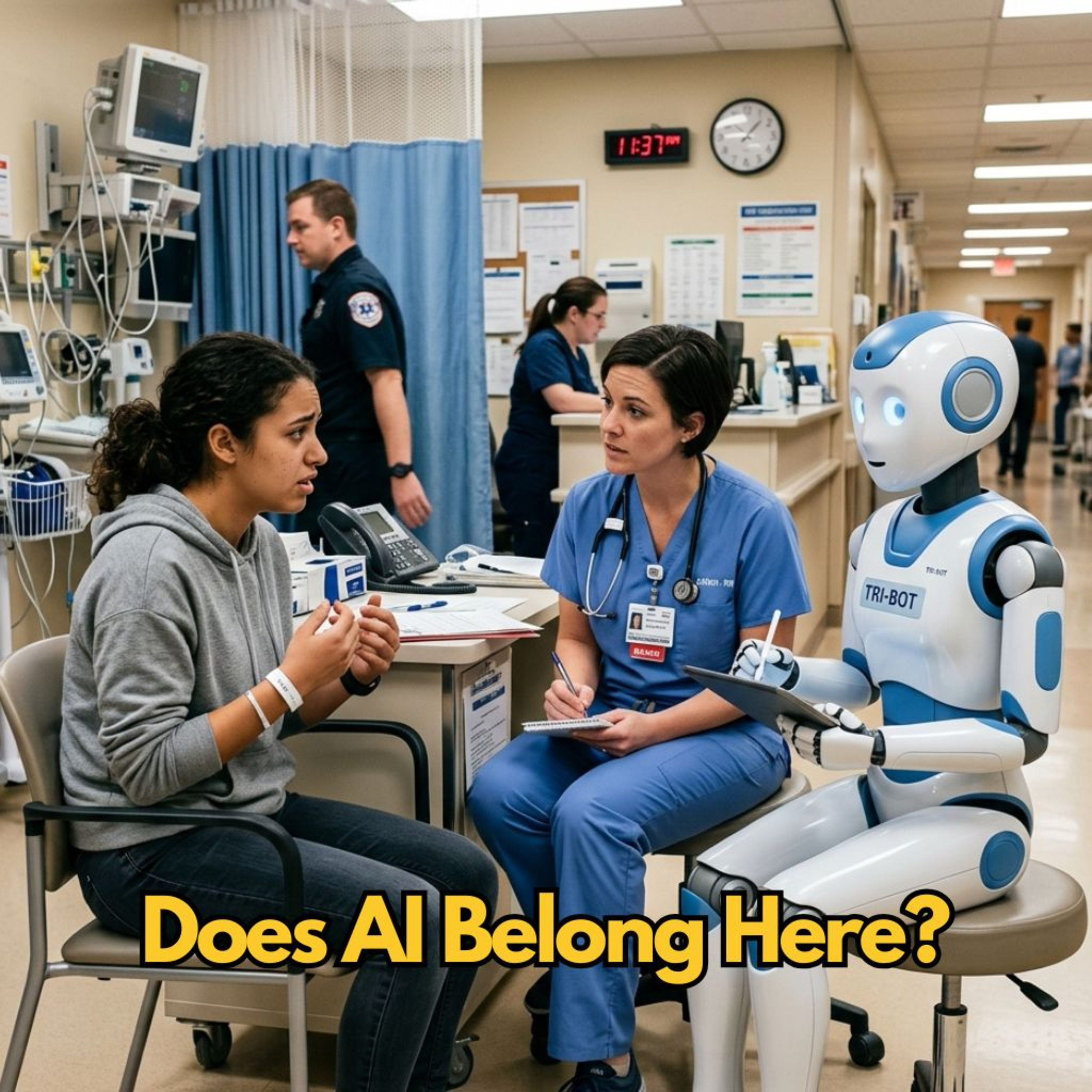
The Ambient Witness Conundrum
May 2300:29:47Tap to summarizeMedicine has always depended on observation. In an emergency department, being watched is part of being cared for. A nurse notices breathing, skin color, confusion, pain, panic, silence, or a family member saying something the patient forgot to mention. In that setting, attention is not intrusion by default. It is often the thing that keeps someone alive.AI changes what observation becomes. A sentence that once disappeared after a nurse heard it can now be captured, processed, summarized, and placed into the medical record. A conversation that once helped one clinician understand one patient can become part of a larger operational system. That may help nurses spend less time typing and more time looking at patients. It may also make care more continuous, especially when shifts change and details get lost.The old consent logic starts to break in the ER. A sign on the wall or an opt-out notice assumes people are calm enough to understand the tradeoff. Many are not. They are scared, sick, medicated, embarrassed, translating for a parent, trying to remember symptoms, or deciding what to say in front of a child. At the same time, stopping every clinical interaction to negotiate recording may slow down the very care people came to receive.The Conundrum:One side says hospitals should be allowed to make ambient AI listening a normal part of care, as long as the system is disclosed, secured, reviewed by clinicians, and limited to documentation or clinical use. The patient came to be observed. If a passing comment, a change in tone, or a repeated complaint helps staff understand what is happening, ignoring that signal can become its own kind of failure. In a crowded ER, privacy is not the only value at stake. Missed information has a cost too.The other side says a hospital visit should still leave room for unrecorded speech. Patients and families say things in medical spaces that are raw, confused, legally sensitive, emotionally private, or simply human. If every word might become data, people may start managing themselves instead of speaking freely. Opting out also puts the burden on the person with the least power in the room, at the moment when they most need help.Once AI turns bedside conversation into clinical infrastructure, what should carry more weight: the hospital’s duty to observe what might improve care, or the patient’s right to have some words disappear after they are spoken?
Transcribe →Codex Works While You Sleep
May 2201:05:05Tap to summarizeThe hosts focused on long-running AI agents, including Codex updates, Google Spark, and Google’s Agent Executor for persistent agent workflows. They discussed new Codex features such as AppShots, Goal Mode, locked-computer use, remote access, and the security risks that come with more powerful agents. The conversation moved into open source malware, the end of Hux, Gareth’s Jasper personal agent, voice latency, Thinking Machines, and ClickUp’s AI-related layoffs. The episode closed with AI model review policy, California AI severance ideas, political narratives around data centers, and the need for HR involvement in workplace AI.Key Points Discussed00:00:17 Welcome and Show Setup00:01:28 Long-Running Agents and Codex00:03:34 Google Agent Executor and Kubernetes00:12:36 Codex AppShots, Goal Mode, and Locked Use00:18:55 Remote Codex Control and Phone Security00:25:54 Open Source Malware and Repo Security00:29:17 Hux Shutdown and Google Daily Briefing00:32:16 Jasper Personal Agent00:36:01 Voice Latency and Thinking Machines00:42:40 ClickUp Layoffs and AI Hiring00:50:14 Federal AI Model Review00:52:24 California AI Severance Safety Nets00:57:05 AI Politics and Data Center Claims00:59:48 HR, AI, and Workplace Mental HealthThe Daily AI Show Co Hosts: Beth Lyons, Andy Halliday, Karl Yeh
Transcribe →Google I/O’s Developer Backlash?
May 2100:58:30Tap to summarizeThe hosts opened by revisiting Google I/O day two, with attention on developer tools, Anti-Gravity, SDKs, CLI updates, and agentic coding workflows. They debated whether AI coding assistants weaken developer skills or help more people build software, then connected that to Meta’s layoffs, keystroke tracking, and ownership of workplace knowledge. The discussion moved into BrightEdge referral traffic, Gemini’s growing share of AI-driven web referrals, Anthropic’s enterprise momentum, and possible IPO paths for SpaceX, OpenAI, and Anthropic. The episode closed with more Google I/O developer updates, TPU hardware, and a discussion of Google’s internal “build cool stuff” culture.Key Points Discussed00:00:17 Welcome and Show Setup00:01:31 Google I/O Day Two Developer Focus00:02:40 Anti-Gravity and Developer Pushback00:03:49 AI Coding Agents and Skill Loss00:17:01 Meta Keystroke Tracking and Layoffs00:27:48 BrightEdge AI Referral Traffic00:29:17 Anthropic Profitability and Enterprise Momentum00:36:58 SpaceX, OpenAI, and Anthropic IPOs00:44:38 Anthropic’s Frontier AI Conversation00:46:15 Google I/O Developer Stack Updates00:49:00 Google Fireside Chat and Build CultureThe Daily AI Show Co Hosts: Brian Maucere, Beth Lyons, Andy Halliday
Transcribe →Google I/O Day 1 Recap
May 2001:28:04Tap to summarizeThe hosts focused heavily on Google I/O and how Google is integrating AI across search, Gemini, Workspace, YouTube, creative tools, developer tools, and future hardware. They discussed Gemini models, Omni, Spark-style agents, Google Pix editing, video generation workflows, pricing tiers, Ask YouTube, glasses, DeepMind research tools, SynthID, and a live AI search demo. The conversation later shifted to Andrej Karpathy joining Anthropic and what it signals about frontier model talent. Jyunmi closed with an AI science segment on Columbia and MIT using generative AI to redesign ribosomes around nineteen amino acids.Key Points Discussed00:00:19 Welcome and Show Setup00:00:57 Google I/O Recap and AI Integration00:05:35 Gemini Models and Omni00:13:16 Gemini Spark Personal Agents00:21:23 Google Pix Creative Editing00:25:47 Availability, Pricing, and Ask YouTube00:29:13 Omni Video and Flow Storyboards00:43:34 DeepMind R&D and Science Tools00:51:59 AI Studio, SynthID, and Developer Tools00:54:37 Google Search Antigravity Demo00:59:25 Karpathy Joins Anthropic01:12:02 AI Science and Nineteen Amino AcidsThe Daily AI Show Co Hosts: Jyunmi Hatcher, Brian Maucere, Andy Halliday, Karl Yeh
Transcribe →Will Meta’s AI Layoffs Backfire?
May 1900:59:45Tap to summarizeThe hosts opened with a Google I/O preview before moving into Meta’s reported AI-focused reorganization, layoffs, and the broader question of whether AI cuts actually produce ROI. They discussed AI-related stock reactions, employee disruption, and how graduates are reacting to AI’s impact on entry-level career paths. Beth introduced a DeepMind resignation post focused on model evaluations and the challenge of measuring emerging capabilities. The show also covered Google Omni science videos, a HeyGen avatar demo, OpenAI product consolidation under Greg Brockman, NVIDIA’s Hermes Agent support, Anthropic Mythos coding benchmarks, and Elon Musk’s court loss.Key Points Discussed00:00:18 Welcome and Show Setup00:01:30 Google I/O Keynote Preview00:03:28 Meta AI Layoffs and Gartner ROI00:18:16 AI Backlash at Commencements00:25:37 DeepMind Resignation and AI Evals00:34:36 Google Omni Science Videos00:36:17 HeyGen Avatars and Uncanny Valley00:53:42 OpenAI Product Consolidation00:55:16 NVIDIA Endorses Hermes Agent00:56:38 Mythos Coding Benchmarks00:58:28 Elon’s OpenAI Court LossThe Daily AI Show Co Hosts: Brian Maucere, Beth Lyons, Andy Halliday
Transcribe →AI Is Listening In Hospitals Now?
May 1800:57:45Tap to summarizeThe hosts opened with several AI news stories from the weekend, beginning with Mayo Clinic’s use of ambient AI listening in medical settings and the privacy tradeoffs around triage. They discussed how labeling something “AI” changes public reaction, using an AI art/Monet example and a Bitcoin wallet recovery story. The conversation then shifted to Google I/O expectations, Gemini updates, Android XR glasses, Meta’s AI trust issues, and ChatGPT-style banking integrations. The episode closed with Apple/Siri frustrations, OpenAI integration concerns, and a cautionary vibe-coding example involving Jasper.Key Points Discussed00:00:17 Welcome and Show Setup00:01:30 Mayo Clinic Ambient AI Listening00:17:21 AI Labels, Monet, and Perceived Value00:19:52 AI Unlocks Old Bitcoin Wallet00:23:26 Google I/O and Gemini Preview00:33:18 Meta’s Avocado Model and Trust Issues00:38:54 ChatGPT Banking and Financial Data Risk00:50:55 AI Layoffs and Stock Impact Tease00:52:02 ChatGPT, Siri, and Apple AI Frustrations00:54:23 Vibe Coding and Jasper MistakesThe Daily AI Show Co Hosts: Brian Maucere, Beth Lyons, Andy Halliday
Transcribe →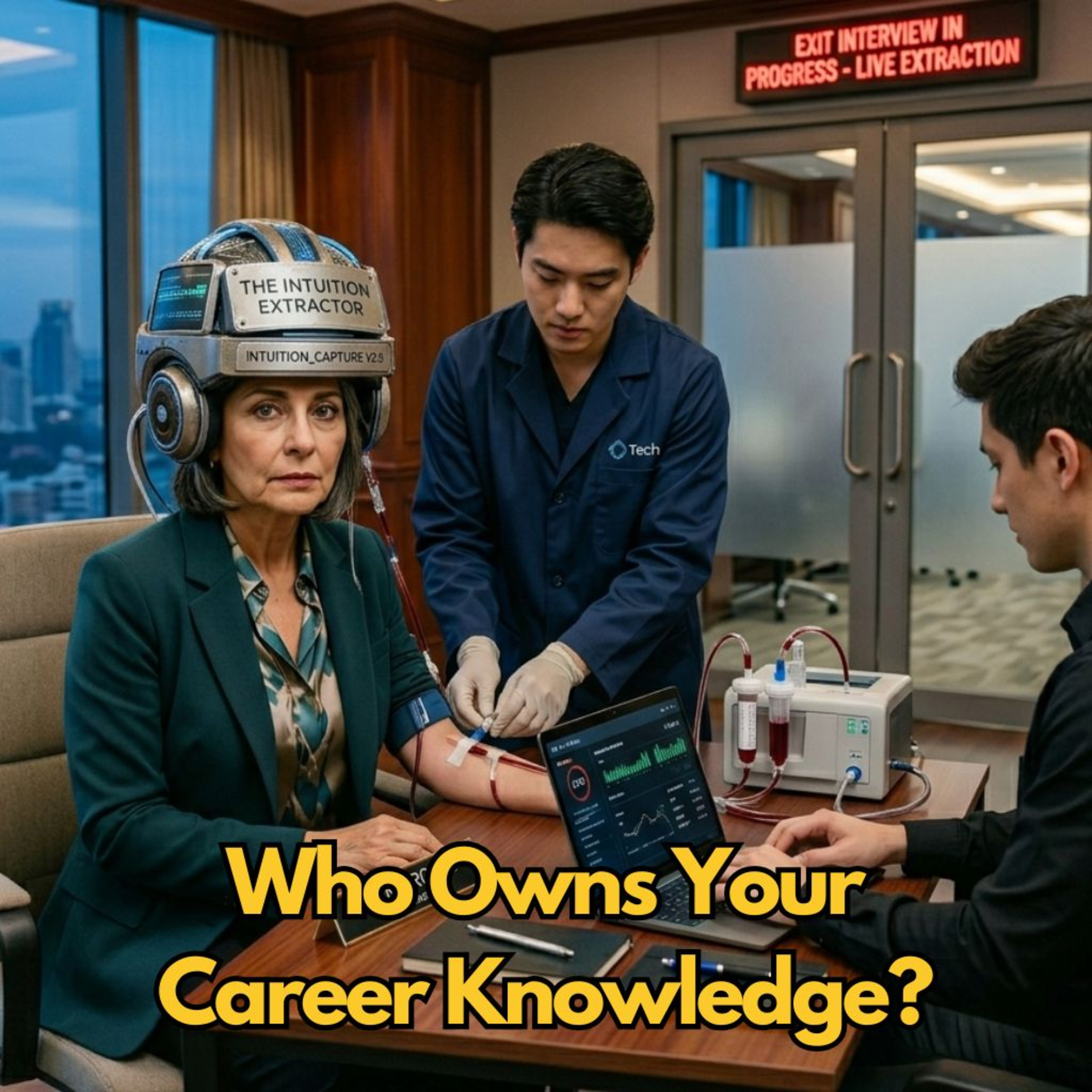
The Exit Value Conundrum
May 1600:25:28Tap to summarizeSome of the most valuable knowledge inside a company never lived in a handbook. It lived inside people. The sales leader who knows which client concern is fake and which one signals real risk. The operations veteran who can spot a future failure from one odd metric. The nurse, engineer, producer, or manager whose judgment comes from twenty years of accumulated mistakes, patterns, and edge cases.AI gives companies a way to capture that knowledge before it walks out the door. A firm can now ask a senior employee to let an internal system absorb their reasoning, decisions, language, relationships, and instincts so the company keeps benefiting after they retire or resign. The company will say that is just a smarter version of documentation. The employee may see something very different: not knowledge transfer, but the creation of a permanent asset built from a life’s work.The conundrum: There are two legitimate pulls here. A company does invest in the environment where much of that knowledge was formed. It paid the salary, gave access to the clients, built the teams, and took the business risk. From that view, preserving expertise for the next generation is a reasonable extension of the job. But from the worker’s side, salary paid for labor performed in time, not for the right to build a digital stand-in that keeps producing value after the person has left. Once that line disappears, expertise stops being something you carry with you and starts becoming something extracted from you before you go.So when a person’s years of judgment can be turned into a company asset that keeps working after they leave, what should count as fair: treating that transfer as part of the job the company already paid for, or recognizing an exit value the worker has the right to sell, refuse, or license on their own terms?
Transcribe →Cerebras IPO Challenges NVIDIA Chip Dominance
May 1501:01:45Tap to summarizeToday's AI news lineup: the Cerebras IPO and wafer-scale inference engine, the Codex mobile app arriving through ChatGPT, span-of-control limits for managing agent swarms, the Figure robot livestream with Rose, Bob, and Frank, AI voice-cloning scams and family code words, a Microsoft 100-agent swarm taking down the Mythos threat actor, Mythos exploiting Apple M5 memory integrity, and a $650M raise for Recursive Superintelligence.A Friday rundown that opened with Cerebras going public and a deep look at how its wafer-scale architecture rewrites the inference cost curve against NVIDIA, AMD, and Intel. The conversation moved into practical agent management — why three to eight agents per operator mirrors firefighting span-of-control doctrine — before turning to a Figure humanoid livestream and a personal voice-cloning scam story that argued for family code words. Cybersecurity dominated the back half, with Microsoft fielding a 100-agent swarm against the Mythos model and fresh reporting on a Mythos-driven Apple M5 memory-integrity exploit. The episode closed on Recursive Superintelligence, the new lab raising $650M at a $4B valuation to build self-improving systems, and the Hinton warning that arrives with that name.KEY POINTS DISCUSSED:00:00:00 Cold Open Hooks00:00:26 Open and Cerebras IPO News00:01:55 Cerebras Wafer Scale Engine Explained00:17:44 Codex Mobile App via ChatGPT00:28:41 Managing Agent Swarms and Span of Control00:33:57 Figure Robot Livestream: Rose, Bob, Frank00:41:17 AI Scams, Voice Cloning, Family Code Words00:48:28 Microsoft 100-Agent Swarm Beats Mythos00:50:52 Mythos Exploits Apple M5 Memory Integrity00:53:07 Recursive Superintelligence and Hinton Warning00:57:45 Weekend Wrap and Community InvitationThe Daily AI Show Co Hosts: Brian Maucere, Andy Halliday, Beth Lyons, Gareth Hood
Transcribe →Anthropic Overtakes OpenAI on Revenue
May 1501:04:35Tap to summarizeToday's AI news roundup: Anthropic's $50B run rate and Claude for SMB, Apple agents in the App Store, Adaption's AutoScientist, and Cerebras' IPO day.The show opened with a recap of a recent European trip and how Google Maps' Ask AI handled cross-country travel like a native guide. From there the conversation moved into the business of AI, with and a new small-business offering aimed squarely at where the money actually lands. The back half pulled the threads forward: agents distributed through the App Store, recruiting firms training agents instead of placing humans, humanoid robots sorting packages, and a research startup automating model customization with AutoScientist. The episode closed on Cerebras going public, why speed and intelligence are not the same axis, and a teaser on KV cache for tomorrow.KEY POINTS DISCUSSED:00:00:00 Brian Returns from European Cruise00:02:01 Google Maps Ask AI Across Europe00:07:42 Anthropic Revenue Surpasses OpenAI00:09:58 Claude for Small Business Launch00:27:42 100th Newsletter and 700-Show Retrospective00:30:12 Apple Agents Coming to the App Store00:34:38 Recruiting Agents and Humanoid Package Sorters00:42:53 Adaption AutoScientist and Ineffable Intelligence RL00:53:01 Cerebras IPO, Speed vs Intelligence, KV CacheThe Daily AI Show Co Hosts: Andy Halliday, Beth Lyons, Brian Maucere, Gareth Hood
Transcribe →