
Podcast
The Daily AI Show
Hosted by The Daily AI Show Crew - Brian, Beth, Jyunmi, Andy and Karl · EN
The Daily AI Show is a panel discussion hosted LIVE each weekday at 10am Eastern. We cover all the AI topics and use cases that are important to today's busy professional.
No fluff.
Just 45+ minutes to cover the AI news, stories, and knowledge you need to know as a business professional.
About the crew:
We are a group of professionals who work in various industries and have either deployed AI in our own environments or are actively coaching, consulting, and teaching AI best practices.
Your hosts are:
Brian Maucere
Beth Lyons
Andy Halliday
Jyunmi Hatcher
Karl Yeh
149episodes
Episodes
Newest firstAll episodes
Stacking AI Tools and the Self-Improving Workflow
Jun 501:06:33Tap to summarizeToday's AI news roundup: ChatGPT Dreaming v3 memory, stacking AI subscriptions, Gemma 4 on the edge, and running Claude Code and Codex side by side on one PRD.A wave of new memory features kicked things off, with ChatGPT's third-generation Dreaming function quietly rebuilding your memory file from chat history and Perplexity joining the memory race. The conversation turned practical fast: whether token maxing is dead, why stacking multiple AI subscriptions now beats betting on one, and how a 12-billion-parameter Gemma 4 model running locally on a laptop changes the calculus. From there it went deep on multi-agent building workflows, including running Claude Code and Codex on the same PRD, Gareth's GSD and GStack frameworks, and how compound engineering compares to GStack and GBrain. It closed on the bigger questions of self-improving workflows where humans become the bottleneck, OpenAI's billion-user claim against Anthropic, and an invitation to spend the weekend building with AI.KEY POINTS DISCUSSED:00:00:00 Episode 740 Open and Friday Welcome00:01:40 ChatGPT Dreaming v3 Memory and Perplexity Memory00:09:33 Stacking AI Subscriptions and Token Maxing Is Dead00:18:12 Gemma 4, Google Edge Gallery, and LM Link00:20:49 Codex Remote Phone Access vs Anthropic Dispatch00:24:09 Goal Loops and the Never-Finished Next Step00:30:33 Running Claude Code and Codex on One PRD00:38:11 Gareth on GSD and GStack Frameworks00:47:36 Compound Engineering vs GStack and GBrain00:59:26 Hermes Proactivity and Self-Improving Workflows01:02:24 OpenAI's Billion Users vs Anthropic and Active-User Debate01:06:03 Final Thoughts and Build-With-AI WeekendThe Daily AI Show Co Hosts: Beth Lyons, Andy Halliday, Gareth Hood
Transcribe →Persistent AI Agents and Waterless Data Centers
Jun 501:02:26Tap to summarizeAI news today ranges from Microsoft's MAI frontier models and GenSpark's enterprise leap to persistent autonomous agents, waterless data center cooling, and agent security hijacks.The hosts opened on a simulated-town experiment from Emergence AI that handed different frontier models the keys to a virtual society, where one model triggered total collapse in days while another built a stable, zero-crime democracy. From there they traced an emerging thread of persistent, autonomous agents running on hardware like DGX Spark, and weighed what happens when those agents can be reached through everyday channels like WhatsApp and Telegram, opening the door to hijacks. The conversation moved through Microsoft's new MAI reasoning models said to match frontier coding benchmarks, Majorana 2 quantum progress, NVIDIA Cosmos 3 paired with Unitree humanoids, and the brutal economics behind inference costs, the Codex outage, and DeepSeek. A standout segment debunked AI water-use myths and showed how waterless cooling is making data centers dramatically more efficient. It closed on a practical note: compound engineering hacks and the trick of copy-pasting an entire playbook into a coding agent to clone its work overnight.KEY POINTS DISCUSSED:00:00:00 Cold Open Hooks00:00:16 Show Open: Top of Mind AI News00:01:08 Emergence AI Town Experiment: Models as Governors00:03:10 GenSpark Joins Microsoft Build, Replacing Copilot00:05:17 Microsoft MAI Models, Majorana 2 Quantum, Discovery00:11:08 NVIDIA Cosmos 3 and Unitree Humanoid Robots00:19:50 Persistent Agents: Hermes, DGX Spark, Desktop App00:35:34 Codex Outage, Inference Costs, DeepSeek Economics00:40:01 Waterless Data Center Cooling and Water-Use Myths00:51:47 Agent Security: Gemini WhatsApp and Meta Hijacks00:57:53 Google Dream Beans, Hux, and Daily Brief Voice01:04:43 Compound Engineering Hacks and Agent CloningThe Daily AI Show Co Hosts: Beth Lyons, Andy Halliday, Gareth Hood
Transcribe →Codex Wants Your Whole Workflow
Jun 301:43:10Tap to summarizeJyunmi Hatcher leads an episode centered on Kyle Shannon’s idea of “the great repurposing,” or the identity shift people face as AI changes the tasks tied to their work. The panel starts with AI news, including Codex plugins, hybrid local-cloud inference from Perplexity, local AI hardware, and AI’s growing role in creative work. Kyle then discusses AI Salon, creative backlash, the “goop phase,” and why people may need to separate who they are from what they do for work. The episode closes with an AI-and-science segment on how checkability determines where AI agents can make real scientific progress fastest.Key Points Discussed00:07:50 Codex Desktop and Plugin Tools00:15:59 Perplexity Computer and Hybrid AI00:20:56 RTX Spark and Local Models00:32:47 Scorsese, AI Filmmaking, and Creative Backlash00:42:20 Kyle Shannon and the AI Salon00:45:54 The Great Repurposing Explained00:51:51 Decoupling Identity from Work00:56:17 Seven Economies of AI Adoption01:03:16 Practical Reality of Repurposing01:17:37 What Do You Want More Of?01:19:50 AI and Science: Checkability Sets the Pace01:31:02 Current Projects, Local Models, and Data ValueThe Daily AI Show Co Hosts: Brian Maucere, Andy Halliday, Karl Yeh, Jyunmi Hatcher
Transcribe →Wait, How Many New Billionaires From This IPO?
Jun 201:00:48Tap to summarizeBrian Maucere opens with Anthropic’s reported IPO filings and uses the news to explore how AI companies could create a new wave of millionaires and billionaires. The panel connects that wealth creation to questions about identity, philanthropy, social impact, and what AI founders or early employees may do after major liquidity events. The conversation then shifts into AI-written fiction, model behavior differences, LLM leaderboard comparisons, Claude 4.8, Google AI Studio’s new app-building capabilities, and practical uses for rich transcript archives. The episode closes with a discussion of Bernie Sanders’ proposed AI Sovereign Wealth Fund Act.Key Points Discussed00:00:52 Anthropic IPO and AI Wealth Creation00:19:43 AI Fiction, Romantasy, and Book Communities00:30:14 Model Behavior and LLM Leaderboards00:35:00 NVIDIA Nematron III Ultra and Robotics00:35:44 Claude 4.8, Cloud Code, and Agent Workflows00:43:00 Google AI Studio App Building00:52:36 AI Tools, Job Tasks, and Transcript Workflows00:56:38 AI Sovereign Wealth Fund ActThe Daily AI Show Co Hosts: Brian Maucere, Beth Lyons, Andy Halliday, Anne Murphy
Transcribe →Anthropic’s Conway Might Change Everything
Jun 101:04:34Tap to summarizeThe crew spend most of the episode unpacking Anthropic’s rumored Conway system and the broader shift from chat-based assistants toward persistent, always-on agents. The discussion expands into memory, caching, Microsoft’s agent-runtime direction, and what it would take for AI tools to manage work continuously across projects. In the second half, they move through a broader Monday roundup that includes NVIDIA’s robotics work, DuckDuckGo’s no-AI-search growth, AI interpretability in self-driving systems, and the growing backlash to AI-generated ads and media. The episode closes with a science-leaning note on AI being used to help investigate ancient Egyptian sites.Key Points Discussed00:02:56 Anthropic’s Conway and Persistent Agents00:19:34 Microsoft Build and Windows as an Agent Runtime00:20:59 Anthropic’s Slash Dream and Memory Management00:34:57 NVIDIA Cosmos III and Robot Reasoning00:39:15 DuckDuckGo’s No-AI Search Surge00:46:29 Carl’s AI Media Demo Segment00:46:44 Alpamayo’s Self-Driving Interpretability Demo00:51:35 AI Ads Versus Reality00:56:40 Human-Made Media, AI Tools, and Backlash01:01:01 AI and Egyptian ArchaeologyThe Daily AI Show Co Hosts: Brian Maucere, Beth Lyons, Andy Halliday, Karl Yeh
Transcribe →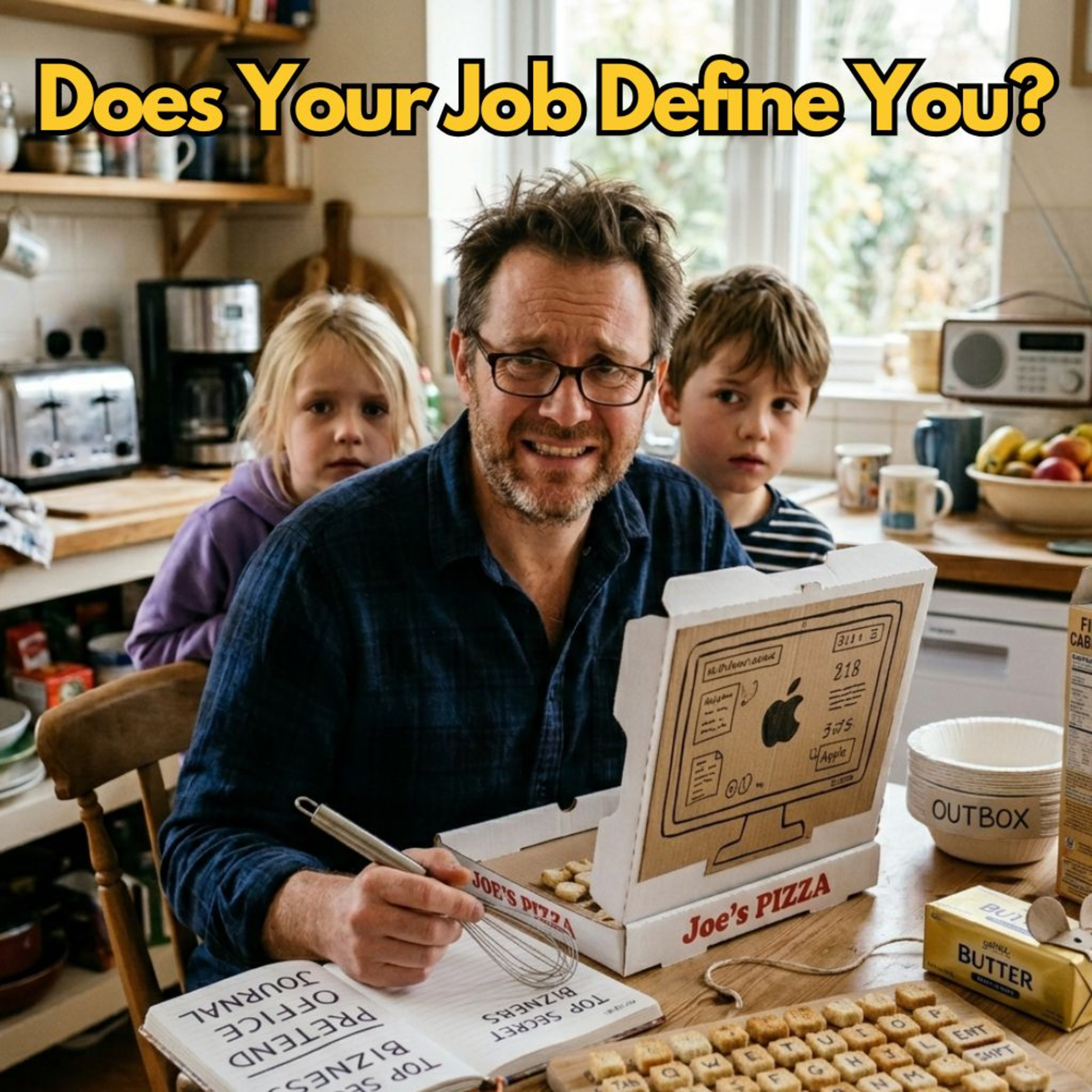
The Post-Work Status Conundrum
May 3000:28:18Tap to summarizeLet's say it is 2046. Maybe we get AGI or ASI. Maybe we get something short of it but still powerful enough to absorb much of the cognitive and organizational burden that once gave large parts of the professional class their identity. Either way, one plausible future is not the end of work, but the weakening of work as a trusted signal of who is truly carrying weight.That would not land the same way everywhere. Some cultures already place more dignity in family life, local belonging, or who a person is apart from their job. Others still treat occupation as one of the main public proofs of seriousness, sacrifice, and worth. In those societies, AI would not just threaten employment. It would destabilize a status system people have quietly organized their lives around.But status systems do not vanish when one breaks. They mutate. If work becomes a weaker way to sort out who deserves admiration, authority, or self-respect, people will look elsewhere. Some of those replacements may emerge naturally through culture, community, and personal life. Others may be encouraged by institutions trying to keep society coherent. Neither path is clean.A future with weaker work identity may be healthier in some ways. It may also create a strange new scramble over what counts as a meaningful life, with no guarantee that the replacement values will be any wiser or more humane than the old ones.The conundrum: If AI weakens work as the main shared source of status in societies that have long treated employment as moral proof, is it better to let new forms of meaning emerge on their own Or does that vacuum become dangerous enough that institutions will need to actively elevate other forms of contribution like caregiving, civic service, mentorship, local leadership, or cultural participation.When AI scrambles the old connection between job and worth, what is more unsettling: a society that lets status mutate on its own, or one that starts trying to manufacture better reasons for people to matter?
Transcribe →Opus 4.8 Lands, Cipher Cracked After 500 Years
May 2901:02:26Tap to summarizeToday's AI news lineup: Anthropic's Opus 4.8 launch and token economics, Sakana Labs' diffusion-block pre-training, an AI cracking a 500-year-old diplomatic cipher, and Cognition's $1B raise for Devin.The conversation opened on the freshly launched Opus 4.8, weighing Every's review against real-world token efficiency and cost, then moved into how the model reshapes compound-engineering workflows and sub-agent setups. From there it ranged widely: unsettling LLM survival simulations, a breakthrough from Sakana Labs that slashes pre-training compute by avoiding full-density back propagation, and a pair of "cool factor" stories where AI decoded a diplomatic letter that resisted decryption for over 500 years and shed new light on the ancient Antikythera mechanism. The funding picture loomed large too, with Cognition's $1B Series D for Devin and Anthropic's $65B raise at a $965B valuation prompting a hard look at the token economics underneath it all, before wrapping with weekend AI resources to dig into.KEY POINTS DISCUSSED:00:00:00 Anthropic Opus 4.8 Launch and Every's Review00:04:26 Workflow Keyword and Compound Engineering Sub-Agents00:12:51 Opus 4.8 Token Efficiency and Cost00:21:04 LLM Survival Simulations and AI Violence00:25:29 Sakana Labs Diffusion Blocks Pre-Training00:31:13 AI Decodes 500-Year-Old Diplomatic Cipher00:36:21 Antikythera Mechanism Ancient Analog Computer00:40:42 Vox AI Neurological Conditions Framework00:45:57 Vibe Coders and Zero2Claude.dev Course00:53:44 Devin and Cognition's $1B Series D Raise00:56:47 Anthropic $65B Raise and Token Economics01:01:06 Weekend AI Resources and Show Wrap-UpThe Daily AI Show Co Hosts: Andy Halliday, Beth Lyons, Gareth Hood
Transcribe →AI Surpasses Humans In Creativity Tests
May 2901:04:33Tap to summarizeToday's AI news lineup: KPMG's Anthropic deal, a BioHub protein model, ingredient embeddings for flavor pairing, a creativity study, OpenRouter's $113M raise, SynthID watermarking, and a Kickstarter pet translator collar.The hosts worked through a dense Thursday mix of enterprise alignment moves, frontier science, and cultural signals. A new study of 100,000 people found generative AI now beats average humans on creativity tests, complicating the long-held bet that taste and originality would remain the human edge. Watermarking expanded across providers as China tightened restrictions on AI researcher travel, and a $250M OpenAI Foundation research push landed alongside fresh Anthropic interpretability work touching mythos and the Pope. The episode closed with a Kickstarter collar promising to translate what your pet is actually saying.KEY POINTS DISCUSSED:00:00:00 Welcome and Tuesday-Thursday Mixup00:01:16 KPMG-Anthropic Deal and Big Four AI Alignment00:06:28 BioHub Evolutionary Scale Model for Proteins00:10:01 Epicure Ingredient Embeddings and Flavor Pairings00:16:21 Study Finds AI Surpasses Humans in Creativity00:20:57 OpenRouter Raises $113M for Multi-Model Routing00:27:43 Karl on Enterprise Token Budgets and Codex Rollouts00:42:37 Google SynthID Watermarking Expands Across Providers00:47:00 China Restricts AI Researcher Travel; Manus Relocates00:48:54 OpenAI Foundation Funds $250M Economic Impact Research00:51:11 Anthropic Interpretability, Mythos, and the Pope00:56:19 Petit Chat Kickstarter Pet Translator CollarThe Daily AI Show Co Hosts: Andy Halliday, Beth Lyons, Gareth Hood, Karl Yeh
Transcribe →Your Digital Afterlife Starts Now!
May 2701:31:07Tap to summarizeJyunmi Hatcher leads a wide-ranging episode that starts with AI news and then shifts into a long featured conversation with guest Nikki Weiss on digital thanatology. The panel discusses what happens to our data, accounts, plans, and digital identity when someone dies, and why most people are unprepared for that transition. They explore digital legacy, grief bots, end-of-life planning, and the ethical questions raised by AI systems that could simulate or extend someone after death. The episode closes with an AI-and-science segment focused on emerging grief-bot research and why the field needs guardrails before the technology scales.Key Points Discussed00:08:02 AI News Roundup Begins00:08:10 Groupon’s AI-Native Pivot00:11:53 New Coding Benchmark Shakes Up Claude vs Codex00:17:52 Figure Robots and Retail Deployment00:20:33 Digital Thanatology Segment Begins00:23:49 Nikki Weiss’s Background in Death Tech00:37:26 Digital Legacy and the Grief Bot Question00:49:42 Practical End-of-Life and Account Planning01:05:18 Data Centers, Tracking, and the Digital Afterlife01:18:23 AI and Science: Grief Bots of the LivingThe Daily AI Show Co Hosts: Brian Maucere, Andy Halliday, Jyunmi Hatcher
Transcribe →Are You AI Pilled?
May 2601:02:57Tap to summarizeBrian Maucere, Beth Lyons, Andy Halliday, and Anne Murphy open with a discussion about whether AI agents are actually cost-effective once token usage, efficiency, and governance are taken into account. That leads into ClickUp’s workforce cuts and a broader conversation about workforce substitution, job loss, and how work shapes identity and meaning. In the back half, the group shifts into practical tools and culture, including a Zero to Claude learning resource, the term “AI pilled,” Grok V9, and new Google features like Ask YouTube and Ask Maps. The episode stays grounded in how AI changes both business operations and everyday human behavior.Key Points Discussed00:02:30 AI Agents, Tokens, and Efficiency00:09:30 ClickUp’s Layoffs and 3,000 Agents00:24:13 AI Job Loss, Identity, and Meaning00:37:48 Zero to Claude and Retired Builders00:42:55 The “AI Pilled” Mindset00:49:37 Grok V9 and Quick AI Closers00:55:59 Ask YouTube and Ask Maps
Transcribe →