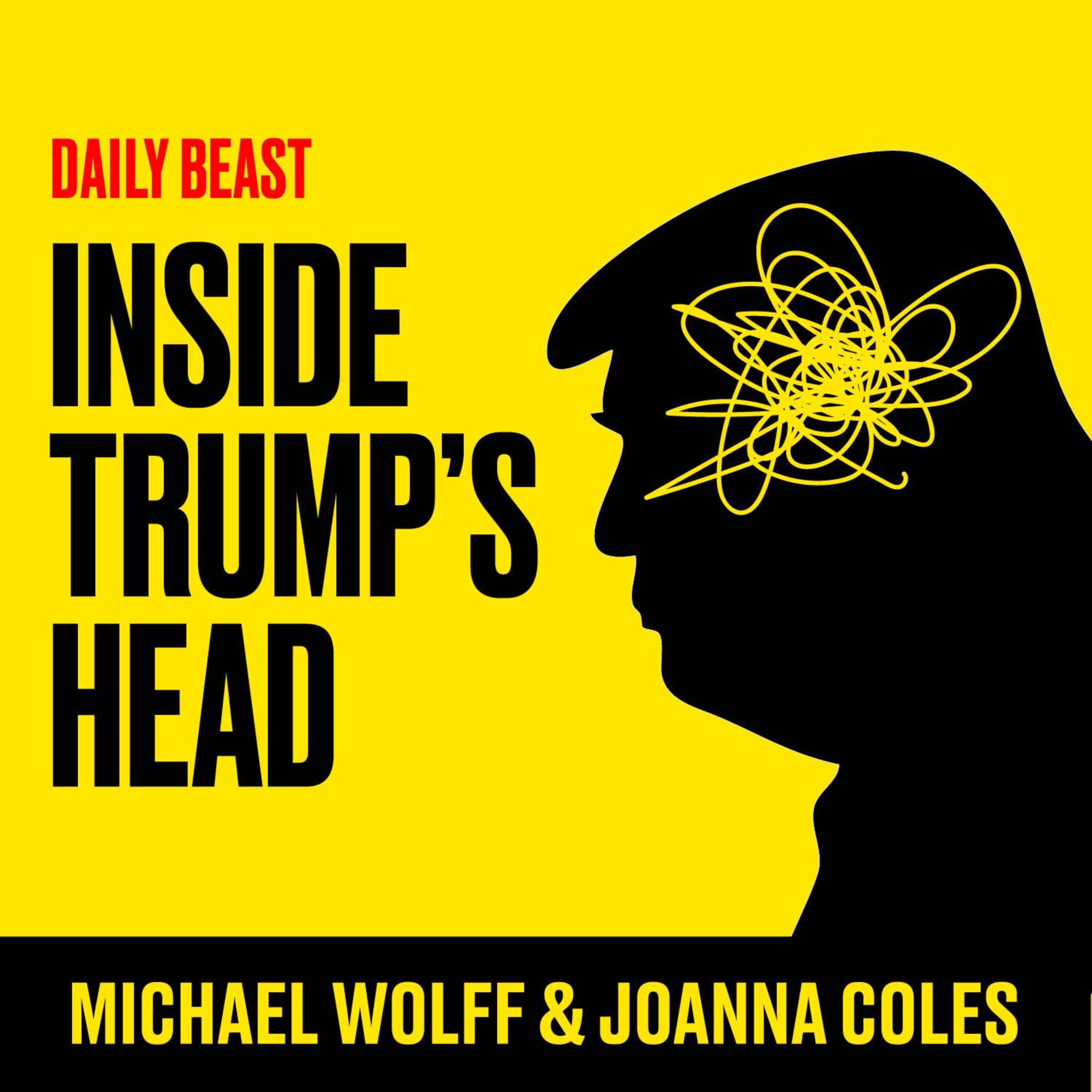
Loading summary
Transcript100 lines
- [00:00]
Greenlight Advertiser
Did you know? Adults 60+ lose more than $60 billion each year to financial exploitation. Greenlight's new Family Shield plan empowers you to monitor your accounts for suspicious activity, protect yourself with up to $1 million identity theft coverage and reassure loved ones that you're safe with location sharing and place alerts. Get peace of mind today@greenlight.com protect that's greenlight.com protect.
- [00:26]
Acast Announcer
Acast powers the world's best podcasts. Here's the show that we rec.
- [00:35]
Michael Wolff
I'm Eden Scher. And I'm Brock Ciarlelli.
- [00:37]
Joanna
We played best friends on the middle.
- [00:39]
Michael Wolff
And became best friends in real life.
- [00:40]
Tide Advertiser
We're here to re watch the Middle.
- [00:42]
Michael Wolff
With all of you. Each week we'll recap an episode with behind the scenes stories, guest interviews and what we think now, many years later, there's a lot to dive into. So let's get to middle.
- [00:59]
Acast Announcer
ACAST helps creators launch, grow and monetize their podcasts everywhere. Acast.com.
- [01:09]
Joanna
Michael, what do you think about how Donald Trump has responded to the death of Charlie Kirk?
- [01:15]
Michael Wolff
I think it's pernicious the way he's responded to it. I think he's put Charlie Kirk's death to political use and I think it's, he's put it to dangerous political use. I mean, without knowing the facts. This is before we had a suspect in the killing of Charlie Kirk. Donald Trump was out essentially saying that the, the left, the liberals, the Democrats and anyone who might oppose him was complicit in the killing of Charlie. Kurt, this is both not only just, just specious wrong, but it's obviously irresponsible. And I can't help feeling that perhaps part of the issue is, is that, is that he can't talk about, he can't come to grips with this, that maybe, maybe in his mind, inside Trump's head it's too associated and how could it not be with the, the, with his own assassination attempt. So I think, I think in some way he is running from this, this death instead of trying to a leader ought to be doing at this point and you know, expressing grief and empathy here.
- [02:42]
Joanna
So Michael Wolf, what a terrible week for us not to both be in New York together. But first of all, where the hell are you?
- [02:52]
Michael Wolff
Well, I am in, I am not in Scotland, but I am very near Scotland.
- [02:58]
Joanna
What does that mean? You mean you're in England? You know, I mean, you say you don't know where.
- [03:03]
Michael Wolff
Oh, actually I'm actually no, I don't exactly know. I am, I was in London. I am in London for the next week and we've taken a weekend excursion to a friend's house. Not in Scotland, but close to Scotland.
- [03:20]
Joanna
I would like.
- [03:22]
Michael Wolff
In County Durham.
- [03:26]
Joanna
In County Durham. Well said. There was a very funny moment in my day yesterday when you called me and there was a lot of background noise and you were like, I'm at King's Cross station, as if it was some sort of otherworldly place, when in fact it's actually rather a fabulous station, which I know well because I often take the train from London up to the north of England. Where you are now.
- [03:49]
Michael Wolff
You would. And where you are from.
- [03:51]
Joanna
Where I am from, though I am.
- [03:53]
Michael Wolff
Where you were once. Were.
- [03:56]
Joanna
Almost. Almost. I was a little further down from County Durham in Yorkshire. But anyway, I'm sorry that we're not together in the studio, but I'm relieved to talk to you and I'm very curious to get your take on what has really been a remarkable week in America.
- [04:12]
Michael Wolff
No, well, it is. And this is a major event. You know, a terrible event occurred, and now we're dealing with the aftermath of. And you know, the thing about political. A killing of a major political figure or an emerging major political figure is that it does become a political event. Now, curiously, and it's somewhat hard to understand, one of the things that's coming out of the White House and out of the MAGA people is a determination not to let anyone talk about this as a political event. And I'm still not sure what exactly what the meaning of that, of that is. So the response is. You. You have to. You have to express in enormous solidarity with the family grief which everyone is. Is basically doing. There's not anyone who is saying. Saying obviously that this is a good thing that happened, this is a bad thing that happened, but it is also a thing that it is now central in this moment of political time. And I think to try to understand what that means is A important and B, going to take some do it.
- [05:45]
Joanna
And of course, Charlie Kirk was a political figure, but it doesn't seem like this was a wildly political act. It seems like an act of a young, disconnected young man. I mean, there are many parallels between him.
- [06:01]
Michael Wolff
Was Matthew Crooks no and yes to school shooters everywhere. Again and again and again and again we have seen this, the confluence of whatever deep emotional issues have gone wrong for someone and access to firearms.
- [06:25]
Joanna
Right. Access to powerful firearms. So what are you actually hearing from people within the White House about how they deal with this going forward?
- [06:39]
Michael Wolff
I think they don't know and they are now responding to this thing. And I think that they're, you know, I was picking up in the conversations, I had some reluctance from people around the president. But now, as he has embraced this, that it becomes the thing that they too, have to embrace, which is that Charlie Kirk and the death of Charlie Kirk is now the weapon to be used against enemies, all perceived political enemies. And obviously, that's incredibly scary, incredibly frightening and incredibly wrong.
- [07:24]
Joanna
There was a strange moment yesterday, which, which you may have missed just because of time difference and things, where Donald Trump is asked by a reporter how he's doing, because really, this has obviously been a terrible week for him for all sorts of other reasons, which we'll come to in a moment. But he says, how are you doing, you know, with the death of Charlie Kir? Trump says, well, I'm actually doing fine over there. There are the trucks. They've pulled up. They're here to do the ballroom, the ball. I'm very excited about the ballroom. There hasn't been a ballroom in the White House, you know, and we're now building one as if he'd already moved on. And he was spotted at the Yankees game. Well, he was spotted. He made a big thing of being at the Yankees game where he was sort of dancing away, and it just felt like he'd immediately moved on. It was very strange behavior.
- [08:16]
Michael Wolff
Well, I think it's also very hard for Trump in Americ. I can't think of an instance, possibly briefly, after his own assassin, the Butler assassination attempt on him. But he doesn't talk about personal feelings. He never talks about personal feelings. Everything is exterior for Donald Trump. And that's, I think, part of what's happened here is Charlie Kirk. And a lot of the people in the White House knew Charlie Kirk. A lot of people in the, the MAGA thing, I, I've met Charlie Kirk a couple of times, seemed like actually a very personable guy, and I think they knew him. They had, they had, they had strong personal feelings about him. And, and I think that's very hard to process and what it has now become for, for Trump. And I think Trump also knew him, liked him, felt a rapport for him in that this is now. But because Trump can't express this, this has become this, this, this other thing. It's vengeance for Charlie Kirk. You know, it's the, it's the left or the liberals who killed Charlie Kirk. And, and, and our commitment now is to going after them. So, you know, once more, it's this weird moment in which everybody seems to be having a great deal of trouble processing this on a normal human level. This is a terrible thing that has happened. It happened because of, of a disturbed kid with a firearm. And it really has, I think we can argue, very little meaning beyond that. And it is only now with this, with this reaction and the MAGA reaction, the White House's reaction and Trump's reaction turning into something else.
- [10:21]
Joanna
Well, and the reaction obviously has been there was clearly a rush to judgment, the assumption that this was done by someone on the left, the grandmother of the boy who is the alleged killer, came out and said they didn't even know any Democrats. This was a MAGA family. They were all supportive of Donald Trump. Which also adds to their confusion, I'm sure, into how to respond to it.
- [10:45]
Michael Wolff
Well, I mean, the response began before we even knew. And that's another issue issue here of that, that inability to wait to see what happened here. What are the facts here then? Complicated by the whole FBI's response in this in which they became a laughingstock. I mean, so we, it's, it's no surprise that Cash Patel and, and what's.
- [11:15]
Joanna
His name, Dan Bongino, his number two.
- [11:18]
Michael Wolff
Yes. I mean these two guys who have no business being anywhere near a leadership role in the FBI screwed the whole thing up, a cock up of enormous proportions. So it becomes necessary somehow to cover that up or at least somehow distract from the fact that once again the Trump administration is beset by incompetence.
- [11:47]
Joanna
Well, let me just ask you something though, because they did get the guy. Was it a cock up of enormous proportions? I mean, 30 hours later, after the assassination, the guy is in custody.
- [11:59]
Michael Wolff
Well, because his family called up and said, and said, you better come and get this guy. So that had turns out to have almost nothing to do with the FBI. And what the FBI did was muddle the whole thing, set up a situation which immediately fed all kinds of conspirac theories, violated all protocols in terms of when this was announced, announced making announcements, everybody rushing onto social media for their own person, for their own individual purposes instead of following procedures. And this includes not only Cash Patel, but also Donald Trump and, and I, and, and again, it's cannot, can't you have to ask the, the question or you have to come to the conclusion that this administration is, is the thing that most characterizes it is that they hired all kinds of people who shouldn't have been hired to do jobs that they have no experience which would, which would let them do the jobs in any kind of professional way.
- [13:17]
Joanna
Well, you're certainly right that people ran to social media. I mean it really is government by social media now, isn't it?
- [13:24]
Michael Wolff
Yeah, I mean, yeah, I mean I think that that's, yeah. And I think much of the response here, the response to, to Charlie Kirk's death is a social media led response. And then much of the now react, current reaction today is a reaction to other people's social media. So you know, I mean, I mean, I mean Tucker Carl Carlson did a, did a thing which I saw incredibly fatuous in which he, he went down the, the Twitter or the X accounts of, of various unnamed people of no consequence whatsoever who were saying things that he felt were inappropriate about, about Charlie Kirk's death. And the point of this is people say inappropriate things all the time. So and the point here, this is a larger social movement according to Tucker Carlson and this is all, all to, to demonize now the left. I, I give up. I mean nothing makes sense here.
- [14:34]
Joanna
Well, it's also very difficult to understand why they want to live in this world with heightened fear, heightened violence. This just seems a very scary place for America to be going.
- [14:50]
Michael Wolff
Well, I mean, I think that there is a conclusion that we can jump to is that they see value for themselves in living in this world. They see value in us against them. They see value in declaring their own righteousness and the, and the, in the absolute opposite for, for, for the left or the liberals or the Democrats who, whoever they, whoever the people who are opposed them, oppose them not for legitimate reasons, but for illegitimate reasons.
- [15:35]
Joanna
To what extent do you think that Charlie Kirk's death and the manner in which it happened at a rally, shot at from 200 yards away or 200ft away, brought back Trump's own experience at Butler, Pennsylvania. I mean, it seems something that everybody skated over.
- [15:56]
Michael Wolff
I mean it certainly should have. I mean, or, or you could say how could it not, how could Trump not see this? But he doesn't seem to be relating, relating to it in that way. I mean, I mean I, I haven't heard heard a, a word of, a word out of Trump's mouth which, which suggests that there is a, a personal, a personal connection to, to a horrifying event here. And I, you know, I mean, I again, I think this is about. He doesn't respond, is incapable of responding personally. I think we need to take a break, Joanna, for some ads.
- [16:45]
Marc Maron
Hey folks, it's Marc Maron from WTF Today. I want to talk to you about Boost Mobile offering reliable nationwide coverage backed by a 30 day money back guarantee. Love your service or get your money back, no questions asked. Boost Mobile offers the coverage, network speed and service you're used to, but at more affordable prices. Why pay more if you don't have to? You can get an unlimited planner for $25 a month that will never increase in price, ever. No price hikes, no multiline requirements, no stress. Visit your nearest Boost Mobile store or find them online@boost mobile.com After 30 gigabytes, customers may experience slower speeds. Customers will pay $25 per month as long as they remain active on the Boost Unlimited plan.
- [17:34]
Greenlight Advertiser
Did you know? Adults 60 plus lose more than $60 billion each year to financial exploitation. Greenlight's new Family Shield plan empowers you to monitor your accounts for suspicious activity, protect yourself with up to $1 million identity theft coverage, and reassure loved ones that you're safe with location sharing and place alerts. Get peace of mind today@greenlight.com protect. That's greenlight.com protect.
- [18:02]
Joanna
And we're back talking about what else but Donald Trump and the response to the death of Trump. Charlie Kirk this week. It's been a terrible week for him, too. I mean, physically, the week looks like it's taken its toll. He was on the breakfast sofa on Fox News on Friday and he just looked tiny compared to the three people he looked like physically. Your description or Steve Bannon's description of him as a giant shrimp. The shrimp is curling in on itself. He was physically smaller than the three people sitting around him. And you just felt this is very unprecedential to be sitting on the FOX News sofa. And there were all sorts of reports that they'd actually delayed the news of the capture of Tyler Robinson so that he could announce it on the FOX News sofa.
- [18:58]
Michael Wolff
Well, I'm sure that that is true. You know, again, another strange aspect of this, that, that, that they wanted to own this, they want to own Charlie Kirk, they want to own the, this, this terrible event, and they want to put it to use. So I, I mean, it's, it's horrifying and I, and I hope actually passes that, that having, that having caught this young guy, everybody realizes this is vastly more complicated. This is not, in the end, a political act. But then having said that, the other thing is that Trump comes to that couch and Trump comes to suddenly wanting to make this announcement in being the hero of this event because things have been, been going so poorly for, for him. I mean, we have, we have the Russians, the, the, the Russians. The intensity of the Russian attack on, on Ukraine has actually become significantly greater than before. Trump got involved and basically said he was gonna, I'm gonna solve the problem. I'm going to Alaska. I'm gonna. I'm gonna take care of this. Well, clearly he's not only taking care of. Not taking care of it, but probably significantly worse. Then we have the Russians, the Russian incursion into Poland. I mean, this is a serious thing. I mean, and it's a serious test of NATO, which Trump has, you know, pretty systematically tried to undermine. Plus, we have inflation numbers that are. That are more than worrisome and which match what virtually everyone said would be the effect of the. The Trump tariffs. So, again, this is all a level of incompetence. They can't do anything right. And let's not forget RFK Jr. In the middle of this, appearing before Congress and with almost everybody, everybody except the most extreme MAGA faction lined up to say, hey, wait a minute, could this really be? Are we really doing this to the American health care system? You know, and I got a feeling that, that. That Trump himself, and this is what I understand is, Is. Is. Is pretty squeamish about this. He keeps asking people about. About RFK Jr. And, you know, he asked him, well, what. How do you think he's. He's doing? And then he says, you know, but he's a Kennedy, so.
- [21:58]
Joanna
So that's interesting. So you sense that there could be a bit of division between the two of them that he's hearing from people?
- [22:05]
Michael Wolff
I do. I mean, I think there is a division between RFK Jr in almost everybody and even Trump. I mean, you know, Trump is a. Is a kind of a. On many levels, Trump is actually a normal person. I mean, he goes to the doctor. He's. He's. He's concerned about these things. He's concerned about his own health. He's concerned about. About his family's health and, and what is. And he is, as well as everyone else, asking the question, what is RFK doing? Does he know what he's doing now? For Trump, it's like, well, he's a Kennedy, so. So he can't be all bad. Again. And again, we see these things. He's chosen these people, he's put these people in place who should not be there. And now, you know, chickens come home to roost.
- [23:07]
Joanna
So do you think there is anyone around him holding the line for America's science, community, and healthcare? I mean, who would be whispering in his ear about rfk?
- [23:26]
Michael Wolff
You know, I think what will happen in this situation is that people will not say anything. No one is going to say. No one is going to be put in a position, put themselves in the position of contradicting Trump until he wants to be contradicted, until he wants someone to say, I think RFK is a catastrophe, let's fire him. That's not going to come from anybody else, but from Trump. But what will happen is people will say nothing. And so I think that's what's going on in the White House. Nobody is saying that RFK is a genius. No one is saying that.
- [24:08]
Joanna
And that silence, does he hear that silence?
- [24:12]
Michael Wolff
No, not necessarily. Until he wants to hear it.
- [24:15]
Joanna
Until he wants to hear it. Right. And what are the, but what are the sort of saner people, if one can put it like that, in the Cabinet? How are they feeling about things at the moment? Because if you're Scott Besant, you're seeing that the economy isn't where they promised it would be. Marco Rubio must be looking at what's going on with Russia and thinking, well, this isn't what I expected as Secretary of State. Or do you think they've just completely rolled over?
- [24:48]
Michael Wolff
Well, they have two lives, parallel lives. There's the life of what they really think and there's the life in which they interact with Donald Trump. And in many instances, there's no crossover there. I mean, you know, in order to survive in this job as working for Donald Trump, then you have to say what Donald Trump wants you to say. There's no other alternative. That's it. Meanwhile, you know, you're not, none of these people are necessarily stupid. Some of them are stupid, but Scott Besson isn't stupid. I, I wouldn't, I wouldn't put him necessarily at the top of the class, but he's, he's not, not stupid and knows that, that at some point this is, the, the economy is going to be, he's going to have to own that. So that's going to be scary for him. Marco Rubio, like, likewise. I mean, Marco Rubio actually is not stupid and has had a long experience and long involvement in international matters, has had a well documented point of view, which he is now contradictory in almost every aspect. And he knows that he is gonna, he is going to be held ultimately somebody, if not Donald Trump, then history is going to hold him account to account here. So, you know, I, I think in every instance they just wait and hope that circumstances will break in a way that Trump will be open to a different approach. But circumstances may not break and it may well be too late.
- [26:40]
Joanna
You're in England at the moment, and the British ambassador to Washington, Peter Mandelson, has just been forced to resign over his letter in the birthday book to Jeffrey Epstein. Can you tell us the reaction going on there? This is a sort of, probably to Americans, a minor diplomatic incident of not much import yet. It's another scalp that's fallen to the Jeffrey Epstein files.
- [27:06]
Michael Wolff
Yeah, well, I think that there are two things, things certainly for us to consider, the birthday book and how that is overshadowing Trump's week and how Epstein himself continues to overshadow everything that happens with Donald Trump. As for Peter Min, you know, as for the British ambassador to the U.S. you know, this is essentially the third time he's been caught up in a scandal and been fired. He has actually seems to have an extraordinary number of lives here.
- [27:49]
Joanna
Well, he was a huge enabler of the Labour Party getting elected, which is why he's been able to survive perhaps better than other politicians. But for those not following this story, perhaps as closely as some of us were, there was a rather remarkable moment where he apologized for his friendship with Jeffrey Epstein on the BBC, on the morning radio show, which is sort of the equivalent to Good Morning America, I suppose, in Britain. And he said, and there are more embarrassing revelations to come. And then didn't go into it. And everybody was left saying, what? And I must have got a handful of texts from people saying, do you know what the embarrassing revelations are? And it turned out to be an article that was coming out in Bloomberg that detailed more of his reliance on Jeffrey Epstein. Yeah, no, very strange.
- [28:42]
Michael Wolff
And that's true. And, and, and Epstein spoke to me about, about Mandelson, who he liked very much, and they had a very close relationship. I mean, I mean, I think that that's, that this is, you know, whatever. I think the thing to process, and this is also true before for Donald Trump, and I think for other people close to Donald Trump, is that these were very close friendships these people had with Epstein. That was part of Jeffrey Epstein's talent. He made friends with many people and he was a good friend to them, supporting them in all kinds of ways, in the ways of a friend, of being available, of being on the phone, of telling them what doctors to go to, of helping to get their children into school, of just being available. Well, it's not. That makes it sound like he was. He was a manipulator, which I'm sure he. He also was, but he was also a genuine friend. He was there. He would talk to you when you wanted to talk. He would you know, he, he is someone that many people came to trust. And I think that was true about Donald Trump and it was true about Peter Mandelson, very much true. And also Jeffrey Epstein helped Peter Mandelson over some difficult personal situations that he had. And so all of these guys now are, you know, the, the affect is that they barely knew him or they wish they didn't know. They wish they hadn't known him or they barely knew him. And I'm sure in hindsight they, they did wish they didn't know him, but they did know him and did know him very well. Including, and this is, you know, always, always relevant. The central headline is that one of the people who knew him best and one of the people Epstein knew best was Donald Trump. And you know, we went into this week with this, with this, this birthday book and a strangled effort on the part of the, of, of the White House. I mean, I still don't know where they, they, they, they hope they were going with this or where it will end up that this birthday letter from Donald Trump to Jeffrey Epstein on the occasion of Epstein's 50th birthday was not written patently, obviously in indubitably, it was written by Donald Trump. And they have called it a hoax. But then, but then when they've been confronted. Okay, so you mean these documents are, are a hoax? It's like. No, we didn't say the documents are a hoax. We said, we said the Democrats are, are perpetuating a hoax by somehow associating Trump with Epstein. The dialectic here is so strangled that I can't help but think that we're gonna get the truth.
- [32:18]
Joanna
Well, it's also so. I mean, the choice of words in the birthday letter are wonderful secret. I mean, it not only feeds into everything we now know about Epstein, but it makes Donald Trump look complicit.
- [32:37]
Michael Wolff
Let's take another break, Joanna.
- [32:40]
Blue Apron Advertiser
You know how everything's a subscription now. Music, movies, even socks.
- [32:45]
Michael Wolff
I swear, if I to continue this ad, please upgrade to premium plus platinum.
- [32:48]
Blue Apron Advertiser
Uh, what? No. Anyway, Blue Apron.
- [32:51]
Michael Wolff
This is a pay per Listen ad. Please confirm your billing.
- [32:53]
Blue Apron Advertiser
Oh, that's annoying. At least with the new Blue Apron, there's no subscription needed. Get delicious meals delivered. Delivered without the weekly plan.
- [33:00]
Michael Wolff
Wait, no subscription?
- [33:01]
Blue Apron Advertiser
Keep the flavor. Ditch the subscription. Get 20% off your first two orders with code APRON20. Terms and conditions apply. Visit blueapron.com terms for more.
- [33:11]
Greenlight Advertiser
Did you know adults 60/plus lose more than $60 billion each year to financial exploitation? Greenlight's new family shield plan Empowers you to monitor your accounts for suspicious activity, protect yourself with up to $1 million identity theft coverage, and reassure loved ones that you're safe with location sharing and place alerts. Get peace find today@greenlight.com protect that's greenlight.com protect.
- [33:39]
Joanna
And Michael Wolf and I are back inside Trump's head.
- [33:42]
Michael Wolff
They were closely involved in each other's lives at a very. I, you know, pick the words in intimate level and, and that's what Donald Trump is running from. Running and running and running to the extent that almost everything that he does certainly can be read as a effort to distract from this.
- [34:14]
Joanna
Well, certainly the spotlight has moved off the birthday letters this week, but I think that we should dip into the birthday letters again next week. And some of them were very perfunctory and they were like, hey, Jeffrey, have a great birthday. But some of them went into really extraordinary detail about what a good friend he was. The sinister pictures of Jeffrey handing balloons to children in childlike drawings. It's a very disturbing book. And it's a creepy book.
- [34:45]
Michael Wolff
Well, yes, but it is also a telling book. And the tell is about Jeffrey Epstein lived a, a sex life, a sibyrites life, a life with, with is as as far from, as far from, from standard middle class values as you can possibly get. And again, the headline is that Donald Trump participated in that life. Donald Trump was very much in law, in, involved in, in the lifestyle which we now associate with Jeffrey Epstein of pursuing women. That is a central quest and a central factor of their lives, of both of their lives.
- [35:46]
Joanna
And also I'm very mindful of Jeffrey Epstein helping finance Jean Luc Brunel, who was a French model owner who got accused in France of rape, the rape of underage girls that Jeffrey Epstein financed MC2, a modeling company in the US with the hope of rehabilitating Brunel, who in fact got re accused and died of suicide in theory, like Epstein in a French jail. So we'll read.
- [36:22]
Michael Wolff
I mean, I mean, we know, you know, the model culture is a bad culture. It thrived for a period and then people understood, hey, this is bad. This is really, this is out of control. And it has largely been, well, to a greater or lesser extent, been corrected and restrained since then. But during that period in which it thrived in a truly unregulated sense, Donald, Jeffrey Epstein was very much a part of it and so was Donald Trump.
- [37:00]
Joanna
Yeah, I remember when Diane von Furstenberg became the head of the cfda, the Council for Fashion Design in America, she insisted that models walking the Runway had to be 16 years old.
- [37:16]
Michael Wolff
And even 16 years old. 16, you know.
- [37:20]
Joanna
Well, I'm now wondering if it was 18. But she put an age restriction on it, which was the first time anybody done it. And the truth is that the model modeling agencies really became disrupted by social media and by influencers who took matters into their own hand and started modeling. And you got the, you know, you got the advent of street fashion. I mean, it was an economic disruption as much as it was people saying, this world isn't working.
- [37:44]
Michael Wolff
No, of course, but that. That era passed or. Or has changed in significant ways. But the era in which Jeffrey Epstein and Donald Trump were involved in it was the era in which bad stuff happened.
- [38:03]
Joanna
Bad stuff happened. Michael, it's a sober note this week. A sober note. Last week you said you were concerned for America, and it's hard not to think that that concern has passed. It's a very strange week.
- [38:19]
Michael Wolff
Well, you know, I mean. I mean, that concern has come to pass, I think you mean, because the concern has not, certainly not, not passed. And I would go back to the thing that I am certainly most worried about this week is the response from the White House about Charlie Kirk and making this.
- [38:42]
Joanna
Well, they've weaponized his death. Right?
- [38:44]
Michael Wolff
I mean, a campaign against people who disagree with the White House.
- [38:51]
Joanna
Michael, let's get into Epstein again next week. Enjoy your time in Northern England. I know it well. It's God's own country. And, yeah, keep your ear to the ground and come back and tell us what's going on. We'll be back on YouTube next Tuesday.
- [39:08]
Michael Wolff
Evening and I will see you from London next week. And then we will be back together in New York. Work.
- [39:18]
Joanna
Good. I will look forward to seeing you. Michael Wolff, thank you very much. So if you have been. Thank you for joining us. Don't forget, you can subscribe to the Daily Beast for up to the minute news on what's going on. And goodness knows, a lot's going on right now. And don't forget to join the Daily beast community on YouTube, which is very easy. Just go to the join button below this video and you get all sorts of benefits. What sort of benefits do people get, Michael?
- [39:49]
Michael Wolff
Oh, my God. Unlimited benefits. You wouldn't believe the benefits.
- [39:54]
Joanna
The benefits are amazing. Extra content. But also, it's true, we like reading the comments, don't we?
- [40:00]
Michael Wolff
No, no. Yeah. No, really, please leave us comments because they mean a lot and frankly, they're always interesting.
- [40:11]
Joanna
They're always interesting. And many of you have suggested very good guests for us to get. A lot of you have suggested we get Mary. We are trying to do actually. So, Mary, if you're watching this, we would love to talk to you. So thank you. Don't forget, as our first lady who came out of hiding this week would have us be beast. And thank you to our production team, Devon Rogerino, Anna Von Erson, and our editor, Jessie Millwood.
- [40:39]
Tide Advertiser
Did you know Tide has been upgraded to provide an even better clean in cold water. Tide is specifically designed to fight any stain you throw at it, even in cold butter. Yep. Chocolate ice cream. Sure thing. Barbecue sauce. Tide's got you covered. You don't need to use warm water. Additionally, Tide pods let you confidently fight tough stains with new coldzyme technology. Just remember, if it's gotta be clean, it's gotta be Tide.
- [41:10]
Acast Announcer
ACAST powers the world's best podcasts. Here's a show that we recommend.
- [41:18]
Naomi Egan
Hey, everybody, I'm Naomi Egan.
- [41:20]
Andy Beckerman
And I'm Andy Beckerman.
- [41:21]
Naomi Egan
We're a real life couple and a real life couple of comedians. And we're the hosts of the podcast Couples Therapy.
- [41:26]
Andy Beckerman
We're the only comedy relationship podcast ever. Yeah, I said it. And we're so good. We've been written up in both the New York Times and we made Grindr's list of top podcasts.
- [41:36]
Naomi Egan
Yes, we're giving you that high, low appeal trust on the show. We talk to guests like Bob the.
- [41:41]
Andy Beckerman
Drag Queen, Angelica Ross Bowen Yang, Janelle James, Danny Pudi, Darcy Carden, Paul F. Tompkins, and more.
- [41:49]
Naomi Egan
All about love, mental health, and everything in between. And we answer your relationship questions. We are two unlicensed comedians just trying to help you out.
- [41:58]
Andy Beckerman
So open your hearts, loosen your butts, because we got a lot of laughs.
- [42:01]
Naomi Egan
And a lot of real talk just for you.
- [42:03]
Andy Beckerman
Download Couples Therapy wherever you get your podcasts.
- [42:09]
Acast Announcer
ACAST helps creators launch, grow and monetize their podcasts everywhere. Acast.com.