
Podcast
The Daily Grind
Hosted by John Spencer · EN
Howdy, y'all! Welcome to The Daily Grind with your host, John Spencer. Grab a mug of your favorite brew and get ready to become the sharpest tool in the shed when it comes to water cooler chatter, conference room banter, and job site small talk. I'll give you the rundown on today's date, share some interesting historical facts, and toss out a few random musings to get your brain gears turning. Plus, I'll offer up some thoughts to ponder on your walk with Jesus, could be about the Bible, prayer, serving others, or something else.
106episodes
Episodes
Newest firstAll episodes
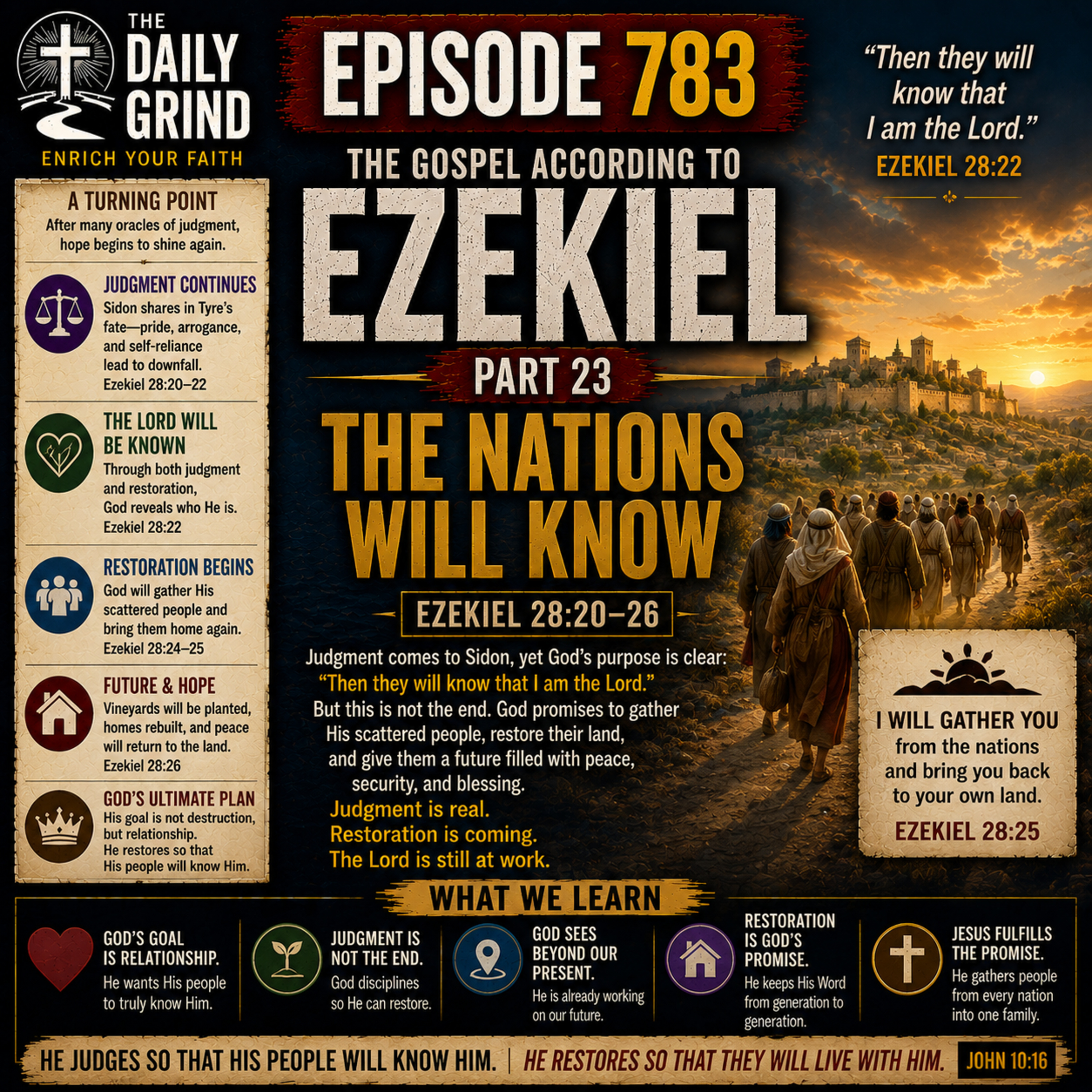
783 The Nations Will Know Ezekiel 28:20–26 (The Gospel According to Ezekiel Part 23)
Jun 300:20:54Tap to summarizeWednesday, June 3rd: In Episode 783 of The Daily Grind, we continue The Gospel According to Ezekiel with Part 23, “The Nations Will Know,” from Ezekiel 28:20–26. After many chapters focused on judgment, Ezekiel begins turning toward restoration and hope. God announces judgment against Sidon, yet repeatedly declares that through both judgment and restoration, people will know that He is the Lord. The passage reminds us that God's ultimate goal is not merely punishment but relationship and redemption. Ezekiel speaks to exiles who had lost their homes, security, and future, assuring them that God has not abandoned them. One day He will gather His scattered people, restore them to their land, and allow them to dwell securely again. The chapter serves as a powerful reminder that difficult seasons are often not the end of the story. Christians ultimately see this promise fulfilled more fully in Jesus, who gathers people from every nation into God's family. Ezekiel 28 closes the long section of judgment against the nations with the first clear rays of hope and restoration breaking through the darkness.Email me your questions, comments, and suggestions. I'd love to hear from you! If y'all wanna talk more 'bout this, I'm all ears. Just give me a holler. You can also help by sending me your favorite trivia or dad joke(s) at spencerjd@thedailygrind.website Or respond below with comments, trivia or jokes.
Transcribe →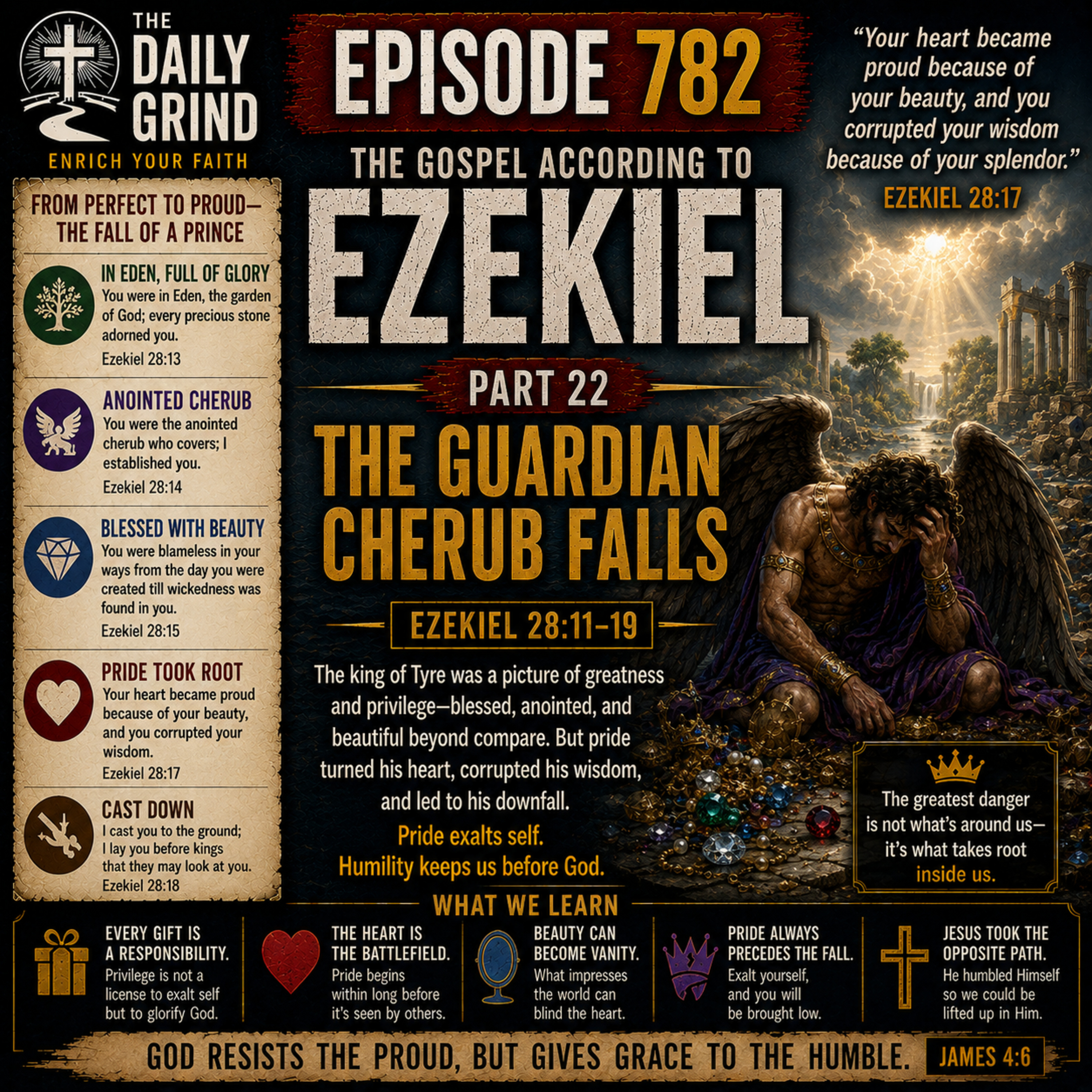
782 The Guardian Cherub Falls Ezekiel 28:11–19 (The Gospel According to Ezekiel Part 22)
Jun 200:22:13Tap to summarizeTuesday, June 2nd: In Episode 782 of The Daily Grind, we continue The Gospel According to Ezekiel with Part 22, “The Guardian Cherub Falls,” from Ezekiel 28:11–19. Ezekiel's lament over the king of Tyre uses stunning imagery from Eden to describe a ruler blessed with beauty, wisdom, influence, and privilege. Yet the very gifts that should have inspired gratitude instead fueled pride and self-exaltation. Ezekiel reveals that the king's downfall did not begin with invading armies but with a heart that became captivated by its own greatness. The chapter serves as a warning that success, beauty, wealth, and influence can become dangerous when they replace dependence on God. Like Adam in Eden, the king reached beyond his proper place and attempted to elevate himself. Christians often see this chapter as a powerful picture of humanity's ongoing struggle with pride and self-sufficiency. In contrast, Jesus demonstrates the opposite path, choosing humility, service, and obedience rather than self-glorification. Ezekiel 28 reminds us that every gift is meant to point us back to the Giver and that true greatness is found in humble dependence upon God.Email me your questions, comments, and suggestions. I'd love to hear from you! If y'all wanna talk more 'bout this, I'm all ears. Just give me a holler. You can also help by sending me your favorite trivia or dad joke(s) at spencerjd@thedailygrind.website Or respond below with comments, trivia or jokes.
Transcribe →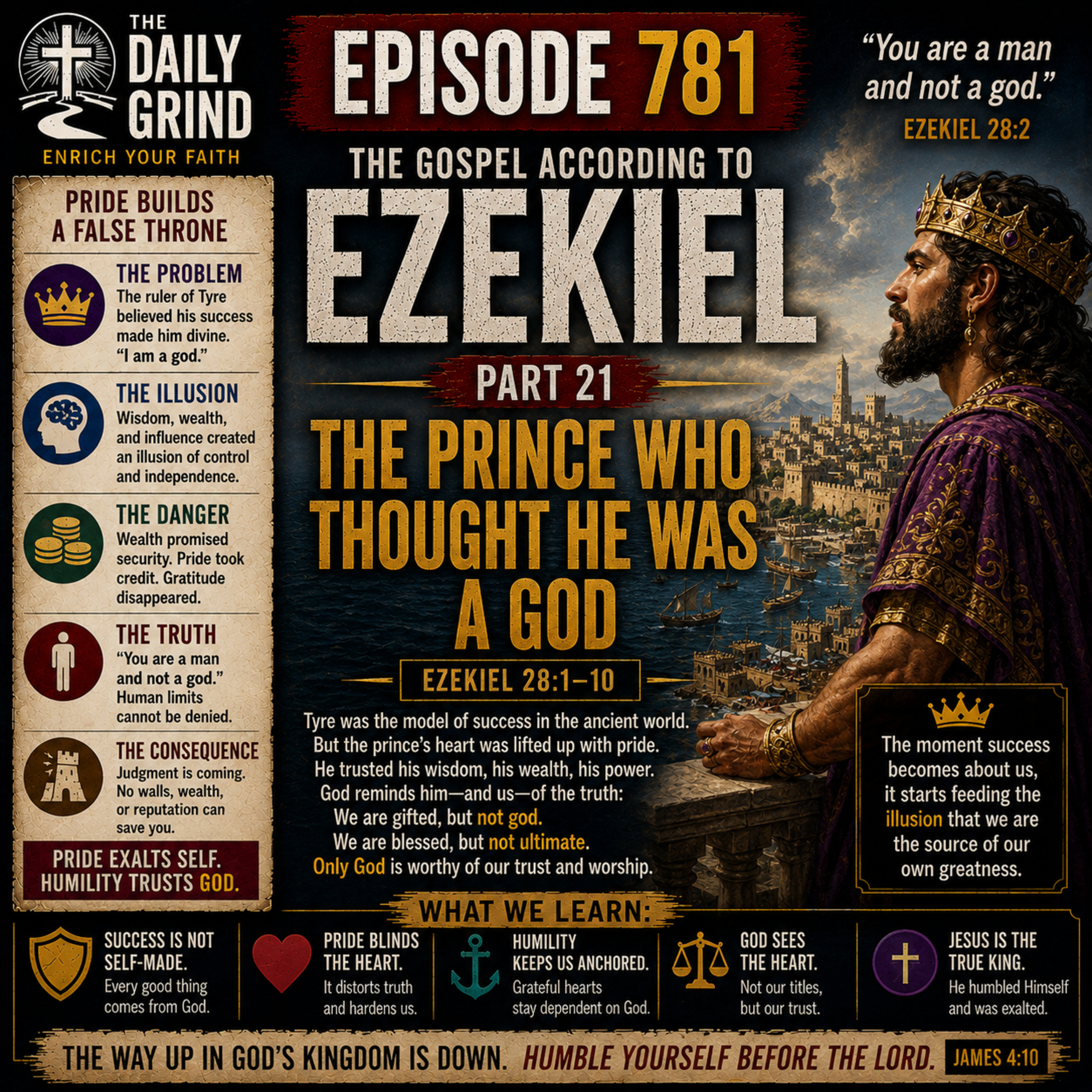
781 The Gospel According to Ezekiel Ezekiel 28:1–10 (The Prince Who Thought He Was a God Part 21)
Jun 100:22:12Tap to summarizeMonday, June 1st: In Episode 781 of The Daily Grind, we continue The Gospel According to Ezekiel with Part 21, “The Prince Who Thought He Was a God,” from Ezekiel 28:1–10. Ezekiel confronts the ruler of Tyre, a wealthy and powerful king whose success led him to believe he was untouchable. God exposes the pride that had grown beneath his wisdom, influence, and prosperity, reminding him, “You are a man and not a god.” The chapter reveals the danger of allowing wealth, achievement, and power to become substitutes for dependence on God. Ezekiel warns that pride often blinds people to their own limitations and creates the illusion of self-sufficiency. The ruler of Tyre becomes a picture of humanity's tendency to trust itself rather than the Lord. In contrast, Jesus demonstrates the opposite path, humbling Himself rather than grasping for power and glory. The chapter reminds believers that success is a gift to steward, not a reason for self-exaltation. Ezekiel 28 ultimately calls us to embrace humility, gratitude, and dependence on God rather than trusting in our own strength.Email me your questions, comments, and suggestions. I'd love to hear from you! If y'all wanna talk more 'bout this, I'm all ears. Just give me a holler. You can also help by sending me your favorite trivia or dad joke(s) at spencerjd@thedailygrind.website Or respond below with comments, trivia or jokes.
Transcribe →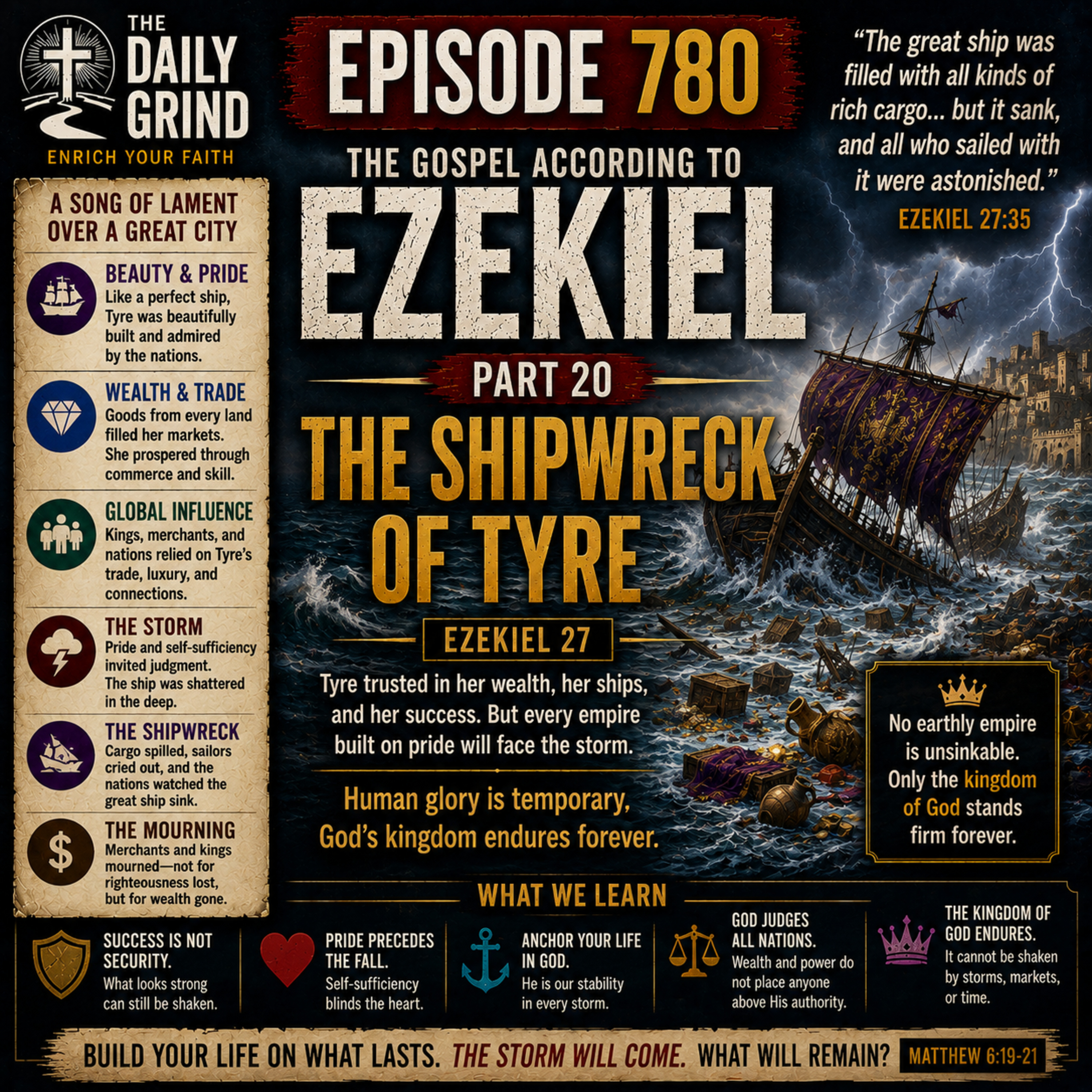
780 The Shipwreck of Tyre Ezekiel 27 (The Gospel According to Ezekiel Part 20)
May 2900:21:27Tap to summarizeFriday, May 29th: In Episode 780 of The Daily Grind, we continue The Gospel According to Ezekiel with Part 20, “The Shipwreck of Tyre,” from Ezekiel 27. Ezekiel sings a funeral lament over Tyre, comparing the wealthy trading empire to a magnificent ship filled with luxury, craftsmanship, cargo, and international influence. The chapter carefully describes Tyre’s beauty, wealth, and global trade networks before revealing its catastrophic collapse beneath the waves. Tyre had built its identity around prosperity, commerce, influence, and self-sufficiency, believing its success made it secure. But Ezekiel warns that even the greatest human systems remain fragile when pride replaces dependence on God. As the ship sinks, merchants and nations mourn not because of righteousness lost, but because their wealth and comfort disappear with it. The chapter becomes a powerful warning against turning money, status, success, or achievement into ultimate security. Ezekiel 27 reminds us that every earthly empire, economy, and system eventually shakes, but God’s kingdom alone endures forever. Christians ultimately see in Jesus a kingdom that cannot sink beneath the storms of history, loss, or death.Email me your questions, comments, and suggestions. I'd love to hear from you! If y'all wanna talk more 'bout this, I'm all ears. Just give me a holler. You can also help by sending me your favorite trivia or dad joke(s) at spencerjd@thedailygrind.website Or respond below with comments, trivia or jokes.
Transcribe →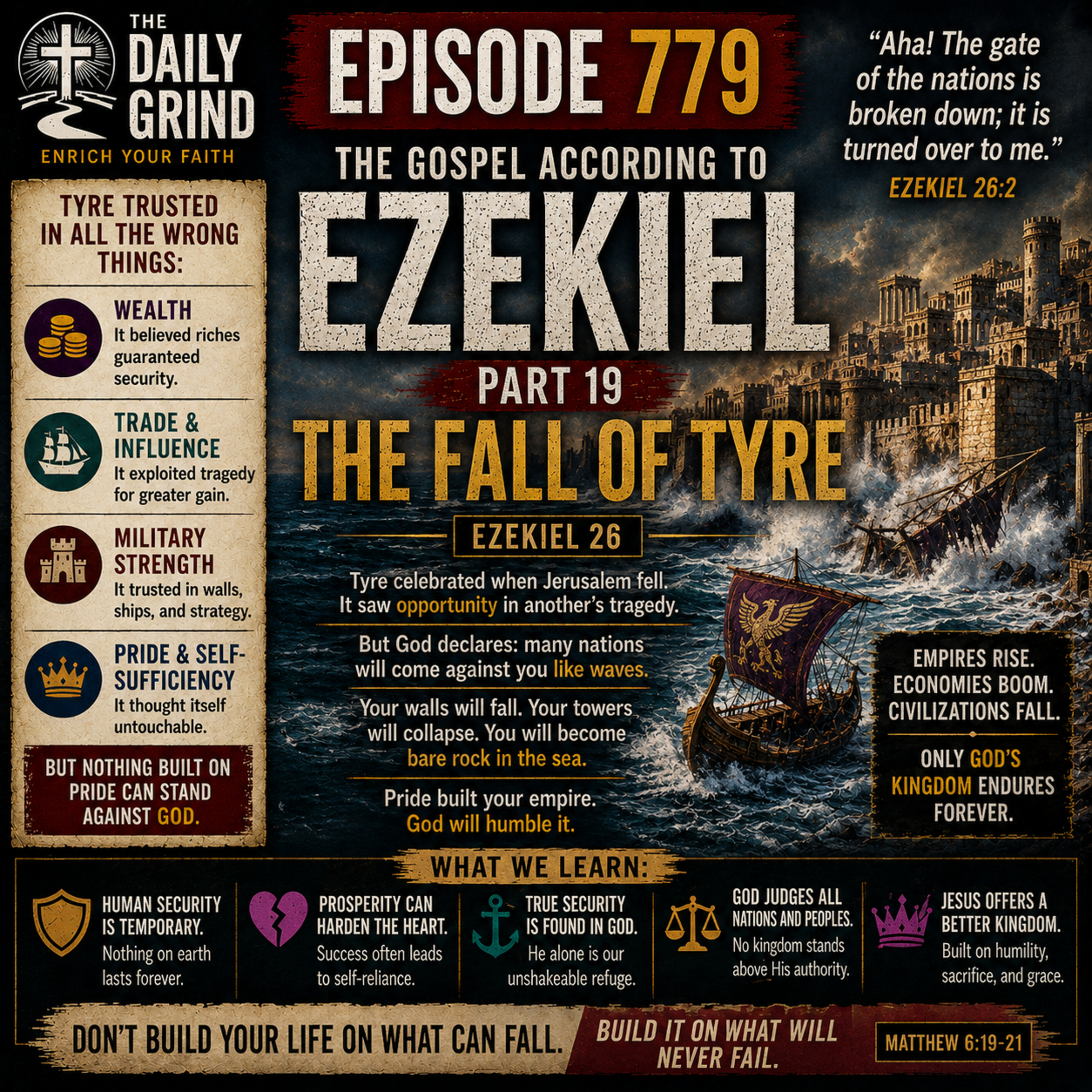
779 The Fall of Tyre Ezekiel 26 (The Gospel According to Ezekiel Part 19)
May 2800:19:35Tap to summarizeThursday, May 28th: In Episode 779 of The Daily Grind, we continue The Gospel According to Ezekiel with Part 19, “The Fall of Tyre,” from Ezekiel 26. Ezekiel turns his attention to Tyre, one of the wealthiest and most influential trading cities of the ancient world. When Jerusalem fell, Tyre celebrated because it saw opportunity for greater economic power and influence. But God confronts the pride, greed, and self-sufficiency hidden beneath Tyre’s prosperity. Ezekiel describes waves of nations crashing against the city like the sea itself, eventually bringing down the empire that once appeared untouchable. The chapter reminds us how fragile human security really is, no matter how strong economies, military defenses, or systems may seem. Tyre trusted wealth, trade, and influence more than God, and its downfall became a warning against pride and misplaced trust. Ezekiel 26 reveals that prosperity without humility can slowly harden hearts into self-reliance and spiritual blindness. Christians ultimately see in Jesus a completely different kind of kingdom, one not built on greed or pride but on humility, sacrifice, and dependence on God. The chapter challenges us to ask what we truly trust for security when everything temporary eventually shakes.Email me your questions, comments, and suggestions. I'd love to hear from you! If y'all wanna talk more 'bout this, I'm all ears. Just give me a holler. You can also help by sending me your favorite trivia or dad joke(s) at spencerjd@thedailygrind.website Or respond below with comments, trivia or jokes.
Transcribe →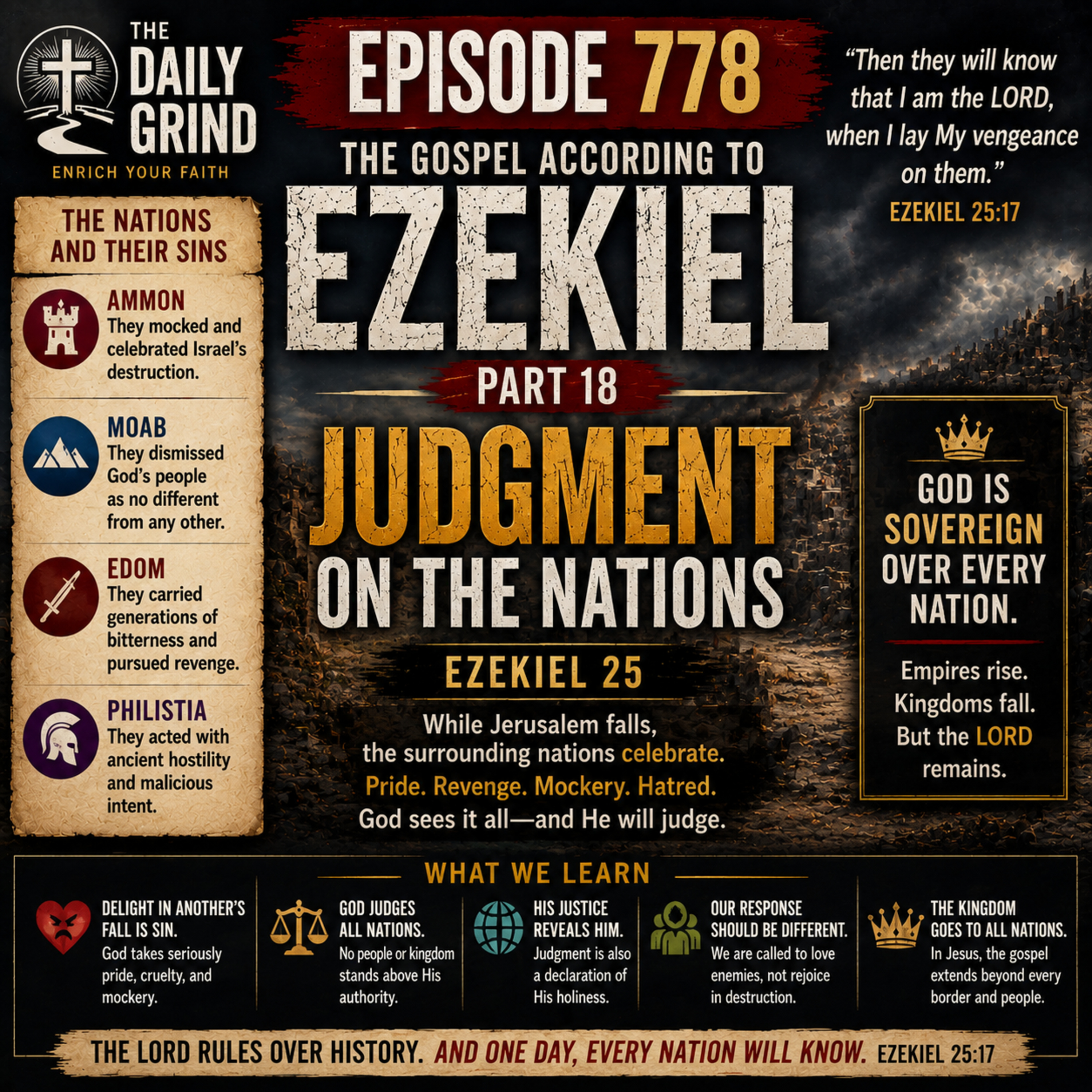
778 Judgment on the Nations Ezekiel 25 (The Gospel According to Ezekiel Part 18)
May 2700:20:41Tap to summarizeWednesday, May 27th: In Episode 778 of The Daily Grind, we continue The Gospel According to Ezekiel with Part 18, “Judgment on the Nations,” from Ezekiel 25. After focusing for many chapters on Jerusalem and Judah, Ezekiel now turns outward to the surrounding nations: Ammon, Moab, Edom, and Philistia. These nations responded to Jerusalem’s collapse with mockery, revenge, arrogance, and delight instead of compassion. Ammon celebrated Judah’s downfall, Moab dismissed God’s people as no different from any other nation, Edom pursued generations of revenge and bitterness, and Philistia acted with deep hostility and contempt. Ezekiel reveals that God is not only Judge over Israel but over all nations, kingdoms, and peoples. The chapter exposes how pride, hatred, revenge, and delight in another’s suffering corrupt the human heart. Again and again, God declares that through judgment “they will know that I am the Lord,” showing that His justice is also a revelation of His authority and holiness. Christians ultimately see the wider fulfillment of God’s kingdom extending to all nations through Jesus Christ and the gospel. Ezekiel 25 challenges believers to reject revenge, pride, and contempt and instead reflect the mercy and character of God even toward enemies.Email me your questions, comments, and suggestions. I'd love to hear from you! If y'all wanna talk more 'bout this, I'm all ears. Just give me a holler. You can also help by sending me your favorite trivia or dad joke(s) at spencerjd@thedailygrind.website Or respond below with comments, trivia or jokes.
Transcribe →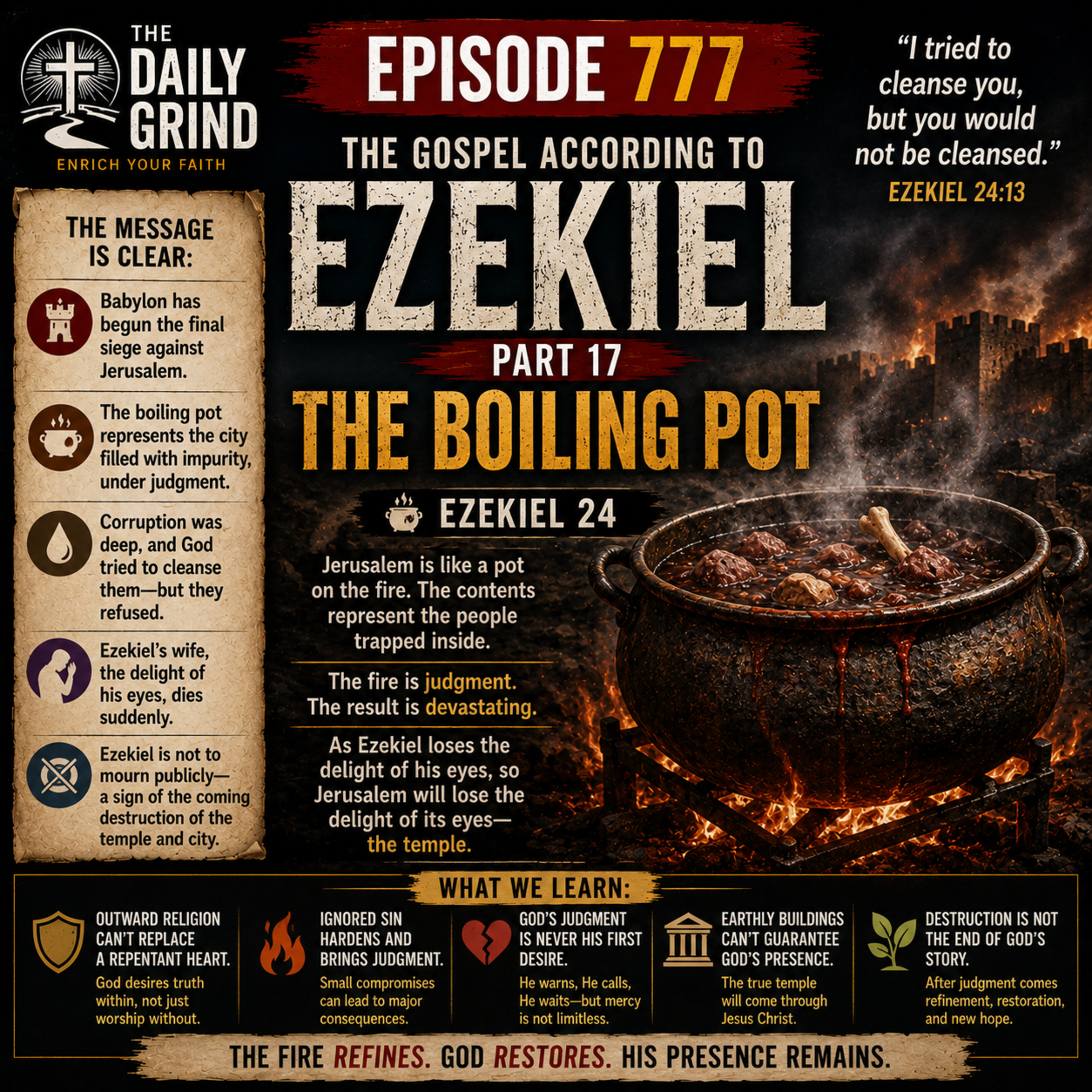
777 The Boiling Pot Ezekiel 24 (The Gospel According to Ezekiel Part 17)
May 2600:18:48Tap to summarizeTuesday, May 26th: In Episode 777 of The Daily Grind, we continue The Gospel According to Ezekiel with Part 17, “The Boiling Pot,” from Ezekiel 24. This chapter marks a major turning point in Ezekiel as Babylon officially begins its final siege against Jerusalem. God gives Ezekiel the image of a boiling pot filled with meat and bones to symbolize the city under judgment. The pot is corroded with impurity, showing that corruption and rebellion had become deeply embedded within Jerusalem. God declares that He had tried repeatedly to cleanse His people, but they refused to repent. The chapter then becomes deeply personal as Ezekiel’s wife, “the delight of his eyes,” suddenly dies, and Ezekiel is commanded not to mourn publicly. His personal loss becomes a living sign of the coming destruction of Jerusalem and the temple, the very thing the people treasured most. Ezekiel 24 reveals that outward religion and sacred symbols cannot replace transformed hearts and genuine surrender to God. Yet even in the collapse of the old system, the chapter quietly points toward future restoration and the deeper reality of God’s presence fulfilled through Christ. The boiling pot reminds us that ignored compromise eventually hardens, but God’s refining work always carries the possibility of renewal.Email me your questions, comments, and suggestions. I'd love to hear from you! If y'all wanna talk more 'bout this, I'm all ears. Just give me a holler. You can also help by sending me your favorite trivia or dad joke(s) at spencerjd@thedailygrind.website Or respond below with comments, trivia or jokes.
Transcribe →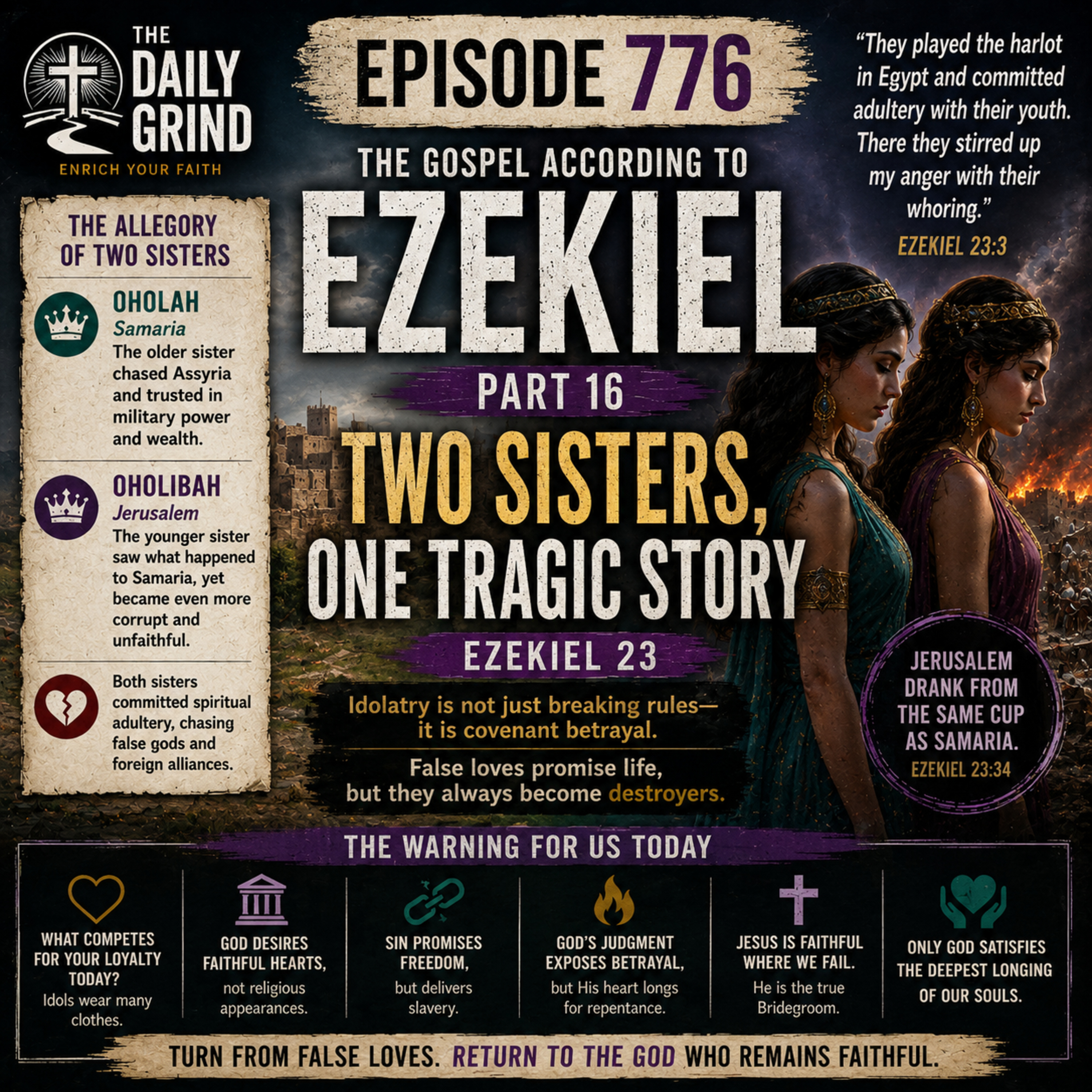
776 Two Sisters, One Tragic Story Ezekiel 23 (The Gospel According to Ezekiel Part 16)
May 2500:19:18Tap to summarizeMonday, May 25th: In Episode 776 of The Daily Grind, we continue The Gospel According to Ezekiel with Part 16, “Two Sisters, One Tragic Story,” from Ezekiel 23. Ezekiel tells a shocking allegory about two sisters, Oholah and Oholibah, representing Samaria and Jerusalem, to expose the spiritual unfaithfulness of both kingdoms. Instead of trusting God, they continually pursued foreign powers, idols, political alliances, and the values of surrounding nations. Samaria chased after Assyria and was eventually destroyed by the very empire she trusted. Jerusalem witnessed that collapse and still followed the same path, becoming even more corrupt. Ezekiel reveals that idolatry is not merely rule-breaking but covenant betrayal, a turning away from the God who loved and rescued His people. The chapter shows how false loves eventually become destroyers, as the things people trust instead of God ultimately enslave and wound them. Beneath the harsh imagery, however, is the heartbreak of a God grieving over His people’s rebellion and still calling them toward repentance. Christians ultimately see the answer to humanity’s divided loyalties in Jesus Christ, who remains faithful where human beings continually fail. Ezekiel 23 challenges us to examine what competes for our ultimate loyalty, identity, and trust today.Email me your questions, comments, and suggestions. I'd love to hear from you! If y'all wanna talk more 'bout this, I'm all ears. Just give me a holler. You can also help by sending me your favorite trivia or dad joke(s) at spencerjd@thedailygrind.website Or respond below with comments, trivia or jokes.
Transcribe →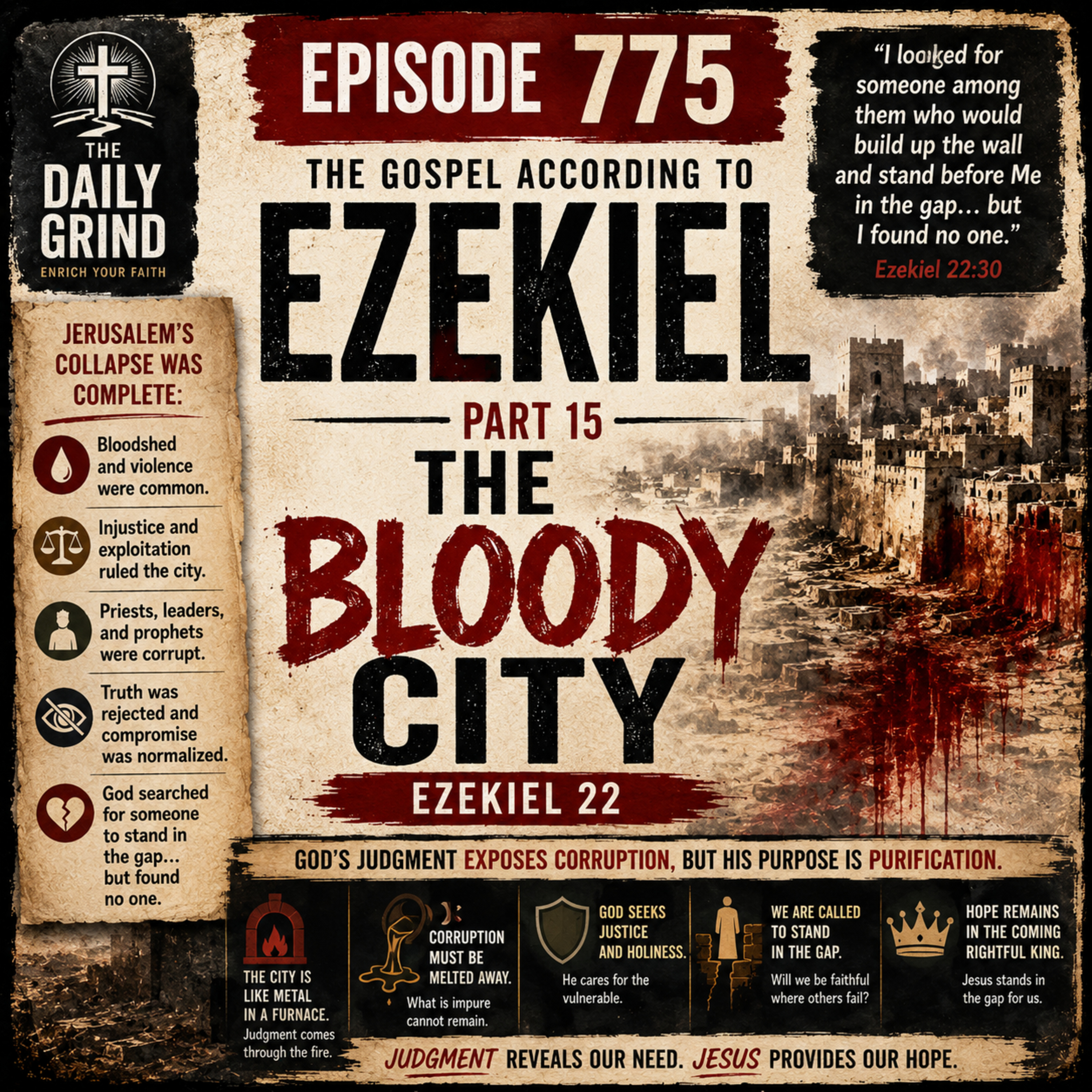
775 The Bloody City Ezekiel 22 (The Gospel According to Ezekiel Part 15)
May 2200:17:59Tap to summarizeFriday, May 22nd: In Episode 775 of The Daily Grind, we continue The Gospel According to Ezekiel with Part 15, “The Bloody City,” from Ezekiel 22. God confronts Jerusalem with a devastating list of corruption, violence, injustice, and spiritual collapse that had spread through every layer of society. Leaders exploited people for gain, priests profaned holy things, false prophets covered corruption with lies, and the vulnerable were oppressed instead of protected. Ezekiel reveals that the city’s downfall was not merely political but deeply moral and spiritual. One of the most heartbreaking moments comes when God says He searched for someone willing to “stand in the gap” for the land but found no one. The chapter warns how compromise slowly becomes normalized until entire cultures lose the ability to recognize corruption clearly. Yet even in judgment, the imagery of the furnace reveals God’s desire to refine and purify rather than abandon His people completely. Christians ultimately see Jesus as the One who perfectly stands in the gap humanity could not fill, bringing reconciliation and restoration. Ezekiel 22 challenges believers to pursue justice, truth, holiness, and courage in a world tempted toward compromise.Email me your questions, comments, and suggestions. I'd love to hear from you! If y'all wanna talk more 'bout this, I'm all ears. Just give me a holler. You can also help by sending me your favorite trivia or dad joke(s) at spencerjd@thedailygrind.website Or respond below with comments, trivia or jokes.
Transcribe →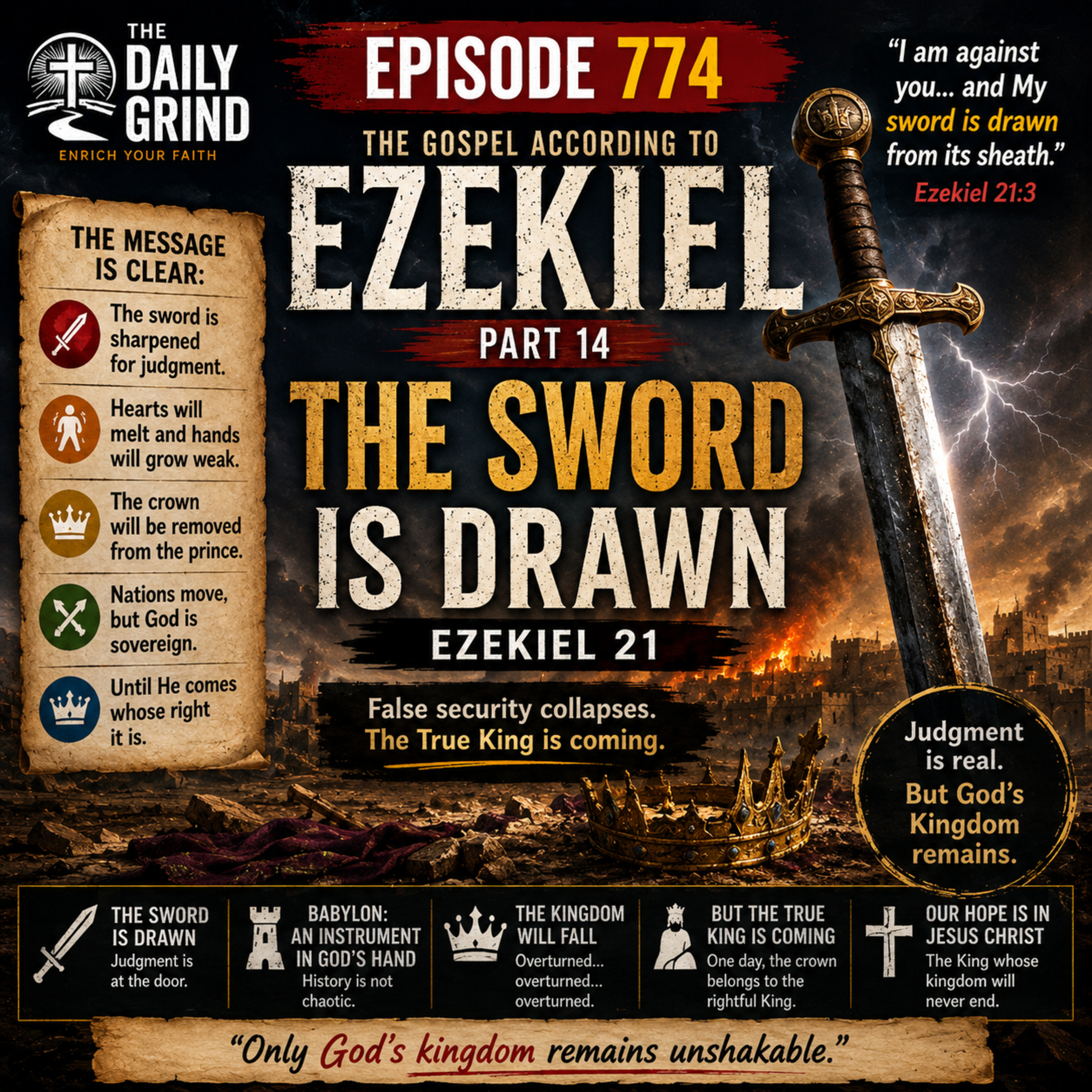
774 The Sword Is Drawn Ezekiel 21 (The Gospel According to Ezekiel Part 14)
May 2100:18:02Tap to summarizeThursday, May 21st: In Episode 774 of The Daily Grind, we continue The Gospel According to Ezekiel with Part 14, “The Sword Is Drawn,” from Ezekiel 21. Ezekiel delivers a dramatic warning that judgment is no longer a distant possibility but an approaching reality. The chapter centers around the image of a sharpened and flashing sword prepared for slaughter, symbolizing Babylon’s coming invasion against Jerusalem. God declares that He is now standing against His own people because of their persistent rebellion, corruption, and refusal to repent. Ezekiel physically groans and trembles before the people as a living picture of the fear and devastation that are coming. The chapter also reveals that behind the movements of nations and empires, God remains sovereign over history and kingdoms. Yet even in the middle of judgment, Ezekiel introduces a powerful thread of hope when he speaks of the crown being removed “until He comes whose right it is,” pointing forward to the coming Messiah and the true King. Christians see this fulfilled in Jesus Christ, the King whose kingdom cannot be shaken. Ezekiel 21 reminds us that false securities eventually collapse, but God’s kingdom alone endures forever.Email me your questions, comments, and suggestions. I'd love to hear from you! If y'all wanna talk more 'bout this, I'm all ears. Just give me a holler. You can also help by sending me your favorite trivia or dad joke(s) at spencerjd@thedailygrind.website Or respond below with comments, trivia or jokes.
Transcribe →