← The Dan Buettner Podcast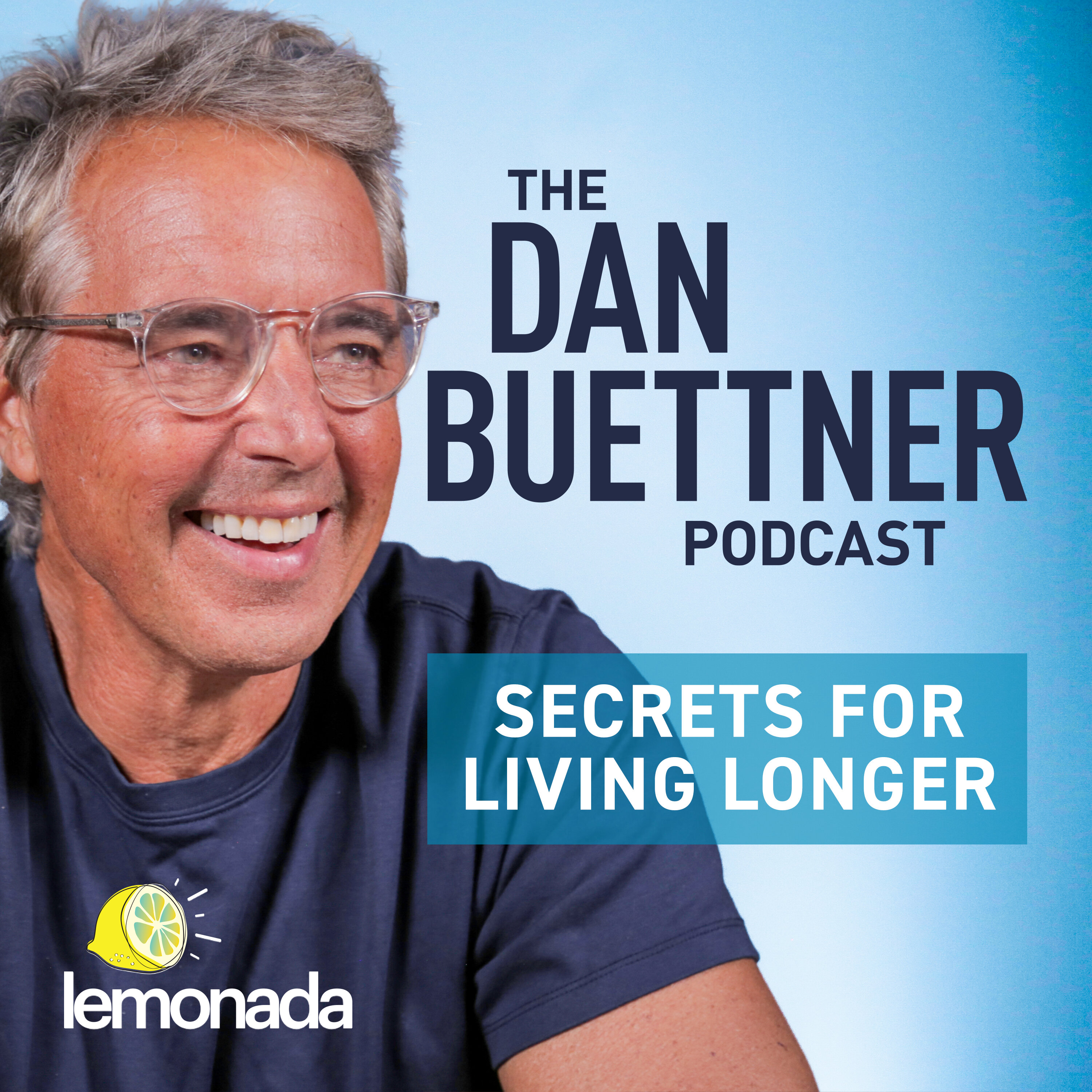
Loading summary
Transcript273 lines
- [00:02]
Dan Buettner
I've always said that one of the most counterintuitive keys to longevity is purpose. We know from long term studies that people can articulate their sense of purpose live about eight years longer than people who can. So this podcast is sponsored by Squarespace, a company that believes in helping you bring purpose to your life. In the blue zones, purpose, or ikigai, is the central part of daily life. It's what gets people out of bed in the morning. For those of you who have a purpose and want to share it, whether it's a blog, it's about gardening, or it's a blog about business or selling your art, Squarespace makes it simple to do. With their amazing cutting edge design tools, you have total control over your site's design without ever touching a line of code. And for those of you with products to sell, Squarespace's powerful e commerce tools give you everything you need to grow your business from managing inventory to secure checkouts. It takes the stress out of building an online presence, leaving you with more time for what truly matters. And that's purpose. So if you're ready to share your gifts with the world, go to squarespace.com livebetter for a free trial and and when you're ready to launch, use the offer code LIVE better to save 10% off of your first website or domain. Lemonada.
- [01:34]
Jeffrey Katzenberg
Our ambition is however many years you're going to live to if we can keep you healthy to the last day and then you just go 1 in.
- [01:45]
Chris Wharton
9 adults over 65 are living with Alzheimer's or dementia.
- [01:49]
Jeffrey Katzenberg
How much time have you spent exercising your brain?
- [01:53]
Dan Buettner
You guys are underselling this. You know, we're sort of told to get X number of minutes of cardio and X number of minutes of strength. But what you're telling me, if you've ever heard of Shrek the Lion King or Beauty and the Beast, you're going to recognize this next guest. You know, usually I'm interviewing scientists, but today I have one of the top Hollywood moguls whose next production is, believe it or not, longevity. Coming on to unleash a few secrets. He's starting a brand new business with a young entrepreneur named Chris Wharton. But he not only reveals what this new business is going to do to add to the body of knowledge, to help us all live longer, he gives it gave us some incredible secrets I've never heard anyplace else. The power of partnership. Probably the best life hack I've heard is and Jeffrey Katzenberg has created fantastic partnerships not only in his business life, but Also in his personal life, but he also gave me arguably one of the best piece of advice for finding purpose in everyday life, something that has fueled him for 74 years of success, health, and even, I would say, vitality. Listen in, you won't regret it. Just to give a little bit of context, I'll tell you a little bit about what I do and then it'll give some more context in the, in our conversation. So about 20 years ago, in an effort to in a sense reverse engineer longevity, I instead of looking in test tubes or petri dishes, I worked with a team of demographers and identify these five areas where people are living manifestly longest. And these are places that in some places have the highest centenarian concentration. But that's not so interesting because making it 200 is mostly right now is mostly a genetic, you won the genetic lottery. But what makes these blue zones extraordinary is they tend to have the lowest rate of middle age mortality. In other words, guys our age or people our age are living about 10 years longer in full health than the average American, even the average wealthy American. So we identified Okinawa, Japan, Sardinia, Italy, longest lived men, Icaria, Greece, island of 10,000 people where there's no discernible dementia, about eight extra years of life expectancy. The Nicoya Peninsula of Costa Rica, which was basically an underdeveloped world in the 1970s, now has the lowest rate of middle aged mortality. People have about a two and a half fold better chance of reaching a healthy age 95 than we do in America. And then among the Seventh Day Adventists, a group of conservative Christians living about seven years longer. So the idea was to look for the correlates or the common denominators as a way to look for insights on what we might ought to do to live longer. And I found that most of what we think leads to healthy longevity is misguided or completely wrong, or at least most of what's marketed to us. So I tend to be a bit of a disruptor in the space and I try to couch everything I say in an evidence based point of view. But it often flies directly contrary to what for example, Peter Attia might say. And I think it spawns sort of healthy debate in service of getting a clear idea or offering a clear idea.
- [05:28]
Jeffrey Katzenberg
Well, I mean, the thing that's interesting about this is the reason that we reached out to you is we actually share much more in common in terms of sort of the thesis of how we look at, you know, health span versus lifespan and in particular the science and the thing that is foundational to what we've set out to do. And we're right at the beginning of the beginning. So you've forgotten more than we know. So we're clear. But our, our ambition was to bring together the greatest research scientists from around the globe, very specifically in the various domains of health. So our process was, is if you look at longevity, so longevity is a big word and it's an umbrella.
- [06:39]
Dan Buettner
Yes.
- [06:39]
Jeffrey Katzenberg
And underneath that are, you know, several, dozens at least very specific verticals that are whether it's bone density or skin or you know, metabolic, you know, we can go on and on and on into, you know, these domains. In each of those domains around the globe there are scientists who have dedicated their life to actually going super deep and to understand and to study and to build data around this. And so our idea really Chris's is, was let's go see if we can pull together the greatest group of scientists, each one who's the Michael Jordan in their domain. I made a great analogy and offer them a resource that they mostly don't have today. So there's a very specific value for them and bring them together into a single place of excellence around healthspan. And the last thing I say and you know, let's pass the mic is that there's so much work that's gone on into disease, disease detection, disease treatments, we don't do that. And that, that's not our, that is not our line. Our ambition is however many years you are going to live to, whether it's 75 or 80 or 90 or 100 if we can keep you healthy to the last day and then you just.
- [08:32]
Dan Buettner
Go, that's the way you want to go.
- [08:33]
Jeffrey Katzenberg
There you go. That's our ambition. Very, that's a very.
- [08:37]
Dan Buettner
In bed, after sex.
- [08:38]
Jeffrey Katzenberg
Yes, whatever.
- [08:41]
Dan Buettner
I love this for a number of reasons. First of all, most, you know, I live in Miami, which is full of these anti aging clinics that are very long on diagnostics. You pay 100 grand a year and most you're coming in for these tests and then sure, this shows all kinds of things to worry about here and think areas where you're healthy. But then on the actual prescriptive, it all boils down to get more sleep, eat better and get physical activity. And I think the hubris of thinking there's a pill or a supplement that's going to anti age us is absurd, never happening. We have 40 trillion cells in our body. Our hearts can go bad, our arteries could harden, our brains atrophy, our skin wrinkles, our cartilage goes. There's so many systems that every one.
- [09:31]
Jeffrey Katzenberg
Of those is happening to me in real time. I'm going, wow, did you share my medical.
- [09:37]
Dan Buettner
We're going to speed up the film so people can see it, but let's go out before we go in. So you guys have this innovative approach, WonderHealth. Let's get it out there. And I love it. I love the idea that there's 34 domains that we're not over indexing trying to figure out what's wrong with people, but really trying to figure out how to fix these common areas. But in general, if you want to add healthiers, if you're speaking to the average American or the type of American who's likely to be interested in becoming part of, of, of. Of Wonder Health. What, what's, what's. What are the ingredients to the, to the, to the recipe?
- [10:23]
Chris Wharton
No, I think it's. We have to be careful not to like, create these blanket recommendations to people. I think actually that's kind of the problem that we face is that we have one or a handful of people finding evidence for things they believe in and then giving these very broad statements about what individuals should be doing. I think the n of one approach should be to get this very precise and granular data to do some deep phenotyping on an individual to understand their baseline. Because we have, as Jeffrey mentioned, these 34 separate domains that we know impact length and quality of life in some degree. And so we need to be able to create enough precise and granular data to then build this roadmap that is specific for an individual. Because what works for me doesn't necessarily work for you. And we know that there are some broad majors. We call them nutrition, exercise, sleep, human connection. We know they all impact us in a myriad of ways. The, the actual question we need to answer is how do they impact me as an individual? And without that granular baseline data, we are approaching this with a sledgehammer rather than a scalpel.
- [11:34]
Dan Buettner
Yeah.
- [11:34]
Chris Wharton
And we know, we know how to improve some of these metrics. Um, so what we did was, you know, we brought together these scientists, and these are really the best of the best. Right. They.
- [11:43]
Dan Buettner
Can you name names?
- [11:44]
Chris Wharton
I can name all of them. Yeah, I've got them all written down right here.
- [11:47]
Dan Buettner
Tell me your favorites.
- [11:49]
Chris Wharton
I can't. I can't give you one favorite. There's 64 of them now.
- [11:52]
Dan Buettner
All right.
- [11:53]
Chris Wharton
But collectively they lead.
- [11:54]
Jeffrey Katzenberg
Pick an area. Pick an area. In particular, whether you sleep or nutrition or.
- [11:59]
Dan Buettner
Who's your nutrition guy? Dariel.
- [12:01]
Chris Wharton
Schmotzafarian or one.
- [12:03]
Dan Buettner
Oh yeah, yeah. We know former tough Louise Burke.
- [12:06]
Chris Wharton
Yeah, he's a great Gene Bowman at Harvard. We, I mean we've got, we've ended up going a bit overboard because like choosing who the world's best anything is, is subjective.
- [12:14]
Jeffrey Katzenberg
Right.
- [12:14]
Chris Wharton
But we, yeah, yeah, but we needed to. Yeah, yeah. So we, you know, I just want.
- [12:19]
Jeffrey Katzenberg
To say he named three names, all of which you go, oh, that's legit.
- [12:23]
Dan Buettner
Yeah, no, no, no, yeah.
- [12:24]
Chris Wharton
I mean, look, collect. Collectively they run over 30 of the leading longevity labs at major academic institutions. They've got 8,000 papers on aging research. I'd say between all of them there's over a thousand years worth of research experience on aging and human performance. These are the best of the best in their areas.
- [12:45]
Dan Buettner
I'm going to push you here a little bit, Chris, because so most people listening right now, they hear Chris and Jeffrey are going to be here and you guys, you sit at the mountain of all this great research. But to the average person listening here in Iowa or New Jersey or Oregon, what, what's your general advice to living longer? And then I want to get down to.
- [13:10]
Jeffrey Katzenberg
So it's rather than advice, we, we need to tell you what the mission of Wonder Health is.
- [13:17]
Dan Buettner
Okay.
- [13:18]
Jeffrey Katzenberg
Right. So it's right now what we're trying to do. And as I said, we're, we're new. But by bringing these world class scientists together with the very, very best state of the art tests and testing equipment and the knowledge and metrics that they've already built around this, the ambition for us is actually to find outcomes that can be popularized. So for the people that are listening here, this is not, this, this research lab is not built for a bunch of super high end people that can pay $100,000 a year for it. That's not the I, that's not the objective at all. We're not a retailer. We are about finding outcomes and to discover new things that are science based that will actually be able to be available to tens of millions, not to thousands. That's the goal here in this in it. And so the sort of state of the art lab is actually just, it's a foundation and it's a beginning. And the goal here is to actually come up with these broadly applicable things that we can say to the people that are listening today. Here's one for you. How much time have you spent exercising your brain?
- [14:46]
Dan Buettner
I don't think people think about that.
- [14:47]
Jeffrey Katzenberg
Okay, well it's 35% or more of when you think about aging, then the things that we have to deal with. You know, I don't remember that things quite the way I used to. There's, you know, oh, I forgot that. Or, you know, I noticed that I'm not as focused as I. Well, guess what? Nobody is spending any time exercising your.
- [15:08]
Dan Buettner
Brain, meaning reading or puzzles or.
- [15:11]
Jeffrey Katzenberg
I'll let him talk.
- [15:12]
Chris Wharton
Yeah. I think cognition is a great example of, of something that is wildly important to all of us, but wildly untested.
- [15:19]
Jeffrey Katzenberg
Right.
- [15:20]
Chris Wharton
Like how many tests have we done to measure our executive function or our working memory or our reaction time or peripheral vision? We don't do these.
- [15:27]
Dan Buettner
Pretend I'm a 12 year old and tell me what exactly you mean by this brain exercise or cognitive function.
- [15:33]
Chris Wharton
Yeah. So. So, yeah. We know now that, you know, one in nine adults over 65 are living with Alzheimer's or dementia. Right. We know one in three over 85 are, you know, it's killing more people than prostate and breast cancer combined. Right. And so we are, we have this myriad of information on how to improve our physiology, our physical health, our lean tissue mass, our body composition, but no one's really talking about cognitive health. And that's because it's very early science. Right. We have people on our board like Rudy. Tansy is a great example out of Harvard who discovered the Alzheimer's gene. Rudy is now working on several different interventions, hardware tools that we can ultimately democratize to help people to optimize their brain health.
- [16:16]
Dan Buettner
But can you give us a sneak peek of what is, what is, what do you mean by exercising your brain? How does one actually do brain burpees or whatever?
- [16:23]
Chris Wharton
Brain burpees, that's what the business should be called.
- [16:27]
Jeffrey Katzenberg
Yeah. That's better than wonder health. Brain burpees.
- [16:30]
Chris Wharton
Yeah. So there's, there's a great tool that, that Rudy developed with a scientist called Sean Patel, both out of Harvard, called React neuro, which is a selection of different tests that are aimed to measure our brain function effectively. And this is a relatively inexpensive piece of hardware and which will become a VR headset.
- [16:48]
Jeffrey Katzenberg
Yeah, VR headset. And a set of interactive things that you are doing to where you're actually having data come in and you're reacting to it physically. And that actually is an exercise for your brain. It's actually kind of fun. It's a little bit like playing a video game.
- [17:10]
Dan Buettner
Yeah.
- [17:11]
Jeffrey Katzenberg
Right. But it's, it's, it has that, like that video game has that familiarity to it. But this is actually. And you should talk about. We have a particular person that's and this is new. So let's be really clear. We're, we're at the beginning here. You should talk about the one person that you've actually done some work with on this anonymously.
- [17:32]
Chris Wharton
Well, we've done it, we've done it with a number of, number of members. Now who specifically are you thinking about? We've got a number of pick anyone?
- [17:42]
Jeffrey Katzenberg
Yeah.
- [17:42]
Chris Wharton
Very well known CEOs, founders, celebrities who are going through this process and have gone from level one on this react headset up to level five. The same as NFL player might be in terms of like peripheral vision and reaction time and multiple object capture. All metrics that we know influence they.
- [18:00]
Jeffrey Katzenberg
Were before they started doing these exercises. I'll just, again, just to tell you, when you say exercises, it's six minutes twice a week.
- [18:08]
Dan Buettner
There we go. Now we're getting it.
- [18:09]
Chris Wharton
Yeah.
- [18:10]
Jeffrey Katzenberg
Okay. Six minutes twice a week.
- [18:12]
Dan Buettner
Not a big investment.
- [18:12]
Jeffrey Katzenberg
You put a headset on and you actually go through this series of exercises, tests or whatever you want to call it, games in which you're actually doing responsive things that are very, it's very.
- [18:25]
Chris Wharton
Specific to like specific areas of the brain. So we can't just, we have to remove all of the guesswork and ground this in actual evidence. Right. And so then we layer over, you know, Gene Bowman out of Harvard also is working on building neuroprotective diets and these biomarkers that will measure specific metrics in your panel that will then determine certain areas of our nutrition that we can optimize to protect our cognition. Like if we let Dr. Dragana Ruja, also out of Harvard, developing a blood plasma assay and these stress indexes to measure how sleep deprivation or chronobiology is impacting brain health. If we layer over all of these very deep dive areas of science, then we can ultimately create this sort of closed loop system where we can determine, you know, which of these tests, technologies, hardwares ultimately can become scalable and affordable so that we can access them and improve the mental health, cognitive health of the population.
- [19:27]
Dan Buettner
This episode is sponsored by BetterHelp. You know, I am a journalist and I'm used to talking to a lot of people when I'm working out some sort of a problem. And when it's a personal problem, I end up calling six people and I often get six different opinions. And I'll tell you, there's something Mark Twain once said. The difference between the lightning bug and lightning is the difference between the word and the right word. BetterHelp has real licensed therapists to help you make sure you get the right word, if you know what I mean. You know. BetterHelp has been helping people find their match for over 10 years and they have a 4.9 rating out of 1.7 million client session reviews. So these are real licensed therapists who are helping you get through your. Your problems. As the largest online therapy provider in the world, BetterHelp can provide access to mental health professionals with a variety of expertise. Find the one with better health. Remember the difference between the word and the right word. Our listeners get 10% off their first month at betterhelp.com live better longer. That's better h lp.com live better long, longer. So I hold three world records for biking across five continents, but I can honestly tell you my single best week of cycling was with Divine Cycling Adventure company. We took a glorious trip across Sardinia. They had three guides that kept the bikes going. They were great tour guides. They were great chefs. They knew the history of the place. One guy was an expert on wine, by the way. Nobody was ever for want of wine. And they knew the best terroir. They knew where to get the best food. We woke up in the morning, we had pimpin bicycles that were ready to go. A fantastic breakfast. We went on somewhere between 50 and 70 miles a day of exquisite riding. They curated the course, they found a great place for lunch. We always ended with a great dinner. It was just the best mix of physical activity actually experiencing a place. Not just traveling to it, but experiencing a place and then emerging from the experience with new friends, new knowledge, and better conditioning. So it's called Divine cycling and adventure company. It's $150 off per person when you book your first Divine Tour. That's D u v I n e dot com. Live better longer and we'll see you.
- [22:11]
Chris Wharton
When you're 100 rather than a handful of people.
- [22:16]
Dan Buettner
You, you guys are enormously talented and successful. I know you've had other businesses. Chris and Jeff, your. Your Hollywood pedigree speaks for itself. Why longevity? You know, why is that all of a sudden such a big topic? You know, I've been it for 20 years and, you know, I was like, you know, sort of the peewee Herman of scientists. All of a sudden people want to talk to me. But what is it about longevity that is attracting the attention of billionaires and venture capital?
- [22:44]
Jeffrey Katzenberg
People have been looking for the fountain of youth forever. Like, that's not. It may, it may seem new, but it's not. This has been around as long as mankind has been around in this. And And I think that for, for Wonderco, for us, we look for change the world, investment opportunities, things that, that could be applicable on a very, very global scale. And I, I think we've seen over the last decade or so too, the area of health and longevity is just keeps getting more and more. Well, you know, our lifespan is in fact, as you know, getting longer because we are the, the science of medicine keeps getting better. Right. And so there are.
- [23:38]
Dan Buettner
I'll tell you something interesting though. I'm actually writing another book for National Geographic on this. Life expectancy is indeed growing, but it's slowed down since 1990. And life expectancy in the developed world now is essentially getting us more older people who are sicker for longer, which are not only bankrupting our economies, but also producing millions of life years of morbidity. So right now, and this is why I'm hoping, you know, what you, what you guys are doing right now, longevity is not getting us what we want.
- [24:10]
Jeffrey Katzenberg
Because Jeff, when you came, that's why it's an opportunity.
- [24:13]
Dan Buettner
Yeah, but, but you also point out happiness and the importance of living a life that is rich and full and satisfying and not just a long time. And I think that a lot of these sort of Silicon Valley bros that tell you to go in the gym and pump protein are not doing us a service in that.
- [24:35]
Jeffrey Katzenberg
And that's fine. But listen, so three years ago when we decided to look at the universe of longevity and just because I had met Chris, my partner, Sujay Jaswan. So Sujay, who's half my age, twice as smart as me, I'm not kidding, he got so excited. He's been interested in this area. His wife is a fertility doctor. So he's been around the area and has been of interest to him for a very long time. And I met Chris and they then sort of partnered up with one another and started really kind of thinking about this as an area of opportunity for us as investors to do something that would be new. So we went and we market mapped pretty much everything going on out there in the world today in terms of longevity. And, and we discovered, what you discovered a very long time ago is 95% of it, snake oil, 5% of it is actually good people, I think, doing, you know, smart work.
- [25:49]
Dan Buettner
I hear some promise.
- [25:50]
Jeffrey Katzenberg
I would give it more credit than you probably would, but you've been at it a couple of more decades than me. I'm a little bit more of the glass full guy. What we found to be pretty uniform in that area is that. And it's what really was the ultimate sort of catalyst for us is that you have people who know something about everything, but they know everything about not very much. And our theory was we want to go and find the people that know everything about something specific in this area and then bring them together like a team. Right. Think of them as a football team here in which we've got guards and tackles and, you know, hunters and quarterbacks. We want a team on the field. And the thing that got them excited about it is they then would actually be able to collaborate with one another. Because all of these researchers that he's rattling off here, each one is in their little silo and doing brilliant work in their silo, but seeing what is the impact on one and the other.
- [26:59]
Dan Buettner
Synergistic.
- [27:00]
Jeffrey Katzenberg
There you go. Because it is, even what they're doing is those 34 categories, actually, every one impacts the others. And so what we're doing is giving all of them this insight into all of the data around each one of these domains. And so they can actually now work in tandem with one another. And that's part of what got them excited about, is that, you know, they, as I say, they've all been off in their research labs, most of them, for multiple decades. They have no idea, you know, you know, how does your brain function?
- [27:34]
Dan Buettner
Yeah.
- [27:35]
Jeffrey Katzenberg
You know, impacting, you know, your metabolic.
- [27:39]
Dan Buettner
And we're now finding the same things that drive type 2 diabetes, drive cardiovascular disease, drive dementia, and if you're just sitting in your silo the whole time, you're, you're, you're not maximizing again.
- [27:51]
Jeffrey Katzenberg
So remember, you're saying disease and we're actually talking about health. Now these things do cross paths on us. So not to say that they're not.
- [27:59]
Dan Buettner
Two sides of the same coin, right?
- [28:00]
Jeffrey Katzenberg
Well, yes, but we're not, you know, when you talk about heart disease or cancer or, you know, Alzheimer's, we're not researching those and we are not.
- [28:11]
Chris Wharton
Well, look, I think it's about, we are researching how to prevent those.
- [28:14]
Jeffrey Katzenberg
Right.
- [28:14]
Chris Wharton
And I think the prevention of those is what ultimately gives us the opportunity to live longer. But you're right, like the, the, the gap between healthspan and lifespan is way too big now there 12ish years on average, about 10% of someone's life.
- [28:28]
Dan Buettner
So crazy. Your wonder health is, is it the, the outcome mostly is this body of, of knowledge that is dispersed through sort of IP that is available or license.
- [28:44]
Jeffrey Katzenberg
It out or is it will be.
- [28:46]
Dan Buettner
Will be or is it mostly you have a team of clients who come in and, and you look after them, you help them prevent disease. What, what's the, what's the business model?
- [28:56]
Chris Wharton
Yeah. So right now we are bringing together all these scientists and we are effectively a living lab. So we have a very small number of people that were running through this n of one study. So we're taking all of these different verticals, testing for them and then intervening, aggregating that information to understand what would be gold standard for that person to based on their biology, genetics and preferences. And ultimately that's going to give us, we're going to be able to observe trends across these verticals. And that's why the scientists are so ambitious. To me both this is expensive study for them to run.
- [29:26]
Dan Buettner
So I'm a little slow with it. If I come in.
- [29:29]
Jeffrey Katzenberg
No, you're not at all.
- [29:32]
Dan Buettner
If I come in as a client, what do I do? What's the process that you take me through to expose me to these experts and, and keep me healthy?
- [29:44]
Chris Wharton
Yeah. So once we've done traditional medical onboarding, we understand any contraindications, medical history and so on, we get you in for a two day testing experience. So this is two three hour sessions, so six hours in total. And we have to obviously sequence that very specifically to remove any interference effects. But the outcome there, and we're testing across all of these different verticals and the outcome there is we get a very deep granular set of data about your biology, your genetics. Okay. We can then de anonymize that and then send that out to the specific scientists themselves so we can get their interpretation for Dan or member X, what is the low hanging fruit or the red flags areas of concern, what's already optimal that we can then park and then we aggregate that back and our clinical team do a great job of this aggregate that into an ongoing roadmap. And so there's two important factors. One is with all that data we have to be extremely careful not to overwhelm. Right. There's what we don't want to do is add time to someone's day. So we want to be able to get very specific so we can get you the highest possible return on your time and energy. And without that data we are guessing. Right. Without that data we could be wasting minutes, hours a day. So we should get very, very specific deep phenotyping, understand specifically for you how we can move the needle and then trend all those metrics upwards and track.
- [31:05]
Jeffrey Katzenberg
You over a period of years. So this is not just one and done you once a year, you come in for A deep dive. And There are these 1400 metrics, the areas that reveal themselves out of the box of places that need attention or areas of weakness. They'll give you a set of programs that you can start to address those things, do a sort of intermediate, much smaller tests, much of which can actually be done remotely three times in the. Over the next nine months and then a year later come back in and now do a full test. Because seeing where you are and where you, where you've got, where you were, where you are, where you're going is the only way to do this. It's not like you can just come in, wave your magic wand and it's all going to be fine. It doesn't work that way.
- [31:59]
Dan Buettner
Not even the premium package.
- [32:01]
Jeffrey Katzenberg
You could do this for you. Yeah, the soupy doopy version. You're looking for your magic pill again there, Dan. I know you're trying to find that fountain of youth. We have not discovered it. Sorry.
- [32:12]
Dan Buettner
How does this differ from Tony Robbins and Peter Diamantes and there's a number of other. Well, first of all, you have me sold on your. The aggregation of these 34 areas in these top experts. I love that. Is the process though much different than it is for any sort of concierge longevity clinic?
- [32:33]
Jeffrey Katzenberg
Well, it. The answer is no and absolutely no.
- [32:37]
Dan Buettner
Good answer.
- [32:38]
Jeffrey Katzenberg
Yeah, the answer is no. I'm sure they all do their tests and probably take many of these measures. I will say at least half of the testing that we do is unique and doesn't exist anywhere else in the world because it's not been. These scientists have not yet put these out into the world. You can't find them anywhere else. So probably half of it is proprietary still because it's, it's new. But the difference here is, is I think, and again, this is, you know, our success isn't dependent upon what anybody else is doing. It's only dependent on how well we do what we're doing. But if you ask me, what do I think it differentiates from most of these other legit organizations out there is that ours is 100% science based and it's based on the most expert research scientists in these fields. This doesn't exist anywhere else. There's not. If you want to get into the issues around sleep and sleep patterns and where you have deficiencies in this and how you can be more effective at your sleep, we have the three leading research scientists in the world who are going to tell you that. Now that I don't think you get anywhere else.
- [33:58]
Dan Buettner
I find that refreshing. And I would be a little bit, My eyes would be rolling a little bit if you're talking about stem cells or rapamycin or.
- [34:05]
Jeffrey Katzenberg
Oh, we can do that too.
- [34:08]
Chris Wharton
So I think we don't, but we could. An important, important thing to mention here, right, is that we, I think the difference for us is that we have no flag in the sand, right? We lean, we lean entirely on the scientists. They pick the tests, the protocols, the interventions, the hardware. You know, we have picked nothing in there. So we're leaning entirely on the evidence. And we're so confident in that that we actually allow the members to have consultations one to one with any of the scientists. Right. And so they can actually hear it straight from them what is happening right now in that area of research. And I don't believe that is happening elsewhere.
- [34:40]
Jeffrey Katzenberg
So the other.
- [34:41]
Chris Wharton
Sorry, sorry, the other piece is that, and we discuss this off air, that we can write the most perfectly prescribed granular program for someone based in the most cutting edge science. If they don't stick to it, it doesn't work.
- [34:53]
Jeffrey Katzenberg
Right.
- [34:53]
Chris Wharton
And so there is some habit science involved here. There's a bunch of metrics that we're not testing for with depth inside a lab. Happiness, joy, faith, hope, human connection. These all make a difference. They're really significant needle movers for how long and healthy you live. And so I think the thing that we do very well is one, we ground everything in the science, but then we weave it into your life and in a way that doesn't suck the fun out of it, in a way that removes friction and allows you to adhere to the plan.
- [35:20]
Dan Buettner
And can you give me example of that?
- [35:22]
Chris Wharton
Of what? Removing.
- [35:23]
Dan Buettner
Removing the friction and doesn't remove the fun.
- [35:26]
Chris Wharton
Yeah. So I think without granular data on, say, let's say, physiology, your ability to build lean tissue or improve heart and lung function, if you're not getting granular data, then you're probably doing much, much more than you need to. So say, for example, we do. Jeffrey's a great example. We do this.
- [35:42]
Jeffrey Katzenberg
I'm the research primate around this. I just thought through telling you I spent 100 minutes, you should put that.
- [35:47]
Dan Buettner
On, on your card.
- [35:50]
Jeffrey Katzenberg
Yeah, no, I was, by the way, I was, you know, I was guinea pig one. I like primate.
- [35:57]
Chris Wharton
So when Jeffrey came in, he actually said to us very specifically, you know, I'll do this, but you cannot add one minute to my day. Right. And so everything we did was to sort of reverse engineer the program to fit into his life in a way that he could.
- [36:10]
Jeffrey Katzenberg
So Keep doing so, Dan. So I've been working out since I was 30 years old and I don't know whether you, you know, you look, it's like I'm 94. So. Because you're reading the Blue Zone. So it's working. So it's working pretty good.
- [36:26]
Dan Buettner
No.
- [36:26]
Jeffrey Katzenberg
So I'm gonna ask you about that.
- [36:28]
Dan Buettner
Next, by the way.
- [36:29]
Jeffrey Katzenberg
Okay. So, but, but so I have, I have allocated. I'm a time allocator. I'm very, very, you know, regimented. I really care about my time. Right. I think I just, investment of time to me is like the most valuable resource that I have. And so I said to them, two things. One, you're not going to turn me into a rice eating monk. I'm a foodie and I want to. That part of my happiness is actually to be able to eat well, not eat well, eat badly. I'll give you, can I give you the three most important food groups to me?
- [37:03]
Dan Buettner
Yes.
- [37:05]
Jeffrey Katzenberg
Crunchy, crispy and fried.
- [37:09]
Dan Buettner
That's the tagline. Crunchy, crispy and fried on the podcast.
- [37:15]
Chris Wharton
Giving too many snippets that they could cut into some like social media posts.
- [37:18]
Jeffrey Katzenberg
I don't care. So, but you know, I've allocated as I, you know, over the years and as I said, I've been exercising gym and exercising gym since I was in my 30s and very regimented about it. I don't, I said, I cannot allocate another five minutes a day. Don't give me three more exercises to do. What you can do is take my program and you can pull it apart. You can't touch my reading because as I said to you, that, that cardio for me is my knowledge time. It's, it's, I, I happen to be on a bike, but really what I'm doing is, is that I'm getting information. I'm reading for that and, and with a voracious appetite and retention. I don't even, my body doesn't even know I'm on a bike.
- [38:02]
Dan Buettner
That's so amazing.
- [38:03]
Jeffrey Katzenberg
Okay. So I say to them, okay, the rest of that time is yours. You guys decide. Do you want to change my exercises? Do you want to increase the weights, lower the reps to whatever. They found some things in terms of my physiology where I have some weak points in this that I had no idea that surprised me in it. And they said, well, you got to start to address those things. Like my posture has been bothering. Like I look at it, I don't think my posture is as good as it used to be.
- [38:32]
Dan Buettner
And Feel free to work on that as we speak here.
- [38:35]
Jeffrey Katzenberg
I did, when I said it to you, saw me put my, my shoulders back into the chair. Because we're all sitting like this. Yeah, yeah.
- [38:43]
Dan Buettner
Looking at our screens.
- [38:44]
Jeffrey Katzenberg
Right. So what Reallocated. But tell. Well, okay, but just talk about the outcome of changing a small, A handful of them. When I say a handful, I mean maybe four things in my exercise program and talk about what happened out of that.
- [39:01]
Chris Wharton
So, yeah, after, I think it was a 90 day retest we did with you, you dropped seven pounds of fat, put on two pounds of lean tissue, improved balance by 74 years old. Yeah.
- [39:11]
Jeffrey Katzenberg
Like if you, somebody, if you actually said that to someone. Yeah, that's not going to happen.
- [39:16]
Dan Buettner
Yeah.
- [39:16]
Jeffrey Katzenberg
Okay. Well, I'm telling you, I didn't do hardly anything, in my opinion. And to me, that's what's so critical about this is.
- [39:24]
Dan Buettner
Tell us what you did.
- [39:25]
Jeffrey Katzenberg
Changing human habits is the hardest thing.
- [39:30]
Dan Buettner
It's damn near. It fails for almost all people all the time. But what, what did you do, Jeffrey?
- [39:35]
Jeffrey Katzenberg
That, that, that they literally changed some of the exercises. The, the types of weights, the types of lifting I was doing, the amount of reps that I was doing. So there was just a rebalancing of it. And I went from a program in which I was doing three days of program and then repeating it. Right now it's four days of program. And, and then I rinse and repeat and that's it. So it changed up the, the some in the interior of that time.
- [40:09]
Dan Buettner
Yes.
- [40:10]
Jeffrey Katzenberg
And produced a kind of startling result.
- [40:12]
Dan Buettner
So you told me you, you, you, you on a stationary bike 100 minutes a day during what you're reading. And then you're also lifting weights some few times during the week. How much?
- [40:22]
Jeffrey Katzenberg
Every day? Every day.
- [40:23]
Dan Buettner
You lift weights every day. How much time?
- [40:27]
Jeffrey Katzenberg
So just about 40 minutes or so.
- [40:31]
Dan Buettner
Yeah. That's pretty amazing. And do you remember one or two of the things they told you that you specifically that you're doing different during your weightlifting time?
- [40:41]
Jeffrey Katzenberg
Yes. So the most specific thing is, is that my core and my balance was actually suboptimal, which I was surprised since I spent so much time on the bike. I just thought I had such strength in that.
- [40:59]
Dan Buettner
Right.
- [41:00]
Jeffrey Katzenberg
And it, it was not. Well, we, I should let him talk about it because he's more objective and knowledgeable and. But there's some crazy statistic about over age 65, you take a fall, you break something.
- [41:13]
Dan Buettner
Yeah.
- [41:13]
Jeffrey Katzenberg
You're done.
- [41:14]
Dan Buettner
40% mortality.
- [41:15]
Chris Wharton
Yeah. Within, within 12 months as well.
- [41:17]
Jeffrey Katzenberg
So they said they looked At. At my core, and just said, you have some real weaknesses in those areas in it. And we're going to start having you do goblatts and this and that and the change. And, you know, I think this is.
- [41:31]
Dan Buettner
You guys are underselling this. I think this is a bigger insight than, you know, because, you know, we're sort of told to get X number of minutes of cardio and X number of minutes of strength. But what you're telling me is how you. What you do during that time. It's crucially important. How many reps change me. Yes.
- [41:51]
Jeffrey Katzenberg
I mean, when you just say I lost seven pounds. That's fat. And gained two pounds of.
- [41:55]
Dan Buettner
Maybe some of you can see Jeff on, On. On you, but he is incredibly fit.
- [42:00]
Jeffrey Katzenberg
He.
- [42:01]
Dan Buettner
He exudes energy. 74. 74 sharp. And, you know, he famously drinks a lot of Diet Coke. Or used to.
- [42:10]
Jeffrey Katzenberg
Used to.
- [42:12]
Dan Buettner
I once read a dozen a day.
- [42:13]
Jeffrey Katzenberg
And you're still alive.
- [42:16]
Dan Buettner
And, you know, it's food groups.
- [42:18]
Jeffrey Katzenberg
That's a blue zone cheat that you didn't. You weren't aware of. But damn, 50 years of diet Coke has just made me.
- [42:25]
Dan Buettner
You know, I just want to take just an interstitial here because you both look really healthy, and at the end of the day, I'm sure by osmosis you've Learned from these 34 scientists some things that you apply in your own life, but what. What else is part of your longevity regimen? I'll start with you, Jeff, and then Chris.
- [42:46]
Jeffrey Katzenberg
I have made a slight adjustment in my diet in that my A1C was a bit higher than it should be, but it wasn't in a metric of diabetes. But it was. Yeah, but it wasn't in a danger zone, particularly given how much exercise I do, specifically how much cardio I do. And so I. Best doctors in the world at ucla. And every year I'm in there and they have said, listen, it's not optimal, but we can't say to you, give up your happiness, because, as I said to you, I'm a foodie, you know, so. Bread, pizza, pasta. Never met a dessert I didn't fall in love with.
- [43:25]
Dan Buettner
Was your wife jealous?
- [43:28]
Jeffrey Katzenberg
So. And they. These, they'll tell you when you go to dinner with me, you're getting. They're getting every dessert on the menu, every dish, every day. Like, okay, it's. So again, the experts in this area, the nutritionists who saw my data said, you know, we look at this slightly differently. Yes, your A1C today, it's okay. It's kind of at the ceiling of where it should be. But based on our research that we have right now today, we will tell you if you stay the course with this, it's a little bit like compounding, you're going to be okay. Okay, okay. Okay. And then Suddenly at about 84 or 5 years old, you're either pre diabetic or diabetic. And when that happens, you're going to be on a severe diet and you're going to have pretty serious medications that you're going to take.
- [44:17]
Dan Buettner
So what did you change?
- [44:18]
Jeffrey Katzenberg
The alternative to that is if you make a small adjustment now and do slightly start to actually modify your sugar and how much of it you do, you, you'll never have this issue. And guess what? Six months later, my A1C is actually. So instead of having dessert every day, breakfast, lunch and dinner, it's four days a week. Right. And I pick and choose.
- [44:46]
Dan Buettner
Oh, too small. Okay.
- [44:47]
Jeffrey Katzenberg
And you know, they put a glucose monitor on me. I'm wearing it now. And I look at it and I pay attention. I'm not obsessed with it. And it, I don't let it run my life, but it's a great aid. And once again with a small adjustment here and you start to find out things that you. I don't know why, it's a crazy thing, but somehow or another if I eat blueberries, you know, and yogurt, my spikes. Right. Okay. The other thing is if I eat dark chocolate and even chocolate on vanilla ice cream, I'm good.
- [45:20]
Dan Buettner
No. Who knew? Forget the strawberries. Bring on the chocolates. On.
- [45:24]
Jeffrey Katzenberg
But that's the point is every human being has these unique things in terms of how we ingest these things and how they impact us. So what I've done is I've discovered things that keep me happy and don't kill me.
- [45:41]
Dan Buettner
Hi, it's Dan Buettner. I've spent my career studying the healthiest, longest lived people on earth. The people of the blue zones. And a key theme I found is that their longevity isn't about extreme diets or punishing workouts. It's about setting up the right environment and having your unconscious choices be slightly better over time. The same principle applies to our dogs. What if you could give your best friend a healthier longer life with one simple daily change? That's why I'm excited about Get Joy's freeze dried raw dog food. It's a clean, simple whole food diet. No fillers, no artificial ingredients, just 100% real USDA sourced ingredients packed with gut healthy probiotics and and prebiotics. And the best part, it's effortless. Just scoop and serve. No thawing, no prep. It's real food that fits your real life. When your dog is eating better, you'll see it in their energy, their shiny coat, and their overall vitality. Give your dog the gift of a healthier, more joyful life. And to get you started, Get Joy has a special offer for my listeners. You can save 30% on your first order, plus receive a free scoop and a free bag of treats. $33 value@getjoyfood.com DanB. You know, as a National Geographic Explorer, I spend most of my life on the road. I like to say my main residence is a backpack. But actually, I also have a real home. But it doesn't have to be empty while I'm away. And because I'm not there most of the time, I usually host on Airbnb while I'm away. Next month, in fact, I'm taking a team of scientists to Sardinia, where we found a new blue zone. And while I'm away, my home will be on Airbnb because it makes sense. And the income I make off of that covers most of my expenses. So I'm a big fan of Airbnb, and Elisa is a big corner of my little universe. You know, your home might be worth more than you think. Find out how much@airbnb.com host you know, this is Population Insights, which is not always applicable to individuals, but let's just say so. We know the group of people who can identify their sense of purpose, who can articulate it, live about eight years longer than people who are rudderless in life.
- [48:15]
Jeffrey Katzenberg
I'll give you mine.
- [48:16]
Dan Buettner
That's what. That's what I was building to here.
- [48:19]
Jeffrey Katzenberg
I'll cut you off.
- [48:20]
Dan Buettner
Cut me off. Save time. Damn it.
- [48:23]
Jeffrey Katzenberg
So mine is actually never let your memories be greater than your dreams.
- [48:28]
Dan Buettner
Oh, I love that. Never let your memories be greater than your dreams.
- [48:32]
Jeffrey Katzenberg
So every day I get up and I'm blessed with the fact that I have. I'm never, ever looking in the rearview mirror, ever. Like, literally, unless you start asking me questions about something out of my past, I have no. I don't wake up and, like, think, oh, the Lion King, oh, Shrek, oh, whatever these things are, they're great, but they're not relevant to me and what I am doing today. Being here right now with you, I was looking forward. I'm excited to be doing this.
- [49:01]
Dan Buettner
Pressure, John.
- [49:02]
Jeffrey Katzenberg
Well, no, I mean, you've spent decades building this knowledge and this information and the Stuff that you've done is incredible. It's inspiring. And so to come and be able to talk with you about a field of which you are an expert and I am a research primate who knows nothing is a privilege, literally.
- [49:23]
Dan Buettner
Thank you very much. First of all, it's an honor to hear that. But it's a privilege to be with you and a privilege to be with you, Chris.
- [49:29]
Chris Wharton
Thank you.
- [49:31]
Dan Buettner
So what's your dream right now?
- [49:34]
Jeffrey Katzenberg
That Chris again, remember?
- [49:37]
Dan Buettner
So this is the main thing. Don't you do like 8,000 things?
- [49:40]
Jeffrey Katzenberg
I looked through all 80, but this is our baby. We started this company in partnership with Chris six months ago. It's very new and its ambition is very, very high. And it's not to have. We make no money running this lab and having wealthy people come through who can afford to pay for it. What they're paying for is the research and our ability to actually learn out of this. Things that will become applicable widely. Our interests are developing, whether it's software, hardware or, or just simply habits that can be popularized and out to tens and tens of millions of people in this. And so as I said, we're at the foundation. Part of this, in it, we're just starting to build this up. But it's this, this is a, this is a 10 year project. It's not a, you know, 10 month.
- [50:39]
Dan Buettner
I love it. It's a dream to actually help people live longer.
- [50:42]
Jeffrey Katzenberg
Absolutely.
- [50:43]
Chris Wharton
I think if we can democratize some of these things, then ultimately we can move the needle for the nation.
- [50:47]
Dan Buettner
Sounds like you're trying to do that. I love the idea that this is generating insights that will be available to the general public. Because at a certain point, you know, you make your money and more money doesn't necessarily make you happier, but it's when you move the needle on the human.
- [51:01]
Jeffrey Katzenberg
Well, the difference is all those other places that you talked about, those various blue zones. No, no, no, no. The labs and the. Oh yeah, and the down in Miami where you talked about these people paying 100,000 a year and blah, blah, blah, whatever those things are, those are for profit businesses. They were built on the foundation of every person that comes through there. Create some kind of return on investment and blah, blah, blah. They're businesses. They're not being critical, by the way. Fair enough. And I'm sure they're doing a lot of good for their clients. Otherwise they'll go out of business. Right. Ours is to actually have the capital to build out these products, the research, the knowledge, and then actually build products out of it as Opposed to having a concierge. Longevity, you know.
- [51:55]
Chris Wharton
Clinic.
- [51:55]
Jeffrey Katzenberg
Clinic, yeah.
- [51:56]
Dan Buettner
You know, I like to offer you an insight from. As you start this, just as something to kind of consider. So when you go to the parts of the world where people are actually living longer, they never try. In fact, most of the time they have no idea how they've made it to you. Ask them, well, you know, I smoke cigars or I eat two eggs and I hate men or whatever, but it's.
- [52:22]
Jeffrey Katzenberg
Always that a combo. I smoke cigars, I hate.
- [52:25]
Chris Wharton
Who is this person.
- [52:27]
Dan Buettner
And that's just the women. But the interesting insight is that longevity always seems to be the product of an environment. In other words, the ecosystem in which they live is somehow engineering their unconscious decisions. You're probably four standard deviations from the norm. And your discipline and your ability to time manage, et cetera. But, but most human beings, you know, you put them on a diet. You put a hundred people on a Diet, within about seven months you've lost 90% of them. And within two years, you've lost 97%.
- [53:05]
Jeffrey Katzenberg
I ate a lot of french fries for lunch today, so yeah, yeah.
- [53:11]
Dan Buettner
So even if we convinced you of a certain diet, same with exercise programs. If you look at the recidivism curves of people who join a gym and show up, the vast majority are gone by September.
- [53:21]
Jeffrey Katzenberg
Right.
- [53:21]
Dan Buettner
Within a year. Even supplements. Even if you found the pill guaranteed to reverse, we wouldn't take it for long enough to make a difference. Because remember, when it comes to longevity, if it's not something we're doing every single day for decades or a lifetime, it doesn't matter. You could do the absolute perfect thing all month long. Absolute. Per you guys, 34, the top experts in the world, they give they. We spent 10 years, and this is the exact thing you need to do, and you do it for a month, it has zero impact on whether or not you're alive in 2035 or how vital you are. So the products I submit to you should be products that shape our surroundings and influence our unconscious unconsciously, how we sleep, unconscious decisions on how we eat, moment to moment, unconsciously, how we socialize, how we engage with the world, how we, how we eat. And I'm just, you know, you're spending, you know, many, many millions of dollars to do that. I just hate to see the same old set of great insight. Here's what you should do. But actually getting people to do them, that's the hard thing.
- [54:35]
Chris Wharton
One pushback I'd have there, Dan, is, you know, there are a bunch of things that we can do and do do right now that can improve the way that you feel, perform, look acutely in the moment. So take that month that you said where you were doing all the right things. It's still worth doing because you feel better in the moment. And that's what we're trying to do as well. This isn't about just adding life. Adding years to your life is adding life to your years. Right. We're also talking about, we'll measure that. What we know we can measure that. We do measure that, you know. And you're also talking about what we know today.
- [55:07]
Jeffrey Katzenberg
Right.
- [55:07]
Chris Wharton
And so there is no silver bullet as it stands, but no one knows whether that's coming.
- [55:14]
Jeffrey Katzenberg
Right.
- [55:14]
Chris Wharton
And some of the emerging technologies and science that we're seeing today are wild.
- [55:18]
Dan Buettner
I agree.
- [55:19]
Chris Wharton
Like, and it is coming, Whether it's in 20 years time or 50 years time or in one year time, things will emerge that we can democratize and scale and make more affordable that will dramatically improve the quality of people's lives. And so right now we can only lean on the evidence we have, but we've all got a bridge to cross, right? And if we can cross that bridge in good health, maybe we'll be around to benefit from some of these things.
- [55:40]
Dan Buettner
What I said about shaping your environment for your unconscious is, wasn't an or to what you're doing was an and.
- [55:46]
Jeffrey Katzenberg
Yeah, yeah, yeah.
- [55:47]
Dan Buettner
It was a.
- [55:47]
Chris Wharton
Well, I think we can, it's a great question. How do we create long term sustainable lifestyle change? That's, that's what we all need really. Because whether these things are coming or not, that's what we need to cross this bridge in good health. Right. And so, you know, things, you know, we have the habit scientists and the emotional health and resilience and stress scientists to help build this type of program. So part of what we're doing is establishing how do we make these things more sticky? You know, how do, how do we make them higher return on your time? Like, how do we get a better result with less effort? Because ultimately that's what we want.
- [56:19]
Jeffrey Katzenberg
Right.
- [56:20]
Chris Wharton
And you know, I'm very different to Jeffrey in the way that I approach this. I'm doing 20 minutes a day instead of, you know, two hours a day. Does that make him right and me wrong? I don't think so.
- [56:30]
Dan Buettner
Yes, yes. Better get out.
- [56:31]
Chris Wharton
Well, look, here's the thing. Like, let's take, let's take cognition. It's a great example. We now know we can start protecting against cognitive decline 30 years in advance. Of symptoms. This is new science. We did not know this until recently. So I would argue that six minute, two, three minutes a week, two three minute sessions twice a week for your cognitive protection, Everyone should be doing right. And think about this like any good financial investment. The earlier we start contributing to the pot, the more we start benefiting from that. Compounding that Jeffrey mentioned. So the thing I would, you know, a big takeaway for the audience I would say is, you know, regardless of your age, you know, the best time to start something like this was 20 years ago. The second best time is today. Right. But I think, you know, if we look at the science as a whole as it stands, we have tremendous and tremendous research evidence to show that if we major in these majors, exercise, nutrition, sleep, stress management, human connection, that we can get a tremendous return on our time. Right. So that regardless of what's coming with any of this emerging science and research, do everything you can to major in the majors. Right now.
- [57:39]
Dan Buettner
Very good advice. On the way in, we were talking about happiness and how important that is. I mean, first of all, it doesn't. What good is it to live 100 years if you're miserable the whole time? So there's some research that shows that if you can manage your life to get in the top 20% of the happiest people, it's worth about six years of life expectancy over being in the bottom 20%. So one thing, I mean, one strategy for longevity is actually happiness. And I'm wondering if either of you have any insights on how to improve your happiness. And this is maybe from your personal life or it can be from your work life or it can be from what you've Learned from these 34 scientists.
- [58:21]
Jeffrey Katzenberg
I would say for me, um, I've come to understand and value partnership. I think partnership may be one of the most valuable things one can build around your life. And when I say partnership, I mean partnership with the people that you work with, partnership with the people you hang out with, friends. Partnership with a mate. I've been married 50 years in Hollywood.
- [58:58]
Dan Buettner
Does she know that?
- [59:00]
Jeffrey Katzenberg
I'm not sure, but I've had.
- [59:04]
Dan Buettner
That's a great insight.
- [59:06]
Jeffrey Katzenberg
I have great partners everywhere. I told you about my partner in business. He's a partner in business. And you know, and this guy Sujay I mentioned to you, half my age and twice as smart. I think having great people around you that make you happy, that inspire you, that challenge you, that love you, is I, I. You can't sit priceless.
- [59:27]
Dan Buettner
That is a really great insight. What what are the fundamentals of a good partnership?
- [59:33]
Jeffrey Katzenberg
Well, the secret to, to a 50 year marriage is, you know, and so this is, this is, you know, this is invaluable advice I'm going to give you. All right. Two words. Yes, dear. Works every time. Never failed me, ever.
- [59:55]
Dan Buettner
Does that work with your business partners?
- [59:56]
Jeffrey Katzenberg
Yeah.
- [59:57]
Chris Wharton
No, no, he never says it.
- [60:04]
Dan Buettner
I love that. But I mean, I imagine keeping your word, I. I mean, what.
- [60:11]
Jeffrey Katzenberg
Yeah, I mean, all of those things, you've created these.
- [60:13]
Dan Buettner
But, you know, it's one of these things that. You're absolutely right. But for, for those of us who don't have great partnerships, it's like, well, how do you, how do you pick a partner? And, and how do you. How do you maintain it? And what's the definition of a good partner and a bad partner?
- [60:30]
Jeffrey Katzenberg
Well, again, I, I don't. There's no.
- [60:32]
Dan Buettner
Yeah.
- [60:33]
Jeffrey Katzenberg
There's no pill that you get to take.
- [60:34]
Dan Buettner
Right, Right.
- [60:35]
Jeffrey Katzenberg
Okay.
- [60:35]
Dan Buettner
Yeah. But no, it's direct. Yes. Good partnerships. And how about you, Chris? What's. What's for. You seem like a really happy guy, by the way. You kind of come in with a big smile and mostly bouncing.
- [60:46]
Chris Wharton
I think, you know, leaning into failure, I think is a. Is a. Like not expecting to go through your life without any kind of setbacks and then actually like approaching failure as. As, you know, failing forward has been something in my life that, you know, I don't imagine anyone. And we get to spend time with the most successful, revered, influential business people, founders, CEOs on earth. I can't name one of them that hasn't failed forward. And at the time, it feels catastrophic if you fail at a big project or you have this big setback. But these, you know, you have to get these scars in order to become the person you need to be to succeed. And I think that is one thing I've learned from spending so much time with Jeffrey and Sujay and a bunch of our members. And so I think that's a, you know, leaning into the hard times is one thing. I think. I think, you know, find something that you are, Find something that you love, become brilliant at it, and then do more of it. I think would be my.
- [61:44]
Dan Buettner
There you go. I like that one. And then if you fail, learn from that.
- [61:47]
Chris Wharton
Yeah. And just keep failing forward.
- [61:49]
Dan Buettner
I want to be cognizant of your time. I have two more things. We give extra points for vulnerability here. So I want to ask you each a question. And the more vulnerable you are, the better. The question is this. Tell me about the Lowest point in your life. And you've won all the Academy Awards for the good things you've done and built multimillion dollar companies, and you shaped the really culture for two generations. And what about failure? Did you have something where you failed and just thought, yeah, many times. And what did you learn from that? Like, the worst.
- [62:31]
Jeffrey Katzenberg
Those are the things that make you stronger. You learn more from your mistakes than you do from your successes always. And that's been true across all the content that I've made over the years. You know, I learned more for the movies and TV shows and animated things that failed than I did from the successes. And so, like, what's the lowest moment? Well, probably the lowest moment for me, at least in a very public way, was when I was fired at Disney. You know, at the height of my success in 1994, you know, everything was 10 out of 10. You know, Lion King, Beauty and the Beast on Broadway, Home Improvement, TV show. I could go on and on about all of these things that were sort of in my domain, and I got fired.
- [63:22]
Dan Buettner
Doesn't make sense.
- [63:23]
Jeffrey Katzenberg
No, it doesn't make sense in it. So it's Shakespearean. You know, they said you got to go to Shakespeare to figure out how, why, and how. But in any event, it was difficult. It was a very both humbling and humiliating time because it was done unceremoniously. I mean, it was like, get out of here. It was a kick in the butt onto the street from this sort of pinnacle of, you know, running the Walt Disney Studios. So the equivalent of a really, really ugly, nasty, personal divorce. Right. That's the only thing I could think of that would. That I. That I've seen that would sort of maybe be some relatable power, you know, parallel thing. And, you know, and all I can tell you is, is that, you know, eight days later, I announced, you know, a partnership with David Geffen and Steven Spielberg, and we started DreamWorks. A whole eight days of morning. Eight days on. On my butt.
- [64:30]
Dan Buettner
So what goes on in that eight days that. That creates this Phoenix?
- [64:34]
Jeffrey Katzenberg
I told you already, I don't look back. Don't look back. You know, and I look back in learning from it, but I don't. I didn't mourn a moment about it. I. I was like, okay, one door closes and another one opens, and I'm not gonna. I'm not gonna be captive to something in my past. I'm gonna focus on what's in front of me and look to what I can do. Great. I had a failure maybe five years Ago, I had this crazy idea about a new form of short form content. It's called Quibi. You know, raised an incredible amount of money, launched this thing and in weeks it was a disaster. It was a failure. And I felt, And I owned it, right? Like I, they, they gave me everything I needed to take a moonshot and it didn't work. And I didn't, I always felt it was my failure, it wasn't anybody else's. There were other people that came along for the ride, but I don't blame anybody for anything about it. I own it. I've gotten way, way, way too much credit for the successes in my career. In which case I felt, be honorable and own your failure. So if you get more credit than you deserve in your successes, you probably ought to take the credit for over. Yeah.
- [65:53]
Dan Buettner
And, and that last failure did, did it humble you? Did, did it well, educate you?
- [66:00]
Jeffrey Katzenberg
Yes, of course. I learned many things from it. And just as a businessman and an entrepreneur and as a storyteller, because I was trying to create a new form of storytelling. And the answers, you know, of course I, I learned many, many things from it, including about myself, you know, in terms of how I managed failure. Right. And I, I was ambitious to handle, to manage failure generously. Right.
- [66:29]
Dan Buettner
And, and, and what does that mean?
- [66:32]
Jeffrey Katzenberg
I owned it. That was all. It's just, I love it in life. I'm sure if you go back to your things, usually it's like somebody else did this. Right.
- [66:41]
Dan Buettner
You know, See, that's where the big thing. Because a lot of people don't own their failure. It's somebody else's.
- [66:46]
Jeffrey Katzenberg
Yeah, no, this is nobody else. This is me. But I'm, but I, but again, I've my job in my careers. And I say careers because I've had multiple careers, including the career today. I'm the. You know, if they make the baseball analogy, I have one lane that I'm, I'm pretty good in, which is I'm a home run hitter, right? I'm the guy, you know, Ninth inning, two outs, bases loaded. Send up Jeffy, you're down by three. What are you gonna do, call me in? And I'm. Because I love swinging for the fence. That's my happy place, right? And the things that I have done have usually been those types of things. Now, by the way, nobody bats a thousand. Yeah, yeah, yeah, right, Babe Ruth. I don't care. Pick whoever you want to. No one bats a thousand, including. Muah. So. But if you don't swing for the fence, if you don't run with the ball if you don't kick it, if you don't shoot it, you don't score. You can't. If you can't score, if you. You cannot win by playing defense, there's no sport in the world that you can win.
- [68:09]
Chris Wharton
This is one of the best things about working with Jeffrey, by the way, is that he's always challenging you to think bigger. Right Then. So I'll come to him with the projects, and he's like, why not one step above it?
- [68:19]
Jeffrey Katzenberg
Why not bigger?
- [68:20]
Chris Wharton
Like we should be thinking about, you know, legacy business talking in terms of decades rather than years. And that's been the biggest thing I've learned from him. You know, think bigger always.
- [68:30]
Dan Buettner
And. And do you think this success, are you smarter than most or do you work harder than most? Or is it simply this really keen insight that you just aim higher than most?
- [68:42]
Chris Wharton
Definitely works harder than most.
- [68:43]
Dan Buettner
Yeah.
- [68:44]
Jeffrey Katzenberg
I have no idea who's. Who is. Who is good at looking at the mirror and actually being able to see what is.
- [68:51]
Dan Buettner
Is that a Shrek thing in there?
- [68:54]
Jeffrey Katzenberg
Yeah. I'm not. I don't know. I'm not. I don't. I'm not a. I'm. I'm no good at self analysis. It's not my lane.
- [69:03]
Dan Buettner
Yeah, no, but I mean that. Those were actually great insight. And with that, gentlemen, thank you very much.
- [69:09]
Jeffrey Katzenberg
Thank you for having us. Fantastic.
- [69:10]
Dan Buettner
We have. Where's those shirts? Because you guys were vulnerable.
- [69:15]
Jeffrey Katzenberg
Live long and prosper.
- [69:17]
Dan Buettner
No exit.
- [69:20]
Jeffrey Katzenberg
Points for vulnerability. Excellent.
- [69:22]
Dan Buettner
You guys are so wonderful.
- [69:23]
Jeffrey Katzenberg
Thank you. Thank you.
- [69:24]
Dan Buettner
Thank you very much for your work.