Loading summary
Transcript78 lines
- [00:00]
Sean Adams
Foreign.
- [00:10]
Michael Nadeau
Welcome to the report is May 27, 2026. Ryan, Sean Adams and Michael Nadeau here. The topic today is a realized loss analysis. We're going deep here folks. How do the losses in 2026 stack up against prior bear markets? We got bitcoin. It's been up about 26% from its February lows. Some signs that momentum is slowing. Maybe there's some ETF blood on the week that we'll discuss. And yet, and yet there is a mini altcoin season of sorts. The market is sending some weird messages, maybe some mixed messages. The big question, as always is where are we going next? We're going to go do a deep dive on that realized loss data and figure out what it's telling us about maybe some of bitcoin's unfinished pain. Also, talk about mini altcoin season hype. Zcash near. What does that mean? The ETF flows. There was a $1.3 billion whale sell on the week. Also, Michael Saylor has switched to buying bonds instead of bitcoins. That's new. And the macro setup as always, stick around to the end. We've got some key bitcoin price indicators to watch. Also Mike still has almost 50% of his cash waiting on the sub on the sidelines here. What's he waiting for? What's he looking at during the summer months of this year? Mike, your closing line on the report was really good. It was this Bitcoin is trading in a zone in which there are simply not many buyers and also not many sellers. Why is that? What's happening right now? Is this the calm before the storm?
- [01:44]
Sean Adams
We've been in somewhat of a calm. It's been interesting with bitcoin basically trading in this like 75 to 82k range or so for the last few months. And I think the reason for that is we've been right near kind of the short term holder cost basis. Right, right near the true market mean price. And there's just not a lot of buyers or sellers. You're trading right around where the kind of average cost of the network is. And so we need to see bit bitcoin either move in one direction or the other. And I think the there potentially is a follow on, on that. So I think it's an interesting time right now. It's been quiet. I'm kind of excited because now things are starting to happen. There's more data to analyze and things are, things are shifting. It's been really interesting just with, with the price performance of Bitcoin down about 10% or so over the last month. But we've seen these, these other coins rallying and it almost looks like, you know, bitcoin. Bitcoin moves first, Altcoins come after. Is this a regime shift or is it more of a head fake? I think we want to get into some of that today and also go through this realized loss as like a really kind of high level setting for kind of where we're at in terms of realized losses relative to past bear markets. So excited to get into it today.
- [02:54]
Michael Nadeau
I can't wait. This is a really great report today. First we got to shout out our friends and sponsors over at Galaxy. This one's for the institutions listening. If you're looking at the future of finance or the backbone of the next industrial revolution, I just mentioned crypto and AI in one sentence. Galaxy is the name you need to know. What's unique about Galaxy is they do both of these things. So in crypto, they are institutional trading, they are custody, they are tokenization. In AI, they are building big data centers. Okay, an HPC ready data center. Their Helio site, it's called 1.6 gigawatts of approved power. The publicly traded company, you know is glxy, that's Galaxy. And if you want to know how Galaxy can help you as institution, institutional capital build, invest and transform relentlessly, go check him out. There's a link in the show notes. All right, let's get to today's report. So Mike has almost 60% deployed in crypto, indicating he's not, he's not bearish, certainly, but he's not yet bullish. He still hasn't seen these fat pitches that he's waiting for. At least he'd like some more before he's done. 40% waiting on the sidelines. Bitcoin at the time of recording is 75K. Let's talk about this altcoin season, this mini altcoin season first. That's where you open today's letter. So it's weird that we're seeing a mini altcoin season amongst some select coins because, like, isn't bitcoin supposed to lead this? So what does this mean? Is this some confirmation that the regime has shifted, the animal spirit's coming back, or is it something else?
- [04:27]
Sean Adams
Yeah, it's an interesting time, I think, to be sort of observing things on, on crypto Twitter specifically right now. And you know, what you typically see is bitcoin make the move first. And we kind of, we kind of saw some of that. I think, you know, these Other coins, Hyper Liquid, zcash are, they're the two that are really outperforming. There's been some other kind of smaller AI adjacent coins that have, that have been outperforming, but it's really been those two coins. And as that's playing out we are seeing kind of like what I would call like what looks like kind of the return of the animal spirits. Right. It's been kind of interesting over the last, you know, let's call it last few weeks, last month or so. You're kind of seeing like the return of some people that maybe went quiet a little bit for the, for the first six months of the bear market. A lot of like larger accounts that will, you know, pump a lot of coins. We're seeing some of this activity which is sort of like what you see during a regime shift. Right. People are coming back in, retail's coming back in. So that's interesting to me. And we're going to go through some of the data to look at sort of the breadth of that. Like you know, typically you're going to see we have, we have an alt season index that we're going to get to here. But can we just do it now? Can we just follow on? Yeah, we can go right into it. Yeah.
- [05:41]
Michael Nadeau
Because this was really interesting. This is down below in the report, so I'm going to scroll all the way there. Here's the altcoin index. And so you said there was a mini altcoin season going on. It definitely feels that way with some key assets. So. And the assets are hype. Hyper liquid is just like doing incredibly well on the 30 to 60 day range. So is Zcash also some of the AI specific coins, VV, that's Venice token near is catching a bit. All these assets are catching a bit. What's interesting about this is like, like we still call them altcoins. I guess we call some people call anything that's not bitcoin an altcoin. To me the expression altcoin comes from like assets that are sort of either forked from Bitcoin or like bitcoin. You could even include Ethereum ether in that camp, but not quite bitcoin. I don't know if the term altcoin applies to like hyper liquid. That's like, that's almost. Hyper liquid is more comparable to a coinbase or a robinhood.
- [06:38]
Sean Adams
Yeah.
- [06:38]
Michael Nadeau
And also the AI coins like Venice, that's something different entirely. It's not trying to do anything that Bitcoin is doing. Maybe zcash Here as sort of the private alternative to Bitcoin. Maybe that's the only Altcoin here. But should we even be calling these things altcoins?
- [06:55]
Sean Adams
It's a good question. It's good. I mean, as the markets mature, I, I think, you know, a lot of these nomenclatures are going to kind of evolve as we go. And yeah, in this bear market, I don't think we've seen in the past like coins reaching, like big coins. Right. Hyper Liquid has a larger market cap, fully diluted than Solana now, a larger market cap than Coinbase now, which is pretty wild. So seeing these big moves, I think 45% move or so over the last month, like that's a lot of.
- [07:23]
Michael Nadeau
Wait, did you just say Hyper Liquid is bigger than Coinbase right now?
- [07:26]
Sean Adams
It is. Has a larger, fully diluted market cap than Coinbase. And I tweeted about this yesterday because that's actually kind of interesting. Coinbase International, which is like a small subset of Coinbase's user base, has done, you know, about 40% more volumes since Hyper Liquid over the last year or so. So that's interest, that's interesting to me, you know, on its, on the surface. But you know, if you, if, if you look at that as like a value investor, you're kind of like, wow, does Coinbase have a hyper liquid inside of it? And people aren't really realizing that potentially. But yeah, it's, it's, you know, it's bigger than Coinbase, it's bigger than Solana now. And I don't know if we've seen this in the past. You know, zcash has tried to push through all time highs, it hasn't quite gotten there, it's come off a little bit. But this, this is a little bit different. And as this is playing out, the activity on crypto Twitter kind of looks like a bull market almost all of a sudden. You've got these big accounts coming in, pushing narratives that can be reflexive with like retail following on to that. So something definitely to pay attention to. But you know, when you look at this Alt Season index, it, you, it barely registers on coin glasses Alt Season index, which is interesting. And to me that's telling me that like this is very isolated. It's not a large breadth move from the rest of the ecosystem. And so, you know, when we look at some of the other data, it gets kind of interesting. You know what's, what's also interesting here is like you're seeing euphoria on the narrative side with Hyper Liquid. But if you look at the data of what's actually going on there, it looks like a bear market. Right. You're not seeing open interest at sort of bull market peaks. You're off 50% or so. Volumes are off 50% or so. There is interesting stuff happening with, you know, Hip three and new, you know, perps markets and partnerships with S and P Global. And like, there's a narrative there, but we're not seeing like the sort of, you know, there's animal spirits on crypto Twitter. We're not seeing them on chain right now. I don't think. So.
- [09:34]
Michael Nadeau
What do you make of this then? And that's interesting. The old season index. The old season index is. Is barely. It's barely showing.
- [09:41]
Sean Adams
Yeah.
- [09:41]
Michael Nadeau
In alt season. And that means, I guess that this is much more isolated to what, like, you know, five, five to seven or so key assets. It's not all general non bitcoin assets.
- [09:53]
Sean Adams
Yeah. And it makes the sort of, you know, the narrative on Twitter and the sort of social side of it, it makes it feel to me like as somebody who's looking at both sides of it, it makes it feel like a little bit more of a head fake to me in terms of just like, is there tons of liquidity in the market right now? Are we in, you know, are we seeing stablecoin supply, you know, increasing all the things that you would want to see for it to be like a really durable move. And I'm not seeing that. So, you know, that's, that's kind of the setup here. And there's. There's rising macro risks and we're going to get into sort of what's happening on the bitcoin side here too. But interesting, interesting part of the market. And, you know, I got to give it up to Hyper Liquid. And you know, every time I tweet about Hyper Liquid, I get. I get more bullet. You know, I get attacked for simply sharing a chart. But I'm actually kind of. It's what makes me more bullish on Hyper Liquid because like there's a cult. There is clearly a cult on Hyper Liquid. That's something you I look for as an investor. Right. That's a. That's an army of marketers for the Hyper Liquid token. And so that is very interesting. Something I'm paying attention to. We missed. We missed, you know, hype when it was down to 20 bucks. I think we talked about it on the show and, you know, I think I missed it because we were kind of focused on, probably too focused on bitcoin. But My strategy is like, it's kind of an abundance mindset. Right. If I miss something, I'm not going to chase it just because it's. Everyone's talking about it. To me that's, that's a sign to probably, if you're in it, to potentially take some off. Right. And there's other coins or there's other stuff. You know, even though we've been mostly sitting in cash, we've also made some moves and we're having some fun and making some trades as well. So, you know, abundance mindset, don't chase things. But we're definitely keeping an eye on this ecosystem.
- [11:39]
Michael Nadeau
There's always a fat pitch somewhere. You don't have to hit all the fat pitches or the park. Let's talk then about bitcoin down, up, excuse me, 26% from the February lows. Maybe some animal spirits and some subset of coins. Let's talk about this from a realized loss perspective. You put a lot of detail and focus in the report on realized loss. First of all, why is that? Why realized loss as a data point interest area for you? I think you referred to this as unfinished pain that we might see.
- [12:16]
Sean Adams
Yeah, potentially.
- [12:18]
Michael Nadeau
What is it?
- [12:19]
Sean Adams
It's kind of another. We, we've covered a lot of stuff on market structure, you know, in a few past episodes, really trying to get a good feeling for like how much of the kind of top, top cohort buyer coins, the hot money that came in, how much of that is rotated? Our view is that has been that it hasn't fully rotated and hasn't fully played out. Looking at realized losses is just another way to sort of assess that. And this is something I was looking at the, the, the other side of the coin when we were kind of back in September, October, looking at realized profits and trying to see if that was sort of overheating relative to where we were. And, and now we're roughly, you know, getting, getting close to eight months into this bear market. And so it's a good time to kind of level set with what has played out. Just another really kind of high level data point to, to anchor to.
- [13:08]
Michael Nadeau
So explain this to us now. There are some layers. So here's the top layer. We're looking at a chart which is just bitcoin realized losses over time from 2017 until right now. So it goes through the two previous cycles, the 2018 bear market, the 2022 bear market and the, and the current bear market we're in. And on the left axis it's bitcoin realized losses. This is in dollar amounts and it's a 30 day moving average. What is this showing us?
- [13:37]
Sean Adams
Yeah, so, you know, we've kind of boxed out the 2018 bear market, the 2022 bear market. And like typically what you see is like a pretty big sp realized losses as the cycle turns. Right? So pretty early in the cycle. And that's what we saw in 2018. And then we, we've historically seen these large spikes at the end of, end of cycles. And so we saw that at the end of 2018, kind of a capitulation December of 2018. And in 2022 it was similar. So we had a pretty big spike early, you know, so this was like late 2021, going into 2022. And then we had a larger spike in the June period of 2022. So kind of around the time that we're entering now and then another larger spike, you know, around when FTX went down, November of 2022. So it's kind of common to see a spike early in the bull market and a spike later in the, in the bear market.
- [14:36]
Michael Nadeau
And the first, the first spike has been bigger than the second spike in the previous two.
- [14:41]
Sean Adams
Well, it was in 18, it actually wasn't in 2022. So the first spike in 2020, there were kind of two in 2021. The first one was kind of, we had like a initial peak, but we were still in a bull market. Came off and then we had a larger spike. But the biggest spike was in the middle of the bear market. It was actually in that June period. That was when blockfi, you know, went out of business. Celsius, like there was a lot, if you, you remember that period.
- [15:09]
Michael Nadeau
How could I forget? Yeah, so sorry, what's the name of that hedge fund? The Suzu Hedge Fund.
- [15:15]
Sean Adams
Yes.
- [15:15]
Michael Nadeau
Three Hours Capital. How did that escape my brain? Oh my God.
- [15:20]
Sean Adams
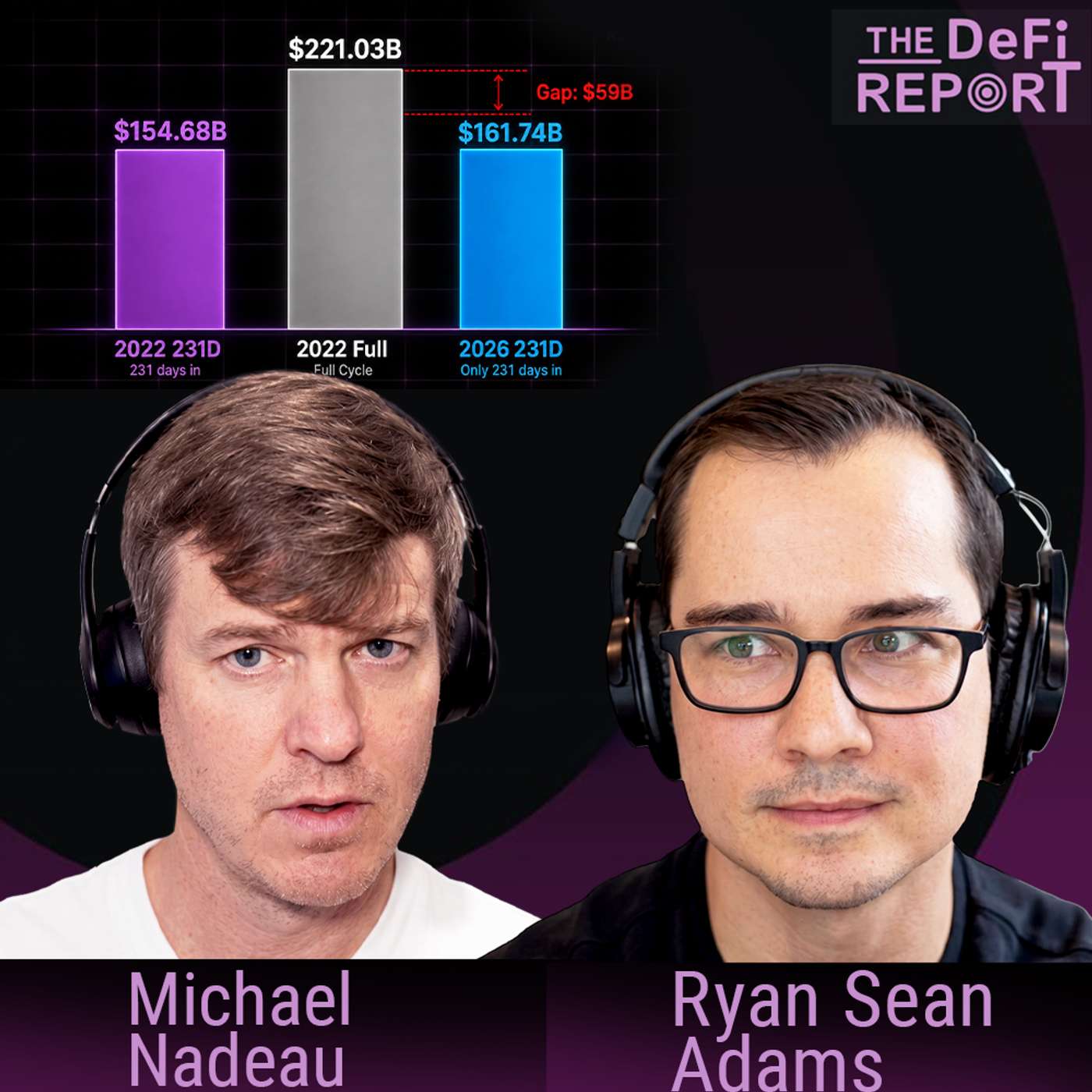
Yeah, it's been a while. We don't want to remember that. But that was, that was kind of the biggest capitulation in 2022. And then we had another one. So what this, this cycle is a little different. If we go to the right side of the screen, we had, you know, a pretty large spike. And these spikes are growing, right? Because the market value of bitcoin is growing, is growing over time. So that's normal is to see them being larger. But we had a pretty big spike, you know, when we came off back in October and then we had a, a very large one in February with the capitulation there. So now, you know, the, the, the, the analysis starts to turn to what is the likelihood of another spike and where are we at? This is just giving us a visual of kind of what it looks like. We went much deeper in the analysis here, which we can get to now. This is like maybe a little cleaner way to, to look at it. And this is just aggregating the realized losses across cycles. So there's no scaling here, we're just aggregating. And you can see right now about 231 days into the bear market, we are at like a very similar level in terms of realized losses as we were in 2022. So that's, that's one way to look
- [16:28]
Michael Nadeau
at the dollar value of the losses 231 days into the cycle.
- [16:34]
Sean Adams
Dollar value. Exactly. So, so around the same, you know, that's helpful to us to sort of just kind of level set. But you, you still have to scale this to kind of understand as bitcoin is growing and the market cap is going up, we need to scale it to that. So that's what this next chart is showing. And this is where it gets a little more interesting. We can see what we did here is we're scaling this to the peak market cap. Um, and we're basically saying, okay, how much, how much losses in dollar terms as a percentage of that peak market cap to, to understand as bitcoin is growing as, as a network, how are these losses scaling rel. Relative to that? Basically? And we can see it's kind of interesting that the, about 231 days into the bear market, both in 2018 and 2022, we had between 12 and 13% of the peak market cap had been set in realized losses at that time. So very consistent there. And if you go to the entire, you know, bear market, also very consistent right in the 17 range of 17% of the peak market cap, you know, came out and realized losses. So if we go to current, the current bear market again, 231 days in. So we're just lining it up with exactly where we were in the prior bear markets. We're only at 6.5% of realized losses relative to that, that peak market cap. So it's kind of interesting that the losses scaled relative to the market cap in the past cycles right now we haven't seen, we haven't seen that. So it telling me like maybe there's not, hasn't been enough pain out there just yet.
- [18:16]
Michael Nadeau
Okay, that's one interpretation of it. Another interpretation is that the bear market is more shallow, that there just won't be this pain ahead. What you're saying is basically From a nominal dollar value, the pain is about equivalent to 2022. But from a percent of market cap, it's about half of 2022. And you'd think again, if this played out like the previous cycle, we would have more pain ahead. But this is kind of objective in terms of the number of days, right? Both these cycles are 231 days. So this is also objectively showing us that it's been a shallower bear market. Like, wouldn't we have to conclude that at some level?
- [18:56]
Sean Adams
Yes, yes, absolutely. And you know, that's one way let's maybe we can get to. We've got some takeaways on this and kind of how I'm interpreting it. There's one. I took it one layer deeper here and instead of scaling it to the market cap, we said why don't we scale it to the increase in realized cap, right? So the realized cap rises beef, you know, as the, as the bull market is playing out. And that's basically all the capital that's getting invested into bitcoin cost basis of the network. And so what we did is we just took the total, you know, increase in realized cap leading up to the peak and then we're taking how much in realized losses basically came out during the bear market. I see. And this, this is a little bit more of a nuanced view. And you can see like it's back in 2018, we took out about 60% of the realized cap increase, you know, 231 days into the, the bear market. And we ended up taking out Almost, you know, 80, 81% through the entire bear market. This is like scaling down, right? So in 2022 we were only at about 40% of the total realized cap gain that came out 231 days in. We finished the cycle at 50, almost 57%. And we can see on the far right there in the blue bar, we're at like 22%. So. So we added 740 billion of realized cap. This is going back to like early 23 up to the peak in, in, in last year. And we've taken out 22% of that, you know, so far in 2022 we had taken out about 40%. So a little more nuanced view. It does look like it's kind of scaling down here. So maybe we won't see like the same levels as what we saw in 2022. But I think the overall takeaway is like it, it looks to me like, you know, not enough pain has really happened. I think there's like basically two interpretations of this. Not enough pain has occurred. Right. You could just look at it with a simple view using this objective data and say, yeah, it doesn't look, look right. We need to see, you know, about 140 billion of realized losses if we're going to match the severity of the 22 bear market in terms of scaling to the market cap. So that could be what's, what's coming. We don't know. I think the bullish interpretation of this is, you know, the, the holder base is stronger. Right. The people that are. Bitcoin's been around now for what, 17 years or so. So you know, there's just more knowledge, there's more education, there's people that are buying it kind of know what, what they hold and they're maybe just a little bit more diamond handed. We have, we have ETFs and institutional players now and the market's just maturing. So you could just look at it and say, well you know, this is of course like there's less pain like people are, we have like a more mature market structure. I think, you know, we're probably, the truth is probably somewhere in the middle on this. It's kind of where my head's at on it.
- [21:55]
Michael Nadeau
So when you say the truth is somewhat somewhere in the middle, you're saying effectively you do anticipate a shallower bear market and also you do anticipate more pain ahead still, even though that will be a more shallow pain than the 2022 cycle.
- [22:12]
Sean Adams
Yeah, yeah. I think a lot of this is going to depend on, you know, we're, we're going to get into some of the, you know, what we're seeing on the ETFs and stuff. You know, how do things start to do. What's the domino effect that we're potentially going to start to see play out here? The narratives that we were talking about a few, you know, a few weeks ago, a few months ago, the momentum stuff. Right, the momentum stuff. The ETFs, you know, really holding up really well. Looks, it looked like institutions were maybe a little more diamond handed than, than we thought.
- [22:42]
Michael Nadeau
That's starting to reverse.
- [22:44]
Sean Adams
Sailors in the market, it looks like, you know, it's starting to reverse. So we've got that chart up here and you know, this is starting to catch my eye a little bit. We've seen $2.5 billion of outflows over the last.
- [22:55]
Michael Nadeau
We're looking at Bitcoin, US spot, ETF net inflow. And you're saying now when we see 2.54 billion in net outflows over what period of time?
- [23:05]
Sean Adams
Over the last two to three weeks or so, that's, that's come out of the market. So there's been a shift there. And if you just like as a reference point, what is that? How, how much is that relative to like other 12, roughly 12 day trading periods, it's in like the, the worst, like 4%. So it's, it's meaningful. But as you can see on the chart, it's not, you know, jumping out relative to these, some, to some of these other outflow periods we've seen. But then yesterday we had something that caught my eye a little bit. So there was a whale that, that dumped 1.3 billion of the IBIT BlackRock ETF yesterday. This was confirmed by, by Bloomberg and Eric Balconis. And you know, that, that, that's a little spooky to me.
- [23:53]
Michael Nadeau
Don't like to see that.
- [23:54]
Sean Adams
Yeah, that's a little spooky because when you start to think about what's happening here on the macro picture with inflation, interest rates, Bitcoin may be starting to give us a signal of like, kind of what's where we're going here. And like, if you think about what investors, a lot of people still think Bitcoin is an inflation hedge. It's, it's really not. And even gold has, has been going down into the, into this environment. And so if you go back to 2022, rising inflation, higher interest rates, this is really bad for, for Bitcoin. You know, this just the, the, the way it plays out is investors just have to sell risky assets. And Bitcoin's probably the riskiest. If, if you're an institution, you're holding a bunch of Bitcoin, Bitcoin's probably the riskiest asset in your portfolio. And so this is what concerns me a little bit. And, and the market has a herd, there's a herd mentality to this. And so if you see one doing it, there's probably other shops that are looking at that move and starting to say, well, you know, the issue here is like, we've talked about this in the past. Bitcoin's kind of a memetic asset, right? If you can't just look at it and say, oh, that person sold. The fundamentals look fantastic, I'm going to just hold. It's more like, oh, everyone's shifting and like, maybe I need to shift as well. And that's why you have, that's why Bitcoin's so volatile, I think, and so something to pay attention to is just kind of what I would say there. And this is one of the things that people have been pointing to, to say like the bottom's in, right. These institutions aren't selling, you know, and this, it's more durable. So something to definitely keep an eye on.
- [25:30]
Michael Nadeau
So you think maybe the reason this $1.3 billion whale sold was to kind of take some risk off of the portfolio in general, maybe concerned about macro conditions in the months ahead. Now let's turn to funding rates because this is actually in the positive territory. And for the last few weeks we've been talking about the negative funding rates on bitcoin, which meant traders were shorting it essentially. Now they're net bullish on bitcoin.
- [26:00]
Sean Adams
Yeah, it's not a huge bullish move there. The funding rates are still relatively low compared to what you would see in a bull market. But it has split positive. You know, I think for me this is, we've talked about how, you know, we've been trying to assess that move that bitcoin made from, you know, early February up until it peaked a few weeks ago, about 82k. Trying to assess like how durable is this? Is it, is it, is there a chance here that a decent amount of that move came from just positioning? Right. And positioning comes into play when you have a lot of shorts on. If the price isn't going down, some of them are getting liquidated and that sort of reflexively can, can make the price go up. And so this is starting to confirm to me that maybe that was the case, that a lot of the movement there was coming from just really positioning rather than durable spot buying. You know, ETF flows, stable coin flows, things like that that I would, that I would like to see. So again, just another sort of data
- [27:04]
Michael Nadeau
point here and you're like, oh, that's confirmation that there was a bit of a short squeeze going on and that propelled some of the mom that we saw in the past few weeks prior to this kind of now more bearish short term cycle that we're in.
- [27:17]
Sean Adams
Yeah, yep.
- [27:18]
Michael Nadeau
How about Michael Saylor? So here's a tweet from Michael Saylor this week. We bought bonds, not bitcoin. The BVAC is charging. BVAC. Oh, BitVac. So he's saying it's like a battery, I suppose, it has to recharge every once in a while. What's this guy doing? He's not supposed to buy bonds. Does he have to pay someone back?
- [27:39]
Sean Adams
Yeah, and he's selling it as a, you know, as a bullish, bullish thing
- [27:42]
Michael Nadeau
here, which is he's selling bitcoin in order to buy these bonds.
- [27:45]
Sean Adams
Well, no, I mean, he's sort of tweeting that out, hey, we bought bonds. But hey, we're just charging the batteries. Like, don't worry. You know, it's sort of like, you know, trying to mask over the fact that they bought bonds. I mean, to me this is signaling, you know, they're trying to, she's trying to show up his balance sheet. I don't, I don't blame him. You know, he's trying to send a signal to the market that he's shoring up his balance sheet. They, they bought, they repurchased 1.5 billion of convertible debt. So they have less debt on their, on their books now. So that's, that's like a, you know, a healthy thing to do when you can do it. And you know, the thing that I'm paying attention to here is just they have about six months of dividend payments in cash remaining.
- [28:22]
Michael Nadeau
To my knowledge, they only have six month Runway to pay dividends before what?
- [28:27]
Sean Adams
Before they have to sell Bitcoin to pay those dividends or sell more stock
- [28:33]
Michael Nadeau
of some kind of potentially.
- [28:35]
Sean Adams
I don't, I'm not 100% sure how they could raise additional cash. Yeah, I guess he could, you know, issue shares, raise cash and you know, that's the Ponzi sort of, you know, economics of some of this. But he has hinted, you know, that they are prepared to sell Bitcoin and that's just being sold as like, yes, you got to sell, sell some. You're gonna, I'm still gonna acquire more than I'm selling, but I gotta sell some. When the price appreciates to pay these.
- [28:59]
Michael Nadeau
The market would not like to see Michael Saylor selling and, and certainly selling in size good to the market, I've got to say.
- [29:07]
Sean Adams
Right. And especially considering that this has been one of the like kind of strongest narratives if you're on the bull side here. And so something, something to pay attention to if, if the price starts going down. I mean, I could definitely see a scenario where the narrative shifts and people are blaming Saylor for, for it. So we'll see.
- [29:26]
Michael Nadeau
Let's talk about how all of this juxtaposed with macro and what's going on there. You, you said this in the macro section today. Our view on macro is simple. Right now it all comes down to Iran. We've held this view into the, that the war would drag on longer than the market wants us to believe. We continue to hold that view. The market depends on the macro depends on Iran. Let me, before we get into the case for why that you think that's true, let me throw out a counter case here, which is, Mike, the market depends on AI, man. It's all an AI trade.
- [30:00]
Sean Adams
Yeah.
- [30:00]
Michael Nadeau
Iran is just kind of a sideshow. Do you think there's any merit to the idea that the market is actually more dependent on AI than it is Iran?
- [30:10]
Sean Adams
The market's clearly very dependent on AI, and I'd say even the broader economy is very dependent on, on AI Right now. The question I have is just how. I think we've had nine straight weeks of just straight up on the, on The S&P 500, a lot of these AI names, and almost everything that's sort of like, adjacent to the CapEx build out has been just getting bid up in the stock market. So I think both can be true that you have this situation where that's basically the only thing the market's paying attention to right now, but it doesn't mean that it can't shift. And at this, while this has been playing out, like oil prices are coming off. That is pretty interesting when you look at the setup here. And really I'm trying to just keep this very simple on the macro side and just really kind of look at, like, what is the complexity of, you know, getting a deal done? And it's, it's just been very interesting to observe the way the market responds to every ceasefire announcement. It's, it's almost like, what is the bull case if we actually get a deal because we've already made, like, a number of moves, as if the, as if the deal is already in place. I, I, a part of me wonders, like, once a deal's done, is that the top.
- [31:32]
Michael Nadeau
Sell the news.
- [31:34]
Sean Adams
You got to give Trump credit the way. Yeah, sell the news. You got to give him a lot of credit. The way he's been able to jawbone the market. It's almost like maybe he's creating a playbook for, you know, future policymakers here. Create a, create, create a, you know, a problem, make everybody scared, and then, like, just keep kind of putting out some stuff to make them feel like it's over or it's better, it's not. Right.
- [31:55]
Michael Nadeau
Like, no one, I feel that it's not repeatable. I think no one else could do that. Only Trump could do that.
- [32:01]
Sean Adams
Yeah.
- [32:02]
Michael Nadeau
I haven't actually followed the details of this because to me, it's Kind of noise. But you said this just yesterday. We gained further insight into what it might take to get a deal done. And Trump wants Saudi Arabia, Qatar, Pakistan, Turkey, Egypt and Jordan to join the Abraham Accords. Okay, really? That's what, that's the latest on this?
- [32:20]
Sean Adams
That's what it looks like. I mean, there's a big tweet. People can go look at what he tweeted out yesterday. And this is kind of like, again, helps me confirm, like, this view of just like how complicated this is and all of the competing incentives of all these countries in the Gulf region. And, you know, I'm not an expert on this. To me, I'm like, again, trying to keep it simple and just say, like, if you just sort of look at the incentives of all these different countries, if you look at the, what he's trying to do, he's basically trying to rewrite history here, reset the Middle East. This is going to impact all of the trade agreements, all the security alliances, normalization with Israel. These are all things that have not happened for hundreds of years. And the countries that Trump wants to come in, like Saudi Arabia is probably the most important one, he wants to come into the Abraham Accords and really kind of, kind of corral all of these countries against Iran. That's what it looks like. That is, he's sort of resorting to as like, this is how I'm going to get this done. You know, that, that just seems like a big ask, you know, if you kind of look at some of these countries and how their actual populations feel about that. And so then you said, so he's, he's making an ask of Saudi Arabia leadership to come in, and then they're turning around and realize and seeing that 80% of their population is opposed to that. So that's a tricky, tricky thing. You know, there's just layers of, you know, negotiation and give and take that would have to play out, I think, for this to come together. So to me, it's just like, okay, this is going to take. This is confirming my view. It's going to take a while.
- [33:51]
Michael Nadeau
So your contention is this continues to look messy, it hasn't gotten any cleaner. There's no, it looks like there's no easy way out. And as a result, sustained high prices in oil as a result of that, including kind of global supply chain oil, energy prices, continued uptick in inflation. Right. We already, we've been looking at CPI the last couple of weeks, and with continued uptick in inflation, this is going to force the Fed's hand Into something perhaps raising rates by the end of the year, which you said, what is the market pricing this 47% chance of a rate hike by December 26th. So those numbers have just shot right up. I mean it was, I think the consensus view that maybe a new Fed chair would cut rates. Now it doesn't look like that's going to be the case and you're keeping an eye on the 2 year and 10 year for all of this. But this is basically the case. Everything you just laid out there is the case for why everything in macro really depends on Iran. Because Iran is upstream of Fed rates and it's upstream of CPI and it's upstream of treasury and it's upstream of the entire global market.
- [35:00]
Sean Adams
Even the AI trade is upstream of this. In my opinion.
- [35:04]
Michael Nadeau
AI trade is based on energy. Right.
- [35:06]
Sean Adams
It relies on energy. Exactly. And I think that's, that's an important piece here. And when you think about just where all the capital is sitting right now, it's in this AI trade. And I would think that, you know, if this starts to become, if you, if you listen to the oil experts, they'll tell you all of these, you know, part of the reason oil isn't already at 150 right now is because we have, you know, globally released strategic reserves into the market to keep it that way.
- [35:33]
Michael Nadeau
Yep.
- [35:34]
Sean Adams
Those experts will tell you that that is now coming to a head and we're like, you know, a month away from some serious shortages. So if this starts to get baked in, you know, the S and P is up nine straight weeks. Some of that capital that's in the AI trade, it would be a smart move to move that to the energy trade. So that's the shift that could, could happen. And then now you have inflit more inflation. We've already seen, you know, PI was 6 over 6% in the last print. CPI 3.8. So if you, you have a high conviction view that CPI is going to go up over the next two, three prints, we'll get the next one in June, then that's not a good setup for risk assets. And just with all the debt that needs to get refinanced, all of the corporate debt that needs to get refinanced, like credit spreads should, should, you know, come up, liquidity conditions will get tighter as that plays out. And you know, people, you know, typically have to sell risky assets. And so that, that's sort of the setup as I see it. At the same time, you know, people have been saying this for months and it hasn't happened. So like there's, you know, you know, there's maybe we're just gonna stay in this sort of suspended reality for a little while, for longer. But yeah, that's kind of, that's kind of how I'm thinking about it. There's a 47 or 47 chance of hikes now getting priced in. And we're going to get, you know, Warsh's first meeting in next month as well and that should give us some more.
- [36:56]
Michael Nadeau
You know what, Mike, I think there's another variable where you could be right on AI. Like Iran is upstream of the AI trade and that's this, which is CPI upticks are not very good for populism. It is not a mitigator of populism. It is an increase in populism at a time where there's this huge anti AI push coming from populist sources. I've seen this on both the left and also on the right and they're kind of converging in sort of a horseshoe. So CPI is not going to be good for building more AI data centers, you know, in the US too. And that could bubble up and hit us sometime in the future with regulators election losses and you're slapping down on AI.
- [37:36]
Sean Adams
Yeah.
- [37:36]
Michael Nadeau
Okay, let's close this out. All right, so what are the key levels for Bitcoin at this point in time in your mind, have they shifted from the last week or are they about the same?
- [37:47]
Sean Adams
Pretty much. We were kind of in a similar spot here, you know, kind of waiting for a move and then, and then we're going to see but 75K. You know, that's an interesting line. That's the 20, 25 low. We already went, we did go below it. So if we go down below that again, something that, something to pay attention to, we could start to hit resistance at that level. The 50, 50 day moving average is about 77. Short term colder hospital, short term holder cost basis 78k. We're now below that and we, we haven't been able to get above that. So that's, that's interesting level. The 80.3k is 200 day SMA that we talked about that a few weeks ago. How bitcoin was looking was threatening it and it had never really durably pushed through in a, in a bear market before. It's come off of that and then we know there's an even, you know, stronger resistance level about 84K. That's sort of on the upside, I think on the downside, you know, 60k is like probably the most durable level right now. And I think the big question is, you know, if, if this inflation story starts to play out and you know, bitcoin is showing weakness here as this is playing out. And bitcoin can be sort of the canary in the, in the coal mine. So if like, like we said, if you have to sell risk assets and you hold bitcoin, that may be the first thing. So it makes sense that bitcoin would show the weakness first. And maybe we're starting to see that right now. Yeah, I think that's kind of the, the setup here right now and we'll see how these other altcoins and things, you know, are responding.
- [39:19]
Michael Nadeau
Yeah, let's talk about that. Let's talk about what you're doing this summer. All right, so what are you exploring, you know, in the altcoin season world for the people that missed out on hype but don't want to miss out on the next altcoin kind of bump? What kind of things are you looking at? What I know, because I know your portfolio has started to increase in fill with some not non bitcoin purchases. What's your thought process there and what are you going to be looking at on the TDR in the months to come?
- [39:48]
Sean Adams
Yeah, so we've established a few altcoin positions. We made a trade so we missed this rally in Hyperloop, but we did close a 78% win on a different trade. So again, abundance mindset, there's always stuff out there. So we're having some fun as we go. But you know, we're, we're getting into some positions. These are in assets. You know, the, I think the, the, the thing that people are maybe pushing back on me a little bit, I've heard from a few readers is like, hey, if your view is that bitcoin, you know, is going to show some more weakness, should we wait on these other altcoins? Like, does this make sense? And my answer to that is the stuff that I am starting to establish positions in is stuff that, you know, was, I was comfortable with the sort of level that I had already come down to. We, we do the same, you know, we don't share it always in, in the research, but we do the same sort of cost basis analysis, holder core analysis on these other coins to try to, you know, have a view on where these things could bottom. And I was, you know, comfortable enough to start allocating. So we've been allocating some sort of high conviction stuff. But I'm also, you know, I also have the view that like, yeah, I may be underwater. If bitcoin comes down on those, we may be underwater on some of those. We'll likely add to that. The goal is to establish a position in some of these coins that I have a thesis on and be in a position that like you can potentially be looking at like a 10x gain. And the thing hasn't even gotten back to like 50% of its all time high. Like that was the Solana trade, you know, back in 2022 when Solana had sold off. And I'm looking for that type of stuff where the risk reward is just so obvious, like it's down so much that it doesn't even need to get back to all time highs for it to be a really big success. And you have to be prepared to potentially be underwater a little bit on that. It's not, you're not, you're never going to get the, the timing perfectly on this. But I just want to be in a zone where I think the risk reward is correct. I do think you want to have some cash and be ready to deploy. And yeah, it's a good time to be locked in. I know it's a summer month so, you know, I want to be touching some grass as well. But definitely a time to be locked in. And all of the work that we've been doing assessing kind of where we want to allocate is going to start to come into play if we see more fat pitches coming.
- [42:08]
Michael Nadeau
I gotta say the TDR portfolio is looking pretty interesting these days. I know you did a report last week on Pump and contrasted that to Hype. That was fantastic. Some of that has made its way into the portfolio. I won't disclose what though that is for TDR Pro members and if you are not a pro member, Mike, is there still like a trial period where folks can sign up for 30 days?
- [42:31]
Sean Adams
Yes. So people can. We'll put the links in the show notes. So, you know, if you want to try us out and just get access to the portfolio, start reading some of the research. Hopefully, hopefully it resonates. We're offering that right now. And if you're on the monthly plan and you like what you're seeing and you want to lock in at $16.67, basically the cost of a Netflix subscription for the next year, you can do that. We've had quite a few of our monthly subscribers do that over the last few years.
- [42:59]
Michael Nadeau
It's been huge. It's been huge. And my message to folks listening to this, if you. If you're spending your time listening to these episodes, why not lock in and get the full package? Okay, so we'll see you next week. Gotta end with this. Of course. None of this has been financial advice. You guys know this is an investor journey, and we're alongside this journey with you. Until next time, stay curious.