Loading summary
Transcript47 lines
- [00:00]
A
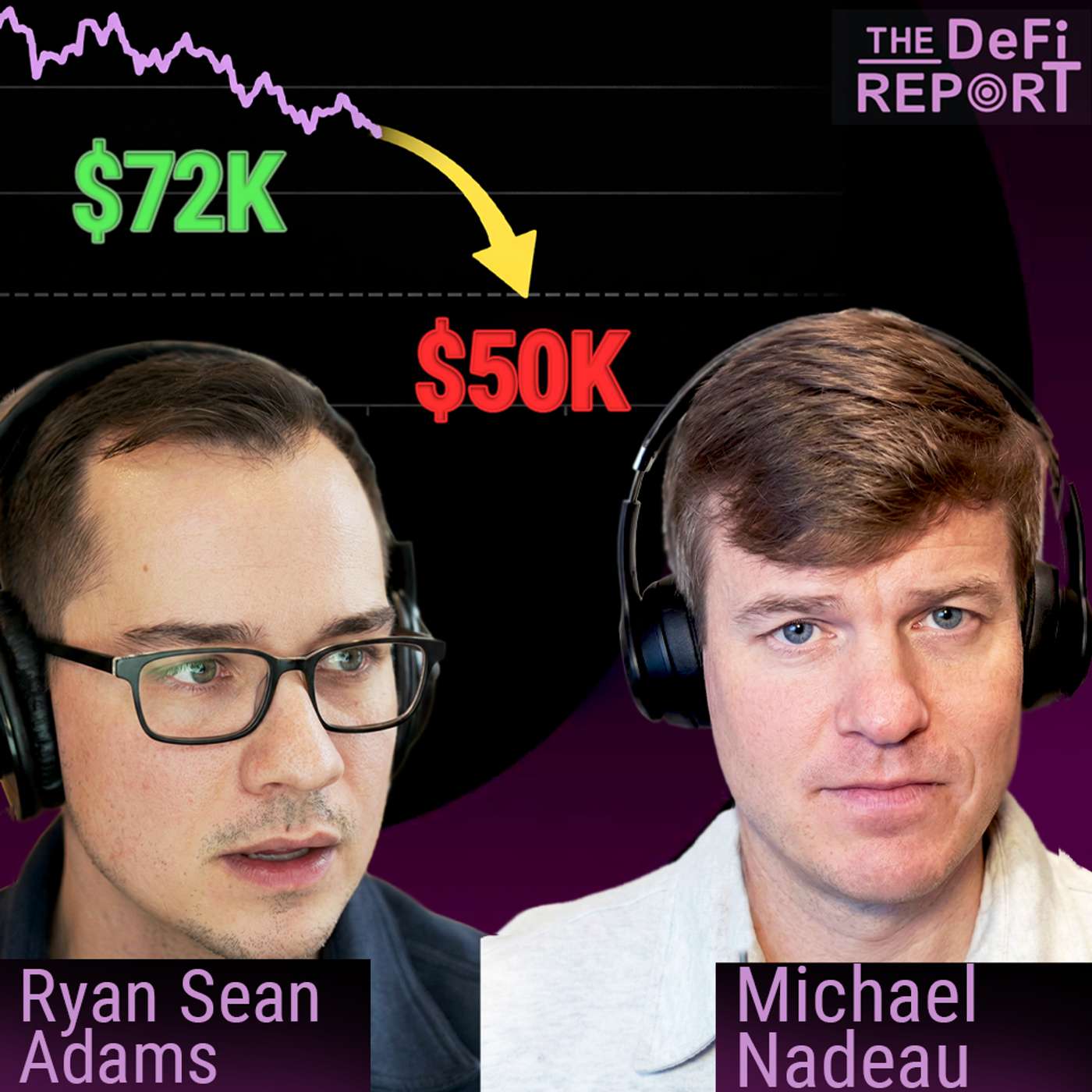
Foreign. Welcome to the DeFi report. The question today, do we deploy now or do we wait for deep value, Deep value territory? It is March 4, 2026. Welcome to the report. So we've hit fair market value targets for Bitcoin. The question is, is it worth waiting for deep value territory? What is? We've got a cycle awareness update on Bitcoin today, and many of these key indicators that the DeFi report has been tracking are now in the buy zone. So how do these indicators compare to the past two bear markets? We're going to explore that. And the big question, of course, is, do we sit comfy and wait? Do we deploy at this fair market value? Do we wait for deep value to get higher ROI at the risk that deep value never comes? Mike, at the end of this report, you talked about attention. You're feeling the tension of wondering whether you're deploying too early or not, or not deploying enough at the lows, or even just the emotional fatigue of trying to get the right entries and sizes. How are you dealing with these tensions going to the report today?
- [01:16]
B
Yeah, I think these tensions are what led to us kind of doing a deep dive on a lot of these cycle awareness metrics that we track. And it kind of reminds me, the tension that I think we're dealing with right now is not too dissimilar to the tension that we had going back in September, early October. It was a different, different type of tension at that time. We were risk on from the lows back in 2022, and the tension was really, you know, do you want to kind of get out of the market at, you know, 120k or so? We had it. We had a base case that we would get to 150. And so you're sort of the tension at that time was, do you want to, you know, hold and potentially forego another 20, 25% move? And so this is a different type of tension now where, you know, we've kind of been on the right side of the market, got into a good cash position, and the tension now is, you know, how cute do you want to get? Do you want to wait for those, like, really deep value entries or kind of deploy into what we think is like sort of more the top of the fair value zone. So I think this week, you know, going through a lot of these numbers will hopefully give people a better sense of kind of where that tension sits currently.
- [02:25]
A
I love that when you're feeling tense, Mike, you just look at the numbers. You look at that on chain data and that makes you feel a little bit better. So we'll be looking at a lot of on chain data here today. Also stick around till the end where Mike and I discuss a move he made. So I got a TDR Pro alert on Sunday about Mike's second deployment into the bear market. I want to discuss this move. It seemed like a significant buy. So we'll do that near the end of today's episode. Of course, before we get in, we got to thank our friends over at Galaxy. And this one's for some of the institutional capital listening. Whether you guys are looking at the future of finance or the backbone of the next industrial revolution, I'm talking AI. Galaxy is the name you need to know. They've established themselves as a global leader not just in digital assets and crypto, but also in data center technology, the infrastructure that is powering AI. Galaxy is really bridging these two worlds. They've got their Helios data center site which is a staggering 1.6 gigawatts of approved power. This is what AI is going to need for the future. Of course, they have their crypto stack too. This is institutional trading, custody tokenization. You guys know the ticker? It's G L, X Y. If you want to find out more about them, how Galaxy helps institutions invest, build and transform relentlessly. Go check them out. There's a link in the show notes Bankless CC Galaxy. All right, your positioning going into the episode has changed. Last week you were 70% cash, now you're 50% cash, 50% crypto. So some deployment on the week that we'll talk about near the end. And of course this comes out on March 4th. We're looking at. I woke up today to green. To green candles, big green candles on Bitcoin and ETH. Bitcoin up about 8%, ETH up about 6% on the seven day and it's been a good 24 hours for crypto prices. I don't know if I want to start there because that's, that's really short term market activity noise. Maybe we should start with where we are in the cycle and the indicators you're looking at. You've got three big ones and then a bunch of other ones. The three big ones are long term holder supply and profit, MVRV ratio and the 200 week moving average. Let's start with the first long term holder supply in profit that is currently about 50%. Can you set up this indicator for us and what it's telling you now?
- [04:56]
B
Yeah, so this is one we Certainly pay attention to. And the chart that we're looking at here right now is the blue line is that long term holder supply in profit. So you can see when the blue line comes down to a bottom, typically that is corresponding with the pink line which is the BTC price. Also, also hitting, hitting up, hitting a bottom. Something that I, I've noticed in this chart is that the lows are, we're sort of hitting these kind of like higher lows in each cycle. We did sort of revisit the low that we hit in the March Covid scare back in 2020. We, we kind of came back to where we, we went down to at the bottom of 2018. But then we hit like a, a slightly higher low on this KPI at the bottom of 2022. And we are currently at a level of about 50.57% or so in terms of basically half of the long term holder supply out there is, is sitting on unrealized losses. And we got as far down as 43.7% last cycle. And you know the, the tension that we described in the intro is really looking at some of these metrics and what we're doing here with, with, with, with the data is we're measuring this from the first time that these levels are crossed. And then what are the, what's the forward looking return, what's the one year, two year, two and a half year, three year forward looking return historically to try to get a sense for you know, how important is it to sort of get these, these entries and the size of these entries right? And you know, what we can see in the data is there is a material difference. You know, even, even waiting, you know, even being at fair value or the top of the fair value zone, there is, there can be a material difference just to getting into deep value. So we can see here, when we crossed 50% back in 2018, the one year return was 18%. Two year was 44%. Two and a half year was 174%. And then you get up to 442% for a three year return. But just getting down when we went down below 45 for the first time, if you were entering at that point, the returns meaningfully shift. The 2.5 year return goes from 174% all the way up to 718.
- [07:17]
A
Wow. Okay. And that is the difference between fair value and deep value that that was back in 2018.
- [07:25]
B
And you know, if we kind of look forward to now we go forward to the, the, the 22 bear market, you know, we're seeing like a sort of a decline in, in the, in the returns each cycle, but still a material difference here. So you know, crossing it at 50% or so, which is where we're at today, that resulted in two and a half year return of about 278%, three year return of, you know, almost 300%. But again, if you waited until, you know, we kind of had the FTX capitulation, this is kind of the difference between buying and like June of 2022 versus buying and you know, November after the FTX capitulation, you know, your returns jump, your two and a half year return jumps to 560% or so. Interestingly, it was about the same as the three year return in this, in this current, this, this past bear bull market. But you know that this is kind of the, the key takeaway. I think we're going to see a similar theme here with some of these other metrics. But the question I have is like, you know, what is the likelihood that we actually come down to these levels? And that's, that's really the tension I think that you have to, you have to kind of contend with right now as a, as a, as an investor in the crypto markets.
- [08:36]
A
Okay. So on this indicator, long term holder supply and profit, we're currently at about 50% right now in the cycle. In 2017, if you waited until you were below 45%, Bitcoin would have been a three year return of 10x versus if you just purchased when it dipped below 50%, it would have been roughly a 4x. So that's the difference between fair value and deep value. Right? It's 4x versus 10x. And you saw the same thing in 2021 with this same indicator. So if you bought at 50%, you, you would have done a three year return of about 3x versus waiting under 45% and you would have had a 5.6x return. And that's a big difference between fair value and deep value for this specific indicator. Now where do you think this number is actually going to go this cycle? Right, because there's no guarantees that we actually drop below 45%. And it's been lower in previous cycles too. Like it's even gone into deep, deep value territory. Do you have any sense for where this metric is actually going?
- [09:51]
B
It's, it's hard to say. What I've been looking at here is trying to understand how many days, you know, we're measuring those returns from the, for the first time that Those KPI levels are hit. But it's also important to understand, like, how many days, you know, how long were these opportunities presented in the market. And back in 2018, we had 190 days where we were actually below the 50% level. So there was kind of like almost more than half the year that you had a chance to kind of deploy into that. And then we actually had 48 days that were actually below 45%, which is the deeper value range. So you had a and a half or so to deploy into deep value back in 2018.
- [10:36]
A
The scariest time to deploy. Always.
- [10:38]
B
It always is. Exactly. And it sounds easy in theory, but it never is. And then if you kind of look at the more recent bear market, we've only had eight days so far.
- [10:52]
A
Where we're in this cycle, we've only had eight days below 50%.
- [10:57]
B
Correct? Correct. And the lowest we got to was about 48.6%. And so, you know, that's. That's kind of the. The big picture here is like, we're probably very early in this process. I know it doesn't feel like that, especially when the price starts to run up a little bit on you, but I think the base case is that we're still, you know, pretty early in this process. We got down to 43.7, you know, last. Last cycle. Maybe we don't go as. As far down there, but I would think, you know, somewhere in the 45, 46% range feels. Feels like probably a pretty good target.
- [11:28]
A
So you anticipate more time below 50% and you anticipate that we will get to the 45% range, though. That's not a guarantee.
- [11:37]
B
Not a guarantee for sure.
- [11:39]
A
Let's talk about this next one. A king key indicator for you, market value to realize to value. The current reading is 1.26. What does this tell you?
- [11:50]
B
Yeah, so blue line on this chart is the market value to realize value. The realized value is what we think is like a proxy for the cost basis of all the tokens in circulation. That number is roughly 54k right now. And as we can see, you know, again, when. When that bottoms, it typically coincides with the bottoming of the bit, the bitcoin price. And, you know, it's kind of a similar story here in terms of, like these thresholds being crossed. And we're at 1.26 right now. We've gotten lower than that. We were at 1.15 or so last week. And again, you can kind of see the story here. So if we look at the 2017, 2018 cycle when we were at the similar range that we're at right now, your three year return is looking at like 441%. As you get down into more deeper value territory. Getting down toMBRV equals one that resulted in a meaningful difference, you know, 1254 return. So more than a 10x return we actually got, we actually went below the, the realized value in 2018 and that resulted in, you know, 13x gains. So a big difference from, you know, the, the kind of 400% gain that you got at the current levels we're seeing today. If we fast forward to the 2022 bear market, there was also plenty of times to allocate in here and at a similar stage that we're at today, your three year return was looking at like 260% or so. But we did end up hitting those lower levels. We hit the one level that resulted in a 372% return and then we went below the realized value as well in the last bear market and if you were buying, that was really the deep value zone and that resulted in about a 560% return over three years. So kind of a similar story here where we think we're kind of at the top of the fair value range. We do think that, you know, we're probably going to get down to that, that realized value in somewhere around the, you know, 55 to 60k range or so, but there's no guarantees and that's, that's the tension.
- [14:06]
A
Okay, so 1.2 where we are right now is roughly in the fair value zone for this indicator. Could you see it drop below 1 and in previous cycles how, what was the, the time window for below one purchasing on this metric?
- [14:25]
B
Yeah, so kind of similar to what we were talking about before. I think this is the difference here is kind of like allocating in that sort of June period when we got down to fair value, this is back in 2022 versus waiting until kind of like the FTX collapse collapse which was when we went into that, that deep value territory in 2018. There were 42 days where we were in the deep value zone. So under, under 1.0. And then in the last bear market it was actually much longer period of time that we were below the realized value. So we were actually had 167 days, almost half the year where you had an opportunity to buy Bitcoin below its realized value, which was around 20k or so at the time. So looks like if we have a similar so far and we're going to get to this a little bit later. This bear market is tracking very closely to 2022. So that's another thing that I'm anchoring to. And so my base case is that we do have, we have some more time here and we're likely to see that ratio kind of drift back down towards, towards one at some point here
- [15:34]
A
and we have yet to fall below 1. But you expect it could drift towards that, maybe fall below it. If we do follow below it. If it's like previous cycles, that could be only for a brief window of time. In 2018 it was 42 days. In 2022, 167. Okay, how about the 200 week moving average? We've talked about this so much on the report. The current reading Right now, the 200 week moving average for Bitcoin is 58, $5,000 and the current ratio 1.17. What are you looking for here?
- [16:08]
B
Yeah, and it just, it just feels like those two lines. So we're looking at this chart here. The blue line is the 200 week. That's the long term almost four year moving average versus the Bitcoin price. The pink line, it just looks like they want to meet. There's almost like a magnet there and
- [16:20]
A
I think you can tell. Yeah, they really want to, they're drawn towards each other.
- [16:25]
B
There's an attraction there. Yeah, for sure. And so, you know, again we're at 58.5k on this. What we're doing to measure sort of the, you know, entry points on this is we're doing a ratio so between the bitcoin price and the 200 week moving average. You know, right now we are at this was, we had this, we pulled this data yesterday. It's gone up a little bit. So we're at, we were at 1.17 yesterday, which again fair value like 1.2 or so is kind of fair value and it kind of tells a similar story. Again, you know, if you were buying at fair value in 2018 bear market, your three year return was, was a 12x. If we look at the 2022 market cycle, it's very similar to 2017, 2018. What we can see is a similar story. If you got in, you know, at fair value or so your, your three year returns are looking pretty good, you know, 372% or so. But if you got in once, you know that once we hit the 200 week moving average, those returns are starting to jump up, especially if you're getting below it. So when we went to Deep Value. This is again difference between allocating in like June of 2022 versus later in the year after FTX, the returns jump up to like 560% or so from, from a 300% range. So again, the key question is what is the probability that we end up hitting these levels and, you know, how much cash do you want to have on the sideline, you know, for that, for that opportunity?
- [17:58]
A
I mean, high level. The difference between fair value and deep value is about. It seems to be the difference between like a, you know, a 3 to 4x and maybe a 5 to 7x. Something like that.
- [18:12]
B
Yeah, yeah, that, that, that's. That kind of. That's what it feels like to me. Keep in mind the. There is a diminishing sort of return on these cycles that we're playing that we're factoring in here. I think if you think of it as like, if you think bitcoin is going to like 250k as like your base case in the next cycle, I think the difference here is potentially like a 250 to 280% return versus potentially like a, you know, closer to a 400% return kind of.
- [18:39]
A
All right, so I feel like we solved it, Mike. All you have to do is buy it. Deep value rather than fair value. Is that how it works? Do we just solve it? Just wait for deep value, guys, it's easy.
- [18:49]
B
This is easy stuff. Guys.
- [18:52]
A
You got some, some other KPIs here from the 2002018 bear market in 2021. Are all of them. I don't know if you want to talk about any of these, but are all of them saying the same thing? That we are at the top of fair market value levels and not in deep value range?
- [19:11]
B
Yeah, yeah. I think that's the key, the key takeaway here. You know, we have a confluence across all of these. These KPIs that we're tracking. Almost all of them are lining up and saying, yes, this is, this is fair value zone. But they're also all saying, you know, we've gotten into deeper value in the past, in the past two cycles. And this just gives like a sort of a more comprehensive look at that for people. And also just the timing. You know, the timing matters here. In both of the last two cycles, bear market cycles, it was roughly a year for this to play out. And that's where deep value really, really occurred.
- [19:46]
A
Okay. And we're roughly, what, four months into this. You market from October, don't you?
- [19:52]
B
Yep, yep. Yeah, from October. October 8th or so. I think was when we, or October 10th is only when we were sort of peaking, it was right before October 10th. So yeah, so it's been, you know, roughly four months into, into this bear market.
- [20:06]
A
So this is consistent with your theme of being patient, waiting for those fat pitch opportunities, enjoying an opportunity to buy at fair market value and also keeping some cash reserves for the deep value territory. That's the story. And the indicators, I mean you were mentioning the tensions, but the indicators seem to confirm that strategy, don't they?
- [20:30]
B
They do, they do. I think this data lays it out pretty clearly. And for pro members that have been following sort of how we're trying to manage this from a portfolio management perspective, you know, what we're doing is trying to line up with this data. I think you can kind of see that we're trying to line up our strategy with, with what this, this data is telling us. And you know, right now this, this bear market cycle to me is shaping up very similar to what we saw in 2022. You know, we've highlighted a red box here on the, on this price chart that's just showing the price action during 2022. And there was, you know, roughly a five month period where we just chopped around like right around Fair Value. There were really no major, you know, bull, bull rallies during this period. We never even got back up to like 30k. So we never got back up to what the prior resistance levels are. We just really bounced around Fair Value. We went above it a little bit, came below it slightly a little bit. And then we had the final move in November and there was a catalyst, you know, for that, that was ftx. And so the question here is, you know, are we setting up for a similar outcome where we kind of bounce around between, you know, 60, 75k or so and then is there another, is there going to be another sort of deep value opportunity or are we just going to emerge out of this at some point there's a new, you know, maybe monetary policy shifts, fiscal policy, there's a, maybe we have global peace all of a sudden. You know, I don't know what it is but you know, I think that's, that's kind of how I'm, how I'm seeing this. And if you pull down to the next chart, you can kind of see this, you know, starting to, to play out here where, where, where earlier in the site, in this, in this bear market cycle. But you can kind of see we've sort of tested twice that, that kind of low 60k range and we bounced off of it. Now it looks like we're going to go test the like 74, 75K range and that's like, that's going to be a critical moment to see if we actually can establish that potentially as support. If that happens, then that's really not my base case. That, that, that, that could happen. But if we establish that as support or a kind of the 80k range, then you have to start to, you know, kind of pivot and think a little bit more about, you know, how this, how this bear market's going to
- [22:49]
A
play out and that's possible. So you see this right now, this is a setup that's very similar to 2022. You say this in the current bear market we see a similar structure starting to form as 2022. Twice now we've bounced off of support in the low 60s. We think the upside resistance is the 74k to 80k range. And that seems to be even at the time of recording with the big move on the week. That seems to be what bitcoin might be starting to test. But the base case you say is that we bounce around between 60k and 75k or so. Nobody can predict where we land. But the probabilities point to a Future breach of 60k. Again that would be into the deep value zone. Is that what's kind of from a price perspective? If we were to translate these indicators into price, like what is deep value price for bitcoin?
- [23:39]
B
Right now I would say deep value zone for bitcoin is going to be below these met these like key metrics. So like the 200 week moving average, so 58.5. Anything below that is any, anything below that's going to be deep valued. I'm going to be, you know, aggressively looking to potentially allocate their realized price. Is 54,55k similar. You get to that level, that's pretty deep value. We did go below these in the 22 bear market, so keep that in mind. But I think 50 to 55k is deep values. If we breach 50k, that's going to be when people are saying it's all over for bitcoin. That's going to be really hard to buy because it's going to feel really scary if you're in the 40s. But you know we, that that's certainly a possibility as well.
- [24:27]
A
Now there are two key questions for investors as we look at these indicators. So you know, when might the deep value occur? Right from a timing perspective. So there's that question and then there's also the question of what are the chances it doesn't occur at all. What happens if we, if this time is different and this time there's no FTX catalyst and we don't get into deep value territory. So first of all, do you have any thoughts on the timing? If we do deep value, when might that occur?
- [25:01]
B
Yeah, yeah, hard to say. My base case with these things is typically to anchor to the way things have played out in the past. That typically does inform the views moving forward. And so typically it takes about a year or so for these cycles to play out. So that's kind of the base case. And then we're always just, you know, updating that, looking at the actual current conditions. What's the data telling us? Lining, lining everything up with onchain data plus what we think the macro outlook looks like to form that view. And so right now anchoring to probably later, later in the year, you know, I don't see any, you know, catalysts right now that make me think that we're just going to shift out of this, you know, kind of like bearish, you know, really, you know, bad sentiment market and, and start to go into a bull market. I don't, I think that's low probability. And so I think like the base case is, probably takes, takes longer and, and that's what I'm anchoring to. It would, I'd have to see something in the market to shift me off of, off of that stance.
- [26:03]
A
So sometime maybe Q3 or so this year.
- [26:07]
B
Yeah, because we topped earlier in Q4, it's possible that it, you know, it does come, it does come a little earlier. So we would be, if, if we, if we end up hitting a bottom in, in Q4 of this year that would be, you know, likely past the, you know, 365 day mark or so. So certainly possible that it could come a little earlier. August, July. August. September is definitely, definitely possible.
- [26:32]
A
And what are, what about the chances that it doesn't occur that we don't hit the deep value territory? I mean you point out, which I didn't know actually in 2018 we did not ever breach the 200 week moving average. So if that's a key indicator for you, what happens if it plays out like 2018 and we actually don't breach the 200 week moving average and there's no deep value for us to scoop up cheap bitcoin.
- [26:57]
B
That is true. We did not go below the 200 week. We kind of just like hit the 200 week moving average in 2018. We didn't go below it. The caveat there is that like the context of that was we were in it still an 83% decline. So, so still a very significant decline. But just because of the nature of where the 200 week moving average was at that time, we didn't go below. And in 2018 we did, we did go below. And I'm sort of angry because of, because the markets have matured so much since 2018. I think, you know, the, the cycle I'm giving more credence to is the 2022 cycle where we did go below. And there's a kind of an interesting like, symmetry here in terms of like the, the level of change between the prior cycle peak and then where the 200 week moving average was. So if you go back to the 2018 cycle, it was basically an 80, the 200 week moving average was about 83% below the, the prior cycle high. And then if you go to the 2022 cycle, the 200 week moving average was about 66% below the 2021 cycle high. That's about 80%. That's about an 80% difference in each case. And so an 80 difference in this cycle gets you into like potentially this, this like right, right down to that 200 week moving average. So that symmetry is kind of interesting to me. Like across cycles I kind of look to see, look for, look for things like that. So my base case is we do go to the, to the 200 week moving average. But again, it's not, there's no guarantees for sure.
- [28:36]
A
So let's talk about how you deploy against this uncertainty in a world of no guarantees. And we talked at the beginning of the episode about the tensions that you're managing, which is the tension of, my God, am I deploying too early? Should I just wait for this, you know, 7 to 8x opportunity in deep value territory? Am I or, or do I risk like maybe not deploying enough at the lows? When the lows come and I don't recognize them, they could be a very short window. And then there's just the constant emotional fatigue of trying to get the, the timing right and getting the right entries and, and size and all of that. So how are you managing these tensions and what actions have you taken on the week?
- [29:17]
B
Yeah, and this is like, this is personal, you know, for, for everybody out there. Everyone's got a different situation. Like, you know, we've done a pretty good job of I think, being on the right side of the market here, getting into a good cash position and you know, the risk for me, like the, the biggest risk is like running out of cash, I think, and missing potential opportunities. So we're trying to, trying to avoid that. But you also have the risk of just, you know, potentially not deploying enough. You know, we got to some good levels and we allocated, you know, when, when we went to those levels. And so we're, we feel good about just like being risk on at this stage, at this stage of the cycle as well and anchoring to the idea that there's probably more opportunities to come. I know the markets are rallying a little bit. If people missed, you know, buying, you know, in the low 60s or mid-60s where we were, you know, I would say, like, you know, we're probably going to get some more opportunities here. That's, that's how I'm thinking about this. And what I'm paying attention to right now with, with the rally we're seeing is just, you know, is there, is there something really durable behind this current move or are we just kind of making a similar move that we did actually in 2022? There was a little rally at the beginning of March, actually very similar with geopolitics. You had the Russia, Ukraine war going on at the same time, so looks pretty similar. And yeah, I think it's a very personal question. Everyone's got different life circumstances and situation, but this is how we're handling it. And hopefully just putting this out there for people and just being really transparent about it is helpful for others.
- [30:52]
A
Yeah. And as a TDR Pro subscriber, I got an alert when your portfolio changed. So on Sunday, you decided to increase your Bitcoin allocation to up to 40% of the anticipated position. So that was 14% of the total cash that you anticipate deploying deployed to Bitcoin. So now you're at 28% of the TDR portfolio in Bitcoin. That was on Sunday. It's gone up quite a bit since then. Of course, these are only two days or three days. I, I suppose I want to congratulate you on the, on kind of the, you know, the local bottom, but probably not the end if the deep value thesis plays out. One last question for you and then I'll let you go. Mike. After Bitcoin. So you are deployed in some size in bitcoin now, in the, in the bear markets. You made your second deployment. When will you start looking at other crypto assets on the watch list and on the long tail? Is it about time now or are you still waiting for that? Some Some, some indicators to, to make you seize those opportunities.
- [31:59]
B
Yeah, definitely more to come here. So we are definitely looking, we're definitely actively looking at a lot of stuff. We have the watch list research reports that go out on Fridays. Those are free and people can access the data dashboards that go with those. The base case here is like focus on Bitcoin and when bitcoin is going to, going to bottom, most of the stuff that we want to allocate to is also looking like, you know, in that fair value zone. A lot of the, like altcoin, the sort of riskier, longer tail stuff is down roughly 80 to 90% or so. So we are very active right now behind the scenes in terms of assets that we want to allocate to, how much we want to allocate to those, you know, levels that we want to get to. So we'll have more research coming out on this. But for right now the focus is on Bitcoin and like, you know, is bitcoin, when is bitcoin bottoming? And then what do we think some of these other assets that we'd like, what are they going to look like when we think bitcoin's bottoming? So more to come on that. But you know, we typically start with bitcoin. We want to get to like a roughly 60 to 70% allocation of Bitcoin and then start to fill out the rest of the portfolio.
- [33:12]
A
Well, thanks for joining us today listeners. So if you want to follow this strategy, of course you got to subscribe. If you've been enjoying these weekly episodes that Mike and I put out on the TDR podcast, please subscribe, give us a five star review on Spotify that raises up the charts and we've seen those come pouring in. So please engage with the content, give us a review, comment on it as well. And also Mike, I believe you're putting out a free trial. So if people are interested in the TDR Pro there is a, an opportunity for you get to get one month free. And so that gets you the weekly report unlocked that we talked about today. Also Mike's portfolio on a weekly basis. You see that and the portfolio change alerts of which I received one on Sunday knowing that Mike was in active deployment mode. Incredibly value valuable in addition to sort of the watch list and the fair market value for all of these other assets. So that is ongoing now. Am I right? How do, how do folks get access to the one month free trial for
- [34:13]
B
TDR Pro that is ongoing right now? We will have a link in the show notes for people to sign up for that one month, three. And like you said, yeah, you get the portfolio alerts. You get access to these cycle awareness reports. We do some stuff on Macro. We cover the on chain data. And, you know, you can kind of just join us as an investor. We're investors like everyone else out there. And it's kind of access to our investment journal and how we're managing a
- [34:39]
A
portfolio hugely valuable, about the price of a Netflix subscription. So fantastic. Even after the first, first month free, you're going to want to renew this. Let's end it there. I got to say, none of this has been financial advice, of course. Mike and I are just investors on the journey alongside you. And until next week, stay curious. Thanks a lot.