← The DeFi Report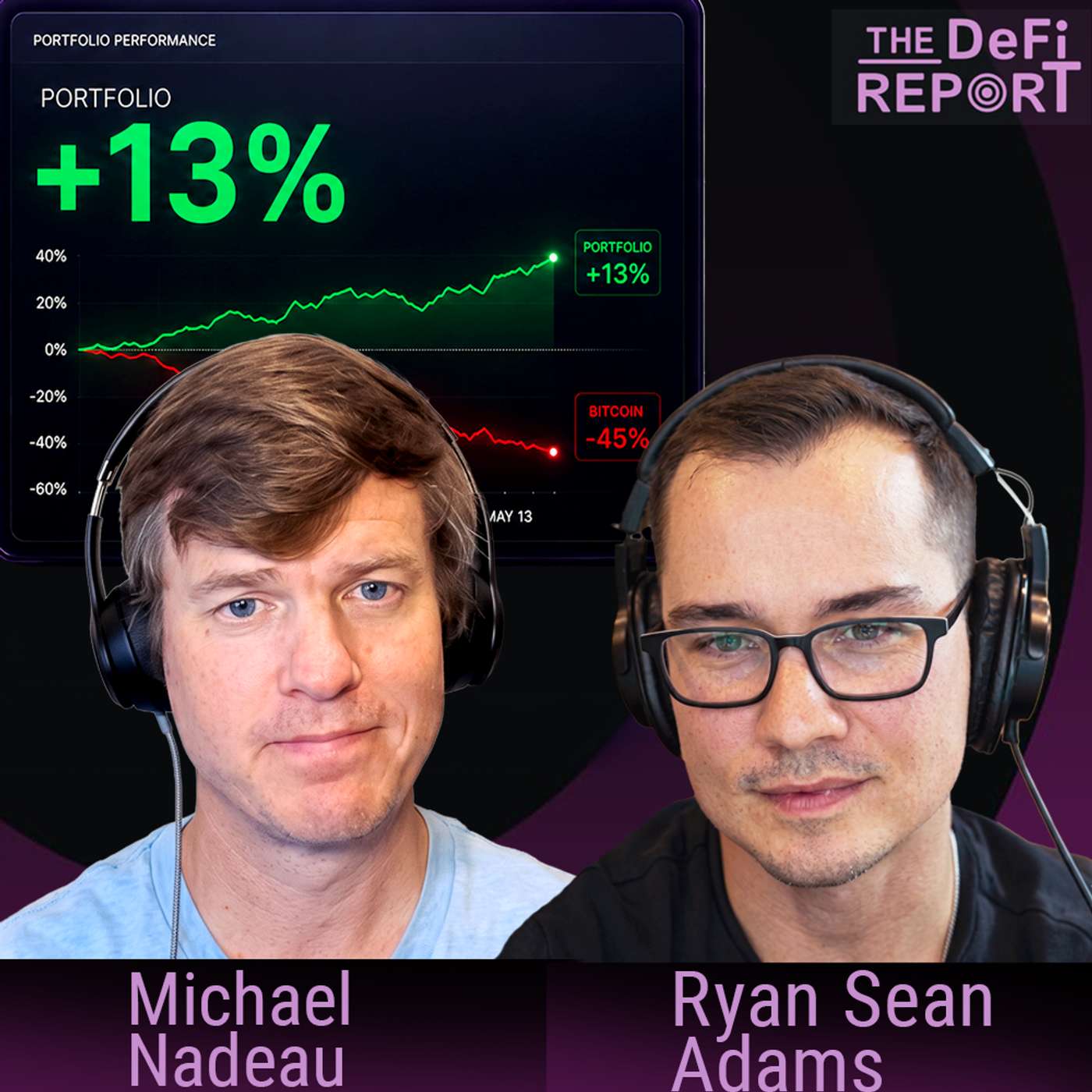
Loading summary
Transcript44 lines
- [00:00]
A
Foreign.
- [00:10]
B
Welcome to the report. We got a special episode today. It is July 15, 2026. We are doing an annual performance report on the TDR. So we're switching it up. We're not talking about current price where we on cycle. Instead we are zooming out. So for the first time, the reason this is special is Mike is opening the books. This is an investor journal, as we always end these podcasts by telling you that this is every win, every loss, every learning. Since the TDR Pro launched about a year ago. It's been about a year is think of it as an annual performance report. You know, you might get these at work, your performance review, but we're looking at this from an investor perspective. And I think it's important because it kind of tests in the real world how Mike's thesis about the cycle, about on chain fundamentals, about using these data sets to predict the course of crypto in the future and to buy particular assets. How does that actually perform in the real world? And why I love it is because think this podcast maybe and you know, my journey is about being a solo investor, a smart solo investor. So if you're managing your own money, if you are a solo investor, maybe if you work at a fund, you manage capital yourself. You can see in the, in the mind of Mike and an investor journal. This is your episode. And at the end, what I'm going to do is spend a few minutes. I am a TDR Pro user. I want to spend a few minutes showing you my setup and how I use these data sets to manage and allocate with my part of my individual portfolio. There's a little bit of AI, a little bit of TDR data. I think you'll really enjoy the tools I'm using. And honestly, I want to hear how other people in the community are also using it, other super users in the TDR community. So, Mike, let's start with this. This is where the report actually opens out. I know you've been asked to run a fund from time to time. Instead, you are running your own capital against the strategies that you bring to us every week. Um, why are you doing it this way?
- [02:19]
A
Yeah, it's a good question. You know, we've been approached multiple times. I've actually worked with multiple teams and, and on standing up a fund that haven't found the right people to do it with. And I've. I really enjoy managing my own, my own capital for. For reasons that might be somewhat, you know, obvious to people. I just kind of enjoy the freedom of it. I Think if you're able to do it in a way where you're intellectually honest and you're able to poke holes in your own thesis and things like this, I think it's doable and it's worked. It just kind of works well for me. I think investing is extremely personal thing and I've really tried to just find what works best for myself. And investing can be a little bit of a lonely experience when you're doing it on your own in front of screens all day. What's nice is we have the Internet and we can access social media and other investors. And what I've really, what I really enjoy is kind of sharing exactly what I'm doing and building a service around that and just being transparent and trying to align my incentives with the customers of the Defi report. So it kind of works nicely where it's this kind of low cost product where you basically get access to everything. We're doing transparency, no conflicts of interest. You know, I'm also a, as an investor analyst in this space, like many of our customers, I'm also consuming content from other analysts and other places. And part of like what we're doing with TDR Pro is to try to solve some of like the problems that I see just kind of within the data and research space. So it's, it's something that, you know, we launched this about a year ago. It, it works really nicely. I'm really enjoying it. I'm enjoying doing this podcast with you every week. And this is an opportunity about a year in to kind of give ourselves an audit, do a full performance review. We're going to be updating some of our reporting and transparency, things like that. And yeah, good opportunity to just kind of like look back. We're nine months into a bear market and just, you know, where are we at? How are we doing? And just do a full full review. So excited to get into it this week.
- [04:24]
B
Full audit. Full review this week. We're going to get right into it. Before we do, we want to thank the sponsor that made this episode possible. That is Galaxy. This one's the institutions listening. If you're looking at the future of finance or if you're looking at the next industrial revolution, I'm talking about crypto, I'm talking about AI. Galaxy is the name. So on the crypto side they do institutional trading, custody tokenization. On the AI side, massive data centers, 1.6 gigawatts of approved power in their Helios site. You guys know them, they trade under the ticker glxy. And if you want to see how Galaxy helps institutions invest, build and transform in crypto and AI, go check them out. There's a link in the show notes. Let's talk about your goals. That's where you open the annual performance report today. And you alluded to some of them as a, as a solo investor managing his own capital. They're pretty close to the goals of maybe, you know, a general manager of a fund, but also different. Like you have this goal number three, sleep well at night. That's why you maintain higher cash levels, so you can actually sleep well at night. Definitely resonates with me. What are the goals of your strategy and your portfolio at the highest level?
- [05:45]
A
Yeah, I think when I got into crypto and when I really started getting into data, the reason I'm here is because I started to realize that, you know, there was an edge that you could have with, with on chain public data sets that just were accessible to anybody. And if you have the willpower and you have the skills and you want to work really hard. I view like the crypto markets as more of a like, meritocracy when compared to like traditional markets. And so that's really why I'm, why I'm here. And really the goal of all this is to compound, you know, your net worth, compound and make money over, across cycles. I have found that investing through cycles is kind of the best way to do this. It's what works best for me. And so that's really the goal is, number one is we're here to make money. Obviously, Bitcoin is like the anchor of our portfolio. Bitcoin is the alpha asset of the crypto markets. When we deploy capital outside of Bitcoin, the goal is to outperform Bitcoin. So that's number two, is like we need to get our allocation into Bitcoin proper, get the cycles, get our entries right and really trade the cycle and manage risk through that. And then when we deploy capital outside of bitcoin, there should be a lot of rigor that goes into that and we should be trying to outperform bitcoin. It's really hard to do that. Most hedge funds in this space struggle to outperform bitcoin. We've been fortunate to do that across cycles. But it's hard and I think it's continuing to get harder. I talked about investing just being a very personal thing for me. Everything I'm doing is to align things to my personal preferences and how I want to live my life and the type of freedom I'm trying to establish in my life. And I don't think being stressed all the time and being maybe over allocated to markets and dealing with volatility. Crypto's a difficult industry as an investor. There are lots of things that come into play as an investor in crypto markets that you maybe aren't dealing with in traditional markets. And so for me, I have just found that keeping maybe more cash on the sideline than a traditional fund would helps me sleep at night. I found that it also helps me manage risk better because I'm able to, I'm calmer, my psychology is more clear. I feel like when things go down, I'm getting more excited because I have some cash to deploy. And you know, psychology is just a big part of investing and just being in the right mindset. We talk about, you know, having an abundance mindset, a growth mindset, these types of things, These things like, really matter to me. So this is just kind of the funny thing to put in there as a goal, like sleep well at night.
- [08:19]
B
But, well, this is why you're gonna, you're gonna find no margin in the DDR portfolio. Okay. Because m his sleep and margin is a leverage.
- [08:26]
A
We don't short the market. Like, there are things, you know, we'll get into. We have a section that we want to talk about just like, what are the best ways to lose money in the crypto markets? Like those are some ways to, to, to lose money. We try to avoid these things. So that's kind of like my personal goals. We run TDR Pro as a service. And so for me, the only way that TDR Pro as a service can be successful is if we are successful as investors. If we're providing service to the market, if we're aligning our incentives with our customers, providing that transparency and hopefully the research resonates with people and, you know, we're able to add value and provide some ROI for our customers. And that's, you know, that, that just goes alongside everything, everything that I'm doing.
- [09:10]
B
That's great, Mike. This is why I love the service and I really enjoy doing these things with you and enjoy being a user of the TDR Pro product too. So a few things we're going to get into the numbers. A few things I should maybe note before we begin. The timescale for this is about a year. So you kicked off the TDR Pro in July of last year. I think it was sometime mid July. It's now about mid July again. So this is about a year of Performance that we're talking about. So that's number one. The second thing that listeners need to keep in mind is we're going to talk about performance in cash terms and dollar terms, of course, but then we're also going to index that to Bitcoin as you index your own performance versus Bitcoin. So we're going to see it indexed to obviously to cash and then index to bitcoin. And the goal, as always, is to outperform Bitcoin. So you have two segments of the portfolio. The first is realized gains and losses. The second is unrealized gains and losses. So the realized section is these are positions that you have exited for cash. Okay. So think of this as if you're framing this out listener. Think of this as knowing what to sell and when to sell. Right. The exit type scenario. It's something that traditionally I haven't been great at, Mike. I got to confess, it's easier for me to buy than it is to sell. And the second piece we're going to get into is performance around unrealized gains and losses. This is kind of like the inverse, which is knowing what to buy and when to buy. So let's start with realized gains and losses. What are the numbers that we're looking at for the last 12 months?
- [10:54]
A
Yeah, and maybe just before I get to the numbers, just a quick note on how we're. We're doing this reporting because we do not manage outside capital. Like, we're not factoring in our cash position into our reporting here. So we're only reporting based on how we did on capital deployed. And then how did that do against Bitcoin? And the reason for that is again, this is a personal investment journey. Sometimes we want to have more cash, sometimes we want to have more optionality. Maybe I want to go on a trip or buy a house or different things like that. And so it's hard to kind of bring the cash into that, into the analysis. And so it's really just, you know, how. How do we do on capital deployed? So that's actually.
- [11:33]
B
It makes it cleaner. I think that makes it cleaner.
- [11:35]
A
Yeah, it's cleaner. And the, the realized gain, losses. This is really from a pretty tight period. So this is from the July through, like October period last year. TDR Pro members or people, TDR readers will probably remember that I was starting to kind of go risk off, you know, before this period. And I kind of pivoted back into the market when I saw that that season was coming. We ended up putting more risk into the market. So I kind of, when I look back at that period, I think, you know, it's hard to change your mind and kind of get back into markets or get out of markets. I think we did a pretty good job of realizing dad season was coming, deploying capital back into the market. And this is the period that we're covering in this realized gain losses and the returns were about 53%. So of capital that we put in, we were able to produce gains of 53%. This was mostly again kind of late cycle Performance Pro members that were early might remember we were buying things like Pump Fun, Athena, we were buying Galaxy, we were buying Bit Mine, bmnr, we were buying ETH because of dad season at this time. So those were kind of some of the wins that that went into that at that time. But yeah, happy to get into any more details like over kind of that period if it makes sen.
- [13:02]
B
Okay, we'll get back to the numbers. So this is kind of booked wins. So booked wins, basically the, you know, things that you sold. And this is all obviously available to TDR Pro members, 53% the benchmark. So if you compare just to bitcoin, the index here, if you just held bitcoin instead of doing what you did with the TDR Pro on these gains, it would have been negative 45%. So the alpha versus bitcoin is about 100%. It's 98.7%. I want to get back, get to the key learnings during this period in a second. But before we do, just so we can see the whole chronology of the final whispers and the final gasps of the bull market and how you're playing that and then calling what we've seen over the last nine months or so, which is the bear market, let's talk about now the other segment first which is the unrealized gains and losses. And so this is kind of like again knowing what to buy and when to buy. If you look at some of those raw numbers of what's in the portfolio right now that hasn't been exited for cash, what do the numbers look like?
- [14:10]
A
So we take everything that's in the portfolio right now. This includes all of our positions capital in. What is the value of that capital? Today we're up 13% over the. This is just. And just to be really clear on this reporting, we're only reporting on trades that pro members could have access to. Right. So I am not reporting on. And this was really applies more to the realized gain losses, but I'm not reporting on bitcoin. That I held from back in 2020 that we sold, you know, last cycle because pro members couldn't, you know, that was already in the portfolio. Pro members didn't have access to that. So we're only reporting on things, you know, over the last year that pro members could have bought and exited when, when we did. So just want to make that clear. But when we took a look at the composition of the portfolio Today, we're up 13 on all of our holdings. That's unrealized gain losses. That number is obviously, you know, moving up and down as prices change.
- [15:09]
B
That's 13 in a crypto bear market.
- [15:11]
A
In a crypto bear market. So pretty solid. I think the takeaway here is, you know, the, the most important thing that I think we've done that we've done well is manage risk, right? Just getting out of the market, getting into a cash position, this is like the most important thing, allows you to buy back more of the assets, more of your favorite assets, hopefully at cheaper prices. We've successfully been able to actually acquire more bitcoin already in this bear market than we held, you know, at the top of the last cycle and planning to get even more, hopefully at cheaper prices. I think that's the big takeaway is we've been able to make money in a market where Bitcoin is down 45% since we launched TDR Pro. So if you just held Bitcoin, you're down 45%. TDR Pro up 13%.
- [15:59]
B
Congrats on that performance. It's fantastic. What was the S and P, by the way, over the last few years?
- [16:04]
A
S P has done really well. It's about 20% over the last year. I think NASDAQ's up about 29% over the last year. So I'm, I'm okay with that. Those things are ripping. And we, we almost kept, kept pace in a down year. I'm kind of okay with, with underperforming some of those benchmarks, some of those more traditional benchmarks in a down year, if we wildly can outperform it in an up year. And maybe just a quick note on the non BTC capital deployments. So 13% is the entire portfolio that includes bitcoin in there. We're up 21.2% on all of our non bitcoin deployments, which is important to me. Like, I always want to make sure if I'm putting capital into play, putting capital into risk, and it's not going to bitcoin like it, it needs to outperform bitcoin that's.
- [16:54]
B
And it is. So it's outperforming bitcoin by about 20%.
- [16:57]
A
Yeah. Yep. That's the aggregate of, you know, all of the positions. We're down on a few in which we can get, we'll get into some of the individual positions, but that's the aggregate of all the positions.
- [17:07]
B
And the nice thing about, of course, an unrealized gain portfolio is kind of the cost basis you get it at. And I think you're pretty proud of the cost basis you've locked in for some of these positions with the current, you know, with the current market as it is. And that's, that's stuff you can only do during the bear market. That's when you want to be locking in these positions accumulate when others are fearful and not when they are greedy. Okay, let's talk about the key lessons from this period. And there were really kind of like maybe two eras. You know, the first era was the last wisps of the bull run. So you said, I think coming into the summer, maybe this is April and May, you were starting to tilt towards a risk off position with respect to your crypto holdings. And you had been very bullish. And you know, TDR Pro, like TDR members maybe don't know this if they haven't been tracking you for longer than a year, but you had been bullish through the entire previous bull market, got in some pretty big positions with, with Solana, you know, some of the Meme coins as well. And you're starting to exit those. You, you thought maybe this, the, the, the market was over, but that season kind of changed your mind and you went back risk on for some period of time over the summer before, of course, in October going risk off. Talk about that first segment, the last wisps of the bull market. You had to change your mind on something. You had to go from tilting risk off to tilting back risk on. What was the learning there?
- [18:39]
A
Yeah, people might recall, you know, going back about a year and a half, going back to January of 2025, I thought that was the most speculative period of the market. That was like when Trump launched the Meme Coin. That was when Solana hit up, went up to 280 or so and we were exiting Solana. You know, at that time we were buying at the, at the lows and our average cost was about $15. Again, that's not part of our realized, you know, reporting here because those trades TDR Pro members didn't have access to. So. Yeah, so, you know, we had seen Like a very big speculative push. You know, kind of earlier in the last cycle, bitcoin still hadn't reached those levels. I think a lot of people were calling for 150, 200, 250K Bitcoin. And so I think you. There was, there were reasons to stay in the market, but because those things had gone up so much, we were, we were happy to take some risk off. And then we had sort of the tariff, tariff thing. Early April, markets sold off. A lot of people were calling for recession and things like that. At that time, I was kind of at a great spot because I had already started to move to cash. We ended up redeploying some of that capital. Not all of it, but we got back in the market and identified some things that we wanted to be. You know, we're really kind of studying what's dad season, what are gonna, what is sort of. Are these, are these DATs gonna outperform the base assets? You know, what does this mean for altcoins? Is this altcoin season? So we kind of reassessed things, got back in the market and that turned out to be a good move. That's not easy to do, right? When you're already kind of shifting your psychology trying to. You're already thinking about what you're gonna do with some of the cash that you, that you, that you exited with. It's not easy to come back in. So I think I'm happy with sort of the pivot to go back into risk on for basically like three months or so and then. And then book some more profits. And then we kind of went fully risk off in September, October period. So.
- [20:34]
B
Yeah, so end of September and beginning of October. That's when you sent an alert in October. I think it was either the, you know, the 8th, maybe 8th or 9th October before the 1010 date to TDR Pro members that you were going. You were switching to risk off. There was something, I think in the volume you didn't trust. There are some indicators that you didn't trust and you switched to risk off at the right time. I think we've talked about that call quite a bit because I don't know, it's just. I was like, oh, shit. Like Mike is right. Like he's doing something right. Because that was very contrarian at the time. People thought the bull market would continue and including into like November and December. They thought, no, that was just a dip. It was just like a temporary setback and we'll be back to bull territory. Can you Talk about what led you to making that call and why you made it.
- [21:24]
A
Yeah. You know, again, really kind of thought we had gone through what I would call like the sort of seasons of a bull market. Like I, I sort of kind of have these markers that I'm looking for as cycles play out. I thought we went through kind of the early bull period for bitcoin. I thought we went to kind of the wealth creation period for bitcoin when the ETFs launched and we went to all time highs before the having. We saw lots of speculation around meme coins, we saw Solana have a really big cycle, we saw new things come hyper liquid. And so I was kind of of the mind that like most of the things that I've, that I would look for to play out within a, within a cycle have played out. And the thing that kind of gave me probably a little more conviction to go risk off back in September, October period. And we kind of went fully risk off like right before the crash on October 10th, which we didn't have like any, I can't predict the markets and I didn't know that was going to happen. But what I did have conviction in was that there was a ton of leverage in the system and there was a reason for it. And it was if you're a trader and you want to put leverage on, the best time to do that is when you have a price agnostic buyer who's publicly saying that hey, we just raised, you know, a bunch of money and we're just going to go buy the spot asset of different things. And so there were lots of debts that were not only buying bitcoin and eth, but like all the way down the risk curve. And we were trying to buy the things that we knew there was going to be this wave behind. As I played out, people just got way too excited with the leverage and you could see that there was just too much leverage in the market at the time. Once those treasury companies were kind of done buying like what was going to be left there. So that was kind of somewhat clear to me that that setup existed in the market and if there's not durable buying behind that, then it's probably time to get out. So that was kind of the main, I think the main thesis was just too much leverage. Cycle has gone on, we've seen everything already play out and the risk is pointing to the downside and I want to structure my cash position to support that.
- [23:35]
B
I think from this report and from everything I've seen, you called the cycle Very well. No regrets there. But are there any other regrets that you actually have during the last 12 months? Things you feel like you missed but should have caught?
- [23:50]
A
Yeah, you know, generally happy, but you never. Nothing's ever perfect. And so a few things. So, you know, we. I think we even did an episode maybe over on the Bankless channel covering sort of some of the ETH dots that were coming out. Bitmine was one that we ended up putting some capital into. And that was a trade for me that the success of that trade was going to be that bit. Mine outperformed eth. And when we exited Bitmine, we exited at a profit, about 30% profit, but that did not outperform ETH. So I kind of consider that even though, yeah, you made some money, I could have put that capital into eth just the same way I think about putting capital into Bitcoin versus an altcoin. I could have put that into ETH and actually outperformed what we had, even though we made money. So that's something I would say we could have done better. Got a little too caught up with Meme Coin. So did. Did well early in the cycle with like bonk and then SPX 6900. And we're pretty selective with these. It's not like we're buying tons of them or we do a lot of. We actually do a decent amount of data work behind the scenes to try to identify things. Obviously there's social elements, you know, that come into play as well, but did pretty well and then started probably got a little too into memes and ended up, you know, kind of holding a few positions a little too late. When we exited, we took losses on a couple of our positions. These are small positions and they, you know, we didn't, I didn't, I didn't lose any sleep over this or anything, but stuff that I could have, could have done better. Hype is an asset that we just. I have not been able to just get on the right side of. Hype actually ended up buying it back in. I think it was July period or I can't remember exactly when it was, but it was around $45. Finally, you know, bought into it and then exited that like at the, you know, when, when we went to risk off, I probably should have just held the position and just bought more when it came down to, you know, 20, $25 or so. So that's a, That's a learning. I think one thing that when I go back and sort of look at that, how we've managed that and just not being on the right side of hype, what it did lead to, and I think this is important where again psychology and you want to buy something and it's not coming to the price you want. It's a very difficult thing as an investor to deal with. The way that I handled that is I got really interested in the perps markets, just more broadly. We put together a dashboard covering both the decentralized and centralized perps markets that led us to start looking at lighter back in, you know, when it was, when it was significantly down kind of trading at its lows. We did a report on lighter and I ended up buying lighter. I was looking at the lighter to hype sort of ratio. I was looking at the products, you know, the team and just kind of the early traction that they had there and, and decided that you know what, this, this perps market is large enough to support like two of these at least. And one being in the Ethereum Ethereum ecosystem makes a lot of sense to me. And so we ended up deploying cash to lit and that, that worked out and lit has actually outperformed hype since we bought it. So I think it's a little bit of a lesson of like, you know, abundance mindset, you know, not chasing things you don't want to be in that scarcity mindset. And the biggest mistakes are made when you kind of get twisted up on an asset and then end up doing something outside your, your, your, your kind of goals and really the process you want to stick to. So you know, that's, that's hype. So anyways, we, we've done well there. Zcash is probably the biggest miss I think we had last cycle and I, I really actually consider it a miss. The reason I consider it a miss is because I was watching it right when it like in September, October, it was like 50, $60 or so. I saw the early sign people bull posting on about privacy and zcash and I was of the mind that like markets are risk off. Like we're going risk off. Like I had already gone to cash basically and I was fading it basically in my, in my head. And I think that's just like this just like highlights the challenge of the life of an investor and being able to hold two conflicting thoughts at the same time. Like I was correct that it was time to go risk off, but I was incorrect that like it's also true that like late in cycles you get these, you do still have a lot of speculation in the system and things can consolidate around one asset. It could, I could have put together a thesis that like, okay, these, there's enough people that are talking about this. I saw Naval Ravikant bullposting Z. That should have been just like an obvious signal to me. And so yeah, going back, I think just being intellectually honest and saying like, what were the things that sort of made it somewhat clear? Obviously it's not clear at the time, but in hindsight it seems clear. What were the things that made that clear? And you know, what can I do better next time? I think it's just, it's really just this being able to hold these conflicting views which is, which is really challenging. But you know, I always want my misses to be like that, like on the upside rather than, you know, holding something too long and, and losing money. So it's a miss. We didn't lose money, but I consider it somewhat of a miss that we could have sort of boosted the portfolio a little bit more even towards the end of the cycle.
- [29:24]
B
I sometimes worry when you talk about that as a miss or when I think about misses I've made that I might take the wrong lessons away and bend my portfolio. I guess a broader question is you've gone through a few misses, but I mean if you have a strategy and some conviction in terms of like what works for you at some level, you also as an investor need to be okay with missing some things. Right?
- [29:49]
A
Like you got to be true to yourself.
- [29:51]
B
The zcash thing to me is just like, I mean if you open the door to off cycle store of value type assets, like does that undermine your whole thesis entirely and cause you to make bigger misses with the broader portfolio?
- [30:07]
A
Yeah.
- [30:07]
B
By chasing something like zcash the next time, do you know?
- [30:10]
A
Yeah, yeah, yeah. I think it's fair. I think it's fair and I think these are all case by case things. And you know, we've been somewhat, I try to like have a plan. I think the more important thing is like have a plan, have a process, have some discipline with what you're doing. But also like you like, it's sort of like Stanley Druckenmiller talks about, you know, strong conviction loosely held. Right. You still have to be somewhat flexible and how you approach things. Like one thing we've been flexible on is when I came into the cycle, I was kind of of the mind that we're going to just really focus on Bitcoin as the alpha asset and try to try to identify when that thing is bottomed and then we'll allocate to altcoins, I think that I probably would have missed a lot if I stuck to that. So we did actually pivot on that a little bit as well. So yes, definitely have process and be disciplined but also stay open minded I think is important. And that's tricky. Right.
- [31:02]
B
The current portfolio, I don't think we have time, Mike, today to go through this section by section, but you've got about five different sleeves or categories that you are actively deploying in and is currently deployed right now. Store of value, which is primarily Bitcoin, you have ETH in that category. You're not looking much towards ETH and you give your reasons why. Then you have of course perps exchanges, decentralized perps exchanges as a category on chain options, which even that as a category is somewhat contrarian. You've got some plays there, which I find very interesting. And then consumer retail and meme coins, you still have that. And then stablecoins and also AI and digital identity. What do you want to say maybe broadly about those categories or you could pick one to talk about?
- [31:53]
A
Yeah, I think broadly speaking the work that we're doing, you know, with the watch list, We've got about 35 projects across a number of different sectors. These are like, that's a curated list. You know, there's, there's thousands and thousands of crypto tokens out there. We've kind of like narrowed it down to like the set that we think is investable based on you know, product market, fit the categories we want to be in and token economics and leadership teams, all of that. I think the work that we do there is kind of the key to like building out the non BTC portfolio. And I think I'm happy with sort of where I think the market's going and the sectors that, that we're in. I would say like the goal, you know, in the. I think it's even harder to sort of get your allocations right and these in maybe like, I guess we'll just call them broadly altcoins. Anything that, that you're investing outside of bitcoin. It's really hard to get the timing right on buying the lows because of there's so much volatility with these assets. My thinking on it is like I want to buy them when I think like the risk return, the risk reward is shifting to the upside when they're, when they're you know, down 80, 90% or so, the charts are flatlining, volumes are lower. We, we're able to do some on chain data analysis on like Cost basis cohorts. We do this with bitcoin, but we actually do it on some of these altcoins as well. We want to have some conviction that the sort of like hot money has, has exited those types of things. So that's kind of what the, what goes into in all of the fundamental analysis. That's what goes into the process of buying these things. And I think we've done a pretty good job in this bear market. It's been tricky with, with altcoins with dispersion in the market. Something's outperforming, you know, bitcoin and doing so pretty durably. I think that's been really interesting. You know, we got into lighter back in May and you know, this is the first cycle, the first bear market I've had where you know, parts of the portfolio are going up 100%, 200% in some cases. So we've had some nice successes. A few assets I think got in a little early. So pump is one, Pump is like I think, you know, when I go back and think about sort of our, our entries into pump, really the thinking here. So we were a little early. So pump traded down I think 33% below my cost basis, which, which I'm okay with. Like we've had, this has happened before in bear markets and we've, we've recovered pretty nicely. But I think when I look back and say what could I have done a little differently? Should I have sort of like been sort of more patient with Pumpkin when I, when I come back to this? Like we were doing, we've done a ton of research on, on pump and every time that I did more research or went deeper on it or tried to investigate a narrative that I thought was prevailing and seeing, seeing what the other side of it was, every time I did this I just kept coming back to like, wow, this thing could just reprice on me anytime because the fundamentals were so strong and I was able to kind of debunk a lot of the sort of narratives. And so that's why we were buying it. We thought, you know, there's a chance other assets were doing that, we're separating. We thought there was a chance we were a little early. But I think we're in a good spot on these. And like we've been saying on, on like a lot of the weekly shows, the goal is to get in these at valuations. Like we try to scale into them so that you know, if it does drop on you, if you've got a nice long term thesis and it drops 20, 30% on you. You can just buy some more with the cash. And now you're in a much better position for when things turn. So that's kind of how we're playing it. That's why we're keeping some cash back. And yeah, the goal is to just get in a position where you can before the market even turns. Some of these things, you're up 100, 200%. We've been able to accomplish that on a few of the assets. I want the portfolio broadly to eventually be in that type of position towards the end of this bear market.
- [36:05]
B
Well, I could say it's a very well considered portfolio. And of course, no portfolio could be 100% correct. That's not the goal of a portfolio. That's impossible. But the rationale and the reasons make a lot of sense. I'll just throw out some of the interesting contrarian positions I find in the portfolios. I see one is Pump, which is somewhat contrarian at this point in time, like meme coins in this economy. What are you doing there, Mike? Another is Athena, which is actually down 94%. When an asset goes down 94%, what are the hopes of recovery there? And yet it's in the portfolio. And you also have some interesting plays in the on chain options field. A pretty low market cap thing. So I love the variation of the portfolio. I find it's very interesting to compare my own individual notes to. And on that I did promise in the intro. Maybe we could talk about what I actually do with some of this data in case it's useful for other TDR Pro members. Shall we do that?
- [37:04]
A
I'd love to hear it. Yeah, it's been interesting. It's been, you know, the last year I've gotten a lot of feedback from people. It's fantastic having you as like a user of this platform and doing these shows with you. So I would love to hear the details behind how you're using TDR Pro.
- [37:18]
B
Well, as you say, I think it's a great product for a solo investor, that type of class. Because as you said, being an investor is kind of a lonely journey. But what you really want, what you really need is kind of an investment committee. Some of the good ideas, iron, sharpened iron. You want to bounce ideas off of somebody else who's smart. And now what you can do, and this is what's so cool, I think about the, the year that we live in, which is 2026, is you can take someone like Michael NATO's brain, combine that with other analysts that you love. So one that I love is Michael Howell. And then you have your own AI intelligence locally that can run all this notes, match it with your portfolio, and actually generate buy orders. That's kind of what I'm doing with my process. So, Mike, I've been going kind of deepish in AI using Claude to create what I call my second brain for investing and help me plan some of this. And the TDR Pro data, what you're doing is a key input to this. So here's what I do. Basically I have a tool that I love. It's a notes tool. It's called Obsidian, it's open source, it's free, basically. I mean, you can pay a cloud kind of premium. And this just takes notes for me in MD format. So an AI can quite easily read it. So that's Obsidian. And then I also have this tool called the Obsidian Web Clipper. So this is in my browser, it hangs up at the top and it allows me to just download any page, including the images of that page, into an MD format. So I can basically do the scraping for myself. And the reason that's necessary is because the, you know, all sorts of different, you know, HTML formats that my Claude natively can't reach. But if I download it in my web Clipper, it downloads to a local folder and then my, my AI tool can go read that as an MD file and has that in a, in a native way. And so I have that and then I have Claude and then just Excel. And so what I love to do is I like to get my favorite analysts. You are my favorite in crypto at this point in the cycle, especially given that this call record that you do and I download your reports into an MD file on my local machine. And then I also go through and I download your portfolio and your watch list and the prices of that. And so within Claude, within my environment, I have kind of a skill that's kind of a TDR skill. And I'm like, okay, go read the folder and go compare what Mike is doing right now with my portfolio. And then I argue with you, basically, not you, but a version of you. And I say, well, has Mike considered this? What about Michael Howell's data? And I'll go to his substack and I'll bring that into my second bring and I'll incorporate all of this and what I'm trying to actually get to. So first time I'm clipping and tracking things, I'm evaluating this through my own framework. And then I'm trying to Build my own version of your portfolio. Kind of a copy trade, mirrored version with my own flair on it. Okay. So some things I'm not doing, for instance, is you're picking some individual memes. I don't feel the confidence to do that. So if I'm doing a meme play, it's more like the meme index of like pump fun rather than individual memes. So I'm customizing it for myself and then I'm having essentially Claude create limit orders and tell me what to execute. So that's how I'm using this data and it's been brilliant. And I think there is a new class of capital allocators that will emerge. Just like there's solo entrepreneurs powered by AI, I think we will see a rise in solo investors powered with other smart analysts like yourself inputting this data to kind of manage their own portfolio. And it's been a lot of fun and this data set has been key. I don't know if anyone else is using the data like that, but it's been a huge unlock for me this year.
- [41:12]
A
That is super interesting to hear. I'm glad you shared that with me. And you know, I'm trying to get as much feedback from people. So if people, you know, want to reach out, you can always respond to the emails that we publish, published to pro members. I'm happy to engage. And yeah, I think from my perspective there's different ways people have been using the product. It's interesting to hear how you're incorporating AI and then like other analysts and things into that. And you know, it's, you can get so much value off of the Internet substack X there's just so much value out there. And like I, this is how when I, when I pay for other newsletters or get research or data from different places, like I'm largely getting it from the Internet economy and I'm not, not reading Goldman Sachs reports or JP more like this is how I do. And I think you can get better value just by sourcing properly. And it's interesting to hear how you're then taking that to another level using, using the AI models as well.
- [42:10]
B
Yeah, sourcing properly is key. And you know what I'm doing is I have spreadsheets to compare kind of your portfolio versus my portfolio. I'm trying to beat you, Mike, if that's even possible. Right, here's the Mike index. See if I can see if I can even beat that on my own. And so that's been a lot of fun. But as you Say it is key to get the right data as input because there's a lot of influencer influencers out there, there's a lot of investors out there, there's a lot of people that are kind of shilling their bag. What I get from TDR is like stake weighted input because I know you have skin in the game with this portfolio and I know the incentive around the data that you provide is not to sell me some crypto assets you're genuinely deploying against it. So that's why it's a valuable data set for my models. This has been cool. Do you intend to do these annual reports on a regular basis and where can listeners find them?
- [43:06]
A
Yeah, and maybe I'll just want to add a few things on the use cases. So I have found it's very interesting there are some TDR Pro members that actually do not copy trade and, and some of them, maybe they get some insights on sort of how we're managing the cycle, managing risk or other assets to go into. But they're kind of, they're big boys, right? These are like institutions, they're doing their own thing, but they still want the view. So I think that's like one, at least from my perspective, one sort of user who just wants the view, you know, thinks it's a smart view and is incorporating that into what they're doing. There is another set of users that also may maybe kind of doing managing their own money, probably accessing other analysts, other paid products out there and maybe incorporating ideas from there and then also incorporating some ideas from maybe TDR Pro. And then we also. I've seen there's, there's a decent number of people that I think are somewhat mirroring the port, the TDR Pro portfolio, how we're managing risks, how we're entering markets. There's always opportunities like try to buy at different prices that we try to buy at and things like that. So I think there's a lot of different ways to do it and I'm just trying to, like you said, align incentives, put some stake behind it. I think it's really difficult for crypto. There's a ton of interest in the crypto markets and there's not a ton of great sources where you get this like stake weighted, I don't know how you're phrasing it there, stake weighted intelligence or whatever where you know that the incentive of the person who's sharing that information with you is, is aligned, you know, with you or at least you can trust that. So that's really what we're trying to do and it's been a fun journey. I'm really excited about it. I'm glad I didn't launch a fund. I'm glad I'm running TDR Pro alongside this. It's like a low cost product and we can reach a much bigger audience. And what's pretty wild is we have customers in 79 countries. We've been doing this for a year which is pretty incredible. So yeah, I forget the question that you asked me.
- [45:03]
B
Performance data. So that's on the website right now. This report that we talked about is available for TDR Pro members and then are you going to continue to publish performance data on some sort of frequency?
- [45:14]
A
Yeah. So you're sharing right now you're sharing the latest portfolio that we shared this week. So going forward, I'm not sure exactly when this is going to be up on the website. I'm thinking within two, a few weeks or so. But we're going to have the unrealized P and L plus the realized P and L the performance against benchmarks. I'm happy to take feedback from, you know, customers so if people can email me if there's things that they want to see in addition to just like the P L. We obviously we've been, we've been, since day one we've been sharing every trade that we're making so people can go through the weekly portfolios and always see in the notes column sort of the changes and kind of what we've been doing. So hopefully it's, you know, feels transparent, it's aligned and obviously hopefully, you know, the returns and we're going to have a, hopefully a good cycle here moving forward.
- [46:05]
B
So if you're listening, you're not a TDR Pro member, there's a free trial available for you. I believe it's a 30 day trial so you can hook up your second brain, use the data, see what is unlocked when you become a subscriber. We'll include a link in the show notes. I'll also include a link in the show notes to some of the tools I mentioned that I use now again, I think a beautiful pairing is you take this data and you mirror this with an intelligent analyst. Mirror this with your AI system that you could customize it for your portfolio. Last question before we end. So a year of performance, final letter grade, what would you give yourself?
- [46:41]
A
I'm going to give it a B plus. B plus. We still got. You got it. You can't. There's still room for improvement. There's still room for improvement. I think we've done really well and I'm really happy with just managing risk. And I think the things that we've been good at is managing risks, understanding the cycle, really like anchoring to that. And then when we lose money, losing it on small amounts and not in big, big, big ways, there's a lot of reasons that there's a lot of work that goes into doing this. And so I don't want to, you know, beat myself up too bad when we do make a mistake. But I think we've done a really good job and hopefully it's valuable to others. And I think, you know, trying to keep the cost of this product as low as possible hopefully provides a good, you know, ROI for customers at Defi report as well.
- [47:30]
B
So there you go. I, I think I agree with that letter grade. I'm a tough grader. So I would probably give you an A for the cycle calls and probably a B for the asset selection so far, but that could convert into an A. We'll have to see what the future performance dictates. So B sounds about right to me. Let's end it here, guys. Mike and I will be next back next week, I think with a typical cycle type report. But until then, you know, none of this has been financial advice. This is an investor journal. We're alongside the journey, just like you. Until next time, stay curious.