← The Digiday Podcast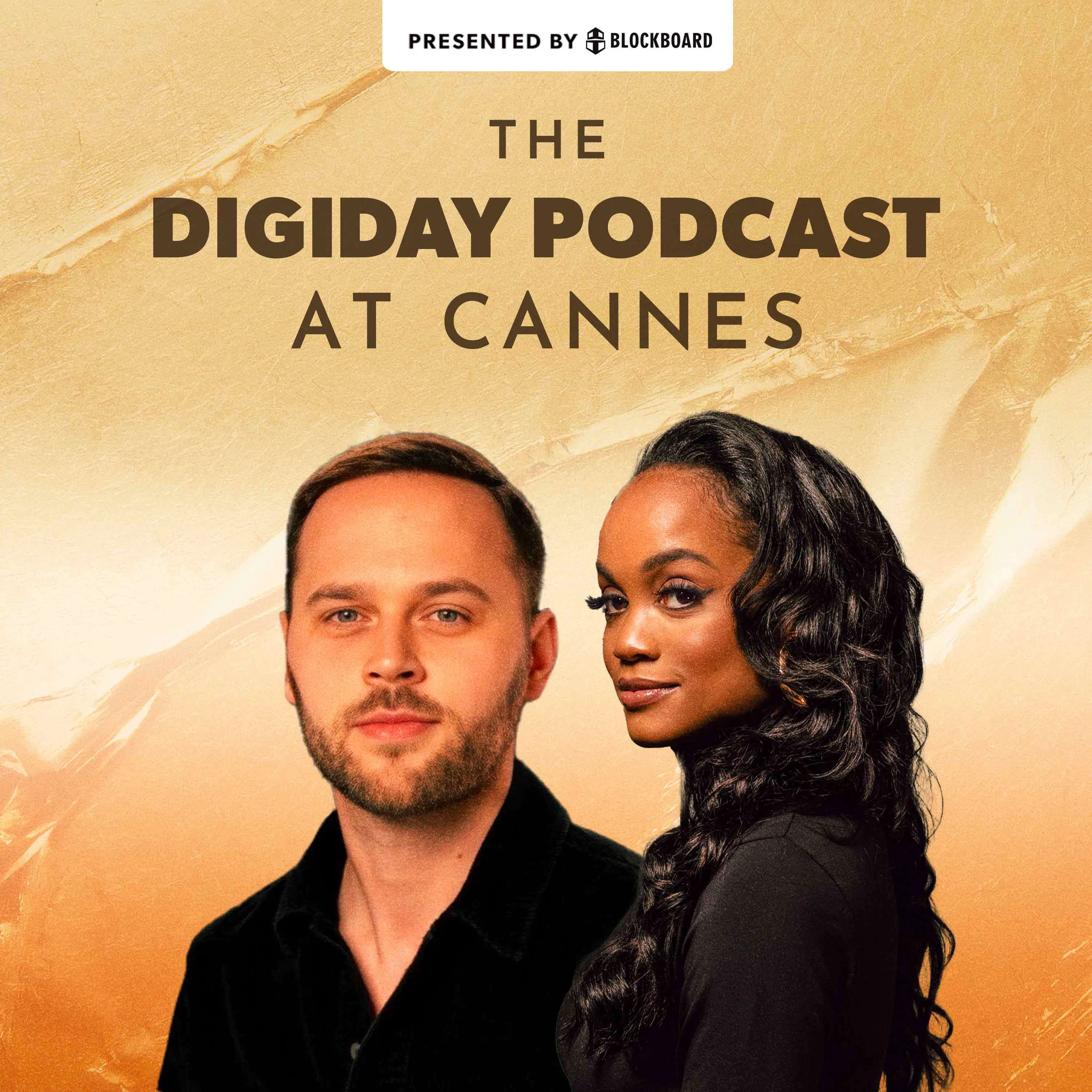
The Digiday Podcast
Digiday at Cannes: Former Bachelorette Rachel Lindsay makes the case for creators
00:25:26
Loading summary
Transcript78 lines
- [00:00]
Roman Wassenmuller
Foreign.
- [00:09]
Kamika McCoy
Hello, hello and welcome to another episode of the Digiday Podcast, a show about the business of media and marketing. I'm Kamika McCoy, senior marketing reporter here at Digiday and we are recording live from Spotify's podcast studio here in camp. Sitting with me here today is Rachel Lindsay, co host of the Higher Learning podcast and also Roman, and I'm gonna have you say your last name.
- [00:30]
Roman Wassenmuller
Roman Wassenmuller is the German pronunciat who.
- [00:33]
Kamika McCoy
Is the head of podcast business at Spotify. I figured it might be easier. How are you guys today?
- [00:39]
Rachel Lindsay
We are great.
- [00:40]
Roman Wassenmuller
It's amazing. It's phenomenal.
- [00:41]
Rachel Lindsay
If you have a bad day, can. That's what I keep saying.
- [00:43]
Roman Wassenmuller
And when I woke up, I felt like it's going to be a bad day. And I looked outside, I was like, yes, every time.
- [00:48]
Kamika McCoy
Absolutely, absolutely. Now, the conversation that I'm excited to have with you guys today is about the creator experience and kind of what that looks like from the business side with podcasts and Spotify, but also as a content creator from your side. Right. I think last year we kind of dubbed Cannes as like, that was the first official year that creators had like a really big presence here on the ground. Right. So my first question for you, Lindsay, is like, to that point, you know, kind of what has been your experience here as Cannes? Do you feel like that's been a recurring theme here, where creators are getting a bigger, bigger presence?
- [01:21]
Rachel Lindsay
Oh, yeah. So my story to get to Cannes was last year I saw everybody here and I was like, what is happening? Why am I not there? I have to be there next year. You don't understand. I manifested this moment because I saw the huge presence that creators were having. I wanted to be a part of it. I wanted to understand what was happening. So to now be here and on behalf of Spotify, on behalf of higher learning, on behalf of the ringer, it's just been such an incredible experience. The reason my voice sounds like this is because I've been talking nonstop. I've been meeting with people, I've been networking, I've been talking about what we do, what more we want to do, the future of it. I've been connecting with other content creators as well, and it's just been a really fun experience. I actually text my co host Van and I was like, we need to have a meeting as soon as we get back. There's so much more that we could be doing.
- [02:08]
Kamika McCoy
I love it here, I imagine. And I mean, that puts you really, really busy. But in all good things Right. Talk to me a little bit about what that looks like specifically on the ground for like the Higher Learning podcast. I heard you say earlier that you brought your bag with you full of podcast equipment.
- [02:23]
Rachel Lindsay
Oh, yeah, yeah. I mean, I'm not recording here. I am enjoying the moment, but just as a content creator, it's just been great. To one, I have to say I've been inspired by talking to other. That's why I text my co host. Like there's so much more we could be doing by talking about like what other people are doing on their shows, how they're connecting with brands, how they see the future of the show. Like I did a panel with Jake Shane and with Morgan and just hearing how they're taking their podcast on tour, how they're connecting with their viewers, different things like that have just been like, okay, there's so much more we can do to grow Higher learning and create more.
- [03:01]
Kamika McCoy
What are some of those things? Right. Cause we're like, we've just passed the halfway point of Cannes. We're crawling toward the finish line at this point, Lost voices and all. What are some of the talking points that you're hoping to take back that you've gotten from Cannes?
- [03:12]
Rachel Lindsay
Yeah, I mean, one thing that I've noticed in talking with different brands out here is just how they can connect with us and how we can relate their product or their brand to our audience and doing it in a way that feels comfortable to us, but that also our audience will be able to consume. And that's been really fun to have those meetings and talk about. You know, I think it's kind of simple. It's just like, let us do things in our voice and let us have creator control. That's kind of how we've been referring to it. Morgan's really good at that. So that's something that I've been talking to her about with, of just connecting, like what it is that they want to do and how they want to present it to our audience and like how we can best partner with each other to get that done.
- [03:53]
Kamika McCoy
What do you think the timeline is going to look like here? Right. One of the things that we also reported last year is like there was a hard learned lesson for creators where it was like, I'm going to come to Cannes, I'm going to strike deals, I'm going to make all this money and go home and take pictures in the house of France. And when they got here, it was like they learned the same thing that advertisers learned. It takes a while for these things to play out. So what does that look like for you?
- [04:11]
Rachel Lindsay
Or particularly, to be honest, I don't even walk away thinking, how am I going to make money? To me, what's been so great about Cannes is connection. Similar to what we say on as we're on stage and we're like, how do you build these audiences? How have you been able to make them grow? It's community and it's connection. So it's like when I, at the end of every day I'm like, okay, how many screenshots did I take of people's digital e cards? Who did I get emails with? And to me that's honestly how I've been able to sit here today. It's how I got to Cannes. It's how I started working with Bill Simmons and the Ringer. Just creating connection, creating that trust and then also letting them know that I'm like knowledgeable about what it is that I'm doing. I'm inspired, I'm passionate about it, I'm doing it with a purpose. It's meaningful to me. It's not just about the dollar. So that's been really great to be able to again establish here.
- [04:57]
Kamika McCoy
Absolutely. Roman, I want to flip the question to you. Same thing, right? You said the last time you were here was 2017, but I'm sure you've been watching from afar and to the point about creators having a bigger and bigger presence every year. Kind of like, what does that mean for like your role on the ground at Spotify? Like how do we adjust to make sure that we're working with creators, Partner with creators, wooing creators?
- [05:18]
Roman Wassenmuller
Yeah, I mean, truth be told, the reason why I'm here again is because creators are present. So that's just like, that's just fact number one. I think what we are trying to do at Spotify is really to build a place where people can connect of like all arts and crafts and you know, like creative and advertising industry is a craft, being a creator is a craft, but also being an artist is being a craft. Like being an author is being a craft. So Spotify really tries to build this place where like people come together and connect and get inspired by each other and maybe also think outside of their like regular day to day horizon. That's also why I think it's so exciting for me to be here because I can go into conversations with creators and advertisers. In many cases, advertisers see themselves as creators as well and kind of like seeing like what are the lessons learned and like, the insights that we can share to make sure that this ecosystem is just moving closer and closer together.
- [06:05]
Kamika McCoy
It's interesting how we're seeing creators kind of, like, filter in the way that they're titled and represented. Right. Because you have some that are, like, influencers, you have. That are comedians, you have some that are podcast hosts and things like that. So given that you were here in 2017, how have you kind of seeing, like, the approach to creators and, like, how creators present themselves at Cannes? Change.
- [06:23]
Roman Wassenmuller
Right. So I think I would love your take on it. I'm not sure I love the word creator, to be quite honest. And we're using it ourselves. It's called I took a lesson from your podcast. And then it would be like, a very long and thoughtful answer. No, but I think, like, how we think about it, we use the word creative. Like, it's basically like a creative person and someone, like, who kind of, like, forms in a different, like, forms art and, like, creation in a different form. And I like the term a bit more. I don't know, it just resonates more with me. So that's like, the first thing. Like, okay, what does this term even mean? Like, what are we using? What do we try to describe? But I think it still underlines that there's a very important role for those people to play here, and I think that's what Khan is becoming, and it's what's so interesting to see.
- [07:06]
Kamika McCoy
Absolutely, Absolutely.
- [07:08]
Roman Wassenmuller
How would you.
- [07:08]
Kamika McCoy
There was a hot take. Do you agree with it?
- [07:10]
Rachel Lindsay
No. When you explained it at first, you said it, and I was like, whoa, we need to rethink everything we've been saying. But, no, I like the way that you explained it. I think what's been. And I think I'm answering your question here. What's been Cool from. I wasn't here in 2017. We started our podcast in 2020. I was doing a bachelor podcast before that, but joined Ringer, Spotify before. And I think for me, I knew once I left the Bachelor, I wanted to be in media. And for me, that only looked like tv. And then I started doing radio, and somebody said, once you can do radio, you can do anything. Which is. Is very true. And once I got into podcasting, the way Bill presented to me, I was like, sure. Through the ringer, I was like, sure, you know, I'll do that. But I have been so beautifully surprised at how meaningful and impactful and how much there space there is to create in podcasting. And one thing we keep talking about over and over here is how this is the future. And as I talk to creatives and different brands and different executives, I'm really realizing even more so that the way that podcasting is moving, the space that we have, the freedom that you have, you really have an opportunity to touch people in a way that you can't in any other medium. So I'm so excited about the future. I actually have an idea for you that Jake and I were talking about because there's just so much, so many more places to go and to connect in a really interesting way.
- [08:39]
Kamika McCoy
Yeah, I think that applies to the concept of like how we approach being a creative, but also like in terms of monetization. Right. So I. One of the things about creators is like, you've got to diversify to make sure that all of your levers are moving simultaneously. So talk to me a little about what monetization has looked like through your partnership with Spotify.
- [08:59]
Rachel Lindsay
It's more of a you question.
- [09:00]
Roman Wassenmuller
I'm happy to take it. You feel free to chime in. But I think 1, 1, 1 optimization criteria we had is basically figure out what diverse income sources look like for creatives. Right. So when we designed a Spotify partner program, it's basically a collaboration combination of different things. It's basically an advertising driven business where you have like big sponsors that are integrated in the content. It's just more network ads that we're running to support like a good income for creators, but it's also making sure that creators participate and the engagement that our premium users are seeing on the platform, which was a big novelty that we announced in November of last year. And that's pretty exciting because it tells you different content in different stages of their career will be dependent on different kinds of monetization capabilities. I think in the past, a lot of creatives have told me, at least that they were discouraged because they couldn't find a brand sponsor from day one. And something we thought about, look, if there's engagement for you and you have true friends that are listening to a show, you should also feel encouraged because there's some steady income coming in, you're growing your income, etc. Which is important for us to make sure we support creatives all across the stages of their career. And the last one that I'm personally quite passionate about, and I know you guys are not testing it yet, so that would be an interesting one to think about is we have a product called Spotify Open Access, which is basically the opportunity for creators and their show to also have like a dedicated paid audience. So, like, it's basically consumers paying creators directly for, like, either additional content, other versions of the content, etc. Which I think is quite interesting that now creators can decide, okay, which of those pockets do I tap into and what's the right mix for my show, the maturity, but also what kind of fan base do I have and are they reacting well to those kind of changes.
- [10:37]
Kamika McCoy
That's very interesting. And I'd be curious to get your take on this as a creative. I'm watching myself.
- [10:43]
Roman Wassenmuller
I'm sorry I messed up this entire podcast. I were all so careful with the word.
- [10:47]
Kamika McCoy
There's one thing to have, like, different levers going at different platforms, but it's another to have it going within one platform. Right. So, like, how important is it to have different levers, whether it be that. What do you say?
- [10:57]
Roman Wassenmuller
Spotify, Open Access.
- [10:58]
Kamika McCoy
Spotify Open Access. Right. Video creator program and things like this. How important is it to have several layers that you can leverage. Excuse me. That you can pull within one platform?
- [11:08]
Rachel Lindsay
Yeah. I mean, I would just say it's great to have different options so you can grow, monetize more. And I love. I don't even know if I knew about the new. What you were just describing. What is it? Open.
- [11:20]
Roman Wassenmuller
Spotify. Open Access.
- [11:21]
Rachel Lindsay
Oh, Spotify.
- [11:21]
Kamika McCoy
We're learning so much.
- [11:23]
Rachel Lindsay
Spotify, Open Access. But I think that that's. I feel like Spotify keeps creating new ways for us to be able to leverage the platform and to monetize and like. But I went to a conference last fall, maybe with Spotify or maybe in the winter, I'm not sure. But what I take from it is you guys are so. You pour so much into creatives. And when I talk to people who are at other networks, they don't necessarily have the option. The options or aren't able to leverage it in the same ways that we are working with Spotify. So I think that's what's a really beautiful partnership.
- [11:55]
Kamika McCoy
We've also got video podcasts, and I feel like that's such a wonky thing because, like, this is a platform that traditionally is catered to podcast and audio. Right now we're introducing video. So the question kind of both of you guys, like, for you, from a creator pov, creative pov, kind of, what does it look like to kind of divvy up, like, dedication to an audio first platform, but also video and making those things work?
- [12:18]
Rachel Lindsay
Yeah. For us, we've been fortunate because we were one of the first podcasts that was tested for videos. So we've been doing that for a little over four years. So I feel like we always perform. And maybe this is because Van and I both come from tv.
- [12:31]
Kamika McCoy
Yeah.
- [12:33]
Rachel Lindsay
Do our podcast like it is in front of a camera, and I think that that helps. And we'll. And to promote it even more, we always say, you really need to go and watch this. Because the way that we talk to each other, it's not just the conversation that we're having, it's the interaction that we have with one another, which I think makes people feel like they understand us so much more better or so much better, and then they're able to connect to us in a different way. Video is everything. We were saying how I was talking to some of the creatives earlier. If you're not. If you don't have video, I think that you're behind. That's the future of it right now. I don't even think we have the attention span to just do audio anymore, the way that things are. But it just adds that other level to your podcast that makes it so much more intimate, which is really, really special. So all that to say when we do our podcast, we do it like there's a camera in the room always. And then. And think of it that way before we think about audio.
- [13:27]
Kamika McCoy
Absolutely. Same question. But, you know, from the business pov, like, how do you balance being, again, an audio first platform, but now you've introduced video.
- [13:35]
Roman Wassenmuller
Absolutely. So, first of all, massive. Congratulations. I mean, you have been pioneers of video podcasting, like, very, very. I don't know if we. If we said this before, but you just celebrated five years. Right. Very recently. So it's phenomenal to see how the show is evolving, but you also, like, are very much at the forefront of everything that is happening. So, yeah, just massive, massive. Congratulations. Phenomenal.
- [13:53]
Rachel Lindsay
See from afar, it has helped our audience grow.
- [13:56]
Roman Wassenmuller
And then, like, let me share a bit how we think about video and why video is important for Spotify. Right. So the truth is, like, what we do is we try to look at consumer and creator signals, and whenever we feel like there's something that can, like, deepen this connection between the two sides, we go for it.
- [14:13]
Kamika McCoy
Yeah.
- [14:13]
Roman Wassenmuller
That's what made Spotify unique and successful in the first place. That's what we did with music. That's how we started out doing podcasts in the first place, because we felt there's something very deep, something very valuable that we can kind of, like accelerate and support. Video is exactly this thing. Like, everything we're seeing, like, once a creative, once a show moves into Video, like, it deepens the engagement with the consumer. Like, it's easier to discover the show. But also, once a consumer adopts watching the show, they spend more time with it, they come back more often. So it's just like, you look at, like, that's the very mathematical answer. But you look at all the numbers, you. You look at all the updates, they're like, okay, we unlocked a new wave of growth for podcasting and deepening the engagement. Phenomenal.
- [14:53]
Kamika McCoy
Yeah, yeah. Do we? I guess. What does that mean in terms of, like, being a audio first or audio driven or an audio originated, if you will, platform? Right. Because with the introduction of video, like, now we're rubbing up against YouTube. So talk to me a little bit about how we. Especially from like, a consumer perspective, coming up, coming to Spotify for the audio. Right. With a sprinkle of video, if you will. So how do you. How do you go about that?
- [15:16]
Roman Wassenmuller
Absolutely. So first and foremost, important to mention, we're still supporting audio and video creators alike. Right. So we're not saying, look, let's turn our back on audio. Let's not care. We're only going video. That's not the case. We're very supportive of creators of all kinds. We offer format flexibility, and as a platform, we also offer the opportunity for consumers to consume however they want. They can watch, they can listen. Even if it's a video podcast. Right. You can go to the gym and still just listen to it. I think that's very important for us. That also differentiates us and, like, a clear signal of how consumers use the app differently than other platforms. So that's one. It's like, you know, if a creator feels like they're ready and they want to move into direction, video, we're supportive of it, but it's not like forcing people into it. We can just share insights and tell them, like, here's what we're seeing. If you're ready, we would really recommend you to go this way. But, like, hey, if you're happy with your audio setup. But maybe it's the more comfortable environment, that's how you build your initial fan base. Don't rush it. Like, take your time. Figure out until when you're comfortable with that, this new setup and this new format as well. And from, like, from a perspective of, like, competition, that's like. To be honest, that's not how I think about it. Like, I don't care who the competition is. Sorry, I'll take number two. So that's two hot takes. As Morgan would say. No, but it's like, it's honestly, we need to look into our creator base, our consumer base, and the platform works very, very different than a lot of other platforms. And, you know, it's not just replicating what someone else has done, but it's doing what is best for those two constituencies, for us. So our video product will always different than others. The way that our algorithms work will always be different. The way that we build fan bases for shows will look different. I think that's something that makes me very, very proud, that we can be different. And the formula of success always has been that we're slightly different and we do things differently.
- [16:59]
Kamika McCoy
I know you said Rachel and the podcast and the team get a lot of early access to things. Right. And get to be innovators in this space, but I'd be curious, kind of like, what is the threshold for a creator creative to get to the axiom and to get to the video podcast and things like that? How do we set that. That threshold?
- [17:17]
Roman Wassenmuller
Right. So I'm not sure how to think about a threshold best. But, like, my honest take is. So I've been in podcasting for probably, like, three years, from 2016-19. Then I went on a different journey, and now I'm overseeing the podcast business since October of last year. And I must say, like, I was very excited about podcasting in its first place because it was very open. Like, it was a very easy and accessible format. And to be quite blunt, something happened in between that made it overly complex, and I don't know what it was, and I can't pinpoint what it is. But now you're asking someone, like, hey, do you want to get started? They're like RSS feeds and this setup.
- [17:52]
Kamika McCoy
Exactly.
- [17:54]
Roman Wassenmuller
People just get hung up on it. So I think a big role that we want to play is how do we simplify this again? How do we just get people and creatives to focus on the craft and experiment with the craft instead of thinking about all those technical nuances and how to set it up? And I think if you figure that out, then you're golden. And I think all the other stuff is just a bit of a distraction.
- [18:13]
Kamika McCoy
Absolutely. Now, Rachel, you've been through many variations of what a creator and a creative looks like, right? What has the experience been like, specifically working with Spotify? How do you think that's helped you, like, grow your audience and monetization, things like that? How. How have they been a partner for you?
- [18:28]
Rachel Lindsay
Well, I mean, I touched on it a little bit earlier when I said what I love about the partnership with Spotify is that you pour into creatives and you feel that, and it feels like more than other places that I've worked before, I absolutely feel that. I feel like that's why we've been able to grow in a certain way. And there seems to be a lot of trust that I appreciate as well. And I love that you said that podcasting is so open, because I think that's what's been so great with what we do, too. We feel like we can do whatever we want, and we're not being micromanaged in any kind of way. We have the freedom to be ourselves more than we can in any other platform. And I think that's what's been so great, which is why I've, you know, pretty much that's. That's all I do right now is just podcasting, because I don't feel beholden, maybe to a network or a company. In certain ways, I am fully myself, and that's the freedom that we get with Spotify, and I think that that has helped us grow or monetize things in a certain way, because people. Yes. First met me on the Bachelor. Bachelorette.
- [19:33]
Kamika McCoy
Yeah.
- [19:33]
Rachel Lindsay
But they'll say, I feel like you are more yourself when I see you podcasting. And that feels very rewarding, very comforting at the same time. And I think that's why Van and I have been able to grow in the way that we have through Spotify because of just the realness of it all.
- [19:49]
Kamika McCoy
Yeah. Would you be willing to talk about some of those monetization opportunities? Like, you know, do we lean into subscriptions? Do we use the video or, you know, a portion of the proceeds, kind of. How does that work for you guys?
- [20:01]
Rachel Lindsay
Our setup's a little different.
- [20:02]
Kamika McCoy
Okay.
- [20:04]
Rachel Lindsay
So I won't get into all that, but I can really speak to video more than I can with anything, which, again, we tested it. You tested it through our podcast, and then we've seen the growth through that by promoting it through video. And then.
- [20:18]
Kamika McCoy
Really.
- [20:19]
Rachel Lindsay
And then the live show that we just did, which sold out in two days.
- [20:23]
Roman Wassenmuller
Yay. Congratulations.
- [20:25]
Kamika McCoy
The last thing. Because we're running up on our time here, and I'm so grateful that you guys have spent it with me. The last thing that I want to ask you is about, you know, from the experience that you've had here so far.
- [20:34]
Rachel Lindsay
Yeah.
- [20:34]
Kamika McCoy
What do you think the role of creators here and creatives at Cannes is or can be?
- [20:40]
Rachel Lindsay
Honestly, I think that it's. There's a lot of collaboration, which is why I Turned to you and I was like, I have an idea for you. Because that has been talking to each other. I knew Morgan before, but I met Morgan through Spotify, south by Southwest, talking with her, but through other creators I'm meeting, and it's kind of talking. We're meeting with each other, and it's like, well, what are you doing? How are you working with these brands? What do you see as the future for your podcast? Which is, again, how the idea came up. That's been something that I didn't really anticipate. I knew I was here to represent our podcast. I wasn't. Again, I keep going back to this word. I was not aware of the connections that I would be making in order to help us all be better as creators. It's been very collaborative, so that's been really great here with Boots on the Ground, and I'm excited to take that back to LA when we go back and see what we can do with it.
- [21:30]
Kamika McCoy
That's an interesting pov, because I feel like a lot of the conversations that we have as journalists is like, what's the deal making? What's the deal making? What's the deal making that's happening? I can. When in reality, for. It seems like for creatives, it's more like, what connections am I making that will hopefully lead to, you know, a partnership or something like that down the road? I think Issa Rae said it once about, like, you know, you ask about how to. How to climb further in your career and things like that. And as opposed to, like, reaching up, it's always a matter of reaching across.
- [21:57]
Roman Wassenmuller
Yeah.
- [21:57]
Kamika McCoy
So I think you encapsulated that perfectly as.
- [22:01]
Rachel Lindsay
Yeah, And I think that's part of being a creative. Yes, you have to look at the business side of things, but you also want to be inspired by what you do. And that's. I mean, yes, it helps to be here by the water with the people who said that is its own inspiration. But I love talking. I mean, I'm a podcaster, so I love talking and connecting with people because I, again, I don't look at it as competition. I look at it as connection because I know that I'm different in what I bring to the table, but I can also learn and then be inspired by other people.
- [22:32]
Kamika McCoy
Perfect, perfect. Any final thoughts that you wanted to say about kind of the role of creators here?
- [22:36]
Roman Wassenmuller
No, I mean, just a massive thank you for everyone showing up here. I mean, for me, it's phenomenal to see just hearing your stories and I knew that, Morgan, you met at south by and then seeing you being on her part was like a moment of delight for me. That happened because it's great to see. So if we can just come back from this and build a few new connections, I think we did some value at like, we did something that is great for everyone. So I'm just super thankful for everyone being here and hopefully we can do more of that going forward.
- [23:01]
Kamika McCoy
Absolutely. Roman, Rachel, thank you guys both for sending the time chatting with us at the Dish Day podcast here live at Cannes. We'll have more throughout the rest of the week and we'll catch you guys on the next episode.
- [23:09]
Rachel Lindsay
Thank you.
- [23:09]
Roman Wassenmuller
Thank you so much.
- [23:15]
Kamika McCoy
Well, that brings us to the end of this episode of the Digiday podcast. Thank you to everyone for listening. And please don't forget to share this episode with someone who you think would enjoy it. You can even rate us and leave us a comment on our Apple podcasts. Thank you so much for joining us.