← DR. GUNDRY PODCAST: GUT HEALTH, WEIGHT LOSS, AND NUTRITION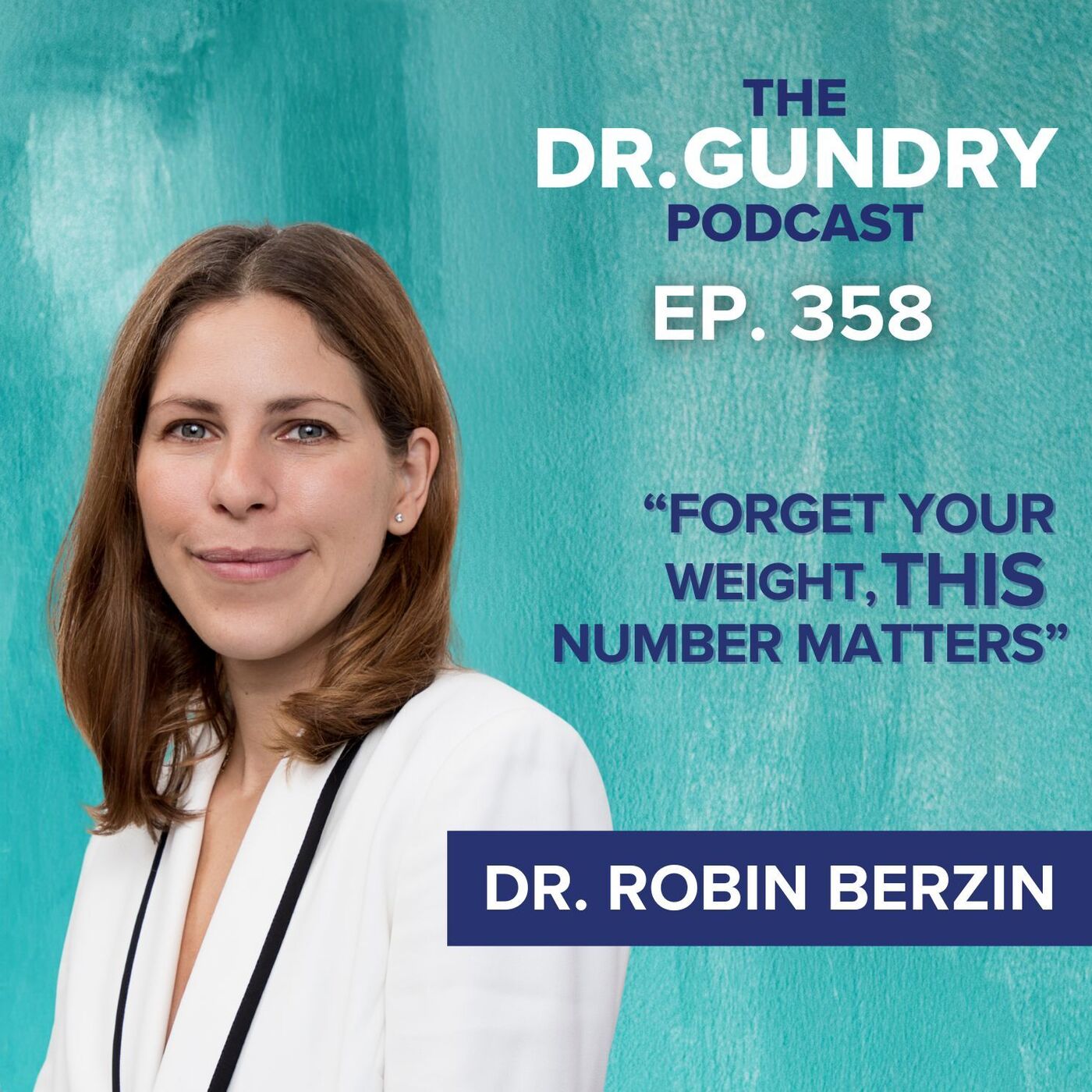
DR. GUNDRY PODCAST: GUT HEALTH, WEIGHT LOSS, AND NUTRITION
3 Things ESSENTIAL for Aging Well with Dr. Robin Berzin | EP 358
00:47:09
Loading summary
Transcript50 lines
- [00:02]
A
Welcome to the Dr. Gundry podcast, where Dr. Steven Gundry shares his groundbreaking research. From over 25 years of treating patients with diet and lifestyle changes alone, Dr. Gundry and other wellness experts offer inspiring stories, the latest scientific advancements, and practical tips to empower you to take control of your health and live a long, happy life.
- [00:26]
B
Welcome to the Dr. Gundry podcast. You know, it's all connected, folks. As I always say, there are no isolated issues in the body, and my guest today agrees. Dr. Robin Berzin, founder and CEO of Parsley Health, has made it her mission to uncover the root causes of chronic conditions by treating the body as one interconnected system. A Columbia trained physician and bestselling author, she's transforming the way we think about health care, helping people everywhere reclaim their energy, vitality and well being. After the break, we'll explore her approach to root cause medicine, the connection between your physical and mental health and the daily habits that can help you take charge of your health. Now, don't go anywhere. We'll be right back.
- [01:19]
A
From the waters of Lake Erie, it was raising flags.
- [01:23]
B
He said there's no way that that fish should weigh 7.9 pounds. It's just not big enough.
- [01:29]
A
To a nondescript office building in Richmond, Virginia, home to a $700 million fund for children with special needs.
- [01:36]
C
If there was a cliche list of how to blow money that you just stole very quickly, this guy did all of them.
- [01:44]
A
To the ski slopes of Salt Lake City, where a former Olympic snowboarder landed on the FBI's most want.
- [01:51]
B
Ryan James wedding is one of those interesting Norcos who have had two very successful careers, one legal and one illegal.
- [01:59]
A
We're pulling back the curtain on a fresh lineup of opportunists who stopped at nothing to get ahead. These are the stories of people who saw a loophole, a moment of weakness, a chance to get ahead, and took it. I'm host Sarah James McLachlachlan. Join me for a new season of the opportunist on May 19th. Follow now wherever you get your podcasts.
- [02:34]
B
If you want my best recipes, early access to new health discoveries, plus exclusive content and giveaways. You need to sign up for my weekly newsletter. It's packed with everything to help you live better. Just head to this episode description. It's free and easy. Dr. Berzin, welcome to the show.
- [02:57]
C
Thank you so much for having me. It's such a pleasure to be here and to see you again.
- [03:01]
B
Yeah, great to see you. So tell me about your approach to root cause medicine. So before you do. How does root cause medicine differ from. From functional medicine, which a lot of people have heard about, or what I practice, which is restorative medicine? What's root cause medicine?
- [03:22]
C
You know, I think the fundamental focus of root cause medicine is what something that we share in functional medicine. Functional medicine is really the basis for root cause medicine. And it's really about just like it sounds, treating the root cause instead of band aiding the symptoms. You know, I always give the example. You don't have a migraine headache because you have a painkiller deficiency. There's a reason why you have that headache. And I'm a conventionally trained physician. I trained at Columbia Mount Sinai Hospital in New York, which are awesome institutions. I loved my medical training. But what I noticed there is that oftentimes, as we manage and treat some of the biggest conditions all of us have today, from migraines to diabetes to women's health issues, we tend to manage the symptoms and not treat the root cause. And when we don't treat the root cause, people don't get better. And so I was lucky to find functional medicine and develop my practice, Parsley Health, where ultimately our goal is that you see results.
- [04:16]
B
That's a good segue. How does your practice at Parsley Health translate into patients achieving better outcomes? Can you give me an example how that works?
- [04:29]
C
You know, I looked when I started Parsley Health nine years ago. It's been nine years, which is incredible. I looked around and I saw all of the good things that were happening in our conventional medical system. You know, focus on data and science and evidence basis. And I also saw some of the things that were missing. We weren't looking at the whole person. We weren't spending enough time with patients. We weren't making it easy for patients to see us online through telehealth. We weren't doing some of the proactive testing that would give us a better sense of what's actually going on with you. And I learned about functional medicine and I even practiced in a great functional medicine practice in New York for a while. And what I loved about functional medicine was like, wow, it fixes all these things that I saw were missing in conventional medicine. Right. We're spending more time with you. We're doing proactive testing. We're looking at the whole picture. But what I didn't see in the functional medicine world was a commitment to looking at data and outcomes, a commitment to evidence based care, modernizing the care experience so that was more approachable and accessible for the average person. It was like Hard to find these doctors. They were really expensive. And so I decided to kind of marry all of those observations into one company whose aim was to really democratize functional medicine to make this root cause approach available to a lot more people. We have something called at Parsley, the Encyclopedia Parsley. We have put evidence basis behind all of our protocols, all of our functional medicine protocols. We built our own fellowship training program. So we have over 30 doctors and clinicians at Parsley Health. And more than that, when it comes to our nurses and health coaching staff, that total team is over 80 people. All of them have gone through our own fellowship in root cause functional medicine. So we could really standardize the care and then we built technology platform around it. We made it easy to work with us online and send us messages and schedule your visits and not have to even come in for a visit if you didn't want to. We do have some in person in New York and la, but we're online nationwide and, and beyond all of those things trying to just streamline the care model, make it more accessible. We made it more affordable. We take insurance in some states. We're in network for about 16 million people on the east and west coast today and growing. But even where we're not in network and it's cash pay, we're still pretty affordable compared to a lot of the services out there. And even past all of that, what I really wanted was just to make it a great experience. Because at the end of the day, I think you and I, we're both doctors, we know a lot of our medical system can be really like, overwhelming and difficult for people to engage with. I always say that the healthcare system is really interested in medicine, but not so interested in health. And so my goal in Parsley was to say, hey, can we just make this a great experience? Because regardless of whether it's functional medicine or conventional medicine or anything in between, we have to want to go see our doctors if we're going to engage in care and get better.
- [07:25]
B
Just as a, as a sidelight. Where did the name Parsley come from? Are you a big fan of parsley?
- [07:32]
C
You know, it's not so much that I'm obsessed with parsley. Although parsley is full of great phytonutrients, minerals, and it goes great with many things. What I loved about the name Parsley was that I wanted something that felt bright and fresh and clean and memorable. It was easy to say familiar. And actually I wrote down a bunch of names and I had drinks with my best friend from growing up and she's like my friend who knows who all the celebrities are and knows pop culture. And I basically live under a rock when it comes to that stuff. And I listed a bunch of names and I listed Parsley Health. And she said, I like that. And I was like, all right, well if you like it, then the world will too. And it just stuck. And here we are.
- [08:15]
B
All right, well, so RFK Jr. I'll drop a name with Maha really thinks that our health system is crazy and certainly wants to try to get better delivery of health care. How do you see and what's your data that Parsley Health, the system is actually going to deliver better results for less cost? How's that put you on the spot?
- [08:49]
C
Yeah, no, I mean it's a great question, right? Because I think everyone spends a lot of time RFK Jr. But also basically everyone saying how healthcare is broken. Right. But then you don't hear a lot of good answers on how to fix it. Correct. And I think folks are correct in that it's a multifactorial issue. Right. It's our food system and our food incentives. It's the incentive system in our healthcare system. We pay for volume, we don't pay for value. Right. We've kind of overindexed on pharmaceutical therapies as our only answer. And drugs are great, drugs are important. We need to keep up our research, we need to have great pharmaceutical industry and it needs to be cutting edge. But we also know that pharma is not the only way to heal the body. And so we've sort of over indexed on that in modern health care, I believe, and I see every day. And so one of the things that we set out to do with parsley was to say, well, how can we show that this is evidence based and also working? And so we actually did twice now an independent research research study through actuarial scientists and actuaries are people for. If you don't know what that word is, I can barely say that word. So don't feel bad. But these are the people who do the math essentially in healthcare to try to figure out whether something that is happening is making things cost more money or less money. That's basically what it comes down to, which seems like it would be easy, but is actually wildly complex. And in this actuarial study that we've done a couple times, we've showed that looking at tens of thousands of parsley patients over time compared to age match controls, so non parsley members, we're saving over 20% total cost of care in the first year of care and 20%, I don't know if that sounds big or sounds small to you. It should sound massive. Because in healthcare today, when I've spent time with people from the big insurance companies, from Aetna, United, you name it, people think it's a good day. If you say, let's save like 2, 3, 4%, that's like an amazing day. So to save 20% in a year or two is incredible. And what we showed is that the big way that we're doing that, two things. Number one, people who come to parsley in the first place often have a lot going on, often have more than you would think. You know, if you're perfectly healthy and you're not using the healthcare system at all, it's hard to save the healthcare system money from there. You can't, right? But 80% of our members have two or more conditions that they're dealing with. 60% of our patients have three or four. And I think we have this misconception that everybody's walking around healthy and then a few people are sick. And the reality is, in America, the vast majority of people are living chronically sick all the time. High cholesterol, heart disease, depression, infertility, menopause issues, diabetes, weight gain. Right, you digestive. 40% of Americans on a given day have a GI problem. 40%, 4 in 10. So the reality is most of us are living with something. Even the people you see walking down the street, who you think, gosh, that person looks healthy, they're often not. And so the reality is parsley has attracted people who are coming to us saying, I don't feel well, I don't know what I have, or I've been given a diagnosis, but I'm not getting better. And so we're treating some of the higher cost folks, the folks who have more going on. The second thing that the study showed is that what we're really doing is helping these patients get better. 80% improve or resolve their symptoms. In year one, we reduce chronic prescription drug usage by almost 65%. We reduce the usage of specialists by 70%. And again, it's not that we're anti drug or we don't love our specialist friends. I refer to people to go get their colonoscopy all the time. And I want my women to go get their pap smears with their gyns and so forth. But in this country, we just go from zero to specialists. Like we don't even pass go. And a lot of people who have health issues are using a lot of specialty care. And there's no one quarterbacking, there's no one saying, let's look at the whole of you, figure out what's going on and not just manage these diseases, but help you get better. And because we do that through functional root cause medicine at Parsley, we've shown that this methodology, this program is actually helping people not need so many drugs, not need so much other care. And then that is doing what the big bad health care system wants, which is to spend less money. I wish I could say it wanted us to all be healthier. I think it does on some level. But like the metric that is used to define that for better or worse, I think in some ways worse is money and utilization of the system. And so that's how they track it, that's the scorecard they're using. So we, we went and looked at that too.
- [13:24]
B
So, you know, the average family medicine GP gets to spend 8, 10 minutes with a patient and it's mainly to refill prescriptions. And nobody went in, I think, went into medicine to do that. How do you, so how does parsley improve on that model? How do you get to, I assume you spend more than eight to 10 minutes. How do you make that work? I'll give you an example. I have third year family medicine. Residents rotate for a month through my clinic and I, you know, my initial consult with a patient is an hour. I see patients for 30 minutes subsequently and they get really excited when they see what restorative medicine does and they go back to their counselors and go, oh, wow, this is what I went into medicine for and that's what I want to do. And they go, wake up. You owe $400,000 in medical school debt and college debt and you're going to have to roll through 40 patients a day, minimum to make a living. You can't do that. So how are you guys doing that?
- [14:47]
C
You know, it's a great question. So we do it for two ways. One, we do the same thing as you. So our first visit's an hour, our follow up visits are 30 minutes. We don't even have a 15 minute visit with one of our clinicians. It doesn't exist. Because I'll tell you, I saw patients, what's today? Friday, yesterday morning. And you know, I'm seeing the patient, I'm treating her depression, her psoriatic arthritis, her high cholesterol, her weight gain, her metabolic syndrome, and she's got major musculoskeletal pain and also she's got high platelet count that like nobody can figure out. And I'm addressing all of those things in 30 minutes. 15 minutes would just like not even, I don't even know where we would begin. So it's just not possible. And by the way, this is a woman who is, you know, 50 years old in the workforce. Again, to my point earlier, like, the average person has all these things going on that who's walking, talking and living their lives. And so the way that we're able to spend the time with folks is two ways. One, when we do take insurance in some cases, but we also charge a supplemental fee on top of that for our program, and that allows us to cover the gap. Because the reality is everyone, your insurance pays us to spend eight minutes with you. When you get, we get reimbursed by your insurance company. No matter which insurance company it is, it doesn't pay us to spend an hour with you. And your insurance pays us to focus on one little problem that you have today. Like the most biggest, most presenting problem. And the thing that's giving you like the most pain today might be just a symptom that we're managing, but if we only have time for that, we don't have time to go like under the surface to the rest of the iceberg, which is actually the stuff that's causing you the most pain. And so we can never get ahead of it when we only reactively treat the thing that's the biggest deal in front of us. And so we do charge some money supplemental on top of insurance. And that allows us to deliver the other things that we do, which also make us more affordable. So we operate in a care team model. And every patient doesn't just get a doctorate parsley, they also get an rn, they also get a care coordinator, they also get a health coach, and they get our digital technology later layer and a lot online. And so by combining those things together, we're able to give you a really beautiful experience and a supported experience. We're able to do things like help you get to that specialist when you need it, get your prescription drugs, get your supplements, whatever it is, while still maintaining an affordable layer. And a lot of that was like what I went into designing because I saw the private practices that are so amazing, they're doing great work, but they're so expensive. And I said, okay, we need to design a whole new layer now. We're using AI and software in new ways to create even more efficiencies there. And my goal with that is that the cost keeps coming down and down.
- [17:37]
B
All right, you mentioned a typical patient that you see. That I see. And this is frequently a woman maybe in her 40s, maybe in her 50s, who, you know, is employed and has these multiple medical problems. How you have a protocol that's called the, the 3B protocol. So how do you, how do you use that to help optimize women's health? Because let's face it, women are no offense to well meaning practitioners. They're really not listened to and underserved in our health care system.
- [18:22]
C
Women are complex and our healthcare system has tried to oversimplify them. And we've boiled women's health down to hormones and I don't know, I'm 43, I have three kids. You know, I'm married. I live my life, I run a company. I'm not a walking uterus. And so the only way to understand women's health is to look at the whole picture. And just like you, we see a lot of female patients. We see men too. We see a lot of female patients because women are misunderstood when it comes to healthcare, and they're not getting what they need. Oftentimes they don't even have a primary care doctor. They're like seeing their GYN for a pap smear every couple years and getting their blood pressure done, and that's like the end of it. They're not getting anything else. And it's really, it's really a shame. And so as I started to see more and more women who were kind of lost outside of pregnancy and having a baby, kind of waiting for menopause or past menopause, and had never gotten good menopause care, it was clear to me we needed a protocol to address the whole woman. And so BBB is Brains, Bones, and booty. And booty stands for your muscles and your metabolism. Bones are, you know, women have five times the osteoporosis over 50 than men. Women lose up to 20% of their bone mass in menopause. Brain health, women have two to three times more Alzheimer's and dementia and metabolic health as estrogen and progesterone, kind of especially estrogen, come down in our 40s and 50s, it's like taking the foot off the gas of our metabolism. And so we end up with a lot more weight gain and a more abrupt weight gain and worse metabolic disease. And when we think about this, brains, bones, and booty, these are the three things we need to focus on. Doesn't matter. You could be 25, 35, 45, 55, or 65. These are the three things that you need to focus on when you want think about healthy aging, great longevity, expanding health span, and feeling good. I, like I said, I'm 43. I want to look and feel even better. My goal is to look and feel even better in the next 10 years than I did in the last 10. I'm in no way resigned to say, well, I'm 43, not 33, so I guess I'll just give up here and wait for menopause to come and disease to hit. I am. And so what I did was. And what we did at Parsley was really dive into, like, what are the supplements that women need to focus on? What are the nutritional guidelines women need to focus on? What are the exercise that women need to focus on? And how do women think about mental health and what is specific to women? Because I know that you and I can noodle all day on, like, a nutrient. You and I could do that. Like, we could derail this podcast and we could get really excited about.
- [21:03]
B
Go down a rabbit hole.
- [21:04]
C
Go down a super rabbit hole. But when you take a step back, what I see women dealing with every single day is their bones are falling apart, their body composition. They have too much fat mass and not enough lean muscle to sustain their metabolism or just sustain their energy. They're low on omega 3s because they all went out the boobs to the baby, as mine did, and they haven't repleted themselves. Their hormones are out of whack, and no one's testing them. No one's looking at thyroid and adrenals, let alone sex hormones. No one's repleting sex hormones, because we vilified hormone replacement therapy for decades in the medical community. And so what I see is a system that is set up for sickness. And if we want to look and feel better in the next 10 years than we did in the last 10, focusing on our brains, bones, and booty, our muscles are the way in which we do that in a simple and effective way and in a broad way versus, like, obsessing about one supplement or what nutrient.
- [22:06]
B
It sounds like this is accomplished with your health coach and, of course, interaction. Are there. Are there tests you mentioned? Some of them that really should be routinely done as a woman goes from, let's just say, 40 to 60 that are really missed constantly. I know my opinion, but I want to hear yours.
- [22:35]
C
I have a feeling we generally agree, but if we don't, I want to hear that, too. So, yes, there are, and there's, you know, testing that we do twice A year for women that is designed for women proactively. These are blood tests, biomarkers you can get at your regular lab. And they're. But they're going beyond what a regular primary care doctor looks at. And they hit across six areas that are vital for women to be proactively looking at. Metabolic health, heart health, thyroid nutrient reserve, inflammation, and your sex hormones. Those are the six. And most of those get totally missed by your average primary care doctor. And I love our GYN community, but they're not doing proactive testing in general at all because their scope of practice doesn't even really allow them to, even if they want to. And so we test across those areas because. And we test them twice a year. And these tests allow women to start to understand, hey, maybe I don't need to feel like I have to boil the ocean here. Maybe I don't have to focus on everything. Maybe I thought I was gaining weight. You know, I had a patient yesterday who, woman in her early 40s, all of a sudden is gaining weight. You know, didn't have a problem with weight, had three kids, but, you know, slowly gained a little bit of weight with each pregnancy. But now she feels like the scale's going up and up and up. And so it's like, okay, let's begin. This could be your thyroid and have nothing to do with what you're eating. This could be metabolic issue. And you've developed insulin resistance. Let's look at your fasting insulin level, your hemoglobin A1C. Let's also get you a continuous glucose monitor at home and see how you're responding to the foods that you're eating. So instead of just telling her, like she would have heard out in the world, congratulations, welcome to your 40s and off you go. We're going to really dive in with this proactive testing and understand what is the root cause of her weight gain and treat that. She came in saying, should I take a GLP1? And I said, well, maybe, maybe a GLP1 is a place we'll go, but a GLP1 just cuts your appetite. That's all it does. It just has. You eat less and we don't know why you're gaining weight. GLP1 might not be the most relevant treatment for you. So, like, I'm not in the camp of I hate GLP1s and they're horrible. We do prescribe them at parsley. I'm not in the camp of, you know, they're the answer to everything. Just put them in the water. Which I think we just saw a Wall Street Journal article just like, you know, shoot Everybody up with GLP1. Just stop asking questions. Wait a minute. We should be able to do more personalized proactive testing and figure out why people are the way they are. And for different people, it could be different reasons. What do you think of GLP1s, by the way?
- [25:24]
B
I think it's the devil's work. But, you know, GLP1 is made by gut bacteria, and if you give them what they want to eat, they'll make plenty of it for you. And the other thing I think we should realize is all the human trials show they basically stop working after a year. You don't get any additional benefit. And if you look at animal trials, the long term use of GLP1s create impressive pancreatic inflammation. So why in the world would I want that for a patient? Plus, all my patients, their insulin levels go up rather than down, and so I get them off of it as soon as I can and treat their gut bacteria and we do fine. So just a different way.
- [26:12]
C
It's a different way. And I agree with you. I mean, food is medicine, and largely you can shift your microbiome and by eating the right food, foods achieve a lot of what a GLP one can achieve. I do have some patients who are morbidly obese on cpap, sleep apnea with, you know, emotional eating and binge eating disorders for whom the alternative is like, death. And I have seen GLP1s help some of those patients kind of reset their eating behavior from a place that wasn't going to happen just by telling them to eat the right foods even though they wanted to. And so I'm of a view that there are roles for drugs when used appropriately, when used in the right patients, but that we're sort of band aiding yet again treating the symptom. So many people overeat because our food has been designed to make us overeat. So many people overeat because we're not sleeping well and they're exhausted, they have sleep apnea, they're not breathing at night and they're keeping themselves awake during the day. So many people overeat because they have undigested grief, and grief is a powerful motivator to munch. And, you know, these are all, again, what you're hearing on this if you're listening to podcast. These root cause reasons are meaningful and important and deserve to be explored and not just band aided over or stuffed down. And so that's where I think the danger in GLP1s comes from.
- [27:42]
B
Yeah, and the other thing that scares me is, you know, 40% of the weight loss is muscle mass and muscles. And you know, sorry, it is. And muscles are actually what eat calories, so.
- [27:56]
C
Exactly. And in our, in our program, when we do prescribe GLP1s, we make sure people are weight training, they're eating adequate protein. The wrong way to do GLP1s is just to keep eating your old diet. And also it's critical. You know, I talk about this. We had an event earlier this week at Parsley's office in New York for women on women's longevity. And a big part of the conversation was around muscle body composition and muscle mass and testing that either through a full body DEXA scan or, hey, if you don't have access to that, cool. Like get a body composition scale. They're not as accurate. Like, do I love them? No. But are they good enough for you to get a sense and then track your progress at home? Absolutely. And we talked about how women have had so much of their self worth attached to the number on a scale. And so that is how wrong that is and how body composition and muscle mass is actually the number when we think about female longevity. It drives metabolic health, it drives brain health. It keeps you upright so you don't break a hip. Right. Body composition is critical, I think, for us to focus on and for everyone. Whether you're on a GLP one or not.
- [29:09]
B
Your book Prescription for Happiness, there's five daily actions to improve your mental health. Can you, can you, can you run through those real briefly for me?
- [29:23]
C
Yeah. You know, I talk in the book about core actions. I don't like the idea of habits. I don't know about you, but the idea of habits is like, I don't know, biting your nails or. It's not just didn't seem like strong enough to me. Like, a habit is not something that defines. Defines your health and your life, but a daily core action is. And so to keep it brief, I can talk about a couple of them. The first one is looking at what you're eating every day and the foods that you're eating and putting in your mouth every day is a core action. What you eat is not a habit. It's sustaining you and reducing your sugar intake to less than 25 grams or 25 grams or less a day. Getting 30 grams of fiber is a good day. 50 is a great day. Really focus on your fiber intake. Feed those good bugs in your microbiome that Dr. Gundry knows more Than possibly anyone about, you know, choose to make what you're eating serve your body and then getting adequate protein. Adequate protein is around 0.7 grams a day per pound of body weight. And if you're really muscle building, you can go up to a gram per pound of body weight. But not everybody needs a gram per pound. Some people can do quite well, just fine, even build muscle with a little bit less. So it ranges based on the person. Another core action I talk a lot about is looking at your technology usage. We spend all day long and all night long sometimes looking at screens. And relationship with Technology today in 2025 is a core action. And if you are addicted to screens, if you can't put them down at night and allow yourself to fall asleep, if you're looking at screens all day, you're probably sitting all day, which is another core action about how much you move. Starting to create limits and boundaries around your relationship with technology and phones and screens is another way in which we reclaim, or maybe, to use a word you might use, restore our health and our relationship to our bodies. And I don't think people oftentimes are as aware about how much the screens have hijacked our health and the way that we. We move and live through life.
- [31:23]
B
Good point. I have. I'll give you a fun example where two different sleep tracking devices. I'll name them. I've got an aura ring on and I've got a. There it is, a whoop band on. And in fact, I have the latest version, by the way. And I was an original adapter of both of these technologies. And I think I wear them for more of comic relief because on a nightly basis, and I won't say which one band consistently thinks I get about an hour and a half of deep sleep every night. The other band, which I'm wearing on the exact same side, says I get 15, 18 minutes of deep sleep. Whoa. Now, which one should I believe? Well, I really like the one that says I get an hour and a half of deep sleep. And then I look at, oh, oxygen saturation. I look. One of the bands now gives me my cardiovascular age. The other one gives me my chronological age. And I can manipulate that data by fooling it. And so I think we really, even with. I mean, these are great devices and there's a lot of technology in them, But I think we are tied too much from this impact. As I tell my patients, and I have. I have people in their early hundreds. Edith Murray, who I featured in the longevity paradox, died two weeks before her 106th birthday and she was walking her foo foo dog every day in 2 inch wedgie wedge heels. Seriously, at 106. And these people did none of this stuff. And I, you know, I go around the world looking at ancient cultures, old, old living people, they do none of this stuff. And so I think we have to be, like you say, very careful that we've, we become technologically interested in things that maybe we really should not be so consumed about. That's my humble opinion.
- [33:45]
C
Yeah. It's a great point to listen to your body. Are you waking up tired or you're not? And you know, I periodically use some of the aforementioned trackers and I do find the data interesting and sometimes it can be helpful. But I think to your point, it is another way in which we're too tied to like, knowing about our reality through a screen. And I find the happiest people, the healthiest people are the people who, you know, get themselves out of the screen and out into the real world. They get into community. You know, loneliness is a huge driver of mortality. Folks who are alone in their older years have worse dementia. And getting out into community, volunteering, being with people, being in nature, doing sports.
- [34:33]
B
Get a dog.
- [34:34]
C
Get a dog. We have two dogs. We have three kids and two dogs in New York City. We are determined to not be lonely. We're just filling our house with life. But it matters. It helps.
- [34:47]
B
Yeah, no, it really does. Dogs make you socialize, among other things. And they make you take them out at least twice a day, whether you want to or not. We have four dogs for that purpose. Two rescues always have two rescues. You mentioned it a minute ago. I, as you know, think supplements do not make expensive urine and they are very beneficial. And we can argue about that. We have an audience question and I always like my guests to have a first shot at it. So this is from Voyage Vixen734 on Instagram. Yeah, this is interesting. I just lost my government job. I'm sorry. I can only afford like two to three supplements, max, all caps. What are the most important ones that are worth spending my tight budget on? You want to take one?
- [35:48]
C
I love this question because I was at an event last night and this guy who's really into biohacking, he showed me his supplement list from, you know, some doctor somewhere he's working with. And it had, literally, I think it had like 40 things on it. I'm not kidding. Things were injecting, things were taking in all sorts of directions. And it was wild. I was like, I Take a bunch of supplements every day. And I believe and know that supplements can be powerful tools when used well. But this is taking it to a whole other level and a level that I think is actually totally unnecessary. And so when I hear this question, what I think is eating real whole foods and making foods at home should be the way that you think about your first supplement. Your supplement number one of the three that you buy and you know, learning to cook, learning to make basic meals, vegetables, whole grains, eating, you know, high quality protein, eating a rainbow. If you can do that as much as possible every day, you're going to get to your fiber count, you're going to get your phytonutrients, you're going to get a lot of the things that you need. Now on top of that, some of the things that I see are really hard to get from food. So I'm going to focus on that and to this question because like, realistically, that we can't get as much as we need from our diet. One of my top ones is magnesium. Magnesium glycinate. It's depleted from the food supply. It improves metabolic health, it improves brain health. It's nature Xanax. It'll help you relax. Because if you're going through a stressful situation and lost your job, I'm so sorry, like that's a huge life stress. It is important for bone health, especially in women. But everybody. And so magnesium is one of those things. Again, it's harder to get from our food supply. So 200 to 400 milligrams of magnesium glycinate every day would be my first pass. Making your food and eating it at home. The first kind of core supplement on the list and then another one would be vitamin D3K2. Vitamin D3K2, so important for bone health, for immunity. Great research on it, for mood support. And also, I don't know about you, maybe you're like lying out naked in the sun, you know, an hour a day hanging out. I'm not. I live in New York. I'm dressed, running around, I've got my makeup on, so like not even like my face. And so the reality is most people are not getting enough vitamin D. And these are basic things, but I would really start there.
- [38:23]
B
I'll add one more. Yeah, I want to hear time release vitamin C. We're one of the few animals that don't make vitamin C. And vitamin C is a water soluble vitamin and you take a vitamin C, it's gone in about two to four hours. And vitamin C Is, is critical for vessel wall health. And so get your, get yourself some time. Release vitamin C. It's really cheap. So, yeah, vitamin D3. And you mentioned something earlier. If you're a mother, you are correct. Your baby stole 90% of your omega 3 DHA from your body to build its brain. And if you've had three kids, there's nothing left. You're right. And you got to replace omega 3s. And I see a lot of vegans because of my time at Loma Linda. Vegans somehow fervently believe that they can eat all the flaxseed oil in the world. And it's really hard to make.
- [39:36]
C
It's really hard. It's just really not bioavailable. I always ask my vegan patients if we're just willing to please, please, please, please eat the fish oil and especially the moms. And when we talk about dementia risk long term and inflammation, you know, women are 80% of autoimmune disease.
- [39:55]
B
Yep.
- [39:56]
C
And a big trigger moment for autoimmune is post pregnancy when that progesterone drops. Another big one is menopause. I see it all the time. We go into menopause and all of a sudden the autoimmune takes up because some of the protective hormones are changing or dropping. And when we think about inflammation and we think about brain health and dementia, restoring those Omega 3s and to your point, it takes a lot more than you think. And so I'm with you on the fish oil over the flaxseeds for sure.
- [40:29]
B
I mean, there are now good algae based DHA products. I make one at Gundry MD by the way. But yeah, I mean, you can do it, so. But you got it. You can't just trust that swallowing a bunch of flaxseeds is going to do it because it doesn't. You know, I see it in my patients all the time. So. So those are my, those are my top ones. All right, well, great to have you go knock them, knock them out at the summit conference. And good to see you again.
- [41:00]
C
Great to see you.
- [41:01]
B
Thanks for coming. Now it's time for the review of the week on Apple podcasts. There is a question about fasting and yes, you can leave a question in the reviews on Apple and Spotify, so feel free to. Dr. Gundry, thank you for everything you do. I have a question. Does the time controlled eating create the gallstones? When you don't eat for prolonged periods, especially if you skip meals regularly or engage in extended fasting, bile can accumulate in your gallbladder. Well, that's an excellent question. I've been teaching intermittent fasting and practicing it for well over 25 years. And good news, neither I nor any of my patients who practice this technique have ever developed gallstones. And I'm not aware of any clinical studies, studies that show a correlation. In fact, I submit that gallstones are a product of gut microbiome dysbiosis and eating lectins and have nothing to do with eating fats or anything like that. So. But great question. So thank you very much.
- [42:12]
C
I love reality TV on Pluto tv.
- [42:15]
B
Same.
- [42:15]
C
And I love that it's free. It gives me the freedom to watch Bravo's Real Housewives Vault Channel. I'm totally free to watch Bad Girls Club. I'm free for Jersey Shore Love and hip hop. I'm free all day. Survivor. I'm free all night. With hundreds of free reality shows, you are totally free to watch what you love on Pluto tv. Pluto TV Stream now pay Never.
- [42:42]
A
I hope you enjoyed this episode of the Dr. Gundry podcast. If you did, please share this with family and friends. You never know how one of these health tips can completely transform someone's life when you take the time to share it with them. There's also the Dr. Gundry Podcast YouTube channel where we have tens of thousands of free health insights that can help you and your loved ones live a long, vital life. Let's do this together.