← DR. GUNDRY PODCAST: GUT HEALTH, WEIGHT LOSS, AND NUTRITION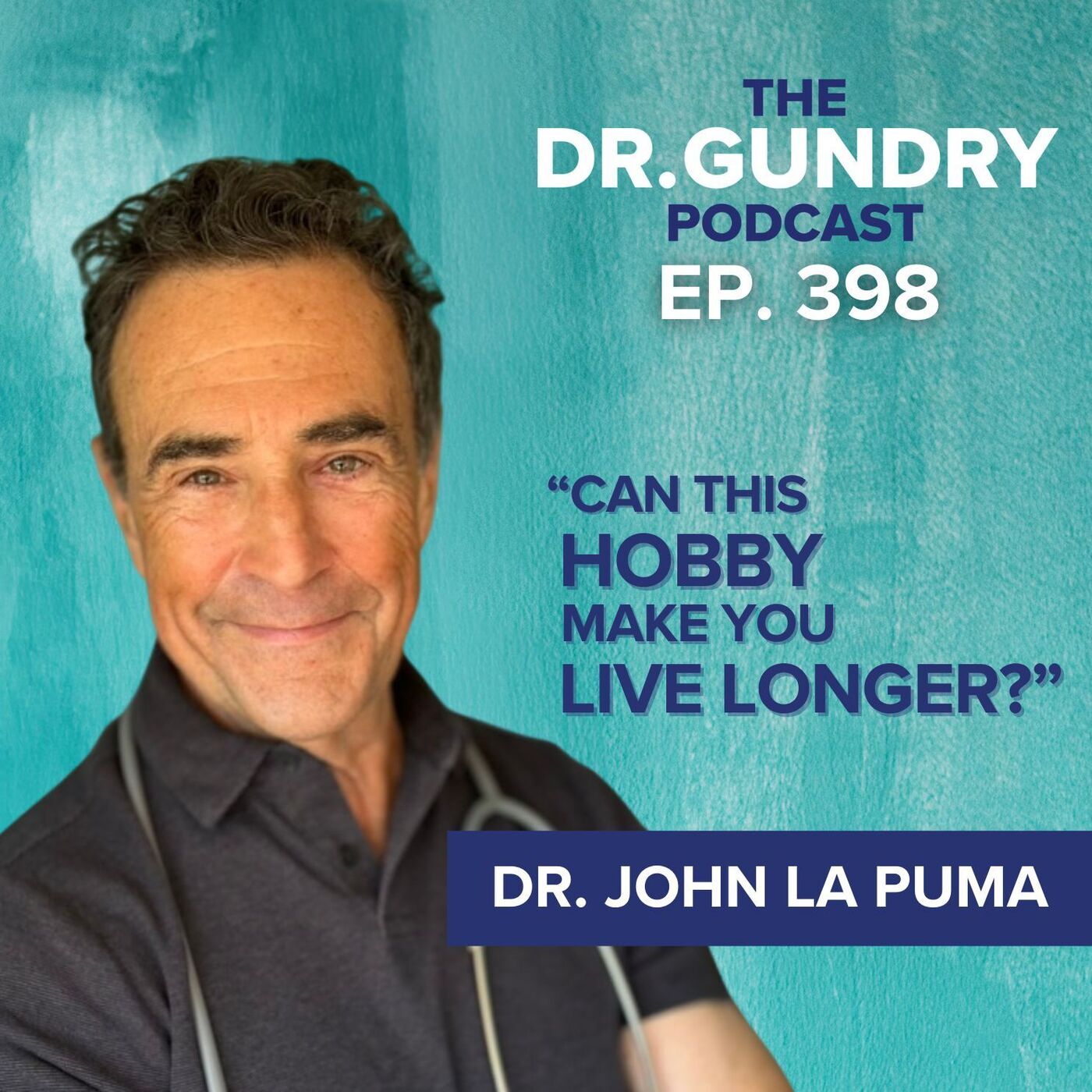
DR. GUNDRY PODCAST: GUT HEALTH, WEIGHT LOSS, AND NUTRITION
Am I Spending Too Much Time Indoors? Signs It’s Draining Your Energy | EP 398
00:39:08
Loading summary
Transcript101 lines
- [00:00]
Dr. John La Puma
Foreign.
- [00:10]
Dr. Steven Gundry
Welcome to the Dr. Gundry podcast. You know, we spend so much time talking about food supplements and toxins, but what if one of the biggest threats to your health is much simpler than that? The fact that you're spending most of your life indoors? So today I'm here with my friend, Dr. John La Puma, a board certified internist, professionally trained chef, and two time New York Times best selling author. In his new book, the Indoor Epidemic, he argues that modern indoor life may be disrupting sleep, focus, metabolism and energy in ways most people never stop to consider. Now, in just a bit, John and I will reveal what all that indoor time is doing to your brain and body, why morning light and cleaner air matter more than most people realize, and how just a few intentional hours outside each week can help reset the signals your body depends on. We'll be right back.
- [01:11]
Podcast Host/Advertiser
If you're enjoying the podcast and want a chance to win free Gundry MD products to support your health, I've made it incredibly simple.
- [01:19]
Dr. Steven Gundry
All you have to do is leave
- [01:21]
Podcast Host/Advertiser
a quick review on Apple Podcasts. Once you've left your review, take a screenshot and mail it to podcastrgundry.com you'll automatically be entered for a chance to win free products designed to support your gut, energy, brain and overall longevity.
- [01:39]
Dr. Steven Gundry
These are the same formulas I use
- [01:41]
Podcast Host/Advertiser
myself and recommend to my patients. Products built around real science, not fads. So if this podcast has helped you think differently about your health, leaving a review not only supports the show, it could also help support you again. Leave a review on Apple Podcasts, send a screenshot to podcastrgundry.com and and you could be our next winner. John, welcome to the show.
- [02:10]
Dr. John La Puma
Steve, Great to be here.
- [02:11]
Dr. Steven Gundry
It's great to see you again. I want to dive right into your new book, Indoor Epidemic. Now, a lot of people blame stress, age and bad genes for feeling tired, foggy and off. But you argue they may simply be living in the wrong environment under artificial light, constant screens and fewer natural cues. What is constant indoor life doing to us?
- [02:40]
Dr. John La Puma
As you know Steve, we evolved 200,000 years ago, largely outdoors. And in just one generation we've moved indoors and we've not left. It became normal to have a screen centered life after Covid. But what most people don't realize is that that move indoors has dramatic biologic consequences. It causes or contributes to, as I think as a root cause, insomnia, immune deficits, insulin deficiency, isolation, myopia, chronic fatigue, attention fatigue, cognitive deficits. And these aren't subtle sedentary ness. Not subtle, but they have devastating effects on our longevity and on our present day, health. And yet it can be a fixable problem if we escape being 93% indoors, which is where we are now.
- [03:43]
Dr. Steven Gundry
93%.
- [03:44]
Dr. John La Puma
93%. That's the number that stopped me when I began to look at longevity in this through this lens. 86% in buildings and 7% in vehicles. Only 7% outdoors. And that time outdoors that we're spending is largely incidental. We walk from the car to the parking lot, we walk down the street to a coffee shop, we pick up a doordash. We happen to be outside. But if you know how to think about what to do outside, you can turn those incidental minutes into medicine by deploying them in a very specific protocol like way.
- [04:30]
Dr. Steven Gundry
You mentioned obesity and you talk about digital obesity. You want to explain that to everybody?
- [04:38]
Dr. John La Puma
Sure. Digital obesity is, well, let's put it in terms our audience gets. We like too much sugar burns out your metabolism. Too many pixels burn out your brain. You're overwhelmed by those pixels. It's one of the reasons we see so much burnout and exhaustion, because your brain actually can't metabolize it. And interestingly, it's not just a metaphor, it's measurable. Like if you get blue light before bed within an hour, as you know, it delays your melatonin, actually reduces its release by 80% so you can't go to sleep. And that lasts for an hour and a half. Your brain actually is overloaded on pixels and starved of the natural inputs you actually need. And it evolved for, because we have just been so immersed in this huge digital environment that many of us can't escape. Some people don't even leave their homes all day. And what I'm out to try to help people with is to escape this digital obesity, in fact, make it not the default circumstance, but one that we can move beyond and turn our incidental time outside into intentional time in a green or blue space, because that's what's going to help us.
- [06:06]
Dr. Steven Gundry
Well, now you mentioned blue light at night is bad for us, but can blue light be good for us?
- [06:15]
Dr. John La Puma
Blue light is essential in the morning when we go outside because we get and as you know, outdoor light is 25 to 50 times brighter than indoor light. We get that big cortisol boost in the morning which we want. So the easiest prescription is to get morning light within an hour of waking because as you know, it impacts the retina and the retina talks to the brain and you get a big cortisol response in the morning. That Wakes you up light first, coffee second. And it does all kinds of good things for your sleep.
- [06:49]
Dr. Steven Gundry
So people say, oh, I don't want high cortisol levels, so why do I want blue light in the morning? Can you explain that, Doctor?
- [06:58]
Dr. John La Puma
Yes, sir, I absolutely will. So, as you know, Steve, cortisol that's chronically elevated during the day just keeps you on edge all the time and you feel like crap and you just are agitated and on edge and reactive and maybe feel exhausted. But that's not what we're talking about. We're just talking about the morning cortisol boost that helps you wake up and it makes your coffee work better, actually, light first, coffee second, because you have an internal surge of energy and then it drops as it should until another part in the day when it rises. But when you get that big morning boost of cortisol because you've been out for 10 minutes of morning light in the morning to absorb the 25 to 50 times brighter sunlight, you also get to make melatonin that night. Fourteen hours later, you get deep sleep, which we were talking about earlier about our trackers. Deep sleep is a time, as you know, that your brain cleans itself of beta amyloid and tau, the proteins that accumulate during Alzheimer's disease. It's the time where you repair muscle. It's the time where you build bone, especially important for women who have osteoporosis. It's the time where you also consolidate memory. And each of those times we miss if we get blue light at night within 60 minutes of bedtime. So we don't want to do that. We want to have different ritual at night. We want to use our analog tools.
- [08:31]
Dr. Steven Gundry
This sounds like an easy prescription to do, but I'm going to throw something back at you. We just had daylight savings time. Yes, and I normally, we have four dogs and I usually take them for a two to three mile hike before we start the day. And we've gotten all screwed up because I can't get out there. And instead of a three mile hike this morning, the dogs got maybe, maybe a mile and we were in the dark and I didn't get that light.
- [09:07]
Dr. John La Puma
No question yet.
- [09:08]
Dr. Steven Gundry
What are we going to do about that?
- [09:09]
Dr. John La Puma
I mean that, that part of it sucks. No question. Daylight savings time, as you know, because of your cardiothoracic background, boost heart attacks 20% the next Monday. Yeah, just 12 hours later because of the time shift, because of the screw up of our circadian rhythm, it has a silver lining, which is that we get an hour of daylight that's extra at night with red and amber light, which is the only light that doesn't suppress melatonin at sunset. So that tells your body it's okay to cool down. When we look at the horizon at sunset, it tells our brain that we're safe. It calms activity in the amygdala. And so it, that's the silver lining of daylight saving time. But like you, I get up before the sun and because we got to get stuff done and I need a 10,000 light therapy lux light therapy lamp right here as I'm reading my mail and preparing breakfast. And that gives me an initial boost when I get up in the dark. I then go out when it is light outside to get the morning rays because that's not full spectrum. It's a good threshold to set my circadian rhythm for that morning. So that's going to be true until a month from now or a month and a half from now when the sun will get up. When we get up.
- [10:35]
Dr. Steven Gundry
What do you tell people? Particularly in the north or in a big city.
- [10:39]
Dr. John La Puma
Yeah.
- [10:40]
Dr. Steven Gundry
Where maybe they actually never see the sun. Or how do we fix that?
- [10:46]
Dr. John La Puma
We fix that by saying you don't need to look at the sun. In fact, you should not look at the sun, but you should thinking, yeah, thank you. Right.
- [10:57]
Dr. Steven Gundry
Good advice.
- [10:57]
Dr. John La Puma
Yeah, thanks. But daylight will find you. So all you need is, is a sky view. You don't need to look at the sun. You just need a sky view because those waves are so much brighter than it is inside. And that's true on a cloudy day. A cloudy day, it's still five times brighter than it is inside on the, with the brightest light. But we don't realize that because our eyes inside are only accustomed to blue light. And in, even in this well lit TV studio you have here, it's maybe 400 luxury. Outside it's pretty sunny. It's gotta be 15 or 20,000 lux. And you can measure this on a phone or with a light meter and see it yourself. So if you live in a city, you just need a sky view. You don't need a backyard, you just need a balcony, a threshold, a doorway. You know, the prescription isn't a hiking trail. It's see the daylight. I mean, this is the first part. This is in chapter one. There are actually extensive protocols of the dozens of different things you can do to get there. But the simple thing is get outside before you get online.
- [12:09]
Podcast Host/Advertiser
When your schedule gets busy, healthy eating is usually the first thing to slip. And that's exactly where most people go wrong because what's on your plate determines how you feel. That's why Butcherbox makes it simple. They deliver over 100 premium protein options straight to your door. My favorites are Butcher Box's 100% grass fed grass finished beef and wild caught seafood. No antibiotics, no added hormones, no additives, just clean, nutrient dense fuel. Your body actually recognizes higher quality protein supports metabolism, energy and muscle health. Without the hidden junk that slows you down, everything is customizable, ships free and shows up when you need it. So eating well becomes automatic. Right now new listeners can choose chicken breast or top sirloin for a year or ground beef for life. Plus $20 off go to butcherbox.comgundry now to redeem this exclusive offer.
- [13:25]
Advertiser
Let's be honest. Adventures rarely go exactly as planned. One minute you're cruising down the highway in your rv, the next your tire hits a pothole the size of a swimming hole. At Progressive, they're ready for you when the unexpected hits. With excellent claim service for your boat, RV and motorcycle, plus optional coverage like roadside assistance and on the water towing to help you bounce back from sudden plot twists, visit progressive.com and make sure your next adventure is unforgettable for all the right reasons. Progressive Casualty Insurance company and affiliates not available in all states or situations. Coverage subject to policy terms and limits.
- [14:08]
Dr. Steven Gundry
You mentioned we're sitting here indoors and a lot of your book is we're. We're trapped indoors in more ways than one. Yeah, you talk about indoor air quality and I've become very vehement or vocal in this space as well. So much so that I've designed my own home kind air filter, nice filtration system which we're using right now because
- [14:32]
Dr. John La Puma
I don't trust this air and nor should you because we are in a sealed environment.
- [14:38]
Dr. Steven Gundry
Yeah, go expand on that. I want to hear your point of view.
- [14:41]
Dr. John La Puma
No, I think it's very good work, Stephen. And I think if you are trapped, as Most people are 93% of time indoors in this indoor epidemic that I've described, you need air purification, especially for particulate matter 2.5 and 10, and also for VOCs, volatile organic compounds because they come from carpets and paints and toxic places.
- [15:15]
Dr. Steven Gundry
You mean like my scented candles?
- [15:17]
Dr. John La Puma
I do. But unscented candles are lovely and you should get some. So I think it's an important thing to do. Inside, air purification is real medicine. Outside, you're fixing more than one variable. Indoor we're fixing air. But outdoors we're fixing light. We're fixing air. We're Fixing circadian rhythm. We're fixing vision and visual focus. We're fixing microbial exposure, which can be very beneficial when that comes from trees. And obviously I'm not talking about the toxins that are inside that you're well aware of, including mold, which is a real problem and not to be underestimated. But outside we fix those things. So we fix more than one variable and we don't do it with very much time. The minimum effective dose of being outdoors is only 17 minutes a day. 17 minutes a day repurposed from your incidental time to intentional time in a green or blue space. That means near trees or near water. It can be still water like a pond or running water like a stream. It can be a swimming pool or a fountain, but better that it's a natural water, but it can be a fountain. And as you know, blue spaces can change the agitated beta waves in your brain to a more relaxed alpha and theta waves calming you. Green spaces. Even living near green spaces improves telomere function, improves prevents telomeres, the end protective caps on your chromosomes from fraying. And being outdoors fixes your biology actively. Even being near residing near green trees and greenery improves longevity passively. It's powerful what outdoors can do. And with this minimum effective dose of just 17 minutes a day, you can, if you use that time, intentionally fix some of the biology that's messing you up that indoors has messed up. A lot of people think burnout is like a character flaw. It's not. It's usually your environment that's hurting you, that you actually have control of if you know how to use it.
- [17:45]
Dr. Steven Gundry
A lot of my patients and a lot of my friends live on a golf course or near a golf course.
- [17:51]
Dr. John La Puma
Is that a green space or should
- [17:53]
Dr. Steven Gundry
we be worried about golf courses?
- [17:56]
Dr. John La Puma
I love the long view of golf courses. When you can see in the distance, it's good for your eyes. It relaxes them. As I said before, it tells your brain when you can see a far away distance that you're safe. It reduces ciliary muscle strain. That's good. If golf courses are treated with synthetic artificial chemicals that are cidal, herbicidal and the like, pesticides and fungicides. That's problematic for the air, it's problematic for the water, it's problematic for the fungal and microbial ecosystems in the ground. It's fun. It's problematic for anything that might grow in the ground that you would eat. So I'm not in favor of. And as you know, I have a certified organic regenerative Farm not in favor of using synthetic, artificial, chemical pesticides, herbicides, or fungicides on anything, particularly not on the home garden. Gardening, though, changes your microbiome. Gardeners have 37% less dementia, lifelong gardeners than non gardeners. Gardening improves focus, it improves immunity, it allows you to eat more fruits and vegetables. And it is a powerful garden, Terrific way to teach children about what, where food is from, what it looks like when food is from, and the, and the creative aspect and adventure of growing it. Everyone should have a garden, and actually 71 million Americans do. And you don't need a little organic farm like I have or a big plot. You, you need a house plant to start. You need a window planter. If you have a balcony. I have these little coasters. I brought you one. I don't have it here that have parsley, chive and basil seeds in it where you can just plant the coaster and water it. And from two weeks later in a pot, you have the beginnings of basil, chives and parsley. It's the simplest way to start gardening. And I give them away at tox because they, people love them. And I really want get people to have their hands in the dirt because it too can be medicine if it's healthy soil. Even.
- [20:27]
Dr. Steven Gundry
Growing inside is a way of bringing the outside into us.
- [20:34]
Dr. John La Puma
Yes, that's. Yes, I love that phrase. Yes, we're bringing the outside in. You know, nature. People think nature is the Grand Canyon, the Pacific Ocean, the Rocky Mountains, the south of France. But it's as close as the breeze ruffling your curtains. It said your four dogs. It's, it's the lettuce in your salad. I mean, that came from somewhere. And when you buy it from somebody who grew it, or even better, grew it yourself. And lettuce was one of the easiest things to grow.
- [21:04]
Dr. Steven Gundry
It's true.
- [21:05]
Dr. John La Puma
Then you know exactly where it came from. You know exactly what it got fed it. You know exactly what its flavors are because you created them with it. It's a powerful, powerful tool to use nature in an intentional way and use it to in, specifically in green or blue spaces. And when you're inside, you are reminded that there's a world bigger than yours, that between those four walls. So inside is a threshold. It's a gateway. It's a way to suggest that there's even more out there, that the world is bigger than those four walls that are keeping you inside, often with stale air. That cuts, by the way, as you know, cognitive performance. People are not measuring carbon dioxide in offices or in homes. And they need to, because over a thousand parts per million, which is 10 people breathing in a conference room. You. The cognitive performance of the room drops.
- [22:08]
Dr. Steven Gundry
I'm falling asleep right now. There's 10 people in this room.
- [22:10]
Dr. John La Puma
I'm not keeping you awake.
- [22:11]
Dr. Steven Gundry
People are hurting my cognitive performance. Get out of here.
- [22:16]
Dr. John La Puma
We couldn't do it without them. That's right. So. No. And you know, the CO2 is a. Something we need to measure.
- [22:22]
Dr. Steven Gundry
Yeah.
- [22:22]
Dr. John La Puma
And that you can often upgrade the IQ of a room by opening a window.
- [22:26]
Dr. Steven Gundry
But wait a minute. We have carbon monoxide monitors in most of our homes.
- [22:29]
Dr. John La Puma
Yeah.
- [22:30]
Dr. Steven Gundry
Why? Why are we missing the fact that CO2 in a closed space with human beings is a bad thing?
- [22:38]
Dr. John La Puma
Well, some offices are not. Actually, the most progressive offices are building it into, well, certified buildings and lead buildings to measure CO2 because it's demonstrated that it's a drag on cognitive performance. It's just not risen to the level of being commercially viable yet. Uh, Cornell did a study showing. An ergonomic study at Cornell that showed that. That the loss of cognitive performance in 100 people in its offices was worth a hundred thousand dollars per person. And that's so dramatic that I. I wrote a piece for a fast company about it. It will be out later this month. It's important to know that the inside is making us sick. You know, our chronic diseases are actually more preventable than people think. You have more control than you think. 80% of heart disease, as you all know, is preventable. 50% of all depression and anxiety are preventable. 40% of cancers are environmentally related and preventable. So because you have more control than you think, the fix is closer to you than you've imagined. And I think it starts with simple protocols and a really foundational operating system, because, you know, if you don't have the right operating system that is foundational, it doesn't matter what you stack on top of it. It's not going to function well or. And certainly not optimally.
- [24:10]
Dr. Steven Gundry
I have my own standards for designing indoor air filters. What should people look for? Just as a general rule, because we do need cleaner indoor air, as the book points out.
- [24:23]
Dr. John La Puma
Yeah, we do. You do want a filter that is specifically for filters out particulate matter 2.5. Because, as you know, that toxin injures the insides of arteries and penetrates all the way to the bottom of the lungs. We get that from automobile exhaust. We get that from indoor toxins. We get that from common sources. We also want filters that filter out VOCs, volatile organic compounds, because they too are especially Noxious. If we can find filters that filter out mold. I really like those. Yeah, mold is a, is a not just an environmental problem indoors, but it can be a personal medical problem that injures people with weakened immunity. And when you stay indoors as much as people do 93% of the time in our indoor epidemic, they are subjected to these problems, especially with our sealed buildings. Our sealed buildings do not allow healthier air from the outdoors to come in. Outdoor air is so much better than indoor air. And when you go outdoors, you fix not just the air problem, but also the light problem, the horizon problem, the circadian rhythm problem, the vision problem, the microbial exposure that is actually good for you. And that's why I'm such a fan.
- [26:00]
Podcast Host/Advertiser
If you're focused on your health, your skin should be part of that conversation too. Fine lines, breakouts and inflammation. These are often signs your skin isn't getting the support it needs. That's where Bon Charge comes in. Their red light face mask uses clinically studied red and near infrared light to boost collagen, support healing and reduce inflammation, all in just 10 to 20 minutes a day. It's simple to use while winding down at night, no extra effort required. But here's the difference. Bon Charge removes sleep disrupting blue and green light, which many other brands leave believe in. That means better results without interfering with your circadian rhythm. It's lightweight, zero emf, zero flicker and built for daily use. The result? Healthier looking skin, fewer blemishes and a more youthful glow. Go to boncharge.com and use code gundry to save 15%. That's b o n c h a r g e.com code gundry.
- [27:14]
Dr. Steven Gundry
So even again, the city dweller who's listening to us, the outdoor air in a city is actually better than the indoor air.
- [27:25]
Dr. John La Puma
It still is. Unless you live next to a smokestack. Unless you live next to car mufflers that are pushing their exhaust into your apartment. It's measurably better, in part because of the work that you encountered in developing this filter that indoor air can be so bad for you. Outdoor air is also have hugely just orders of magnitude greater volume than indoor air. So there are pollutants in outdoor air, no question. But the volume is so much more vast than the volume inside that they are diluted. Essentially when you're indoors, they're concentrated. When you go outdoors, you have the advantage not just of that dilution, but of the many other benefits that I've described and that actually we take people through in the seven Day outdoor reset that I describe in the book, which is very simple, goes one day at a time. And it's kind of a protocol. It is a protocol with specific steps. And the first step is the one that I've mentioned, this morning light step where you get 10 minutes of morning light within 60 minutes of waking without sunglasses. But glasses like yours or soft plastic glass contacts are just fine. Don't block the light. That will give you all the benefits. We talked about that big cortisol boost, better deep sleep. Melatonin made the proper time 14 hours later. Your memory consolidation, your important glymphatic cleaning. Many people don't know that term. The was coined in 2013, Nobel given in 2017. Glymphatic cleaning system only happens in the the first half of sleep really. Primarily third of sleep during the deep sleep. Yeah. Which our various devices track. But you don't have to track it. You can just know that you need to get consistent sleep. That's more important actually than even the number of hours of sleep that you get. I I where you have a consistent within half hour, 40 minutes of sleep time and a consistent half hour, 40 minutes of wake time. That consistency is more tied to longevity than the actual hours of sleep that you get. Most people, as you know, seven to nine hours of sleep, optimally, some fraction of the population can run on four to six hours. That's I have read. I'm interested in your idea that that's a genetic variation. The people who can do that. Is that your experience? Yeah.
- [30:09]
Dr. Steven Gundry
You know, one of the most famous heart surgeons was Michael DeBakey from Houston, Texas.
- [30:14]
Dr. John La Puma
Yeah, I went to Baylor.
- [30:15]
Podcast Host/Advertiser
Yeah, that's right.
- [30:17]
Dr. Steven Gundry
And I knew him well. I was in his society. But he usually only got about four hours of sleep and he lived well into his mid 90s. Well, doing well into his mid 90s.
- [30:30]
Dr. John La Puma
Yeah, he's a phenomenon.
- [30:31]
Dr. Steven Gundry
But yeah, he usually only got about four hours of sleep and did perfectly fine.
- [30:36]
Dr. John La Puma
Yeah, well, he was an exceptional human being in so many ways. And, and I do think that those, those people exist and thank goodness for them. But the most of us need seven to nine hours and we cheat ourselves if we get less. And that sleep deficit is problematic for us. It puts off deep sleep so we don't get brain cleaning. It puts off our normal melatonin rise. And so we don't get to sleep as easily. Our sleep is not restorative. It doesn't allow us to function optimally. It actually adds to this feeling of burnout that so many people have. And that is so much not their fault, so much an environmental problem. And you know, you've done this by teaching people that food is information, supplements are information for your body. And I've come to believe, and the research and I went through 2,200 peer reviewed studies to write this book. The research shows that light and air, I believe, also are information for your body. Light is metabolized in the brain. It's not just a metaphor. So like you've shown people that lectins are hidden inflammatory triggers. I think that indoor toxins and the indoor environment is an inflammatory trigger for the body and raises C reactive protein and raises inflammation levels which come down, by the way, when you have deliberate intentional exposure to green and blue spaces, mood improves, clarity, improves focus, improves blood pressure, improves your cortisol levels that are chronically elevated come down. Each of these has been demonstrated in peer reviewed studies. What I want to know is, as you've demonstrated this for lectins and I believe that the research shows that air and light are similarly inflammatory. Is there something that you would add to your prescriptions for your patients who are getting the right food and supplements that is environmental that they might be missing?
- [32:54]
Dr. Steven Gundry
I frequently write prescriptions to my patients to get a dog. And I can't tell you the number of patients who, number one, bring their dog with their next visit. And several of my patients have framed that prescription with basically this is the first prescription I have ever gotten from a doctor that works. And so, yeah, so. And I feel, again, I completely agree with everything you write in this book. The prescription that you talk about. I think one of the things I would add to that is a dog forces you, whether you want to or not, to go out in the morning and go out in the sunset in the evening. And I just think the dog knows best. The dog hasn't been trained like we have. And that forces you to do that.
- [33:54]
Dr. John La Puma
That's right. There is a little bonus chapter about companion animals in the book and I do suggest that people have a dog. And I love that you write those prescriptions and I know your patients love you for it. It sounds like it. With that framing. I love that. I feel that that introduces another benefit of nature and, and that is that nature is social.
- [34:16]
Dr. Steven Gundry
Yeah. You end up talking to people.
- [34:18]
Dr. John La Puma
Exactly. And that's a good thing for our longevity.
- [34:21]
Dr. Steven Gundry
Absolutely.
- [34:22]
Dr. John La Puma
It shows bonds, it produces bonds, it makes you feel not so alone, it allows you to connect with other people, which is a good thing for your telomeres, a good thing to protect your telomeres. From fraying these protective caps on the ends of chromosomes that indicate our longevity. And that's powerful. Medicine fights loneliness. Loneliness. Dr. Murthy said it's worth three quarters of a pack of cigarettes a day. And we want to fight loneliness. And many people in America are lonely and burned out. And this is a, it's a prescription that, you know, it doesn't have a copay. There are no side effects. It doesn't take more time because you're just repurposing incidental time. And it doesn't take more willpower either. It's just a, a way to frame, I think, to escape an indoor epidemic and use a protocol that can make your life so much better because it amplifies the good of everything else you're doing. When you have a good diet, when you have good fitness routines, when you have a good sleep routine, when you have. Know how to manage stress, when you have good relationships, when you are part of a community, being intentionally outside in a green or blue space along the protocols that I suggest can make those things work better for reducing risk for chronic disease, for improving longevity, and for just feeling well in a way that I think America does not. And this has not really had a name until now, so I gave it one.
- [36:07]
Dr. Steven Gundry
Thank you for bringing this to everybody's attention. I think it's fascinating that Chef MD is doing now a kind of an outdoor prescription.
- [36:17]
Dr. John La Puma
Yes.
- [36:18]
Dr. Steven Gundry
Well, well done. Well done.
- [36:19]
Dr. John La Puma
Well, thank you, Steve. It's, you know, cooking outdoors counts too.
- [36:25]
Dr. Steven Gundry
Oh, there you go.
- [36:25]
Dr. John La Puma
Yeah, yeah, definitely. When you grow what you cook, even a little bit, even the, the herb garnish on top of a salad or a salmon, it's even more powerful. And actually, herbs are a great way to start. That's why we did these coasters because they have such intense and, and high concentrations of antioxidants and anti inflammatory agents. In fact, herbs and spices, gram for gram of higher anti inflammatory potential than almost any other food group.
- [36:59]
Dr. Steven Gundry
And as I wrote in my last book, it turns out that herbs have an incredible microbiome that actually teaches our immune system to actually accept bacteria as potential friends rather than enemies. So.
- [37:16]
Dr. John La Puma
So I love that. Exactly right.
- [37:18]
Dr. Steven Gundry
So, John, VOCs, these volatile organic compounds. That in a way sounds scary. And a lot of people, I think are beginning to realize, well, yeah, carpets and our furniture have these things. And we see cleaning products advertised all the time to get rid of bacteria in our home, et cetera.
- [37:42]
Dr. John La Puma
We.
- [37:42]
Advertiser
Where.
- [37:42]
Dr. Steven Gundry
Where do cleaning products, spraying products come in terms of VOCs?
- [37:47]
Dr. John La Puma
Many cleaning products can contain VOCs. And I prefer cleaning products that don't. I mean, I think that's something to look for on the label, something that specifically claims that they do not contain VOCs. Because we want to be really careful with what we put in an urban environment because it's such a sealed box and because many of us don't have windows open and we're inside 93% of the time, they can affect our immune system in ways that are really unfavorable.
- [38:19]
Dr. Steven Gundry
And there are some bad endocrine disrupting.
- [38:23]
Dr. John La Puma
That's right. Yes. That's also true for phthalates. It's true for a number of other toxins that we really don't want in the home and that we can improve by getting outside.
- [38:37]
Dr. Steven Gundry
All right, well, thanks again for coming. The book is Indoor Epidemic by my good friend, Dr. John La Puma. Great to see you again.
- [38:46]
Dr. John La Puma
You too, Steve.
- [38:46]
Dr. Steven Gundry
Thanks for coming.
- [38:51]
Advertiser
Pluto TV has thousands of free movies and TV shows. You swear?
- [38:56]
Dr. John La Puma
If I'm lying, I'm dying.
- [38:57]
Advertiser
This is the mindset free.
- [38:59]
Dr. John La Puma
This is mantra free.
- [39:01]
Advertiser
This is with movies like Titanic, Dreamgirls, and Gladiator.
- [39:08]
Dr. John La Puma
Why you not entertained?
- [39:09]
Advertiser
And TV shows like Survivor, SpongeBob SquarePants, the Fairly Odd Parents and Ghosts. Pluto TV is always free.
- [39:17]
Dr. John La Puma
Huzzah.
- [39:18]
Advertiser
Pluto TV stream. Now pay. Never.
- [39:25]
Podcast Host/Closing Speaker
I hope you enjoyed this episode of the Dr. Gundry podcast. If you did, please share this with family and friends. You never know how one of these health tips can completely transform someone's life when you take the time to share it with them. There's also the Dr. Gundry Podcast YouTube channel where we have tens of thousands of free health insights that can help you and your loved ones live a long, vital life. Let's do this together.
- [39:48]
Advertiser
Day or night. VRBoCare is here 247 to help make every part of your stay seamless. If anything comes up or you simply need a little guidance, support is ready whenever you reach out. From the moment you book to the moment you head home. We're here to help things run smoothly because a great trip starts with the right support. And hey, a good playlist doesn't hurt either.