← DR. GUNDRY PODCAST: GUT HEALTH, WEIGHT LOSS, AND NUTRITION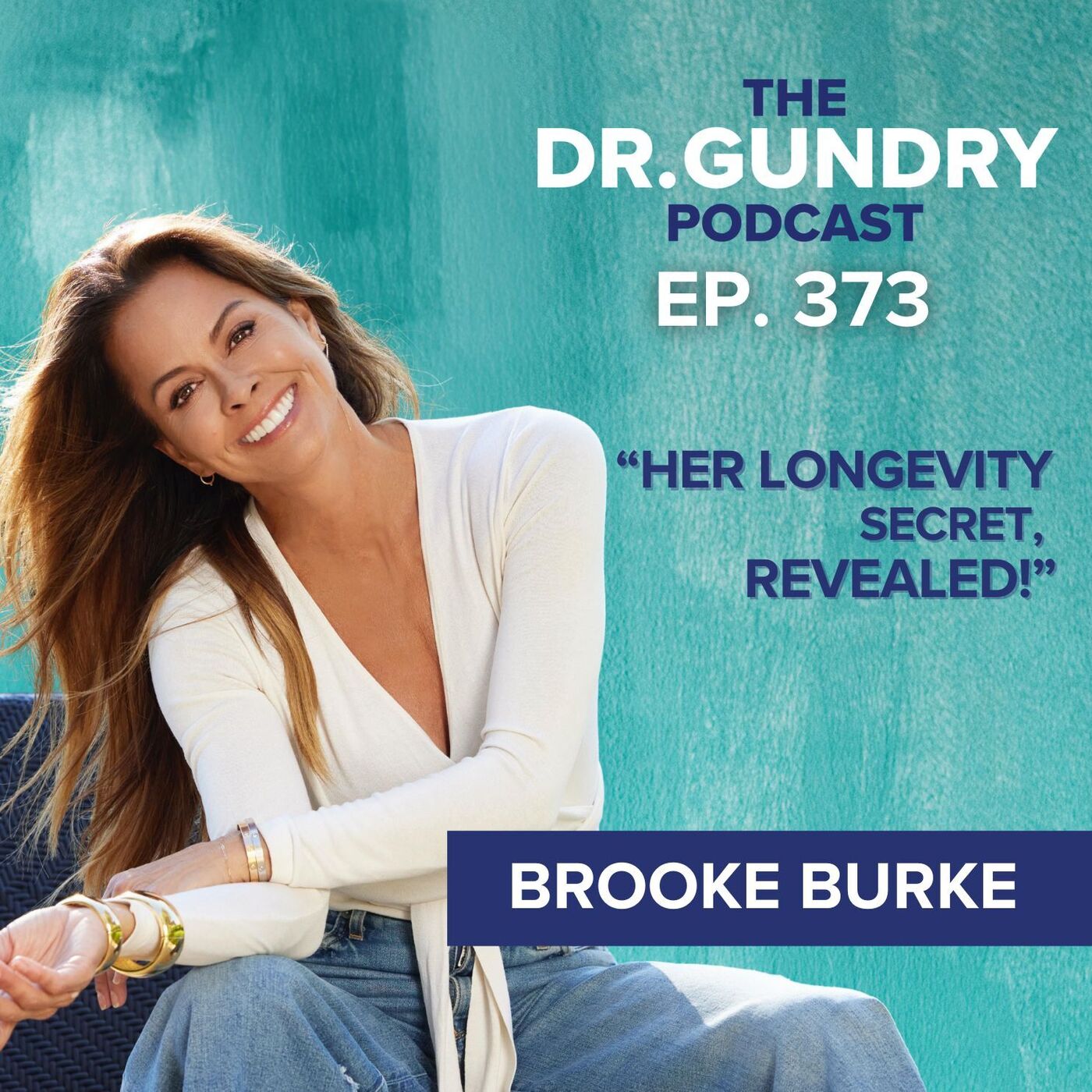
DR. GUNDRY PODCAST: GUT HEALTH, WEIGHT LOSS, AND NUTRITION
Brooke Burke’s Wellness Revolution: Redefining Strength, Stress & Self-Care | EP 373
00:45:14
Loading summary
Transcript125 lines
- [00:00]
Dr. Stephen Gundry
What does a confident smile say to you? And more importantly, what does it say about you? At Smile Generation, they believe a confident.
- [00:09]
Smile isn't just about white teeth, it's.
- [00:12]
About whole body wellness. As I've discussed on this very podcast, oral health is connected to everything from.
- [00:19]
Your heart and immune system to even your brain.
- [00:22]
When you care for your mouth, you're investing in your entire future. Smile Generation's trusted dentists provide all encompassing, compassionate care.
- [00:31]
Merging advanced, proven technology with a patient first approach.
- [00:36]
They educate and empower individuals to protect.
- [00:39]
Their health through oral care tailored to.
- [00:41]
Their lifestyle, wellness goals and life stage.
- [00:45]
Visit smilegeneration.comgundry to learn more when you.
- [00:51]
Understand that your smile is more than just teeth and gums, that it's actually.
- [00:56]
A gateway to your health, your confidence and your future. That's where empowerment begins.
- [01:02]
Smile Generation is offering a $59 new.
- [01:05]
Brooke Burke
Patient special which includes a comprehensive dental exam, cleaning and X rays regular value at least $290. This offer is for new patients only and is not valid for Tricare or Medicare Advantage and may be covered by.
- [01:20]
Podcast Host / Narrator
Insurance subject to your plan's restrictions.
- [01:22]
Brooke Burke
To take advantage of this offer, book.
- [01:24]
Dr. Stephen Gundry
Your appointment by December 31, 2025.
- [01:27]
Brooke Burke
For complete terms and conditions, visit SmileGeneration.com.
- [01:30]
Podcast Host / Narrator
GUNDRY welcome to the Dr. Gundry Podcast where Dr. Stephen Gundry shares his groundbreaking research from over 25 years of treating patients with diet and lifestyle changes alone. Dr. Gundry and other wellness experts offer inspiring stories, the latest scientific advancements and practical tips to empower you to take control of your health and live a long, happy life.
- [01:56]
Dr. Stephen Gundry
Welcome to the Dr. Gundry podcast. You know, women make up about 80% of all autoimmune disease cases and of course are more likely to face thyroid problems and chronic fatigue. And yet they're also the most committed to eating healthy, exercising and staying on top of their medical care. So why is it that women who are working so hard for their health still face bigger challenges? Well, today my guest and I are going to explore this paradox and more importantly, how women can take back control with the right tools. I'm here with Brooke Burke, award winning TV host, entrepreneur and fitness educator. Through her platform, Brooke Burke Body, she's been inspiring millions of women to feel stronger, more confident and more in charge of their health through smarter movement, mindset and lifestyle choices. After a quick break, Brooke and I will talk about why women are uniquely vulnerable to hidden health risks, some simple steps that you can start right away and why is there nutrient gaps that matter most after 4040 and her three pillars for building lasting energy and vitality. So stay tuned. You're not going to want to miss this one if you're a woman and maybe the man who is in her life as well. Be right back.
- [03:20]
If you enjoy learning about the latest breakthroughs in gut health, longevity and nutrition, then you'll love my free weekly newsletter. Every week I share exclusive tips, new discoveries, and personal insights I don't always get to cover here on the podcast. It's your direct line to staying ahead on the science of feeling your best. From foods that heal your gut to little known tricks for better energy and aging. So if you haven't yet, go sign up right now. Just check this episode's description for the link or head to drgundry.com it's free.
- [03:55]
Brooke, welcome to the show.
- [03:56]
Brooke Burke
I'm so happy to be here.
- [03:58]
Dr. Stephen Gundry
All right, how is it that women face greater challenges? You know, you guys try to do everything right and women are a huge part of my patient population. Why are you guys having such a hard time with this?
- [04:13]
Brooke Burke
Well, I love a conversation like this because I deal with so many women that are frustrated that seem to be making all the right choices. I am actually one of those 80% that you just spoke about. So I've got a handful of autoimmune disorders. I've had thyroid cancer, Hashimoto's, ibd, Vitaligo, Meniere's. My list is long and yet I work so hard to take great care of myself. And the statistics show us, you know, 80% of us, then you've got heart disease, we've got osteoporosis. Right? Autoimmune, all of these things, hormonal challenges. Why are we facing so many more challenges than men?
- [04:49]
Dr. Stephen Gundry
Well, how come?
- [04:51]
Brooke Burke
What do we need to do differently?
- [04:53]
Dr. Stephen Gundry
Well, you know, you're right. In fact, I was just being interviewed by a podcast hostess yesterday afternoon who is a fitness influencer, who is a mother. And as we progress, she's got autoimmune issues, she's on thyroid replacement, and she's doing everything right. And she said, what the heck? You know, why me?
- [05:21]
Brooke Burke
Mother Nature really stuck it to us.
- [05:23]
Dr. Stephen Gundry
And again, I've written a lot about this. I think you guys are, you're designed to have a parasite in your body for nine months at a time. And your immune system, unlike men, doesn't have to dramatically shift gears during the time of a pregnancy from accepting this incredibly foreign entity in and not attack it and then return kind of quote to normal. And it's so interesting to me, 80% of my practice is autoimmune patients who have tried everything and done work. So many women right after pregnancy may be the first time that an autoimmune disease appears or a bowel issue appears or fatigue appears. Many of my patients who are dealing with an autoimmune disease, let's just choose rheumatoid arthritis. When they get pregnant, they go into remission and their rheumatoid arthritis goes away. Their markers goes away, the swelling in their hands go away or wherever. And then minute that baby comes out, their autoimmune disease flares and it just, you know, it's just a storm.
- [06:32]
Brooke Burke
So no one's really talking about this. It's so fascinating. And when you, when you describe it that way, you're right. I was diagnosed with my first autoimmune disease after pregnancy. So is it a hormonal shift? Is that what we're talking about here? Is it a neglect to, to try to manipulate that, that process?
- [06:49]
Dr. Stephen Gundry
No, I think a lot of, a lot of it, at least for, for my patients, is just the act of labor causes really profound changes in the wall of the gut. The gut wall becomes ischemic. And you also, during the act of labor, there's a lot of foreign particles from the baby that are actually released into the bloodstream of the woman. And so I think it's this kind of damage to the wall of the gut, plus the sudden change in that baby coming out of there that starts a lot of this process.
- [07:24]
Brooke Burke
So do you think in the world of preventative care or even manipulation, manipulating the body, if we were to attempt and make our best effort to build a stronger immune system, do we then have a better chance at managing all of these health challenges?
- [07:38]
Dr. Stephen Gundry
Well, I don't think it's so much a stronger immune system. What I think is more important is educating the immune system for sure. And we're beginning to realize that long ago, back when our ancestors, our great great grandparents, had a normal microbiome, basically, we're supposed to have a tropical rainforest of microbes in our gut with all this diversity of creatures, if you will, that are dependent on each other. And we know that the more diverse this tropical rainforest is, the more information is actually given to our immune system system about who are bad guys, who are good guys. But perhaps more importantly, the information is given to the immune system that this set of microbes has got our back, that anything that comes down the pipe, anything that we're exposed to, our gut microbiome, our oral microbiome, will take care of the problem, naturally, we have this.
- [08:46]
Brooke Burke
Natural ecosystem that's supposed to work for us, right?
- [08:49]
Dr. Stephen Gundry
And you immune system, you're the.
- [08:50]
Brooke Burke
You're messing up.
- [08:52]
Dr. Stephen Gundry
You're the last guard, and we've got you. And you guys just kind of relax. We'll call you if we need you, and we'll tell you who the good guys are, who the bad guys are. Now, unfortunately, most of us have a desert wasteland instead of a tropical rainforest. So number one, we don't have a really great defense system in our microbiome. And number two, we don't have any teachers in our microbiome to tell our immune system who are the good guys and who are the bad guys. So that's a one, two punch. So we've got a, As I talked about in the gut brain paradox, we've got a poorly trained militia that doesn't know who to shoot at. And so we're more likely, I think, particularly women, to just shoot at just about anything, rather than.
- [09:40]
Brooke Burke
Sounds like a dispute disaster.
- [09:42]
Dr. Stephen Gundry
Yeah.
- [09:42]
And. And it is. I mean, autoimmune diseases in the dark ages, when I was in medical school, they were so rare they existed, but they were so rare that when we do workups of somebody who had a problem, when we exhausted all other possibilities, we'd say, let's do the funny tests. And they were called funny tests, which were these blood tests for autoimmune diseases. And they were called funny tests because we almost never needed them. It's like, well, maybe she's. She's got one of these funny diseases like Crohn's or rheumatoid arthritis.
- [10:15]
Brooke Burke
That's so interesting. Why are we seeing it so commonly now?
- [10:18]
Dr. Stephen Gundry
Because that whole system has fallen apart where we don't have a gut microbiome to protect us and we don't have teachers in our gut microbiome to teach who the good guys are and bad guys are.
- [10:31]
Brooke Burke
So is it because of what we're putting into our bodies? Is it the environment around us?
- [10:35]
Dr. Anurag Singh
Us all?
- [10:36]
Dr. Stephen Gundry
Yeah, all of the above. Yeah. You know, I write about the seven deadly disruptors. But one of the things that really over the last. I've been doing this for 25 years, and I was in medical school in the middle 70s, believe it or not. Three things happened in the 1970s that changed everything. And you can look back now and go, holy cow. These three things, Number one, broad spectrum antibiotics were developed, and they were miraculous when they came out, because before that we had to put something on a petri dish and see if it would grow and then we'd have to try individual antibiotics to see if it would kill it. And that would take a long time, days. And most of these bacteria wouldn't even grow on a petri dish. So we didn't know how to treat serious infections. When broad spectrum antibiotics came out, it was great because now we had a shotgun or an AK47 on set, on automatic and we can just plow down all these bacteria. And it was miraculous. What we didn't know is that it also killed all the bacteria that lived in our gut who we didn't even know were there. So that was number one. Number two, glyphosate, the active ingredient in Roundup, was invented and by Monsanto and it was actually patented as an antibiotic, not as a weed killer. And now glyphosate is not used on GMO crops. It's actually used on conventional crops to dry them, desiccate them so you can harvest them easier. And so it's sprayed on all our wheat, all of our corn, all of our soybeans. You name it, it's sprayed on it and it's not washed off. So it's fed to our animals and we eat the stuff. And now we know that glyphosate is a really good way to kill off bacteria in our gut. So that's number two. And number three, NSAIDs were developed non steroidal anti inflammatories like ibuprofen, like Naprosyn, Aleve and Advil. These things were so dangerous in causing holes in the wall of our gut that originally was only by prescription and you could only use them for two weeks because. Because the FDA said they're so dangerous now. They're the largest selling popping and like.
- [12:50]
Brooke Burke
Tic tacs, no one's talking about this. So I know that because of my autoimmune, autoimmune challenges in my gut, I know that that's bad for me. But nobody's really talking about this.
- [13:00]
Dr. Stephen Gundry
No. And I see, I've seen a number of world class athletes popping them daily for anti inflammatory. Yeah. Who were, you know, who had an injury and they were treated with this stuff, all of a sudden develop an autoimmune disease and they go, what the heck, how'd that happen? And then we look and they've got wide open leaky gut and their immune system is activated.
- [13:19]
Brooke Burke
Gosh, we have to do a better job of being educated. I mean there's so much information out there, it's really difficult for people to cipher through that and to understand what the positive changes are, and you know, I'm curious, smarter supplementation, how important is that and how much of a difference does that really make in our overall well being?
- [13:39]
Dr. Stephen Gundry
You know, I used to tell patients for my change of life that supplements made expensive urine. And I firmly believe that.
- [13:48]
Brooke Burke
I don't disagree.
- [13:49]
Dr. Stephen Gundry
They don't make expensive urine as I subsequently learned. In fact, I'll tell you a story from this week. I had a patient who had very low coenzyme Q10 level levels. And before we started measuring coenzyme Q10, we knew that statin drugs like, you know, Lipitor, Crestor block the production of coenzyme Q10 by the liver. And so for instance, in Canada, if Canadian physician prescribes a statin drug, by law they also have to prescribe Coenzyme qtep. That law doesn't exist in the United States. So, and most well meaning physicians don't know that you literally have to give someone on a statin drug coenzyme Q10. Why is it so important? Because coenzyme Q10 is so called because it is the coenzyme to make ATP, the energy currency that we burn. And if you don't have coenzyme Q10, you don't make as much ATP as you need. And what surprised me when we first started measuring coenzyme Q10 is that most adults after the age of 50 pretty much don't make coenzyme Q10 anymore. So you have to supplement it.
- [15:07]
Brooke Burke
And most adults I imagine don't understand because they're not a great detective of their own body, why they don't have energy, which we know leads to a whole lot of negative things. It's, it's so interesting.
- [15:18]
Dr. Stephen Gundry
We need energy, otherwise we're not around. Yeah.
- [15:24]
What we cook with is just as important as what we cook. You see, non stick pans contain harmful forever chemicals like pfas, linked to hormone disruption and inflammation. And yes, those chemicals leach right into your food, poisoning you and your family. That's why I recommend our place a line of stylish high performance cookware made without a trace of those harmful ingredients. Their four piece cookware set replaces a whole cabinet of pots and pans. Two always pans in two perfect pots in mini and full sizes. With just four pieces, you can sear, saute, fry, bake, steam and roast safely and easily. The best part, you'll save $150 when you buy the full set instead of individual pieces. So stop cooking with toxic cookware and upgrade your kitchen with our place today. Visit from Our Place.comGendry and use code GUNDRY for 10% off sitewide. With free shipping returns and a hundred day risk free trial, there's no reason to wait because healthy eating doesn't start at the table, it starts in your pan.
- [16:39]
Dr. Anurag Singh
Our cells are constantly renewing themselves but as we age, they start to need help keeping up. That's where urolithin A comes in. I'm Dr. Anurag Singh, M.D. ph.D. And Chief Medical Officer at Timeline. I've spent years researching this remarkable nutrient and what I have learned has the power to change the way we age. Urolithin A targets common signs of aging at the root by revitalizing the mitochondria, the battery packs of the cells for the first time, you can easily incorporate it into your routine with Mitopure, the only clinically proven urolithinase supplement on the market. One daily dose of Mitopure boosts energy production, improves muscle strength and enhances endurance even without a change in exercise. It's so powerful that it's the number one doctor recommended longevity supplement trusted by elite athletes and health experts. Empower your cellular health with Timeline powered by Mitopure. Visit timelinenutrition.com gundry10 and use code GUNDRY10 for 10% off your first order. That's timelinenutrition.com GUNDRY10 and the other thing.
- [17:55]
Dr. Stephen Gundry
That is interesting is that for instance, half of us, at least half of us, carry one or more mutations of what are laughingly called the mother effort genes, which are the MTHFR mutations. And everybody wants to blame everything bad that ever happened to them because of this mutation. But it's very fixable with the right form of methyl B12 and methyl folate. And a lot of us naively say, oh, there's a, there's a supplement that says methyl B12. I'm going to swallow it. Unfortunately, a lot of us don't have a receptor in our intestines that allows us to absorb methyl B12. But if we put it under our tongue, it can go directly into our bloodstream. So I'll tell you a hilarious story. I had a patient who had this mutation and I put him on a methyl B12 sublingual under his tongue and we measured his B12 level, and we measured his homocysteine level and his B12 levels were low. And I said, you're not taking your methyl B12. He says, yes I am. I take it every day. I said, no, you're not. You know, look, here's the evidence. You're not taking it. He said, I'm telling you, I'm taking it every day. And I said, and you're putting it under your tongue, right? And he said, well, no, it's so sweet. I sweeten my coffee with it.
- [19:11]
Brooke Burke
Yeah.
- [19:12]
Dr. Stephen Gundry
I said, you can't do that. You can't swallow it. I said, put it under your tongue. You know, I'll see you in three months. And sure enough, he put it under his tongue. His B12s were perfect and his homocysteine was fine.
- [19:21]
Brooke Burke
But in his defense, how would one know? So what is sort of the baseline for somebody? Where do they begin? How are, how is the general population going to have a better understanding of what to do and what not to do and what the enemies are? Where does somebody even begin?
- [19:37]
Dr. Stephen Gundry
And that's actually. I'm glad you brought that up. There's one of the vitamin companies, very good company called now has taken it upon themselves to buy various supplements on Amazon and then send them to a third party lab. A third party labs use send like Gunry md. We send all of our products to a third party lab and say show us what's in this that I'm claiming that's there. I don't want to exaggerate, but 85% of the products that now bought on Amazon and sent to the lab either didn't contain the ingredient they said it did or didn't have anywhere near what they claimed was in there. And I'll give you an example from this week. I have a woman who needs a huge amount of CoQ10 to get normal levels. And she needs about 600 milligrams of CoQ10. Most people need about 100. But we'd had to work her up and so she was taking two 300 milligram gel caps from Costco and it was working great. That was her dose and we. Great. So I see her last week and her CoQ10 is in the toilet and I go, what the heck? Why'd you stop your COQ10? And she said I didn't. And I said, well yeah you did. Look, there it is. And she said, no, I didn't. I said, and you're still taking those two Kirkland Coq 10? Well, no, you know, it's two of them. And I found one on Amazon that's 600 milligrams and it's got all this other great stuff in it. So I've been taking. That makes sense, right?
- [21:10]
Six, seven.
- [21:11]
With just one. There was nothing in it. You got to know your supplement company at the very least, you gotta make sure it's GMP certified General Manufacturing practices. But you gotta make sure that it's third party tested, that the company says.
- [21:28]
Brooke Burke
Those two great points for people to wrap their head around.
- [21:31]
Dr. Stephen Gundry
Yeah.
- [21:31]
Brooke Burke
Just to simplify, you know, the whole process and you know, one of the questions that I get a lot in my community with women 40, 50, 60, I'm on the other side of menopause, but mother Nature keeps changing everything as soon as I figure it out. So I have great compassion for most women. But one of the things that's coming up a lot for me is this mystery of protein and how much do we need and is it a gram per pound or a gram per kilo? Osteoporosis, energy, bone density, you know, bmi. Why is fat showing up? Why do my joints hurt? Like there's so much going on in the female body and everybody's looking for a quick fix and for one solution. So I'd love to unpack a little bit about the mysteries of protein with you and what your thoughts are and how much can we really get from Mother Nature and how important is supplementation in that world. I'm adding it to my smoothies now and I'm adding more protein into my daily routine for the first time because I'm really struggling to meet my protein goals. My body's changing, so I'm trying to change with it. I'm trying to show up differently as my body is different. And that's what I tell most women. You've got to be a detective, you've got to ask the questions, you've got to have some great advisors. But you've also really got to listen to your body and take those signs and the body language and get curious and stay curious and listen and learn and then change along the way. It's very complicated. Most of the words that you use mean nothing to the general population. It's confusing, but there's a lot of information out there.
- [22:57]
Dr. Stephen Gundry
There's probably three of us in the medical community that are the anti protein guys is the wrong word, but we are over proteinized in this country. Valter Longo, head of longevity at usc, Christopher Gardner, head of nutrition at Stanford and me have been pleading that we eat far too much protein than we will ever need. And that's not based on conjecture, that's based on science. The U.S. department of Agriculture sets the recommended daily allowance for all of these nutrients. And the way the RDA for protein is set, 50% of people can meet their protein needs with just about 40 grams of protein per day. That's it. Regardless of, regardless, regardless of activity. The USDA says, well, we don't want to worry about 50%. We want to make sure that 95% of people, when we tell them what they need, will make, get enough protein and so they double the recommended amount so that literally everybody, no matter, you.
- [24:11]
Brooke Burke
Do half of that.
- [24:12]
Dr. Stephen Gundry
Yeah, half of that would be, be just fine. But let's, let's err on the side of caution. Isn't it true that older people need more protein? Yes, but not for the reason you think. I actively take away protein from my older individuals and seal their gut and we find that their need for protein was because they had damage to the wall of their gut. We're supposed to have a surface area of a tennis court to absorb food. Most of us as we get older have a ping pong table as a surface area. What was remarkable to me is as I took protein away from patients but repaired the wall of their gut, their protein levels in their blood, their albumin actually went up as I took their protein away. We're all, all three of us are interested in how do we maximize not only our longevity but our health span. And that's the side we've chosen to come down on. There's certainly other very valid arguments. If I'm a 20 year old power lifter, I'm certainly going to need far more calories to accomplish what I want.
- [25:24]
Brooke Burke
We're all so different and having a greater understanding, I think, of our individual needs is really key. And I think it's such a big picture. It's smarter supplementation, it's restorative rest and sleep and rest and recovery and really understanding that there's strength in that. I mean I'm a big believer in this concept of strength as it pertains to training, building muscles, but also strengthen how we show up, strengthen how we surrender, strengthen the need to understand how to regulate our nervous systems, how to slow down. I mean I think in the concept of lifespan and longevity, it's, it's about regulating that nervous system. It's knowing when to slow down, how to listen to our body, the need for rest as well as the need to activate energy which we do through in my opinion, movement, mobility, not just fitness, but movement, you know, and we know that to be true from the studies of the blue zones. And these people that are living to be 100, 100 plus years, how did they get that way? And you know, and I think it's mindset, it's Lowering their stress levels. Movement, nutrition, happiness, energy, all of those things. It's not just one magic pillar, one magic solution that's so different for each individual person.
- [26:31]
Dr. Stephen Gundry
Yeah, the, the best lessons from the blue zones is you really ought to be a goat and sheep herder because they're all goat and sheep herders and you know, but we all can't be goat sheep herders.
- [26:42]
Brooke Burke
I'll tell you a funny story. I went to Costa Rica to host one of my VV body retreats and I went to Nosara, one of the blue zones and I thought, I'm gonna find these centurion people that are 100 plus years. I'm going to interview them, they're going to give me their secrets, they're going to tell me what they're eating and what they're drinking and what they're doing. I was so excited about this adventure. And to my surprise, this was a culture that wasn't really stressed out. They were sleeping great, they were rising with the sun, they were walking to work. They weren't. There wasn't a gym to be found because they didn't need one. It was all about movement and mindset and low stress and that time there. And I go back there every year to host a transformational wellness retreat, but that mindset really changed me. And there's some really simple things that by the way are free and available to us that mother nature has provided us with like sunshine, quality, sleep, community, love, happiness.
- [27:34]
Dr. Stephen Gundry
So we can all move to Costa Rica.
- [27:35]
Brooke Burke
Let's go.
- [27:38]
Dr. Stephen Gundry
The Dr. Gundry podcast is brought to you by Progressive Insurance. Fiscally responsible financial geniuses, monetary magicians. These are things people say about drivers who switch their car insurance to Progressive and save hundreds because Progressive offers discounts for paying in full, owning a home and more. Plus, you can count on their great customer service to help you when you need it. So your dollar goes a long way. Visit progressive.com to see if you could save on car insurance, Progressive Casualty Insurance company and affiliates. Potential savings will vary. Not available in all states or situations. You know how I always say movement is medicine? Well, what if there was a way to give your skeleton the benefits of movement safely, gently and effectively right in your own home? That's exactly what the Juvent Micro impact platform does. It delivers controlled, gentle impulses that help support your bones, joints and circulation without worrying about the strain or risk of high impact exercise. Think of it as a daily vitamin for your joints and bones. I use Juvent every day and have seen my mobility and flexibility improve greatly. Its Safe NASA back technology has been shown to improve bone density and balance in just minutes a day. And right now you can try juvent risk free with a 6 week buyback guarantee, a 10 year warranty and get $300 off when you visit juvent.comgundry and use code GUNDRY at checkout again that's juvent.comgundry code GUNDRY because staying active isn't just about today. It's about keeping your body strong for all the tomorrows ahead.
- [29:27]
Brooke Burke
But I think movement and mindset also are a really big part of this equation. How we meet ourselves, how we activate natural energy, our willingness to create dopamine and adrenaline and even oxytocin that feels feel good drug that when you do something good for yourself it makes you want to do more. The better you feel, the more you do, the more you do, the better you feel. It's a very simple solution for me. How we fuel our body, how we speak to our body, how we meet our body, how we move our body. Some really simple things. You know, I've been on this big walking, walking mission lately and it's not just walking for a workout. It's walking for movement and for energy. I take a couple of my calls a day now. Doing a walk and talk, I'm more focused, I'm not distracted, I'm not locked down at my computer. I'm moving my body and just creating energy and doing something mindful that really feels good. I think there's a lot of little things that we overlook because we just want one magic pill or one magic quick fix and we want one answer and this universal theory which I really don't believe exists. We're so different. You know, even going back to this protein formula, everybody is different. Different activities, different needs, different challenges. It's fascinating and it's mysterious and we have a long way to go in regards to educating ourselves and really understanding how our bodies process differently.
- [30:41]
Dr. Stephen Gundry
Well, you know, that's why I see patients six days a week and look at their blood work every three months because there are, I mean you can watch these things unfold in real time and you can. They're my laboratory, if you will. I've been a researcher all my life, so my patients, most of what I learn I learned from them. Like okay, let's. I invented the concept of exercise snacking, actually trying to get my patients to incorporate small bits of movement throughout the day.
- [31:15]
Brooke Burke
I have a similar turn and the app, we call it bite sized burns and knowing that doing something is better than doing Nothing. If you have 10 minutes today. You know, I really designed and choreographed this app for people that are busy, that want to do something, that understand doing something beginning small. Doing something today is better than just losing your sense of self and not being able to find your way back. So these bite sized opportunities, if you have five minutes, I can show somebody how to retrain their core in five. You don't need more than five minutes a day because that's all it takes if you do it properly and efficiently. So I'm a big believer in that and taking those moments to activate energy. I love that. I love that. Snacks, bite sizes.
- [31:55]
Dr. Anurag Singh
Yeah.
- [31:55]
Dr. Stephen Gundry
I mean, you're brushing your teeth. Do deep knee bend squats while you're brushing your teeth. For sure. It's like you got two minutes. Do it while you're. You're not doing anything else.
- [32:03]
Brooke Burke
I have a question for you because this comes up a lot. I would love to pick your brain about this concept, this mystery of collagen. Collagen's having a moment right now and everybody's talking about it. Vanity, hair, skin and nails. But beyond that also for me, gut health and gut repair. And I do a whole lot of things in that world because of another autoimmune and IBD and longer conversation. We could do a whole pod on that one and intermittent fasting and gut repair. But what are your thoughts on collagen?
- [32:28]
Dr. Stephen Gundry
Well, if collagen was actually the miracle that all the collagen companies want us to think it is, then every one of us growing up in the 50s and 60s and even the 70s should all have looked like Arnold Schwarzenegger. And I say that is because multiple times a day we all ate collagen in the form of jello and jell. O is merely collagen. And all of us had consummate, which was bone broth for lunch and fancy restaurants served it for dinner. So we were aware wash in collagen. And we were, we were. I'll leave it at that. What I think is most important is we know the building blocks of collagen. And to me, it's far more important to make sure that you, number one, are consuming the building blocks that collagen is made from. But number two, you actually have to have vitamin C to knit collagen to get together. And it's one of the big missing pieces. I think we are one of the few animals that don't manufacture our own vitamin C. So we have to have a supply of vitamin C. You mean a supplement? As a supplement. And you have to have time to release vitamin C. You can swallow vitamin C, but it's gone in about three hours.
- [33:50]
Brooke Burke
Time release time.
- [33:52]
Dr. Stephen Gundry
Release vitamin C. Another great tip. About a thousand milligrams twice a day. Barring that, you could get chewable vitamin Cs and take one about 500 milligrams four times a day. But it's one of the real keys to putting collagen to use.
- [34:08]
Brooke Burke
I'm starting that today.
- [34:09]
Dr. Anurag Singh
All right.
- [34:10]
Brooke Burke
I'm a good patient.
- [34:11]
Dr. Stephen Gundry
Very good.
- [34:12]
Brooke Burke
You know, in baseline, you know, you mentioned something about seeing your patients and doing blood work every three months. One of the best pieces of advice that I could give anyone is to really be a great patient. And I am, because I have a. To manage this very complicated system. And you wouldn't know that, but I am a detective of my own body, and I'm a really good patient. But having that baseline blood work, knowing where you've been and where you are and having something to really measure that against, so important.
- [34:39]
Dr. Stephen Gundry
You don't want to manage these things. You want to get rid of these things. And the great thing is, like, publish my data. 94% of people who arrive with an autoimmune immune disease by blood markers, they're in remission within nine months to a year on no medications. So this is not. I firmly believe this is not something you manage. This is something you get rid of.
- [35:03]
Brooke Burke
That's hopeful.
- [35:03]
Dr. Stephen Gundry
Yeah. Yeah.
- [35:04]
That's why I see patients six days a week.
- [35:06]
Brooke Burke
Because you're a good doctor.
- [35:07]
Dr. Stephen Gundry
Yeah, that I, you know, I get up to see a mirror. What I would have called a miracle 30 years ago. If I don't see a miracle happen in my office, us, you know, then I wouldn't get up. But my goodness, getting up and saying, wow, what miracle am I going to see today? That's pretty motivating.
- [35:25]
Brooke Burke
I love that. That's hopeful. So I know Mindy Peltz was one of. Was a guest on your podcast. Love her fast like a girl. Fantastic book that I think every woman and young woman should read. I've been intermittent fasting for over a decade. It works for me. I'm a big believer. And it's not just my fed fast window. Gives me a little bit more freedom, but I do it for rest and recovery. I do it for gut repair. We've been doing it for centuries. I'm a big believer. It is the greatest nutritional choice that I've ever made. What are your thoughts? And I like to extend my fast window as well. Thank you, Mindy, for The inspiration, but also understanding when and how. For me, it's really the why. But when my body needs certain things and when my body functions at a functions at a higher capacity and when my body needs to slow down and rest and recover. So it's not just somebody who's skipping breakfast and starving. That's not intermittent fasting, everybody. But it really works for me.
- [36:17]
Dr. Stephen Gundry
I love it, as far as I know. And nobody's contradicted me yet. And people love to. I was the first person to write about time restricted eating back in the early 2000s.
- [36:27]
Brooke Burke
Okay.
- [36:28]
Dr. Stephen Gundry
And it was in my first book, Dr. Gundry's Diet Evolution. We actually had an entire chapter on the manuscript. And my editor, Heather Jackson at Random House said, this is crazy. I am not going to let you say this. You're. We're cutting the chapter. Oh, no, seriously. And I said, no, no, no, no. I've been doing this since 2000 because.
- [36:49]
Brooke Burke
No one was talking about it at all about it.
- [36:51]
Dr. Stephen Gundry
Nobody. And I said, you know, here's why I'm doing it. Here's the data and here's the studies. And she said, okay, I'll give you two pages in the book to make your case. That's it. The chapter is gone. You get two pages and anyone who's looking, you can find those two pages. Yeah. So I was speaking at the Mind Body Green symposium a couple of years ago and who should be in the audience but Heather Jackson. And she came up to me and she said, you know, I always knew you're going to be a great author and can you ever forgive me for taking your chapter away? She said, I should have realized that you were right about this like you were right about other things. I should have. I should have let you have it. I said, no hard feelings, but no one's. I was first to write about this. We did not crawl out of our cave and said, what's for breakfast? There wasn't a storage system. You know, there wasn't a bowl of Cheerios up there. And if you look at hunter gatherers, modern ones, they don't eat until 10 or 11 o' clock in the morning when they find something to eat. Very simple. It's very simple. Simple. And the point of that is, and I've written several books about why that's beneficial, is we know. Look, we know our brain needs seven, eight hours of rest. We need it shut down. Part of that is for repair work. Part of that is brain cleaning, this wash cycle. And if we know the brain needs that rest period, it Just makes sense that perhaps our GI tract, which is incredibly metabolic active, needs that same period of rest. And you know, work out of San Diego has shown that the average American now is eating 16 hours a day.
- [38:36]
Podcast Host / Narrator
Wow.
- [38:36]
Dr. Stephen Gundry
Literally from the second they get up.
- [38:38]
Brooke Burke
Which means they are digesting in their rest period. Nothing good is happening, period. I want to cleanse my body, I want cellular repair, I want to recharge my batteries.
- [38:48]
Dr. Stephen Gundry
Yeah. And so that just doesn't happen.
- [38:50]
Brooke Burke
So simple to me. And going back in time with what you said, it's just fundamentally how the way of the world was back then. It's interesting, you know, after reading, you know, Mindy's book as well, you know, even religiously when we go through fast, everybody thinks they're starving and so broken down, but really we're creating and activating a great opportunity for energy. Energy. We just have to change our mindset in this fed fast window.
- [39:14]
Dr. Stephen Gundry
And it's one of the best ways to activate stem cells. Yeah, I mean we've got oodles of stem cells. We don't need to go buy them in Mexico. We just have to activate them. So true.
- [39:27]
Most people feel tired not from lack of caffeine, but from dehydration. The truth is your body needs real electrolytes and that's why I recommend Element, a zero sugar electrolyte mix that gives you exactly what your body needs to thrive. Sodium, magnesium and potassium in science backed ratios. No sugar, no artificial ingredients, just clean, effective hydration. And great news elements fan favorite lemonade salt. Flavor is now here to stay bright, tangy and incredibly refreshing. It tastes like summer in a glass without the crash. Go to drink LMNT.
- [40:10]
To get a.
- [40:11]
Free 8 count sample pack with any purchase. Perfect for finding your favorite flavor or sharing with a friend. Remember, proper hydration supports your energy focus and even your gut health. Stay hydrated the right way with Element.
- [40:28]
Brooke Burke
So strength is a really is a very new concept for me at BB Body and mostly because my body is changing and my fifth 50s and I have chosen to incorporate strength training to maintain muscle that I have. I'm not worried about bulking, building too much muscle. We talked about the power of protein, but it's also strengthened the way we show up and strengthen our boundaries and strengthen our inner dialogue and strength in so many ways. And it seems to be that strength is the new healthy and even a little bit sexy lately. Strength is the new sexy in my community of women. It's, it's new for me. Love to know your thoughts on that. In lifting heavier for me, it's progressive overload, it's slow form first. You know, strength follows in my opinion. But I'm, I'm seeing more and more of it and it's probably because my community is 40, 50, 60 and seeing great results and feeling much better. Since I've added strength training into our workout split at BB Body, we can.
- [41:21]
Dr. Stephen Gundry
See in our patients blood work. Most patients in America, America are insulin resistant. 80 odd percent of people who are overweight are insulin resistant. 98 of people who are obese are insulin resistant. Now what does that mean? Insulin is basically a salesperson that takes the sugars we eat and the proteins we eat and tries to sell it to our muscles who are their biggest customers. And if the muscles are hungry or if there's a lot of muscles, then insulin has a really easy job. The muscles go, oh yeah, we're starving to death. We'll buy everything you've got, we'll take it. You don't even have to work. But if the muscles are number one, not a lot of them, or if they're not doing any work, they're going. And insulin shows up, say, hey, you know, she just, Brooke just ate some great stuff here, open the door, I want to sell it to you. And the muscles go, couldn't eat another bite, I'm stuffed. Or there's, hey, there's only four of us to buy what you're eating and you've eaten for 12 people or 12 mussels. We can see that, we can measure it. So then we put them on a strength training program and all of a sudden their insulin resistance drops, their insulin drops. And if I want to show patients a crystal ball of what bad things are going to happen to them, cancer, dementia, then insulin resistance and elevated insulin is the two perfect predictors of bad things happening. And so they can say, whoa, you mean all I had to do was do some, you know, exercise, snacking, or add a little strength training. And strength training can be done at home 100%.
- [43:04]
Brooke Burke
That's why I created my app. Absolutely. It doesn't take a lot to set up your digital space. Yeah, takes a of couple commitment and you can start small. But I, I think that makes an incredible difference. And then the other side of strength training for me is the surrender where yoga and the stretch philosophy comes into play. And I really think that yoga, for me it's not even a workout, it's medicine. It's my therapy. It's where I get all my inner housekeeping done. It's my time to really rest and reset and to listen to my body and the messages from my body. I think our bodies have so much to say. And if we learn to slow down, whether it's meditation, stillness, whatever it is that, you know, makes you feel good. But for me.
- [43:43]
Dr. Stephen Gundry
Or get a dog.
- [43:44]
Brooke Burke
Or get a dog, dog therapy, dog yoga, animal yoga, yoga, live streams, there's dogs, cats, children, everything. But I think yoga really helps. And it's time to really do that inner housekeeping and to drop into that inner voice inside and learn about your body. And sometimes we have to, to slow down, to just listen. That's where I get most of my information. It's in that, in that pace and in that stillness. So yoga is the other side of strength training for me, and I think it's all really important.
- [44:15]
Dr. Stephen Gundry
Now it's time for the question of the week. Question of the week comes from Joanna Caram on Instagram.
- [44:21]
About my episode on getting clear skin.
- [44:22]
From a healthy gut, she asked Dr. Gundry, do you recommend limiting leafy greens that are high in oxalates? Well, that's a great question. Believe it or not, we should normally have bacteria that love to eat oxalates and destroy them and thrive. Unfortunately, as you probably guessed, most of us who are sensitive to oxalates don't have those bacteria. But what I found with my patients is once they get a healthy gut microbiome by following my program, they no longer react to high oxalate foods a hundred percent. So it's just getting the right bacteria back to protect you again. Oxalates are part of the plant defense system, so it makes sense that they would like to give you pain when you eat them, but you, through the years had developed a system of eating those guys. And unfortunately for most of us, they're now gone. Great question. Now it's time for the review of the week. The review of the week comes from at healthdose360. On my YouTube video about foods that don't break your fast, they said great tips. Didn't realize some foods we thought harmless actually break the fast. Thanks for clearing that up. Definitely bookmarking this. Well, Thanks a lot. Health Dose360. I've been doing this now for 30 years, knowing what works and what doesn't work and finding it out by looking at the blood work in my patients. And when I learn something from my patients, I pass it on to you. And thanks for enjoying it.
- [45:52]
Just when you thought summer couldn't get any hotter, Pluto TV is turning up the heat with thousands of free movies presenting Summer of Cinema Stream your favorite blockbuster films like Gladiator, I Will have My Vineyards, Good Burger, this is what I Do.
- [46:08]
Fast Food, Beverly Hills Cop, the Girl.
- [46:11]
With a Dragon Tattoo, and Julie and Julia. Bon Appetit.
- [46:14]
All for free on your favorite devices.
- [46:18]
Pluto TV Stream Now.
- [46:20]
Pain Never.
- [46:24]
Podcast Host / Narrator
I hope you enjoyed this episode of the Dr. Gundry podcast. If you did, please share this with family and friends. You never know how one of these health tips can completely transform someone's life when you take the time to share it with them. There's also the Dr. Gundry Podcast YouTube channel, where we have tens of thousands of free health insights that can help you and your loved ones live a long, vital life. Let's do this together.