← DR. GUNDRY PODCAST: GUT HEALTH, WEIGHT LOSS, AND NUTRITION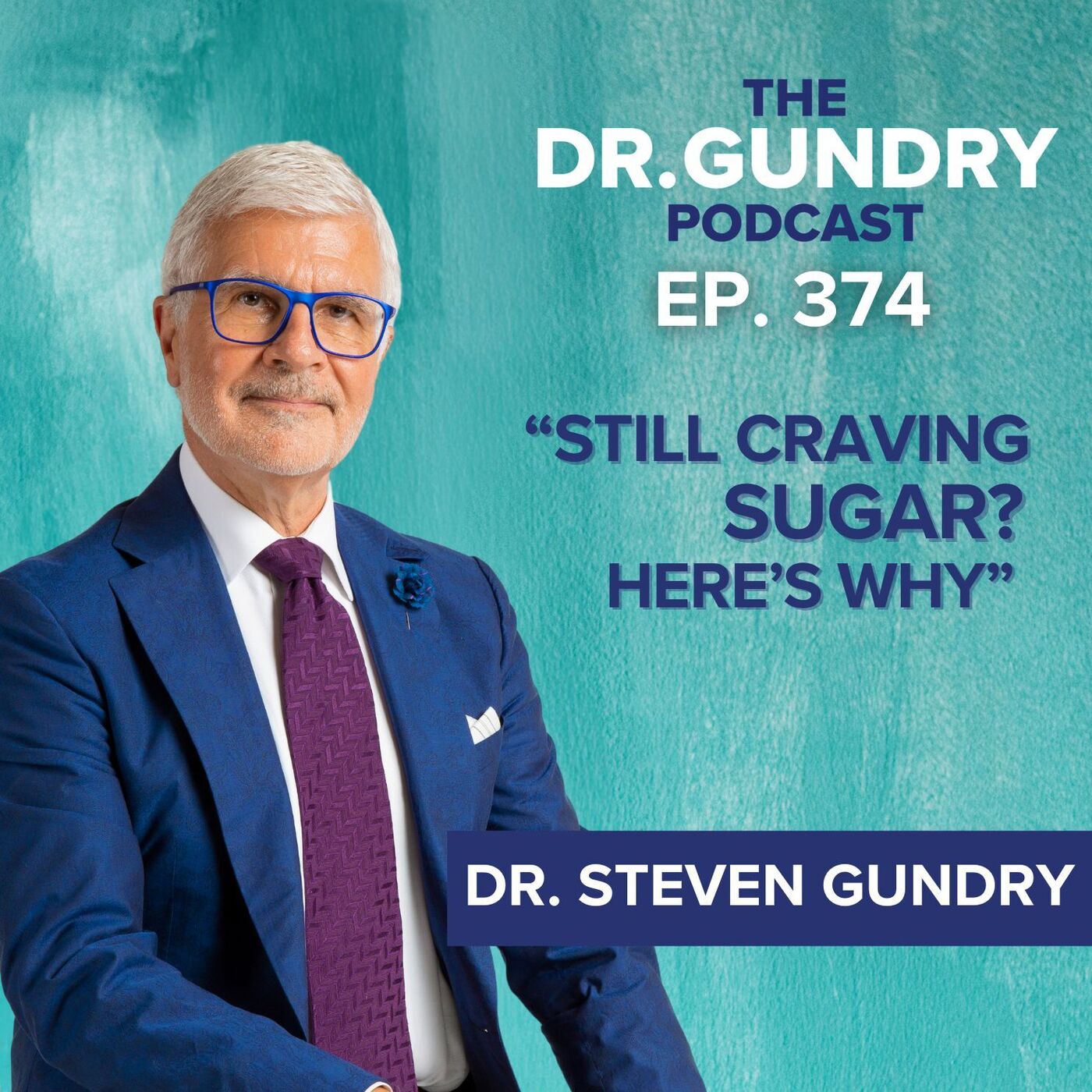
DR. GUNDRY PODCAST: GUT HEALTH, WEIGHT LOSS, AND NUTRITION
Craving Sugar All the Time? Here’s What Your Gut Is Trying to Tell You | EP 374
01:12:09
Loading summary
Transcript59 lines
- [00:00]
Dr. Steven Gundry
What does a confident smile say to you? And more importantly, what does it say about you? At Smile Generation, they believe a confident smile isn't just about white teeth, it's about whole body wellness. As I've discussed on this very podcast, oral health is connected to everything from your heart and immune system to even your brain. When you care for your mouth, you're investing in your entire future.
- [00:26]
Smile Generation's trusted dentists provide all encompassing, compassionate care. Merging advanced, proven technology with a patient first approach. They educate and empower individuals to protect their health through oral care tailored to their lifestyle, wellness goals and life stage. Visit smilegeneration.comgundry to learn more when you understand that your smile is more than just teeth and gums, that it's actually a gateway to your health, your confidence and your future. That's where empowerment begins.
- [01:02]
Podcast Announcer
Smile Generation is offering a $59 new patient special, which includes a comprehensive dental exam, cleaning and X rays regular value at least $290. This offer is for new patients only and is not valid for Tricare or Medicare Advantage and may be covered by insurance subject to your plan's restrictions. To take advantage of this offer, book your appointment by December 31, 2025. For complete terms and conditions, visit SmileGeneration.com GUNDRY welcome to the Dr. Gundry Podcast.
- [01:34]
Podcast Host
Where Dr. Steven Gundry shares his groundbreaking research from over 25 years of treating patients with diet and lifestyle changes alone. Dr. Gundry and other wellness experts offer inspiring stories, the latest scientific advancements and practical tips to empower you to take control of your health and live a long, happy life.
- [01:56]
Dr. Steven Gundry
If you're listening to this podcast, I.
- [01:58]
Know you care about your health and.
- [02:00]
Your families and I applaud you. But even with the best intentions, healthy quote unquote choices can quietly sabotage you. I see it all the time sky high inflammation markers in patients who swear they eat clean. That's why I felt it urgent to discuss this topic. Seemingly harmless foods your body turns straight into sugar and why sugar is enemy number one for a happy, healthy microbiome. We'll also set the record straight on fiber and reveal the real story on pumpkin seeds. Plus, I'll share simple, proven steps to break a sweet tooth habit for good. Tested by yours truly, a former one big bag of peanut M M's in one sitting sort of guy. So stay tuned. This episode is packed with practical tips that could change your life or someone's. You love.
- [02:53]
Craving something decadent like a double fudge brownie lasagna or an Almond Joy muffin that see secretly Good for you. Then you'll love my Dr. Gundry newsletter. Each week I send out an exclusive recipe that not only tastes incredible, but also supports your gut, your heart and.
- [03:11]
Guest Expert
Your long term health.
- [03:12]
Dr. Steven Gundry
From snacks to desserts, these recipes prove you don't have to give up flavor to eat right. You just need the right ingredients and a little guidance. So go ahead, treat yourself to food that loves you back. Sign up for my free newsletter using.
- [03:27]
The link in this episode's description.
- [03:31]
Now Been told for decades that fiber is good for us. That it keeps our digestion on track, helps us lose weight, supports heart health. And that's partially true. But what if I told you that some of the most popular high fiber foods on the market, even ones that you're buying at health food stores, are a complete waste of time, or worse, actually harming your gut and making you sick? Today, I'm going to reveal some of the best sources of fiber and expose the ones that sound healthy but can actually leave you bloated, tired and frustrated. So let's get into it. But before we do, make sure you hit that subscribe button on YouTube or.
- [04:15]
Follow this podcast wherever you listen.
- [04:17]
It's totally free. And by the way, you won't miss a thing that way. Okay, let's get into you've been lied to about fiber topic. The worst fiber number one Whole grain cereals and breads. Big food companies love to market whole grain as a health halo. But let me ask you something. If whole wheat is so good for us, why did humans spend thousands of years carefully removing the outer husk of the grain and only eating the soft white interior? Why did the South Americans and Central American people who invented corn go to the trouble of treating corn kernels with lye or boiling them in lime juice to remove the hull, a process called myictinization to make pozole or hominy and then hominy grits or or masa harina flour? Why did they do that? Why do 4 billion people who use rice as their staple go to the trouble of taking the hull of brown rice off and they eat their rice white? Why do all of these cultures do this? Because they've learned through centuries that the outer hull of grains are dangerous that are bad for them. And just remember that the next time you see whole grain goodness. The husk in wheat, what we call wheat bran, is mostly insoluble fiber. Now let's explain fiber. There's essentially two kinds of fiber. Insoluble fiber means that if you drop that fiber into a glass of water and stir it around, it will never dissolve, it will never mix in. Soluble fiber, on the other hand, means exactly that if you take soluble fiber and put it into water, it will dissolve. One way of thinking about that, sugar is soluble in water. If you put a couple teaspoons of sugar in water, stir it around, it disappears. If you put sugar in your coffee or tea, stir it around, it disappears. That's because the sugar is soluble in water. Well, it's the same with fiber. There's soluble fiber and there's insoluble fiber. Here's the problem with insoluble fiber. Insoluble fiber in general does not feed gut bacteria. Bacteria are not interested in fermenting it. But even worse, insoluble fiber makes your bowels move. And that's touted as a really good thing. But think about the last time you had food poisoning. What happened? You ran to the bathroom and got rid of everything you ate very quickly with basically watery diarrhea, and that was the end of things. Hopefully your intestines said, oh, my gosh, there is something really bothering me. It is irritating the inside of the lining of my gut and I gotta get rid of it as quickly as possible. Guess what insoluble fiber does to the wall of your gut? If you answered it, irritates it. You're correct. It's literally like swallowing razor blades. And your gut is not dumb. It tries to get rid of it quicker, which explains why insoluble fiber is pretty good at making you have a bowel movement, but it's not good for you. You're having a bowel movement because your body knows it's foreign and it's hurting you and it's trying to get it out as fast as possible. Think about that the next time you're hoping to have a bowel movement with insoluble fiber. It literally scratches holes in the wall of your colon. Worst fiber number two, instant oatmeal. Now, this one's everywhere, especially in the healthy breakfast aisle. But instant oats are highly processed, often loaded with sugar and flavorings, and they have a high glycemic index. That means they spike your blood sugar, the exact opposite of what you really want in a high fiber food. And regular oatmeal is also a nightmare. Almost all oats tested in this country, even organic ones, test positive for glyphosate, the active ingredient in Roundup. They also test positive for another herbicide that is banned by the EPA as causing cancer and birth defects. But it's in almost all oats. So if you think oats are a healthy way of getting fiber in your diet, think again. Now, I often see patients who are pre diabetic or diabetic, and they've been told that they should start their day with a healthy bowl of oatmeal as a way to regulate their blood sugar. And recently I had a patient who we had really well on track. Their hemoglobin A1C was coming down, their insulin levels were coming down. And again, I see my patients usually every three months. The next time I saw them, the insulin was way up, their hemoglobin A1C was way up, their blood sugar was way up, their insulin resistance was way up. And I went, what the heck? You were doing so well. And he said, well, I was doing so well. And then my regular doctor said, we can do even better if I add a bowl of overnight oats to my diet. And that was the exact thing that happened. That's the only thing that he changed in his diet. And we could see it as night and day. And unfortunately, I see this all the time. Oats are not a healthy way to improve your health. Quite the opposite. Worst fiber number three, high fiber cereal bars. Now folks, these are just candy bars in disguise. A little bit of added fiber doesn't cancel out the chocolate chips, the syrups, and the sugary fruit pace. Also, these bars in general don't tell you the type of fiber. Just remember that most of the companies that produce cereal bars like Kellogg's are grain companies. So they're going to load their cereal bars with inflammatory cereal grains. Now, sad fact, you may know that the founder of one of the most popular energy bars, and I won't mention their name out of respect, actually died of a heart attack at a very young age. Worst fiber number four, fruit juice with added fiber. Now, this is a classic big food trick. Take something unhealthy like sugary fruit juice, add a sprinkle of fiber, and suddenly it's marketed as digestive support. Now, let me be clear. There is no added amount of fiber that you could add to fruit juice that could undo the damage of high sugar fruit juice. It's just not going to happen. Buyer beware. Well, okay, are there actually soluble fibers that support gut health? You betcha. So soluble fiber, once again, that is fiber. Those are long chain sugar molecules that are all bound together with chemical bonds. That's really the definition of soluble fiber. Another word for it is polysaccharides. Poly means many saccharides, mean sugar and the longer these sugar molecules are and the tighter the bonds between these sugar molecules, the more they resist digestion by your digestive enzymes and make it down to your colon, your large intestine, where most of your gut buddies live. So the tighter those bonds, the longer the chain of polysaccharides, the more likely they're going to get to where they're needed. And that's down in your gut. Now here's the ones that I personally use the best fiber number one, the chicory family vegetables. Things like radicchio. Radicchio you can find in almost every grocery store. Now, some people call it the Italian red lettuce. It looks like a tight ball of an iceberg lettuce or a cabbage. It's actually not. It's chicory endive. You can find Belgian endive and Trader Joe's. You can find it in every grocery store. You can find it now in lots of mixes. You'll see butter lettuce and radicchio at Trader Joe's. These chicory family of vegetables are loaded with a soluble fiber called inulin. And inulin is one of the favorite bug foods that you can eat. Interestingly enough, as many of you know, I spend a lot of time in Italy and the south south of France. I have never been served a salad in the south of France or in all of Italy that doesn't have at least one or two different forms of chicory in that salad. In fact, the famous Tricolori salad of Italy has two chicory vegetables, Belgian endive, radicchio, and then it has arugula, which is a cruciferous family of vegetables. So isn't that interesting that one of the most famous salads of Italy has two chicory family vegetables in it?
- [14:37]
Ever wonder why your joints feel stiff even when you eat right and stay active? It's because your bones need more than calcium. They need movement, nutrition. That's where the Juvent micro impact platform comes in. Think of it as your daily vitamin for your skeletal system, just like a vitamin for your metabolism. Juvent Spring Gentle micro impacts help build bone strength, improve balance and even support your body's stem cell production for natural repair and regeneration. Just 10 to 20 minutes a day on the Juvent platform can help strengthen your body. And the vibration is gentle. I use it while checking my emails on my phone. I urge you to give it a try for a healthier microbiome, stronger bones, improved balance, and even better stem cell production. Visit juvent.com and use code GUNDRY for $300 off. Trust me, Your bones and your future self will thank you.
- [15:32]
Second best, ground flaxseed. Now, flaxseed is fantastic soluble fiber source that also contains short chain fatty acids called alpha linolenic acid, ALA for short. Study after study after study shows that the more alpha linolenic acid that you get in your diet, the healthier your heart is, the healthier your blood vessels are. And the good news is the less bad bacterial pieces called LPSs get into your bloodstream. And I document this in my patients all the time. We up their alpha linolenic acid intake and lo and behold, their LPSs fall, their inflammation markers fall, and flaxseeds are a great way to get it into your diet. Here's the proviso. Please buy them whole, keep them in your refrigerator, buy a little coffee grinder, grind them up and then put it in your water, put it in your smoothie, put it in your goat or sheep plain yogurt. Lots of ways to add it. If you have to buy it ground, buy it in the refrigerator section and then keep it in the refrigerator. Flaxseed goes rancid very quickly and I don't want you to be harmed by something so healthy as flaxseeds. Number three, psyllium husk. Now, this is one of the purest sources of soluble fiber and it's really easy to stir into water or add to smoothies. And the cool thing about psyllium is that it does not produce gas in your intestines as they ferment it. So if you're worried that fiber is going to make you bloat, make you gassy, and you're going to look pregnant. Psyllium fiber doesn't do that, but it still feeds your gut buddies. Now, buyer beware. Please read the label carefully on psyllium products. Some are high in sugar, including a commercial brand. Or if it says no sugar added, look for an artificial sweetener. Some of the most popular big name commercial brands have artificial sweeteners like sucralose, which does a great job of killing off your gut buddies. Just get the natural stuff and you'll be way ahead. Buy 100% psyllium organic, preferably. All right, number four, resistant starches. Now remember, any starch is just chains of sugar molecules bound together with chemical bonds. That's what makes a starch rather than just a sugar. The longer these chains are, the more tightly the bond is, the more resistant that starch is to your enzymes digesting it and turning it into sugar, which you absorb. And that way it makes it down to your gut buddies who really need it. There's lots of ways to do this. You can take root vegetables like purple sweet potatoes or yams, cook them, then put them in the refrigerator, and then reheat them. The refrigeration will actually result in much higher resistant fiber content than if you ate it fresh out of the oven or off the grill. So cook cool. Reheat is the way to go. Word to the wise, if you're trying to lose weight or if you have insulin resistance or an elevated insulin level like 88% of Americans do, don't go crazy on these resistant starches. And if weight loss is your goal, I advise my patients really only have them once or twice a week. I see people go crazy on resistant starches, but unfortunately, they're still mostly sugar. And there's better ways to feed your gut buddies, number five and number six, jicama and avocados. Now, jicama is a root vegetable. It's crunchy, refreshing. Some people think it tastes like a Japanese pear.
- [19:52]
Guest Expert
I agree.
- [19:53]
Dr. Steven Gundry
And it's full of prebiotic fiber. But use jicama as a dipping chip or stick for guacamole. That way you get a double benefit. Avocados are rich in monounsaturated fats, they're rich in fiber, they're incredibly low in sugar. So using a one, two punch of a guacamole with a dipping chip of jicama gets you double the fiber, double the fun, and as I always say, eat an avocado a day. This can actually help you lose weight. Okay, why all this matters? The reason soluble fiber matters isn't your digestion. When your gut bugs eat the right fiber, they create postbiotics, including short chain fatty acids like butyrate. Now, butyrate isn't just good for your gut. Believe me, it is your colon cells. 80% of all their nourishment comes from butyrate. But butyrate is the holy grail of everything in health. It's a fuel for your mitochondria. It supports your immune system. It even supports your brain cells. This is why I always say, if you feed your gut bugs what they need, they'll take care of the rest of you. Okay, final takeaways. To reiterate, you need more fiber, but you need the right fiber. And don't be fooled by cereal companies who are just marketing a bowl of cereal compressed into a fiber bar to make you think you're suddenly eating something healthy. Find the sources of fiber that dissolve in water so the next time you see High fiber on a package, flip it over. It's most likely full of sugar or wheat bran or other grain brands and will often have an artificial sweetener to fool you even more. Leave that on the show. One final thing about soluble fiber. If you're trying to fast or cut cravings, try this super power trick. A scoop of prebiotic fiber in water in the morning. Morning doesn't break your fast and it feeds your gut bacteria and your gut bacteria, if you feed them what they want, they literally send text messages to the hunger center in your brain that say, hey, we got everything we need today. You don't have to go looking for anything else because our needs are met. How do we know this? There's a fascinating several studies done in China where they took volunteers, put them on a 7 or 14 day water fast. All they got was water. Half of the group got 100 calories of prebiotic soluble fiber. We can't digest it, but our gut bugs can. The other group just got water. The group that got the prebiotic fiber had absolutely no hunger, none, for seven to 14 days. Why? Because their gut bugs were fed and the gut bugs sent the text messages to the brain saying, we're good. You don't have to go looking for anything else. And it's called the gut centric theory of hunger. I've written about it extensively. We now know that if you give your gut bugs what they want to eat, they'll make GLP1 and they'll make Cholecystokine and CCK. GLP1. Where have we heard about that? Oh, that's the injectables that make you not hungry. Make your gut buddies happy. They'll make GLP one for you. You won't be hungry naturally, so when you feed your gut bacteria, they return the favor. This Halloween, when you're carving the pumpkins, I want you to skip the tradition of eating the pumpkin seeds. Now, while this may seem like an innocent, delicious snack, pumpkin seeds are actually doing you more harm than good. Now, there are a lot of claims about the benefits of eating pumpkin seeds. They're great for prostate health, they're great for regulating hormones, they're full of antioxidants, they strengthen your hair and nails, they're great for heart health, and they're rich in zinc. Well, some of this actually may be true, but there's a bigger problem with pumpkin seeds, and I bet you know what it is. Yep, they have lectins. Now, what the heck are lectins? Lectins, as most of you watching this channel know are part of the plant defense system against being eaten. And plants are eaten by animals where they're predators and plants do not want to be eaten and they certainly don't want their babies, their sick seeds eaten. So plants use biologic warfare to convince animals that eating them or their babies is going to make them feel bad, is going to make them not live as long, is going to make them not as fertile. And so these are incorporated into the vast majority of seeds that you have the potential to eat. Another similar favorite snack very much in the same way are sunflower seeds. So when you see all those baseball players munching on their sunflower seeds and spitting out the shell, just realize that they're eating a lectin loaded food. Sunflower oil is bad for you because it's an omega 6, 6 fat and it's loaded with lectins as well. This also goes for peanuts, which are not a nut at all. It's a legume, cashews and chia seeds. Now wait a minute. Chia seeds. Chia seeds are great for you because they have omega 3 fats, which they do. But years ago I was exposed to studies from Loren Cordain, the father of the paleo diet, who's a professor at Colorado State University of humans who were given chia seeds to show that they had anti inflammatory properties because the omega 3 fats and lo and behold, they did have omega 3 fats in their blood, but their inflammatory markers like C reactive protein CRP actually went up when they were eating chia seeds. So what can you do? Well, since we're on the subject of chia seeds, you may have seen my interview right here on my YouTube channel with Basil seeds and the founder of Zen Basil. Basil seeds have all the benefits without the lectins and they act exactly like chia seeds. So use basil seeds instead.
- [27:48]
At the end of a long day, I want something that helps me relax and recharge. That's why I've added the Bone Charge red light face mask to my nightly routine. Every evening I wear it for 15 minutes while reading or watching TV. The bon charge red light face mask uses gentle red and near infrared light to support circulation, collagen production and relaxation. And it's completely EMF free and flicker free. Since I started, my skin looks smoother, more youthful, and a side bonus, it makes my wife laugh every time she sees me wearing it. Remember, laughter is one of the best medicines for longevity, so try it for yourself. I think you'll see a noticeable difference in your appearance as well. Visit boncharge.com and use code GUNDRY to save 15% off your skin. Will thank you tomorrow.
- [28:40]
Now, there are seeds that don't have any lectins. Plants have a strategy. Plants would like you to distribute some of their seeds for them by eating them. And these plants make the coating of the seed indigestible so that you cannot digest it with your digestive enzymes or even your microbiome. And so you will poop their babies intact somewhere with a generous dollop of fertilizer. So flax seeds fall into that category. Now, as you know, flaxseeds are loaded with a really cool protein, but they're also loaded with the short chain omega 3 fat linolenic acid. Flax seeds have been shown particularly linolenic acid to dramatically reduce inflammation and actually prevent lipopolysaccharides, those LP that I talk about, from getting into your bloodstream. Now, here's the deal with flax seeds. They resist digestion. So you could eat all the flaxseed crackers in the world and they're useless. You could sprinkle flaxseeds on your salad. They're useless. You have to grind them. And please, if you're going to buy them ground, buy them refrigerated, keep them in the refrigerator. I personally like to buy them whole. Get a coffee grinder, grind your flax seeds when you use them and then mix them in with whatever you're going to eat. It's a great source of omega 3 fats, fiber and protein. Second, hemp seeds. Hemp seeds have no lectins. They're also a good source of omega 3 fats. They're a great source of protein and they have been shown to improve heart health, brain health and eye health. Particularly, hemp hearts are really easy to use and there's no more processing needed. Sprinkle them on your salads, put them in your goat yogurt, put it in your goat or sheep kefir, and they.
- [31:01]
Add a really great texture.
- [31:03]
Sesame seeds. Sesame oil. And sesame seeds have been shown to block the effect of LPSs, those inflammatory bacterial cell walls. So get yourself some sesame seeds. In fact, studies in humans show that having people consume 2 tablespoons of sesame oil, not the toasted but the regular a day, dramatically lowers blood pressure in people who are hypertensive. And when they stopped using the sesame oil, their blood pressure went back up. Are there safe nuts? Well, yes, there are. First of all, you want to get zinc. Have some Brazil nuts. They're also rich in selenium. About three Brazil nuts will give you your daily dose of selenium that you need for thyroid health, for prostate health. But don't overdo it because too much selenium can backfire.
- [32:06]
Guest Expert
Walnuts.
- [32:07]
Dr. Steven Gundry
Walnuts are a rich source of tannins, a type of phytosterol polyphenol that has been correlated with improved brain health. Macadamia nuts. Macadamia nuts are mostly monounsaturated fats like olive oil oil. But they contain a additional fat that's been shown to directly affect the health of blood vessels and the brain. And there's several studies that suggest that this particular fat in macadamia nuts can suppress appetite. Pistachios. They're one of my go to nuts. They are rich in melatonin. In fact, they're the highest melatonin containing food there is. No, they're not going to make you sleepy. It turns out that melatonin, as you know, is only one of two antioxidants that are used in our mitochondria. The other one is glutathione. So melatonin is not the sleep hormone. It is the antioxidant of your mitochondria. Finally, pine nuts. Pine nuts, of course, are an essential oil, essential ingredient in pesto, along with basil and parmesan cheese and olive oil. But pine nuts are absolutely delicious, particularly if you toast them lightly and then sprinkle them on your salad. Throw them on your vegetables and you'll have a great way to get another beneficial nut in a fun way to change around your vegetables and your salads. Okay, that's it. Throw away the pumpkin seeds. Don't roast them for Halloween. That way you will not get a spooky surprise.
- [34:00]
Guest Expert
Let's talk about where sugar might be hiding in the foods you're eating. Almost not a day goes by when one of my patients who I accuse of eating too much sugar says, doctor, I do not eat sugar. And yet their blood work says they do. So what gives? Well, we already know that cookies and candy are sugar bombs. Here's the surprise that you may not know, and my patients often do not know. We can turn the protein and or carbohydrates in everyday food very easily into sugar. So in some cases, these healthy foods will spike your blood sugar even more than if you were actually eating table sugar. That's why avoiding desserts and obvious sources of sugar isn't enough. It's the everyday foods that are sabotaging your energy, your waistline and your long term health. And finding these everyday saboteurs is what we're going to help with today. All right, so why is there a problem with sugar? There's multiple reasons. First of all, let's just talk about table sugar for a moment. Table sugar, or cane sugar, is actually the combination of two sugars, glucose and fructose. The combination is called sucrose. So table sugar, what we think of as sugar, is half glucose and half fructose. Many of us are aware of high fructose corn syrup, and that just means that instead of that one to one ratio between fructose and glucose, there's more fructose than there is glucose. And we'll get into why that's a problem and might be fooling you in a minute. Now, normally when we taste sugar, first of all, we have no sugar receptors on our tongue. We have sweet receptors in our tongue. And surprisingly, we actually have sweet receptors in the lining of our intestines. Yes, there are actually receptors for sweetness. In fact, two thirds of your tongue is turned over to sweet receptors. Why? Because back in the good old days, finding something sweet meant survival. And back in the good old days, there were only two sources of sweetness in our diet. Ripe fruit and honey. Those were the sources that were available. So seeking out sweetness actually told your ancestors that the fruit had a great deal of sugar content, and that sugar content in fruit was almost exclusively fructose, not glucose. Honey is a combination of fructose and glucose. But the point is, you are after sweetness because this was a great source of calories. That's why you are interested in sweet. One other thing is kind of fun. Do you know that you have color vision because you are a fruit predator? You only respond to the color cues in fruit to tell you whether that fruit is ripe or not. And the plant uses those color cues to make sure that you're eating the fruit at the time the plant wants you to eat its fruit when the seeds in that fruit resist digestion. And you can carry off that plant's babies to somewhere else and poop them out with a generous dollop of fertilizer. So only animals that predate on fruit or flowers, like bees, have color vision. Your dog does not have color vision, because your dog could care less whether the squirrel is red or gray or black if it's moving. Your dog is fascinated with it, but not its color. It has no benefit knowing the color of something. You have color vision because you're a fruit predator. And fruit was an amazing source of calories for you and your ancestors. So fruit is actually the subject of so many of my videos. But let me give you one more key. So fructose is not absorbed like glucose when we eat it. Glucose is absorbed immediately into our bloodstream where it's used as really the primary fuel for our mitochondria, the little energy producing organelles and almost all of our cells. Fructose, on the other hand, is not aggressively absorbed into our bloodstream, but most fructose is taken immediately to the liver. Do not pass go, do not collect $200. Where it is detoxified. Yes, fructose is a toxin. It is detoxified into fat in the form of triglycerides and also into uric acid. Now, I'm going to have a lecture on uric acid and gout coming up. But uric acid is incredibly useful for storing sugar as fat. Uric acid produces insulin resistance and is a one, two punch for taking the fructose in fruit and converting it into fat to store for the winter. Now, the reason I'm mentioning this is whenever I talk about the dangers of fruit juice or the dangers of a fruit smoothie or the dangers in modern fruit, and someone comes online and says, I wear a continuous glucose monitor and my fruit smoothie does not spike my blood sugar, my blood glucose. Well, no, it won't, because it's mostly fructose and it's going into your liver and causing you to make triglycerides and acid and by the way, of fatty liver. So you won't see what you think you're seeing as the effect of fruit, because fruit is fructose and it's not absorbed into your bloodstream as glucose. It's going to your liver in a completely different pathway. So please stop telling me about your glucose monitor. You're missing the boat, all right? That's why modern foods, even ones that we think are healthy, can be like mischief in your body. Let me talk about another one. Now, this is a favorite subject of Professor Christopher Gardner, who's the head of nutrition at Stanford, and he has some fabulous YouTube videos out, some of them fairly short, that goes into the mistaken idea that we need lots of protein in our diet. Protein is, is, is amino acids. And yes, we can use amino acids as a fuel, but we have to deaminate, take a nitrogen molecule off of amino acids to turn them into glucose. So even if you're eating protein, you can turn that protein into sugar. What's more important, and the point he tries to make is let's think about if I eat fat and I eat more fat than I need, do I have A storage system for extra fat that I eat. And the answer is, of course it's in my fat cells. And as any of us who look around every day know, we have an unlimited ability to store fat in our body. In fact, you probably saw just this past week that there are now, for the first time in America, more overweight and obese children than there are thin or undernourished children. First time in America. So we have a crisis in storing fat. Okay, so fat can be stored as fat. Fair enough. Sugar. We have a storage system for sugar. It's called glycogen. And glycogen can be stored in our liver, and glycogen can be stored in our muscles, but we don't have a big storage system for that. The good news is we can convert sugar into fat. And so we have an endless ability to. To store sugar as fat, as most Americans are well aware. So sugar also can be stored as fat. But what about protein? Well, protein is made into muscles and bones and cartilage and tendons, and that's what protein is used for. The implication is all we have to do is eat more protein and, and we'll store it as muscles or bone. And as hopefully anyone now realize, you don't, there is no storage system for protein except when you're actively building muscle, which most of us aren't. So what do you do when your excess protein is. Where do you put it? You convert it into sugar. It's called gluconeogenesis.
- [44:53]
Dr. Steven Gundry
Why?
- [44:54]
Guest Expert
Because then you can convert it into fat. So even protein in excess becomes sugar and then fat, because that's the only place you can put it. So even extra protein, particularly protein that is finely pulverize like a protein powder, becomes sugar faster than you are well aware of. Yes. Can it build muscle? No question about it. But the amount of protein we need to build muscle is ridiculously small on a daily basis, and we'll leave it at that. Finally, every night on TV, you see commercials for GLP1 drugs, and there's some happy, smiling, dancing person who says, I got my A1C down. So A1C refers to hemoglobin A1C. And it's measuring what are called advanced glycation end products, which are nicknamed ages on the hemoglobin molecule in our red blood cells. This is called glycation. And glycation is. We can take sugar that we eat or that we have in our body, we can take protein that we eat or have in our body, and we can combine them in one of the strongest chemical bonds that's ever been described called the Mallard reaction with heat. Well, we have sugar, we have protein, and we have heat in our bodies. So 24 hours a day, we're making advanced glycation end products. And the bad news is, as the name implies, advanced glycation end products age us. So when someone says, I got my A1C down, what they're really saying is, either my sugar consumption is going down or my protein consumption is going down, or both are going down. But since protein and sugar are half of each equation, my patients often realize that the problem with their aging or their A1C is not the sugar that they're avoiding or think they're not eating. It's actually the protein they're eating that's being broken down into sugar. Remember, it's half of that is equation. And not a day goes by that one of my patients finally realizes that it's their high protein diet that's actually part of this problem. So protein can become sugar. Well, how about healthy carbohydrates? Like a bagel? Anytime we grind up flour grains into a fine white powder, we're actually able to digest that into glucose faster than we can digest sucrose table sugar into glucose and fructose. In fact, the glycemic index of white bread is 100. It's the fastest known food to become glucose in our body. Table sugar, in fact, is only about 75, reflecting the fact it literally takes longer to turn that into glucose in our body. So a healthy bagel is actually more sugar laden than a candy bar, but it's not on the label. So one of the things you got to do with any carbohydrate food is if there's a label, then look at total carbohydrates. Don't look at added sugars, don't look at sugars, look at total carbohydrates. And usually it'll be per serving, then right underneath there will be fiber, whatever fiber is there. And quite frankly, there's little to none in a bagel. Take the fiber from the total carbohydrates, that will give you the actual carbohydrates. And in that bagel, so what? Well, there are 4 grams of carbohydrates in a teaspoon of sugar. And all of us can relate to what a teaspoon of sugar looks like. So take that number of carbohydrates, divide it by four, and you will actually get the teaspoons of sugar in that product. And so many of my Patients are flabbergasted when they realize that that healthy bagel might have 10, 11, 12 teaspoons of sugar in that healthy bagel. And they weren't eating any sugar, they assured me. Their almond flour tortilla, their white flour tortilla, their corn tortilla, same thing. Their healthy snack chip, the same thing. So you want to find out where the sugar is that you don't think you're eating, even if it doesn't taste sweet. Do that simple calculation and you will be shocked with the amount of sugar we're actually consuming in our healthy diet. How about oatmeal? It's marketed as heart healthy, but in reality it's just a big bowl of sugar. Here's the problem with oatmeal. Oatmeal, even whole oats, even organic oats are more likely to contain glyphosate in Roundup than glyphosate you don't want to be eating. Both the Environmental Working Group and Consumer Reports have tested multiple even organic oat products with big names and have found glyphosate. There's also two other herbicide pesticides that are banned by the EPA that are consistently found in oats. So you do not want a bowl of pesticides herbicides in your daily breakfast. Instant oats. Whenever you see the word instant, that means that these have been pre digested. All their sugar molecules have been broken apart. So it's just a great way to blow sugar into your bloodstream. It's a blood sugar roller coaster in a bowl. So if you like what you're seeing, please hit that subscribe button and make sure to like us on Instagram, YouTube or wherever you're getting this podcast. Well, how about milk? I mean, milk does a body good. What does milk have to do with sugar? Well, a lot. Go ahead, read the label. You will be shocked to see the sugar content in milk. It may be hidden as carbohydrates. It may say no added sugar. That's not where to look. Look at total carbohydrates. Milk is loaded with lactose and lactose is sugar. Now the problem with milk in America is that most milk in the United States is, is comes from casein A1 producing cows. These are the Holstein cows, black and white cows. So many people who think they're lactose intolerant, in fact are intolerant to casein A1. Now also remember that casein A1 actually is converted in your body to beta casein morphine, which not only spikes insulin, but it acts like Morphine in your brain. And that's why so many people get kind of this warm fuzzy feeling after drinking a glass of milk. It's the morphine effect. And that's probably not a great idea long term. How about breakfast cereal? Many of these cereals carry the heart healthy label. Now I can assure you, as the former president of the Desert chapter of the American Heart Health association for two years, that these Heart Healthy symbols are not awarded. They are purchased from the American Heart Association. It has nothing to do with whether it's good for you or good for your heart. So take a look at those Heart Healthy cereals. Do the math with total carbohydrates minus the fiber. Divide by four and you'll be shocked that your bowl of sugar, bowl of cereal has more sugar than a donut or a candy bar. And then you're going to pour milk on that bowl of sugar and you're going to pour sugar on top of sugar even though you thought you weren't eating any sugar. It's all around us. Well, how about sugar free packaged foods? Now remember, your tongue does not have sugar receptors. It has sweet receptors. And back until a few years ago, your tongue could not imagine that the sweet thing that you were eating wasn't sugar. Because what else could it have been? When you eat sugar, your receptors tell your brain that you just ate something sweet. Must be sugar. Your brain sends a signal down to your pancreas. Sugar is on the way. Make some insulin to handle that sugar to get it out of our bloodstream. The pancreas obliges when sugar does not arrive because what you are eating didn't have any sugar. Your insulin pulls your blood sugar down. Your brain goes, what the heck? Not only did I not get any sugar, but my sugar levels went down. You got cheated. You cheated me. Go find some more and keep looking until you get me what I need. And that sets up this incredible roller coaster dependence on the more of these sugar free foods that taste sweet that you're eating, the more of these things you eat and the worse you feel and the more your blood sugar crashes, which makes you want to eat more of this stuff to get your blood sugar up. And I say this as someone who was addicted to diet Coke. I drank eight Diet Cokes a day and yet was 70 pounds overweight, wondering what the heck. All I'm doing is eating healthy, no sugar foods. So don't get trapped in this evolutionary trap that our bodies couldn't have imagined was happening. So these are not health foods. That's why Sugar free sodas and sugar free protein bars leave people hungrier than they have before. Now, if you've got to have sweeteners, stick with something like allulose, which is a true sugar but actually helps lower blood sugars and in some human trials have actually aided with weight loss as opposed to these other intestinal bacterial killing sugars like sucralose or aspartame. Those are real deal breakers. All right, so your body reacts to sugar that you can't taste, that you can't see, that won't be listed on the label. And always remember, particularly in the forms of protein powders, that you will take a lot of that protein and convert it into sugar to store as fat, unless you're actively building muscle through strength training. And again, to leave you with Christopher Gardner's thoughts. Americans right now with a normal diet, plain old everyday diet, eat twice the amount of protein than the USDA recommends as protein requirements for America, twice the amount in regular food. That's without adding all of these additional sources of protein. That's it for today. There's a lot of places that sugar is hiding and a lot of things you're eating that are actually converting to sugar without you knowing it.
- [58:12]
Dr. Steven Gundry
All right, you heard me say it.
- [58:14]
Over and over again, but it bears repeating. Sugar is incredibly dangerous and, and even worse, it's highly addictive. In fact, the average American eats 153 pounds of sugar every year, whether they know it or not. That's a lot of sugar. Ready for another fun fact? You know this sugar is highly addictive. And believe me, I know how hard it can be to kick a sugar addiction. I'm someone who could go through a two pound bag of peanut M&Ms. In a single sitting. I know how addicting sugar can be.
- [58:58]
That's why today I'm going to teach.
- [58:59]
You how to kick your sugar addiction in just four easy steps. All right, step one, you gotta know where sugar is hiding these days. Sugar is everywhere and it's no wonder people are addicted. They don't even know they're consuming it. That's why I recommend you memorize the different names that sugar can go by, such as brown rice syrup, corn syrup, high fructose, corn syrup, glucose fructose, agave. These are all code words for sugar. And it gets worse. Maple syrup, honey, all natural cane sugar. Somehow that's different. So next time you're at the grocery store, make sure to check for those names on the label. Or better yet, if you're looking at a label, you probably should put it back, back. Because a packaged food most likely is going to have sugar in one form or another well hidden on that label.
- [60:16]
All right, step two.
- [60:17]
Here's another label trick. Don't look for sugar on the label. It's purposely misleading. These were changed. These label laws were changed by the federal government during the Reagan administration because the Department of Agriculture realized that their business is to protect agricultural products and make sure agricultural products were being consumed.
- [60:52]
So the amount of sugar on a.
- [60:54]
Label is well hidden. Now, recently, the label laws were changed to put added sugar as a separate ingredient. But that's not there to make you aware of how much sugar is added. That's to distract you again. So don't look at sugar. Don't look at added sugar. Now, naturally, if you see a lot.
- [61:19]
Of sugar in both of those, run.
- [61:22]
But where it's hiding is under total carbohydrates. So look at total carbohydrates per serving size. And serving sizes are getting smaller and smaller to fool you about how much sugar is actually in that package. Take total carbohydrates. The next line down is fiber. Fiber is indigestible, so it doesn't count against carbohydrates. So you subtract the fiber from total carbohydrates. That number that you get is actually the grams of sugar in that serving size. Now, grams don't mean a lot to people, particularly in the United States. So here's the easy equation that I've.
- [62:11]
Talked about and written about.
- [62:13]
There are four grams of carbohydrate in one teaspoon of sugar. So take that number of total carbohydrates that you got, divide it by four, and that'll show you the actual amount of sugar in that product serving that you're eating. And when you do that, you may never read a label again because it's so shocking how much sugar is actually being consumed in this country. And it's all hidden in these packaged foods. And read the label, do the math. It's quick and easy. And when you do that, you'll be shocked with how many things you'll start putting back. Step three, Give fruit the boot. Believe it or not, most fruit contains incredibly high amounts of sugar. And no, there's no such thing as good for you or healthier sugar. Sugar is sugar. And that goes for coconut sugar, brown sugar. Agave sugar is sugar. Fruit fructose is sugar. And the problem with fructose, as we now know, is that fructose goes directly to your liver, where it's converted into fat triglycerides, and it's converted into uric acid. Now, increasingly we're realizing that uric acid, which, which most of us have heard of, causes gout. Uric acid causes high blood pressure. Uric acid causes kidney damage. And increasingly we're realizing that uric acid is a big culprit in producing diabetes and insulin resistance. Additionally, fructose, in the form of fruit sugar or high fructose corn syrup, is now the leading cause of fatty liver disease. And we have an epidemic of fatty liver disease in this country, particularly in our kids.
- [64:41]
Part of the problem has been that.
- [64:44]
We now have fruit available to us 365 days a year. And we inherited a system from great apes that takes fruit sugar and converts it to fat, because fruit used to be only available a few times a year, even in the jungle. And we have the ability to convert fruit sugar into fat. But now fruit has been raised for sugar content. I mean, it's obvious. I mean, an apple today is the size of a grapefruit. An apple when I was growing up was the size of a crab apple now, and even the names give it away, you know, Ambrosia apple, Honey crisp apple. It's pure sugar, and they've been bred for this content. The safest fruits, believe it or not, are blackberries and raspberries, followed by strawberries. Blueberries are down the line now because they've been bred for sugar content. If you want to have something in your hand that you can eat, A kiwi is actually the lowest fructose containing fruit. Grapefruits are actually low in fructose. So those are your best options if you just have to have fruit. Pomegranates are incredible. Option number one, they're hard to eat and they're only available at certain times of year, fall and early winter. So pomegranates are perfectly acceptable. Step four, don't quit cold turkey. The key to maintaining any healthy lifestyle choice is to ease into them gradually, keep track of your progress, and always keep an end goal in mind. Deprivation is not the goal of any healthy lifestyle. It never works. So, for instance, let's suppose you're used to putting two teaspoons of sugar in your coffee every morning. Well, you got two options. Drop down to one teaspoon, believe it or not, in a week or so, it will be every bit as sweet as you remember and keep dropping back. Alternatively, choose one of the safe no calorie sweeteners. My personal favorite right now is allulose. Allulose is a true simple sugar. It was first discovered in figs. Allulose is readily available. Get the non GMO variety. It actually is a prebiotic fiber in its own right. Monk fruit works well. Stevia works well. Try those as sugar substitutes. But remember, your tongue has no sugar receptors. Your tongue has sweet receptors. And the only things that were ever sweet, way back when was fruit. And fruit stimulates you to produce insulin. So when you use a non caloric sweetener and you taste sweet, your brain is convinced that you're eating fruit. And when sugar doesn't arrive, your brain is convinced you've been cheated and you should go back and find some more. How do I know this? I was addicted to Diet Coke. I would have eight Diet Coke a day. I always had a hand wrapped around a Diet Coke.
- [68:43]
If I could sterilize Diet Coke and.
- [68:46]
Have it in the operating room in surgery, I'd do it. But my brain didn't understand why sugar was not arriving because my tongue tasted it. And so just be careful of all these no sugar sweeteners. Sweetened foods, they will fool your brain every time. All right, final dark chocolate. Dark chocolate is a great way to transfer into having a more healthy treat.
- [69:22]
But be careful.
- [69:24]
Even dark chocolate has a lot of sugar. My personal favorite, and I have no relationship with them, is is lilies. Lilies uses stevia as their sweetener and they have a great 85% dark chocolate that virtually has no sugar in them. And finally, avoid these non sugar added drinks just because it says no sugar added or just because it says sweeten with Stevio or sweeten with Monk fruit. Again, your brain doesn't understand that that sweet taste wasn't sugar. And your brain will literally make you go looking for more of this stuff. Now I know how wonderful soda is, but over five years ago on YouTube, I introduced the concept of a healthy Coke using sparkling water, San Pellegrino or other Italian sparkling waters and balsamic vinegar.
- [70:39]
And if you haven't seen it, look it up.
- [70:41]
I was the originator of the Healthy Coke recipe.
- [70:46]
Guest Expert
You get all the benefits you're looking.
- [70:48]
Dr. Steven Gundry
For for the flavor you're looking for.
- [70:51]
Guest Expert
But you're going to get the health.
- [70:53]
Dr. Steven Gundry
Benefits of balsamic vinegar. A prebiotic fiber, a polyphenol, and there you go. So there's ways around this sugar addiction. Don't look at quitting sugar as a prescription, as a saying you, you know, are being made to avoid. Look at it as a way of getting control of probably the most addictive substance in our diet. And as any addict knows giving up an addiction is difficult, but well worth.
- [71:32]
It in the end.
- [71:33]
Let's get rid of our sugar addiction.
- [71:38]
Now it's time for the Question of the Week. The question of the week comes from Ms. Hype on Instagram. Regarding my reel about the inflammation pumpkin seeds can cause, they asked, is the pumpkin okay to eat if you don't eat the seeds?
- [71:52]
Well, yeah.
- [71:53]
The main issue is the seeds. The pumpkin itself is perfectly fine with the proviso that pumpkins are fruits and you'd be amazed how much sugar content there is in in pumpkin.
- [72:09]
So eater beware.
- [72:11]
Great question. Now it's time for the review of the week. The review of the week comes from my YouTube video about foods that don't break your fast. They ask so I can start taking my glutamine powder first thing in the morning without breaking my fast. Great to know. I was always under the impression that was strictly calories that did it. Thank you, Dr. Gundry. Well, not so fast. When you say glutamine powder, what actually are you talking about? Glutamine is a protein. It's an amino acid. And remember, amino acids will break your fast. The only things that don't break your fast, in fact, are fats. But sugars and proteins will break fast. But if you're talking about glutamine powder powder in the form of something that's used for repairing leaky gut, which is a tiny amount of glutamine, like 300 milligrams, then no, that won't break your fast. But if you're using a heavy glutamine based protein powder that most likely will break your fast. Thanks for reviewing.
- [73:19]
Podcast Host
I hope you enjoyed this episode of the Dr. Gundry podcast. If you did, please share this with family and friends. You never know how one of these health tips can completely transform someone's life when you take the time to share it with them. There's also the Dr. Gundry Podcast YouTube channel where we have tens of thousands of free health insights that can help you and your loved ones live a long, vital life. Let's do this together.