← The Dr. Gundry Podcast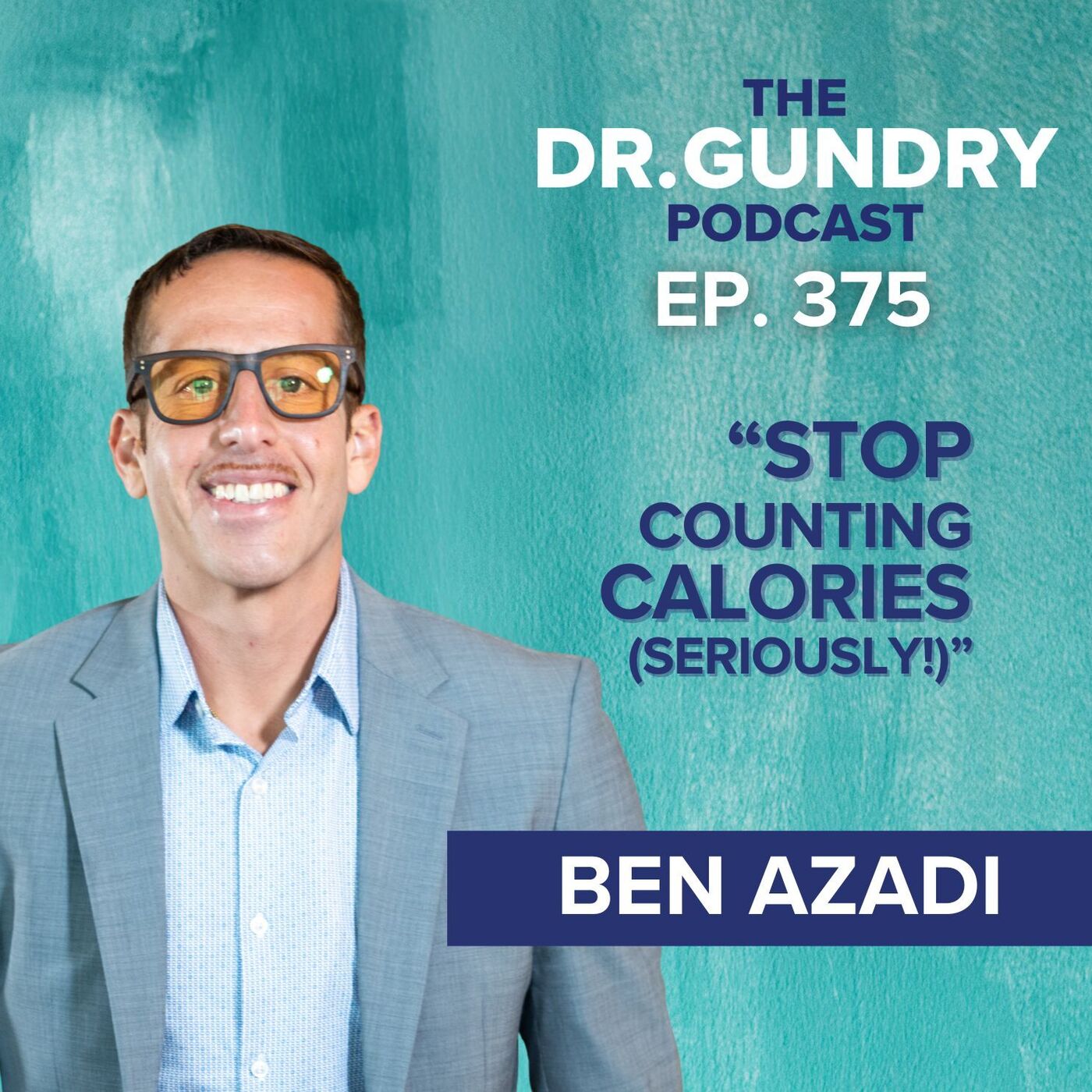
Loading summary
Transcript78 lines
- [00:00]
Podcast Host - Advertiser
What does a confident smile say to you? And more importantly, what does it say about you? At Smile Generation, they believe a confident smile isn't just about white teeth, it's about whole body wellness. As I've discussed on this very podcast, oral health is connected to everything from your heart and immune system to even your brain. When you care for your mouth, you're investing in your entire future. Smile Generation's trusted dentists provide all encompassing, compassionate care. Merging advanced, proven technology with a patient first approach. They educate and empower individuals to protect their health through oral care tailored to their lifestyle, wellness goals and life stage. Visit smilegeneration.comgundry to learn more when you understand that your smile is more than just teeth and gums, that it's actually a gateway to your health, your confidence and your future. That's where empowerment begins.
- [01:02]
Smile Generation is offering a $59 new patient special which includes a comprehensive dental exam, cleaning and X rays regular value at least $290. This offer is for new patients only and is not valid for Tricare or Medicare Advantage and may be covered by insurance subject to your plan's restrictions. To take advantage of this offer, book your appointment by December 31, 2025. For complete terms and conditions, visit SmileGeneration.com GUNDRY welcome to the Dr. Gundry Podcast.
- [01:34]
Podcast Host - Narrator
Where Dr. Stephen Gundry shares his groundbreaking research from over 25 years of treating patients with diet and lifestyle changes alone. Dr. Gundry and other wellness experts offer inspiring stories, the latest scientific advancements and practical tips to empower you to take control of your health and live a long, happy life.
- [01:56]
Dr. Steven Gundry
Welcome to the Dr. Gundry podcast. You know, for the first time in history, there are now more American children that are overweight than they are underweight and undernourished. First time in history. And that should be a wake up call for all of us because it proves just how badly our modern food system has failed. So that's why I'm so excited about today's guest, Ben Zadi, the four time best selling author including his latest Metabolic Freedom book, an international keynote speaker and founder of Keto Camp. After transforming his own health by losing £80, Ben I only lost 70, so you got me. Ben has spent the last 15 years helping others break free from sugar dependence and improve metabolic health. In just a bit, Ben and I will reveal why chasing weight loss misses the point how to finally make keto and fasting sustainable and the surprising foods that bring your metabolism back online. So stick around.
- [02:58]
Podcast Host - Advertiser
This conversation could change the way you think about your health forever.
- [03:02]
Dr. Steven Gundry
We'll be right back. You don't want to miss this one.
- [03:07]
Podcast Host - Advertiser
If you enjoy learning about the latest breakthroughs in gut health, longevity and nutrition, then you'll love my free weekly newsletter. Every week I share exclusive tips, new discoveries and personal insights I don't always get to cover here on the podcast. It's your direct line to staying ahead on the science of feeling your best. From foods that heal your gut to little known tricks for better energy and aging. So if you haven't yet, go sign up right now. Just check this episode's description for the link or head to Dr. Gundry.com it's free.
- [03:41]
Dr. Steven Gundry
Now, you and I have been speaking the same language when it comes to metabolic health, and I think our listeners are going to hear that loud and clear today. Now, we agree that weight gain isn't really the root of the problem, but a symptom of deeper dysfunction. So let's break this down together for our listeners. What's your technique for helping people move past the old calories in calories out mindset? And when you start with that, give me the capsule summary of why calories in calories out is really meaningless in this discussion.
- [04:17]
Ben Azade
The bottom line is that the premise is flawed when we view the body in the way that the calories in versus calories out crowd views it. Their premise is that we need you to lose weight so you could be healthy. And the body doesn't work that way. We don't lose weight to get healthy, we get healthy to lose weight. And the truth is nobody actually has a weight problem. It is a weight symptom. So calories is just another way to treat the symptom. It's a distraction from what really matters, which is hormones, inflammation and metabolism. And so many people go down that route. As you know, Dr. Gundry, they're just chasing calories. And the problem with it is that it works for the most part. In the beginning, you're going to lose some weight because obviously less energy is coming in. However, you can out trick your metabolism, your metabolism will slow down to match the energy coming in. And you can only cut so much. There has to be a better way. There is a better way. And the better ways to focus on hormones and inflammation and, and detach from focusing on calories. Because when you get healthy, the side effect, the benefit, is the way it comes off. And that's what I learned. And that's exactly what you've taught for so many years.
- [05:25]
Dr. Steven Gundry
Well, you know, in my clinic, I see patients who feel hungry all the time. They crash without constant snacking. And, you know, they really struggle to lose weight. And they're what you describe as classic sugar burners. Now you've been through that yourself. I have too. So what are the first steps you recommend to help somebody break free from this constant sugar dependence cycle?
- [05:51]
Ben Azade
That is the first step. Take them from burning sugar to burning fat. And there's really nothing wrong with using sugar and glucose as a fuel source, unless you're only using sugar and glucose as a fuel source. And unfortunately, about 93% of Americans are stuck burning. And what's really interesting, when I was writing Metabolic Freedom, I was looking at a lot of studies with insulin resistance, diabetes. And of course, once you are diagnosed with diabetes, it opens up a whole world of other conditions like heart disease and cancer. But with insulin resistance, I found a study called the Whitehall 2 study that showed the average person could have full blown insulin resistance for on average 6 to 14 years without their blood sugars showing any changes. That includes their A1C because their body is producing so much insulin to clear the excess glucose until the message is not received anymore, you're going deaf to the screams of insulin. Most practitioners don't even order a fasting insulin blood test. It's one of the most important tests to understand, hey, are you burning sugar or burning fat? So that test, I made the point that you got to get that test done. You want to make sure you have sensitive levels of insulin. And when you get back that report on your fasting insulin, that reference range will show 3 to 25. Anything over 7, in my opinion, is considered insulin resistant. So it might not be fat flagged as a problem if it's at 12 or 18. But that means you are burning sugar. And some signs, some quick signs that you'll pay attention to if you're a sugar burner, extra weight, obviously crashing after eating a meal, skin tags, brown patches, these are signs to pay attention to that you're burning sugar, not fat.
- [07:29]
Dr. Steven Gundry
In my clinic, I have third year family practice, residents come into my clinic for a month. And so these are guys and ladies who are about to go out into practice. And none of them have ever been told about insulin resistance. None of them have ever heard of ordering a fasting insulin level. None of them have ever looked at insulin resistant markers like Homa IR for instance. None of them. And you're absolutely right. We see all the time people who have normal, quote, unquote, hemoglobin A1Cs normal or little elevated fasting blood sugars, glucose. And yet, you know, underneath all this, they all have elevated insulin levels and elevated insulin resistance. Labs have not caught up with this. For instance, I mean, the Cleveland Clinic, Cleveland heart Lab still says that a normal fasting insulin level is up to 26. And it's like, no, it's not. Well, it might be in Ohio, in Cleveland, and I would agree, but that's not normal. That's what they think is going on. And you brought up a very interesting thing which is worth mentioning. As a heart surgeon, many of my patients that I operated on for coronary artery disease had skin tags. And for those who are listening, these are these quote unquote benign growths that happen sometimes on your neck and your armpits, down in your groin. And a great number of my patients had these blood benign skin tags. And you go to your dermatologist and they burn them off. Well, I had a bunch of these benign skin tags when I was a big fat guy. And I'm going, yeah, that's interesting. All these people that I'm operating on have these skin tags. And isn't that interesting? Well, when I started my journey, the.
- [09:25]
Podcast Host - Advertiser
First one of the first things that.
- [09:26]
Dr. Steven Gundry
Happened is that these skin tags dried up and fell off. And I'm going, what the heck is that all about? Well, I literally had stopped feeding the of these, quote, benign skin tags. So anyone listening today, if you got skin tags, Ben's right. These are signs of. You've got insulin that's elevated. And insulin more than anything else, is a growth hormone. And the more we realize that as we get older, there is nothing in us that we want to grow. That's a great sign that you've got an issue. You know, basically I use the example of the original Jaws movie trailer where this young lady's swimming on the top of the ocean and it's a beautiful day, and unbeknownst to her, a giant great white shark is coming up to eat her. You're right. Most Americans, there is a great white shark of insulin that's literally eating us. So good for you for pointing those things out.
- [10:30]
Ben Azade
Yeah, that's a really great analogy. And that is the case, unfortunately. And I think the reason why most practitioners do not order a fasting insulin is because there's no medication to prescribe for high insulin, only for high glucose. So they wait until the glucose changes, but you don't want to wait that long. It could be six to 14 years. And then automatically you're pre diabetic, or maybe you wait too long and you're full on diabetic. And what's interesting about the diabetes piece. In the US we spend $4.6 trillion on healthcare every year, which would be the fourth largest GDP in the world, if that was a GDP. Yet we're sicker than ever before and pharmaceutical companies are richer than ever before. And you would think we might. We should rank top 10, top 20 in health in the U.S. no, we're like around 37. But one out of every four dollars spent on healthcare spent on diabetes, primarily type 2, which you and I both know, Dr. Gundry, is 100% preventable and also 100% reversible. And once you're diagnosed with diabetes, it significantly increases your risk of other diseases. As a matter of fact, it's actually pretty rare to die from diabetes. People are dying with diabetes, but it's leading to the complications, the cancer, the heart attacks, the strokes. It's. It opens up a scary future for you if you're diagnosed with diabetes.
- [11:43]
Dr. Steven Gundry
And one other thing, this just actually came up recently. I'm a big believer that dark spots or liver spots or sunspots are like you say, another really good way of looking at not only insulin resistance, but also how we're handling the sugars and the proteins that we eat. And I was out with some friends and happened to notice that this woman who's, quote, unquote, very healthy on the surface, had a. Had a lot of dark spots on her hands. And I just happened to mention it because at least in my practice and personally myself, I used to have some pretty good dark spots on my hands. And, you know, I don't have them anymore. And I was just remarking that she happened to have them. And my wife got rather upset with me, and she said, what'd you tell her that for? You know, she, you know, we're all vain. And I said, well, I mentioned it because this is actually a very good signal that you may be healthy as a horse in your mind. You may be exercising, you may have, you know, guns from lifting weights, but this is a really useful sign that something metabolically is wrong. What say you?
- [13:02]
Ben Azade
Yeah, no, I agree with you. 100. And it's interesting because there's a good percentage of people that have metabolic syndrome, but you would not. You cannot tell from their physical appearance. They are skinny fat, a lot of this organ, visceral fat. And you can't tell just by looking at them. But meanwhile, their organs are suffocating under this nasty white fat, applying pressure to their heart, their pancreas, their liver. The more visceral fat you have, the higher Your chances of disease in your future. And for some people, because of their genetics, they look lean on the outside, but they're accumulating fat on the inside. But like, if you have that lens like you just spoke about, when looking at their hands and their skin spots, they brown spots, skin tags, you could kind of get clues that this person is actually insulin resistant. And the best way, of course, is to get that fasting insulin test done and then you could verify it.
- [13:50]
Dr. Steven Gundry
Now the other thing that I think we're unfortunately becoming more aware of, that we've got all these hidden disruptors in our food supplies, like glyphosate, like the fact that most of the things we eat are processed foods and, and now microplastics in literally everything. All of these things damage mitochondria, and in the end, it's really the mitochondrial function and how well they function that really is driving this entire mischief of insulin resistance. So if somebody wanted to take action today, they're listening to this and they're going, oh my gosh, you know, I've got a few skin tags and I've got some dark spots. What's the first toxin or ingredient you tell them to cut out of their diet?
- [14:40]
Ben Azade
That's a tough one because to your point, there's so many I could list. I'm going to make the case, and I know we're going to talk more about this later, maybe we could get into it now, but I'm going to make the case that it's the rancid fats, processed fats, okay, over glyphosate, over processed sugar, even though I think those are really bad for you. And here's why I say that the processed fats, of course, are these processed seed oils. And not all seed oils are bad for you. We could get into that, I know you want to, but the processed variety. And it's estimated that around 80% of our entire food supply in the US contain these processed seed oils. And the reason why I believe they're the number one thing I would remove is because of how long they stay inside of your body. There's a study that measured the linoleic acid levels in our blood and in our cells. And it showed that the half life of these bad fats are approximately 680 days, two years, and it takes about six years for the body to remove 95% of them. So when we consume them within hours, they end up into our cell membranes and to your point, our mitochondrial membranes. And we don't get rid of them in Days or weeks or months. We get rid of them after years. Compare that to sugar. You get a glucose spike. It goes back down to baseline. You could walk it off. You could do some things to kind of mitigate the glucose spike. Not good for you over time, but it's not staying in your cells for two to six years. Glyphosate also is toxic. But I would still argue that these seed oils stay in your body longer. And they're so prevalent that it's the first thing that I would get rid of my diet from my diet.
- [16:12]
Dr. Steven Gundry
Interestingly enough, most of our seed oils come from glyphosate sprayed products. Okay, so how the heck do we have to become like Esselstyn or Joel Fuhrman and eliminate all fats from our diet?
- [16:29]
Ben Azade
I'm a big, big fan of healthy quality fats seed oils. Let's unpack that real quick because there's a huge conversation happening around seed oils. They're all bad for you is what we hear. They're not all bad for you. The reason why most seed oils are bad for you is because they're polyunsaturated fatty acids. The word poly, of course, means many. So these seed oils contain many double bonds, making them really unstable, especially when they're exposed to pressure, heat, oxygen. When they're processed, that's exactly what they're exposed to. Pressure, heat, oxygen, which makes them rancid in the bottle before you even purchase it and heat it up even more. So when you consume these fats that are unstable and oxidized, it's a big problem. But when you consume cold pressed organic seed oils and you're not heating them up, they're actually really healthy for your cells. They're actually healthy for cell membrane integrity and function. I'm not saying to avoid fats. I'm a big fan of saturated fats, which contain zero double bonds and even monounsaturated fats like your favorite olive oil and avocado oil. When it's high quality, done the right way, these are great fats that are the building blocks for your cells. And back to the conversation on insulin. If we look at the three macronutrients, it's really simple. It's carbohydrates that will raise your blood insulin levels more than protein and fat. Protein is considered a moderate insulin release fat. Very, very minimal. Pretty much nothing is happening there. So I think we should consume more fat, less carbohydrates, but the right types of fats. That is the point.
- [17:59]
Podcast Host - Advertiser
With the holidays around the corner, I'm all about finding gifts people will actually use. Not just for a week, but all year long. And that's why I love Cozy Earth. The bubble cuddle blanket and bamboo pajama set transform any home into a cozy sanctuary. Luxurious, practical and endlessly comforting. Perfect for gifting this holiday season and beyond. Not only are the bamboo pajamas unbelievably soft, they keep you cooler than cotton and wrap you in effortless comfort. Cozy Earth is so confident you'll love them. They offer a 100 night sleep trial and a 10 year warranty. And right now, Black Friday has come early. So stack my Code Gundry on top of their site Wide Sale for up to 40% off. That's cozyearth.com code Gundry for up to 40% off. Wrap the ones you love in luxury with Cozy Earth. Want to feel younger, move better and keep your body strong for decades to come? Here's one simple secret most people overlook. Your bones aren't just structure. They're a living organ system that drives metabolism, immune function, even hormone balance. That's why I'm a big fan of the Juvent Micro Impact Platform, a NASA backed innovation I use every single day. It delivers gentle, targeted micro impacts that safely strengthen your bones, improve mobility, and according to a recent study, helps to improve microbiome diversity. Think of it as your daily vitamin for your entire body. Just 10 to 20 minutes a day on the Juvent platform is a mechanical nutrient your bones crave to stay youthful and strong. Visit juvent.comgundry and use code GUNDRY for $300 off. This makes a great holiday gift too for a loved one. Head to j-u V-E-N-T.com gundry and use code Gundry. Your future self will thank you.
- [20:02]
Dr. Steven Gundry
So that kind of is a good segue into ketones and ketosis and fasting and how that can promote metabolic flexibility. Now, most people still think of ketones as a super fuel and I've written an entire book that probably not the case. The real power of ketone, in my opinion is that they uncouple mitochondria and that actually is one of the keys to, in my opinion, a prolonged health span. Now you frame this idea as metabolic flexibility. So how do you explain that to someone who's new to keto or thinks they should constantly be in ketosis? Because that's the super fuel of all time.
- [20:46]
Ben Azade
Yeah, you did a really great job with unlocking the keto code. You know, there's nothing new about keto. It's it's just nuanced or new to some people. This, this keto is a metabolic process, and it's been around for as long as humans have existed. Our ancestors, they were kind of forced into times of producing ketones through starvation or limited amounts of carbohydrates. It doesn't mean we stay there. But with those 93% of Americans that are stuck burning sugar, they're essentially in a keto deficiency, a fat burning deficiency. So for those individuals, I want to shift them into ketosis. And there's many different ways to it, but it doesn't mean they stay there. It just means we achieve metabolic flexibility. We take them from burning sugar to burning fat for a short period of time, and you unlock metabolic flexibility. And now you're going back and forth between sugar burning and fat burning. That's the way I live my life. I believe it's the way you do it too, Dr. Gundry. But we become dogmatic about our approach and then we think it's keto forever. And I was guilty of that. And I know you also fell into that camp. And I used to think it was all about keto forever and ever and ever. And then I personally started noticing issues on myself and then with many clients I was working with, and I discovered it's a tool in the shed. But it's not the only tool in the shed. It's a really great tool when it's done the right way for the right period of time. And to your point, what it does for the mitochondria is exceptional. That mitochondrial and coupling that you did a great job explaining in your book helps with cellular energy. Of course, it helps to lower insulin levels in the body. But it's not meant for you to stay in this. It's considered a stressful state. You don't want to stay there for the rest of your life because that could cause some issues.
- [22:17]
Dr. Steven Gundry
It's fun to certain health gurus who go just hardcore, that fat should be our only fuel and that we should be constantly in ketosis. And that's the way nature intended us to be. Five years later, all of a sudden, they're on the all we should eat is simple carbohydrates. And I won't mention names, but it's interesting to see how sometimes when you head down what appears to be a logical pathway, you often do, particularly if you're practicing on yourself or seeing it in your patient practice. There's some detriment to this. It does catch up with you.
- [23:00]
Ben Azade
That's right.
- [23:00]
Dr. Steven Gundry
I always tell my Keto fanatic patients. I say, so let's suppose you really believe in this ketosis and you and your tribe just killed a buffalo. Are you going to say, oh, geez, I'm going to limit myself to only 4 ounces of this buffalo because I got to stay in ketosis? I said, really? Are you really going to do that? Do you think your ancestors really said, oh, my gosh, I just really shouldn't eat any more of that buffalo today? Honestly, no, you're absolutely right.
- [23:31]
Ben Azade
Yeah. Sometimes they came across like honey and blueberries and they ate it. You know, they wanted to survive, they wanted to thrive. They didn't say, I'm doing keto, I'm not going to eat that. So, yeah, to your point, it's about metabolic flexibility. And that's what I talk about in metabolic freedom. I strategically place these what I call feast days where you increase your carbohydrate intake. But here's the caveat. It's healthy whole food carbs that you increase on these feast days to intentionally get yourself out of ketosis, out of fat burning. But on that day, it's a low fat day. I think the problem is that when people increase carbs, sometimes they also keep fat high. That's a problem. That's a standard American diet. You don't want to increase, keep fat high on a high carb day. It's a low fat day when you have a high carb day.
- [24:12]
Dr. Steven Gundry
There's a young man out of Phoenix, Arizona, who wrote a couple of books you may be aware of the Carb Night Solution.
- [24:20]
Ben Azade
No, I'm not.
- [24:20]
Dr. Steven Gundry
You ever heard of it?
- [24:21]
Dr. Anurag Singh
No.
- [24:21]
Dr. Steven Gundry
The premise was exactly what you were talking about. He was a real kind of low carb keto fanatic. And one day, I guess he just couldn't help himself anymore. And he had like, you know, five cookies and chocolate cake and maybe two bowls of ice cream. And he said, you know, oh my gosh, you know, I've done it, I'm dead. And he woke up, I guess, the next morning and he was two pounds less. And he said, what the heck? And so he actually wrote several books. The most famous is the Carb Night Solution. And it's exactly what you're talking about. He broke his, you know, his keto cycle with loading, with, you know, a lot of carbs. Now, were they good carbs in retrospect? No. But the point is, well taken that cyclically going from ketosis to burning sugar as a fuel is actually how we were designed. And the whole metabolic flexibility is, you know, is really the key, you think? I think most people now think Dell.
- [25:31]
Ben Azade
Yeah, he's spot on with that protocol. I like that approach. And I, it's, it's just more enjoyable too.
- [25:37]
Dr. Steven Gundry
Right.
- [25:37]
Ben Azade
You'd have these flex days, as I call them, and you'll be able to enjoy yourself and not worry about it. I mean that's, we were designed to have that metabolic flexibility. And for those who are doing keto right now and that are hardcore, I hope that actually helps some pressure get relieved for you because you don't have to stay in ketosis forever, nor should you stay in ketosis forever.
- [25:55]
Dr. Steven Gundry
What I like to do, as you may or may not know, is I like to have my, my patients have their cake and eat it too, in a way. There was a beautiful study out of Chicago a few years ago, look, asking people to do a intermittent fasting window of about six to eight hours during the week and then take the weekends off. And they found that the compliance was so much better with taking the weekend off rather than just, you know, every day. I can only eat in a six hour window, you gotta take a break. And the nice thing about it was they found that there was no detriment to the benefit in terms of metabolic flexibility. Getting back to your point, in fact, probably if we were to design a study, right. You might see a benefit from doing that. If nothing else, it really helps compliance. So that's what I do in my practice. I say, look, bear with me during the week, but you know, take relax on the weekends. And that's kind of how we break it up.
- [26:57]
Ben Azade
It makes sense to me because if it's a Wednesday night and they have an opportunity cake, they're going to think, well, I could eat it on Saturday. I know that there's going to be in a couple days an opportunity to eat it. So I'm going to stay the course. So it makes sense to me that it's going to increase compliance. I like that approach.
- [27:12]
Dr. Steven Gundry
Maybe we should bring up the famous five, two diet where you eat normally five days a week and then two days a week, you really restrict your calories down to maybe 5, 600 calories. What I like that. But what I do is we'll do the 5, 2 diet. But what I do is I have the fasting day on Monday because you're just coming off a weekend. And then my next fasting day is on the Thursday because you're heading into a weekend. So you, the fast days are Monday and Thursday and then you eat normally Tuesday and Wednesday and then you eat normally Friday, Saturday and Sunday. And that combo has worked really well for my patients who want to do that. So that's just another way of, I love that, doing the same thing.
- [28:05]
Ben Azade
I love that approach. I think part of the benefit here, Dr. Gunder, is, is when you're making these dietary changes and shifts, it's creates adaptation in the body. Every great personal trainer understands the benefits of changing the routine, right? You go from high reps to low weight, back, different exercises and it forces the body to adapt, prevents plateaus. This is a very similar concept. You have feast days which are not fasting. You have fasting days where you're in ketosis and that change creates, forces adaptation. Then good cells get stronger and the bad cells do not adapt.
- [28:35]
Dr. Steven Gundry
Now, as my audience knows very well, food isn't just calories, it's actually information for both ourselves and from my standpoint, our microbiome. So when you are standing in a grocery store, what are three foods that you tell your listeners to always put in their cart to support their metabolism?
- [29:00]
Ben Azade
It's a great question. The first one is going to be grass fed and grass finished red meat. I personally feel incredible when the majority or not the majority, a good percentage of my diet comes from grass fed grass finish red meat. So that could be steak, it could be burgers. We know it's loaded with minerals, it's loaded with available iron. When you buy it from the right source, from cows that are grazing on grass, not grains, they're not, they're not loaded with antibiotics. It's very healthy for you. The protein quality is very satiating. It helps you build lean muscle mass. It just tastes delicious. So you want to cook it ideally with a lot of redness. So medium or rare versus well done. So number one would be grass fed and grass finished red meat. Number two would be organic pastured eggs. I know there's a percentage of people that have an allergy or sensitivity to eggs, but for me I do really well with pastured eggs, especially when it comes from a good source. The yolk we know is loaded with so many qualities. Lutein, zeaxanthin, high quality omega 3 fats. Also some EPA in there as well. So I love eggs, especially when you're not overcooking them in seed oils. Maybe you cook them in like grass fed butter or beef tallow. So eggs with the yolk, the third one, technically I don't get this at the grocery store because you cannot find the high quality there. And I think you know what I'm talking about. But it's going to be olive oil, your favorite. I don't buy at the grocery store because it's hard to find good quality at the grocery store. As you know, that's why you produce your own. So a high quality olive oil is, as you know, I'm preaching to the choir here. It's so incredible for your body. It's anti inflammatory, it's packed with oleocanthals, which is amazing for the brain. I love the taste of it and I want to make sure it burns my throat. It makes my tongue fuzzy. It's like peppery. I don't use it to cook with. I use it sometimes in my coffee. I use it for salad dressings and dips and heck, sometimes I'll just take a shot of it when I'm feeling like I want some olive oil. So those are the top three right there.
- [30:54]
Dr. Steven Gundry
Applaud all of that with one exception. And I grew up in Omaha, Nebraska, so forgive me the beef state. So there is a really mischievous sugar molecule in beef, lamb, pork and cow's milk called Neu5GC. And you and I and fish and chicken have a different molecule called Neu5AC. And Neu5GC is a major antigenic substance to us and we eat neu 5 GC, we make antibodies to it. It's incorporated in our gut wall and our blood vessel wall, in our blood brain barrier in our joints, and we attack that. Now the good news, if you ferment any of these products, the bacteria fermentation eats all the NEU 5 GC. So one of the things that was, shouldn't have been surprising to me, but, but when you look at these super old people in a lot of the blue zones, one of the things that's really remarkable about most of these blue zones is they eat fermented goat and sheep cheeses and yogurts, number one. And they eat a large amount of fermented meats in the form of sausages or hams. For instance, prosciutto has no neu5gc. A true fermented sausage has no neu5gc. And I'm going to do a shameless plug for a good friend who I have no investment in, Chef Jimmy Schmidt, who's won three James Beard awards. He has a company called JR Ranch Foods, and he ferments his grass fed, grass fed beef, hamburger, hot dogs, brisket, and there's no neu5gc in them. And it's absolutely delicious. So, so that's the proviso. I'm going to give you and then it's one of the great health foods. How's that?
- [32:51]
Ben Azade
I like that.
- [32:52]
Dr. Anurag Singh
Yeah.
- [32:52]
Ben Azade
I'm going to check out that ranch J.R. ranch.
- [32:54]
Dr. Steven Gundry
J.R. ranch Foods.
- [32:56]
Ben Azade
J.R. ranch Foods. Okay, cool. Thanks for putting that on my radar. It's interesting.
- [33:01]
Dr. Steven Gundry
Yeah.
- [33:03]
Dr. Anurag Singh
Our cells are constantly renewing themselves, but as we age, they start to need help keeping up. That's where Urolithin A comes in. I'm Dr. Anurag Singh, M.D. ph.D. And Chief Medical Officer at Timeline. I've spent years researching this remarkable nutrient, and what I have learned has the power to change the way we age. Urolithin A targets common signs of aging at the root. By revitalizing the mitochondria, the battery packs of the cells for the first time, you can easily incorporate it into your routine with Mitopure, the only clinically proven urolithinase supplement on the market. One daily dose of Mitopure boosts energy production, improves muscle strength, and enhances endurance, even without a change in exercise. It's so powerful that it's the number one doctor recommended longevity supplement trusted by elite athletes and health experts. If you empower your cellular health with timeline powered by Mitopure, visit timelinenutrition.com gundry10 and use code GUNDRY10 for 10% off your first order. That's timelinenutrition.com GUNDRY10.
- [34:20]
Podcast Host - Advertiser
When it comes to longevity, it's not just about adding years to your life, but life to your years. One of my favorite tools for staying vibrant and active Infrared therapy. That's why I love Sunlight and Infrared saunas. They deliver light and heat deep into your body, supporting heart health, circulation, detoxification, and even cellular repair. Infrared therapy can reduce inflammation, boost recovery, and help you relax. It's the key to living longer and feeling better. My wife and I use our sunlight and regularly. It feels amazing. And it's a healthy habit. Habit that's easy to stick with because it's so relaxing. Right now. You can save up to $1,400 on your own sunlight and sauna. Just go to sunlighten.com and mention Dr. Gundry when you fill out the pricing form. Don't wait. Start investing in your long, healthy life today.
- [35:18]
Dr. Steven Gundry
I've been warning people about whole grains and oatmeal for years. They're marketed as health foods, but but my goodness, they do so much more harm than good. And you echo this in your book. So how do you go about changing such an ingrained, no pun intended mindset?
- [35:35]
Ben Azade
It's so interesting because When I speak with my clients and I ask them to give me a list of the foods you're eating, I want to know if they're eating a lot of sugar. And they usually say, I don't eat any sugar, Ben. And then they list the grains, they list the oatmeal. And what they don't get is that that turns into sugar inside of the body. It might not happen as rapidly as table sugar, but it will happen over time. Oatmeal in particular is an interesting one. Especially. I used to be inside of that fitness space. I used to own a CrossFit gym in Miami. And everybody's eating oatmeal, right? Oatmeal is not a health food. I know you teach this all the time. It's really not. Most oatmeal has glyphosate. It's one of the highest sprayed crops in the world. And when you eat oatmeal, it also has a lot of anti nutrients and it turns into sugar in your body. So it's not a health food. And a lot of people are eating oatmeal instead of eggs, for example, because they think it's a healthier option. And I would argue, no, I would prefer the eggs. I would prefer protein and fat over the oatmeal. So I'm not a fan of oatmeal. Although I love the taste of oatmeal, I don't think it's healthy for you. Same thing goes for grains and whole wheat bread. For example, in the US we know the wheat in the United States is very different than the wheat in Europe. And it's a good. This dwarf wheat, this hybridized wheat that's also been highly sprayed with glyphosate, which is mitochondrial poison. It damages the gut wall. It's. It creates a lot of issues. So I stay away from wheat bread. Wheat bread also spikes your blood sugar. It can even spike your blood sugar as high as a Snickers bar or a can of soda. So if people think they're doing something right, opting in for wheat bread instead, we want protein and fat. We want some fiber. We want some low glycemic carbohydrates, not necessarily oatmeal and wheat bread.
- [37:13]
Dr. Steven Gundry
Now, you also talk about, and I like this because I've talked about it in the past. You talk about the concept of vitamin G, which is gratitude. And can you explain how that part goes on into metabolic flexibility in your book?
- [37:30]
Ben Azade
Vitamin G is essential. It's an essential nutrient. In my book, it's not woo Woo. When you feel gratitude. So gratitude is not a practice. Gratitude is a feeling first and foremost. There are numerous studies that I cite in chapter 10 of Metabolic Freedom that show what vitamin G gratitude does to change your physiology. Number one, UC Davis has a study showing individuals who take vitamin G have healthier blood pressure and healthier A1C levels. There was a study done from Harvard that was published in JAMA 2024 study that looked at 49,275 nurses and it showed that the nurses who took vitamin G daily had a 9% reduction in dying from all cause mortality compared to the nurses who didn't take vitamin g and a 15% reduction in cardiovascular disease. One more study on PubMed from Dr. Martin Picard looked at the mitochondrial health of caregivers through the MHI Mitochondrial Health Index. And caregivers, they live a very stressful life. They're dealing with a lot of. And essentially what the study went on to show is that the caregivers that took vitamin G at night, they felt gratitude at night, had healthier mitochondria the following morning compared to the caregivers who didn't take vitamin G. See, gratitude automatically forces your body, or I should say allows your body to produce oxytocin, which lowers cortisol. We know high levels of cortisol, it's inflammatory, we know it leads to the cortisol belly. So you lower cortisol, you produce oxytocin, you rewire the reticular activation system in your brain when you are consistent with gratitude to see more things that you're grateful for. So it's an essential nutrient. There's no toxicity limit. I don't have an affiliate link or a coupon code. They don't sponsor Dr. Gundry's podcast because it's free. You think about something you're grateful for, the best time to do it is in the morning. You can write it down. But just know, for my left brain friends, it's not a practice, it's not a checklist. Gratitude is a feeling.
- [39:25]
Dr. Steven Gundry
You mean I can't bottle it and sell it at Gundry md?
- [39:28]
Ben Azade
Come on, you can't. Which is kind of cool because it's free. But you know what? I was thinking of bottling it up and having like little affirmation message messages in a gratitude bottle. That would be pretty cool.
- [39:37]
Dr. Steven Gundry
Oh, I like that. All right, take a note. We're gonna.
- [39:40]
Ben Azade
I love it.
- [39:41]
Dr. Steven Gundry
So Metabolic Freedom, you know, really, it's a great book and it really complements the ideas that I've been Sharing for years. And I think our listeners are really going to walk away with a lot of hope with reading this book. I'd like to invite you to help me answer an audience question. So the audience question comes from Todd456, Peter on Facebook. What are your thoughts on microdosing GLP1 drugs? Is it a safer option to help jumpstart my health journey? By the way, I'm very obese and need every bit of help I can with willpower. This is actually a great question and unfortunately we're now seeing the commercials on TV every night for this.
- [40:21]
Podcast Host - Advertiser
Yeah.
- [40:21]
Ben Azade
And I definitely am excited to hear your thoughts on this. It's a great question. You know, zempic and these GLP1 drugs are very popular these days. And we're starting to actually start to see some studies showing the damages of these drugs long term. Not at micro doses, like this question, but at higher doses. We know that when you take them at higher doses, when you take them for a long period of time. Yeah. You're going to lose weight. Absolutely. But there's a difference between losing weight and losing fat. A good percentage of the weight loss is going to be muscle. And you do not want to lose muscle. It is a very important metabolically active organ that actually creates insulin sensitivity. And what happens when you get off the ozempic or the GLP1 drug? After six months or a year, you rebound. But what comes back is not the muscle, it's the fat. So I've read some studies showing about 38 to 50% of the weight loss is muscle. That is not good. Okay, this question is different from that. This question is about microdosing Ozempic. Okay. I have to admit, I'm not an expert in this area. I don't work with people that use Ozempic. I use every natural solution first with that being said, and then I want to give it to you because I want to hear your thoughts. With that being said, this question was very specific. This person is unhealthy. They're thinking about taking small amounts, hopefully for a short period of time, not long term, to kickstart their journey and get momentum. To me, it sounds like a valuable option, but again, I haven't worked with clients that take Ozempic. It's not something I recommend or prescribe. So it's out of my area of expertise. And that's where I give the mic Back to you, Dr. Gundry.
- [41:50]
Dr. Steven Gundry
Yeah, I don't prescribe any of these GLP1 drugs. I've unfortunately seen the side effects that you talk about in users, that, yeah, they can get it from somebody else, and they often end up in my clinic on them. There's no study that shows that these things continue to be effective beyond a year of use. There's multiple studies, mostly in animals, that continued use really produces pancreatic inflammation in most animal studies, which to me, scares me to death and should scare most everybody else to death. And you're right, a huge amount of the weight loss is in actually muscle. The other thing that's surprising to me, it shouldn't be surprising because the studies show it actually increases insulin levels and it also increases insulin resistance. And that's the last thing I want for long term metabolic health. Now we're beginning to realize, and I wrote my last book referring to this, we now know that GLP1 is produced in our gut by bacteria, and it's a feedback loop that if bacteria are given what they want to eat, the good bacteria they produce. Produce GLP1 to tell your brain that their needs are met and that you don't have to go looking for any more food. Our problem in the United States is that we don't feed the good bugs anything. They're starving to death. So the last thing they would produce is GOP one, because they want you to eat more food, because they swear that the next bite is finally going to have the same stuff they need. And of course, it never arrives. So in someone who wants a microdose of GLP1, what I try to do is give those bacteria that produce GLP1 what they want to eat. And at least in my practice, once we do that, the effects are remarkable without the expense of these drugs. So, yeah, I find if I can put the right bugs in, give them what they want to eat by telling my patients to eat soluble fiber and fermented foods, that combination that'll kickstart GLP1 production. But it's a great question. And, you know, you and I have both been there. We thought we were doing everything right. And, you know, we just kept getting fatter and fatter and, yeah, we could lose £20 and then gain 25. I've been there, you've been there, and you do need help, but I'd rather get help from my microbiome than an injectable drug.
- [44:34]
Ben Azade
Well said. I'm with you on that 100%, Doc.
- [44:36]
Dr. Steven Gundry
All right, well, it's great having you on. And where can people find you? Where can people get the book?
- [44:42]
Ben Azade
It's been an honor being on your podcast. I love your work. It's just you've been a huge influence in my life. So thank you for this opportunity, Dr. Gundry. My website is benazade.com and you could get the book with a free course over@metabolicfreedombook.com it's also available at all bookstores, airports, and also on Audible and Spotify.
- [45:02]
Dr. Steven Gundry
Now it's time for the Review of the Week.
- [45:04]
Podcast Host - Advertiser
The review of the week comes from ebrariat6884. On my YouTube video with Brooke Burke, they said, I follow Dr. Gundry's diet. It has worked for me. Well, thank you very much, Deborah. I'm glad it's working and it's been working for millions of people. But let me tell you, every time I hear it works for somebody, I appreciate it and I'll keep working for you.
- [45:29]
Just when you thought summer couldn't get any hotter, Pluto TV is turning up the heat with thousands of free movies presenting Summer of Cinema. Stream your favorite blockbuster films like Gladiator.
- [45:42]
I Will have My Vineyards.
- [45:43]
Good Burger.
- [45:44]
Ben Azade
This is what I Do.
- [45:45]
Podcast Host - Advertiser
Fast Food, Beverly Hills Cop, the Girl with a Dragon Tattoo, and Julie and Julia.
- [45:50]
Dr. Steven Gundry
Bon Appetit.
- [45:52]
Podcast Host - Advertiser
All for free on your favorite devices. Pluto TV Stream. Now pay Never.
- [46:01]
Podcast Host - Narrator
I hope you enjoyed this episode of the Dr. Gundry podcast. If you did, please share this with family and friends. You never know how one of these healthy tips can completely transform someone's life when you take the time to share it with them. There's also the Dr. Gundry Podcast YouTube channel where we have tens of thousands of free health insights that can help you and your loved ones live a long, vital life. Let's do this together.
- [46:27]
Podcast Host - Advertiser
Look, it's okay to make some financial mistakes. We've all missed payments, signed up for cars we didn't need, or ignored our credit score. You're not alone. That's why you need Experian, your big financial friend. The Experian app helps you check your FICO score, find ways to save, and get matched with credit card offers that fit your needs. Some cards are labeled no Ding Decline, which means if you're not approved, they won't hurt your credit scores. So yeah, it's okay if you haven't been the best with your finances. That's why you've got extra Experian on your side. Download the app for free today. Applying for no Ding Decline cards won't hurt your credit scores if you aren't initially approved, initial approval will result in a hard inquiry which may impact your credit scores.
- [47:21]
Podcast Host - Narrator
Experian.