← DR. GUNDRY PODCAST: GUT HEALTH, WEIGHT LOSS, AND NUTRITION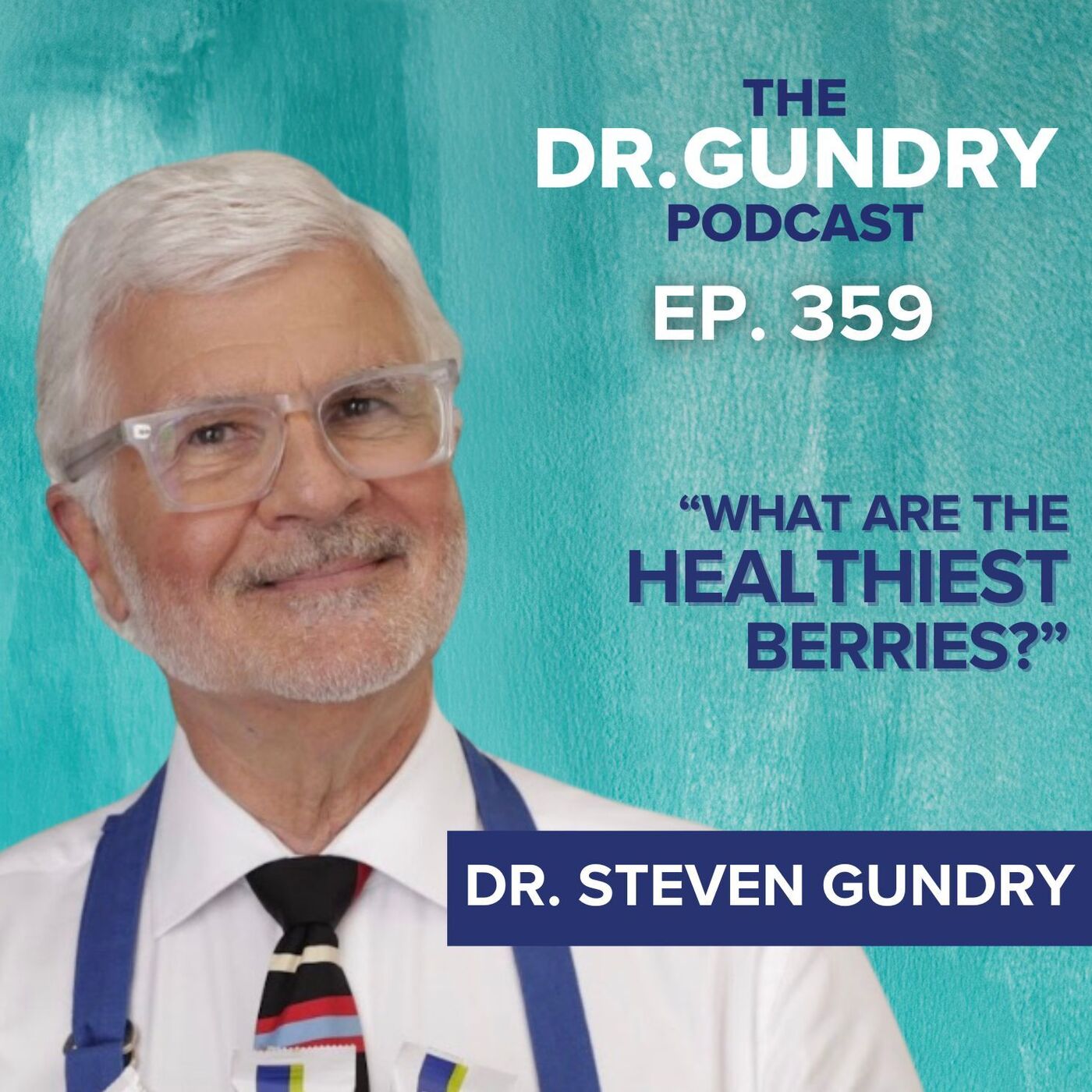
DR. GUNDRY PODCAST: GUT HEALTH, WEIGHT LOSS, AND NUTRITION
Healthiest Berries, Olive Oils and Teas (Polyphenol Day Edition) | EP 359
00:53:15
Loading summary
Transcript60 lines
- [00:02]
Dr. Steven Gundry
Welcome to the Dr. Gundry podcast where Dr. Steven Gundry shares his groundbreaking research from over 25 years of treating patients with diet and lifestyle changes alone. Dr. Gundry and other wellness experts offer inspiring stories, the latest scientific advancements, and practical tips to empower you to take control of your health and live a long, happy life.
- [00:26]
Let's talk about polyphenols.
- [00:28]
These powerful plant compounds are some of the most important and overlooked nutrients. Nutrients for your overall health and in honor of National Polyphenol Day, July 11, a day my team at Gundry MD created in honor of my birthday, we're diving deep into how they can transform your energy, your gut, and even your skin. In this week's episode of the Dr. Gundry podcast, I'll reveal the top polyphenol packed foods you should be eating daily and why they may even be more important than your daily multivitamin. We're talking berries, olives, teas, and yes, even chocolate. And to keep things fun, I put my taste buds to the test with a blind taste challenge.
- [01:08]
Can I tell the difference between low.
- [01:10]
And high polyphenol options? It's a delicious, info packed episode you won't want to miss, so stay tuned. If you want my best recipes, early access to new health discoveries, plus exclusive content and giveaways, you need to sign up for my weekly newsletter. It's packed with everything to help you live better. Just head to this episode description. It's free and easy.
- [01:40]
All right, July 11th, my birthday is officially National Polyphenol Day. Now, if you've watched me enough, you know what a polyphenol is. But a lot of people still don't quite get what a polyphenol is. First of all, the way to remember polyphenol that I teach my patients is polywanto phenol. Like polywant a cracker.
- [02:07]
That way you'll remember it.
- [02:08]
So polyphenols are these amazing plant compounds that we've known about for more than 20 years and we once thought they were primarily antioxidants, but in fact it turns out that they are some of your gut buddies favorite prebiotic foods and your gut buddies eat polyphenols and they turn them into really cool compounds. So that's what we're gonna talk about today. It turns out every studies show the more polyphenols you get in your diet, you're healthier in every way. A better gut microbiome, a better brain. I talk about that in the brand new book the Gut Brain Paradox. More diverse microbiome and if you haven't figured it out by now, the more diverse your microbiome, the more species in this tropical rainforest that lives in our gut, the healthier you are, the longer you live. And more importantly, the longer you live well. And that's obviously the name of the game. Okay, so let's talk about where do you find these polyphenols in high concentrations? Now, you can find them in fruit. And you're going, but wait a minute, Dr. Gundry, you tell us that fruit is really bad for you. No, I have nothing against fruit. Fruit can be a great friend. But I have a problem with the modern fruit industry. It doesn't take a lot of insight when you go to the grocery store to realize that even organic blueberries are the size of grapes. Apples have been bred to be the size of grapefruit, and they've all been bred for sugar content. And sugar is the last thing you want. The polyphenols in berries, particularly in general, are in the skin and the seeds. And so what you don't want is a lot of sugar. And unfortunately, that's what they've been bred for. The other thing that's very important to remember, and I can't stop emphasizing this, you and I carry a mutation that we inherited from great apes that allowed great apes to take the sugar in fruit, fructose, and convert it into easily into fat in the form of triglycerides and into a compound called uric acid, which is notorious for causing kidney stones, gout and high blood pressure. It allowed great apes, unlike any other monkey, to store fat during fruit season. And as climate change happened and forest receded, great apes were able to out compete other monkeys for storing fat from fruit. And they could make it through the hard times. It turns out we inherited that mutation, which means fruit and fructose enables us to store fat much more easily. Now, for years we thought this was the thrifty gene and that allowed humans to make it through hard times. We now know that that thrifty gene is this genetic mutation. Why is that important? I got news for you. Even in the jungle, fruit only ripens once a year. That is true even now. But you go, but wait a minute, I see fruit in the grocery store all year round. That's a modern new invention. There were no 747s bringing blueberries to Costco in March from Chile. Fifty years ago, it did not exist. Apples can be stored a year, and that's not possible long ago either. So we now have 365 days of endless summer and you're not supposed to be an endless summer because that mutation, which was very beneficial long ago, now works against you. So, please, fruit, particularly dark berries, are great for you in season, but they're not great for you out of season. Okay, so where are the three top ones? Well, number one, I'm a huge fan of blackberries. It's one of the smartest fruit choices that you can make, especially when they're in season. Now, there's just 7 grams of sugar per cup. Just to give you a quickie, there are 4 grams of sugar in a teaspoon of table sugar. So that's about two teaspoons of sugar in a cup of blackberries. Now, they're loaded with a type of polyphenol that are called anthocyanins. Those are those dark purple polyphenols that have been shown to support heart health, gut health, even blood sugar regulation. And if you've read the energy paradox, mitochondrial uncoupling, which is one of the best things you can do for your health and your mitochondrial health. Plus, they're quite high in fiber, and fiber also is another prebiotic for your good gut buddies. So it's a win win. A win win for the bugs, a win win for you. But be careful. A lot of these in the winter are coming from Chile and Argentina, so they're truly not in season. And I have blackberries in my garden, and I can assure you that I get, oh, a couple months of blackberries, and that's it. So just buyer beware, whenever you see these compounds, number two, and probably tied maybe ahead of blackberries or raspberries. They're tied with blackberries in terms of gut brain benefits, but they're even lower in sugar. They only have 5 grams per cup, so that's about a teaspoon of sugar in a whole cup of raspberries. Now, they're packed with fiber and polyphenols. There's a really cool polyphenol called ellagitannin. Now, ellagitannins help your gut bacteria produce a compound that I've written about. We've seen it here on the podcast called urolithin A, which is a really fascinating postbiotic that's been shown to support mitochondrial uncoupling mitophagy, which is the recycling of mitochondria that have been damaged, and mitogenesis, the building of new mitochondria. And believe it or not, the more you build, the happier they are, the more energy you have and the more muscle mass you have in human studies. And they Also fight aging, so why not? Not bad for a little berry. Now, pomegranates also are loaded with this same polyphenol, but they're technically not a berry, so they're still a fruit. Winner number three. When I'm in Europe, I frequently am served black and red currants. And currants are one of the incredible powerhouses of polyphenols, and they're a berry. You have to hunt for them in the United States. Luckily, we're getting more and more of them, but they're incredibly common to be served for breakfast, for a dessert, with cheese. And if you see them, try them. Black currants can positively change the gut microbiome, making it much more diverse. Heart health. In a randomized double blind, placebo controlled trial, that's the gold standard. Blackcurrant extract help reduce central blood pressure and arterial stiffness. And in my clinic, one of our favorite sayings is, you are only as young as your blood vessels are flexible. And so blackcurrant extract made human beings blood vessels more flexible, obviously a good thing. Skin health. In a study of 50 women ages 40 to 65 with wrinkles and dry skin, red and black currant extract led to significant improvements in wrinkle reduction and moisture after 12 weeks. That's three months. And remember, your gut and your skin are intimately connected. Your lining of your gut is basically your skin turned inside out. So what happens on the inside of your gut directly affects what happens on your skin. And that's why I included red and black currant extract in my bio skin youth complex for that very reason. All right, here's bonus berry number four. Aronia berries, AKA chokeberries. Now, these are antioxidant polyphenol powerhouses and worth seeking out. A type of chokeberry is one of the richest sources of polyphenols, Aronium melanocarpa. That actually means dark body. They contain four times more anthocyanins than blueberries. They're excellent for cardiovascular health. They may help support digestion, improve heart and blood vessel function, and they do maintain healthy cholesterol levels within the normal range. One study even showed that aronia berries can support brain function thanks to their incredibly high intensity anthocyanin content. That's why they made it into my vital reds formula, which, by the way, you probably see me sipping every time. Oh, I just had a shot of aronia berries.
- [12:31]
Yummy.
- [12:32]
Now, luckily, you've probably never seen them in a grocery store, but they are becoming more widely available. You can usually find them frozen, which is the easiest option and we're starting to see them fresh in some well stocked stores. So if you see them, it's worth looking for them and trying them out. That's my bonus berry polyphenol for the day. Now, final thoughts. If you want to supercharge your gut, your mitochondria, your skin and your brain, polyphenols are the key. And these four berries are some of the best ways to get them. Just remember, please, please, please buy in season and local is best. Go to your farmer's market, find out where they got them, if they're growing them. The other thing is consume them in moderation. A lot of people hear, oh, Dr. Gundry loves all these things. I'm going to go to a big box store and I'm going to buy £2 of them and I'm going to eat them in a single sitting. That's not what I'm telling you to do. And unfortunately I get to see it in my patients blood work. When things change for the worse in terms of their cholesterol and triglycerides and it turns out they literally thought they should be eating boxes of blackberries and raspberries every day. And that's exactly what you don't wanna do. Moderation is the key.
- [14:01]
We're celebrating National Polyphenol Day, a holiday dedicated to one of the most powerful group groups of plant compounds out there, polyphenols.
- [14:11]
Now if you follow me for a.
- [14:12]
While, you know how passionate I am about these mighty molecules. They can truly supercharge your health, especially when it comes to your gut and your heart. So what's one of the richest sources of polyphenols? You guessed it. My favorite, high quality olive oil. I've often said that the purpose of food is simply to get more olive oil into your body. And I stand by that. So today we're doing something a little different. A little fun, a little tasty.
- [14:44]
I hope.
- [14:46]
I've got five different olive oils in front of me and yes, one of them is my own Gundry MD Polyphenol rich olive oil.
- [14:55]
But here's the twist.
- [14:56]
I'm going to taste them all blindly. I don't know which is which. They're putting my taste buds and maybe my loyalty to the test. Now, I'm not a certified olive oil taster. This isn't some official judging event. We're just trying to have a good time and maybe learn something in the process. But I will be evaluating each oil using some classic criteria. First up, aroma. What am I smelling? Is it fruity, grassy, nutty, floral. A good olive oil hits your nose before it hits your tongue. Then the flavor. I'll be looking for bitterness, pungency, fruitiness and even sweetness. Great olive oil has a flavor journey. Next, the body or what we call mouthfeel, is it velvety, syrupy, thin, rich texture tells you a lot about the quality. And finally, balance and aftertaste. Does it all come together harmoniously? Does the flavor linger or disappear right away? And one last thing, does it make you cough? Believe it or not, the coughing sensation often comes from the amount of polyphenols. Okay, so before we dive in, if you've been enjoying these episodes, please take a moment to like share and subscribe to thedrgo Gundry podcast. And be sure to follow Gundry MD on Instagram. We've got some amazing giveaways going on right now for National Polyphenol Day and trust me, you don't want to miss them. Also, don't Forget to visit gundrymd.com and use the code PODCAST20 for 20% off full price items. It's a great time to stock up. Now a quick note for the olive oil purists out there. I know that professionals use special blue glasses when tasting. That's to disguise the color of the oil because the color doesn't actually tell you anything about the taste or quality. But today we're just using regular glasses. We're trying to keep it casual. Now each bottle has been covered so I can't see the label. And here in front of me are my five mystery bottles oils. I must tell you that I have been locked away in a soundproof sealed room while my staff has been putting this out. So quite frankly, I don't know what's in here. Okay, this is number one. I think we're just going to go right to left. This has actually got a really nice aroma and you can swirl it. Now I must tell you, I have done olive oil tasting in Italy and we're required to gargle it in Italy, but I think for the purpose of filming, you probably don't want to watch me gargle. Now this one is actually doesn't have a lot of effect initially, but wow, it really hits you in the back of your throat. It's got a really thick mouthfeel and the aftertaste lingers for really a long time and if I didn't know better, I would really want to cough. But I'm going to try not to. This one's actually got a lot going for it. Okay, Number two, totally different aroma. This one doesn't smell very olivey, whatever that means. This one is pretty bland. Not a lot going on.
- [19:00]
Definitely in the back of my mouth.
- [19:02]
There'S that kind of stingy feeling, but nowhere near the feeling in the back of my mouth. Certainly doesn't make me want to cough. This one is smoother, more buttery. I can tell you there's a huge difference between French and Italian olive oils. The French prefer their olive oils to taste buttery, probably because they like butter. And the Italians don't particularly approve of the buttery flavor. They want more of the kick. So this one tends to head towards the buttery side, but not as complex as number one. Number three. Oops. Clean my. Clean my palate. This one smells more olive than number two. It does have a nice hit in the back, but the flavor profile, there's not anything that kind of jumps out. It doesn't taste as buttery. It tastes kind of thin, if you know what I mean. Maybe you don't. One more time. Now, this one is not. Not up there. But it does have some nice kick at the end. Number four. Holy cow. Does this one smell like olives? Wow. Nice and smooth.
- [20:59]
Wow.
- [20:59]
There's the kick. Lots of stuff going on in the back of my throat. But wow, does this one smell like olives? And it's very impressive. Really smooth. But there's the kick. So this one's the most aromatic of these four so far. I mean, by far. Usually, aroma is a good indication that there's a lot coming on. Remember, most of our taste actually comes through our nose. So there's a lot of olive going on on this one. Now, it's interesting, the difference between number four and number five and even number three and number two, night and day. Difference between the aroma. Yeah, you know, there's probably some olive in there, but the aroma is just totally different. This one is kind of like drinking grease. There's not much flavor. It tastes greasy. There is a tiny bit of kick in the back. But my overall impression is this is a delicious glass of grease. And it's grease. What the heck? But that's really about all there is in this one. Gotta admit. So this is number five. I think this is my least favorite, this one. Like I say, if I wanted a nice, greasy salad dressing and I was new to olive oil, this would be the most benign of the olive oils. How's that?
- [22:47]
Do I get to see?
- [22:51]
All right, so this is California Olive Ranch. If you've read my books, I do recommend California Olive Ranch.
- [22:59]
But.
- [23:02]
This is the global blend for everyday use. That's their way of telling you that this oil was blended from multiple sources. In other words, they bought it from different countries, they bought tankerfuls through, and they blended it all together. So even though I like this company, their individual olives that are grown here in California are the one to get. But if you're just starting out, like I said, this is the least innocuous and maybe a good introduction and they don't pay me. Now, this one's a. This one's a tough one. This one, let me. You know, I want to make sure about this. So this one has a really fruity taste and it's got a nice kick in the back. This one, not as much aroma. Definitely not the fruity taste. Less kick in the back. No, no. There comes the kick, actually, just because this one has got that fruity taste, but this one has got a bigger kick. I'm gonna. This is my next least favorite. So let's see what I got. Bertoli extra virgin olive oil, rich taste. Now, the problem is it's coming from. Are you ready for this? Argentina, Chile, Greece, Italy, Morocco, Peru, Portugal, Spain and Tunisia. Oops. So this is a blended one, plus it's in plastic, so rich taste. Well, it does have a fruity taste, but number one, please never buy it in plastic. Okay, so this one's actually got a nice olive smell to it. Not a lot going on on the taste, but it's got a really good kick at the end. This one definitely smells like olives. This one tastes actually really, for lack of a better word, fresh.
- [25:40]
Almost like they just pulled the olives off the trees.
- [25:43]
And it's got a really nice kick. And again, you're looking for kicks. This one. Holy cow. I mean, you can. You can literally smell the olives from here. The rather one, you know, you got to put your nose in. You put your nose in this one and you go, whoa. What's in there? This is a good sign. It's got a lot of interesting taste. A smooth. And there's that kick in the back. All right, I'm gonna go for this one next.
- [26:19]
Ah.
- [26:20]
So this is Graza. Now, it says finishing oil. And the reason I think they're saying that, first of all, it's from Spain, single country. The reason they're saying finishing oil is because you're not really gonna wanna drink this. And it's a really bad one to start with because there's a little too much going on. But it's in plastic. So I'm glad it's kind of down there. The problem is these oils have acid in it. And believe it or not, extra virgin does not mean that the olives have never had sex. This means that the acidity is actually ranked in a very fine line. So they're supposed to be acid in olive oil. The acid will leach plastic out of the bottle. So that's the last thing you want to put olive oil in. So if I had known that, I wouldn't have never even picked it up off the shelf. All right, so it's down to these two. You kind of guessed where I'm going, because this guy has been knocking my socks off. This guy's a close contender, so let's see who it is. All right, I know these guys. They do not pay me anything. The reason I know them is I've met them at the Ferry Market farmers market in San Francisco. They're a family operation from Sacramento. And this is not my favorite of theirs, actually. My favorite is actually the early harvest. It's incredibly hard to find. But this is a really good American olive oil. And if you're looking to help America, this is actually a good one. And it ranks way up there. All right, but this one blew everybody away. This one is.
- [28:18]
I mean, like I say, I can.
- [28:21]
I can smell it from here. And it better be, of course, Gundry MD High polyphenol olive oil. Now, the smell gave it away, and obviously I know this olive oil, but the smell tells you everything because that's the first idea about the amount of polyphenols that you're going to get. But the great thing is it's smooth, it tastes good, and it does. And make you choke and cough. This one, if I didn't really take a big swag, I'd be coughing with that one. So we've got my favorite, and thank goodness it was that one. But this has been great fun. And in fact, I know a lot of you do beer tasting parties, wine tasting parties, cognac tasting parties. Why don't you set up an olive oil tasting party and amaze your friends? It's actually great fun to see that all olive oil is not the same. Now, I know what you're thinking. Of course you picked your own. But here's the truth. There's a reason we bottle and sell this one. I genuinely believe it's the most delicious, most polyphenol rich, supercharged olive oil we could find. It's bold, it's peppery, it's alive, and that's what Great Olive Oil should be. Let's not forget why we did this taste test today. High quality olive oil isn't just tasty, it's powerful. It supports heart health. It feeds your gut with polyphenols that nourish good bacteria. It protects your brain, supports healthy aging, and can even help manage weight. It's basically liquid gold for your body. So do yourself a favor. Make olive oil a part of your daily routine. Your taste buds and your health will thank you. And don't forget, head over to gundrymd.com and use code PODCAST20 for 20% off. There are tons of fun things happening for Polyphenol day. Giveaways, discounts and more from myself and everyone here at the Dr. Gundry podcast. Have an incredible Polyphenol day.
- [30:56]
I'm going to share with you my tea routine. All right, July 11th National Polyphenol Day is just around the corner, so I thought this year I'd share a little secret with you. What's in my teacup? And no, I'm not just sipping any old tea. I mix together 10, count them, 10 of the very best polyphenol rich teas out there and I sip them all day at the office. I'm excited to walk you through each one of them and explain why they made the cut for my daily brew. All right, let's get started. Organic Bitter Melon now, bitter melon has been used in traditional Chinese and Ayurvedic medicine for centuries to actually help manage blood sugar and diabetes.
- [31:46]
Why?
- [31:46]
It's actually full of polyphenols, particularly flavonoids. Now, these flavonoids and polyphenols mimic the effects of insulin and actually help regulate sugar levels. They do this, if you've read any of my most recent books, by acting as mitochondrial uncouplers. But what's really exciting about teas in general and their polyphenols is we now know that these polyphenols are some of the favorite foods for your gut buddies, for your microbiome. And it's thanks to the microbiome eating these polyphenols that they then pass on the benefits to you. In fact, a study in the Journal of Ethnopharmacology found improved glycemic control in patients with type 2 diabetes Drinking bitter melon tea and actually has a really interesting flavor that adds to my flavor profile. All right, what's next? Japanese White Mulberry. Now, white mulberry leaves have been used to control blood sugar levels in East Asian medicine and were historically Cultivated in China, as you probably know, for silk production. Now, the leaves are actually the preferred food for silkworms. But white mulberries tea has quercetin, chlorogenic acid and rutine. And with notable presence of dnj, which plays a crucial role in inhibiting sugar digestion and absorption, thereby supporting healthy blood sugar levels. Now, interestingly enough, research in diabetes care showed the extracts help lower blood sugar after carbohydrate intake. All right, gynostema. Now, it's also known as Jeogulan. In China, it's referred to as the herb of immortality. Gynostema is known for its adaptogenic properties which help increase the body's resistance to stress. Now, there's a type of saponin similar to genocides in ginseng. Gynostema is celebrated for its adaptogenic effects. In fact, a study in phytomedicine reported enhanced heart function and reduce chronic fatigue symptoms in people who use it. I happen to have a mulberry tree at my house and mulberry leaves, and particularly mulberries are really some of the finest polyphenol containing substances you can get. Now, why use it in tea? Turns out that hot water is really useful for extracting the active ingredients in all these teas. And that's where the whole idea of teas came from in the first place. Speaking of whole ideas, classic green tea is in here. Now, originating in China, green tea has been celebrated for its health benefits for thousands of years. Now, the polyphenols in green tea are predominantly known for its cacacans, especially EGCG, which constitute about 30 to 40% of its extractable components benefits. Well, a meta analysis in the Journal of the American Medical association linked consumption of green tea to reduced mortality due to all causes, including cardiovascular disease. In fact, as you probably have read in other studies, drinking green tea has been linked with reduction in a great variety of cancer risks and reduction in prostate cancer in men. Mint medley. Now, mint is part of the basil mint family. As many of you know, mint has been used for thousands of years for its digestive benefits and has obviously a refreshing flavor. And it contains menthol, a natural animal analgesic. Now, mint varieties are very high in rosmarinic acid. Now, you may have heard me talk about or write about rosmarinic acid before. It's actually a very potent antihistamine and it's also a very potent longevity compound. In fact, one of the theories of why the inhabitants of Acciaroli, this tiny village south of Naples, Italy lives so long is that they are constantly cooking and chewing rosemary, which is rich in rosmarinic acid. And there are numerous studies showing the benefits of mitochondrial uncoupling with rosmarinic acid. And that's why the mint medley is in my teacup. Chocolate Pu erh tea. Pu Erh tea, which I've written about extensively, is from the Yunnan province in China. Now, it undergoes fermentation that produces, among other things, statin like compounds. But it's rich in polyphenols that have actually been developed from the tea during the fermentation process. Now, these complex polyphenols increase with the age of the tea, thereby enhancing its flavor and its benefits. And you can buy multiple ages of pu erh tea. For instance, some have a chocolate flavor, hence the name Chocolate Pu erh tea. Now, the cool thing about the polyphenols being aged is we know that fermentation in general increases the bioavailability of polyphenols. So fermenting them before they get into you is like a double whammy of good polyphenols. Now, there is a study that long term consumption linked reduced LDL cholesterol and increased HDL cholesterol, which was published in Experimental Gerontology. And it actually has a great kind of chocolate flavor. How about Guy Yousa? Now, it's native to the Amazon rainforest. Gyousa is known for its stimulating effects and it contains caffeine, theobromine and L theanine. But it has significant amounts of chlorogenic acid, one of the most available phenolic acid compounds, similar to the compounds found in green coffee beans. Now, a study indicated that coffee rich in chlorogenic acid improved blood flow and endothelial function after a single intake. Additionally, chlorogenic acid has been shown to significantly reduce blood pressure in clinical trials. Now, clinical trials have also shown that supplementing with cga, chlorogenic acid and other plant extracts reduce body weight and blood fat levels. CGA has also been shown to reduce BMAI and waist circumference in individuals with prediabetes. How does it do that? Chlorogenic acid is a magnificent mitochondrial uncoupler. And if you've read my books, you know that mitochondrial uncoupling basically produces a caloric bypass in you, which quite frankly, is a good thing. White willow bark. Now, believe it or not, it was known as nature's aspirin. White willow bark has been used since Hippocrates time for pain relief and inflammation. And it was actually shown to the pilgrims by native American Indians for relief of pain. Now it contains flavonoids and polyphenols like salicin which is metabolized into salicylic acid, the active ingredient in aspirin in the body. Now this contributes to its anti inflammatory and pain relieving effects. But what's really interesting about salicylic acid is that most people don't know that fish oil, which is thought to be anti inflammatory, actually has no anti inflammatory properties unless it's converted by salicylic acid into a compound called resolvin. And it's actually resolvin that is the anti inflammatory effect noted in fish oil. And you actually have to have a little bit of salicylic acid to do the job. So white willow bark tea gives me that little bit of of salicylic acid and this has been described in the American Journal of Medicine. All right, how about chaka tea Flavor Blue Magic, A blend of mamaki, butterfly pea and lemon butterfly pea flower tea is rich in anthocyanins which are responsible for the striking blue color in this tea. And it has antioxidant properties. Where have you heard the word anthocyanin before? Ah, dark blue colored berries, like blueberries, like blackberries are rich in anthocyanins. Now it's rich in cachactins and chlorogenic acids as well. And once again, I'm just doubling up on all those polyphenols. Plus it's a lot better for me to get my anthocyanins this way than eating a handful of blueberries which, as you probably heard me say, have been bred for sugar content. Also, sad to say, blueberries have now joined the dirty dozen list for the most pesticide, herbicide laden fruits that you can buy. Darn it. Pau d'. Arco. Now, Pau d' Arco was used by indigenous tribes in South America. And the bark is rich in polyphenols. It contains quercetin and other flavonoids, but is particularly rich in neptoquinolones which have been studied for their potential antineoplastic properties. In fact, I use it in treating my patients who have neoplasms that come to me. I'm after the polyphenols. I'm after the fact that it will inhibit neoplastic changes. And why not? Now let me just add a few buying guides. First of all, always opt for organic teas. Secondly, avoid teas that come in plastic bags. You'll notice all of these are paper plastic. We now know with the presence of heat you will put microplastics in your tea and that's not a good thing. Now as for these, generally one to two cups a day is recommended for most people. Again, I drink this throughout the day. One of the big benefits of drinking tea is it generally lowers your iron levels. Now, unless you're a person who has very heavy periods, keeping your iron levels low, as I've talked about before, is a really good idea. Unless you're a person with low iron levels, then you really don't want tea as a major part of your diet. Now, as I noted, some teas do contain caffeine, so be sure to check the label and always avoid caffeine about eight hours before bed. But in general, teas have far less caffeine than coffee. Finally, you'll also need to consult with your healthcare provider before adding any of these into your regimen. This is especially true if you're pregnant, nursing or are currently taking medication.
- [44:10]
Dr. Gundry's Daughter
These are all Dr. Kendry's daughter teas and he puts them in this big mug every morning. So let's start with his classic green tea. This goes in his Mint Medley. This is his Organic Jasmine White Mulberry tea. Next we have his Bitter Melon Chocolate Purr tea. This is his Gai Gostima tea. White Willow Bark goes in his Pod Arco and this is his Gaius Tea. He drinks these in his big mug all day long.
- [44:55]
Dr. Steven Gundry
Question of the Week On a reel I shared when I was on the Tamarind hall segment, Raja Blanco on Instagram asked, how do you measure a leaky gut?
- [45:04]
Well, luckily there are now well documented scientific studies that show that you can.
- [45:10]
Measure leaky gut either with a stool test or I prefer a blood test looking at anti zonulin igg and anti actin igg for one. And these are readily available? Yeah, they do cost a bit of money.
- [45:28]
They do at the moment have to.
- [45:30]
Be ordered by a physician, but well worth looking into. And quite Frankly, I created guntreehealth.com to.
- [45:38]
Allow you to access this information with.
- [45:40]
A finger stick in the comfort of your own home. Thanks for the question. Review of the Week on the Secret of Cashews Video Z Birakanlar writes a review with a question. I met you through the Plant Paradox book. Your claims were very interesting. I did some research on you. I was surprised that you didn't back down on lectins despite being criticized a lot. I really like these ideas, to be honest, but I want to give you some advice. Please make your channel universal no matter which country they watch from they should be able to watch listen to you in the language of that country. Well, thank you.
- [46:18]
First of all.
- [46:19]
Yeah, I don't back down because, quite frankly, the science backs me, number one.
- [46:25]
But more, more importantly, I've now been.
- [46:27]
Tracking my patients six days a week.
- [46:31]
For the past 25 years.
- [46:33]
And I see what happens real time with blood work, with leaky gut markers.
- [46:41]
When we remove these troublesome foods from people's diets.
- [46:45]
And lo and behold, 94% of the time, within a year, their leaky gut is sealed. So I don't conjecture about this. I actually study this, and that's why I don't back down. Thanks for writing in. And we'll work on getting this in every language in every country because quite frankly, I think the world needs this.
- [47:08]
Pluto TV Advertiser
I love reality TV on Pluto tv Same. And I love that it's free. It gives me the freedom to watch Bravo's Real Housewives Vault channel. I'm totally free to watch Bad Girls Club. I'm free for Jersey Shore love and hip hop. I'm free all day. Survivor. I'm free all night. With hundreds of free reality shows, you are totally free to watch what you love on Pluto tv. Pluto TV Stream now. Hey, never.
- [47:38]
Sarah James McLachlan
From the waters of Lake Erie, it.
- [47:41]
Dr. Steven Gundry
Was raising flags, and he said there's no way that that fish should weigh 7.9 pounds. It's just not big enough.
- [47:48]
Sarah James McLachlan
To a nondescript office building in Richmond, Virginia, home to a $700 million fund for children with special needs.
- [47:56]
Dr. Steven Gundry
If there was a cliche list of how to blow money that you just.
- [48:00]
Pluto TV Advertiser
Stole very quickly, this guy did all of them.
- [48:03]
Sarah James McLachlan
To the ski slopes of Salt Lake City, where a former Olympic snowboarder landed on the FBI's movie Most Wanted list.
- [48:10]
Dr. Steven Gundry
Ryan James Wedding is one of those interesting Norcos who have had two very successful careers, one legal and one illegal.
- [48:18]
Sarah James McLachlan
We're pulling back the curtain on a fresh lineup of opportunists who stopped at nothing to get ahead. These are the stories of people who saw a loophole, a moment of weakness, a chance to get ahead, and took it. I'm host Sarah James McLachlachlan. Join me for a new season of the opportunist on May 19th. Follow now wherever you get your podcasts.
- [48:53]
Dr. Steven Gundry
I hope you enjoyed this episode of the Dr. Gundry podcast. If you did, please share this with family and friends. You never know how one of these health tips is can completely transform someone's life when you take the time to share it with them. There's also the Dr. Gundry Podcast YouTube channel where we have tens of thousands of free health insights that can help you and your loved ones live a long, vital life. Let's do this together.