← DR. GUNDRY PODCAST: GUT HEALTH, WEIGHT LOSS, AND NUTRITION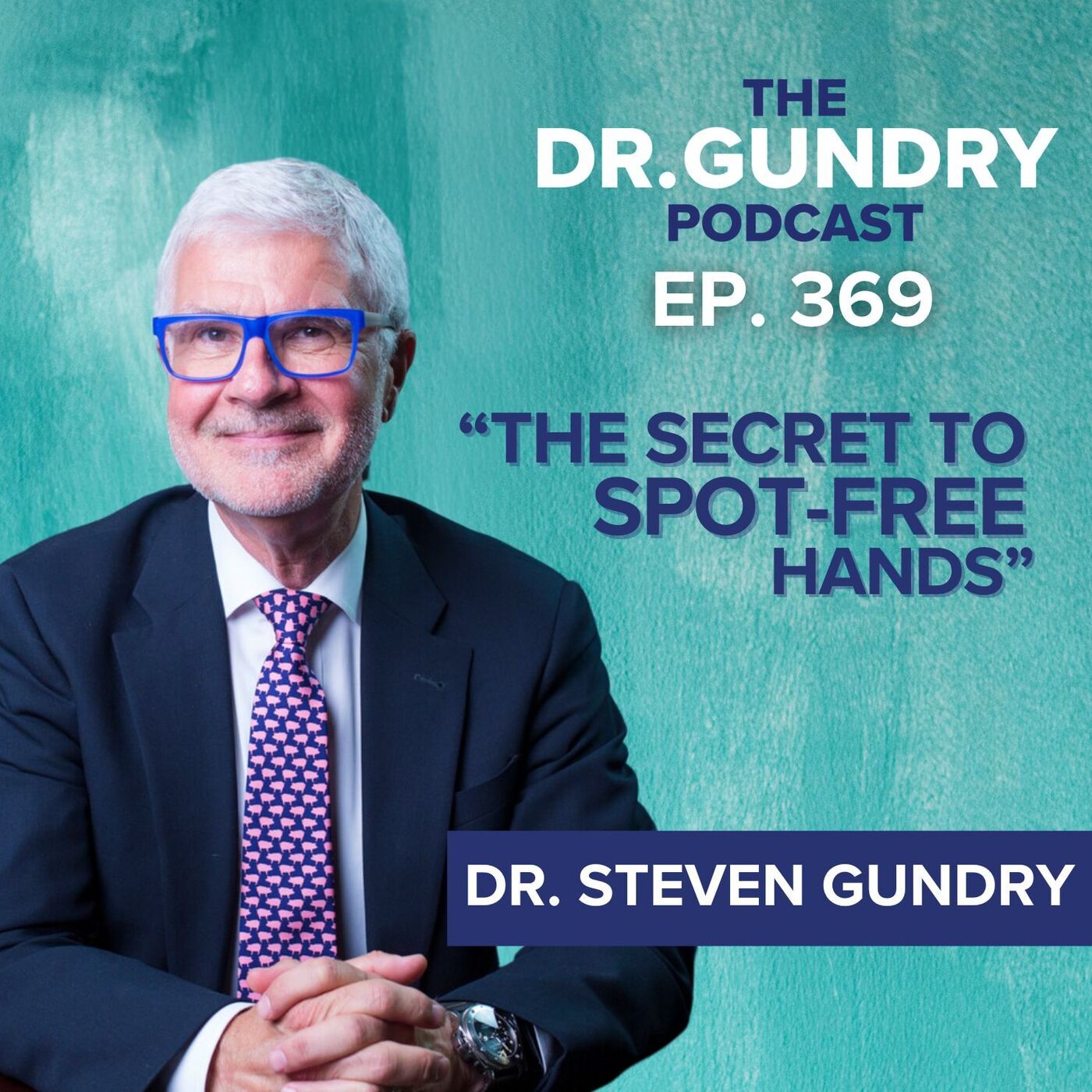
DR. GUNDRY PODCAST: GUT HEALTH, WEIGHT LOSS, AND NUTRITION
The Secret to Spot-Free Hands | EP 369
00:43:38
Loading summary
Transcript30 lines
- [00:00]
Dr. Stephen Gundry
What does a confident smile say to you? And more importantly, what does it say about you?
- [00:06]
Podcast Host/Announcer
At Smile Generation, they believe a confident smile isn't just about white teeth, it's.
- [00:12]
Dr. Stephen Gundry
About whole body wellness. As I've discussed on this very podcast, oral health is connected to everything from your heart and immune system to even your brain. When you care for your mouth, you're investing in your entire future.
- [00:26]
Podcast Host/Announcer
Smile Generation's trusted dentists provide all encompassing, compassionate care. Merging advanced, proven technology with a patient first approach. They educate and empower individuals to protect their health through oral care tailored to their lifestyle, wellness goals and life stage. Visit smilegeneration.comgundry to learn more when you understand that your smile is more than just teeth and gums, that it's actually a gateway to your health, your confidence and your future. That's where empowerment begins.
- [01:02]
Dr. Stephen Gundry
Smile Generation is offering a $59 new patient special which includes a comprehensive dental exam, cleaning and X rays regular value at least $290. This offer is for new patients only and is not valid for Tricare or Medicare Advantage and may be covered by.
- [01:20]
Podcast Narrator/Producer
Insurance subject to your plan's restrictions.
- [01:22]
Dr. Stephen Gundry
To take advantage of this offer, book your appointment by December 31, 2025. For complete terms and conditions, visit SmileGeneration.com.
- [01:30]
Podcast Narrator/Producer
GUNDRY welcome to the Dr. Gundry Podcast where Dr. Stephen Gundry shares his groundbreaking research from over 25 years of treating patients with diet and lifestyle changes alone. Dr. Gundry and other wellness experts offer inspiring stories, the latest scientific advancements and practical tips to empower you to take control of your health and live a long, happy life.
- [01:56]
Dr. Stephen Gundry
Ever wonder why some people seem to glow from the inside out while others struggle with stubborn dark spots, dull skin or early signs of aging? The truth is, great skin isn't just about what you put on your face, it's about what you put in your body. On today's episode, I'm diving into some powerful new strategies for radiant, youthful looking skin will tackle one of the most common concerns dark spots. And I'll share surprising ways to fade them naturally. Then I'll reveal how you can actually eat your skin care. Yes, the right foods can work better than the most expensive creams in your cabinet. And finally, I'll revisit some of my favorite foods for healthy, glowing skin that you can start enjoying right now.
- [02:45]
Tom Schwartz
Guys, what is up? My name is Tom Schwartz. Some of you might know me from Vanderpump rules. We had 11 wonderful, beautiful, strange seasons together. You've seen me at some of my worst and now I want to show you Some of my best. Welcome to my new show, Detox Retox on podcast one. So what are we doing here? Well, we're striving for balance in an ever extreme world. Each week we celebrate the. The dance between indulgence and moderation. And I want to level up together and I, I don't want to feel bad about feeling good. It's all about harmony, okay? Through conversations and travels, friends, your favorite reality stars, Internet personalities, experts, amateurs, metaphysics. The best cal, highly experiential. It's gonna be a nice blend of practical, fantastical. It's not woo woo. If it works. So we're gonna open up our minds with fascinating humans from all walks of life. You're a little reminder that it's never too late to start fresh and find harmony. New episodes of Detox Retox with me, Tom Schwartz. Drop every Tuesday. Come vibe with us and remember to rate, review and follow wherever you get your podcasts.
- [03:46]
Podcast Host/Announcer
If you've got dark spots showing up on your hands, face, or arms, I want you to listen carefully, because here's something most people don't know. Dark spots are not just skin deep. They're an indication that you're forming the same kind of damage in your brain, your heart, and your lungs. If you're seeing them on the outside, chances are they're forming all over the inside, too. And despite what people call them age spots, they are not just a normal part of getting older. They're a signal. Your body is actually trying to tell you something. So today, I'm going to break down what those spots really mean. How they're connected to aging on the inside and on the outside, and what you can do to help get rid of them naturally. Plus, I'll share my own routine and why, at 75, I still get compliments on my hands and skin. Okay, so let's break it down. Most people think dark spots are caused by sun exposure. And yes, sunlight does play a role. But it's not the whole story. And it's definitely not the main reason they show up. Because here's what's really happening. Dark spots are a visible sign of something much bigger, a process called fibrosis. Fibrosis is when tissues throughout your body, like your heart, your lungs, even your skin, start to stiffen and scar over time. This stiffness makes it harder for your organs to function the way they're supposed to. For example, in the heart, fibrosis can prevent the muscle from relaxing properly between beats. That's called diastolic dysfunction. And it's incredibly Common as we get older in the lungs, fibrosis makes it harder to take a deep breath. That's known as pulmonary fibrosis. And it can sneak up on you without any symptoms. Now here's the connection. The same process that causes stiffness in your heart and lungs also happens in your skin. So when you see dark spots forming, it's not just surface level discoloration. It's a visible warning sign of tissue damage that could be affecting your entire body long before you feel it. So the real culprit is a process called glycation. This happens when sugar molecules in your body bind to proteins, especially when heat is involved, forming sticky compounds called AGEs or advanced glycation end products. These ages break down collagen, stiffen tissues, and speed up visible aging, including wrinkles and dark spots. And these same ages also show up in stiffened heart tissue and damaged lungs. So again, this isn't just about your skin. Glycation affects your whole body. Now, what makes glycation worse? Now, most people know that sugar is part of the problem, but what they don't realize is protein is the other half of the glycogen equation. In fact, glycation requires both sugar and protein to happen. So even healthy seeming meals like grilled chicken with a sweet marinade or a protein bar with sugar alcohols can create a perfect storm for age formation. Especially if you cook at high temperatures. Grilling, toasting, roasting, you dramatically increase these compounds. So where are some of the worst offenders? Well, chard or burned meat that crust on your steak are advanced glycation end products. And when you eat those advanced glycation end products, you actually absorb them. Another bad offender is toast and grilled sandwiches. Just remember that sweet marinades and barbecue sausage, which are going to get grilled on the grill, you're eating advanced glycation end products on that food. Processed high protein snacks or extremely high amounts of protein powder also create advanced glycation end products. Now here's the problem. Back in the good old days, you didn't drink protein powder or eat a protein bar. You ate a animal or plant that contained protein. Now, it actually takes a huge amount of energy and digestion to break down that protein. You lose about 30% of all the calories in a protein based meal by the process of digestion. And that's one reason protein can help you lose weight. But when you suddenly eat protein that's been broken down into its individual amino acids, that protein slams into your bloodstream. Unlike trickling down your mitochondria, which can Use protein for fuel. Get overwhelmed. Now it's rush hour in your mitochondria. When mitochondria can't turn all that protein into energy ATP, the mitochondria is shifted over to store as fat. Now here's something interesting I've seen over and over in my practice. Patients who eat more plant based protein things like lentils, nuts and hemp tend to have much lower levels of IGF1 or insulin like growth factor. Why is that good? It turns out that super agers, super old people, late 90s, early 1/ hundreds, have very low levels of insulin like growth factor 1, IGF1. Sadly, high IGF1 levels are linked to accelerated aging, tissue overgrowth and more dark spots. That's because plant proteins are different in their amino acid structure. What's interesting is they don't spike IGF1 the way animal proteins do. And they're less likely to promote glycation, especially when cooked gently like steaming veggies. Including animal proteins. For instance, the Japanese tend to steam their fish, steam their chicken, steam their vegetables. Now I'm not saying everyone needs to cut out animal protein completely, but if you're dealing with dark spots or worried about what's going on inside your body, dialing back the meat and adding more plant based sources can really help. So if you want to reduce dark spots and slow the aging process inside and out, here's what I recommend. Number one, add more plant based protein to your diet. Number two, cut back on sugar and excess protein. The average American consumes two times the recommended amount of protein just by eating food. Two times the recommended amount, we are over proteinized. Third, avoid high heat cooking and try steaming, roasting at low temps or indirect grilling. Next, eat polyphenol rich foods every day. Whether they're berries in season, pomegranates in season, extra virgin olive oil, even extra dark chocolate. Use a clean mineral based sunscreen. Take time to release vitamin C twice a day. Focus on your gut health, because skin health starts in the gut. Eat foods that feed your good gut buddies, like fermented foods, prebiotic foods like chicory, and avoiding inflammatory foods like whole grains and nightshades. Okay, so let's go over some of the questions I get all the time. Dr. Gundry. How do you keep your hands looking so young? Now the hands are one of the first place dark spots form. Now my hands weren't always this way. It took about one year to get rid of the dark spots after putting myself on my eating protocol. Now this list is free@gundry md and doctorgundry.com Primarily, I stopped eating a low fat diet. I don't go a day without olive oil, avocado or pistachio nuts. I focused on doing all the things I just recommended, eating polyphenol rich foods, cutting sugar, avoiding overcooked proteins and taking care of my gut buddies. Everything starts in the gut. But here's the thing. Even with all that, I know I'm still exposed to sun and oxidative stress like everyone else.
- [12:39]
Dr. Stephen Gundry
Most people think of their skeleton as just bones holding them up. But the truth is your skeletal system is one of the most powerful drivers of your health. It affects your metabolism, your hormones, even your immune system. And that's why I get so excited about the Juvent but Micro Impact Platform. Unlike those high frequency vibration plates that can actually damage soft tissue, Juvent delivers gentle, safe micro impacts. What the company likes to call Vitakins or a mechanical nutrient your bones and joints absolutely need. I spend roughly 10 to 20 minutes a day and already notice improved mobility and circulation. And several of my patients have reported positive results using Juvent regularly as well. And here's the best part. You can do it while reading, checking email on your phone, or sipping your coffee. So just visit juvent.comgundry and use code GUNDRY for $300 off looking for delicious gut healthy recipes, early access to new research, and special giveaways.
- [13:44]
Podcast Host/Announcer
My weekly newsletter delivers all that straight to your inbox.
- [13:48]
Dr. Stephen Gundry
Head to this episode's description right now.
- [13:51]
Podcast Host/Announcer
And sign up or type in Dr. Gundry.com and fill in your email. It's your best source for staying healthy and informed. Let me tell you a story about one of my patients. Two of my patients are in their late 70s from Oregon, and as many people know, many people from Washington State and Oregon bring their RVs down to Palm Springs for the winter. Good idea. This patient whose hands were covered in dark spots, we saw them the first year and they went off back to Oregon and they were driving back to Palm Springs in the winter of the following year in the rv and his wife suddenly turned to him and she said, george, look at your hands. And George has hands on the steering wheel like this. And George went like this to look at his hands and nearly drove off the road. Now why was she exclaiming for him to look at his hands? Because his dark spots had disappeared. And when I saw them back in my office, number one, his dark spots on his hands had all gone away and they shared the nearly fatal way that he discovered how good he looked. He'd been following Protocol. It worked. So do I use one product on my skin? Yes, it's called Dark Spot Diminisher. And yes, it's mine. But unlike most spot treatments that just lighten the skin, this one is packed with polyphenol rich plant extracts. And I used to have a number of dark spots on my hand. I'm down to one and you actually can barely see it. I have none on this end. Why? Because I eat to remove dark spots. I eat to prevent dark spots. And any pesky ones I treat with Dark Spot Diminisher. Now, other questions I get all the time. Is melasma the same as these dark spots? Is it fixed the same way? No, melasma is not the same, but it's actually fixed in the exact same way. And I've had a number of patients, including a few famous ones, that were able to relieve their melasma by eating a proper diet. Melasma is once again a sign that you have insulin resistance, you have metabolic inflexibility, and this is just another warning on your skin surface that something is really wrong inside of you. Another question. Will red light therapy help? Well, I'm actually quite fond of some of the red light, the therapy masks that are available. What about white spots instead of dark ones? Now, white spots are actually an absence of pigment. And there can be two reasons for that absence of pigment. One is the more concerning one, which is vitiligo. Now, Michael Jackson suffered from vitiligo. Vitiligo is actually an autoimmune disease where your melanin forming cells in your skin are attacked by your immune system. And the good news is I see a lot of patients with vitiligo, and we're able to reverse that vitiligo with my program. The other cause of white spots is actually a simple fungal infection called tinea versicolor. You can treat it with topical antifungals that will kill the fungus. But the bad news is the white spots will remain over the winter until you get out in the sun the next year, and then they'll go away. Question. What are healthier ways we can cook on the grill? Well, I never cook directly over the coals on a grill or over the flames. I always cook indirectly so that I'm not really making chars on anything I cook. And that's an easy way to start. Okay, so here's the bottom line. Dark spots aren't just a sign of age, they're a sign of damage. And what's happening on your skin could very well be happening in your heart, your lungs, even your brain. So if you're seeing those spots show up, don't just cover them up. Use them as a signal to take action. Tried every cream, serum and skin care hack out there and still struggling with breakouts, dryness or premature aging. There's a missing link. Most people, even dermatologists, completely overlook Your diet. Your skin is actually a reflection of what's going on deep inside your body, specifically inside your gut. I say it all the time. Your gut is your skin turned inside out. So if your gut isn't happy, your skin won't be either. And unfortunately, most people are unknowingly doing damage from the inside out by eating foods that irritate and inflame the gut lining. Take grains for example. If you wouldn't scrub your face with sandpaper, why would you do the equivalent to your gut lining? Because that's exactly what eating grains and other lectin heavy foods does. They act like little tiny razor blades, scraping and weakening your gut wall. And the result often shows up right where you don't want it on your skin. So let's walk through a few gut loving skin supporting foods I recommend adding to your plate today. First off, fermented foods. If you want glowing skin, start with your gut buddies. Fermented foods are one of the best ways to nourish them. This includes foods rich in probiotics, which are living bacteria and postbiotics, the beneficial compounds they produce, and yes, even dead probiotics, which research now shows can be incredibly useful for skin health. In my new book, Gut Check, I explain how these dead bugs, once thought to be useless, help build a thicker skin and gut barrier and even support healthy hair growth. So what are some of my favorites? So try plain goat or sheep kefirs, plain goat and sheep yogurt, kimchi, miso, raw sauerkraut or even canned sauerkraut, and even vinegar, which contains beneficial short chain fatty acids that support your gut lining. Now, all of these foods help crowd out the bad guys and feed the good bacteria, leading to calmer, clearer skin over time. Now the second thing you need to add is soluble fiber. You have to feed your skin from the inside out. Now eating foods with probiotics is one thing, but you've got to feed those probiotics what they want to eat. And that's where prebiotics come in. And hear me out, not all fiber is created equal. Soluble fiber feeds good gut bacteria and helps repair the gut wall, which translates directly to clearer, healthier skin. Unfortunately, insoluble Fiber from things like grains can actually damage the gut lining. And guess where that damage shows up? Yep. Right on your skin. Okay, so where are some of my favorite soluble fiber sources? Flaxseeds. Now, flaxseeds have kind of a double bonus. They're packed with alpha linolenic acid, which is a short chain omega 3 fat, which really helps prevent destruction of your gut wall. It's loaded with lignans that nourish the microbiome. Artichokes are loaded with a prebiotic fiber called inulin, and they're loaded with polyphenols that actually improve your liver function. How to eat them. You can saute them with olive oil and garlic. There's absolutely no preparation required. You can get them frozen, you can get them already in jars. You can add them to your salads, you can add them to other vegetables. They should be in your pantry and in your freezer and your refrigerator all the time. Now, leeks. As you know, I spend a lot of time in Europe studying ancient old people. And it's amazing how popular leeks are in the diet of Europeans. Now, they're part of the onion family and the garlic family. They're definitely much milder than onions. And they're a staple in all these cuisines. You can braise them, you can make soups out of them. Dare really should be a part of your diet. Now here's one of the surprises, everybody. Okra. Now, okra has got some huge benefits. It actually binds to lectins in your gut and helps to eliminate them. I even use okra powder in my lectin shield formula to bind lectins. I've got a great recipe for okra potato chips right here on my YouTube channel. And quite honestly, if you've never done my okra potato chips, try them out. They will not make it from the oven to the table. You and your entire family will finish them before a second is over. They're that good. And for those of you who say okra is slimy, there is nothing slimy in my okra potato chips. Avocados. Now, they're one of the most powerful skin supporting foods that you can eat. They're packed with monounsaturated fats, which can help keep your skin cells plump and hydrated from the inside out. They're also rich in fiber, which keeps your gut microbiome balanced. And remember, a happy gut equals healthy looking skin. They're also a top source of two carotenoids, lutein and zeaxanthin, which have been shown to help protect the skin from UV damage and oxidative stress, two of the biggest drivers of premature aging. In fact, one randomized controlled trial in the Journal of Cosmetic Dermatology found that women who ate one avocado per day for eight weeks experienced measurable improvements in skin firmness and elasticity compared to those who who didn't. So I recommend eating one avocado a day. Next up, olive oil. Now, olive oil is one of the best kept secrets in the skin care world, and it works from the inside out. It's loaded with polyphenols, plant compounds that nourish your gut bacteria and protect your cells, including your skin cells, from oxidative damage. But not just any old aloe oil do Most grocery store olive oils are either cut with cheap oils or oxidized from poor storage and long shipping. In fact, some studies show they contain barely any beneficial polyphenols at all. Instead, I recommend a cold pressed early harvest high polyphenol olive oil. And yes, you'll taste the difference. A slight peppery bite in the back of your throat is actually a sign of high polyphenol content. That's a good thing. Use it daily. Drizzle it over cooked veggies, blend it into dressings, or even sip a small shot in the morning like I do. It's one of the simplest, most effective ways to support your gut and your skin every single day. Start eating foods rich in silica. That's sand. Vegetables like chard, arugula, bok choy and radicchio are all rich in silica. It's a trace mineral that plays a crucial role in collagen formation, skin hydration and elasticity. Now silica helps your body convert proline, an amino acid, into hydroxyproline, one of the building blocks of collagen. And without it, your skin can lose firmness and structure over time. A study showed that women who supplemented with bioavailable silica for 20 weeks experience significant improvements in skin smoothness, elasticity and brittleness of hair and nails. But you don't need a supplement to get these benefits. Not if you're eating the right plants. Dark leafy greens plus silica rich veggies like artichokes deliver exactly what your body needs to build beautiful skin from the inside out. Timed release Vitamin C is the next next step. Ever wonder why smokers tend to have more wrinkles and visible signs of aging? It's not just the smoke. It's because smoking rapidly depletes vitamin C, a nutrient your body needs to repair collagen without enough of it, collagen breaks down faster and your skin pays the price. That's why vitamin C is non negotiable for skin health. It acts like the knitting needle for collagen, helping stitch together strands to form strong, resilient skin and blood vessels. But since your body burns through it quickly and you do not manufacture vitamin C on your own, we're one of the few animals that don't. I recommend a time release formula of vitamin C or simply chewing a vitamin C tablet several times a day. Now here's some bonus. Eat your sunscreen. You've heard me say it. Eat your sunscreen. Why? Because most commercial sunscreens are full of toxic ingredients your body absorbs and they're endocrine disruptors and they're often less effective than you think. Instead, consider Fern Block, a patented oral supplement made from the tropical fern Polypodium leucotomas. Research shows that fern block helps protect the skin from oxidative stress and UV induced aging when taken orally. It's one of my favorite tools for inside out sun protection. And yes, it works okay. That's how to take care of your skin from the inside out.
- [28:17]
Dr. Stephen Gundry
You probably heard me talk about Cozy Earth sheets before because truly they're the most comfortable sheets I've ever slept on. But here's what most people don't realize. Cozy Earth didn't stop at bedding. They've taken that same next level comfort and built it into clothing you can.
- [28:32]
Podcast Host/Announcer
Wear all day long.
- [28:34]
Dr. Stephen Gundry
Take their bamboo joggers. These are seriously the softest joggers. They're lightweight, breathable, and they somehow make lounging feel elevated. Honestly, I catch myself reaching for them more than anything else in my closet when I'm at home. And then there are the Everywhere pant that's become a real staple for me. It's versatile, it looks polished, but it still feel like I'm wearing loungewear. And I'm not the only one. Everyone I know who's tried Cozy Earth is instantly hooked. They really nailed comfort for real life. So go to cozyearth.com and use my code GUNDRY for up to 40% off pants, joggers, shirts, everything. And if you get a post purchase survey, let them know you heard about Cozy Earth. Right here.
- [29:22]
Podcast Host/Announcer
Number one on my favorite foods for healthy skin are foods that contain probiotics. Now, good health begins in the gut. Believe it or not, your gut, the lining of your gut is your skin turned inside out. And what happens in your gut is not like Las Vegas. What happens in your Gut doesn't stay in your gut and it's reflected on your skin. So your gut health has a direct impact on your skin. So probiotics are the good gut buddies. So you really want good gut buddies to outweigh the bad guys. Now, there are lots of foods that provide either probiotics, which are living bacteria, or postbiotics. And postbiotics are the fermentation products that bacteria make. And interestingly enough, as you'll learn in Gut Check, my new book, Dead Bacteria, dead probiotics actually are incredibly useful for fostering good skin health. So fermented foods like vinegar, kimchi, goat and sheep kefir that are plain goat and sheep yogurts, coconut yogurts, miso sauerkrauts, and various probiotic supplements are a great way to improve your skin health. There are some specific probiotic bacteria that have been shown to enhance skin thickness, skin health, hair growth, hair health. And that's exciting new information that a number of us have been talking about recently. Number two, prebiotics. Now, it goes without saying that prebiotics are important for skin health in that they support a healthy gut microbiome. Remember, think about probiotics as basically grass seed. The problem with grass seed is I tell my patients in the desert that if I give them grass seed and tell them to go plant it, unless they fertilize and water the grass seed, it's never going to grow. And so many of us make the mistake that all we have to do is swallow probiotics, and everything else takes care of itself. And unfortunately, that's not true. You've got to feed the friendly bacteria what they want to eat. And we're beginning to know exactly what these guys like to eat. And these are called prebiotics. Prebiotics primarily with soluble fiber. Now, people say, oh, fiber is really good for you, and you need lots of fiber. But don't make a mistake. There are soluble fibers and there are insoluble fibers. The problem with insoluble fibers, like in grains, is these are literally like swallowing razor blades, which will damage the wall of your gut, and that damage will be reflected in your skin. So soluble fiber, on the other hand, is what your gut buddies want to eat. And soluble fiber will not damage the wall of your gut. Quite the contrary, it will help repair the wall of your gut. And as the wall of your gut gets happier and happier, that'll be reflected on your skin. So flaxseeds. Flax seeds are a great source of soluble fiber. They're great sources of a short chain omega 3 fat, which is called alpha alpha linolenic acid ala and it's also a great source of protein. There's a recent study showing that the lignans in flaxseed or high lignan flaxseed oil actually change the microbiome in a positive way that suppresses breast cancer growth. Sounds good to me.
- [34:10]
Dr. Stephen Gundry
Artichokes.
- [34:12]
Podcast Host/Announcer
You know, artichokes get a bad rap for being hard to prepare. Get the frozen artichokes and eliminate all.
- [34:20]
Dr. Stephen Gundry
The hard work or get them in a can.
- [34:24]
Podcast Host/Announcer
I particularly like them frozen because then I can do anything I want with them. They're available in most grocery stores in the freezer section. They're available at Trader Joe's. Incorporate them into the meals you're cooking. Put them in soups, cook them in stews. I like to saute them with olive oil. I like to bake them with olive oil and salt and pepper. They're great with garlic sprinkled on them. It's really easy to do. And they're just an amazing source of soluble fiber. Leeks. I just got back from England and France and I can tell you that almost every meal I had there had some form of leak, either as a part of the dish or in a soup or in a stew. And it always reminds me how we really have never appreciated the ability of leeks as a great source of prebiotic fiber. They're a cousin, they're a part of the onion family. And again, it was just amazing how many times I had leeks in a week in London and Paris. It should be part of our diet. And they're really easy to prepare. Make sure you slice them in half the long way and rinse thoroughly before you cook them because they can contain some grit, but that's the easy way to fix them. And then just treat them like, like you would treat onions. They don't have the pungency of onions. So people who don't like onions can actually do great with leeks. Now, okra is one of my all time favorites. Okra, believe it or not, absorbs lectins. But more important than that, okra is loaded with mucopolysaccharides with polysaccharides. Now, a lot of people don't like the slimy effect of okra. That's okay. Buy it frozen, slice them in half, put them in a bag with olive oil, salt and pepper, some seasonings, throw them on a baking sheet, bake them at 400, 425 degrees, flip them over in about 10 minutes. You will have the tastiest okra potato chips. We have yet to get a batch to the dinner table because they're gone the minute they come out of the oven. It's here on my YouTube channel. Try it out. Jicama. Jicama is another great root vegetable that tastes like a cross between an apple and a potato. You can actually roast it or eat it raw. You can put it in a salad. I like to use it as a dipping chip for my guacamole. And reminder, please don't put tomatoes in your guacamole. It's not supposed to be in there. You can also supplement with prebiotic fiber. I like inositol, myo, inositol, and inulin, and they're readily available as supplements. All right, the number three food foods that are high in silica. Now, silica is basically sand. Dark, leafy greens are full of silica. Arugula, Swiss chard bok choy, radicchio. They also pack a powerhouse of polyphenols and antioxidants that your skin needs. They all provide the body with vitamin A, A, which works against dry, flaky skin. They provide vitamin C, which undoes the sun's damage to collagen and elastin. And they have vitamin E, which helps keep your skin calm and comfortable. But what most important in these greens is it's high in the content of silica in dark leafy greens. What else is high in silica? Artichokes. So there's a double good reason to get these little guys into your diet. And again, it couldn't be easier now that we have frozen artichoke hearts. Number four, mushrooms. Mushrooms are loaded with biotin, but perhaps more importantly, they're loaded with these polysaccharides, which are one of the first favorite foods of your gut microbiome. And the happier and more diverse your gut microbiome is, the happier the wall of your gut is. And that'll be reflected once again in how great your skin looks. Number five, olive oil. High quality organic extra virgin olive oil is brimming with nutrients that benefit your skin, including essential fatty acids and vitamin E. But more importantly, it's loaded with polyphenols like hydroxytyrosol and tyrosol that have been shown to improve skin quality by improving the wall of your gut. There's an exciting new paper that shows it even improves improves the ability of your blood vessels to expand and contract properly. And more blood flow to your skin means your skin looks more radiant. And don't forget you don't have to just drink olive oil. Sophia Loren credited her incredible beauty to putting olive oil on her skin daily. And I recommend you do the same thing. Number seven, sweet potatoes. It's rich in beta carotene, which is the precursor of vitamin A, vitamin E and antioxidants. Vitamin A fights skin discoloration. I bet you a lot of you are putting retinoic acid on your skin. That's vitamin A. And retinoic acid is also, by the way, an interesting mitochondrial uncoupler. Vitamin E supports the collagen production in your skin. Finally, walnuts. One ounce of walnuts contains 8% of the daily recommended value for zinc and zinc is incredibly important for skin function. Walnuts are also an excellent source of short chain omega 3 fats like alpha linolenic acid. Avocados, before I go. Avocados are a fantastic source of oleic acid, the same fat in olive oil, but they contain vitamin E and a ton of fiber, prebiotic fiber that your gut buddies are going to love. Turmeric. Let's not forget turmeric. Turmeric is also shown to fight fine lines and wrinkles. There's an abstract in a dual study, random clinical trial that the application of topical turmeric extract reduced the appearance of facial hyperpigmentation and fine lines and wrinkles. And it was actually a split face study among Caucasian women. Turmeric was combined with niacinamide. Women put it on one side of the face and and a placebo on the other and the combination product was significantly better at improving fine lines and wrinkles than just alone. So tell you what, why not try a turmeric mask at home and let me know the results.
- [42:27]
Dr. Stephen Gundry
Now it's time for the question of the week. The question of the week comes from Martinez6351 on YouTube. She asks. Hi Dr. Gundry. Thank you for your wonderful life changing books. I live in Mexico where we have lots of mesquite trees. Do you recommend eating mesquite flour or mesquite honey In Mexico, mesquite is considered a superfood. Well, that's a great question. In fact, mesquite flour can be used in lectin free recipes very safely. And you're right, mesquite has some very interesting properties. As far as mesquite honey goes, if mesquite is native to your area, then by all means use a little bit of mesquite honey.
- [43:12]
Podcast Host/Announcer
But if mesquite isn't native to your.
- [43:15]
Dr. Stephen Gundry
Area, you'll be much better off using local honey where the bees are using the pollen that they acquire locally and you'll get a better result. But that's a great question. Now it's time for the Review of the week. The review of the week comes from arliebuck222 on YouTube who said learning from who I call the Heart and Gut doc of True Intent is always valuable. Love the info. Well, thank you Charlie Buck222. I still see patients six days a week and we call it the practice of medicine for a reason. What I think is going to be very useful may not work on certain patients and we me want to find out what works and what doesn't work. And I've now been doing this for over 25 years. So I report you decide. I hope you keep enjoying the information.
- [44:15]
Podcast Host/Announcer
Just when you thought summer couldn't get any hotter, Pluto TV is turning up the heat with thousands of free movies presenting Summer of Cinema. Stream your favorite blockbuster films like Gladiator.
- [44:28]
Dr. Stephen Gundry
I will have My Vineyards.
- [44:29]
Podcast Host/Announcer
Good Burger. This is what I do. Fast Food, Beverly Hills Cop, the Girl with a Dragon Tattoo, and Julie and Julia. Bon Appetit. All for free on your favorite devices. Pluto TV Stream. Now pay Never.
- [44:47]
Podcast Narrator/Producer
I hope you enjoyed this episode of the Dr. Gundry podcast. If you did, please share this with family and friends. You never know how one of these health tips can completely transform someone's life when you take the time to share it with them. There's also the Dr. Gundry Podcast YouTube channel where we have tens of thousands of free health insights that can help you and your loved ones live a long, vital life. Let's do this together.