← DR. GUNDRY PODCAST: GUT HEALTH, WEIGHT LOSS, AND NUTRITION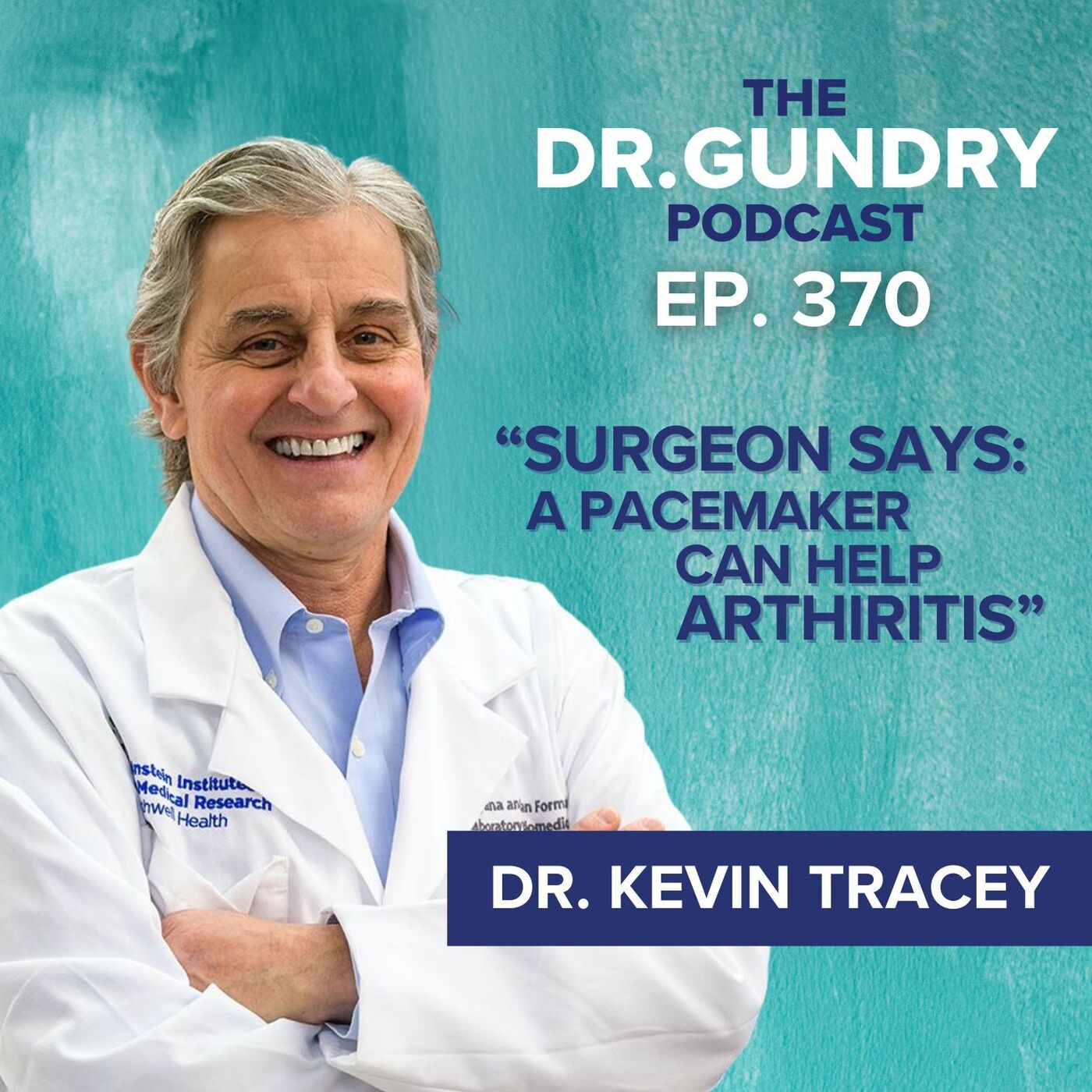
DR. GUNDRY PODCAST: GUT HEALTH, WEIGHT LOSS, AND NUTRITION
Vagus Nerve: The Hidden Switch For Your Health, Says Dr. Kevin J. Tracey
00:49:33
Loading summary
Transcript51 lines
- [00:00]
Dr. Steven Gundry
What does a confident smile say to you? And more importantly, what does it say about you? At Smile Generation, they believe a confident smile isn't just about white teeth, it's about whole body wellness. As I've discussed on this very podcast, oral health is connected to everything from your heart and immune system to even your brain. When you care for your mouth, you're investing in your entire future. Smile Generation's trusted dentists provide all encompassing, compassionate care. Merging advanced, proven technology with a patient first approach. They educate and empower individuals to protect their health through oral care tailored to their lifestyle, wellness goals and life stage. Visit smilegeneration.comgundry to learn more when you understand that your smile is more than just teeth and gums, that it's actually a gateway to your health, your confidence and your future. That's where empowerment begins.
- [01:02]
Podcast Announcer
Smile Generation is offering a $59 new patient special, which includes a comprehensive dental exam, cleaning and X rays. Regular value at least $290. This offer is for new patients only and is not valid for Tricare or Medicare Advantage and may be covered by insurance subject to your plan's restrictions. To take advantage of this offer, book your appointment by December 31, 2025. For complete terms and conditions, visit SmileGeneration.com GUNDRY welcome to the Dr. Gundry Podcast.
- [01:34]
Podcast Narrator
Where Dr. Stephen Gundry shares his groundbreaking research from over 25 years of treating patients with diet and lifestyle changes alone, Dr. Gundry and other wellness experts offer inspiring stories, the latest scientific advancements, and practical tips to empower you to take control of your health and live a long, happy life.
- [01:56]
Dr. Steven Gundry
So what if the future of medicine isn't pharmaceuticals, but electricity? And what if the key to treating depression, arthritis, even memory problems lies in a nerve running right through your chest? Well, my guest today is Dr. Kevin Tracy, President and CEO of the Feinstein Institutes for Medical Research, a pioneer in vagus nerve science, an actual neurosurgeon, and author of the new book the Great Nerve. His groundbreaking discoveries, from the inflammatory reflex to the field of bioelectronic medicine, are transforming how we understand and treat certain diseases. Now, after a quick break, we'll explore what this breakthrough means for your health, the simple ways you can start supporting this powerful nerve at home, and how medicine itself may be about to change forever. So we'll be right back. You're not going to want to miss this one because this is brand new for most of my listeners.
- [03:01]
This episode is brought to you by Thrive Market. It's my go to for healthy groceries, supplements, and even household items Delivered right to my door at up to 30% off. Join today and get $80 in free groceries@thrivemarket.com GundryPodcast Dr. Tracy, great to have.
- [03:21]
You on the program. Welcome. Thanks for being here.
- [03:24]
Dr. Kevin Tracy
Thanks for having me on. It's great to be here.
- [03:26]
Dr. Steven Gundry
So let's dive in now. Your journey, as I read in your book, began with a tragic loss of a young patient to sepsis. So how did that moment set you on a path towards discoveries that could change how we treat chronic disease?
- [03:43]
Dr. Kevin Tracy
It was 1985. I was a neurosurgery resident at the New York Hospital at Cornell Medical center, now now called Weill Cornell in New York City. And I had known for most of my life that I wanted to combine a career in science, looking at ways of inventing or discovering therapies with a career in neurosurgery. So rotating through the burn unit at the New York hospital as part of my neurosurgery training, I came to be the physician treating a 11 month old girl named Janice. She had been terribly scalded in a household accident. Her grandmother actually spilled boiling water on her in the kitchen when she was cooking dinner, turned and drained this pot of water in the sink and tripped over Janice. It was tragic and sad. And despite the severity of this injury and the prognosis was grave, from the minute she arrived in the emergency room, she was miraculously bouncing back from one bout of medical crisis to another. And we actually started thinking she might go. But I was standing in the doorway to her room watching her feed from a baby bottle at lunch hour. And her eyes rolled up in her head and she. And she arrested. She. Her heart stopped. I ran into the room, I put her in the crook of my arm, gave cpr. The nurse called the code. The code went for what felt like hours and she was gone. And when I told her mother what had happened, that Janice had passed, the poor woman fell into a faint. It was a sad, unforgettable story because she was so innocent. And if anything could make it worse, it was that we really didn't know why she died. One minute she seemed like she may be going home and the next she was gone. And the dogma at the time was that she had gone into septic shock from toxins made by bacteria that we didn't see. We didn't find infection in her at the time and was not seen at autopsy. And so this question sort of haunted me. So the simple answer to your question is I knew I was going to pursue a career in Research. I had not picked a research topic, but Janice's experience. Janice's death motivated me to start to ask the question, what is it about inflammation that can cause shock, in her case, that can kill. And the answer turned out to be cytokine storm. And so my colleagues and I were in the very early days at Rockefeller and at the New York Hospital, Rockefeller University in the New York Hospital, we were, in the very early days, large team of us in identifying the role of cytokines that now go by the name of TNF and IL1 and IL6, and how these cytokine storms can contribute to overwhelming inflammation. And that that's what I've been studying essentially for four, 40 years. This past May was when Janice actually died 40 years ago. And it really has culminated in a discovery that, as you pointed out in the introduction, may lead to using electricity to stop cytokine storm instead of drugs.
- [06:55]
Dr. Steven Gundry
That's why I wanted you on the program. I've been interested in cytokine production since I was a transplant immuno and just doing heart transplants, and certainly in my practice with patients looking at leaky gut and looking at these markers like IL1, IL6, TNF Alpha. From my perspective, the more leaky gut we have, the more we actually activate our immune system to produce these signaling molecules. And one of the intriguing things about your book is focusing on using the vagus nerve. Believe it or not, as a general surgeon and as a heart surgeon, I was routinely cutting the vagus nerve to treat ulcers or other conditions, or while I was up in the neck of patients, I was routinely trying to avoid cutting the vagus nerve when I was operating on carotid arteries and so forth. So I have a deep respect for the vagus nerve as a surgeon, as I'm sure you do. So getting back to this great nerve now, your book opens with Galen's pig experiment, which was one of the turning points in medicine. So can you tell our listeners why you chose to highlight that moment and what do you think it teaches us about scientific discovery?
- [08:25]
Dr. Kevin Tracy
A great deal. I have great respect for the great Nerve. The name of the name of the book actually comes from what Galen used to refer to the vagus nerve, as he called it the pneumogastric nerve, because he knew it went to the stomach and the lungs. But he also referred to it as great and frankly, doctors and scientists for centuries. Galen, of course, was around the time zero, the first millennia. Galen was a Roman physician who cared for many of the Roman emperor as well as their gladiators and their animals. But he was also a scientist. And so in many ways, Galen was one of the first physician scientists. And his. His term, the great nerve, actually stood for centuries, for some 1500 years or so, the vagus nerve was called either the pneumo gastric nerve or simply the great nerve. And so that's where the name of the book comes from. The reason Galen is associated with that nerve is one, because he began studies, anatomical studies, on its path. Now, he was limited in many ways. One, it was illegal and deemed unethical to study human cadavers. So he didn't have access, at least not legally, to human anatomy. So he turned to large animals, and he could dissect baboons and pigs and sheep and cows and whatever he could get his hands on, but he could also operate on them. Unfortunately, there was no anesthesia. He did essentially like a public demonstration, like a. Like a public health announcement. So a wealthy colleague had rented a large hall, and Galen put on this show. They had a pig tied on the operating table, and it was squealing away. And Galen exposed a branch of the pig's vagus nerve, a small branch which he had discovered in the neck, which we now know today is the laryngeal nerve. And that's the branch of the vagus nerve that goes to the voice box. Now, back then, nerves were thought to originate in the heart. And the heart was supposed to be the source of all sort of action and activity and behavior. The brain was thought to be an organ that cooled the blood. The brain wasn't thought to have anything to do with producing behavior. So the pig squealing away, Galen is showing everybody, see this nerve that. That's part of the. Of the pneumogastric nerve. But look, it's going over here. He cut it, and the pig was silenced. And so what I like to say is, with one swoop of his knife, with one flick of his knife, Galen made two incredibly important discoveries. One, he proved that the vagus nerves, that nerves themselves were the. Were carrying the information that controls behavior, which later, of course, was linked back to the brain. And second, he proved that the larynx, the voice box, your Adam's apple, as we call it today, that that was the source of vocalization. So what can you learn from that? You can learn that experimentation produces knowledge, and knowledge can become embedded in human culture and change the world.
- [11:34]
Dr. Steven Gundry
Now, you also, in the book, tell a fascinating story about one of your patients, like Kelly Owens, who really, I mean, it's A tear jerker went from decades of suffering to living a normal life, all from stimulating this vagus nerve. Can you elaborate on that? Cause I think it helps people understand the power that you suggest this nerve has over what we would assume. It has nothing to do with the.
- [12:09]
Dr. Kevin Tracy
Power you're referring to that the nerve has that was discovered in my lab in the late 1990s is the ability to inhibit, to suppress inflammation. And this came out of left field. We can talk about the experiment that led to that, but first we'll tell you Kelly's story. So Kelly was a young girl who was living a normal life, playing high school sports, volleyball, basketball, and everything, very active. And she injured her knee and came home that night, and her knee swelled up to the size, as she says, of a volleyball. Now, what's important about Kelly's story is that for her whole life, she was journaling, keeping diaries, and later even blogging and posting all these stories. So all these stories are readily accessible online from her own. From her own words, what happened was it wasn't a sports injury that caused her knee to swell. After complicated medical workup, Kelly received the diagnosis of Crohn's disease, which is an inflammatory bowel disease that's an autoimmune condition. Now, like any autoimmune, many, not any, but like many autoimmune conditions, they may start in the intestines in inflammatory bowel disease, but the inflammation can spread to other tissues. And in Kelly's case, it spread to her joints, and she developed disabling arthritis from this to the point that her father gave her a cane for one of her birthdays. And Kelly spent many years in and out of wheelchairs or using the cane. She was treated with powerful immunosuppressing medications everywhere from New York to the Mayo Clinic to Hawaii and back. But as a young woman now a school teacher, her physicians finally told her that they were out of medical options. She'd spent more than a million dollars on various medications, and they told her to get prepared to spend the rest of her life taking steroids, which, of course, nobody wants to do. The side effects of those are terrible as well. And immunosuppression is a big one. Kelly saw me on Huffington Post live talking about how the vagus nerve can inhibit inflammation. And that the science that my laboratory here at the Feinstein Institute, my colleagues and I had laid out, science which, by the way, has now been replicated by dozens, if not hundreds of laboratories all around the world over the last 25 years. What I said on Huffington Post Live was that I started a company called Set Point Medical, and that was leading into clinical trials. Kelly called me up, and I don't remember speaking to her. She may have spoken to my office, but we advised her to look into the Set point clinical trials, which were going on in Europe somehow. And when you meet Kelly someday, you'll. You'll understand. She talked her way into this clinical trial. She and her husband Sean, sold all their earthly belongings in New Jersey and moved to Amsterdam for six months, where a neurosurgeon participating in the clinical trial led by SetPoint Medical, the company I co founded, now a California company. The neurosurgeon implanted a device which was like a cardiac pacemaker. I call it a generation one vagus nerve stimulator. We can talk about generation two later. This pacemaker drove electrical signals into her left vagus nerve five minutes at a time, several times a day. And about two weeks later, she's still in Amsterdam. Of course, she's recovered from the surgery and she's on her way to a doctor's appointment. And of course, there's elevated trains in Amsterdam. And Kelly was running a few minutes late. She saw the train pulling in to the station, and she ran up the stairs. She gets to the top of the platform and turns around like, where the heck's John? Well, Sean standing at the bottom of the stairs with tears in his eyes, tears of joy, because he hadn't seen Kelly able to run at all, never mind run up a flight of stairs, in years. Kelly went on to make a remarkable recovery currently. And I spoke to her recently. She currently takes no medications. Her only therapy is the vagus nerve stimulator in her left neck. And she has no signs or symptoms of inflammatory bowel disease or arthritis. You're right. It's a tearjerker story. It brings tears to my eyes. Even now. She's all better.
- [16:21]
Dr. Steven Gundry
You know, I'm always looking for ways to help you live longer, feel better, and keep doing the things you love well into your 90s and beyond. And one tool I use every single day is the Juvent micro impact platform. Unlike traditional vibration plates, which can actually damage soft tissue, Juvent delivers safe, diagnostic, gentle micro impacts that support bone health, mobility, circulation, and even joint comfort. What really excites me is the science. These micro impacts may help your body produce more of its own stem cells, which are key for repair, regeneration, and healthy aging. One study also showed how vibration therapy can help improve microbiome diversity. Sign me up for that. Think of it like a daily Mechanical vitamin your skeleton needs. Just like your body needs nutritional vitamins. The best part, it takes 10 to 20 minutes a day. So stop waiting, visit juvent.comgundry and use code GUNDRY to save $300. That's juvent.comgundry code GUNDRY try it today. Your future self will thank you. One of the things I talk about often is how hidden toxins can sneak into our lives in surprising ways. And unfortunately, most non stick cookware is still loaded with harmful forever chemicals like Teflon and pafss. In fact, one recent show that a single scratch on a non stick pan can release thousands of plastic particles into your food.
- [17:51]
Yikes.
- [17:51]
That's why I've switched to our place cookware. Their pans and pots are 100% toxin free. No PAFs, no PTFEs, just safe high performance cookware that makes me feel good about what I'm serving. And I love how versatile they are. With just their four piece cookware set, I can sear, saute, steam, boil and bake. All while saving valuable space in my kitchen. So stop cooking with toxic cookware and upgrade to our place today. Visit from Our Place.comGendry and use code GUNDRY for 10% off site wide. With a hundred day risk free trial, free shipping and free returns, there's zero risk in trying it for yourself.
- [18:38]
I like seeing miracles. What I would have called a miracle 30 years ago. I still get up every day and see patients six days a week because I get to see miracles like that that I wouldn't have believed. And one of the reasons I wanted you on the program is you remember from medical school we were taught that the vagus nerve is kind of how the brain talks to the various organs and sends information downward. But subsequently we know that for every fiber coming from the brain down to the organs, there's actually a lot more fibers coming up from the viscera to the brain. And so I've taken, you've taken a top down approach and my work has been taking a bottom up approach. So what I want to do know is you know and I've read your research and I've read your book and it's very, it's very impressive. And again that's why I wanted you on and I think there's, there's a common ground here that can you tell our listeners, okay, how did you know putting a pacemaker on this nerve change what was happening in the signaling in the gut, in the immune system activation in the gut from your standpoint and can you go into that for us.
- [20:08]
Dr. Kevin Tracy
The discovery that we made, we today call is widely known as the inflammatory reflex. Now, what's a reflex? We'll go by first principles. A reflex is what happens when you're sitting on the exam table in a doctor's office and she thumps your knee and your leg goes up and you say, who did that? That's a reflex. The way it works is that the rubber hammer stretches the patellar tendon, which activates sensory nerves. Reflexes begin with sensory input. The sensory input to the spinal cord is relayed back to motor nerves that travel back down to the quadriceps femoris, your thigh muscle, and your leg pops up. That's a reflex. Well, the same thing's happening in all your organs all day long that you don't think about. The vagus nerve is carrying reflexes to all your organs. One family of them we call the inflammatory reflex. But let's again, first principles. What's the vagus nerve? Well, as you said, it travels from the brain at about the level of your ear down your neck and chest, and it touches all the organs you never think about all day long. But very importantly, we say the vagus nerve, but you have two, one on each side. And more importantly, in each of those two vagus nerve propers, you have 100,000 fibers. So you actually have 200,000 vagus nerves. It's very hard to study the individual fibers in humans. It's nearly impossible. But we can do a lot in mice and in other animals. In mice. And some brilliant work from Harvard by Steve Lieberless and his team. As few as 100 or 120 fibers in a mouse regulate breathing. So you have this massive number of fibers, but the function of each fiber is highly specific. So that means if a small number of fibers can control breathing, in a mouse, there's like 5,000, not 100,000. But that small fraction of fibers is what you need to breathe. Then you've got thousands of other fibers doing other actions. So in the context of inflammation, what we've discovered is that when inflammation occurs in your body, say in your intestines or your liver, that activates vagus nerve sensory fibers that travel up to the brain stem. And recent work from Charles Zucker's lab at Columbia here in New York, or from my own lab at the Feinstein Institute, we're able to show a specific cytokine like IL1 or TNF can activate specific bundles of vagus nerve fibers that carry the information up into the brain. Now, when it gets there, like your Knee jerk. The incoming information activates an outgoing signal. And what we've discovered is that about a thousand fibers in humans carry signals from the brain back to the spleen, where it literally shuts down the white blood cells ability to make toxic levels of cytokines. Now, it doesn't immunosuppress, it doesn't cause the white blood cells to become immunosuppressed. It doesn't turn off cytokine production completely, it just lowers it, it suppresses it by 50 to 80%. So now in an inflammation situation, your white blood cells making toxic or dangerous amounts of cytokines, like what happened to Janus or to Kelly Owens, these toxic amount of cytokines are reduced if we stimulate those fibers to block the release of cytokines. The company Set Point Medical has now built a device which is called an immunoregulator. And it's specifically designed to stimulate for one minute a day in the left neck, the fibers that turn off inflammation. And what's amazing about this is that the activation of the inflammatory reflex for one minute a day with this device that's the size of a multivitamin in a FDA approved breakthrough clinical trial had significant benefit in 80% of the patients after one year. So 242 patients were enrolled in the trial. The results were so successful that the FDA approved this device, now the immunoregulator, for use in treating patients with rheumatoid arthritis. So it's come sort of full circle from a project in the laboratory discovering the vagus nerve acting like the brakes on your car to slow down inflammation, to an FDA approved device for rheumatoid arthritis.
- [24:30]
Dr. Steven Gundry
Yeah, that's a long, long way around 30 years. So let me bring it back to something that I've talked about and I've had him on my program, Wim Hof the Iceman. We know that we can inject lipopolysaccharides, LPSs, which are dead bacterial cell walls, into human volunteers and produce septic shock even though they are dead bacteria. Exactly what you described killed your little patient years ago. And Wim Hof, as you well know, primarily his breathing techniques can be injected with LPSs. And rather than fainting and becoming tachycardic, sits there and laughs and continues the conversation. And he's shown in volunteers that they can be trained to also withstand the, you know, the same insult. And what I'm hearing from you, and this is all, in my humble opinion, regulated by his control of his vagus nerve. What say you?
- [25:39]
Dr. Kevin Tracy
So this has Been studied, as you know, by Peter Pickers in a beautiful paper. So I met Wim Hof about four or five years before Peter Pickers did that study. And I also studied Wim Hof in a sort of an N of one study here at the Feinstein Institute. And what we did was, my colleague, we drew his blood, and then we said, okay, you. You do your thing, and we shut the door of the exam room and we went and got coffee or something and came back two hours later and drew his blood again. Wim, come back in a week and we'll tell you the results. So he comes back in a week. And I said, wim, your cytokine production, how much cytokines you can make in your blood before and after the first two hours, the baseline, and two hours later, when we left you, I said, you reduced your cytokine production by about 80%. I said, what did you do? And he said, I breathed like a mother. And I said, okay. He said, are you going to publish me? I said, no, we're not going to publish you. He said, why? I said, you have to. We have to do a proper study. I said. And he said, what's a proper study? I said, well, you have to teach 10 people to do this and show that you can replicate it. And then they have to end people you don't teach, so they're the controls. And then the first 10 have to teach the second 10 and repeat the study. And that's, in fact. So Wim at the time was living in Amsterdam, so he collaborated with colleagues in the Netherlands, and they did the study there. It would have cost a lot of money for me to do the study here, which I told them at the time. So he did the study, and I opened the proceedings in the National Academy of Science. I was thrilled to read the study now. And by the way, Wim has on several podcasts, has actually given me a shout out for that little story I just told, and it's in the book. But Peter took it to the next level and asked the mechanism. And what he discovered was that when Whim does this breathing, which is like a tantric breathing, it's big breaths in, big breaths out, repeated 30, 40 times, breath holding for as long as possible, repeat the cycle three or four times. That was known already. And what Peter proved by measuring norepinephrine levels in the blood is that it induces a massive stress response. Now, years before, when I was still a trainee in neurosurgery in New York, my colleagues and I had injected Steve Lowery and others had injected, as you said, endotoxin. But when we injected endotoxin with norepinephrine to mimic a stress response, we showed that that blocked cytokines. So it's actually a fight or flight response. Now, if you have a flight or fight response, does that mean your vagus nerve is turned off? Absolutely not. The textbooks say that, but they're wrong. And we know they're wrong because of a study a year or two ago from New Zealand in which the researchers there were studying sheep. Now, now, I think this is all I can think of as a far side cartoon with the sheep jogging on a treadmill in a lab and what all the captions could be. But turns out this, this study was brilliant. Is brilliant and important because it's one of the first studies to prove that during exercise, you exercise not only your sympathetic fight or flight response, but you also turn on your vagus nerve. They're both turned on and in fact, the importance of turning on the vagus nerve with fight or flight. As a cardiac surgeon, you may remember this from decades ago, a Japanese study. When you stimulate the vagus nerve during sympathetic stimulation, you actually get a synergistic increase in cardiac output because you slow cardiac filling to the point that you get a more efficient expansion of the right ventricle and you get more cardiac output, you get more coronary artery blood flow. It's a really important question and a really important answer. Turning on fight or flight does not necessarily mean you're turning off the vagus nerve. And turning on the vagus nerve doesn't mean you're turning off fight or flight. There's much more harmony and balance in biology than on and off. It's much more functioning in harmony and in synergy. And that's really the story, I think, of the vagus nerve. Whether it's for inflammation or heart rate variability or all the other things it does.
- [30:00]
Dr. Anurag Singh
Our cells are constantly renewing themselves. But as we age, they start to need help keeping up. That's where urolithin A comes in. I'm Dr. Anurag Singh, MD, PhD and Chief Medical Officer at Timeline. I've spent years researching this remarkable nutrient, and what I have learned has the power to change the way we age. Urolithin A targets common signs of aging at the root. By revitalizing the mitochondria, the battery packs of the cells, for the first time, you can easily incorporate it into your routine. With mitopure, the only clinically proven urolithinase supplement on the Market One daily dose of Mitopure boosts energy production, improve improves muscle strength and enhances endurance even without a change in exercise. It's so powerful that it's the number one doctor recommended longevity supplement trusted by elite athletes and health experts. Empower your cellular health with Timeline powered by Mitopure. Visit timelinenutrition.com gundry10 and use code GUNDRY10 for 10% off your first order. That's timelinenutrition.com GUNDRY10.
- [31:15]
Dr. Steven Gundry
Time is one of our most precious resources and one of the ways I save time and money is by using Thrive Market. Just last week I ordered some of my favorite dark chocolate, olives, cassava flour and even non toxic cleaning supplies without having to set foot in a crowded store. Everything arrived right at my doorstep and I saved about 25% compared to what I'd pay locally. What do I love most? Their website and app make it so easy. You can filter for whatever lifestyle you follow. Low sugar, keto, gluten free, you name it. For me, that means I can quickly find high quality lectin free ingredients I use in my recipes. So here's the deal. When you join Thrive Market today, you'll get $80 in free groceries. Just go to thrivemarket.com gundrypodcast that's Thrive Market podcast.com gundrypodcast.
- [32:07]
In my practice, patients come to see me very much. For why that young lady came to see you, they're looking for options beyond drugs. About 80% of my practice is autoimmune disease and these people are on one or two or three immunosuppressants, which they realize is probably not a good thing. And in many cases they're not working. And you're right, living on steroids the rest of your life is a bad idea. Bioelectronic medicine or bioelectric medicine may be one of these solutions. And so can you explain how electricity is one modality here that we've neglected?
- [32:48]
Dr. Kevin Tracy
The key to understanding bioelectronic medicine is similar to the key to understanding how you would make any other medicine. It begins with knowing the molecular mechanism of the disease. So we can walk through an example of rheumatoid arthritis in which the purported molecular mechanism is producing too much tnf. Now you're right, the blood, the drugs that block TNF only work about half the time, 40% of the time. So it's not the whole story. But let's just think about the 40% patients that it is working in. So TNF is a valid drug target in RHEUMATOID arthritis. If you're a drug company, you say, I'm going to make drugs that hit TNF specifically, and that will be the what will test for safety and efficacy and then we'll market those. If you take a bioelectronic medicine approach, you say, okay, TNF's the target. Rheumatoid arthritis is the disease. Can we find neural circuits that lower or reduce TNF production in the body? And the answer, of course, we've talked about is yes. We discovered vagus nerve circuits that can turn off tnf. Okay, check that box. Now the question becomes not can we make drugs that do that, but can we make devices that control the activity of nerves? And that's exactly what we did at Setpoint Medical. Setpoint Medical developed a device the size of a multivitamin that uses electricity. It has a rechargeable battery to drive a current through a circuit board. The device has a little antenna in it and it can talk to the doctor's tablet. So the doctor can adjust the, the strength and the frequency of the treatment. The electricity, what it does is it delivers pulses, little spikes of electric current into the vagus nerve in the neck for one minute a day. What happens? The electricity going into the vagus nerve, these spikes, it's not traveling up and down the vagus nerve like a copper wire. These spikes are on and off, on and off, on and off. And the on and off nature of the spikes causes the vagus nerve itself to fire on its own behalf. So nerves carry action potentials, which are voltage spikes. And you can incite the nerve or induce the nerve to fire its own voltage spikes, which travel up and down the nerve away from this, from this source of stimulation or activation. And so the answer to your question is this multivitamin sized bioelectronic device delivers the signals to turn on the brakes using the vagus nerve's own evolutionarily conserved mechanisms that evolved over millions of years to control the magnitude of The TNF and IL1 and IL6 and other cytokine responses. The real key to bioelectronic medicine in the case of rheumatoid arthritis is it's not a completely new idea. I told you. Kelly has a Gen1 device. Because Vagus nerve stimulation was first approved in the 1990s to treat patients with epilepsy and then soon after that, patients with depression. There's been follow up studies and 250,000 patients followed for 30 years. We know that it's safe, we know that it doesn't have a black box warning. We know that it doesn't cause immunosuppression and we know that it's a one time expense, not a recurring annual expense of 50 to $100,000 a year. As you know, some of your patients have, I'm sure, talked to you about this. I think there should be a side effect warning on some of the biologics that bankruptcy is a potential side effect because that's what happened to many people I've met. And now some of them have this immunoregulator in their neck and they don't need to take those drugs anymore. And so there's a lot, there's a lot of stories out there now. It's not just one patient.
- [36:37]
Dr. Steven Gundry
It's great that I can have a multivitamin inserted in my neck. We see now lots of devices, consumer devices that purport to stimulate the vagus nerve, maybe the vagus nerve in the ear, devices that you wear on your neck to stimulate the vagus nerve. Where are we in that realm?
- [37:03]
Dr. Kevin Tracy
Buyer beware, as you know, is the best answer. Buyer beware. Let's start with the scientific, engineering, medical, physiological facts. There's only two ways to specifically stimulate the vagus nerve. The first is, as we've been talking about, to put a stimulating electrode directly on the nerve. And there's several FDA approved devices to do that. And they've all been subjected to FDA regulatory scrutiny. They've all been subjected to large, randomized, well controlled, replicated clinical trials. That's the gold standard way to know that you have specifically stimulated the vagus nerve. You have a device implanted usually in the neck. The second way is experimental. We've done it here in, in my lab. Several other research centers have, have done it. You can use a technique called focused ultrasound and that will channel the ultrasound energy through the tissues and you can focus it, if you will, on the vagus nerve and stimulate the vagus nerve in the liver, for instance, where we've done some work to show that that can actually cause weight loss and correct the hyperglycemia and hypoinsulinemia in models of obesity and type 2 diabetes. And there's clinical trials progressing in that space which are fascinating and we could talk about that. Then there's this whole universe of using transcutaneous electrical nerve stimulation, which is essentially putting electrical devices on the skin. Some people put it on their neck, some people put it on their ear. There is zero, none, not an evidence that those are vagus nerve stimulators. There's lots of evidence that electrical current on the skin travels across the skin. It travels across the muscles and subcutaneous and fat tissues under the skin. There's no evidence that it can travel through these tissues, through the sternocleidomastoid muscle, through the fat, to target the vagus nerve inside the carotid sheath in the neck, for instance. Now, where it gets very confusing is that the FDA has authorized some devices as vagus nerve stimulators, which are essentially TENS units, despite what I just said. And so fine, it's a, you can say it's a nomenclature issue. It just. The problem with that is it does create some confusion. Now if you're considering sort of a do it yourself stimulation with a TENS unit, I think there's several factors to consider. First, check with your doctor. Is it safe? Second, is it FDA approved? If it's FDA approved, what condition is it FDA approved for? Is it approved for your condition or for a different condition? Third, and in this day and age, this is incredibly complicated and confusing. What does the clinical trial data say about the use that you want to use it for? How many patients were in the clinical trials? Were they appropriately randomized? Were the trials appropriately controlled? Are the statistics correct? Are the assumptions and follow up correct and proper? When you scratch the surface of that, looking for instance at recommendations to use a TENS unit in your ear, there is only two clinical indications that have been subjected to that, that pass that muster with large clinical trials. Well controlled, well randomized one, and they're both with the same device. It's a European device, used to be manufactured by a company called Servomed. I'm not sure it's available anymore. And they showed that stimulating the ear, the cartilage of the ear, which has a branch, a sensory branch of the vagus nerve, that, that actually had clinically significant benefit in some patients with epilepsy, about half of them. And it had clinically significant benefit in helping people with sleep disorders. And the interesting thing there was that the beneficial effect on the sleep disorder seemed to persist for many weeks after they stopped stimulating. All the other things are either, all the other potential indications for these devices are either very small clinical trials, some of which I've done, my colleagues and I have done 20 patients, 15 patients. And they're interesting, right? That's how you, that's how you start in science and medicine. You start with a pilot trial and then you move to a replication trial and a larger trial and add more controls. Most if not all of the recommendations by people selling things for their vagus nerve, not what they call non invasive vagus nerve devices. Nearly all of them. If not, don't pass that muster that you and I would consider clinically rigorous.
- [41:52]
Dr. Steven Gundry
As a doctor, I see firsthand how our modern lifestyle takes a toll on our health. From constant screen time to poor sleep and even skin issues that just won't seem to go away. That's why I'm such a fan of Bwan Charge. They've created science back tools that bring ancestral wellness practices into today's world and one of my favorites is their red light face mask. Since using this mask just 10 to 20 minutes a day, the difference has been incredible. My skin looks smoother and I even feel more relaxed after each session. What sets Bon Charge apart is the quality. They've removed disruptive blue and green light frequencies that other brands leave in so it won't mess with your circadian rhythm. It's lightweight, comfortable, completely toxin free, zero EMF and back by over 4,000 peer reviewed studies. So if you want glowing skin, fewer wrinkles or just more energy, head to boncharge.com and use code gundry for 15% off. That's B O N C H A R G E.com code gundry and save 15% today.
- [43:02]
Final question on that subject. Since Wim Hof and his tantric breathing does work, are there any take homes from this discussion today for somebody who wants to use their vagus nerve to reduce inflammation? Is it meditation? Breathing techniques? Breath holding?
- [43:27]
Dr. Kevin Tracy
The advice you give your patients probably every day and the same advice grandma gave you and me, right? Eat a balanced diet, get enough sleep, pay attention to your exercise routine and try and exercise regularly. Try to stay socially and cognitively connected to friends, family and community. Giving back something when you can. Try to avoid excess stress in your life. If meditation helps you do that and reduce anxiety, great. If there are other cognitive behavioral therapies that help you do that, great. Practice those at the end of the day. What's so remarkable about all of those recommendations and a few more is that they all are associated in one way or another with reducing resting heart rate. And as you know and most people nowadays seem to know, after billions of web impressions, a slower heart rate tends to be associated with improved heart rate variability. And that is one imperfect but one way to get a sense of a healthy vagus nerve, if you will. Now we've seen in patients with autoimmune disease and long Covid that their vagus nerves are damaged and heart rate variability can be impaired and resting heart rate tends to Be higher. Does that mean if you exercise more and do some of these things that are recommended to quote unquote, stimulate your vagus nerve, that they'll be fixed? Well, no, not necessarily. I mean seriously, if a rheumatoid arthritis patient could do a few extra sit ups to take away their pain and suffering, they would do it. It's not that simple. If the vagus nerve is damaged, for instance, it might require a device, therapy, it might require an immunoregulator, it might require something else. That being said, for people who are generally healthy, presumably you, hopefully me, and we want to optimize our health. Those basic health practices are all good things. I do meditate, I do try to watch my diet, I do try to exercise regularly. I do try to get enough sleep. I do try to use my brain and stay socially engaged and active. And a couple times a week I put the shower on full cold because the evidence is pretty clear. My doctor said it's okay for me to put the shower on full cold. You have to check, but the evidence is pretty clear that that cold shock activates fight or flight, which we already talked about. And that fight or flight is anti inflammatory. And if you stay in the cold, which I've trained myself to do, you actually find it. First of all, I notice that it's still uncomfortable, but I don't mind it so much. It's some sort of meditation. And Wim Hof does talk about that, how when he's in the cold, he finds it an ideal time when he comes out to meditate. But in addition, if you stay in the cold long enough to notice that you're calming down or observing, it's almost like observing someone else in the cold. If you check your pulse, you'll find your heart rate has slowed. And at that point now I've done both, right? I've stimulated fight or flight and rest and digest. So yep, it's what grandma and your primary care physician tells you to do. I think it's the best advice for your healthy vagus nerve.
- [46:33]
Dr. Steven Gundry
You make a good point. My mentor at the NIH, who is the head of heart surgery at the nih, Andrew G. Morrow, actually always used to quip that we only have so many heartbeats in our lifetime and once you use them up, that's it. So that anything you can do to preserve what you've got. And again, that's kind of exactly what you're saying.
- [47:02]
Dr. Kevin Tracy
The Framingham heart study proved him correct, right?
- [47:04]
Dr. Steven Gundry
Yeah.
- [47:05]
Dr. Kevin Tracy
So? So the only single known predictor of the longevity of a population is resting heart rate. The slower the better. He was right.
- [47:16]
Pluto TV Announcer
Just when you thought summer couldn't get any hotter, Pluto TV is turning up the heat with thousands of free movies presenting summer of cinema. Stream your favorite blockbuster films like Glenn Gladiator.
- [47:28]
Dr. Kevin Tracy
I will have my vineyards.
- [47:29]
Pluto TV Announcer
Good burger.
- [47:30]
Dr. Anurag Singh
This is what I do.
- [47:31]
Pluto TV Announcer
Fast food, Beverly Hills Cop, the Girl with a dragon Tattoo and Julie and Julia.
- [47:37]
Dr. Steven Gundry
Bon appetit.
- [47:38]
Pluto TV Announcer
All for free on your favorite devices. Pluto TV Stream now pay never.
- [47:47]
Dr. Steven Gundry
We have an audience question. This is from glitterbug12x on YouTube. Can vagus nerve stimulation help with tinnitus or tinnitus? My dad has really bad tinnitus and has tried various treatments to no avail. Got any thoughts?
- [48:07]
Dr. Kevin Tracy
My thoughts are maybe for the following reason. But before I get to maybe, first let me tell you maybe also means nobody knows the answer. There is not a clinical trial you can point to of a well controlled study using vagus nerve stimulation to treat tinnitus. However, if your father's physician gives permission and if your father doesn't mind trying a ear stimulating device, for instance, which may or may not stimulate a branch of the vagus nerve to the ear, it is possible that some forms of tinnitus are caused by excessive inflammation in the middle ear. So it's possible, theoretically possible, based on evidence from many clinical studies, all small and not all well controlled. But many clinical studies have pointed to the possibility that a TENS unit applied to the left ear may in fact reduce inflammation in some conditions. We've seen that in rheumatoid arthritis. We've seen it in lupus arthritis. My colleague Ben San recently reported in pediatric Crohn's disease some benefit in his studies. So we don't have all the answers, can't make it as a medical recommendation, but it is something to consider if it's possible for him to try it.
- [49:22]
Dr. Steven Gundry
Well, that's a good summary. We were talking off camera. I'm not aware that there's any valid study. Yeah, so we'll leave it at that. But it's a great question and probably needs more looking into. Well, Dr. Tracy, it's great meeting you and coming on the show. I think this is an area that my listeners are not aware of and that's why I wanted to have you here. So thanks again and good luck with the book, the great nerve. Great title.
- [49:53]
Dr. Kevin Tracy
Thank you so much, Dr. Gundry for having me on and thanks for letting me talk about the book with you. I really appreciate it.
- [50:02]
Dr. Steven Gundry
Now it's time for the review of the week. The Review of the week comes From Arianna on YouTube they said I love you doctor heart emoji. Your knowledge is mind blowing. And you know what? It's actually always confirming my gut feeling intuition. I am so grateful for your advice. Also, you look great. Thumbs up emoji and I trust you.
- [50:24]
Thanks.
- [50:25]
Well, thanks very much Farianna. You know I try to give you the information that I've learned taking care of patients six days a week for the last 30 years. And as I say, you know, I report and you decide. I'm glad it's working out for you. Thanks very much.
- [50:43]
Podcast Narrator
I hope you enjoyed this episode of the Dr. Gundry podcast. If you did, please share this with family and friends. You never know how one of these health tips can completely transform someone's life when you take the time to share it with them. There's also the Dr. Gundry Podcast YouTube channel where we have tens of thousands of free health insights that can help you and your loved ones live a long, vital life. Let's do this together.
- [51:05]
Experian Announcer
Not great with finances.
- [51:07]
Dr. Steven Gundry
That's okay.
- [51:07]
Experian Announcer
Experian is your big financial friend. Explore credit card offers, some labeled no Ding decline, which means if you're not approved, they won't hurt your credit scores. See experian.com for details. Applying for no Ding Decline cards won't hurt your credit scores if you aren't initially approved. 2025 Experian Experian.