← The Dylan Gemelli Podcast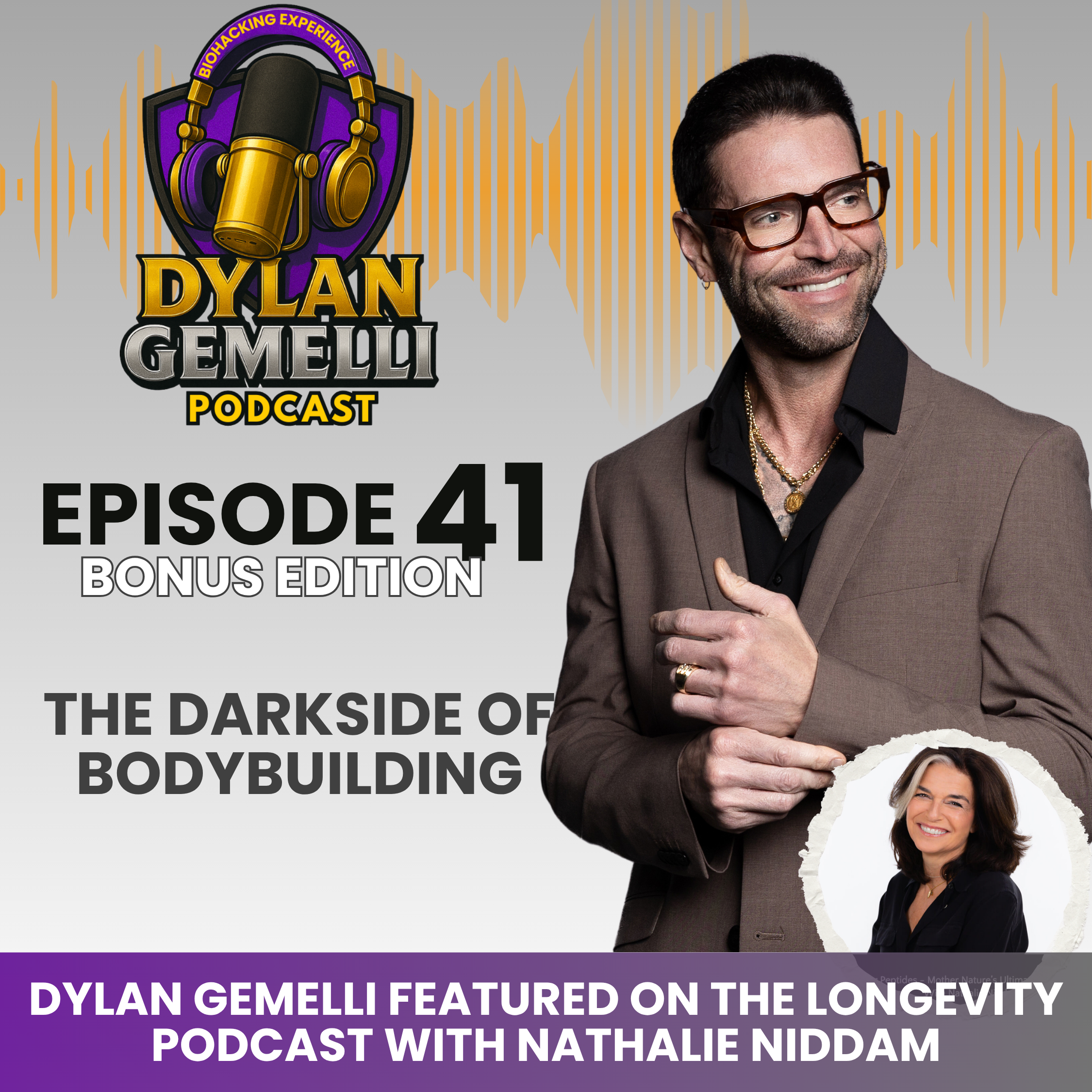
The Dylan Gemelli Podcast
Episode #41 Dylan Gemelli opens up on The Highly Acclaimed "Longevity Podcast" with Nathalie Niddam! The dark side of bodybuilding, eating disorders, peptides, anabolic steroid use, Urolithin A, cellular health and more!!
01:02:43
Loading summary
Transcript236 lines
- [00:01]
Rakuten
If you're shopping while working, eating, or even listening to this podcast, then you know and love the thrill of a deal. But are you getting the deal and cash back? Rakuten shoppers, do they get the brands they love? Savings and cash back. And you can get it, too. Start getting cash back at your favorite stores like Levi's, Plow and Hearth, Adidas, Sephora, and Neiman Marcus. Stack sales on top of cash back and feel what it's like to know you're maximizing the savings. And it's easy to use. And you get your cash back sent to you through PayPal or check. The idea is simple. Stores pay Rakuten for sending them shoppers and Rakuten shares the money with you as cash back. Download the free Rakuten app or go to rakuten.com to start saving today. It's the most rewarding way to shop. That's R A K U t e n rakuten.com.
- [01:00]
Natalie
Welcome to the show. Dylan Gemelli. It is a pleasure to have you here today.
- [01:04]
Dylan Gemelli
It's always wonderful talking to you. Like I was telling you earlier, I said I could talk to you all day, so I'm looking forward to it.
- [01:09]
Natalie
Well, same. So buckle up, people. We're gonna. I don't know where exactly we're going, but we're going places today, so we're gonna talk. And actually, you know, there's Dylan's one of these people who can talk about so many different things, Right. Because you have this background in bodybuilding. You're. When I talk about, you know, the bodybuilder biohackers that were using peptides before anybody else, you're that guy. But you've also had a very long journey. And the interesting thing about the bodybuilding space is, comes with a lot of inherent kind of pitfalls for people. Right. And so there's the, you know, there's obviously there's like the whole. The peptides, the sarms, the growth hormone that some people get into, which hopefully not too many, the steroids and then even this, I guess, this, this kind of obsession with body composition and being lean and being ripped and being all those things. And we think of. We think of certain issues as being female only, but you guys get left behind and you got caught up in some of that. So, number one, thank you for being here and for being willing to share your story and I'd love to hand over the mic for a bit and have you talk to us a little bit about that journey.
- [02:24]
Dylan Gemelli
Yeah, you know, one thing I will Say is for many years I wouldn't talk about any of this. I felt like it was like you said, I felt like it was a female only thing and talking about it made me feel weak, vulnerable, strange, would be looked at funny. Not that I cared so much about what people said, but it was just once again, it's like a complex thing. You're already dealing with a complex disorder as it is and then it's a whole nother issue on. And part of the complex disorder does revolve. And I realized later I tell myself I don't care what people think. But you really do or you wouldn't have the problem. Right. But then it becomes inherent to me over time that as I did stop to care about what other people think, it is a me problem. But it's a culmination and it takes so long to figure out and you don't really wrap your head around it. So I'll start back. The reason that I got into nutrition. I started studying nutrition at 11 years old. I started reading food labels and trying to figure out what they meant. I didn't necessarily understand what they meant, but I started to look at them and try to figure out for myself before I asked, what do these mean? Because I, I mean when I was 11, it's not like there was a big Internet to look up and look everything.
- [03:37]
Natalie
Yeah, no kidding.
- [03:38]
Dylan Gemelli
Yeah, I, we had just gotten like America online dial up. There really wasn't anything to look up at that time. So you know, I'm reading the back of labels and my main thing that I was looking at at the time was percentages on fat and you know, carbohydrate just to percents. Not, not really understanding, but at least taking the time to look, not, don't understand that ingredients in order and all that.
- [04:01]
Natalie
So let me ask you this. Were you like, were you, were you. Why, why were you concerned about this? Is this because of the household you grew up in? Were you kind of an overweight kid like some kids, you know, we come from. I mean I came from a culture where if your baby wasn't fat, your baby wasn't healthy.
- [04:17]
Dylan Gemelli
Right, right.
- [04:18]
Natalie
And so which, which brought in a whole host of other issues, but we're not going to go there. What was your thing? What, what kind of. At 11 years old, what really ignited this kind of interest, you know, focused interest, if you will, on how much fat is in my food or whatever the case may be?
- [04:35]
Dylan Gemelli
Good question. So it's like an anomaly, right. My dad was a college athlete. He had a Full ride scholarship for football. Chose to play basketball at a different school. Major, major, athlete. My mom was a cheerleader. You know, everything and. But I'm an only child in an Italian family, so this. Eat, eat, eat, eat. Like, everything revolves around food, food, food. You better. It's always, are you hungry? Do you want this? So need enough? No. And the problem was is God bless my mom. She would do anything for me, but I mean, anything. So If I want McDonald's every day, I got it every day against my dad's will, you know, whatever. So I, I was a. I played, I played basketball. And this is all through high school too. Basketball, football, tennis, and baseball and so. But I was overweight, playing all of these sports and excelling at these sports, but always in bad condition. And, you know, I'm with like the group of kids at school that are always the most popular kids, but in the back of my head I'm like, I can't take my shirt off at a swimming pool. I know, like with the girls, they're my friends, but they're never going to really go out with me because look at me, you know, And I, I'll never forget. I can pinpoint the time. I was 10 years old or 11 years old. It was, it was 1994. I can tell you exactly when it was. And we got home from a vacation in Florida and I, we. I was eating like ice cream, and it was steak every single night and all of this ice cream and fatty foods and everything. And I got home and I gained like seven or eight more pounds. And I remember crying in the mirror, getting in the shower and thinking that it was never going to end. Like, I really thought there was no way to fix this ever. And so I was about five foot eight, like literally in seventh grade, about 165, which is at five foot eight. 165 at that age is not good. And then I played tackle football that summer and I grew to like 6:1 and I went to like 135 pounds. And so you can imagine the drastic difference. I looked like a totally different guy when I went back to school.
- [06:38]
Natalie
Oh my God. Like, you turned into a string bean.
- [06:40]
Dylan Gemelli
Yeah.
- [06:41]
Natalie
And.
- [06:42]
Dylan Gemelli
And it.
- [06:42]
Natalie
And I would have a bean to string bean.
- [06:45]
Dylan Gemelli
Yes. And all the attention I was getting from, from girls, which was like, huge for me at the time, the way that my sports changed and that my ability, I became obsessed with running because I could do it, you know, and all of these things opened up. Well, here's the problem. One, everybody started saying I was Doing drugs or I had an eating disorder, which I had no idea about any sort of eating disorder, nor drugs, nor none of that. I was completely like a young kid. I didn't know what, what the hell people were even talking about. Well then it became like my parents started questioning me and I'm like, dude, like, I don't even know what you're talking about. Then it got the idea into my head about the, the eating and the throwing up of the food. Food. And I was so terrified about gaining weight and getting it back that that all got into my head. So basically I didn't even know what it was. And the convolution of everybody accusing me of it gave me the understanding and idea of what it even was. I never had the heart to say that to my mom or dad or anybody ever to this day, because I wouldn't want them to feel responsible. But I didn't know what any of that was. Honestly, I had no clue about any eating disorder, any kind of people at the time. It was called crank. That's like speed. And I was like, I don't even know what this is. All I know is weed, you know, like, I don't even know what we're talking about.
- [07:58]
Natalie
It's gonna make me eat, so I'm not doing that.
- [08:00]
Dylan Gemelli
Yeah, exactly. So then what happens is my fear and the understanding of this. I start to have that, that problem with the bulimia first.
- [08:09]
Natalie
Wow.
- [08:10]
Dylan Gemelli
Yeah. And you can imagine trying to hide that. And you're not gonna hide that. You think you are, but everybody knows, you know, and everybody knew. And it became to the point where it became a big problem. And my, my mom and dad were watching everything I did. You know, I was just looking for ways to, to get rid of food or to not. And then it became, okay, I don't like this. It's. It's disgusting. I. And then it's like, okay, I just, I'm not going to eat, you know. And it became this double edged sword. And I remember in my freshman year, my dad said, if you don't weigh 150 pounds, I will not let you play basketball. I will not let you play. And so I was in my room, like looking in the mirror, like, you have a decision to make, dude. Like, what's more important? And I just forced myself to deal with it. But it's one of those things that I would let it go for like a year and then it will come back. You let it go and you think you're okay. And then all of a sudden out of nowhere, something in your head clicks. Somebody says something, something happens. You look at a picture. I don't know anything. And so it's this just endless battle.
- [09:11]
Natalie
You know, what's an addiction? Right. So it doesn't. You don't just. It doesn't just go. It's like, alcoholic is always an alcoholic. Even if they never touch that drink again.
- [09:22]
Dylan Gemelli
It doesn't.
- [09:22]
Natalie
Wow, that's such a burden for such a young person.
- [09:25]
Dylan Gemelli
That's hard, you know, And I. I wasn't honest with myself about any of it at all. I would deny it to myself. I mean, obviously denying it to my parents or anybody else, but I. I would be totally dishonest with myself, lie to myself. And then it got to the point where I stopped because I was having so much fun partying and, you know, going to college, and it just kind of went away. You know, for years, it just went away. And then I. I got hurt playing basketball and I started to go into modeling, so. Right. That's the. Probably the worst thing that I could have ever chose to do.
- [10:03]
Natalie
Let me reintroduce you to your eating disorder here. Yeah.
- [10:06]
Dylan Gemelli
So the. Sure. Now I'm going to say something else that helped me control my weight at the time, which I'm not ashamed to admit either, is with all the partying and the cocaine use, I didn't have any trouble gaining any weight or looking at my body because I didn't gain any weight because I was partying and doing drugs. So there was no. No problem. I would go days without eating at the time. I'm not advocating this to anybody. I'm just explaining my journey.
- [10:28]
Natalie
No, no.
- [10:29]
Dylan Gemelli
Yeah, yeah.
- [10:30]
Natalie
So far, we're not advocating much for.
- [10:32]
Dylan Gemelli
No, we're to do.
- [10:33]
Natalie
Yeah.
- [10:34]
Dylan Gemelli
I'm giving you every pitfall that's taken me to why I'm. Why I do what I do now. So mind you, it wasn't as big of a struggle, but then I stopped partying and stopped doing that, trying to get my act together, and I got myself into trouble. And so I had to kind of restart my entire life because if you're around that type of thing, you're eventually going to get in trouble. So let's skip past the trouble part and leave that part out.
- [10:57]
Natalie
Let's just say there was trouble.
- [10:59]
Dylan Gemelli
Let's just say I lost a couple. Couple years of my life.
- [11:02]
Natalie
I worked troubled times.
- [11:03]
Dylan Gemelli
Yeah.
- [11:04]
Natalie
All right. So you came out of that, which is amazing.
- [11:07]
Dylan Gemelli
Yes. So once I finally came out of all of that, we're looking about 2011, and I have to start my life from scratch, from ground zero. I'll just say when I was in prison because I got in trouble with drugs. When I got out, I had a big trouble. I had lost. I was down to about £159 at 6 foot 1. So you can imagine how skinny I was. I was down to nothing. And that was from being in there and just refusing to eat any of that garbage and working out seven days a week. And my whole life was revolved around working out. So when I got out, all I did once I started to find a job and work was at night, I just got into bodybuilding forums and started studying everything that I could study. I became fascinated with the body, with anatomy and physiology, with supplements, which then turned into me studying steroids, which then led me into SERMs and peptides from all the bodybuilding forums. And that's how I started making YouTube videos, was because I got approached by people at a supplement company that saw how much I knew so fast because I, Natalie, I, I used to read until 3 and 4 in the morning and just study. And that's all I did because I, I, I was so ashamed of myself. All I wanted to do was learn, you know, and, and I, and being in there, I read so much. I was used to reading. And so I decided, you know, when I was in there, I'm gonna, I am going to make up for all the people I let down and all the talent I wasted. And so from there I started to educate people on steroids, trying to tell them not to use them and educating on all of the side effects. But then with the understanding of, you know, if you're going to use them, here's the way to use them. Not really what I wanted to do, but it helped me build my character online and to grow. Well then, as you and I have discussed, I got introduced to peptides and SARMs, which were completely underground. And so I put a ton of study into those and shifted my focus. I even know the steroid videos were to get viewers and I kind of tried to not do those as much, but I was getting approached by professional athletes to coach them, which you can imagine, and bodybuilders. So I, I started a career coaching and I continued to do that several years until really two years ago, I got a break and I got to go to the Mr. Olympia, I got to speak. I met like Dr. Elizabeth Y. And you know, people like that that I was blessed to meet and be around that I got to, to and then they grew fond of me and I got my opportunities. And once I figured out, wow, you know, I have these opportunities and chances now. Mind you, I've been struggling with the eating the entire way through. Okay. Because I would go up and down in weight with. With steroid cycles that I used, and, oh, my gosh, I look great, but, oh, I'm too big, and people insulting me online, taking shots at me left and right. You can't ever please anybody.
- [13:57]
Natalie
No, I mean, when you're a public Persona, like, it's. It's tricky. There's always going to be someone coming at you about something. Doesn't matter what you do.
- [14:05]
Dylan Gemelli
And the more I did and the more I went against the grain or the more I said things, more insults, and it's hard. You can say, oh, I don't care all day. But it. You know, my wife sees it and says something to me. I see her cry or get upset. My step kid, somebody sees it, I'm going to get upset. I'm human.
- [14:21]
Natalie
Mm.
- [14:22]
Dylan Gemelli
So this is still going on with the body dysmorphia, by the way, until this last year now, at the Mr. Olympia, I spoke, got a huge break. I knocked it out of the park. This was my best showing of my life. I did not choke. I got up there and I ripped it up, and I got all of these opportunities out of it. And I got home and I got Covid and I started. Instead of getting depressed, like, why has this happened to me? When I got all these opportunities, that's when I found biohacking, when I found people like you, when I was going through and realizing this is what I'm supposed to be doing. And at the same time, I went in one day, my wife was in the kitchen, and I said, hey. I said, I'm done. I'm. Because I'm starving myself badly, like, every day for, like, four years. All I'm eating all day long is vegetables. Like, like, 13 servings a day, 13 to 14 oatmeal, egg whites, and peanut butter and yogurt. And that's literally it.
- [15:13]
Natalie
And.
- [15:14]
Dylan Gemelli
And I'm burning with my, like, roughly three hours of training between cardio and. And, you know, lifting. I'm burning, like, 35,4000 calories a day and eating, like, 1600.
- [15:24]
Natalie
Wow.
- [15:25]
Dylan Gemelli
So I feel like daily, I'm like, can't focus, always pissed off, you know, being a jerk for no reason. I went in there one day and I told her, look, I said, we're going to make some changes today. And she's just looking at me because I know she's praying for help all the time for me because of my stress and everything. And I said, I've been studying and watching and learning for so many years. I said, we're gonna. I'm gonna go from 15 grams of fat today to a hundred. I'm gonna test this out. I'm gonna go from 1600 calories to 2,700 and we're gonna do this, this, and this. So right now I'm eating.
- [15:59]
Rakuten
Like, if you're shopping while working, eating, or even listening to this podcast, then you know and love the thrill of a deal. But are you getting the deal and cash back? Rakuten shoppers, do they get the brands they love? Savings and cash back. And you can get it too. Start getting cash back at your favorite stores like Levi's, Plow and Hearth, Adidas, Sephora, and Neiman Marcus. Stack sales on top of cash back and feel what it's like to know you're maximizing the savings and it's easy to use. And you get your cash back sent to you through PayPal or check. The idea is simple. Stores pay Rakuten for sending them shoppers and Rakuten shares the money with you as cash back. Download the free Rakuten app or go to rakuten.com to start saving today. It's the most rewarding way to shop. That's R A K U t e.
- [16:54]
Dylan Gemelli
N rakuten.com 16 ounces of fish a day. Salmon. Normally, sometime I rotate in the sea bass, even though it's really expensive, I don't care. And then 12 ounces of either venison, elk. Like, I'm trying all these beefs, meats, everything. Avocados every day, sprouted bread, all of the complete 180. And I haven't been this cut since I use steroids. And this happy and this focused and this energetic. No. And I'm just turning 43 and I'm in the best shape of my life and focused. I. I still have some issues where I look in the mirror and go, ah, you better be careful. And then I'm like, wait a minute, you're gold. Like, what are you doing? You're gold. You haven't felt as good in your life. And so I haven't overcome it by any stretch. But with the studies that I've been doing now and the time and the effort and the people I've surrounded myself with, I understand every facet of where I've been wrong and understanding. Look, I'm a data guy. Like, I have con. I have A CGM I've been monitoring. I have the lumen. So I'm testing my breath, seeing what's affecting me. How many, where, where am I burning more fats than carbs and how am I utilizing this? How is my carbohydrate intake compared to being at 150 to 300 grams? Like I'm, I'm doing all the data, so I'm learning myself because I've been doing this on everybody my whole life and I'm, I'm like the biggest hypocrite in the world. And I'm saying how can you teach people and expect people to listen to if you're a prick and don't do your own, you know, your own work? So I think, and I'm a very spiritual guy, I'll leave that alone. It's to each their own. But I do a lot of prayer and, and that helps guide me and it's helping me realize where I'm wrong and why I'm still thinking I'm not selfish. I am because I'm still focused on Dylan, even though it's not like selfish with money or anything like that. But it's with myself and my time and I'm trying to fix all of that and put people ahead of me and it's doing nothing but work. So I'm in a much better place. But it's, it's, it's, it's, it's an endless battle fight. Yeah, but you know, when you see the results and you know in your heart, like you can see and feel, and then you see it helping others too. You, you tend to get over things, you know.
- [19:07]
Natalie
Well, for sure. I mean, look, I don't think leaving faith out of it is necessary. Particularly I think that people find their source of strength, their source of inspiration, their source of what's going to help them to stay on a path that they've chosen. And you know, for some people it could be another person. For some people it can be their faith. You know, And I think as long as we are open to the possibility that different people will use, will access different sources of motivation and are okay with that, then whatever your source of motivation is, it, it's a beautiful thing.
- [19:45]
Dylan Gemelli
It literally carries me every day. First thing I do when I wake up, we say a prayer together in bed. I get up, I go for a 20, 25 minute walk. Even in the 5 degree weather, I pray the whole time. I read the entire New Testament cover to cover last year. Like I, that that's what my, that's the way I've overcome things. And to each their own. I know I don't really care. I'll never back down from mine. I won't flood people with it. You do you, do you.
- [20:11]
Natalie
Yeah.
- [20:11]
Dylan Gemelli
But I will always. I will always be proud to tell you what. What I do and what I believe in and what has carried me and what continues to carry me. Until I did that and chose to put God first, I was just a fucking disaster.
- [20:23]
Natalie
Yeah.
- [20:24]
Dylan Gemelli
A mess. Empty. Lots of money, lots of shit. Great house, great family. And empty. Just empty. Literally. And now I don't feel that anymore. Ever.
- [20:36]
Natalie
Yeah. Good for you. All right, so. So you found your. Your source. Let's call it that.
- [20:43]
Dylan Gemelli
Yeah.
- [20:44]
Natalie
And which is, which is amazing. And you've completely turned around on diet.
- [20:50]
Dylan Gemelli
Yes.
- [20:50]
Natalie
Right. So you've moved from, and it sounds to me like you move from manipulating diet to achieve some outcome as defined by whatever your goal happened to be that day.
- [21:03]
Dylan Gemelli
Yeah.
- [21:03]
Natalie
To possibly moving towards a diet that you're using to nourish your body, which is two very different focuses. And so let's talk a little bit about what that looks like. Now, you've mentioned you, you. Well, actually, no, you mentioned fish, you mentioned venison, you mentioned elk. So you're eating meat, you're eating fish, you're eating sprouted grain. So you're not in a. So you're. You. It seems to me like you've moved into a space where you've broadened and expanded your diet and feeling that what's working for you is this massively expanded variety of food which, you know, some of the audience is going, yes, and some of the audience is going, what do you mean you're eating grains? You can't possibly be eating grains. And somebody else is like, oh, no, but fish is full of plastics. And somebody else is saying, well, how could you possibly eat like, you know, a four legged mammal? And people have all these stories around food. And so, you know, what brought you to, you know what? I would think as someone who trained as a nutritionist is, you know, a much more robust way of fueling your body. Even though. I know, I know, I know, guys, I know there's grains in there, but I'm, I'm of the opinion that it depends. Right. Some people have the metabolism to deal with them, and as long as we choose wisely, they're going to be fine for us. But in terms of your nutrition philosophy, what's helped you to really kind of get into this place and how has it changed the way that you're coaching your clients. Like, were you telling your clients to eat a varied diet, or did you have them kind of on the egg white peanut butter?
- [22:42]
Dylan Gemelli
I think that as a person that coaches you, still, no matter what, you know, you have a tendency to lean into what works for you. At times, you just kind of. You try to not do that, but you. You'll kind of go back to that with the realization it doesn't work for everybody, but you'll try to go that route first.
- [22:59]
Natalie
Yeah, yeah, yeah. It's kind of like a default mechanism.
- [23:01]
Dylan Gemelli
Yeah, yeah. And it's not good. It's. It's not. Because you need to analyze that person and go with what you know. It's good to have your own data. Let me preface something for you, though, that I. That I didn't say. Two years ago, when I started working with the doctor, he said to me, I have all of my people that work with me go get a calcium score on their heart. He said, I'm sure yours is zero. You know, look at you and how you train and do everything. And, you know, I. I don't. I stopped drinking. Do. I stopped doing everything 10 years ago. I don't do. You know.
- [23:33]
Natalie
Yeah.
- [23:35]
Dylan Gemelli
And so I went in for the calcium score, and it came back 124. And I had a meltdown because I had researched and knew what it was. So through my own searching, I went and had comprehensive metabolic testing. Not just ldl, hdl, all of that. My LDL was a little bit elevated. My total was still under 200. But LDL was slightly elevated, which didn't make sense to me. Um, and it was just elevated out of nowhere. It hadn't been. I have the. The testings back to 2015 was always in, like, the 90s, but it was about 115, 120, which is elevated. And. But that's not the data we need. Right. So I went in and got my LPO B, my particle sizes, the stuff that really matters.
- [24:17]
Natalie
Yeah.
- [24:18]
Dylan Gemelli
My LP score is 3:30.
- [24:20]
Natalie
Oh, dear.
- [24:21]
Dylan Gemelli
Yeah. So immediately, boom, there's the ticket. Right? So the more I study lp, I understand your diet has nothing to do with it. Your training has nothing to do with it, and this is a genetic issue. So, of course, you and I both know what I'm recommended, right? Statin, Statin, Statin, statin. Right. Well, thankfully, I have a friend, very close friend, that works and is one of the developers of vascepa. I'm talking PCSK9 inhibitors. For people that don't know that there's other options besides statins, which they don't want you to know.
- [24:54]
Natalie
Yeah.
- [24:54]
Dylan Gemelli
So I get in the car with my mom and my wife, drive to Minneapolis to go to the Mayo Clinic, three and a half, four hours away for them to tell me that all I need is a statin. I'm perfectly fine, there's nothing to worry about. And that PCSK9 inhibitors would be bad practice. And they don't know enough about LP to advise me much on it because there's just not much to know. You only need to test it once in your life and it's not going to change. And I said on the. I got into a big argument with my mom and my wife on the way home and I said, they are so full of shit. Oh, you, you know, they're the professionals. You know all of that. I said, that's fine. I said, it's my life. I'm going to do whatever the law I want to do. So I took it upon myself to do things my way. I found the doctors that I know would help me. I got Repatha and Vascepa, no statin. I did take niacin for several months because I was aware of what it could do to your lp. But my liver enzymes got so elevated because of all the shit that I was taking to try to fight and combat this. So I backed off the niacin. I did implement several things. One of those is pomegranate juice because that supposedly can help to reverse some plaque in your arteries. Now, taking in minimal amounts of that, I had an A CT Angio done that showed a 38% blockage. So they said it's in one area. You know, you're. You caught it, now we're going to stop it. So I have. My LP was 3:30. And I told you, they tell you, oh, it's not going to go down. You only test it once. I got it tested and I've watched it now for two years or a year and a half. The last time I got it tested, it was 96.
- [26:23]
Natalie
Wow. So this is because of the PCSK9.
- [26:26]
Dylan Gemelli
I am certain it's because of that on top of divine intervention through prayer. And I'm also certain that it is through some of the other mechanisms that. And with like niacin, like red yeast rice, which is a natural, you know, statin. But I backed off of that because I saw that it was taking a toll on my other body parts. So you have to monitor your blood work and not throw too much in it because I was throwing the kitchen sink at it. Resveratrol, turmeric, like everything. I was taking way too much because I panicked. And I've scaled it back and, and I've watched the numbers. Now let's take that into consideration with the diet. They tanked my LDL down to 38 when I started with the statin. And you and I both know when you tank your cholesterol that low, that's how you get things like Alzheimer's and all kinds of other things that will develop. So what I've done, I made all those changes to my diet and oh, you know, saturated fats, red meats. Cause I. I eat every day grass fed butter, sct, not mct, sct, which is short chain triglyceride oil. I'm getting this ELA release, which is obviously helping me cut up. And that's what I do in my bulletproof coffee instead of the MCT oil, which we can talk about. So I do that. I do olive oil and then I do walnuts because walnuts are the best for your heart and for your heart health. Or like I do almonds, but peeled. I've interviewed Dr. Gundry and you know how he is on the. I know, yeah, yeah. So he got into my, he got into my head a little bit on that one. But I do the peeled, like sprouted almond butters.
- [27:52]
Natalie
Yeah.
- [27:53]
Dylan Gemelli
And. And I. My carbohydrate intake is, you know, I'm on the lower end. I'm only like 75 to 100. And it's very clean. It's mostly vegetables and fruits and things. But I'm not scared of those by any stretch of the imagination. But all that meat, all that, all that fat that you know and everything. And my numbers are as beautiful as they could possibly be. And so what I. What made me make the change is to get back to what you asked Eudaimonia, there is a test there called a noe pnoe.
- [28:23]
Natalie
Yeah.
- [28:24]
Dylan Gemelli
And you know, he hooked me up to the thing. And that right there was the moment I saw how much my body was ripping through fat. And that's what made me go, you know, through that test. And he gave me this printout and said, you're supposed to be eating this much fat and this. And I'm looking at it going, I, here's the thing, Natalie. You know that old school 90s mentality of if you eat fat, it's gonna make you fat? Oh, yeah, yeah. And no matter how many people I put on a diet that had more fat in it, I told myself that it would make me fat and just deprive my. I literally the only source of fat I had is peanut butter. It's it for.
- [28:59]
Natalie
And it's not your best fat either.
- [29:01]
Dylan Gemelli
No, it's not. No shit. No. Of all the, of all the nut butters, it's the worst. And so I made those changes and like I said, you'd think, oh, your cholesterol's gonna bomb. You're gonna be all messed. My blood panels and everything came back the best. They've been like, literally I'm doing about 12 ounces of red meat five days a week. On the weekends, I kind of take it off. But the salmon has been a big key for me, I think adding that in there and the good healthy fats, the grass fed fats, because I'm very particular about grass fed pasteurized eggs. Because I don't think people don't realize when you're getting grain fed versus grass fed, what kind of nutrient differences that you're getting and the differences in the quality of the food. All eggs are not equal. All meats are not equal. Not even close. Not even close.
- [29:53]
Natalie
Yeah, for sure. Well, I mean, you know, I think that the, the thing we tend to ignore with chickens is that they're, they're actually omnivores. Right. So they're not supposed to be only eating grains and only eating whatnot. I mean, they hunt and peck, they eat insects, they eat all the things. This is, this is what's concentrating into that. Egg yolk.
- [30:13]
Dylan Gemelli
Yes.
- [30:14]
Natalie
And so for sure, the, the idea that you can get an egg from a chicken that's been trapped in a cage, fed whatever concoction people have decided they should be eating and get a high quality food from it. Even though, I mean, you know, so then they'll put Omega 3 into their food. It's just, it's trying to do something that nature does in a very different way when.
- [30:39]
Dylan Gemelli
Yeah.
- [30:39]
Natalie
Is being provided the food that it's supposed to be eating in the first place.
- [30:43]
Dylan Gemelli
Absolutely. I found this brand of meat at Whole Foods, it's called. And I don't work for them or anything. I'm just saying what I eat. It's called force of nature. Yeah, it's. It's so good. Like I've gone through literally. So I started doing the ancestral because it's got liver and heart in it, you know?
- [31:00]
Natalie
Yeah.
- [31:01]
Dylan Gemelli
So I, I have a, I have a four thing rotation. I do. I go venison for two days because I'll split them and then I'll do elk and then I'll do the bison, and then I'll do the regular ground beef. But I like the venison so much that I'll tend to double that up. It's so. You know, I had never had any of the things I just listed, aside from ground beef in my entire life once. Never. None of those.
- [31:24]
Natalie
Wow. Now, the Horse of nature also sells the elk and the. And the venison.
- [31:29]
Dylan Gemelli
Yeah. There. So it's like, because we get everything at the, The. The fish at Whole Foods, that's where I found, for me, personally, is the best. At least here, you know, when I moved to the coast, I'm sure it'll be different, but that's where we get all the fish. And then I found it directly across in that, like, freezer section right from the counter there. And I was looking and I was like, you know what it. Let's try all of these and just see. I mean, if I don't like it, I don't like it. You know, I loved all of them. Every one of that elk is, like, delicious. And I'm looking at these, and I told my wife, at this point in my life, it's like, what the. Just try it. If it sucks, I just won't eat it. You know? I mean.
- [32:04]
Natalie
Well, you know what's interesting is, I mean, a lot of these red meats are by their very nature relatively lean. Yeah, right.
- [32:11]
Dylan Gemelli
Yeah.
- [32:12]
Natalie
So the nice thing about that and, And I do think that. That our ethnic background sometimes weighs in on some of the foods that we do better with than others. And. Which isn't to say that, you know, if you've completely abused your body in. In different ways, that your metabolism might not no longer respond properly to different foods. But the nice thing about eating, getting the red meat without too much of the saturated fat with it is that it allows you to fill in the blanks with saturated fats that you choose. So it's extra virgin olive oils and, you know, like. And I'm curious about the SCT oil because. Yeah, I'm. I'm curious about that. But at some level, it. I don't. I'm. I'm. I'm reluctant to put a blanket gold stamp on saturated fat for every single person. Me too, because I don't think it works that way for every single person. And. And we just have to be open to that.
- [33:13]
Dylan Gemelli
I agree. I couldn't agree more. They have put the fear of. Of so many things inside of us. And if you don't test and run your own data, how do you really know.
- [33:22]
Natalie
Yeah, I mean your body will decide, yeah, saturated fat is good for you or not. And I'm not, I'm not putting a red X through it either.
- [33:30]
Dylan Gemelli
No.
- [33:30]
Natalie
My only thing is, you know, where I get uncomfortable is people who. Blanket statement. Everybody needs to this. Yeah, everybody should this. And I'm like, you know, the only thing everybody should do is figure out what works for themselves.
- [33:43]
Dylan Gemelli
Yes, that's the. Thank you so much.
- [33:46]
Natalie
Good statement.
- [33:47]
Dylan Gemelli
I couldn't agree more. It's just so look, when it comes to all of these, like I did the, the, the background test on, on what my body supposedly was going to do the best with and they told me that I would. On that DNA test was the polar opposite of every piece of data that I have. This is why the testing is so important. They told me that my body was not going to metabolize fats well at all, that I would do very poorly and that I should eat a low fat diet and that I should have an extremely high carbo fat carbohydrate diet. And when I did do all of that, I felt my worst, I looked my worst and I had the worst results on every aspect of my life.
- [34:23]
Natalie
And that.
- [34:24]
Dylan Gemelli
Yeah, done. Yeah. And I told the guy on the phone because you know, they try to sell you their, all of their. And, and, and I told him, I said, look, I said I've been a nutritionist 15 years. I said I'm not looking for anything other than data here. And he started to get on this thing and I said, and I let him go. And I said well that's amazing. I said because everything you just told me is the complete and utter polar opposite of what your data just gave me. And he just didn't know what the. To say because he was just like a salesman that had no idea about diet. And I said I appreciate your time, man, because I'm not a dick, you know, and whatever. But it's just, you have to be my. I guess what I'm saying is you have to be careful because they're just trying to sell you stuff on, on things like that. And you, you got to understand that. Yeah, those tests are good and they're helpful, but it's just data. And all of this is data. Just like science is data. And it's, it doesn't always hold true.
- [35:12]
Natalie
Yeah.
- [35:13]
Dylan Gemelli
At all.
- [35:13]
Natalie
When it comes to DNA, it's predispositions.
- [35:16]
Dylan Gemelli
Yes.
- [35:16]
Natalie
So it doesn't mean that it's going to show up. That may not be the way you're expressing. Right. Now for any number of reasons. So I do think, and I agree with you wholeheartedly, that the DNA testing is great. You do it once. But then what's really going to guide your decisions is what you're seeing in your labs.
- [35:34]
Dylan Gemelli
That's right.
- [35:34]
Natalie
On an ongoing basis.
- [35:35]
Dylan Gemelli
Yeah.
- [35:36]
Natalie
And so I would imagine that that's how you work with your clients as well at this point.
- [35:40]
Dylan Gemelli
Because I'm so educated on labs and I'm getting more education now, like I was talking to you about. I'm going through several things right now that I. You know what? I thought I was an expert on labs. Like, honestly, I really did because I've been doing it so long, and I do hormone optimization, and I started that class last night I was telling you about with Dr. Y. And it's. And it's cellular health coaching. And she started going through all of these labs. And I'm sitting here going, man, you don't know. You know, to myself. And I'm. I'm. I'm a humble guy. Like, I don't think I, you know, I'm. I'm open. I want to learn everything. I used to be kind of the opposite. Now I realize my deficiencies and I want to learn. And I was just sitting here going, man, you are so full of, dude. Like, you don't know anything. But it's. It's so enlightening. And I saw, you know, she was saying, telling me, because I. I have a crashed ferritin level, which I can't figure out for the life of me. I've gone through every possible thing, and I've had. My liver has been elevated and I've had fiber scans, everything. And she was showing me how it was a cellular deficiency and a mitochondrial issue, more than likely. So, you know, I've been using urolith and A. And methylene blue right now, and I'm hoping that's going to show some difference after I give it time. And I'm just going to be explored, like. And if that's not. It's more than likely a gut issue. Right. So.
- [36:57]
Natalie
Right, well. And so let's just tell people a little bit about why the urolithin A and the methylene blue might be helpful in this situation.
- [37:03]
Dylan Gemelli
Yeah.
- [37:04]
Natalie
So that they understand. Right. So.
- [37:06]
Dylan Gemelli
Well, I mean, mitochondrial repair is key. Like cellular. Cellular dysfunction generally is either like with. It is cell membrane or mitochondrial issue. And if you're not. When you have mitochondrial issues. And this is all stuff I gathered last night, by the way, in class and things that I've learned, you know, working with my studies, you know, with, with might appear, which is urolithin A is that when your mitochondria break down as we age, which is going to happen and obviously there are certain aspects of life that can contribute to that faster. But as we get into 30s and 40s, we can expect that to happen. But when that mitophagy occurs and you re. Regenerate the mitochondria and rid yourself of all of the, the garbage and waste and, and then it can rebuild. Well, that is one of the keys and ways to avoid disease. All of the disease really starts in your cells. That's what I learned last night is every single thing centers around poor cell health. No matter what it is. There's a miscommunication, a misfire. And look, I don't know all the terms, I have them right here, but we were looking at like smooth and rough, er, and things like that.
- [38:12]
Natalie
That I'm Reticulum.
- [38:15]
Dylan Gemelli
Exactly. And, but then all of these different areas that could misfire and have a problem. And that's where you need to look. And that's the core of the problem.
- [38:24]
Natalie
Yeah.
- [38:24]
Dylan Gemelli
And where everything starts.
- [38:26]
Natalie
And it's like you said, you know, it's, it's, it starts at the cell. Because if the cell membrane's not working, what needs to get in isn't getting in.
- [38:33]
Dylan Gemelli
Right.
- [38:34]
Natalie
Isn't getting out. That at a foundational level.
- [38:36]
Dylan Gemelli
Yeah.
- [38:37]
Natalie
And if mitochondria aren't functioning now, you, you're facing an energy crisis. But plus poor nutrient sensing. And this is the thing that a lot of people forget and miss about mitochondria is they're not just there to produce energy. They're also there to assess their environment, to decide what they're going to be doing, whether they're making energy or not making energy and management of reactive oxygen species and all the things. So, I mean, it is, it is interesting how, you know, like we, we start at this big macro level and say, oh, you know, it's all about the food that I'm eating. And then the next thing you know, you're looking through a microscope and it's about this tiny little itty bitty organelle that would. You could fit like a thousand of them on the end of. On the tip of a needle or something. It's wild, but the link between the two is irrefutable. Right. So it is about how you eat and it is about how you're fueling your body, but it's also sometimes diving into those details and it's just, you know, it's interesting to me with you know, even just the two compounds you just mentioned, like the urolithin A and the methylene blue, how these are compounds that. Well, the urolithin A in particular, which is, and you mentioned the gut a minute ago. In a perfect world, we'd be making our own urolithin A in our gut. So many of us are not right. But this urolithin A primarily is sitting there giving the signal to turn over mitochondria, get rid of the broken, make some new ones that can actually do the job. But then maybe talk to us a little bit. I mean, you know, I'm, I just recorded a whole podcast on my. Okay. But I, you know, why don't you share with the audience why the methylene blue is becoming such an important piece of the puzzle for you as well.
- [40:15]
Dylan Gemelli
You know, I had, you know, how so it's just crazy how you get turned on to all these things. I had Dr. Scott. Sure. On and he's the one that.
- [40:23]
Natalie
He's the guy.
- [40:24]
Dylan Gemelli
He's the methylene blue guy. And he's my guy. He's my boy. Like, I talk to him a lot now, you know, but I, I had reached out to him because I, you know, from Dr. Yearth and it's you, you know how you just meet everybody when you're in this and we got to talking and man, he, he goes so fast and he got me into trying it and using it and it has opened up a whole new realm for me. I'll be honest with you. Like I, I take it every morning now. He's got a couple options that he does at TR Scriptions, you know, and, and I saw that you used him too. And that was one of the reasons I trusted it was because of you. By the way, I never talked to you about this, but holy. For one, I was having a major sleep problem at the time. This is off topic, but that, that TRO z I, I. Okay, so what I did was I wore the, the, you know, the true dark glasses. I over wore them. I never took them off. Like never.
- [41:16]
Natalie
Like during the day?
- [41:17]
Dylan Gemelli
No.
- [41:19]
Natalie
So your body's thinking you're living in perpetual night.
- [41:21]
Dylan Gemelli
Basically. I couldn't sleep. I was waking up every three hours and I was. My circadian rhythm was totally post and I couldn't figure out what was going on. And then I researched it and I was like, oh, I'm scared to even put them on now. Like terrified.
- [41:33]
Natalie
Just at the end of the Day, dude. Just at the end of the day.
- [41:36]
Dylan Gemelli
Oh my gosh. I was wearing them out. I was wearing them on videos. I was wearing them everywhere.
- [41:40]
Natalie
Yeah.
- [41:41]
Dylan Gemelli
Anyway, I started taking that and it flipped the switch for me because I was, you know, Then I took epitalon and boom, back to normal. All good. But anyway. And I don't know which one you use, but the. Just blue is just the pure methylene blue. Right. It's like I think 15 milligrams of pure methylene blue.
- [41:57]
Natalie
If you take the full troche, I think it might be 12. I. So I use different ones for different things. The. The blue canadine, which makes. Yeah, that's what I use. I use that as a pre workout every day. And I'll anywhere from a quarter to a half depending on the day.
- [42:12]
Dylan Gemelli
So when I get up in the morning and I told you I go for a walk, that's when I take it on my walk. I take that in the tro immune because that's kept me really healthy all winter. And I do a half every single day. And I'll tell you what, even days like today where I didn't sleep much last night, I'm razor sharp. Like razor sharp. And throughout the day. And it is, it really locks you in. Now there's a little, little bit of nicotine in there. A little tiny amount. Right. But it's like a healthy amount. And I. I don't know. I'm not gonna fake it. Like, I understand all the facts behind that. Maybe you do. On, on the difference there on why it's good for you.
- [42:49]
Natalie
Yeah. Well, nicotine is a nootropic.
- [42:51]
Dylan Gemelli
Yeah.
- [42:52]
Natalie
Right. As is caffeine. There's a tiny bit of that as well. Yes. There's like teeny amounts of nicotine, caffeine, and a tiny amount of CBD as well.
- [43:00]
Dylan Gemelli
Yeah.
- [43:01]
Natalie
There's no psychoactive in it. And you know what, what the formula, what the docs, who are the formulators, the transcriptions are really good at, is putting together ingredients that you put in. You put very little amount of each one. Some is so much greater than the parts.
- [43:19]
Dylan Gemelli
Yeah.
- [43:20]
Natalie
Right. And so that's where a formula like Kenatine Blue really, really delivers for some people. Right. Not for everybody, but. And you know what's interesting about methylene blue, and I'm. I'm sure you're going to talk about this is on the one hand, it's this very powerful antimicrobial. It was the first drug that was ever approved by the fda.
- [43:41]
Dylan Gemelli
Yep.
- [43:42]
Natalie
But. And it got. And it fell completely out of favor when the new kid in town showed up called penicillin. But methylene blue also is important for one of the steps in the electron, one of the four steps in the electron transport chain that your body uses to make ATP.
- [44:01]
Dylan Gemelli
Right.
- [44:01]
Natalie
So it's an energy, it helps to make energy while it's cleaning up the environment. And it's all lies. What it's really going to do for you. All lies in your dosage.
- [44:10]
Dylan Gemelli
Yep, a hundred percent. And that's one of the things, one, one of the basics that I understood about it initially was the way that it improved like your mitochondrial efficiency kind of.
- [44:22]
Natalie
And I think it's Cytochrome C is.
- [44:24]
Dylan Gemelli
What optimizes which like you said, increased ATP production. So you're, you're feeling more energy. But one of the things that I've noticed with it, and this is what I love about pairing it with urolithin A, they both have. So I'm a big endurance guy. I didn't really bring that up to you, but I do an hour and a half of cardio every day. And one of the reasons I'm in that fat burning zone instead of carbs is because it's steady state. So I'm in a certain zone. So it's really ripping through vat as opposed to carbohydrate. Well, I know when anything affects my endurance, trust me, Annie, the smallest to the biggest thing I know, it's impossible to not know. I'm so trained for that. And this is between the two of those. It's, it's pretty damn noticeable on the endurance side of things. And that that was one of the, another benefits of it. And, and then I was under the impression that it kind of was like an antioxidant.
- [45:19]
Natalie
Yeah, it'll mop up reactive oxygen species too. It does lots of things.
- [45:24]
Dylan Gemelli
Yeah.
- [45:24]
Natalie
Really cool. Much more than clean out fishbowls, which.
- [45:27]
Dylan Gemelli
Well, it offers some cell protection, doesn't it? I mean, basically.
- [45:31]
Natalie
Yeah.
- [45:31]
Dylan Gemelli
And then like I was telling you, I said I'm razor sharp. That's one of the things I love about it is the razor sharp focus that I feel when I take that blue canadine. Oh my gosh, I feel so locked in. And like I said, even I, I didn't sleep that much last night and I'm so, I mean, you see, I'm locked in. I just did an hour and a half, of course cardio before this. I worked all morning and we're gold. You know, I still, I feel really locked in. So. Yeah, I. I love it. I really do.
- [45:59]
Natalie
All right, so let's get back to Dylan now that we've given Troscription a very well deserved but unsolicited.
- [46:05]
Dylan Gemelli
Exactly.
- [46:08]
Natalie
Plug. Because we both love it so much, but at the same time. So, so let's get back to Dylan's journey right now. So at this stage of the game, you're. You've been through this incredible journey. You've come out the other side bigger, faster, stronger, smarter.
- [46:24]
Dylan Gemelli
Yeah.
- [46:26]
Natalie
And so. And you're really leaning into this incredible podcast that you've built, which is.
- [46:32]
Dylan Gemelli
Thank you.
- [46:32]
Natalie
Congratulations. Like, you're doing a really nice job with that.
- [46:35]
Dylan Gemelli
Thank you.
- [46:36]
Natalie
What does, what does what the next couple of years look like for Dylan? Are you going back to coaching? Like, what's your. No, what's. What's your thing?
- [46:45]
Dylan Gemelli
So. Well, honestly. So I, I signed with one of the biggest podcasting agents in the United States. So I'm really working on, really building that to like, I, I want my podcast to be a top five podcast. I know that's a big, big journey, but I have really studied the art of podcasting. Asking questions, listening, and getting big names on already on my own with nobody's help. So I know with that kind of help I can do that. So that's a big goal of mine. Now beyond that, I am like in the process right now of multiple things. So I mentioned the cellular health coaching. I don't know if you know Dr. Stephen Cabral, but that I'm doing his program, the IHPI Integrative Health Practitioner. And then I told you, I just beforehand, I just got accepted University of Arizona to finish my master's, to get my rdn so I can have that on paper. So the ultimate goal would be to get a doctorate in there now. Now what I really would like to do is have either my own kind of practice, like practitioner type of thing, or work with another, like, really, really well known doctor, or be a part of something like that. I want to be a part of something that I can build and grow and make a real legacy and difference, like a real significant difference. Not just, oh, you make these videos, you do these podcasts, they help people. You're doing all these great things. I want to make a real big difference. Impact, hands on. I want to still continue to do that work too, because I feel like I have the. How do I say this? Just like the talent and the voice to do it. I don't want to misuse that or abuse it and use it in the wrong way. So I want to use it properly, and I feel like I'm doing that because I really take the time to get to know people before I podcast. I. I really touch and highlight their. Their strengths and what will help people, and I. I really make it about them, not me. When I. When we talk. I love doing this. I love going on podcasts. I really do. But I like to focus on individuals and help, you know, feed what they do. And so I want to be as humble and least selfish as I can be on this journey, but still, like, really make a big impact at the same time. And I'm doing it for a lot of reasons, but I really feel like more than anything, it's like, what I'm being told to do inside, you know, I. Sometimes words come out that I don't really know where the hell they came from or, you know, like some kind of knowledge base that I have that. I'll be perfectly honest with you. I don't know. I don't know because I don't know where it came from. But I do really work hard at studying. And, you know, it gets a little harder to retain info as you get older. Just. I think it's because of the long days and the stress. For me, maybe that it gets a little harder, but I. I reread, reread, reread, until I just can't read anymore. I make it a point to know what I'm doing and not bullshit my way through it, you know, like a lot of people do. And you. You know, people like you and me, we know when people are full of. But not everybody does, you know, And I don't want to ever be that guy. I don't. So I think that it's really like a more internal thing that I'm being told to do, and I'm just trying to do it.
- [49:57]
Natalie
Amazing. Yeah, I love it. So, all right, so let's. You know, we've got a variety of people listening to us right now.
- [50:06]
Dylan Gemelli
Yeah.
- [50:07]
Natalie
They have beautiful insight into you and your journey and where you've been and where you're going. And what would you know if we could spend the next few minutes just kind of. Even though the only thing we said applies to everyone, is that everybody has to find their own way, right? Find the diet that works for you, find the plan that works for you. You know, is this. Is there some. I don't know, is there some wisdom? Is there some advice? Is there. What would you like to share with the audience in terms of helping them to orient on their own kind of health journey and you know, in achieving those, all those goals that they may have, whether it's looking your best, but maybe it's just feeling your best or overcoming an illness or saying, you know what, I just want to make sure that I look and feel and perform my best for decades and decades to come.
- [50:58]
Dylan Gemelli
You know, there are several things that apply to everybody that apply no matter what. I don't care who it is. There's subjective things and then there's non subjective things. One of the things that I did when I started this was try to define biohacking and what it means because it sounds like a ridiculous term and maybe it is, maybe it isn't, okay?
- [51:17]
Natalie
But the fact, you know what, it's.
- [51:19]
Dylan Gemelli
A term, it's a term and, and what all that it revolves around and understanding it is, is really about focusing on how to be your best. Health, wellness, longevity. But you can't do, I don't care what you do, what hack you have, what, what supplement you have, what anything, it starts within yourself. If you're unhappy with yourself, if you're having like mental strain, mental stress, moments of unclarity, doubt, whatever, you have to start there. I don't care who you are, I don't care what it is. If you've got problems there, it's going to affect every other aspect of your health and what you're trying to do to fix your health, there's going to be something wrong. Now I'm not saying that you're not going to be stressed and I'm not saying it's easy because it's not. But just for instance, we all need sunlight, right? And so that's why I get out and go walk in the morning, clear my head. If you don't want to pray, just clear your head and get, breathe fresh air, get into the sunlight, move, move. You don't have to do the extensive cardio I do every day, but you need to move. And that movement is going to help your body get going. It's going to help your metabolism go. It's going to make your body work and go. Being sedentary all day doesn't work for anybody. It never has, it never will.
- [52:36]
Natalie
That is a universal truth.
- [52:37]
Dylan Gemelli
Yes, indeed. Okay, then you need to have plenty of sleep. This is for every human. You cannot function and live long term and be healthy on four and five hours of sleep or interrupted sleep or bad sleep or whatever the case may be. Sleep is of the utmost importance. Staying hydrated is of the utmost importance. I was just learning about that last night with like cells and water and makeup and the dehydration not just of your body, but of your cells and the certain amount of water that you need. And why the DEXA scan was so important to look at that. But water hydration is important, some sort of nutrient balance, whatever that is for you finding it. But just understand this, we have, yes, it is more expensive to eat healthy, but when you're looking at what you're putting into your body and then you need to look at what am I spending my money on and is this more important than what goes into my body? And that should always be one of your main focuses on the types of foods that you're eating. I'm not saying everything organic is superior because there's certain things that are bullshit, but it's understanding that eating the healthiest foods and the cleanest foods, the ones that are done properly, grass fed things, mostly organic things, there's a couple things you can get around there, but for the most part whatever you can do but trying to get the best types of food foods, the safest foods, the healthiest foods within you. And then yes, there are some sort of supplemental things that you need to look at. You need to be looking at your electrolytes. Everybody needs to make sure magnesium and potassium are in the correct balance. Because if they're not, you're. How do I say this right? Because you're going to start having all kinds of problems. Like electrolyte balance is so important, especially just, let's just talk about heart rhythm. If you have low magnesium or way too high and you're proposing proportionally off, guess what's going to happen? Heart palpitations, you're going to think you're dying. There's going to be problems, there's going to be all kinds of functioning problems. And if your electrolytes aren't balanced, you're drained like of sodium and salts. There's, there's so many things to look at there. This is universal. You have to be aware of this. So what I would say is blood work, I don't care who you are, at least two times a year. You need to be aware. If you don't do that and you put it off, put it off, put it off, put it off and then something's wrong. Because you can have things wrong and never know and then go in one day and it's too late. You know the people that go in and it's like you got a couple months to live and they're like, what? You know, I Feel fine and then all of a sudden it's a downward spiral. Because you never monitored anything or checked anything. I, I might be obsessive on how much I check, which, that's fine, to each their own. But you need to be in tune with that and checking it and making sure. So these are all things of the. Because you need to understand your body and how it changes as it ages and things that are going to go wrong. Because you would do that with your car. When the check engine light comes on, if you don't go do it, what's going to happen? So you should be on this clock going, okay, I'm a certain age, I better go. Like for, you know, men or testosterone drops or women going through menopause, you know, you need to understand and learn those things and, and make sure you're on top of those. But these are universal things. But like I said, it starts, starts here, it starts right up here and getting that balance. And I'm telling you, once you get in these rhythms and routines, like I said, I never thought in a million years I'd be getting up and going and walking in 5 degree weather every morning, you know, so just so you.
- [55:43]
Natalie
Know, guys, Dylan was just pointing his, at his head.
- [55:46]
Dylan Gemelli
Yeah. So sorry, where is his head?
- [55:47]
Natalie
No, that's okay.
- [55:48]
Dylan Gemelli
Yeah, I forget that there's audio listeners, but yeah, I never thought for, in a million years I'd be doing something like that and now I can't go a day without it. Literally. I fell one day. There was ice under the snow. I didn't see. So I know I'm looking at the ground every day when I walk, but it was like, it was really early in the morning. It was like 6:30, so it was still dark and I literally fell. There was ice under the snow, but. So be aware if you're doing that. But, but things like that, that are so easy, they don't cost you any money, didn't cost you anything. So, you know, those are things that I would point out, but you know, focus in and caring about your diet that I just don't understand how people don't let it go. And, and I would say spend a little bit of time and listen to people talk or learn about, you know, different types of diets and if anything, just learn about like seed oil, sugars, like things in our foods that you need to be aware of because I'm, I promise you that stuff accumulates real fast and it happens really fast and it will just degrade your health. It really, really will.
- [56:50]
Natalie
Well, you know, seed oils is an interesting one. Right. I think that in some ways they, they get too much attention, but I think it's because of the packaged and processed foods.
- [57:02]
Dylan Gemelli
Yeah, I agree.
- [57:03]
Natalie
You know, I think that if you're not eating a bunch of packaged and processed foods, so you're not getting them there.
- [57:08]
Dylan Gemelli
No.
- [57:09]
Natalie
And every once in a while you come across, you know, a cold pressed expeller, sunflower oil.
- [57:16]
Dylan Gemelli
Well, that's not the end of the world.
- [57:17]
Natalie
It's not going to kill you.
- [57:18]
Dylan Gemelli
No, no, no.
- [57:19]
Natalie
But I, but I think there's, there's an oversimplification medication that's happening right now and maybe it's because that's the only way to really drive the message home.
- [57:28]
Dylan Gemelli
Yeah.
- [57:28]
Natalie
But I think that what people really need to think about is all these packaged and over processed foods. This is where, this is where the, the dangers really lurk.
- [57:40]
Dylan Gemelli
Yeah.
- [57:40]
Natalie
And not to mention the fact that they're hyper palatable. Right. So they're made to taste better than they should.
- [57:45]
Dylan Gemelli
Yeah.
- [57:46]
Natalie
And, and then we lose. You know, our brains are wired for pleasure. At the end of the day, that's what they're wired for.
- [57:53]
Dylan Gemelli
And you know this better than anybody. You got to be aware of the tricky stuff that is labeled on things. You got to learn how to read a label, you know, and I don't know this guy from, from Adam, aside from the videos I watched, but that Bobby Parrish has an app and it's called Bobby Approved. And we'll scan it at the store, me and my wife, and it'll tell you, and it's a free app and on there it'll tell you why he doesn't approve it and it'll list the things in there that are bad. So at least it's a learning cur curve. It doesn't cost you anything and you may disagree with some of it, and that's fine. I, I, I don't, I don't agree with everything that he says he doesn't approve, but it's nice for me to look at it and go. Because sometimes we go, huh, yeah, maybe that isn't good. And maybe that is going to accumulate. And sometimes I go, man, this guy's full of, you know, I bet. But it's, it's nice data, I'm thinking.
- [58:38]
Natalie
Right? Yeah. And I think that's part of the, that's part of the process. It's becoming more conscious and more aware. And yeah, if you can draw that line, to become more conscious and more aware without obsession, which is easier for some people than others. But if you can do that without obsessing about it, it allows you to draw your own baselines and conclusions.
- [58:58]
Dylan Gemelli
Yeah. You know, one of the things that you had said too was the, the SCT oil as opposed to the MCT oil. So I did an interview with these guys. They're happy, healthy guys and I love these guys. Like, they're, they are, they're some of the guys that help me with my eating and my metabolism and everything. And they're the ones that turned me on to it because I was just getting into aeropressing and danger coffee and like all of this stuff because I've just been drinking K cups like a. I didn't even start drinking coffee till like a year and a half ago. Like never.
- [59:29]
Natalie
Right.
- [59:30]
Dylan Gemelli
And then we started doing the K cups and all of this and I'm like, they suck. You know, and I'm, I take the time and the pride now to aeropress every day, twice a day.
- [59:39]
Natalie
Yeah.
- [59:40]
Dylan Gemelli
So, you know, the MCT oil had me certainly intrigued and I was like, I'm gonna try this. Before I ever had the opportunity to try it, they gave me this full blown rundown of the difference between SCT oil and MCT oil and the short chain and the high heat and every, everything that you know, and, and being a short chain, the more ability to release more cla, more fat burning and, and so I thought, okay, I literally won't go a day without this shit. Like, I won't go a day without it. I love it so much. It's like, it, it, you know, it reminds me of almost like ghee. It almost tastes like clarified butter.
- [60:13]
Natalie
Really?
- [60:14]
Dylan Gemelli
Yes.
- [60:14]
Natalie
What's it called? Is there a brand? I've, I've not heard of it.
- [60:18]
Dylan Gemelli
It's just they are the only ones. I think they have a patent on it. They're the only ones that can even make it. It's. It's SCT oil and it's happy, healthy guys. I literally will not go. I literally traveled with it, put it in its own little glass jar and took it with me in my little carry aeropress like when I went to a 4M. And, and yeah, it was with me the whole way. And my, and I, my wife will tell you, like, I had everything ground. Like, I had it all pieced out ready, like perfectly ready. Like, I won't go without it. I will not go. A day without is amazing. And it tastes so good. I just have a serving of it a day. I have a half a tablespoon in each coffee. I Do two coffees a day.
- [61:00]
Natalie
Nice.
- [61:00]
Dylan Gemelli
Yeah. And then I put in mine. I do one of them. I do just a little bit of organic maple syrup and some protein powder. And then the other one I don't do. I only do a little touch of maple syrup every day. I'm not a big, like sweet. I just like it in one. But I do a little bit of protein powder and the SCT oil and then aeropress the coffee and boom, that's it.
- [61:20]
Natalie
Well, I can promise you that by the time Dr. Y is done with you, you'll be putting. Instead of the maple syrup, you'll probably be putting some treas in your cup.
- [61:29]
Dylan Gemelli
Probably. She has a. She. She has a really good impression on me and I tend to listen to damn near everything she says.
- [61:37]
Natalie
Yeah, she'll have you using the treas. It's actually a sugar that's a. Well, that's found in honey. And interestingly enough about Treos is it doesn't. It helps to stabilize blood sugar. So I have a jar of it next to my coffee machine. That's what I put in my coffee every.
- [61:53]
Dylan Gemelli
Really. So, yeah. Is it.
- [61:55]
Natalie
And it's good for mitochondria. It's. You'll see. It's.
- [61:58]
Dylan Gemelli
Is it like allulose or is it.
- [62:00]
Natalie
What if it's another sugar? But it's. It's even better. I think it's quite expensive, which is why you're not going to find it, you know, widely used.
- [62:10]
Dylan Gemelli
Right.
- [62:10]
Natalie
But I think I got like a giant bag of trehalose from maybe bulk supplements or something. And it. I mean, it wasn't cheap, but it wasn't wildly ordered. So.
- [62:20]
Dylan Gemelli
Thank you. That's awesome.
- [62:21]
Natalie
No, no, don't ask me. Ask Elizabeth here.
- [62:24]
Dylan Gemelli
I will ask her.
- [62:25]
Natalie
Yeah, it'll come up. If she's doing cellular medicine with you guys, it will come up.
- [62:29]
Dylan Gemelli
I'm going to bring it up, then I'm going to email her about it after the podcast.
- [62:33]
Natalie
Tell me.
- [62:35]
Dylan Gemelli
Yes, 100%. Because she had another thing she was telling. Let me see. It was something. I sell water. Have you heard of that? I sell water. That's another thing she was telling us last night. I got to look at. I learned so much last night. I'm on overload as seriously.
- [62:48]
Natalie
Yeah, well, at. That's a beautiful thing. You know what? It's a big piece of. Staying young is never stop learning.
- [62:54]
Dylan Gemelli
No. And what I was going to tell you that you're going to find very fascinating when I was in school, and this holds true with a lot of the Foods I eat now. So most of the foods I eat now I would not eat. I wouldn't eat like mushroom, zucchini, none of that. I wouldn't touch it till like my 30s. Now I can't go a day without it. I never would eat peanut butter fish, no nut butters, no nothing till I was in my middle 20s. I hated biology. I hated biology so much that I had to take it by itself on a summer course and, and, and do it all alone. Now it's the only thing I'm looking into and study. Like that's the only fascination I have aside from nutrition and anatomy and stuff. So it's wild how things change. But literally everything I thought I hated, I love. And I mean when I tell you I love it. I can't get enough of the info I at all. It's wild.
- [63:42]
Natalie
Well, good for you. This is going to be, this is going to be fun, Dylan.
- [63:46]
Dylan Gemelli
Yes, it is.
- [63:47]
Natalie
Okay, well I think that we're up on time so I would love to invite you to do is to tell people where they can find you and follow you on your continuing journey.
- [63:57]
Dylan Gemelli
Thank you.
- [63:58]
Natalie
And yeah, and then we'll have to talk again.
- [64:02]
Dylan Gemelli
Oh, that's a given for sure. So for every social media site, Instagram's my bread and butter. But Instagram, Facebook, X TikTok, which I don't. I have a lot of followers but don't use a lot. It's just at Dylan Jelly and then the Dylan Jamelli podcast is Everywhere. It's on YouTube. I created my own channel just for that. On top of my other channels like Dylan Jelly biohacking. But you can Apple Spotify like every audio there's like 10 of them. It's on I think at this point. Yeah, I just RSS feed it everywhere. So that's it. It's pretty simple to find me. You can't miss it.
- [64:37]
Natalie
Dylan Gemelli.
- [64:38]
Dylan Gemelli
That's it.
- [64:39]
Natalie
Dylan, it's been a pleasure, thank you.