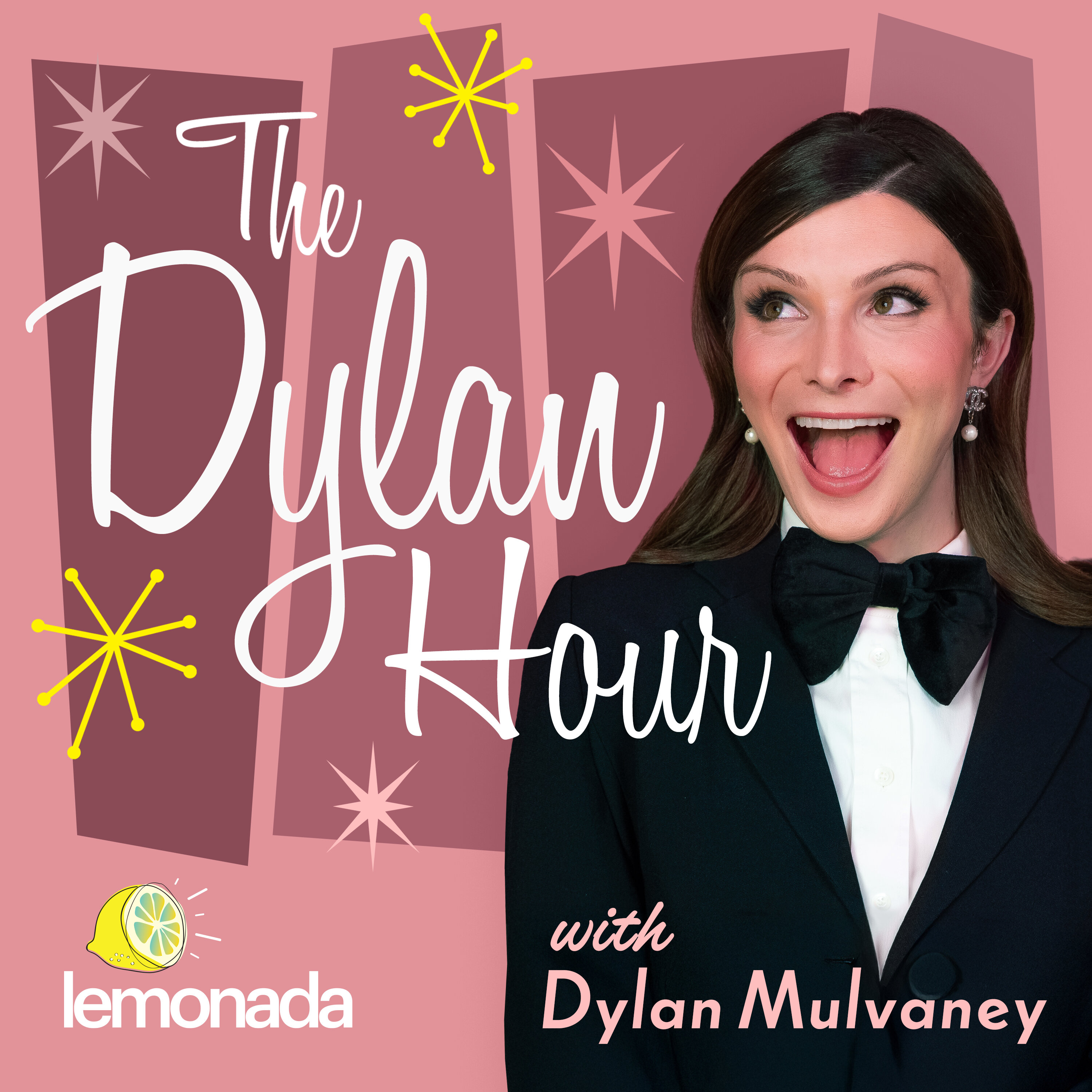
Loading summary
Transcript300 lines
- [00:00]
Dylan Mulvaney
Hey there.
- [00:01]
Glennon Doyle
We hope you enjoy the Dylan Hour. If you love the show, there's an.
- [00:04]
Dylan Mulvaney
Easy way to support it.
- [00:05]
Glennon Doyle
After you listen, take a quick moment.
- [00:07]
Dylan Mulvaney
To leave a rating and review on Apple podcasts. It really helps more awesome listeners like you discover the show.
- [00:13]
Glennon Doyle
Thanks for your support and enjoy the episode.
- [00:16]
Dylan Mulvaney
Hi everyone, I'm David Duchovny. Join me on my podcast, Fail Better.
- [00:21]
Glennon Doyle
Where we use failure as a lens.
- [00:23]
Dylan Mulvaney
To reflect on the past and analyze the current moment. I I speak with makers and performers like Rob Lowe, Rosie O'Donnell and Kenya Barris, as well as thinkers like Kara Swisher and Nate Silver to understand how both personal setbacks and larger forces impact our world. Listen to Fail Better wherever you get your podcasts.
- [00:47]
Glennon Doyle
Lemonad, in your car, in the shower, on a walk through the Dylan Hour. Feeling sweet, feeling sour. I feel nothing. The Dylan Hour. My couch is open. It's better than therapy. All you soccer moms, all your they's and thems, all your bottom boys, my bisexual femmes, come one and all disassociate with me. It's free, grab a drink or two or three. You have no friends. All good. You got me. It's the Deal Hour. Love ya. Hello, and welcome back to the Dylan Hour. Is this an okay time? God, I hope it is, because this might be one of my favorite episodes of the Dylan Hour and definitely the most vulnerable because I am bringing on sort of a queen of vulnerability and just kindness and buoyancy with my favorite author and someone who got me through a lot in my life. And, God, we talk, we cover a lot of different things, and I just want to get into it. So without further ado, I want to welcome onto the Dylan Hour Glennon Doyle.
- [02:11]
Dylan Mulvaney
Dylan, I've been waiting for this moment. I've been waiting to meet you for, oh, so many years.
- [02:16]
Glennon Doyle
This is just the beginning.
- [02:18]
Dylan Mulvaney
I know.
- [02:19]
Glennon Doyle
I can't wait to be on a real couch with you one day.
- [02:21]
Dylan Mulvaney
I know, I know. And I was trying to figure out today when you came into my consciousness, because now it's just like this overlapping thing where every person that I love is your friend.
- [02:35]
Glennon Doyle
And so I'm going to take that as a huge compliment because the people that you love are. You're very specific about and the people that I now love, which is something that I learned through you. I also feel like I learned how to, like, occupy space because of you and, like, taking up space. And the fact that you're willing to come on to my space today and share with me is, like, the greatest gift in the entire world.
- [03:01]
Dylan Mulvaney
I'm delighted.
- [03:02]
Glennon Doyle
I was going through a really rough time last year and you reached out in a moment when I think I was at my lowest. And now I'm back, baby, I'm feeling happier than ever. But just having that support from you, somebody that like, I've admired for so long, but then actually getting to like connect with you and talk with you is like, I couldn't believe it. But so on social media, how are you just scrolling? Are you kind of. How. How did, like, how do you see things? How do you monitor what you're seeing and filtering these things?
- [03:37]
Dylan Mulvaney
Yeah, this been. It's been a long journey for me. I'm a highly sensitive person and so I had this idea for a long time that I was just supposed to be able to handle social media life. I was supposed to be able to handle the input of the world. And so I would continue to expose myself to everything even though it crushed me constantly because of this, like, tough supposed to self that I constantly think I'm about to become and never have. And so over time, in my last phase of recovery, which has been my most effective, I just have really started accepting who I am, not who I like, wish I would be, but who I actually am and how things actually make me feel. And I really filter carefully. My social media, my Internet, my tea, all of the input in my life, I filter really carefully.
- [04:31]
Glennon Doyle
And the texting is the thing that you taught me was that I don't have to text people back right away or at all.
- [04:38]
Dylan Mulvaney
Dylan. Whenever I get really frustrated or stressed about some perceived obligation, it really helps me to take a step back and think about whether I even agreed to that obligation. Like 20 years ago, people didn't live all day in response to whoever wanted to tag them. Like, you're it all day. Like just in reaction, constantly because they didn't have phones.
- [05:04]
Glennon Doyle
How crazy, though, that somebody can see when you read something.
- [05:08]
Dylan Mulvaney
It's like being monitored all the time on Instagram.
- [05:12]
Glennon Doyle
If I want to see something that like somebody tagged me in or they sent me a message, I then they know that I saw it. And then it's like a. It's like a countdown clock of if I'm going to or if. What does that mean? If you don't? Do you have a little bubbly next to you?
- [05:26]
Dylan Mulvaney
I've got some bubbly.
- [05:28]
Glennon Doyle
What is your bubbly?
- [05:29]
Dylan Mulvaney
So my, you know, I've been sober for 47,000 years, so this.
- [05:33]
Glennon Doyle
Congratulations is.
- [05:34]
Dylan Mulvaney
Thank you. This is my favorite. We call it fancy water in My house. So boring. Water, obviously, is flat. Fancy water is bubbly water. My favorite is grapefruit. It's the spindrift. Do you know Spindrift?
- [05:48]
Glennon Doyle
Oh, spin. That's, like, healthy for you, I think.
- [05:50]
Dylan Mulvaney
I don't. I mean, I think it's, like, fake healthy. Like, I'm sure it's not actually healthy. And I don't know anything about this company. They could be awful. I'm not.
- [05:57]
Glennon Doyle
I think that Laffy Taffy is a fruit. So in my mind, spindrift is about as crazy as I'm gonna get when it comes to, like, healthy things.
- [06:04]
Dylan Mulvaney
Right. Well, there you go.
- [06:06]
Glennon Doyle
I thought, because on the Dylan hour, we always have a little something to sip on. I think we'd call it Bubbly girl water today, because as I think people might assume that we're both kind of, you know, we get vulnerable, we get serious, but we're also kind of fun.
- [06:19]
Dylan Mulvaney
I think we're fun.
- [06:20]
Glennon Doyle
How do you shift from going from, like, your bubbly self to then, like, when people expect the serious vulnerability from you?
- [06:28]
Dylan Mulvaney
I'm constantly back and forth, back and forth. I don't understand anything if it's not funny. Like, I think life is. All the hard stuff is absurdly hilarious. It's just all life is ridiculously hard, and that's what makes it funny.
- [06:44]
Glennon Doyle
And then I feel like if I've lived in the hard for too long, I then get. I have to make a joke or I have to do something to lighten the tone a bit. And that's also occupying space. I feel like I feel too guilty about. If I'm, like, taking something too vulnerable for a while, then I'm like, oh, I need to not tell people how I actually feel.
- [07:07]
Dylan Mulvaney
Yeah, that's like when you're text people, text me something really serious and then write lol at the end. It's like, we can't take the sincerity, so we have to, like, punctuate it with.
- [07:22]
Glennon Doyle
With something that's like, just jk. Yeah. And so a big thing that we're doing here after our first sip is the bitter and sweet of the week. And you need a second to think about it.
- [07:34]
Dylan Mulvaney
You go first.
- [07:35]
Glennon Doyle
Okay. I would say that my bitter is. I feel like I have sort of outgrown certain habits and took a major step forward in a lot of ways, creatively and, like, psychologically. And now I'm starting to go back into, like, my sad girl era a little bit, and I find myself taking, like, two big steps back and leaning more into sort of these comfortable habits that aren't good for me. And it's scary because I know that progress has been made, but it almost feels like nothing. Especially, I think when you do a project or you release something that you're so proud of and then it's over, you almost forget that it exists in a way. Like, I did this play and it was the happiest time in my life. And now that it's not happening, you know, for a bit, it feels like, did it ever happen at all? Yeah. But I think the suite for my week is knowing that I do have things to look forward to. My book, my play will happen again. I think that's what's really screwed about social media is you feel like every single day you have to be putting something out there. And unless. And if you don't, you're not, you know, relevant or special or people don't care about you anymore. And it is cool to finally have these projects that I've been working on for years to then be like, oh, but wait till, you know, this comes out. And hopefully that wave will. I can ride it a little longer. But is that something that you've experienced, like when you release a book and then it's like, what, what now? Or how long do you live in that high?
- [09:19]
Dylan Mulvaney
Absolutely. But the older I get and the longer I live in this creative world, the more I feel like people like Adele and Lorde have it figured out. I trust in people who make something deep and wide and beautiful and take their time and go away and don't feel the scarcity of being relevant every day and. And then come back with something that's true and real and an offering and then go away again. Because what I have found when I succumb, which is often to the pressure to be relevant every day, to be doing something, to be offering something all the time. Because my entire life is a back and forth between this energy of leave me alone and I feel left out.
- [10:14]
Glennon Doyle
Yes, just back 0 to 100 all the time.
- [10:18]
Dylan Mulvaney
But it's like this. It's different to offer something daily or weekly or monthly. It's shallow. They're just more shallow offerings than the ones that come when you trust yourself and your art enough to go away and have the transformation and depth that real art requires and then come back with that. And it's just withstanding that, like, scarcity in the air of, you know what it is, My therapist called it the other day is she said, glennon, you need some more object permanence. Like, you know, how Babies think, like, when they close their eyes, they disappear. Like, just because no one's paying attention to you right now doesn't mean you don't exist. Glennon, like, it's okay. Go away, make your stuff and come back. Right, So I get that Dylan, but.
- [11:08]
Glennon Doyle
In Adele, I think she just. Cause she finished out her Adele world sort of concert and she was like, I don't know when you're gonna see me next, and we don't. But she gave hell of a show. And that's like. I think when you're doing it, you put it all out there.
- [11:24]
Dylan Mulvaney
Yeah. And she said, I think I've been thinking about this every day. She said, I've built this beautiful life and now I wanna go live it. What's the point of building all the things if we never sink in and say it's good enough and enjoy all of the beauty of the actual lives we work so hard to build? I think it's. I think she's a really great example of not succumbing to scarcity.
- [11:46]
Glennon Doyle
Okay, I'm going to try to not succumb to the scarcity. Now you've had a minute. Do you think you might have a bitter and sweet of the week?
- [11:54]
Dylan Mulvaney
Yeah, I think it's. It's a little bit similar to yours and it's kind of dramatic. So I'll just say it in a simple way.
- [11:59]
Glennon Doyle
I love drama.
- [12:00]
Dylan Mulvaney
Okay, give it to me. So I think the bitter is that I kind of like, I've been really doing so well and strongly with my recovery this last two years, and then just in this past month, I've really backslid a little bit, and that has sucked. And I felt very lost and kind of like what you were saying in terms of. Wait, what happened? Did I ever even recover? I've forgotten everything, I'm fucked again, et cetera, et cetera. And then I realized the sweet is that the other day I sat down and I figured out why I let myself get. For me, it all has to do with eating. I think everybody has. I consider myself lucky that it's something that's so obvious that I can, like, see on my body. I can feel. I actually stop eating when. When I. Abby calls it when I get weird again. And I never really know why. It's been happening for freaking 45 years. But this time I figured out that I had started making decisions again that were outside of my desire. I, Dylan, had made these really strong, important decisions that I was gonna pull back on some things that I was gonna, like, live My delicious little life and not sign contracts, not do these things that, like, that some people can handle. But for me, require me to build up this, like, armor that I don't want to have to live with. Like, I want to build a life that supports the softest version of myself. But because of scarcity, I had started.
- [13:53]
Glennon Doyle
That you shouldn't have, right?
- [13:55]
Dylan Mulvaney
And so I was doing that again, and I was making decisions that were outside of that, like, important decision that I had made to take care of myself. So the sweet is that I figured it out. I would not have figured it. I would have gone on for another year. I would have gotten loster and lost her. I would have been.
- [14:13]
Glennon Doyle
And so how'd you find it?
- [14:15]
Dylan Mulvaney
Well, I was sitting. I was in therapy, actually, and I was reporting what had happened. And my therapist said, okay, but like, a month ago, we were all right. We were. You were gonna make this decision. Remember, you were happy because of this and this and this. And I realized, oh, my God, those are the things I was going back on. And so immediately after the therapy session, I called, I made some really serious, important calls to say, nope, I'm not doing it. Nope, nope, nope. I disappointed a bunch of people. I let down three different people that I don't wanna let down. And then I felt okay, and I was able to start eating again. And now I feel alive again.
- [14:57]
Glennon Doyle
And was the. Did the fear of, like, telling these people, was it because you didn't wanna upset anyone? Like, it was. Was it the people pleaser in you?
- [15:07]
Dylan Mulvaney
I think that it wasn't. I think, a little bit. I think more it was the fear of irrelevance, of. I always think, well, if there's an opportunity in front of me, if everybody else would want that opportunity, then I should do it. I should want it. Like, if it's on the table, other people would die for that thing. Like, of course I should do it. And I'm like, that's not. There's. I can. Dylan, I can just feel when I'm making a disembodied decision. Like, if it's like, it's totally disembodied. I'm like. It's like when I go to the grocery store and I buy a bunch of fricking kale and I get it home. And Abby's like, do you want me to just throw this kale directly in the trash? Or should we put it in the fridge first and pretend we're the kind of people who are going to eat kale and gut? Like, I'm making decisions about this fake person I am not. And when I actually get in my body and I think, do I want that? Even if everybody else would want it, I don't want it.
- [16:10]
Glennon Doyle
Honey. It's time for a little ad break, so don't go anywhere. This show is sponsored by BetterHelp and therapy can feel like a big investment, but the state of your mind is just as important as your physical health. Now let's talk numbers. Traditional in person therapy can cost anywhere from 100 to $250 per session, which adds up fast. But with better help. Online therapy you can save on average up to 50% per session, and with better help, you pay a flat fee for weekly sessions, saving you big on cost and on time. Therapy should feel accessible, not like a luxury. With online therapy, you get quality care at a price that makes sense and can help you with anything from anxiety to everyday stress. Your mental health is worth it and now it's within reach. I have always been a queen of therapy. I even asked my parents if I could start therapy when I was just a little kid and it's still one of my favorite hours of the week. But I know that it's not as easy for everyone to jump into, so I feel like Better Help really is an awesome option. With over 30,000 therapists, better help is the world's largest online therapy platform, having served over 5 million people globally. It's convenient too. You just join a session with the click of a button, helping you fit therapy into your busy life. Plus you can switch therapists at any time at no extra cost. Your well being is worth it, so visit betterhelp.com dylanhour to get 10 off your first month. That's BetterHelp. H-E-L-P.com dylanhour Love ya. Do you ever get hit with a.
- [17:47]
Dylan Mulvaney
Cringy memory of your 13 year old self out of nowhere and suddenly your.
- [17:51]
Glennon Doyle
Panic sweating and laughing at the same time?
- [17:53]
Dylan Mulvaney
Don't, don't worry, don't worry. We all get get that.
- [17:55]
Glennon Doyle
It's because being an adolescent is one of the most visceral shared experiences we have as people and we want to talk about it. Join me, Penn Badgley and my two friends Nava and Sophie on podcrushed as we interview celebrity guests about the joys and horrors of being a teenager and.
- [18:11]
Dylan Mulvaney
How those moments made them who they are today.
- [18:14]
Glennon Doyle
New episodes of podcrust are out now. Wherever you get your podcasts.
- [18:20]
Dylan Mulvaney
It'S the dealing hour.
- [18:25]
Glennon Doyle
When I was listening to your audiobook, you talked about writing a previous book and then going to promote it and then realizing, like, ooh, this doesn't feel as good, and I think it needs to be something different. And I was going through a very similar situation last year. Was that a really crazy decision for you to be making?
- [18:51]
Dylan Mulvaney
Yeah. I mean, Dylan, it's weird to think back then, but when I was writing Love Warrior, I was just really entrenched in evangelical Christianity. I was a Sunday school teacher. My community was all Christian women. And I wrote Love Warrior as a really a marriage redemption book, a story, because I had found out that my husband had been cheating on me our whole marriage, and that was a doozy. And then, you know, in the Christian.
- [19:28]
Glennon Doyle
Oh, this is a sip and spill. We're in the sip and spill of it all now.
- [19:31]
Dylan Mulvaney
We are. We are. I mean, in the Christian world, that's like, the pressure to whatever is called just find grace and forgive is heavy. It's heavy. And that is the story of that book. And then. And it was a big book. It was picked as Oprah's book club. So there was a lot of pressure on the story. And then at the first event that I went to to launch Love Warrior, I met Abby.
- [20:00]
Glennon Doyle
Oh, my God.
- [20:02]
Dylan Mulvaney
It was six weeks before the book came out, and I had to talk about, like, disappointing everybody else while rocking the boat. I had to. I mean, I had to call Oprah and be like, okay, so here's the thing, actually, our book, our redemption book, I'm actually not. I'm gonna follow this love that I have with this woman. And, you know, harder than that was telling my children and all of it. So. And, you know, people told me. I mean, my people I love, who are still in my life career wise, said, this will be the end of your career forever. Like, you can do this, but this will be the end.
- [20:47]
Glennon Doyle
Honey, I don't. I'm looking at you right now, and I don't think that's the case.
- [20:53]
Dylan Mulvaney
But that's the thing, Dylan. It's like, what's so wonderful and beautiful about you and is that we don't need people to stay the same. Like, we don't. That's not what's trustworthy. What's trustworthy is to just tell the truth of who you are, and then when the truth changes, tell that truth. The trouble we get in is when we tell the truth of who we are, and then that becomes some kind of cast. Like, we have to stay in that thing.
- [21:22]
Glennon Doyle
Yes.
- [21:23]
Dylan Mulvaney
That's not even true. That's not the way life works. Life is change.
- [21:27]
Glennon Doyle
And I think social media only helps prop up that initial truth that then can't form into other truths. Because I remember the first time I cursed on social media, everyone was like, what? They couldn't believe it. And then now I think there's nothing sustainable about having to be, you know, the bubbliest sort of infantilized version of femininity and something. I really wanted to talk to you today and kind of the theme of our episode is sisterhood. And I think I obviously, I love femininity. I love connecting with women. I love feeling those friendships and those. That sisterhood in my life, but I feel often very guilty about that sisterhood. Also. We share a little Irish sisterhood. Did you know that?
- [22:19]
Dylan Mulvaney
I do now. I did not know.
- [22:21]
Glennon Doyle
Top of the morning to you, honey Mulvani. You're from the north. You're very Irish, right?
- [22:26]
Dylan Mulvaney
Very Irish, yes.
- [22:27]
Glennon Doyle
Okay, now tell me, when you think of, like, the idea of sisterhood, what does it mean to you?
- [22:35]
Dylan Mulvaney
That's such an interesting question because, well, as you know, the concept of gender is so baffling to me. Like, even. Even the word sisterhood I get stuck on because I don't understand. Yes.
- [22:49]
Glennon Doyle
Who's entitled to it.
- [22:52]
Dylan Mulvaney
And I'm not being difficult. Like, I truly don't. There are some concepts that I cannot get a hold on, and I don't think it's because I'm stupid. I think it's because they are concepts that are nonsensical. Speak on it. Anyone who thinks they have a grip on it has, like, some kind of false sense of security or dogma. Okay. I think sisterhood, to me, I mean, I guess for me, like, siblinghood would be a better. A better word. I guess it means.
- [23:28]
Glennon Doyle
Well, because you do have a real sister.
- [23:30]
Dylan Mulvaney
I do have a real sister. Yeah.
- [23:31]
Glennon Doyle
Yes.
- [23:32]
Dylan Mulvaney
I have a real sister.
- [23:33]
Glennon Doyle
Siblinghood is like the literal, you know, sort of the sister to sister connection that you do have with your sister. But. And then I guess sisterhood can also be more figurative, though, like, of, like, when you think of your female friendships. Is there a better, like, word that you can think of?
- [23:54]
Dylan Mulvaney
I mean, I guess I want to live in a way that, like, when I reached out to you, I find life to be so difficult. I really. It's not an easy road for me.
- [24:11]
Glennon Doyle
No. And retweet.
- [24:15]
Dylan Mulvaney
What I've learned is that the only thing that makes it a little bit easier is that if when I'm struggling, not when I'm at a high. Everybody wants to be friends. When you're at a high, like everybody, like, that's not. That's nothing. But when I'm not popular, when I'm not having a good moment, when I'm struggling, I never forget the people who reach out then.
- [24:45]
Glennon Doyle
Amen.
- [24:46]
Dylan Mulvaney
I think that is sisterhood to me.
- [24:48]
Glennon Doyle
That was when I had a lot of very shiny people in my life because of this following that I grew. And then when shit went down, it was interesting to see who was there. And how interesting that, like, not only the people that stayed there, but you were one of the few that actually like, ran to me and said, hi, are you okay? In a way that I would have expected a lot of my loved ones, you know, the people that I thought loved me to do, but they were scared of what that meant if they showed support, especially publicly. And I think sisterhood is something that I feel really. It actually makes me really feel nice to know that you kind of also are struggling with this concept. Because I get very guilty. I feel guilty because I assume that every specifically, like CIS women love the concept and then don't want me to be a part of it. You know, they don't feel like trans women can occupy that space. Or if we do, it needs to be this very delicate sort of walk of the line of what's inserting yourself too much into womanhood and sisterhood and what's not enough and who's trying too much and who's, you know, not. And I think I've sort of thrown my hands up at trying so desperately to be a part of something that doesn't always feel like it wants me. But do you at times feel like you aren't included?
- [26:22]
Dylan Mulvaney
I have never. This is an ad nauseam conversation that Abby and I have had. I have never in my entire life, not one time felt a true belonging in a group, except for my teeny little family in this house, which is why as my kids are getting older and leaving, I'm having a full on crisis. It's not. Yeah, it's not the one group that.
- [26:49]
Glennon Doyle
You were like, I could lead. This is disband. Wait, are they moving out for college?
- [26:54]
Dylan Mulvaney
One is a senior in college, one is. She's just graduated from high school and she's doing music, so she's on. They're doing what they should be doing.
- [27:04]
Glennon Doyle
Okay, so I'm moving in is what it looks like. Dylan, you move in and I'm never leaving that house ever. And we're just gonna sit on the couch. And maybe that's what sisterhood is.
- [27:16]
Dylan Mulvaney
That is. But Dylan, I just want you to know that I just believe that there are some people who struggle with belonging. My sister and I call it, like, dissolving into a group. It's usually. I know several people who have this feeling, and I think it's people who have a very strong individuality. I really think we kind of balance back and forth between do I get belonging or do I get individuality? And for me, for many reasons, I panic a little bit. I can't. I have a hard time fitting in anywhere. And whatever you're talking about, the version of sisterhood that looks like a commercial or like a book club or like a. That thing, I don't have that. I don't have a group. I don't have, like, a bunch of people that I call and come over on Sunday and we, like, braid each other's hair. I don't have that version. I have a few friends that I would die for. They're separate. They don't. They're not even friends with each other, and there's only, like, three of them.
- [28:32]
Glennon Doyle
It freaks me out when, like, friends from separate places sometimes get together and there's. It's scary. It feels like we're either a wedding or a funeral. I'm like, which one is that? Because I do sometimes. Because some people aren't supposed to meet. I don't think. You know, some. I think sometimes a little separation isn't the worst thing.
- [28:54]
Dylan Mulvaney
Totally.
- [28:55]
Glennon Doyle
But as far as your. Your actual biological sister, tell me about her.
- [29:03]
Dylan Mulvaney
Well, she's probably one of the reasons that I've never forced belonging with anyone else, because. And I used to be so confused about when my friends needed each other, because I always got every single thing that I needed. So I thought from my sister. She's three years younger than me. She doesn't function like a younger sister. She functions like an older sister, which is something that happens in families where one kid is addicted. So I was a raging addict from the time I was 10 years old. So because of that, she kind of became the caretaker. She is still the caretaker. 40 years.
- [29:40]
Glennon Doyle
Amanda, right?
- [29:41]
Dylan Mulvaney
Amanda, yeah.
- [29:42]
Glennon Doyle
And Amanda co hosts the podcast with you sometimes.
- [29:45]
Dylan Mulvaney
She sure does. She's a genius. She's the fiercest, smartest, kindest person I know. We were actually in a car this week because my aunt is really, really sick, and we had to go sit with her, and we were driving home, and we just. My sister just said, I cannot believe that there's gonna be a point on this earth when one of us has to leave the other first. Like, I don't have any recollection or consciousness of the. Of life without her. Yeah, yeah. So that sisterhood I get. But she, but, but like, but that's. She has to love me. That's the thing. I can't find belonging where people can make choices. I can only find belonging with people who are contractually obligated to love me. Yeah, yeah.
- [30:39]
Glennon Doyle
And your sister has been kind of going through it as well lately with a lot of health things. But most, I think it all relates back to advocating for yourself. And that was a huge theme of Amanda's life.
- [30:52]
Dylan Mulvaney
Recently saved her life. I mean, she went for her mammograms, they were all clear because of some genetic testing we had because of a family member. She had this like one thing they couldn't explain on her genetic testing, but they said it's fine, don't worry about it. She insisted upon a ultrasound and long story short, she kept insisting, they kept saying, it's fine, you're fine. And then she kept insisting. She just had this hunch. And they ended up doing an MRI and they found that her breast was actually full of cancer. But because of her density, you have a high density breasts, high density breasts, it shows up white in a mammogram and cancer is white, so you can't see it. It's just an insanity of the medical system that is of course not set up to serve women in any way. So her self advocacy, following her hunch, it's kind of a version. It's exactly a version of what we talked about before. It's just amazing when you figure out no one else is going to take responsibility for your life. It sounds so simple, but it's not simple. It took me 50 years to figure it out. It's like whenever I get bitter that I'm being dragged in too many directions or that I have to do, have to do something that I, I get mad at other people for making me do the thing. And then, and I get bitter. And then phase two is my body starts. Start shutting down. I get exhausted, I can't function. And then stage three is when I remember that no one is supposed to take care of me except for me. And then I go and make all my decisions and everyone goes on and lives. And so sister's version was that that was her version of self advocacy and she saved her literal own life. Wow.
- [32:48]
Glennon Doyle
And so how is she right now?
- [32:50]
Dylan Mulvaney
Perfect and wonderful. We went through like a slice of hell and not knowing and it was really scary for about six months. And she just Got extremely lucky, and it was all cleared out, and she had wonderful surgeons, and now she's absolutely fine.
- [33:06]
Glennon Doyle
Oh, that makes me so happy. I would like to meet her one day.
- [33:09]
Dylan Mulvaney
Oh, I hope. I know you will. You will love her.
- [33:13]
Glennon Doyle
Okay, good.
- [33:13]
Dylan Mulvaney
She'll be a good sister to you.
- [33:15]
Glennon Doyle
See, that's where I think I really. I have a half sister, Stacy. Hi, Stacy. Hi, Stacy. But, you know, she's my sister, and she's a bit older than me, and we. So we didn't really grow up the same way that you were talking about of, like, knowing life without the other. And we. You know, also, my parents were divorced, so I was always at a different house. And I think there was, like, when I transitioned, there was a guilt associated, especially, I think, my family. I just. I couldn't believe that they were going to have to make all these shifts, you know, saying my daughter, my. My sister, my. You know, she. And. And. But specifically, more than anything, was. It was my mom and my sister, because I felt so guilty that, like, I was gonna be expecting them to view me as equals or, like, I think I was. I. I talk a little bit about this in my book of, like, kind of almost. I think some queer people and trans people, we pull away from family because we're so scared that, you know, even if they do accept us, that it's gonna. It's too much to ask of someone that loves you to then shift and see you in that different light. But it's so possible. And I think, you know, it's been a long road trying to get there with my family. But was that difficult for the family, the women in your life, to kind of get behind seeing you as a queer person?
- [34:52]
Dylan Mulvaney
I mean, okay, a couple things, because as you're talking about that with your family, what I'm thinking is that is a version, and maybe in some ways a more dramatic and difficult version, I'll give you that, of what every single adult has to do. Every single. Like, the thing that I have found that has kept me most trapped and small is the family role that I was cast into. In my family of origin, everybody in the world is cast into a family role. Okay? You're the this one. You're the that one. You're the that one. Yes. That's how families function, because.
- [35:33]
Glennon Doyle
Glennon, could we turn off the air? Sorry, I'm getting a little chilly. Chilly.
- [35:37]
Dylan Mulvaney
Good job, Dylan.
- [35:38]
Glennon Doyle
I know. I can't believe I asked for what I needed.
- [35:41]
Dylan Mulvaney
Asked for what you need.
- [35:42]
Glennon Doyle
Yeah. Oh, beautiful people. It's starting. Oh, my God. Okay, Glennon, what was your family role?
- [35:50]
Dylan Mulvaney
Okay, so I was the sick one. That was my job. And. And, you know, there's a lot of versions of this role. Some people call it the scapegoat. The important thing is that the sick one stays sick. So for me, it didn't matter what that sickness was. It could be bulimia, it could be depression, it could be alcoholism, it could be anorexia, it could be intense anxiety. What mattered was that I stayed fucked up. Because what happens then is that everybody else organizes themselves around that person. Like all of the family's dysfunction can be understood as just inside this one person. One person is embodying all the fucked upness of the whole family. Okay. What is fascinating is that every person has this, like, hero's journey that they can go on based on the role that they were cast in in order to become fully human. All right? But it's so hard because when I first started to consider. I mean, Dylan, I used to write. In my first memoir, I wrote these words in ink. I was born broken. I was born. It's in writing. I can't take it back. Who's born broken?
- [37:02]
Glennon Doyle
And that's why you have a lot of books after, to prove otherwise.
- [37:08]
Dylan Mulvaney
I'm like, everything's just a retraction of. Because that's what life is, right? You just, like, keep looking back at with different lenses. Different lenses better.
- [37:16]
Glennon Doyle
I feel like I'm gonna find you in Barnes and Noble just, like, sharpieing out that line from every single one.
- [37:22]
Dylan Mulvaney
I know. But it's interesting because when you break out of your role, the whole family goes into chaos. Because when you change your role, everybody else has to change their roles. And it's. It's hard and it rocks the boat, and it's very scary. But I do believe that that is a version of what every adult. Most of us don't, by the way. Most people just stay in their family roles forever. They actually believe they're the sick one. They actually believe they're the hero. They actually believe that they're this one dimensional character and they never get to expand into their whole full humanity. But that's what adulthood is. It's just rejecting the original family role. Yeah, I have felt it.
- [38:03]
Glennon Doyle
And then do you feel like now you. Does your family have roles right now or do, like. Do you. Have you tried to kind of, like, not let that happen because you've been able to call it out?
- [38:17]
Dylan Mulvaney
Yeah. So here's what happened to me. And I. I wonder if other people will Relate to this. I bet they will is that I called it out and then shit got really weird with my family. Like it every holiday was like. It was like there was this huge elephant in the room that I couldn't take back. And so then guess what I did? I got sick again. I was like, oh. Like I didn't do this consciously. But the discomfort was so apparent with the whole family that it felt easier to be like, forget it, nevermind, I'll go back to my role. I'll be the sick one. We can all just, you know, turn back towards me and figure this out. So then I got sick again for another year before I figured out what I was doing.
- [39:02]
Glennon Doyle
It's like you've identified the stereotypes of like the Sex and the City characters and what they would say. And then it's like a black mirror episode where they don't know how to function anymore because they go to just be stereotypes of themselves. It's scary to call something like that such a big concept, especially if somebody isn't ready to hear that and if your family members, for example.
- [39:25]
Dylan Mulvaney
Yeah, because when you're saying when a kid is. When a grown up kid is saying, actually I don't think that I was just born broken. Like, I think there is a lot of toxicity and sickness, but I think it belongs to all of us. I don't think it can be explained away just as my problem. I think it's a family problem. That's not what they were saying when I was young. When a kid got sick, they just put the kid in therapy. I had to go to a mental hospital by myself and then go back to the same like. So the problem is that when you say, actually I don't think I was born broken. I think I was just born into a family, like all families where there was a lot of toxins and I breathed in those toxins and that's what made me sick. I don't think it was me. I think it was all of us. When you say that, everybody loses their mind because that wasn't the story, that wasn't the narrative, Right? That's like, then everybody has to look at their own shit and people do not want to do that.
- [40:22]
Glennon Doyle
But now you're, you are someone that I think is known as like helping others call out their own shit. And, and I think what is kind of odd about the that role then is that people tend to put you up on a pedestal or, you know, people like, I've seen people refer to you as like the patron saint of like Female empowerment or, you know, like some of these really intense titles. I. And, and so they like to project that onto me at times as well too. As far like a trans activist, which I'm like, wait, I've never called myself an activist in my entire life. Like, when people say that to you, I was curious. Just like, selfishly, I wanted to know, like, how does that make you? Does it make you feel weird or do you. Are you like, so grateful for it? How does, how do you respond? I shut down because it doesn't make any sense.
- [41:12]
Dylan Mulvaney
There's nothing real about it. Like, I, I will say that. So I go for a walk every day. And often I'll be walking on the little sidewalk in front of our house. It's like this big path. And very often someone will stop me who's actually listening to the pod and they will hug me. And there's a very real moment of realness. Something that they were going through, I was talking about, and that made them feel less alone. That shit lands with me. I like people who are just always themselves, meaning they're different every day. I'm not. I'm different all the days I. I can't even put a word after I am without getting itchy because I don't know what I'm going to be tomorrow. I don't know. And I need the freedom to be constantly evolving, to be whatever I need to be right now. So I can barely even say I am Glennon. So I'm certainly not gonna relate to. I am a patron saint, a female empowerment. That is way too much labeling for me.
- [42:21]
Glennon Doyle
Right? Yeah. I think about the I am statements of, like, well, like, I am a woman now. And I think about my relationship to femininity. And I'm so scared that, like, the moment that I claimed that title, like, how can my womanhood change and how can it evolve past this thing that especially what I struggle with is like. Because obviously people took to a specific version of what that I am was when I was putting out those videos. And now I feel very differently about my womanhood in a thousand other ways, in really rich ways and beautiful ones and dark ones and sad ones that. But I, I'm so scared because I don't think that they're gonna enjoy those that I am that woman as much as they did before.
- [43:10]
Dylan Mulvaney
And so, Dylan, that's womanhood.
- [43:16]
Glennon Doyle
Fuck.
- [43:17]
Dylan Mulvaney
Everybody on earth wants you to be a shiny two dimensional caricature.
- [43:22]
Glennon Doyle
Yeah.
- [43:23]
Dylan Mulvaney
And then when you introduce any sort of complexity, darkness, difference, blah, blah, blah, the whole world freaks. The Fuck out. So, yeah, I feel that too.
- [43:34]
Glennon Doyle
Did. Did your relationship with Abby kind of free you from a little bit of that being like, so close with another woman that like, you didn't have to, like, it wasn't as much in your own home.
- [43:51]
Dylan Mulvaney
Okay, so here's a funny story I'm gonna tell you that I've never told anyone. Because when you say that, you would think that, right? You would think right away. You look at Ab, she's so like, free. And no gender norms there. And when I first met Abby, our first night together, I flew. We were still very much on the down low. I had told my family and my kids, but nobody in the public. I flew to see her and we were going to be in the room for the first time. We had already both blown up our entire lives to be together and we had not spent more than 10 minutes in a room together. Okay.
- [44:28]
Glennon Doyle
Yes.
- [44:28]
Dylan Mulvaney
This is very intense, high stakes. We were in a hotel room. She had to leave to go do the ESPYs. She had to like accept. It's like the Oscars for the sports people or something. She had to like accept a statue with.
- [44:42]
Glennon Doyle
Do you think of yourself as a wag?
- [44:44]
Dylan Mulvaney
What is a wag?
- [44:46]
Glennon Doyle
A wife and, or, and girlfriend of like, sports players?
- [44:52]
Dylan Mulvaney
Um, I guess so.
- [44:54]
Glennon Doyle
We gotta get you a reality show.
- [44:56]
Dylan Mulvaney
I feel it.
- [44:57]
Glennon Doyle
You and all the wags.
- [44:58]
Dylan Mulvaney
My entire reality show.
- [45:00]
Glennon Doyle
You gotta continue. Go, go.
- [45:01]
Dylan Mulvaney
Dylan. They'd be like, she's still on the couch.
- [45:04]
Glennon Doyle
There she is with her bubbly water.
- [45:06]
Dylan Mulvaney
She's going to the bathroom. She's back on the couch. Okay.
- [45:10]
Glennon Doyle
So takes her high.
- [45:12]
Dylan Mulvaney
She. She leaves to do the ESPYs. She leaves me a present on the. The bed. I open up the present and, Dylan, it's these. If they were not 7 inch Louboutin heels, I don't know. They were the highest heels I have ever seen in my life. They. I couldn't. And I felt. I was like. I did not see this coming. This is like not the lesbian culture I was expecting. And I was.
- [45:39]
Glennon Doyle
You thought there was gonna be Birkenstocks in that box?
- [45:41]
Dylan Mulvaney
Exactly. Something comfortable at least. It was like. It could not have been a more stereotypical feminine shit, Dylan. I tried so hard. The whole time she was gone, I tried to put them on my feet. I was trying to walk her at practice, walking around the hotel. Cause I didn't want her to know that I didn't know. I think we've laughed about it so much and I think she was so entrenched in this, like, professional Sports world where you, like, buy your girlfriend this, like, fancy shit, this, like, hyper feminine versus masculine. And I was like, what is this shit? So it was so interesting. We had to, like, we were two women, and we were still very much unraveling and chilling. Yeah. Yes.
- [46:29]
Glennon Doyle
And then. Do you still own the heels?
- [46:33]
Dylan Mulvaney
No. I don't know what the hell I did with those. I just never wanted to see them again. No. And then over time, we did undo that. And Abby has been extremely helpful to me in. I used to say to her, dylan, I was so disembodied, I had no idea what I wanted, how to feel good, how to feel like myself. All I did was look out at the world and decide what I should look like, what I should present myself as, was what I should. I used to look at her and say, can you. Do I look comfortable? And she'd go, glennon, I can't tell you if you look comfortable. That's, like, a thing people have to decide for themselves.
- [47:16]
Glennon Doyle
That's the craziest question I've ever heard in my entire life.
- [47:19]
Dylan Mulvaney
That is a disembodied human being. Right? Just. It doesn't matter if I am comfortable. Can you just tell me if I look comfortable? Cause that's what I'm going for.
- [47:28]
Glennon Doyle
Because there's no chance in hell that I will ever be. But if I look it, that is. Oh, my God. Well. And, honey, I've started now dating these straight men, and I find myself putting on the Louboutins, but then taking them off because I'm like, oh, God, am I taller than them now? Or. You know, like, there's so many weird moments where I. I then try to, like, perform femininity, when, in a way, like, my transition's been a way to, like, break down all those things. And then I. It's like I sign up for it even further.
- [47:59]
Dylan Mulvaney
What is femininity like? What. When you think of femininity, what do you think of? I'm so fascinated with this question.
- [48:06]
Glennon Doyle
I feel like it's funny because it's a buoyancy. It's a. In which. What I don't want it to come off as is, like. It's so funny because now I'm like, listen, I can see the Daily Mail, you know, Dylan Mulvaney believes femininity to be flightiness. But I feel my most grounded when I'm in the air or when I'm in water or when I feel light on my toes. And that's where I like to actually live, is in the softness of feeling light. And that when I am my most feminine, which is. Honestly, I think there's very few people in this world who love the color pink more than I do. And I. I. And when I came out, honey, I told. Everybody knew that. And then I was told that that was a bad thing, you know, and. And. And that was something to be embarrassed of. Um, and so started to scale it back. And. And I think femininity now is. Is any moment where I feel sort of like the softness and the lightness to life. Um, and it. It has very. With my appearance, even, or my. My voice or the way that I. My body even, you know, my boobs, like, that isn't a part of my femininity. It's. It's actually. It's like the way that I occupy the air around me.
- [49:37]
Dylan Mulvaney
I freaking love that so much. In all of my conversations, I've never heard anybody say, it's about buoyancy. I feel that. I don't. I feel that in my body. That's so good.
- [49:50]
Glennon Doyle
Maybe. Are we the. The. We're the sisterhood of the buoyancy femininity.
- [49:54]
Dylan Mulvaney
There you go.
- [49:55]
Glennon Doyle
Oh, but. Oh, that means sob. Sisterhood of buoyancy. Uh. Oh.
- [50:00]
Dylan Mulvaney
It's also funny because the word boy is in there. In there somewhere, which is cool. I like that.
- [50:04]
Glennon Doyle
Oh, I kind of love that too.
- [50:07]
Dylan Mulvaney
It's like, it's the theme of this conversation, too. It's just about a resistance to rigidity. I don't think it has anything to do with what we think it has to do with.
- [50:19]
Glennon Doyle
Oh, I have another question. How about when you did. Oh, my God, I almost said transition. I meant when you almost. When you entered into your lesbian hood, was there ever a moment where you then felt like you needed to be more masculine? Like, was there ever a part of you that was like, ooh, I want to butch it up a little bit?
- [50:38]
Dylan Mulvaney
Yes. I have some humiliating pictures from a red carpet in which I decided that I was going to all at once embrace all of my lesbian ness. And if I have, like, this huge flannel on and.
- [50:51]
Glennon Doyle
Can I Google that?
- [50:52]
Dylan Mulvaney
I wish you wouldn't. I'm sure you will. It looked like a caricature of the other side. Like, it was ridiculous.
- [51:00]
Glennon Doyle
This will be the blast from the past segment where we now insert a picture of you on the red carpet in, like. Were you in, like, a suit?
- [51:08]
Dylan Mulvaney
No, it was like, a big flannel honey. Huge jeans and boots.
- [51:13]
Glennon Doyle
It looked so straight from the cabin in the woods.
- [51:16]
Dylan Mulvaney
It was pretty comfortable, though. I Do remember having a good night.
- [51:20]
Glennon Doyle
And you didn't even have to ask, do I look comfortable? Because you just were. So maybe you are a little more butch than we all knew. I love it. Oh, I think it's such a gender fuckery when, like, I go out in, like, a suit and, like, slicked little. You know, I feel like daddy for a second. I usually like to be mommy, but there's sometimes a moment where I think it's. It's. And funny enough, my best friend Lily finds me the most feminine when I don't really have makeup on, and I've. Oh, God. I want you to meet Lily. You're gonna fucking love her. But it's so. It's so beautiful to have a woman in your life see that version of you as the most feminine.
- [52:00]
Dylan Mulvaney
Oh, yes, I get that. Yeah. Abby is much more feminine than I am in spirit.
- [52:07]
Glennon Doyle
Really?
- [52:08]
Dylan Mulvaney
Yes. I am very feminine in appearance. But she is way soft. Like, whatever we attribute to. She's more open, she's more generous, she's softer, she's more buoyant. It's interesting. Her vibe is more feminine, but her appearance is more masculine. And I'm the opposite.
- [52:31]
Glennon Doyle
Well, I guess that is that the makings of a good relationship.
- [52:35]
Dylan Mulvaney
Could be.
- [52:36]
Glennon Doyle
Could be.
- [52:36]
Dylan Mulvaney
It could be. Whatever it is, it's working for us.
- [52:38]
Glennon Doyle
You know anyone for me?
- [52:40]
Dylan Mulvaney
Well, I only know, like, three people, so I'll check in with them.
- [52:43]
Glennon Doyle
I let. I'm. That's perfect. Because chances are, if you enjoy them, I probably will.
- [52:50]
Dylan Mulvaney
You know, I vetted them, babes.
- [52:54]
Glennon Doyle
We'll be right back with Glennon Doyle after a word from our sponsors. Hi there. It's Julia Louis Dreyfus. This fall, my podcast Wiser Than Me is back for season three with even more wisdom. Straight from some legendary old ladies. These chickadees have a lot to teach us. Every word is a lesson in living unapologetically and focusing on the stuff that really matters. From Lemonada Media Wiser than Me, Season 3 out now. Find it wherever you get your podcast. Subscribe to Lemonada Premium in the Apple Podcasts app and listen to every episode of season three A.D. free. DC versus Marvel, Android versus iPhone. John Williams versus Hans Zimmer. You may have had these pop culture debates with your friends, but I know.
- [53:53]
Dylan Mulvaney
You didn't have me weighing in with a verdict. I'm Ronald Young Jr. And as the.
- [53:59]
Glennon Doyle
Host of Pop Culture Debate Club, I'm here to listen to the arguments, ask some questions, and ultimately pick a winner. Listen to Pop Culture Debate Club wherever.
- [54:07]
Dylan Mulvaney
You get Your podcasts from Lemonada Media and the BBC. It's the Dealing Hour.
- [54:21]
Glennon Doyle
It's very clear that we've already done a lot of oversharing, so why don't we push you a little bit more to our overshare don't care segment.
- [54:28]
Dylan Mulvaney
Great.
- [54:28]
Glennon Doyle
This is a lightning round of 10 questions. You're on the clock. It's going to be two minutes countdown, and I'm just gonna ask you a series of questions and you answer them as quickly as you can, okay? Deal?
- [54:42]
Dylan Mulvaney
Deal.
- [54:43]
Glennon Doyle
Oh, my God. Are you ready?
- [54:43]
Dylan Mulvaney
I'm ready.
- [54:44]
Glennon Doyle
Okay, it's happening. What is your number one favorite way to relax?
- [54:48]
Dylan Mulvaney
Trash tv.
- [54:49]
Glennon Doyle
Favorite color versus color used most in your home decor.
- [54:53]
Dylan Mulvaney
Ooh, purple blue.
- [54:58]
Glennon Doyle
I turned 27 this year. What's something you wish you could tell your 27 year old self?
- [55:03]
Dylan Mulvaney
It's gonna be okay.
- [55:05]
Glennon Doyle
What's your comfort? TV show?
- [55:07]
Dylan Mulvaney
The Real Housewives.
- [55:09]
Glennon Doyle
What's a habit of yours that you wish you could instantly break judgment?
- [55:13]
Dylan Mulvaney
Judging, judging, judging, judging. Always judging.
- [55:15]
Glennon Doyle
Of all the ages you've been, what's the best age now?
- [55:19]
Dylan Mulvaney
48.
- [55:20]
Glennon Doyle
What is the last thing that made you belly laugh?
- [55:24]
Dylan Mulvaney
Voice messages from Liz Gilbert.
- [55:27]
Glennon Doyle
Lesbian trope that you fall under.
- [55:29]
Dylan Mulvaney
Oh, we just never stop talking, talking, talking, talking. We can't. It's not enough to understand each other. We have to overstand each other.
- [55:37]
Glennon Doyle
One of your favorite guests that you've had on your podcast.
- [55:40]
Dylan Mulvaney
Oh, I just had Alex Hedison.
- [55:43]
Glennon Doyle
Yeah, last time you cried happy tears.
- [55:48]
Dylan Mulvaney
Oh, my daughter, she's on a. She's on her first tour. So she's on stage singing to people. And I stand there and listen. I'm her roadie, Dylan. Abby and I are on an 18 city tour right now. I'm only on a break for two days.
- [56:01]
Glennon Doyle
Oh, my God. And I got.
- [56:02]
Dylan Mulvaney
So I stand there and she sings.
- [56:05]
Glennon Doyle
Who is your teenage crush?
- [56:07]
Dylan Mulvaney
John Blanchovi.
- [56:10]
Glennon Doyle
I don't know who that is.
- [56:11]
Dylan Mulvaney
Dylan, could you just say you don't know who that is?
- [56:15]
Glennon Doyle
Cold plunges or.
- [56:16]
Dylan Mulvaney
Nah, nah. For me, yes. For Abby.
- [56:21]
Glennon Doyle
What is the hardest part about writing a book?
- [56:24]
Dylan Mulvaney
Everything. It's the worst thing in the world. It's impossible.
- [56:26]
Glennon Doyle
Okay? In that we have. I mean, honey, I need 78 podcasts based on every single question I just asked you. So I guess we're going to a Jon Bon Jovi concert together one day.
- [56:38]
Dylan Mulvaney
We must.
- [56:40]
Glennon Doyle
That might be my introduction. I. What's it? What? Can you give me a little hum of maybe one of his big tunes?
- [56:46]
Dylan Mulvaney
Oh, we're halfway there.
- [56:51]
Glennon Doyle
We're Living on a cripple. Okay, I know that song. Okay. And now I just need to google a picture. But so was this. It's but like a younger version of Jon Bon Jovi. Just really got it going for you.
- [57:03]
Dylan Mulvaney
Yeah, I feel like any version now. I think when I think of my teen, my crushes, they were all the long haired. Like, you know, the bands, the rock bands, they all have the long hair. They still have that. So I think it might have been my gateway, like my acceptable. My acceptable embracing of the femininity early because I. That I had no. There was no possibility of queerness for me. I didn't know a single queer person. There was no queer people in my neighborhood, my school mind. I just. So I think that that may have been the way that I got in the door.
- [57:38]
Glennon Doyle
Okay. And you see, I think the long hair for me was I was attracted to long haired men because I wanted the long hair and then I wanted to be a woman. So, you know, it's. It's two sides of a different coin. That's right. And then how about. Wait, you just saw Alex Hedison, who we love. It's you. You've got this like you. You are kind of part of like a lesbian mafia in a way.
- [57:59]
Dylan Mulvaney
It's like we call ourselves a militia Etheridge. A militia Etheridge is what we call ourselves.
- [58:05]
Glennon Doyle
That's what you call yourselves, the militia Etheridge?
- [58:07]
Dylan Mulvaney
Yeah. Any group of lesbians. Yes.
- [58:09]
Glennon Doyle
Oh, that's really good. So I just need to get a girlfriend really quickly to join that.
- [58:15]
Dylan Mulvaney
You are so welcome, Dellen. You are so welcome.
- [58:18]
Glennon Doyle
And then this is a biggie though, because I. I feel like I' so much from you that I need to be able to give back to you in other ways. You know, it needs to be an equal exchange. I'm friends with many Real Housewives. Are there any that you are part. You know, and maybe you like to keep work and play separate, but is there anyone that you are. Like, if I could have it just like a meal or a little conversation with which of the housewives do you just adore?
- [58:46]
Dylan Mulvaney
Well, Dylan, I think I just. I think one of the beauties of the Real Housewives for me is that they stay in my tv. I don't know.
- [58:53]
Glennon Doyle
And that might be for the best.
- [58:54]
Dylan Mulvaney
If they came to my house.
- [58:55]
Glennon Doyle
You know what, you seem to clean up your side of the street pretty okayish right now. And I don't know if it could bring in some fun chaos.
- [59:05]
Dylan Mulvaney
I think I love the fun chaos. I like contained chaos for Me, structure liberates. So lots of chaos. But inside, my TV is. I can survive. But I think I'm a person who tries so hard. Like, I'm just such a. I just try so hard. And I'm always trying to be good and do the right, but be better. And I just. There's something that is so freeing to me to watch a bunch of women who are not even trying to be good. They are not even trying to be good. They are.
- [59:29]
Glennon Doyle
And they're trying to be bad.
- [59:31]
Dylan Mulvaney
They're trying to be bad. And I don't hate it.
- [59:35]
Glennon Doyle
Oh, it's.
- [59:36]
Dylan Mulvaney
I do not hate it.
- [59:36]
Glennon Doyle
You know what I got to tell you, though? Being in those rooms with them, even when the cameras are off, they're. They. They're still being bad. They're still being bad, but in, like, a very lovable way. I got. Oh, honey, we gotta have a dinner. I can't. I got some good stories for you, but also maybe. Are you. Be honest with us. Is one of these contracts that you had to, like, retroactively turn down. Were you gonna join a Real Housewives franchise?
- [60:03]
Dylan Mulvaney
No. No one has ever invited. I would be the most boring. Can you imagine? Let's communicate directly. Let's know. I would be the worst.
- [60:12]
Glennon Doyle
I've thought about it a lot of, like, if I was like a permanent fixture on that show and what kind of tropes or stereotypes I would fall under. And I think we're pretty similar in the way that we would probably just cry every single time a fight broke out and said every. You know, in Mean Girls, where like, the. There's the she. The girl gets up and she's like, can't we all just get along?
- [60:30]
Dylan Mulvaney
Yes.
- [60:31]
Glennon Doyle
I think that that would. It would start to. Or we would, like, we'd hold it in and then we would fuck it. Series finale. We'd explode.
- [60:39]
Dylan Mulvaney
I could do that too.
- [60:40]
Glennon Doyle
Like, everything you ever thought about. Everyone would come out.
- [60:44]
Dylan Mulvaney
We could analyze the shit out of them. I will give you some tea, which is that more than one Real housewife who has been through the transition of being in a hetero and then switched out has contacted me secretly for guidance.
- [61:04]
Glennon Doyle
So that's who. Okay, so you're the whis. You're the lesbian Real Housewife Whisperer. I'm the celebrity trans kid whisperer. Whenever somebody has a trans kid that in Hollywood, I always am like, oh, I got this great meeting with someone, and then I show up and it's like them holding the hand of a small child in like, a Disney gown. Saying, help. So that's who's in our DMs, Dylan.
- [61:27]
Dylan Mulvaney
That's the story of my life. A different version of that every time. It's always somebody getting sober or somebody who just figured out that they're gay. That is my job on the planet, is to walk people through those things. I didn't sign up for it, but that is my job.
- [61:45]
Glennon Doyle
Well, I'm gonna send all my people for those particular things your way. You got any transes in your life, you send them mine.
- [61:53]
Dylan Mulvaney
I'm so glad to know that.
- [61:54]
Glennon Doyle
And then our last segment on the show. Are you ready?
- [61:57]
Dylan Mulvaney
Yeah, I'm ready.
- [61:58]
Glennon Doyle
Okay, this is our last call. Confessions. We have a phone call from one of my lovely followers, and they're going to either confess something to us or give us a piece of. We're going to ask for a piece of advice.
- [62:09]
Dylan Mulvaney
I love it.
- [62:11]
Glennon Doyle
Hello? Honey, is me getting top surgery?
- [62:16]
Dylan Mulvaney
Blasphemy against God.
- [62:19]
Glennon Doyle
Am I going to hell? Honey, baby, angel, human that left this voicemail. I wish I could hug you right now because I want you to know that I don't think there's anything blasphemous about you getting the care that you need and deserve. And I think if it's any help to whoever you are out there. Actually, my transness has brought me a lot closer to God and. Or an idea of a higher power. And I think the more that I really honor when I do things for my body and with my body, when it's for me and not for anyone else, and not trying to please anyone else, when I have taken those steps to do so, I then look in the mirror and I feel so much closer to who I was always supposed to be. And I would like to believe that if there is a higher power, a God, that they love that for me. And so I want you to go into this situation of you experiencing, hopefully what will be a really affirming moment in your life with nothing but excitement and joy and euphoria and trying to make it the most special experience it can be. And not one that's. That's weighed down with baggage, because I got that religious baggage too, baby. And. And we. We can't always take it with us. Not especially not in a surgery.
- [63:58]
Dylan Mulvaney
Yeah. Yeah. And I would just add, for me, I'm for. You're hearing this from a former Sunday school teacher who has been part of churches her entire life and who feels still deeply, deeply connected to God. I just know. I just know. Like, I've, like, I know I'm Alive and talking to Dylan right now that the God that I know and love is kind of like a parent God, a parenting God. And I can tell you love that as a parent, the most beautiful thing in the world is watching your kid live out loud exactly who they are. That's the joy. That's what parenting is. It's just watching in awe. And, like, the awe. And I will try really hard not to start crying right now, but the awe. Awe gets bigger and bolder. The bigger and bolder the kid gets. Like, the braver the kid gets. I think this is why Abby always. We're always trying to talk about why we tend to respect and love and admire queer and trans people more because. And it's not just about the queerness or the transness. It's because I have an immediate respect for anybody who I know has done the brave and hard work of becoming who they are. When there is resistance to that becoming, that is what I respect. So the awe of seeing that in your own kid, I know that. That's what I know, that that's the pride and the joy of whatever God is. Watching God's children be brave enough to break the cultural mold and become who they were born to be.
- [66:12]
Glennon Doyle
It's watching your daughter sing on stage.
- [66:15]
Dylan Mulvaney
It is. It is. It's watching anybody. A friend, a kid. This caller really going inside themselves and blooming.
- [66:26]
Glennon Doyle
Yep.
- [66:27]
Dylan Mulvaney
Not just matching, not assimilating, not dying inside while they toe some line, but blooming from what was born inside the seed that only they know. So if you are led to top surgery, is having top surgery blasphemous to God? If you are led to top surgery, having top surgery is communion with God. It's celebratory. It's becoming. It's a fulfillment. Go, go, go.
- [67:01]
Glennon Doyle
Glennon, I think I maybe just had my favorite interview ever.
- [67:07]
Dylan Mulvaney
Aw.
- [67:08]
Glennon Doyle
With someone.
- [67:09]
Dylan Mulvaney
Me too. And I'm so glad we did this.
- [67:13]
Glennon Doyle
But you promise we'll get to talk again in our lives.
- [67:16]
Dylan Mulvaney
You have my number. You text me, and I will text you back, Dylan. That is how much I love you.
- [67:23]
Glennon Doyle
Wow. And I. I'll text you back. Do you like a voice note?
- [67:26]
Dylan Mulvaney
I do. Like, I love a voice note.
- [67:28]
Glennon Doyle
That's great. Okay, let's move to that, because I actually. I like to know where the inflection is going.
- [67:33]
Dylan Mulvaney
Yes.
- [67:33]
Glennon Doyle
And I really struggle with, like, especially, you know, like, I. I just. I want a little reference in. In. In what's happening.
- [67:41]
Dylan Mulvaney
Yeah. And, Dylan, you just keep being your buoyant, fresh self every damn day. And you just keep showing up exactly as you are, whoever you are that day.
- [67:54]
Glennon Doyle
Yeah. And if you want to do another carpet in flannel, I'll hold your hand. I'll plus one for that. I'll wear the matching flannel gown version.
- [68:06]
Dylan Mulvaney
Oh, God, I would love to see that.
- [68:08]
Glennon Doyle
Oh, my God. I just. I adore you in ways that I hope you know and then other ways you will never will. But thank you for. Oh, my God. It's so. Oh, no. Not why I've never cried on the Dylan Hour yet. It's so crazy to get to talk with someone who has gotten you through a lot, and you were that person for me. So thank you.
- [68:33]
Dylan Mulvaney
I love you. You're welcome.
- [68:34]
Glennon Doyle
I love you.
- [68:35]
Dylan Mulvaney
Thank you for this hour.
- [68:36]
Glennon Doyle
Okay, you have a good rest of your day, and we love you here at the Dylan Hour.
- [68:41]
Dylan Mulvaney
Love you back. Bye, everybody.
- [68:43]
Glennon Doyle
Bye, Glennon. Want even more of the Dylan Hour? Now is a great time to subscribe to Lemonada Premium. You'll get bonus content, outtakes and more from conversations with fabulous guests like Joe Locke and Dylan's dad, Jim Mulvaney. Just hit the subscribe button on Apple Podcasts or for all other podcast apps, head to lemonadapremium.com to subscribe. That's lemonadapremium.com the Dylan Hour is a production of Lens, La Manada Media. Our supervising producer is Jess Kreincic. Producers are Carmen Laurent, Keegan Zema, and Aria Bracci. Audio and video production and engineering by Jordan Lynn, Ivan Koraev and Brian Castillo. Our SVP of weekly programming is Steve Nelson. Our theme song was composed by Daniel Mertzluft and arranged by Aaron Kaufman. Special thanks to Megan Strickland. Executive producers Stephanie Whittlesworth Sachs, Jessica Cordova Kramer, Katherine Law and Dylan Mulvaney. You can find us online at Lemonada Media and you can find Dylan on TikTok and Instagram. Ylan Mulvaney. Follow the Dylan Hour wherever you get your podcasts or listen. Ad free on Amazon Music with your prime membership.