← The Epstein Chronicles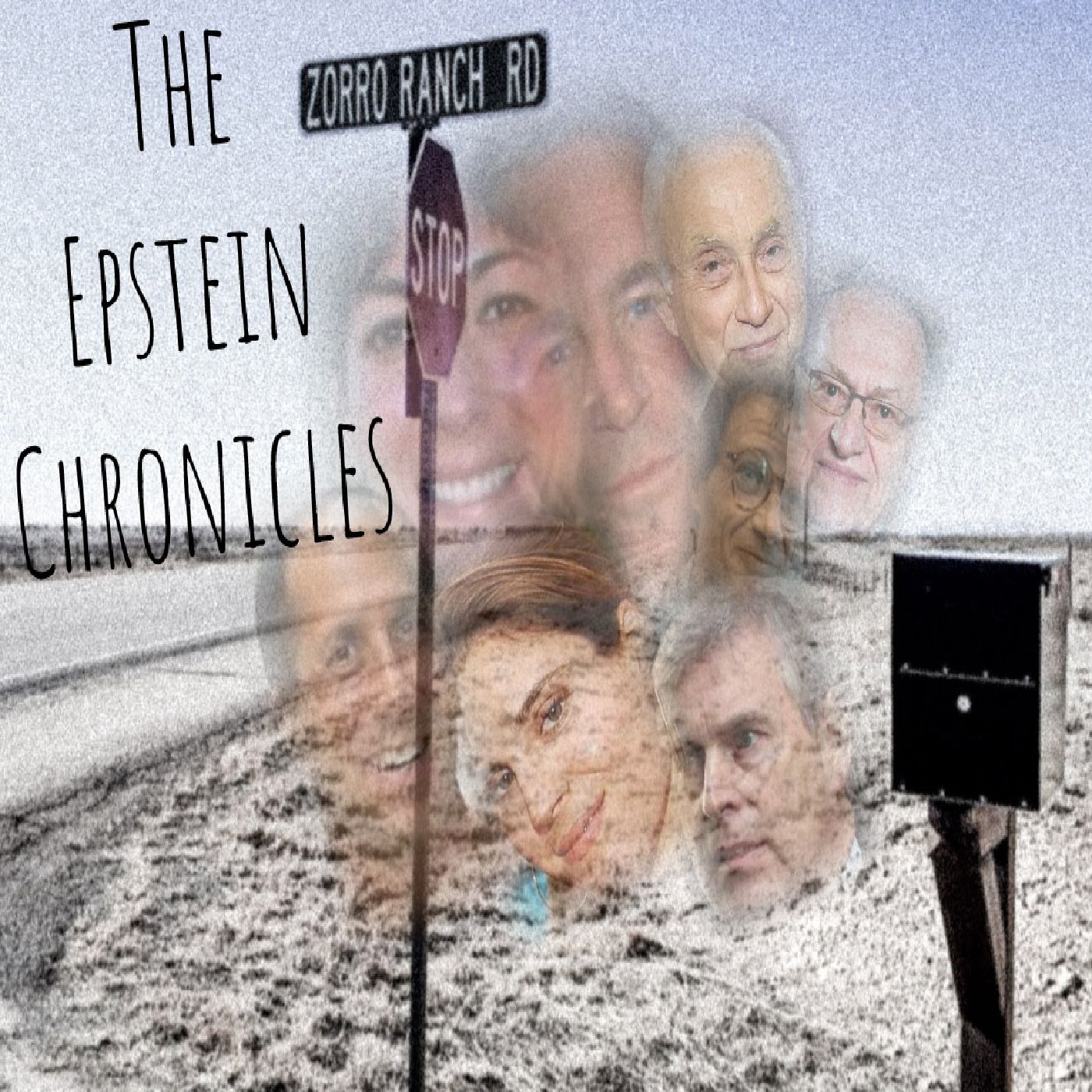
The Epstein Chronicles
From Denial to Reckoning: Why the Epstein Story Couldn’t Stay Buried
00:12:58
For years, the idea that those in power were entangled in the Epstein operation was dismissed as paranoia because it threatened faith in institutions. As evidence accumulated through court records, testimony, and financial trails, that denial became...
Loading summary
Transcript9 lines
- [00:00]
Lady Luck
Hey everybody, lady luck here and we're celebrating America's 250th birthday. Now all summer long I'm going to be celebrating by playing on spinquest.com which is an American owned social casino. It obviously features over a thousand slot games and live blackjack, live craps, live bubble craps. Head on over to spinquest.com get yourself a $30 coin pack for just 10 bucks.
- [00:25]
Spinquest Announcer
Spinquest is a free to play social casino void where prohibited. Visit spinquest.com for more details.
- [00:31]
Epstein Chronicles Host
What's up everyone and welcome to another episode of the Epstein Chronicles. For the past seven years I've been on the front lines of this fight. While it was still fashionable to laugh it off, I was there. When saying Epstein's name in the same sentence as power invited ridicule instead of engagement. I watched as evidence was ignored because it was inconvenient. I absorbed the accusations, the dismissals and the lazy labels making meant to shut down inquiry. This was never armchair speculation for me. It was document work, testimony, review and pattern recognition done in real time. While others waited for permission to speak, I spoke anyway. While institutions stalled, I kept digging. While narratives were enforced, I challenged them. And back then, critics didn't argue the facts so much as they attacked the premise. They said the connections were overblown, the implications exaggerated and the questions irresponsible. They insisted the system would self correct if left alone. They accused anyone pressing harder of chasing shadows or seeking attention. What they really meant though, was that the truth made them uncomfortable. Comfort masqueraded as skepticism and skepticism masqueraded and as intelligence. I was told to wait, to trust, to stop pushing. And guess what? I did none of those things. Now those same critics speak with borrowed certainty and secondhand conviction. They use language forged in earlier battles that they once mocked. They repeat conclusions they once dismissed as reckless. They reframe persistence as foresight, conveniently forgetting who who paid the price for it. Then again, I guess that yesterday's conspiracy has become today's consensus. Yesterday's nuisance has become today's so called expert. And for a long time, the idea that the people who rule over society were entangled in something as grotesque as the Jeffrey Epstein operation was treated as paranoid fantasy. It was easier, more comfortable, to believe that corruption had limits and that depravity existed only on the margins. Power people told themselves might be greedy or arrogant, but it surely wasn't that sick. Anyone who suggested otherwise was mocked, sidelined, or labeled unstable. The story that we were fed was simple and soothing. Epstein was an aberration. He was a lone monster who somehow slipped through the cracks. The institutions were remain fundamentally sound. Justice, though delayed, would eventually correct itself. That narrative held for years because it had to. The alternative was too disturbing to confront. But narratives have a way of collapsing when the facts accumulate and the facts have been piling up relentlessly. Court records, depositions, sworn testimony, financial trails, and contemporaneous emails tell a story that can no longer be dismissed as coincidence. Epstein was not operating in isolation, and he was not protected by accident. His access, his immunity, and his longevity required cooperation at the highest levels. Systems don't bend that far without intent. Prosecutors don't grant extraordinary leniency without pressure. And law enforcement does not repeatedly look away without instruction. What we're dealing with is not a single criminal case, but a pattern of institutional behavior. As someone who has studied this case in exhaustive detail, the first thing that becomes clear is how carefully constructed Epstein's protection really was. This wasn't a crude corruption or simple bribery. It was procedural, bureaucratic, and legally engineered. Agreements were drafted to obscure accountability rather than impose it. Jurisdictional confusion was used as a shield. Victims were isolated, discredited, or quietly compensated, while perpetrators remained untouched. Every safeguard that was supposed to protect the vulnerable was repurposed to protect the powerful. And that level of inversion does not happen by chance. It reflects priorities. The refusal to believe this for so long the was not due to the lack of evidence, but a lack of willingness. Accepting the truth meant accepting that the people entrusted with authority had betrayed that trust in the most profound way imaginable. It meant recognizing that governance itself had been compromised. People cling to faith and institutions because the alternative is destabilizing. If the system is rotten at the top, then participation in it feels like complicity. The lie was more tolerable than the truth, and so the truth was delayed, not disproven. What has changed now is not the underlying reality, but the public's capacity to ignore it. Each new document release, each new sworn statement strips away another layer of plausible deniability. The same names appear again and again. The same patterns of silence repeat all across decades. The same excuses are recycled with diminishing credibility. At some point, coincidence becomes insult. The question is no longer whether powerful people were involved, but how many and to what extent. The debate has shifted from did this happen? To how deep does it go? And that depth is precisely what terrifies people most. Epstein functioned as a node, not a kingpin. He connected money, politics, intelligence, finance, academia, and media in ways that served mutual interest. His value Was not merely his wealth, but his utility. He knew things, recorded things, facilitated things, and kept leverage in reserve. That's why he was tolerated. That's why he was protected. And that's why consequences never seem to stick. In a system built on power, leverage is currency. When people say those who rule us, they're not speaking metaphorically. They're referring to the real architects of policy enforcement and narrative control. These are the individuals who shape outcomes without ever appearing on ballots. Their influence flows through appointments, funding and institutional inertia. And Epstein move comfortably among them because he belonged in that ecosystem. He was not an outsider crashing elite spaces. He was an asset operating within them. And that distinction matters. Participation in Epstein's world took many forms. And that complexity is often misunderstood. Not everyone was abusing children directly, but many benefited from the structure that allowed the abuse to continue. Some provided legal coverage. Some applied pressure behind closed doors. Some chose silence in exchange for access or advancement. Some dismiss victims as liabilities rather than human beings. Moral responsibility doesn't end at direct action enabling his participation when harm is known and ignored.
- [07:53]
Lady Luck
Hey everybody.
- [07:54]
Lady Luck here and we're celebrating America's 250th birthday. Now all songs summer long. I'm going to be celebrating by playing on spinquest.com which is an American owned social casino. It obviously features over a thousand slot games and live blackjack, live craps, live bubble craps. Head on over to spinquest.com get yourself a 30 coin pack for just 10 bucks.
- [08:17]
Spinquest Announcer
Spin Quest is a free to play social casino void where prohibited. Visit spinquest.com for more details now.
- [08:25]
Epstein Chronicles Host
Protection, likewise, was multi layered and strategic. It was not a single phone call or a single deal. It was a sustained effort across time and administrations. When scrutiny increased, buffers were deployed. When outrage flared, it was managed. When accountability loomed, it was redirected. The goal was never justice, but containment and damage control became policy, while truth became negotiable. Of course, the media's role in this cannot be overlooked. When individual journalists did heroic work, institutional media largely failed. Stories were spiked, softened or framed to minimize systemic implication. Focus was placed on salacious details rather than structural failure. Attention was diverted towards spectacle instead of accountability. This was not always due to malice, but it was always due to fear. Because power punishes those who threaten it. But silence, well, that's often rewarded. And speaking of silence, the intelligence implications of the Epstein operation further complicate the picture. Networks that are built on secrecy, coercion and comprom are inherently valuable to intelligence services. That doesn't require cinematic Conspiracies. To be effective, it requires opportunity and. And indifference to morality. Epstein's activities intersected naturally with those dynamics. Where leverage exists, interest follows. Where interest follows, protection often comes with it. And I can tell you for a fact that for survivors, the reality has been devastating. They weren't just abused by individuals, but abandoned by systems. Every dismissal reinforced the message that they're suffering from was inconvenient. Every sealed record told them their truth was negotiable. Justice delayed is not justice denied by accident. It was denied by design. And that's a wound that doesn't heal easily. In fact, it's compounded every time. Accountability is deferred yet again. What we're witnessing now is not sudden enlightenment, but the slow failure of suppression. The truth didn't suddenly emerge. It persisted. It survived legal maneuvers, public relation campaigns and institutional resistance. It survived because too many people were harmed for it to disappear completely. Memory is stubborn when trauma is shared. Eventually the weight becomes unmanageable and the COVID cracks. Now, those coming to terms with this reality often experience anger, grief and disillusionment all at once. Look, that reaction is rational because it reflects a recalibration of trust. Once you understand that degeneracy was not an exception, but a tolerated feature, your view of authority changes permanently. Cynicism is not the problem, but being naive is healthy. Skepticism becomes a form of self defense. Belief must now be earned, not assumed. And so what does that mean? It means respecting the evidence and following it wherever it leads, regardless of comfort. It means resisting the urge to simplify a complex, ugly truth into something more palatable. It means acknowledging uncertainty without retreating into denial. But most importantly, it means centering survivors rather than institutions. Power deserves scrutiny, not sympathy. The Epstein case isn't over because one man's dead and a woman is in prison. The architecture that enabled him and her still exists. The incentives that protected them remain largely intact. And without a structural reckoning, history will repeat itself just under a different name. Accountability can't stop its symbolism. It must extend to systems of agreements and people who believe themselves untouchable. Look, Ultimately, this reckoning forces a hard question on society. If those who rule us, conspired with, participated in and protected a man like Jeffrey Epstein, what does that say about the moral foundations of governance itself? The answer is uncomfortable, but clarity often is. Degeneracy thrives where a power is unaccountable. And exposure is the first step, not the last. What matters now is whether truth leads to change or merely just the next layer of denial. And so this ends where it always should have begun, with accountability instead of amnesia. The truth about Jeffrey Epstein was never hidden because it's unknowable, but because it was inconvenient. To those in power, every delay, every deflection, every demand to move on was an admission of fear, not innocence. The record now speaks louder than any gatekeeper ever could. What was once denied is now documented. What was once mocked is now undeniable. The question is no longer who knew, but who is still being protected. And whether this reckoning means anything at all depends on whether justice finally follows truth instead of just burying it all over again. All of the information that goes with this episode can be found in the description box.
- [13:58]
Bluff
What's going on everyone? It's Bluff here and we're driving through the states in the Bluff Mobile and the best thing that we can do is play our favorite casino style games on Spin Quest. They have over a thousand games including live dealer blackjack and craps with with tons of slots and unlimited options. You can get a $30 coin pack for just $10. For new users sign up today. Go to spinquest.com right now Spinquest is
- [14:22]
Spinquest Announcer
a free to play social casino void where prohibited. Visit spinquest.com for more.