Podcast
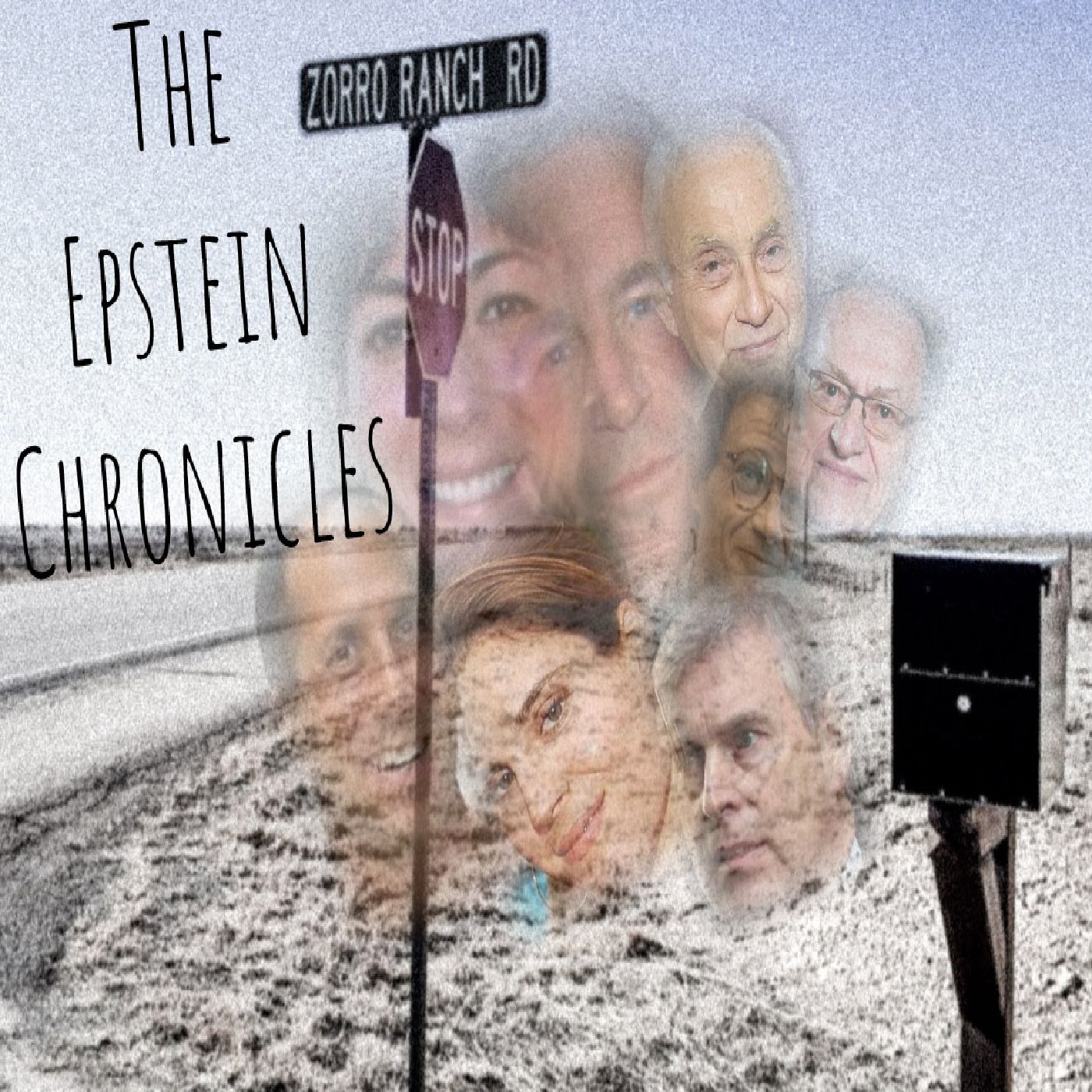
The Epstein Chronicles
Hosted by Bobby Capucci · EN
Jeffrey Epstein was a multi millionaire who had political and business ties to some of the most rich and powerful people in the world. From businessmen to politicians at the highest levels, Epstein broke bread with them all.
Yet for years the Legacy media and the rest of high society looked the other way and ignored his behavior as multiple women came forward with allegations of abuse.
Even after he was convicted and subsequently received a sweetheart deal those same so called elites welcomed him back with open arms.
Now after his death and the arrest of Maxwell, the real story is starting to come together and the curtain has begun to be drawn back and what it has revealed is truly disturbing.
From Princes to Ex Presidents, the cast of scoundrels in this play spans continents and political affiliations leaving us with a transcontinental criminal conspiracy possibly unlike any we have ever seen before.
In this podcast we will explore all of the levels of Jeffrey Epstein and his criminal enterprise.
From his most trusted assistants to obscure associates, we will leave no stone unturned as we swim through the muck searching for clarity and answers to some of the most pressing questions of the case.
From interviews with people directly involved in the case to daily updates, the Epstein Chronicles will have it all.
Just like our other project, The Jeffrey Epstein Show, you can expect no punches pulled and consistent content. We have covered the Epstein case daily(everyday since October 1st 2019) and will continue to do so until there are convictions. With a library of well over 1k shows, you can expect a ton of content coming your way including on scene reporting from the Maxwell trial and from places like Zorro Ranch.
Thank you for tuning in and I look forward to having you all along for the ride.
(Created and Hosted by Bobby Capucci)
Become a supporter of this podcast: https://www.spreaker.com/podcast/the-epstein-chronicles--5003294/support.
Yet for years the Legacy media and the rest of high society looked the other way and ignored his behavior as multiple women came forward with allegations of abuse.
Even after he was convicted and subsequently received a sweetheart deal those same so called elites welcomed him back with open arms.
Now after his death and the arrest of Maxwell, the real story is starting to come together and the curtain has begun to be drawn back and what it has revealed is truly disturbing.
From Princes to Ex Presidents, the cast of scoundrels in this play spans continents and political affiliations leaving us with a transcontinental criminal conspiracy possibly unlike any we have ever seen before.
In this podcast we will explore all of the levels of Jeffrey Epstein and his criminal enterprise.
From his most trusted assistants to obscure associates, we will leave no stone unturned as we swim through the muck searching for clarity and answers to some of the most pressing questions of the case.
From interviews with people directly involved in the case to daily updates, the Epstein Chronicles will have it all.
Just like our other project, The Jeffrey Epstein Show, you can expect no punches pulled and consistent content. We have covered the Epstein case daily(everyday since October 1st 2019) and will continue to do so until there are convictions. With a library of well over 1k shows, you can expect a ton of content coming your way including on scene reporting from the Maxwell trial and from places like Zorro Ranch.
Thank you for tuning in and I look forward to having you all along for the ride.
(Created and Hosted by Bobby Capucci)
Become a supporter of this podcast: https://www.spreaker.com/podcast/the-epstein-chronicles--5003294/support.
1,353episodes
Episodes
Newest firstAll episodes
Judge Sullivan Receives Epstein Files After DOJ Runs Out the Clock (7/31/26)
Today00:11:52Summary readyThe Justice Department delivered the disputed Jeffrey Epstein materials to U.S. District Judge Emmet Sullivan at the edge of the court-imposed deadline, complying only after Sullivan ordered the government to provide less-redacted records or justify why the information should remain concealed. The material included emails involving Epstein, names removed from a draft indictment, references to possible co-conspirators and underlying FBI interview records. Sullivan issued the order in journalist Katie Phang’s lawsuit challenging the DOJ’s compliance with the Epstein Files Transparency Act, after concluding that the department had failed to meaningfully answer several of her arguments and had already missed an earlier deadline.Although the last-minute submission technically placed the requested material before the court, it did not make the records immediately available to Phang or the public. Sullivan would still have to review the documents and determine whether the DOJ’s redactions and withholding claims were legally justified. The timing reinforced criticism that the department was treating disclosure as something to resist until compelled, rather than an obligation to fulfill promptly. After months of delayed releases, incomplete explanations and litigation over the redactions, handing the records over at the deadline looked less like voluntary transparency and more like reluctant compliance under direct judicial pressure.to contact me:bobbycapucci@protonmail.comsource:Blanche surrenders unredacted Epstein files within minutes of judge's deadline - Alternet.orgBecome a supporter of this podcast: https://www.spreaker.com/podcast/the-epstein-chronicles--5003294/support.
SummaryThe Epstein Flag List and the Rush to Close the Case (7/31/26)
Today00:13:45Summary readyNewly released FBI records showed that, days after a July 2025 White House Situation Room meeting about the escalating Epstein controversy, FBI Director Kash Patel asked for information about sensitive material uncovered during the bureau’s review. An FBI official responded with spreadsheets labeled “Flagged Items Lists,” which reportedly included references to public figures, potentially classified information and possible child sexual abuse material. The documents indicated that FBI reviewers had been instructed by the Justice Department to flag such material for discussion with DOJ attorneys while records were being processed and redacted. Todd Blanche, then serving as deputy attorney general, was identified as the senior Justice Department official overseeing the effort.The internal communications appeared to conflict with the Justice Department and FBI’s public statement issued two weeks earlier, which said their exhaustive review had uncovered no evidence warranting investigations of additional uncharged people. The flagged material had reportedly been delivered to the Justice Department months before that declaration, raising questions about how quickly officials decided to close the matter and whether potentially significant leads received adequate scrutiny. The existence of prominent names in investigative records did not establish criminal wrongdoing, and flagged material could include unverified tips or incidental references, but the timing and apparent disparity between the private review and the government’s public conclusions fueled suspicions that the department was rushing to shut down further examination of Epstein’s powerful associatesto contact me:bobbycapucci@protonmail.comsource:Scrambling DOJ rushed to shut Epstein case as 'flag list' surfaced big names: new docs - Raw StoryBecome a supporter of this podcast: https://www.spreaker.com/podcast/the-epstein-chronicles--5003294/support.
SummaryMega Edition: Jeffrey Epstein And The Blackhole Known As His Finances (7/31/26)
Today00:48:35Summary readyJeffrey Epstein presented himself as a sophisticated financier and money manager, yet the precise origins of his enormous fortune were never fully explained. His best-documented client was retail billionaire Leslie Wexner, who gave Epstein extraordinary authority over his finances and property, but Epstein offered few verifiable details about who else paid him, what investments he managed or how his businesses generated hundreds of millions of dollars. By the time of his death, his estate was initially valued at roughly $578 million and included mansions, islands, aircraft, investment accounts and tens of millions of dollars in cash and securities. The visible wealth was real, but the professional track record supposedly responsible for producing it remained remarkably thin.The finances were made even more difficult to follow by Epstein’s use of trusts, limited-liability companies, offshore entities and accounts spread across numerous financial institutions. He established businesses in the U.S. Virgin Islands, received substantial tax benefits there and even obtained a license for an international banking entity that operated with offshore clients. Later disclosures showed that he maintained relationships with major banks beyond the institutions most publicly associated with him, while court filings and estate litigation exposed layers of companies and financial vehicles surrounding his assets. None of that, by itself, proved that all of his money was illicit, but the combination of opaque income sources, concentrated relationships with extremely wealthy patrons and a deliberately complex financial structure ensured that the complete story of how Epstein accumulated, moved and protected his fortune remained unresolved.to contact me:bobbycapucci@protonmail.comBecome a supporter of this podcast: https://www.spreaker.com/podcast/the-epstein-chronicles--5003294/support.
SummaryMega Edition: Andrew And The Advice He Continued to Ignore (7/31/26)
Today00:45:37Summary readyThe Department of Justice Office of the Inspector General (OIG) report into Jeffrey Epstein’s 2007 Non-Prosecution Agreement (NPA) presents a disturbing portrait of federal cowardice, systemic failures, and deliberate abdication of prosecutorial duty. Instead of zealously pursuing justice against a serial predator with dozens of underage victims, the U.S. Attorney’s Office in the Southern District of Florida, under Alexander Acosta, caved to Epstein’s high-powered legal team and crafted a sweetheart deal that immunized not just Epstein, but unnamed potential co-conspirators—many of whom are still shielded to this day. The report shows that career prosecutors initially prepared a 53-page indictment, but this was ultimately buried, replaced by state charges that led to minimal jail time, lenient conditions, and near-total impunity. The OIG paints the decision as a series of poor judgments rather than criminal misconduct, but this framing betrays the magnitude of what actually occurred: a calculated retreat in the face of wealth and influence.Critically, the report fails to hold any individuals truly accountable, nor does it demand structural reform that could prevent similar derelictions of justice. It accepts, without sufficient pushback, the justifications offered by federal prosecutors who claimed their hands were tied or that the case was too risky—despite overwhelming evidence and a mountain of victim statements. The OIG sidesteps the glaring reality that this was not just bureaucratic failure, but a protection racket masquerading as legal discretion. It treats corruption as incompetence and power as inevitability. The conclusion, ultimately, feels like a shrug—a bureaucratic absolution of one of the most disgraceful collapses of federal prosecutorial integrity in modern history. It is less a reckoning than a rubber stamp on institutional failure.to contact me:bobbycapucci@protonmail.comsource:dl (justice.gov)Become a supporter of this podcast: https://www.spreaker.com/podcast/the-epstein-chronicles--5003294/support.
SummaryMega Edition: The OIG Report Detailing The Investigation Into Epstein's NPA (Part 48-51) (7/30/26)
Today00:49:44Summary readyThe Department of Justice Office of the Inspector General (OIG) report into Jeffrey Epstein’s 2007 Non-Prosecution Agreement (NPA) presents a disturbing portrait of federal cowardice, systemic failures, and deliberate abdication of prosecutorial duty. Instead of zealously pursuing justice against a serial predator with dozens of underage victims, the U.S. Attorney’s Office in the Southern District of Florida, under Alexander Acosta, caved to Epstein’s high-powered legal team and crafted a sweetheart deal that immunized not just Epstein, but unnamed potential co-conspirators—many of whom are still shielded to this day. The report shows that career prosecutors initially prepared a 53-page indictment, but this was ultimately buried, replaced by state charges that led to minimal jail time, lenient conditions, and near-total impunity. The OIG paints the decision as a series of poor judgments rather than criminal misconduct, but this framing betrays the magnitude of what actually occurred: a calculated retreat in the face of wealth and influence.Critically, the report fails to hold any individuals truly accountable, nor does it demand structural reform that could prevent similar derelictions of justice. It accepts, without sufficient pushback, the justifications offered by federal prosecutors who claimed their hands were tied or that the case was too risky—despite overwhelming evidence and a mountain of victim statements. The OIG sidesteps the glaring reality that this was not just bureaucratic failure, but a protection racket masquerading as legal discretion. It treats corruption as incompetence and power as inevitability. The conclusion, ultimately, feels like a shrug—a bureaucratic absolution of one of the most disgraceful collapses of federal prosecutorial integrity in modern history. It is less a reckoning than a rubber stamp on institutional failure.to contact me:bobbycapucci@protonmail.comsource:dl (justice.gov)Become a supporter of this podcast: https://www.spreaker.com/podcast/the-epstein-chronicles--5003294/support.
SummaryKatie Johnson and Donald Trump: Examining the Claims and the Silence
Yesterday00:30:18Summary readyIn 2016 a woman using the name Katie Johnson filed a federal lawsuit alleging that she had been assaulted as a minor — in her complaint she claimed that in 1994, when she was 13, she was lured by Jeffrey Epstein to his Manhattan residence with promises of modeling, and that Trump and Epstein took turns sexually assaulting her during a series of parties. After filing the suit, the case was dismissed or voluntarily withdrawn, and the woman's identity and credibility came under heavy question. Media investigations found no independent verification of the accuser’s identity or direct confirmation of her story, and suggested the legal action may have been tied to outside actors, raising serious doubts about the authenticity of the claims.The pushback included abrupt cancellation of a planned press appearance by Johnson, no confirmed attorney-client communications, and serious scrutiny of the legal counsel and promoters of the case, including accusations of coordination by a controversial figure with a history of disputed celebrity claims. Trump’s camp denied the allegation outright, and legal analysts pointed to procedural deficiencies in the filing — including that the lawsuit alleged criminal conduct under a civil statute that did not apply. This resulted in the case failing to proceed, major media outlets treating the matter as unverified, and critics arguing that the entire matter became a lightning rod for conspiracy theories rather than a credible path to accountability.to contact me:bobbycapucci@protonmail.comsource:A California woman accused both Epstein and Trump. Did she exist?Become a supporter of this podcast: https://www.spreaker.com/podcast/the-epstein-chronicles--5003294/support.
SummaryRunway to Ruin: Jean-Luc Brunel’s Role in the Epstein Network
Yesterday00:13:40Summary readyJean-Luc Brunel, a prominent French modeling agent and founder of MC2 Model Management, maintained a long-standing and deeply troubling relationship with Jeffrey Epstein. More than just a social acquaintance, Brunel was widely identified as one of Epstein’s primary suppliers of young girls, using his modeling agency as a pipeline to traffic aspiring models—many of them minors—into Epstein’s control. Survivors and witnesses have alleged that Brunel lured girls from disadvantaged backgrounds in Europe and South America with promises of modeling contracts, only for them to be flown to the United States where they were abused by Epstein and his associates. Brunel’s agency reportedly received substantial funding from Epstein, who appeared to use the business as both a recruitment mechanism and a cover for the systematic exploitation of vulnerable young women.Allegations against Brunel include not only trafficking but also direct involvement in sexual abuse, with several survivors naming him in sworn testimony. He was accused of participating in the assaults alongside Epstein and facilitating access to girls who had little understanding of what they were being brought into. Despite being investigated in multiple jurisdictions, Brunel operated for decades with little interference, a fact that has drawn criticism toward international law enforcement and regulatory bodies for their failure to act. His relationship with Epstein was not incidental—it was structural, and essential to Epstein’s ability to source victims under the radar of conventional oversight. When Brunel was finally arrested in France in 2020, it was viewed as long overdue, though he died in custody in 2022 before facing trial.to contact me:bobbycapucci@protonmail.comBecome a supporter of this podcast: https://www.spreaker.com/podcast/the-epstein-chronicles--5003294/support.
SummaryTranscripts From The Hearing Dealing With Tyler Robinson’s Courtroom Appearance (Part 6) (7/29/26)
Yesterday00:14:14Summary readyThe October 24, 2025 hearing centered on Tyler Robinson’s request to appear at future court proceedings in civilian clothing and without restraints. His attorneys argued that routinely presenting him in jail clothing and shackles would undermine the presumption of innocence, interfere with his ability to participate in his defense and create prejudicial images that could spread through extensive media coverage. They maintained that the Constitution required the court to make an individualized security assessment rather than rely upon a blanket policy, emphasizing that Robinson had surrendered, had behaved appropriately in court and had not been shown to present a specific courtroom threat. The defense also opposed suggestions that Robinson could simply attend meaningful hearings remotely, arguing that he needed to be physically present to observe witnesses, communicate with counsel and participate fully in the proceedings.Prosecutors and attorneys representing the sheriff’s office argued that restraints and jail clothing were justified by transportation and courtroom-security concerns, particularly given the seriousness and public profile of the case. They proposed using virtual or hybrid proceedings for noncritical hearings and said civilian clothing could make Robinson harder to identify during an emergency, also pointing to allegations that he had changed clothes while fleeing after Charlie Kirk’s shooting. The defense separately asked the judge to strike the sheriff’s office’s filing on the grounds that the sheriff was not a party to the criminal case, although the parties agreed the judge could still consider its security information. Judge Tony Graf questioned whether jail clothing itself could prejudice potential jurors, treated clothing and restraints as separate issues and reserved his rulings until a public WebEx hearing the following Mondayto contact me:bobbycapucci@protonmail.comsource:tyler-robinson-redacted-hearing-transcript.pdfBecome a supporter of this podcast: https://www.spreaker.com/podcast/the-epstein-chronicles--5003294/support.
SummaryMurder In Moscow: Bryan Kohberger Is Appointed Legal Counsel By The Court (7/30/26)
Yesterday00:13:08Summary readyBryan Kohberger’s request for a new trial will first have to survive an initial review by the Idaho court, which must determine whether his post-conviction petition presents specific, legally sufficient claims that warrant further proceedings. Kohberger alleges that his guilty plea was produced by coercion, misinformation, false promises and the withholding or misrepresentation of potentially exculpatory evidence by his defense team. Should the court find that those allegations merit examination, the case could advance to responses from prosecutors, additional filings and potentially an evidentiary hearing where Kohberger, his former attorneys and other witnesses could be questioned. A new trial would not be automatic; he must first convince the court that his plea was not knowing, voluntary or supported by effective legal counsel.Credibility could become the decisive issue because Kohberger’s current account directly conflicts with what he repeatedly told Judge Steven Hippler when entering his plea. Under oath, Kohberger admitted killing Madison Mogen, Kaylee Goncalves, Xana Kernodle and Ethan Chapin, said he understood the agreement, denied being threatened or improperly pressured and expressed satisfaction with his attorneys. The court would therefore have to weigh his new accusations against that extensive plea-hearing record and the testimony of the lawyers he now blames. Even if Kohberger secured permission to withdraw the plea, the prosecution could revive the original murder case and potentially seek the death penalty again, leaving him to face the trial and punishment that the plea agreement allowed him to avoid.to contact me:bobbycapuccI@protonmail.comsource:How Bryan Kohberger’s post-conviction legal process works | Idaho StatesmanBecome a supporter of this podcast: https://www.spreaker.com/podcast/the-epstein-chronicles--5003294/support.
SummaryTed Waitt And The Transcript From His Epstein Related Trip To Congress (Part 6) (7/30/26)
Yesterday00:12:51Summary readyTed Waitt told the House Oversight Committee that he met Ghislaine Maxwell and Jeffrey Epstein at a Hong Kong dinner in November 2003 and began dating Maxwell the following year, remaining in a relationship with her until September 2010. Waitt portrayed his own contact with Epstein as extremely limited, saying he had only a brief introduction at the dinner, one arranged meeting at Maxwell’s New York residence and two later chance encounters. He said he never communicated with Epstein by phone or email and had no business or financial relationship with him. Waitt testified that Maxwell described Epstein positively as a brilliant investor and money manager and told him that, after their romantic relationship ended, she continued working as an estate manager overseeing his properties and staff.Waitt said he wanted Maxwell to stop working for Epstein because Epstein was her former boyfriend, but claimed he had no knowledge at the time of their criminal conduct and never witnessed abuse, coercion or trafficking. He repeatedly said he could not confirm how much work Maxwell continued doing for Epstein while they dated, despite their seven-year relationship, and he denied knowing whether Epstein manipulated or abused her. Waitt also acknowledged that Maxwell had been around his four children, three of whom were girls, and said that had he known then what he knows now, he never would have befriended her or allowed her near them. His testimony largely presented him as someone who was intimately involved with Maxwell for years while remaining unaware of the reality of her relationship with Epstein and the crimes for which she was later convicted.to contact me:bobbycapucci@protonmail.comsource:GO120551Become a supporter of this podcast: https://www.spreaker.com/podcast/the-epstein-chronicles--5003294/support.
Summary