← The Epstein Chronicles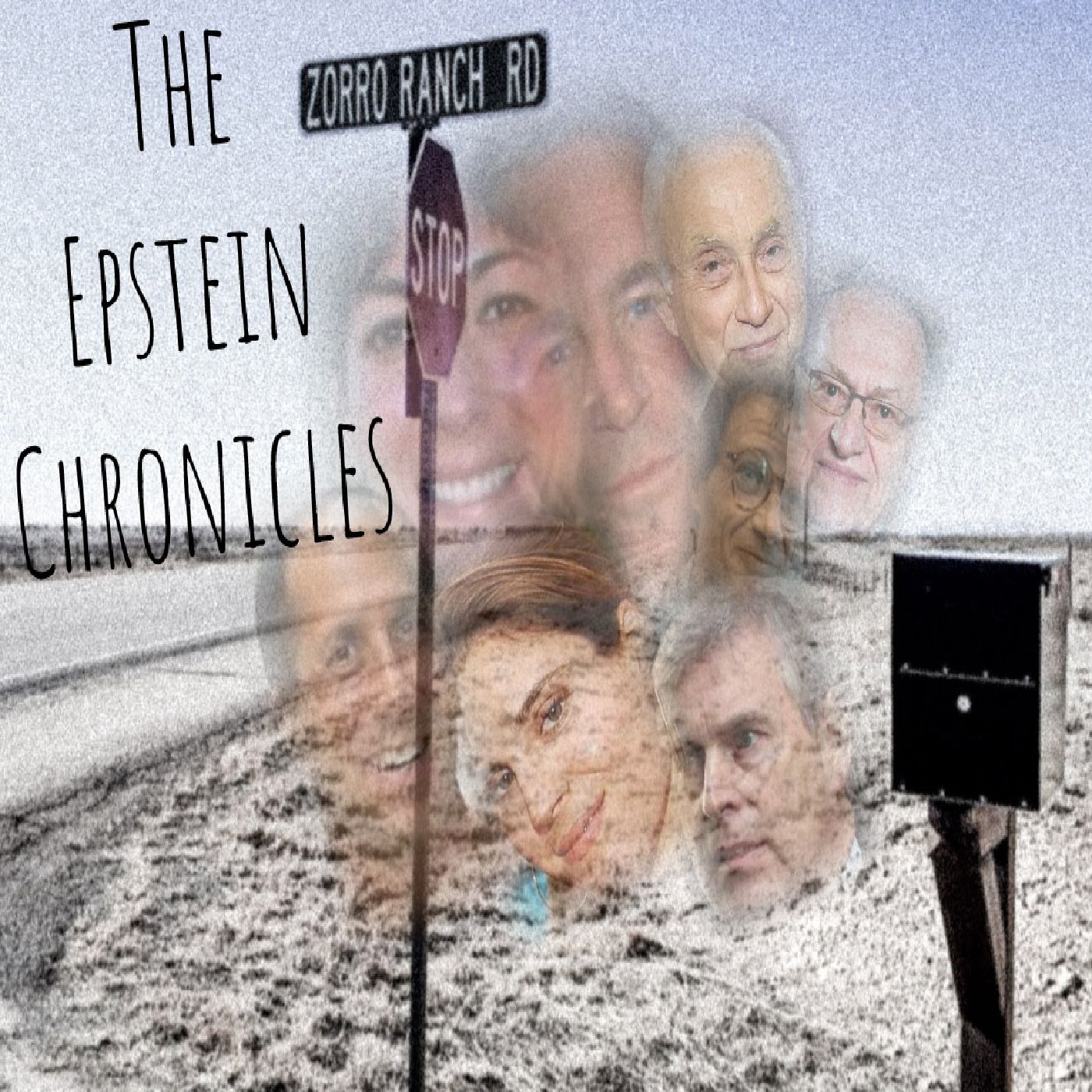
The Epstein Chronicles
How Epstein’s Operation Required a Network the DOJ Won’t Confront
00:13:37
The Department of Justice’s long-standing claim that Jeffrey Epstein and Ghislaine Maxwell acted alone is contradicted by the government’s own records. Federal prosecutors explicitly acknowledged the existence of multiple co-conspirators as early as...
Loading summary
Transcript13 lines
- [00:00]
SpinQuest Advertiser
Whether it's slots or live dealers, Spinquest.com has the fun and action you're looking for with Spinquest exclusives blackjack, roulette, baccarat and even live dice. With craps and bubble craps, the games never stop so you don't have to, and right now, new users get $30 coin packs for just 10 bucks. Play now@Spinquest.com SpinQuest is a free to
- [00:25]
SpinQuest Disclaimer
play social casino void where prohibited. Visit spinquest.com for more details.
- [00:31]
Lowe's Spanish Advertiser
Este cuatro de julio and loaves ahoras acuarntai cinco porciento en electro domestico selectos ademas ahora ocenta dolar gas selecta char broil performance series Ahora dos noventa y nueve dolares nuestra mejor selection esta qui en Lowes Lowes Nosotros Ayugamos 2 Ahoras.
- [00:57]
SpinQuest Disclaimer
Foreign
- [01:00]
Epstein Chronicles Narrator
what's up everyone? And welcome to another episode of the Epstein Chronicles. The Department of Justice has spent years advancing a narrative about Jeffrey Epstein and Glenn Maxwell that collapses under even minimal scrutiny. According to that story, Epstein and Maxwell were isolated predators who acted largely alone. They were, we are told, the two uniquely depraved individuals who exploited vulnerable girls without meaningful assistance. This framing is not accidental or merely prosecutorial storytelling. What it is is a deliberate narrowing of responsibility that conflicts with the government's own records. Federal filings, plea agreements, sealed exhibits, and sworn testimony contradict the lone wolf theory repeatedly. The DOJ has never reconciled those contradictions. Instead, it's doubled down on them. And that refusal is itself revealing. Institutions don't lie this consistently unless there is something at stake. In this case. What's at stake is not just reputational damage to third parties, but exposure of systemic failure. The first and most damning problem with the DOJ's position is that it directly contradicts its own earlier statements. During the Florida investigation, prosecutors explicitly acknowledged the existence of multiple co conspirators. This wasn't speculation by defense counsel or advocacy groups. It was language drafted and approved by federal prosecutors. The non prosecution agreement was structured to immunize Epstein and unnamed others from federal prosecution. That immunity was not incidental or implied. It was explicit. The agreement referenced individuals who were never charged, never named, and never meaningfully investigated after the deal was signed. This alone destroys the claim that Epstein and Maxwell acted in isolation. Prosecutors don't grant immunity to ghosts. They grant it to people whose exposure would complicate the case. The DOJ has never explained why the language existed. If no one else mattered. Instead, silence has always been their answer. Beyond the npa, contemporaneous investigative activity confirms that Epstein's operation required infrastructure. Victims describe recruiters, schedulers, drivers, pilots, accountants, and fixers. These aren't peripheral figures who wandered into a crime scene by chance. Instead, they performed recurring, specialized roles that enabled abuse to continue over years and and across jurisdictions. Travel does not arrange itself. Payments do not disappear on their own. Non disclosure agreements do not draft themselves. Lawyers do not proactively silence victims without instruction. Each of these functions required people acting with knowledge and intent. The DOJ has never plausibly argued otherwise. Instead, it's attempted to redefine participation so narrowly that only hands on abuse counts. That's not how conspiracy law works. No, that's how liability is avoided. The existence of at least 10 identified co conspirators was acknowledged internally long before Epstein's 2019 arrest. That number did not originate from rumor or Internet speculation. It emerged from investigative records and prosecutorial disclosures. Some of those individuals were named and sealed filings. Others were referenced through redactions that preserved anonymity while confirming involvement. The DOJ has never disputed the accuracy of that figure. It's merely refused to elaborate on it. When pressed, officials retreat behind claims of victim privacy. That justification collapses upon inspection. Victim protection does not require indefinite secrecy for perpetrators. Courts routinely balance those interests without erasing accountability. The DOJ's refusal to do so here is a choice it's not a legal necessity. The claim that naming co conspirators would harm victims is particularly hollow given the DOJ's treatment of victims themselves. Survivors were excluded from the NPA negotiations entirely. They were denied notice, input, and opportunity to object. They were lied to about the status of the case. Their rights under the Crime Victims Rights act were violated, a fact later acknowledged by the courts. The DOJ did not protect these women when it mattered most. To now invoke their welfare as a shield for secrecy is cynical. It repurposes harm as justification. It also deflects attention from the real beneficiaries of silence. Victims have consistently asked for transparency in it's the government that resists it. And of course, financial relationships further undermine the DOJ's narrative. Epstein's wealth did not exist in a vacuum, nor was it managed casually. He relied on sophisticated financial structures, accountants, and institutional partners. These systems move money, paid settlements, and maintained secrecy. When civil litigation later exposed some of these relationships, the the DOJ showed little interest in pursuing them criminally. That selective disinterest is telling. Financial crimes are usually aggressively prosecuted when they intersect with sex trafficking here, they were largely ignored. That omission suggests restraint from above, not lack of evidence. Prosecutors follow money when they are not allowed to. When they do not, it's because someone has decided that they should not. The case of individuals who bought their way out of deeper scrutiny further exposes the facade. Civil settlements and private agreements were allowed to substitute for criminal accountability. That substitution was not inevitable. Prosecutors routinely pursue cases even after civil resolution. In the Epstein context, however, civil payouts seem to function as as pressure valves. They reduce public outrage while preserving institutional calm. The DOJ never articulated why certain figures were not charged despite credible allegations. It simply moved on. That pattern repeated itself across administrations. Political party did not matter. All that mattered was institutional protection. Now, the Trump administration inherited this case, but did not fundamentally alter its trajectory. Despite public posturing about transparency, the DOJ under Trump continued to resist disclosure. It's opposed unsealing key documents. Its defended redactions long after the rationale for secrecy expired. It did not convene a broad conspiracy prosecution after Epstein's death. It closed ranks instead. And this continuity matters. It demonstrates that the problem is structural, not partisan. The same instincts governed decision making, regardless of who occupied the White House. The instinct amongst power is to preserve power, not justice. The death of Epstein in federal custody should have triggered the most aggressive institutional reckoning imaginable. Instead, it became another justification for narrowing focus. With Epstein gone, the DOJ treated the case as functionally resolved. That posture makes no sense if Maxwell and others were central participants. Conspiracies don't dissolve when one conspirator dies. They persist in evidence, testimony, and records. The DOJ chose not to pursue that logic. It did not convene a grand jury to explore the broader network. It did not issue a comprehensive accounting of prior failure. It blamed individual jail staff and moved on. That response was insufficient by any standard of accountability. And of course, that brings us to the Maxwell prosecution, which further illustrates the selective nature of DoJ inquiry. The government framed her as Epstein's sole partner, effectively absorbing the role of an entire network. Evidence of additional participants was minimized or excluded. Jurors were instructed to focus narrowly. Lines of inquiry that pointed outward were curtailed. This was not because those avenues were irrelevant. It was because they were inconvenient. The DOJ achieved a conviction while avoiding a cascade of disclosures. That outcome satisfied institutional needs. It did not satisfy the factual record. The continued sealing and redaction of Epstein related documents is the most visible manifestation of this protection.
- [09:59]
SpinQuest Advertiser
Forget whatever plans you have this weekend because you're staying at home and playing on Spin Quest, and there's never been a better time to sign up than right now. New users get $30 coin packs for just $10. All the table games you love, with hundreds of slot games and real cash prizes. That's at spinquest.coms P I N Q
- [10:19]
SpinQuest Disclaimer
U S T.com Spinquest is a free to play social casino void where prohibited. Visit spinquest.com for more details.
- [10:46]
Lowe's Spanish Advertiser
Hellos Try to lista de materiales escrita o en una photo y recivo una coticacion en minutos angilissa tus projektos miintra siguesa con Lowe's.
- [11:00]
Lowe's Pro Desk Advertiser
Pros. Save more on what you need to get the job done right Right now at Lowe's, get 15% off select custom entry and interior doors, plus save $80 on the DeWalt 20 volt max 2 tool combo kit. Now now just $169. And at the Lowe's Pro desk, bring us your materials list and get a quote in minutes. Handwritten, a photo or even a sticky note is all you need. Keep your jobs moving faster and on budget at Lowe's. Valid through 7 8, while supplies last Selection varies by location.
- [11:29]
Epstein Chronicles Narrator
These materials are decades old. Many involve individuals who are no longer private citizens. Others relate to conduct already described publicly. Yet the DOJ continues to argue that disclosure is going to be harmful. Harmful to whom is never clearly stated. The harm to public trust is obvious and ongoing. Transparency is not a threat to justice. It's a prerequisite when transparency is treated as dangerous. It suggests that exposure would implicate the institution itself and the DOJ's reluctance to name co conspirators. As is not about legal uncertainty. Prosecutors name alleged participants all the time, even when cases are unresolved. It's not about evidentiary weakness either, given the volume of sworn testimony and corroborating records. What remains is institutional conflict of interest. A full accounting would require acknowledging prosecutorial misconduct, regulatory capture, and political interference spanning decades. It would raise questions about about why Epstein was protected in the first place. It would force examination of intelligence ties, financial leverage, and prosecutorial discretion. That examination is precisely what the DOJ wants to avoid now. When viewed holistically, the Epstein case is not an anomaly, but it's an exposure event. It reveals how power insulates itself through procedure, delay, and narrative control. The DOJ did not merely fail to stop Epstein it actively structured outcomes to minimize disruption. That's a harder truth than individual corruption. It implicates systems rather than villains. And systems are harder to dismantle. They also fight back more effectively. And the insistence that Epstein was self created is perhaps the most fragile lie of all. Epstein did not emerge fully formed with limitless access and immunity. But those things were granted over time. They were reinforced through decisions made by prosecutors, regulators and political actors. Each decision narrowed scrutiny and expanded protection. By the time the system recognized the scale of abuse, it was already invested in its own silence. Admitting that would require institutional humility. The DOJ has shown none. Now public confidence in justice depends on consistency. When ordinary defendants face sweeping conspiracy charges for far less organized conduct, the disparity becomes glaring. The Epstein case stands apart not because it's uniquely complex, but because it was uniquely restrained. If float upward, the DOJ's actions make sense only when viewed through the lens of self preservation. Protecting co conspirators protects prior decisions. Protecting prior decisions protects careers and legitimacy. The invocation of privacy as perpetual barrier to accountability is unsustainable. Privacy interests diminish over time, especially when balanced against systemic wrongdoing. Courts recognize this routinely. The DOJ's refusal to do so here is strategic, not principled. It keeps the focus on abstract process rather than concrete responsibility. It allows officials to speak in generalities while avoiding specifics. That's the language of evasion, not justice. So ultimately, the question is not whether there were co conspirators. The DOJ's own history answers that in affirmative. The real question is why the government continues to behave as though as naming them would be catastrophic. The most plausible answer is the most uncomfortable. Exposure would reveal that Epstein was not merely protected by wealth and connections, but by institutions charged with stopping him. That revelation would not end with Epstein. It would ripple outward. And the DOJ understands that, and that is why it resists. And what remains, after decades of obfuscation is not mystery, but clarity. The government's not guarding victims. It's it's guarding itself. It's guarding the record of how Epstein was enabled, insulated, and ultimately contained rather than confronted. No rhetorical reframing can erase that history. No narrative can override documentary evidence. The truth persists despite delay. And the longer that it's suppressed, the more damning that suppression becomes. All of the information that goes with this episode can be found in in the description box.
- [16:08]
Bluff (SpinQuest Promoter)
What's going on everyone? It's bluff here. And we're driving through the states in the Bluff Mobile. And the best thing that we can do is play our favorite casino style games on Spin Quest. They have over a thousand games, including Live dealer blackjack and craps. With tons of slots and unlimited options, you can get a $30 coin pack for just $10. For new users sign up today. Go to spinquest.com right now.
- [16:31]
SpinQuest Disclaimer
Spin Quest is a free to play social casino void where prohibited. Visit spinquest.com for more details.
- [16:40]
Lowe's Spanish Advertiser
Ahora mascolos hilleba cada projecto al sigente niver Ahora quince porciento. Ilres agilisa.