← The Epstein Chronicles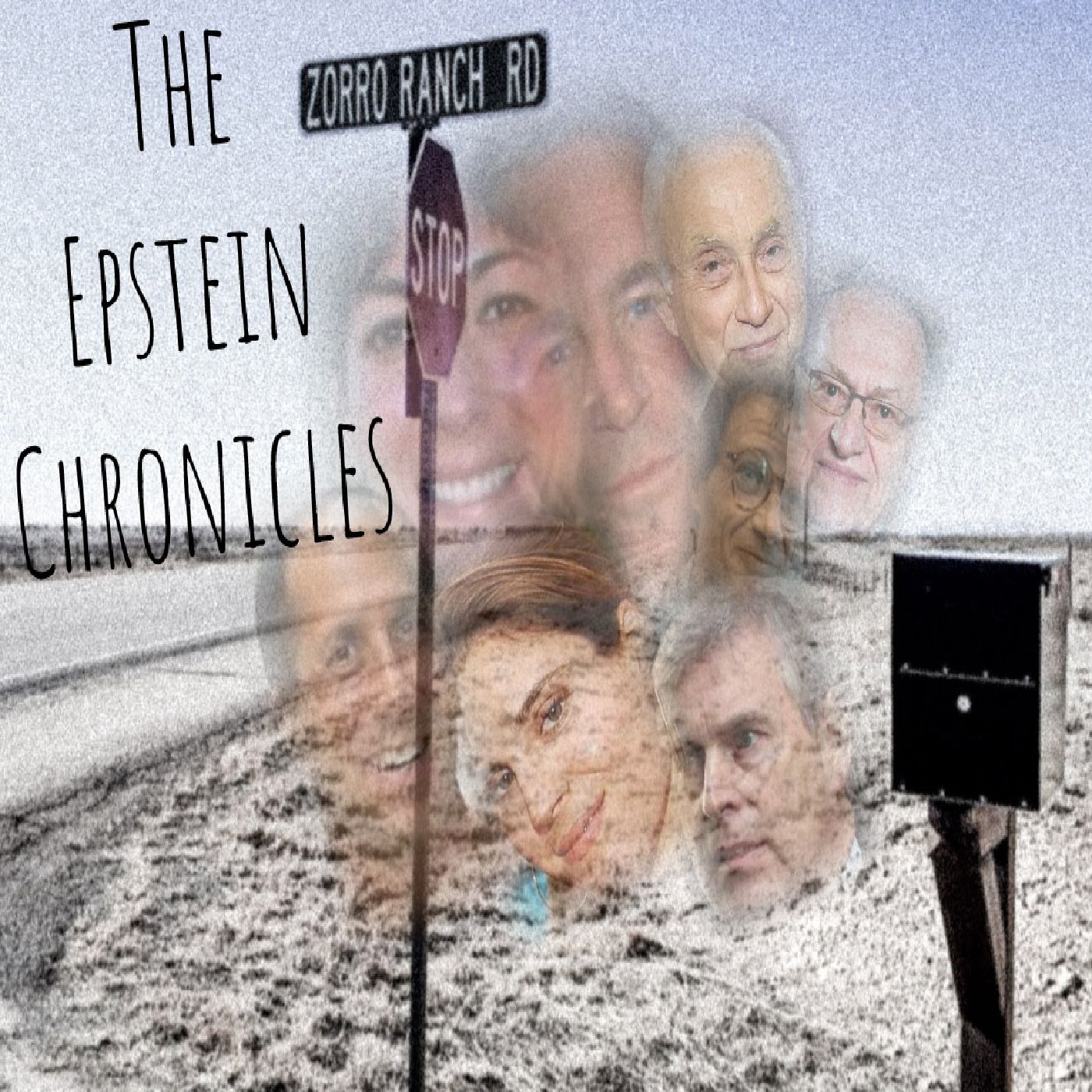
The Epstein Chronicles
Inside My Six-Year Battle Against Jeffrey Epstein: Before the World Listened (Part 2)
00:13:33
I spent years digging into the Jeffrey Epstein situation when almost nobody wanted to touch it. During that time, speaking publicly about what was really happening came with actual consequences—jobs vanished, relationships fell apart, and people...
Loading summary
Transcript4 lines
- [00:01]
A
What's going on everyone? It's bluff here and we're driving through the states in the Bluff Mobile and the best thing that we can do is play our favorite casino style games on Spin Quest. They have over a thousand games including live dealer, blackjack and craps. With tons of slots and unlimited options, you can get a 30 coin pack for just $10. For new users sign up today. Go to spinquest.com right now Spinquest is
- [00:24]
B
a free to play social casino void where prohibited. Visit spinquest.com for more details. What's up everyone and welcome to another episode of the Epstein Chronicles. In this episode, we're going to pick up where we left off, talking about my fight against Jeffrey Epstein for the past six years. After that day at Zorro Ranch, something inside me shifted permanently. Like whatever fragile parts of me that were still clinging to some illusion of safety finally snapped clean off and fell away. I stopped worrying about what I could lose because whatever fear people thought that they could use against me, I evaporated the moment I realized there was nothing left that they could take. My career had already taken a beating. Opportunities had already dried up. People had already walked away because they were uncomfortable with a fight I wouldn't abandon. Doors had already slammed shut that I spent years trying to open. I had already paid socially, professionally, and emotionally long before anyone ever heard a voicemail thread. So when people ask if I was scared, I laugh. Because fear only controls you when it has a hold of you. Once everything soft has been burned away, all that's left is bone and willpower. Look, I lost work because of this. I lost financial stability because of this. I lost relationships because of this. I lost people I loved because the subject matter was too heavy, too messy, too dangerous, too dark for them to live beside. Every day I watched people fade out of my life slowly, like lights dying across a distant skyline, one at a time. They didn't leave with screaming matches or dramatic endings, just silence. Silence that felt like abandonment masked as politeness. Silence that said, I can't handle this version of you. Silence that cut deeper than any insult ever could. And it forced me to rebuild myself in isolation. There were nights where I sat on the floor, staring at the wall, not crying, not shaking, just numb. Like someone unplugged me internally. I wasn't sad in the traditional sense. I was hollowed out, scraped clean emotionally, like the inside of my chest had been scooped with an ice cream ladle. Food didn't taste like anything. Sleep didn't exist in a real way. I'd lie there with my eyes closed. But my mind would keep replaying every voice that trusted me to speak for them. Every story I couldn't forget, Every detail that clawed at the inside of on my skull. You know, people throw around the word trauma like it's trendy, but living with it is suffocating. It's like drowning in air. You're breathing, but nothing reaches your lungs. Every day felt like carrying dead weight up an endless staircase. And every time I thought I made progress, the stairs stretch longer. I'd sit at my desk and open a blank document 20 different times without writing a single sentence. But because my brain felt like cement, I'd replay every decision I'd ever made, asking myself if I was completely insane for not letting this go. I'd wonder why I wasn't stronger, why I felt so worn down, why the armor cracked even though I kept telling the world I was solid steel. I'd stare at my phone, knowing I needed to answer messages, but my hands wouldn't move. I felt disconnected from my own body, like I was floating above myself while watching everything fall apart in slow motion. And look, that kind of fatigue, it's not physical. It's spiritual. But here's the truth. I never once wished someone else would carry the load. Instead, I just wished I could breathe once in a while without feeling like I was being crushed under the gravity of a dying star. People call me strong, but strength isn't what carried me. It was obligation. It was loyalty. It was fury. It was responsibility to the voices that trusted me. It was the knowledge that walking away meant leaving people behind who never got the luxury of escape. Listen, folks, strength isn't glamorous. Strength is built out of moments where you have every reason to quit. And you don't. Anyway. There were days where I felt like two people living inside of one skull. One person was the fighter, the loud, relentless, raging force who could stand in front of anyone without flinching. The other was the broken one, the exhausted, hollow, quiet version of me who wondered if any of this was actually changing anything. It felt like I was splitting in half. One part weapon and one part wound. I'd walk through public spaces, watching normal life unfold around me and feel like I was watching a movie instead of participating in reality. Everyone else looked weightless while I felt like I was dragging chains. Everyone else got to forget. I never did. And here's why. The guilt. Jesus Christ. The guilt was vicious. Guilt that I couldn't do more. Guilt that survivors trusted me with their stories. Guilt that I sometimes needed a break from Trauma that they had to live with every second of every day. Guilt that I felt tired when they never got rest. Guilt that I was human when I wanted to be indestructible. Guilt that I still felt pain when none of this happened to me personally. Guilt that I wasn't enough. And that guilt metastasizes into self loathing if you're not careful. There were moments when I felt like disappearing. Like I was dissolving from the inside out. I didn't feel joy anymore. I didn't feel lightness. I didn't feel anticipation for anything. Life lost. Texture and color. Everything flattened into grayscale. I wasn't depressed in the traditional sense. I was emotionally emptied. Scoop clean and left echoing. And you don't talk about it because nobody wants to hear that the person they think is strong is actually held together with frayed string and adrenaline. But even at my lowest, even when I was hanging on by a thread that felt like it could snap at any second, quitting was never an option. Not even once. The thought would flicker and something inside of me violently would reject it before it even completed itself. Because walking away wasn't self preservation, was betrayal. It was abandoning every survivor who risked everything to speak. It was surrendering to the people who wanted silence more than anything. It was letting the monsters win. And I refused to live in a world where that's considered acceptable. So I rebuilt myself, piece by piece, like assembling a machine out of wreckage. I learned how to survive without softness. I learned how to turn pain into fuel. I learned how to stand up even when my knees were shaking. I learned how to walk through the fire without expecting water on the other side. I learned how to become someone who doesn't need safety to move forward. I learned how to be unbreakable because breaking was not allowed. And every time I put myself back together, I became something harder, sharper and less willing to bend. And somewhere in that transformation, something unexpected happened. I stopped giving a single ounce of energy to fear. Look, it's not bravery. It's not machismo. It's not ego. It's a simple realization that fear had nothing left to threaten me with. Fear only works when you have something left to lose. When everything soft inside of you has already burned away. Fear becomes irrelevant. Once you survive your darkest internal war. External enemies lose their power. And at that point, I became something dangerous to the people who depend on silence. And look, the intimidation, it didn't start loud. It started subtle. Like a slow drip meant to wear a hole through stone. First, it was Strange calls with nobody speaking on the other end. Just breathing. Just silence thick enough to feel like somebody was standing behind me. Then it turned into whispered threats. Vague enough to deny, sharp enough to feel deliberate. Then it escalated to more direct messages. People telling me to stop digging, Telling me I was getting too close. Telling me that there were consequences for people who didn't know when to shut up. And I have to tell you, it was almost funny at first. Like watching amateurs try to stage a thriller. But then the tone changed and the frequency changed and suddenly they weren't whispering anymore. They were saying that they knew where I lived. They were saying they were coming. They were saying I should be afraid. And I remember sitting there thinking, you motherfuckers fucked up. See, these people? They don't understand men like me. They don't understand what it means to grow up in a world where violence is not theoretical. They don't understand what it means to come from a place where danger is just background noise. They don't understand what it means to have watched friends bleed out on pavement while sirens scream too far away to matter. They don't understand what it means to have buried young men who never made it to adulthood. They don't understand what it means to have known people who have went to prison for murder before they were old enough to vote. They don't understand what it means to have to live in a reality where fights didn't end with handshakes. They ended with funerals. They thought they were dealing with some soft civilian they could spook. They had no idea they were talking to somebody who learned to stop flinching a very long time ago. And look, I don't say any of that to sound tough. I'm not a gangster. I'm not a hitman. I'm not some Hollywood action figure who thinks a punch in the face is a personality trait. I say it because growing up with that level of chaos rewires your brain. You stop reacting to fear the way other people do. You stop believing threats automatically mean danger. You stop letting your body shake when someone tries to frighten you. Fear stops being an alarm system and starts being background static. So when these powerful, polished cowards tried to scare me with anonymous voices and vague promises of violence, that shit didn't land. Their tactics were amateur hour compared to the real world I came from. Their threats sounded like jokes whispered through trembling teeth. But these didn't quit. They kept calling, over and over, day after day, night after night. The same recycled intimidation script repeating like a broken record. Until one night, the voice on the other end finally dropped the pretense and said that they were coming to my house. No more suggestion. No more innuendo, a direct statement said, with the full expectation that it would send me spiraling into panic. And instead of fear, something else switched on inside of me. A heat, a clarity, a level of street focus that felt like everything in the world suddenly snapped into perfect sharpness. I hung up the phone and and instead of pacing around, instead of checking my windows, instead of grabbing a weapon or calling anyone or strategizing, I got on the computer and I booked a flight to Zorro Ranch. I wasn't going to wait to be hunted. The predator was going to become the prey. And we all know about Zorro Ranch. Epstein's desert fortress. The place people whispered about but never confronted. The place designed for secrecy, silence, and fear. The place nobody dared walk up to and until someone like me did. There's this long stretch of empty road leading to Zorro Ranch that feels like driving across the surface of the moon. No houses, no gas stations, no lights, just miles of flat earth, desert wind, and the kind of silence that swallows sound. Most people would turn around before they reach the halfway point. Most people would feel the weight of isolation, maybe think twice. Most people would feel the presence of something dark waiting ahead and. And slammed the brakes, but my foot only pressed harder on the gas. Every mile stripped another layer of hesitation off me. By the time the gates came into view, I was ready to rock. I pulled up to the massive iron gate and killed the engine. The air felt unreal, like the whole world was holding its breath. No movement. No sound except wind. It was a place built to make people feel small, insignificant, and powerless. A place meant to intimidate on sight. And I remember standing there, looking up at the massive structure, thinking all this money, all this land, all this power, and it still couldn't save his bitch ass. I walked right up to the intercom, pressed the call button, and stared directly into the camera like I was daring whoever was watching to blink first. When the voice crackled on the other end, they sounded startled, like nobody had ever actually done this before. And I said in the clearest voice I think I've ever spoken in my life, yo, you said you were coming to my house, so here I am at yours. If you want to talk, come talk. If you want that smoke, come get it. And look, I wasn't performing. I was simply done. Done being stalked, done being threatened. Done letting these cowards think that they own fear. And look, nothing dramatic happened after that. No black SUV's pulled out. No dramatic standoff. Just silence. Thick, heavy, charged silence. And in that silence, I realized that everything they used to control people. Fear, intimidation, manipulation, shit don't work on me. You can't threaten someone who has already walked into a lion's den on purpose. You can't scare someone who has lived through worse than anything you can invent. You can't scare someone who refuses to bow. In that moment, I stopped being a target and I became a problem. Driving away from Zorro Ranch that night felt like leaving a graveyard after burying someone. Except the funeral wasn't for Epstein. It was for the version of me that still cared about consequences. That man died on the desert road under a full sky of stars that didn't give a damn about human power structures. I left a ghost behind at that gate. And the version of me who drove away had nothing left to lose, nothing left to fear, nothing left to protect. There was nothing left. Except the mission. All right, folks, we're gonna wrap up right here. And in the next episode, we're gonna pick up where we left off. All of the information that goes with this episode can be found in the description box.
- [14:03]
C
What's up, everybody? It's Bretzky. And America is turning 250. And I can't think of a better way to celebrate that than playing on an American owned social casino. Spinquest.com with all all of your favorite games. Live craps, bubble craps, live blackjack. There's no better place to play for free and win real cash prizes. Spinquest.
- [14:25]
B
Com Spinquest is a free to play social casino void where prohibited. Visit spinquest.com for more details.