← The Epstein Chronicles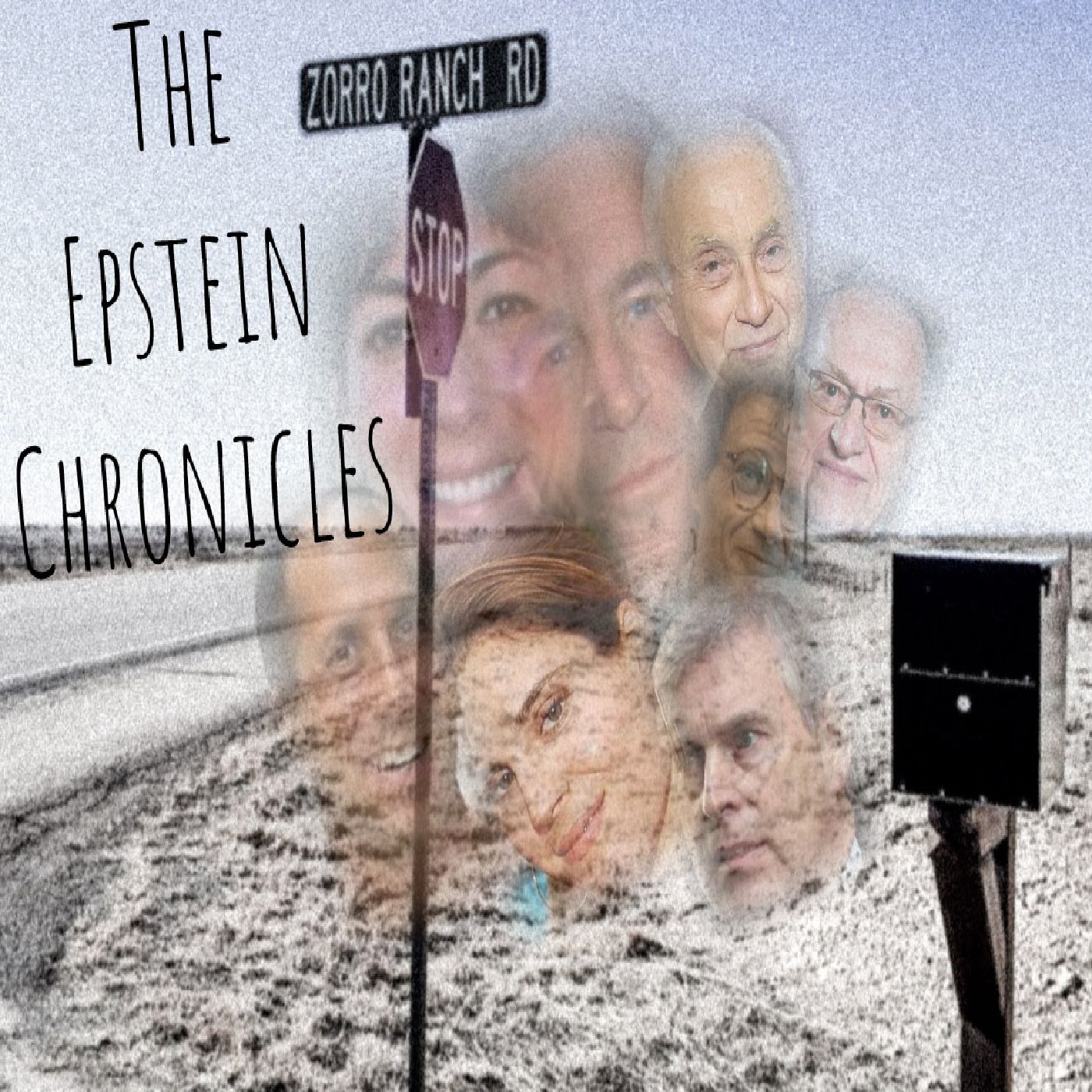
The Epstein Chronicles
Mega Edition: Alex Acosta And His Epstein Related Congressional Deposition (Part 7-9) (5/17/26)
00:34:25
When Alex Acosta sat before Congress to explain himself, what unfolded was less an act of accountability and more a masterclass in bureaucratic self-preservation. He painted the 2008 Epstein plea deal as a “strategic compromise,” claiming a federal...
Loading summary
Transcript13 lines
- [00:01]
SpinQuest Advertiser
I'm here with spinquest, where you can play and win from the comfort of your own home with hundreds of slot games and all of the table games you love with real cash prizes. Right now, $30 coin packs are on sale for $10. For new users, it's all@spinquest.com that's s
- [00:20]
SpinQuest Disclaimer Announcer
p I n q U-E-T.com SpinQuest is a free to play social casino void where prohibited. Visit spinquest.com for more details.
- [00:31]
Dish Network Advertiser
Dish has been connecting communities like yours for the last 45 years, providing the TV you love at a price you can trust. Watch live sports news and the latest movies, plus your favorite streaming apps all in one place. Switch to Dish today and lock in the lowest price in satellite TV starting at $89.99 a month with our two year price guarantee. Call 888-add-D Dish or visit Dish.
- [01:01]
Alex Acosta
What's up everyone? And welcome to another episode of the Epstein Chronicles. In this episode, we're going to pick up where we left off with the Alex Acosta transcript from his trip to D.C. once again, Alex Acosta answering the questions. And multiple people, mainly redacted, doing the questioning. Question now, sir, what you have in front of you is a New York Magazine article dated October 28, 2002. Title quote, Jeffrey Epstein, international money man of mystery. Quote, terrific guy. Donald Trump booms from a speakerphone. He's a lot of fun to be with. And if I hadn't mentioned this, this is dated October 28, 2002. And Mr. Acosta, I'm going to have you turn to the fourth page of the document. The top of the page there you'll see starts the wizard. Do you see that answer? Yes. Question. And if you go three paragraphs down, there's a paragraph that starts, epstein likes to tell people. Do you see that? Yes. Question. This paragraph reads, epstein likes to tell people he's a loner, a man who has never touched alcohol or drugs and whose nightlife is far from energetic. And yet, if you talk to Donald Trump, a different Epstein emerges. Quote, I've known Jeff for 15 years. Terrific guy. End quote. Trump booms from a speakerphone, quote, he's a lot of fun to be with. It's even said that he likes beautiful women as much as I do. And, and many of them are on the younger side. No doubt about it. Jeffrey enjoys his social life. Mr. Acosta, this article was published in 2002, before the U.S. attorney's office launched its investigation into Jeffrey Epstein. Was Donald Trump ever questioned about this article or this quote that he gave to the reporter. Answer. So first he gets interrupted by whoever's doing the questioning. It's a yes or no answer. Not to my knowledge. Question. Thank you, sir. I'm going to hand you another exhibit which will mark as minority exhibit B. Mr. Biggs, just so you know, we'd like copies. Question. So, Mr. Acosta, what you have in front of you is a Page Six article dated October 15, 2007. It's titled Sex case Victims lining up. And I'll note for the record that Page six is owned and operated by by the New York Post. Now I will read the first paragraph to you. It starts lawyers. It says, lawyers for Manhattan billionaire investor Jeffrey Epstein, who's agreed to a plead guilty to soliciting underage hookers. Underage hookers, imagine, are bracing for a slew of lawsuits from as many as 40 young women who came to his Palm beach mansion for a massage session. Page six is learned. And then I'll have you flip the page and we'll go to the very last paragraph. Here it reads. Meanwhile, the Mar A Lago club in Palm beach last night confirmed the website report that Epstein has been banned there. Quote, he would use the spa to try and procure girls, but one of them, a masseuse about 18 years old, he tried to get her to do things, end quote. A source told us, quote, her father found out about it and went absolutely ape. Epstein's not allowed back, end quote. Epstein denies he's banned from Mar A Lago and says in fact he, he was recently invited to an event there. Now, Mr. Acosta, as it says in this article, this was published in October of 2007 after your office had executed the non prosecution agreement with Jeffrey Epstein, but before he pleaded guilty to the charges, did the U.S. attorney's office ask Donald Trump about any women at Mar A Lago? So I'm going to. Again, cut off, sir. It's a yes or no answer. No, no, no. It's a very simple. Sir, it's a yes or no question. Answer with respect. With respect. You're asking questions based on headlines that are pretty explosive. And I think to that he's getting cut off again. And I'm asking about your knowledge. Are you aware of anyone in the U.S. attorney's office asking Donald Trump about the article? I think to that cut off again. Mr. Neiman, let him answer. Acosta. I understand, but I want to provide a fulsome answer if I can. First, these are the words of the prosecuting attorney in the case. Cut off once again, sir. That's not my question. I'm asking if you're aware to that Acosta cuts him off. I'm providing you cut off again by the person asking the question. If Donald Trump was interviewed about women at Mar A Lago, I'm not aware of who was interviewed and, and not interviewed in the case generally because US Attorneys do not become involved in deciding who gets interviewed and who does not get interviewed. I do believe you said in this hour, the decisions are mine. You are the U.S. attorney, is that right? So when I said the decisions are mine, you're taking my comments out of context because I said I am ultimately responsible for what my office does. I'm not pushing away blame, I not pushing away responsibility. That doesn't mean that the U.S. attorney of a district with several hundred attorneys, even in high profile cases, directs who is interviewed and not interviewed. And so as a U.S. attorney, I do not have knowledge who was interviewed in the case. As U.S. attorney, I do not have knowledge who was interviewed in the Abramov case, which we did as well. As U.S. attorney, I do not have knowledge in who was interviewed in the UBS case, which. Which was a major case. So as a U.S. attorney, my job was to allow my line prosecutors, our line prosecutors, line prosecutors that have great experience, one of whom, one of the supervisory attorneys of whom used to be the head of public corruption, public integrity here in Washington, to determine how to proceed with investigations. Question. Thank you. You have relied frequently on the OPR report and you'd with me that the OPR report outlines that you negotiated the non prosecution agreement, Is that correct? That is not correct. That's not correct. Not what the OPR says. Did you have any role in negotiating the non prosecution agreement? The OPR report says that I ultimately approved the term sheet that required two years, that required registration and that required a mechanism for individuals to. To recover monetary. And so I approve that. Question. Understood. Answer. It was then negotiated after that by the U. The AUSAs. The report also says. Question. Did you meet with Epstein's defense attorney? Answer. Let me finish, if I could finish my answer, please. The report, as I was saying that also says that Epstein's defense attorneys then requested a meeting. It says that it went to our first assistant. And. And I said, I bet you this case ends up in Washington because they had done was Hire Mr. Starr. Question. And Mr. Lefkowitz. Answer. And Mr. LefKowitz. Question. And Mr. Dershowitz. Answer. And Professor Dershowitz. And when they hired them, I predicted I got a phone call asking for A meeting. I predicted my career first assistant that the case would end up in Washington. I said we should meet with them so that the first time Washington hears about this is not the South Florida office, refused a meeting. I then asked him to call the criminal division in D.C. and invite the head of Child Exploitation and Obscenity Section, who are the experts in this, from Washington D.C. down to the meeting, so that the Child Exploitation and Obscenity section would be fully briefed on the case, fully briefed on how we were proceeding on the case, and they would know what we were doing because my prediction was that it would end up in Washington. Mr. Garcia thank you. Mr. Acosta. I think we're going to move on. Mr. Garcia I'm going to move on to Mr. Submaranian real quick. But before I do that, really quick, I just wanted to be clear. Also, when you were during your time as U.S. attorney, did you ever speak to Donald Trump generally? Mr. Acosta I did not. Mr. Garcia so you never, the entire time you were U.S. attorney, you never once spoke to Donald Trump? Mr. Acosta the entire time? Let me be more clear. I did not speak with President Trump, with Donald Trump before I was considered for secretary of labor. Mr. Garcia thank you. Mr. Submaranean. I was going to ask you that, but had you met with him before? Acosta There was one instance where I saw him in the lobby across the way and I remember thinking, oh, that's Donald Trump. If you define that as a meeting, we didn't have a conversation. I just saw him kind of like, like seeing people in the room. Mr. Garcia you never had a phone conversation also, not just a meeting, never a phone conversation of any kind with Donald Trump? ACOSTA I did not have an in person conversation. I did not have a phone conversation. Mr. Min email. Acosta we hadn't shaken hands. SUBMARINE what about with any of his associates? Mr. Min. Email, text, any of them? Acosta no email to my recollection. No text to my recollection, no associates. To my recollection. He moved in circles that I did not move in, to be honest. Mr. Frost Can I ask real quick, during the time that you were considering this case, did anybody reach out to you, you know, any form of communication inquiring about it? Mr. Acosta so the office got any number of communications, I assume you mean from the media. Mr. Frost. You personally. Mr. Acosta and those have gone through. So it was 20 years ago. I don't know if a reporter at some point cornered me and asked me a question. Mr. Frost anybody from D.C. acosta so at some point the case was appealed to Washington and at that point then there were conversations, primarily letters that were provided Washington but not specifically around the NPA and considerations over it. Did anyone reach out to you from Washington? Anyone from local government in Florida? Anyone in South Florida? Mr. Acosta so is your question before the non prosecution agreement was signed? Mr. Frost yes, before it was signed. ACOSTA Were there any communications by government officials? FROST Government officials, donors, anyone that would reach out to you asking questions about this case or to provide there to that cut off by ACOSTA I don't recall any communication from what you would term as donors. I I'll just call them wealthy people. Mr. Frost wealthy people. ACOSTA I don't recall any communications. So I reached out to Washington to ask the head of child exploitation and obscenity section to come to our meeting because I wanted Washington to be fully briefed because I thought Washington would be brought into this. That was my reaching out. And so in that process I'm sure that there was some back and forth so that the person could come to this meeting where to be clear, I I rejected every ask the defense made of me and I said we're going with the original decision that I made. All right folks, we're going to wrap up right there and in the next episode dealing with the topic, we're going to pick up where we left off. All of the information that goes with this episode can be found in the description box. What's up everyone? And welcome to another episode of the Epstein Chronicles. In this episode, we're picking up with the Alex Acosta deposition that was given to Congress. Once again, Alex Acosta is answering the questions and a whole host of people are doing the questioning. ACOSTA now going forward, Your question was Mr. Frost when you were being considered to be the Secretary of Labor? ACOSTA yes. FROST in your conversations with Donald Trump or anyone in his administration, did you talk about the Epstein investigation? ACOSTA the first time. FROST before confirmation. ACOSTA the first time that I recall. NIEMANN before confirmation Forget everything you had
- [12:43]
SpinQuest Advertiser
planned for this weekend because you are sitting on your couch and winning from the comfort of your own home. I'm here with spinquest where you can play hundreds of slot games, all the table games you love, and you could even win real cash prizes. New users $30 coin packs are on sale for 10 at Spinquest.
- [13:02]
SpinQuest Disclaimer Announcer
Spinquest is a free to play social casino void where prohibited. Visit spinquest.com for more details.
- [13:11]
Sherwin Williams Advertiser
Shop the Sherwin Williams Memorial Day sale and get 30% off paints and stains. May 15th through the 28th. Whether you're refreshing your interior or exterior, we've got the colors to bring your vision to life. And with delivery, getting everything to your door is easier than ever. Shop online to have it delivered or visit your neighborhood Sherwin Williams store. Click the banner to learn more. Retail sales only some exclusions apply. See Store for details. Delivery available on qualifying orders.
- [13:40]
Alex Acosta
ACOSTA Talking about this from the first time I was being considered for a position in the Trump administration to confirmation the first time I recall talking about this, there may I don't know, there are two points at which I may have at one point at which I did and one point at which I may have the point at which I did I was I believe there were some stories I forget where I know in the Washington Post there was a story above the fold at one point, but I think that was later. And so I talked to the communications team because the communications team needed to be briefed about it, obviously. And so I had a conversation with the communications team. Mr. Frost and then you said there was another ACOSTA and the other instance where I may have had communication. I don't recall if I did or if it was simply or if there was some written question or otherwise. But at some point in the vetting process, a question may have arisen and if the question arose. FROST and you don't remember? ACOSTA I honestly don't remember. But if the question arose in the vetting process where the FBI does its background. FROST okay. Acosta Then Frost cuts him off. Very good. Thank you. Jasmine. Crockett pipes up okay, so I've just got two questions and you may be able to finish answering them before the end of this part. I still want them to get on the record because I'm going to have to go. You talked about how weak the case was and there was a number of follow up questions on that from Dave Min I'm trying to figure out, are you aware as to whether or not any of Jeffrey Epstein's employees were ever interviewed as as part of the investigation? Mr. Acosta so again, as U.S. attorney, I don't get involved in who was to that cut off by Crockett okay. Acosta Interviewed? They may have been interviewed. They may not have been. CROCKETT okay. ACOSTA that was not that was not the role that I played in this. CROCKETT okay, I understand. And the only reason I ask is because you talked about basically how you all came together. And I'm aware that a lot of times there's basically like conferences that you pull together your entire team and you talk about these things. Right. But it doesn't sound like you ask those questions in those meetings either to know whether or not, well, did you go and do this, that or whatever the things to better the case and make the case stronger. But I'm going to hold that there. And if you have anything to provide as it relates to testimony of the things that, that you did to try to make the case better or try to make sure that you had everything that you could to make sure that it was the best case, then please let us know on the record later. But the final question, because I want to kind of get to the end is it sounds like you had a lot of meetings with lots of people. But it seems like the victims were left out of this. And ultimately we know that there was a problem with you potentially. I don't know the exact language, but violating statute that requires victims to be made aware. So while there are all these other conversations taking place, and I'm used to prosecution offices talking to victims and explaining to victims why they are going to have weaknesses in their cases and explaining prior to making an offer because there have been victims that have been told prosecutors, yes, I hear you saying that the case is weak, but I want to testify, I want my day in court. I want, I want to go forward. And I have heard prosecutors go forward simply because victims are saying we want to go forward. It doesn't sound like that was done. If it was done, please let us know. But it's my understanding that Sarah Kellen, Nadia Marcinkova and Adriana Mucinska, that they were being investigated as co conspirators or that they were being included in the NPA either before or after it was signed. But is that common practice in the Southern District of Florida? Number one. And how can you explain including young women in a non prosecution agreement without their knowledge at the request of a clear serial sexual predator? Mr. Acosta. Okay, so that was a lot of questions. Let me try to take the gist of this. I'm reading from the case agent sworn statement, I believe you cited litigation where they filed suit under the CVRA. Ms. Crockett. Yes, Acosta. So first at the time, and it's all since changed, but at the time it was Department of Justice position that the CVRA did not attach until indictment and that was the written position under an Office of Legal Counsel decision. And so things have changed. But I want to be very clear up front. The Office of Professional Responsibility reviewed this matter fully. And there are some things, I agreed with the question earlier where I agreed with the criticism of opr, but OPR found out that we did not violate any law, we did not violate any department policy, and there was no misconduct with respect to victim notification. Reading from the case agent sworn declaration, many of the victims were troubled about the existence of the investigation. Some victims who were identified through the investigation refused to even speak to us. During interviews conducted from 2006 to, to 2008, continuing after, after the agreement was signed, no victim expressed a strong opinion that Epstein be prosecuted. And so that was actually filed in response to the claims that you made in that, that you quoted from that litigation. That is the litigation that proceeded and the declaration was filed as a response to the claims that you made. Now, the respect to victim notification. Very briefly, one of the issues that arose is, and this went to a little bit of your question about some of the difficulties that I will own with the proceeding on the state was that we included a provision that allowed the victims to recover monetary damages. And our prosecuting attorney and the FBI case agent started notifying the victims. And this isn't my recollection. Let me be clear. This is what the OPR discussed and found because, you know, I was not as U.S. attorneys supervising victim notification. This was, you know, left to the prosecuting attorneys and the supervisory chain. And this is what OPR found. And so they became concerned that they were generating more impeachment evidence because if victims became aware that they could recover monetarily, they would have when they were put on the stand. Can you imagine how the questioning would go? Is it true that if this person is convicted, you stand to recover $100,000 or $150,000 or whatever the amount was. And because of that, they went to their professional responsibility officer, their ethics officer, and said, we feel uncomfortable continuing with the victim notifications. And the ethics officer at the time said, if you feel uncomfortable, then don't go forward. And so the notifications, based on my understanding of the OPR report, proceeded by saying that the investigation is ongoing because at the time the, the appeal was pending in D.C. and we didn't know how it would turn out. And so that is the decision that was made. It was made with the best intention of preserving the case. And it was made in conjunction with the professional responsibility officer of the office. Redacted. We're going to end the democratic round there. But before we do, Ms. Stansberry, can you please introduce yourself on the record? Ms. Stansberry? I'm Melanie Stansberry from New Mexico. Thank you for being here. Mr. Acosta, how are you? Mr. Ansari. Hi. Yasemin Ansari, Arizona's third Acosta. How are you? Great. We'll go off the record. So they go off the record, then they come back. So just for a clean record, the Epstein case in the Southern District of Florida was resolved via non prosecution agreement, correct? Yes. I want to differentiate a little bit. Did you approve the terms of the NPA itself? You've been using term sheet, I think that language that you've been using. Is there a difference between the two? So the term sheet was the initial proposal that was presented to the defense, I believe in late July. The ultimate agreement differed primarily as we have already discussed, from 24 to 18. Uhuh. And I approve both. Okay. Is there a difference between the non prosecution agreement and and the kind of plea agreement? Answer. There is. Question what is it? Answer. So a non prosecution agreement is typically kept in the U.S. attorney's office and its agreement not to prosecute. And in this case it was a deference to the state that would be prosecuting pursuant to these terms. Question Are plea agreements traditionally more public than non prosecution agreements? Non prosecution agreements traditionally are not public. Okay. Or at least were not public traditionally at the time. At that time. So a non prosecution agreement like wouldn't be. I'm sure PACER didn't exist in 2006, but wouldn't go online or wouldn't be available at a courthouse for the public to view. It would not. It would be kept at the U.S. attorney's office. Question Was that the part of the rationale to choose a non prosecution agreement versus a plea agreement? Answer it was not. Question did defense counsel ever suggest that they wanted it to remain private? Answer so at some point in the process that came up and that came up in the negotiation process, as a matter of fact, U. S Attorney policy, it would remain within the U S Attorney's office, but it's always subject to Freedom of Information Act. Question. Okay, but from your side of the negotiating table, it being private was not pivotal in the negotiation. Acosta, it being private was not pivotal at all. Was there ever discussion enforcing a plea agreement versus an npa? I don't understand the question of forcing a plea agreement. So it was obvious the defense team's interest for an NPA because one rationale I would think would be that it's not a public document. Did it ever come up in conversation of the U.S. attorney's office that they would prefer a public document or versus the npa? I wasn't part of the team that negotiated this and so I can't speak as to what came up in conversation. The ultimate plea was in state court. Uhuh. So we need to be. Well, let me separate out the terms. The plea was in state court. It was a public state plea. The federal resolution that we were going to withhold prosecution pending the state plea and serving his term. Question. Okay, answer as we envisioned it under continuous confinement in the state court. Question. Okay, thank you. All right, folks, we're going to wrap up right here. And in the next episode dealing with the topic, we're going to pick up where we left off. All of the information that goes with this episode can be found in the description box. What's up everyone? And welcome to another episode of the Epstein Chronicles. In this episode, we're going to pick up where we left off with Alex Acosta and his trip to speak to the U.S. congress. Question. I'm going to introduce. I think it's exhibit two, the actual npa. So this non prosecution agreement in the Epstein matter, just for the record, this looks like the non prosecution agreement that you approved? It does and it has signatures. So yes. Question. I believe from everybody. Yes. Question. And it was originally signed in September of 2007, but he did not plead and stay court until the summer of 2008. Is that your recollection as well? That's my recollection. Do you recall as to why the large delay there? Yes, because after he signed it, we expected him to plead right away like defendants typically do. And then he started challenging it collaterally. He started challenging the authority of the office to enter into the agreement. And then he started appealing to Washington D.C. to the criminal Division. And then subsequently the deputy Attorney General. Question. And you have said before, but in your experience, it's kinda strange for someone to agree to an agreement and then attempt to backtrack. In my experience, it hadn't happened previously. And let me just add in the experience of I think I can speak for our office. Everyone was upset. Question. Is there my own kind of intellectual curiosity. I mean he, he signed it, your office signed it. Was there any reason to go through the delay? Could you not summon him to court and say you have to follow the agreement? Answer. So at various points in the delay process, I think everyone, at some point, everyone became frustrated and said, why don't we just declare a breach? One thing we did not foresee, all these appeals and all the collateral attacks. And I will accept that criticism. But having signed this, if we declare a breach, then now we're litigating as to whether or not it's a valid breach, if it's because it's unilateral breach. And now we're putting off the criminal trial and the criminal prosecution that much longer as we go through the litigation of. So once it's signed, do we have the grounds to withdraw? And we had discussions at various points about whether we should or should not. But ultimately, you know, he was appealing to Washington. We were shocked. But Washington heard him out. I asked Washington to expedite the appeals because I wanted it just done and I wanted him in jail. But you know, Americans do have a right to appeal decisions of U. S. Attorneys to their bosses. Question. But you had said like he was appealing after he agreed to it. Answer. Look. Question. Which is unprecedented. Answer. It's absurd. It is absurd and unprecedented, but it is what it is. And if we declared a unilateral breach, the now something that's already been delayed is going to be further delayed as we litigate whether or not we had a right to breach. Question. And then the appeals process, you said the head of criminal division in D.C. and the DAG, is that correct? Answer. He appealed to Criminal Division. I think the head of Criminal division delegated that down. And then he appealed to the deputy Attorney general. Question. So. Well, I just. I won't testify for you. What did the Criminal division, what was their decision? The Criminal division supported the office and then the deputy Attorney General supported the office. Who was the DAG at the time? I'm sorry, I should remember and I don't. That's okay. That's one we can figure out. But the deputy Attorney general's Office supported your U.S. attorney's Office decision in the matter. They authorized us to go forward. Bingo. What have I been telling you? That's Mr. Philippe that I've been talking about for how long? You just got to read in between the lines, folks. Answer. They authorized us to go forward. Question. All right. Was there any delay between the DAG approval and the final plea in state court? Answer. Once the deputy attorney general authorized it to go forward, then the plea in state court proceeded. I don't want to say expeditiously, but in relatively short order. Were you not aware of any appeals to the state attorney general? I was not aware of any appeals to the attorney general. Question. In non prosecution agreements generally, this one sounds pretty unprecedented in its number of appeals and steps. But does a U.S. attorney have the authority to enter into them without Washington approval? Yes. What are they? Again, a general question. What? What kind of crimes are they normally used for? Answer so non prosecution agreements are typically used more for the white collar setting. In this case it was different because it's a non prosecution on a federal crime, but it's a non prosecution in deference to an alternative prosecution in the state where the case began so he could proceed as police initially had thought appropriate. Question so not. I mean this is kind of an untraditional non prosecution agreement generally. But. But they're not traditionally used in sex crimes or Answer that's correct. Question or other violent crimes.
- [29:30]
SpinQuest Advertiser
Forget everything you had planned for this weekend because you are sitting on your couch and winning from the comfort of your own home. I'm here with spinquest where you can play hundreds of slot games, all the table games you love, and you could even win real cash prizes. New users $30 coin packs are on sale for 10@spinquest.com Spin Quest is a
- [29:52]
SpinQuest Disclaimer Announcer
free to play social casino void where prohibited. Visit spinquest.com for more details.
- [30:00]
Alex Acosta
This is the kind of hot button issue going into September 29th, but are non prosecution agreements binding on all US attorneys within the United States? Answer they are not and I'm sure you're aware that matter is pending in the Supreme Court. Question But a district court has said that and an appeals court has said A district court has said that and an appeals court has said that and that is the position of the Department of justice. While U.S. attorney had you used non prosecution agreements prior to this one? Not to my recollection. Did you use one after? Not to my recollection. And just you were there for a number of years and this was the only case that was a non prosecution. So non prosecution agreements are typically are more typical in the types of cases that are litigated in Washington or in other districts. Okay. You said white collar cases. Yes. More common financial or tax crimes. Those kinds of things. Correct. All right. We've touched on this kind of around the topic an awful lot today and there was an awful lot of back and forth in the last hour. But just this is a broad question. So as briefly as you can and to the best of your recollection, why a non prosecution agreement in this case? Answer so ultimately the question was do we proceed federally or do we defer to the state? It came from the state. The state police wanted certain charges. I understood that would result in two years. It entered the office in the context of we may have to proceed with a double prosecution. And the fact is I understood them were local facts. We felt comfortable that we felt we had an agreement or an argument for an interstate case. That is, if we had to go to trial, we had no issue going to trial. But everyone favored a resolution that was negotiated. But because of all those issues, it seemed that a state resolution at the time made sense. As I said Before, I note OPR's comments. If we had, I think what I told the Office of Professional Responsibility was if we had foreseen all the issues that the state resolution raised, we would not have gone down that path. And I don't advise others to go down that path. But we didn't foresee them at the time. And when I say we again, that's on me. I will take responsibility for that. And in the sense I think OPR was generally correct. Question and prior to the execution of the NPA is it was largely believed in the office that a negotiated agreement was. I'm going to use the phrase the like safer outcome. It was going to result in jail time. Answer it was the superior outcome because it would result in jail time, it would result in registration, it would send a signal to the community and I, you know, credited or cited from multiple people. It was the sense that you didn't have to put the victims that didn't want to go through a trial through a trial. And there was a continuum. We talk about the victims as if they had one view and, you know, multiple victims with different views. Question we're there. I'll read you. It's page 40 of the OPR report. Vilafana, the lead line prosecutor on the case, told OPR that she was angry when she received Menshell's July email explaining that he had proposed to Sanchez revolving the federal investigation through a state plea. In Vilafana's view, the proposed state resolution didn't make any sense and didn't correspond to department policy requiring that a plea offer reflect the most serious, readily provable offense. In her view, a plea to a state charge obviously would not satisfy this policy. Did Ms. Vilafana ever express to to you your concerns regarding the language of the NPA? Was the question answer Ms. Vilafana and ended up negotiating the language of the NPA. I think it's fair to say that she would have preferred a federal resolution. I think my supervisory staff differed from her in that they were comfortable with the state resolution, although to some extent the federalism concerns the deference to the state, if I'm being fair in all of this primarily comes from me. And I think OPR found that and I think OPR was fair in that judgment. Question so it's Ms. Vilafana's words, not yours, but just your interaction with her and with others negotiating this agreement or getting to this agreement. Would it be fair to characterize her and you've said this as in favor of a negotiated resolution, but not necessarily in favor of the state resolution? Answer I think that would be fair. Question. Okay, I just wanted to kind of, you know, dissect that because it was a little confusing. Do you ever recall who first initiated the negotiations with Epstein's defense regarding the npa? Answer I do not. Question Were there ever any concerns regarding using an NPA versus going to trial? Answer so ever is a very broad word, right? I think this is 20 years ago. Thinking back, these conversations, sometimes they happen around the table, sometimes they also happen in a hallway. You know, the first assistant had his office right next to mine. We shared a suite, the criminal chief at his office down the hall. You get together, you talk about things. And the proposal formed and ultimately I approved it. But the proposal, people come together, they generate a consensus. What do you think? What do you think? How do we go forward? But ultimately, look, I approved it and so I was a U.S. attorney and I take responsibility. Question Would you characterize the processes like a rigorous debate that that led to this outcome versus trial? Answer I think there was a fulsome and rigorous debate and that simply wasn't one meeting that happened over a number of days, if not weeks, where ideas would be discussed back and forth. Question and then while I'm going to have two different time periods while it was being negotiated prior to being signed In September of 2007, do you recall negotiations regarding the longer moving forward off of how the Defense Council was acting on or any new information? Answer There was some. I don't recall them, but I've read in the OPR report that there were some discussions about not longer moving forward. No longer moving forward. And it was based largely on defense counsel getting very close to the line of what's proper and not proper for a defense counsel to do. And my view on that is I understand defense counsel are who they are. I understand they're frustrating, and I understand that they agree and then say they didn't agree. But that's the decision that we had. We should make a good faith effort to follow through on what we thought was the right approach, despite defense tactics that were frustrating at best. And you asked earlier, I'd say bordered on. It's not frustrating and unprofessional. And it came very close to the line. All right, folks, we're gonna wrap up right here and in the next episode dealing with the topic, we're gonna pick up where we left off. All of the information that goes with this episode can be found and in the description box.
- [36:57]
SpinQuest Advertiser
Forget whatever plans you have this weekend because you're staying at home and playing on Spin Quest, and there's never been a better time to sign up than right now. New users get $30 coin packs for just $10. All the table games you love, with hundreds of slot games and real cash Prizes. That's at spinquest.coms P I N Q
- [37:16]
SpinQuest Disclaimer Announcer
U-E S T.com Spin Quest is a free to play social casino void where prohibited. Visit spinquest.com for more details.