← The Everyday Millionaire and Mindset Matters Podcast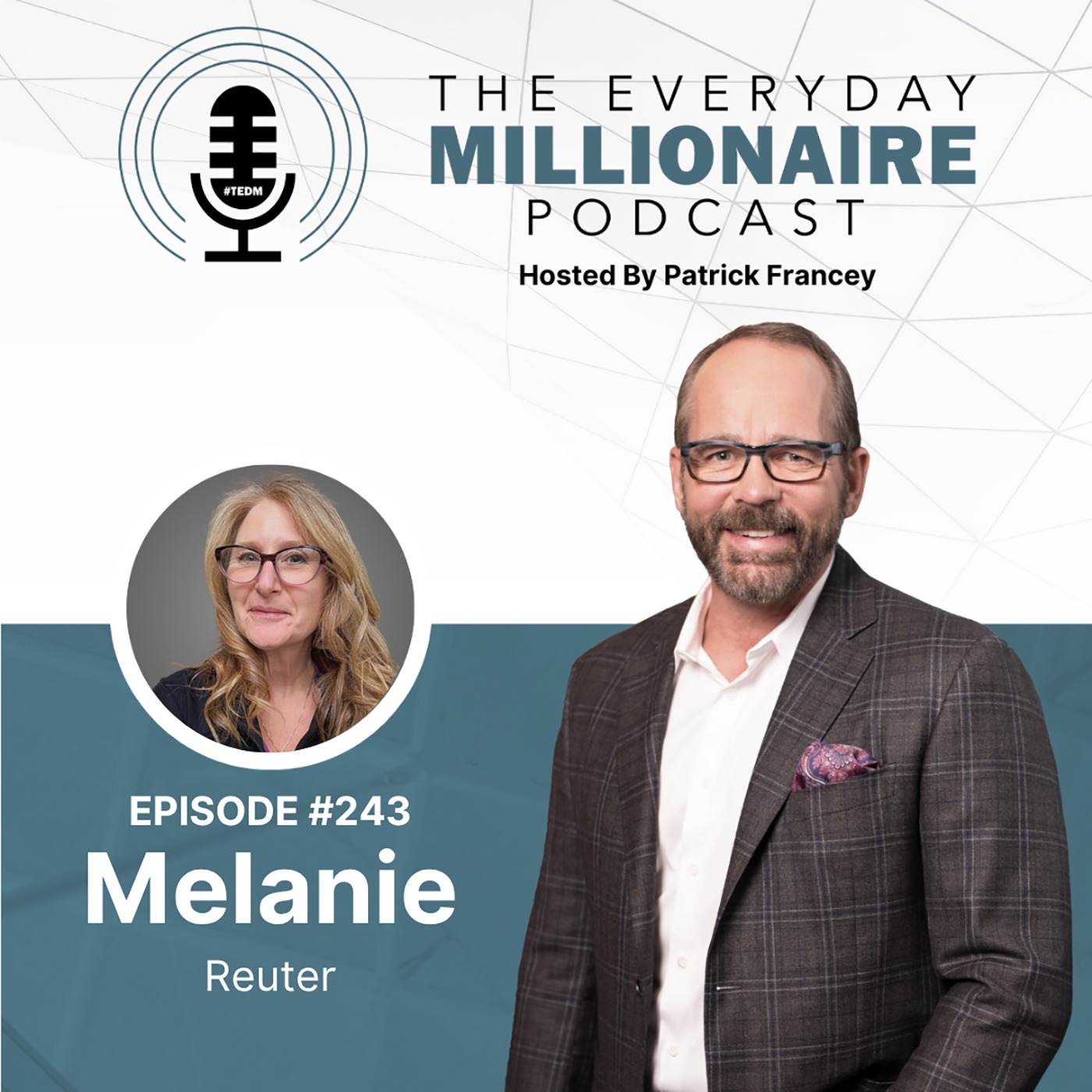
The Everyday Millionaire and Mindset Matters Podcast
Episode #243 – Real Estate to Lifestyle Business: Melanie Reuter’s Next Chapter
00:42:40
Loading summary
Transcript77 lines
- [00:00]
A
Foreign. Welcome to the Everyday Millionaire Podcast. My name is Patrick Francie and I am your host and I want to begin by saying thank you for listening. On this show I am having conversations with seemingly ordinary individuals who have achieved some amazing and extraordinary results in both their life and business. My intention is to inspire and help you learn and grow by having my guests share their journey of how they face and overcome their challenges, but also how they celebrate their their many wins. And now let's get on with this show and have a conversation with today's guest. My guest today, Melanie Reuter, is a very good friend. She is a real estate investor and the former Director of Research at the Real Estate Investment Network where she worked from 2005 to 2016, where she analyzed market fundamentals and trends and help guide investment strategies for other investors. She authored much of Rain's seminal research informed publications such as top 10 towns, the transportation Impact on Real Estate and her own portfolio includes multifamily property, raw land and an Airbnb in Chilliwack, British Columbia, as well as investment property in Alberta. Recently she stretched out of her comfort zone into the world of hospitality by purchasing an off grid fishing lodge near Kent, Kamloops, B.C. a beautiful property. Now Melanie splits her time between Kamloops and Chilliwack with her husband Ray, who also previously worked at Rain, and together they are raising their two teenage children. In this conversation we explore the journey of Melanie and Ray into this Airbnb property and the impact that her real estate investing experience gave her or had on her in order for her to bring this deal together. To together, her and Ray are living their dream of owning this type of a property. They're working hard, they're enjoying it and this is an amazing conversation. For those of you who are former Ray members, you may know Melanie and Ray, this is such a great story. Thanks for listening. Let's get this show started. Melanie Reuter, welcome to the Everyday Millionaire podcast. Thanks so much for joining me.
- [02:30]
B
Thank you Patrick. Francie, it's so great to be here and chat with you. This is going to be fun.
- [02:36]
A
We get to get caught up. As I stated in the intro, you're a longtime friend and certainly have been part of the RAIN community. We're part of the community for many, many years. You worked in the office for several years with myself, Don Campbell, with the whole team of people within the Real Estate Investment Network and we get to share I think, which is a kind of a cool success story. You may be the first success story. I may just put a Whole new initiative around RAIN success stories, interviewing RAIN members like yourself who've done some really cool things. So you may be the new trendsetter.
- [03:13]
B
That'll be the first time in my life.
- [03:15]
A
Yeah. Right. Okay. So, Melanie, let's get caught up. And, you know, we got a lot of ground, a lot of things I want to talk about, but most of all, I want to talk about what you've got going on. You've got a lodge called when to Go, a remote lodge. And that's kind of your new initiative. And I want to talk about that and how you got there, the journey to that accomplishment and that goal. So fill us in. What is the lodge all about? What is when to Go all about?
- [03:43]
B
All right. When to Go Lodge. Okay. Well, I was sitting in the bathtub. I think I just said to Ray, my husband, who also worked at RAIN for many years, that I would be happy if I never saw winter again. And he essentially said, hold my beer. Look at this listing. So he's a marketplace junkie. It was a real estate ad for this off grid fishing lodge in Kamloops, B.C. so 60 km down, a forest service road, generators, solar power, has 10 cabins, all lakeside. And he's like, I think we should do this. So we did it. It was honestly, the deal was done in four weeks and now we own this, this lodge with all these cabins, and we're in hospitality. So seriously, trial by fire. It was one of the hardest real estate deals we ever did. The people who owned it got really, really deep into their isolation, and I don't think they wanted to have guests at their fishing lodge anymore. So they were very concerned about what our interests were in the lodge. And so we didn't get any books or any reservations or anything till the day we closed on the lodge. So definitely behind the eight ball when we started, but, oh, we love it. We've got people who are coming for a vacation, international travelers who are coming to the deep BC wilderness, and they're, they're just blown away by how beautiful it is. I get to socialize with people, which I love.
- [05:25]
A
We're.
- [05:25]
B
We're figuring it out. We're making toast on the wood stove. It's. It's just super, super fun. The hardest part, though, is everyone comes on vacation and they want to socialize and they want to have a few beverages and, you know, this is our life. So we're trying not to, you know.
- [05:44]
A
You're trying not to become workaholic.
- [05:46]
B
Yes, exactly. Exactly.
- [05:48]
A
It's going to be a future treatment center. For Melanie and rarely.
- [05:53]
B
The original owners ran Alcoholics Anonymous retreats at the lodge. So we might come full circle.
- [06:01]
A
So you're. And your lodge is. I mean, it's at the end of a thing, a road that you go way back country. You got a nice lake that you're on. Really what boils down to a. Almost a private lake, given the access, is only across your property, I think is what I understand. And I haven't been there and I feel a little bit guilty about it, but, you know, we've just been busy. But I will make a point. So tell me a little bit about the journey to kind of get there now. So first off, I also just realized that that could be your, your, your bugout spot as well. You know, should we, you know, go. The apocalypse hit and, you know, Beautiful.
- [06:44]
B
We're essentially on a private lake. We're surrounded by thousands of acres of crown land. So Ray feels that that's all his land. Of course we, you know, yeah, we're, we're ready for anything. But it was, it was an interesting journey. Of course, it's, it's fraught with lessons. My dad passed away a couple of years ago and left us his house. And so we partnered with my brother and he was going to caretake and run the business while we were still raising our kids in Chilliwack. And he decided after a couple months, it was too much for him. It was too much isolation and he wanted out. So we are still in the process of coming up with his half of the investment to pay him out. But it felt really good. It was a decision that filled a lot of buckets for us. Family legacy. A place to still work and still learn and make some money. And if it didn't work out, we're like, we have these, this great property on the lake. If the business is amazing and it's too much for me, we'll sell it for money. If the business sucks, we'll get our money out of it. But if not, we've got a place for friends and family to come, like you said, when it hits the fans. So there didn't seem to be any negative things for us. So we're, we're loving it. And I'm learning how to chop wood and I'm. I'm learning how solar works. So it's keeping us physically active and mentally refreshed. So it's pretty great.
- [08:23]
A
That's cool. So we'll talk, we'll leave a link. If anybody is interested in learning more about the property, we'll make sure there's a link in the description, etc. So that they can take a look and if they want to book, that'd be great. So let's go back a little bit, Melanie. I mean, you and Ray were part of the RAIN community and worked with RAIN and worked with us for many years. So think about your journey to this. I mean, again, it wasn't, that wasn't the vision. You and Ray, you know, weren't saying, oh, we're, you're not working backwards from it. Ten years ago, it was literally you were on your journey of building your real estate portfolio, doing your life. How much of that really served you when you went to do this particular deal? Like, you know, you owned, you own a bunch of real estate and you've done well in the real estate world. Ray is a very hands on kind of guy, so he really drove a lot of that initiative and has the skills and the competency to do that. Really, you. And you were on stage with rain. I mean, you were doing research for rain. Like you were really in it. So you understand it. So how much of that background gave you the confidence to take this on, for example?
- [09:32]
B
All of it. All of it, honestly. Yeah, I was the director of research, so we were teaching fundamentals. I love Kamloops for fundamentals. I've always loved it. It's a great transportation hub. You've got Thompson Rivers University. Now we're definitely outside of, you know, the Kamloops area, but we've got that population of people that want to come and stay. It's a great getaway for them. But being on stage at rainn, you know, when I initially started, now I have a master's degree in criminal justice, you know, with a focus on research. So research to me is research, research, research. It's just these facts and you're, you're, you're putting it together. But real estate was new for me when I joined rain, so I had a, you know, imposter syndrome. Here I am teaching people how to invest in real estate now, albeit it fundamentals of the areas, but I didn't own any real estate. And that was really hard intellectually for me and, and for my ego for sure. But listening to you guys and being surrounded by people who are taking action and who were doing it inspired me to do the same thing. So I was learning and I was also doing at the same time. And you know, isn't that what you say you, you miss 100% of the shots you don't take? So, so how Do I expect to be a real estate investor if I wasn't buying real estate? So I did. I bought my first property, which I still own. We call it the learning property.
- [11:08]
A
Was that one in Edmonton?
- [11:10]
B
Yes. Oh, my gosh. Northeast Edmonton. I bought at the height of the oil boom. I think it's still, what, 15, 18 years later, worth less than it was when I bought it. But it's chunking along. It's putting a little bit of money in my pocket. I'm learning a lot from that property still. And I, you know, I can't sell it or I'd lose money. But we learned to use other people's money, and for us, it was using our house as a bank. So we have a 10 plex townhouse complex in Chilliwack, and we bought that by using, you know, refinancing our house, and we keep doing that and we keep being able to buy more and new properties. So we ended up buying a 13 acre parcel of raw land also in Chilliwack. And then we bought Ray's mom a house in. In Birch Bay. So we're just using the money to make more money. So it's really the same seed money that we've had. And that was a big lesson for us. I mean, I came from parents who didn't really want debt and didn't take risks. And you bought a house, you kept that house for your whole life. So it was all very new to me to learn what I learned at rainn for the 11 years that I was there.
- [12:35]
A
Well, let's talk. There's a couple things I want to talk about and unpack a little bit on that. Melanie is, you know, first off, you know, when you consider your background and your parents, and then ultimately, here you are this many years later as a entrepreneur, a business owner will call it, because really, that's what you are. That's what you progress to that journey of entrepreneurship. Now, not everybody is designed to be an entrepreneur. I mean, when you started with Rain, when you came in, you were young and smart and fired up to do things. So you had a job and then you went on to be an entrepreneur because Rain was, I think, the last job that you had. And then you and Ray just fired up your real estate. Then you went on to be just entrepreneurial in all things that you were doing. What drove that was that Ray's entrepreneurial spirit because he seemed to be a little bit more entrepreneurial than you. That was my observation. That's not necessarily the case. But did you gain that Confidence or just collectively, you guys said, we can do this. I'm tired of working for anybody. We're going to do our own thing. How did that progress?
- [13:37]
B
Yeah, it was lots of discussions. It was business development. We had experts come into rain to coach us and basically I was feeling very stressed. I mean, we were traveling a lot with rain. I was missing my kids. I was lying to my toddler about when his birthday was because inevitably I was in Toronto in April for acre and was missing his birthday.
- [14:07]
A
Sure.
- [14:07]
B
And we just, we thought that we could do it on our own. And you know, our business coach said, okay, what's the worst thing that can happen if this doesn't succeed? Seed? And it was, oh my gosh, we're gonna live on the beach in Hawaii and homeschool our kids. Well, that doesn't sound that bad. You know, that's some people's ultimate dream, not their worst case scenario. And we knew that, you know, we had skills and we could, you know, recreate ourselves and we never burned any bridges and we had great contacts and I'm a big networker and we're both hustlers. So, you know, we, we just did it. And I did some coaching with women, getting them started in real estate investing. And I loved it. And you know, really, it culminated and we have a lot of side hustles, multiple streams of income, which are a fricking bookkeeping nightmare. But we still have, and probably to our detriment, a do it ourselves attitude. So I, you know, remember Don Campbell talking about he would never manage his own properties because he would drive by and obs success about them. And we manage our own properties and that is how we were able to support ourselves because we were paying ourselves, we were doing the work. I mean, we're real estate investors. But let's be honest, I'm, I'm cleaning toilets at the lodge. We do all the move out cleans in our, our rental properties in Chilliwack. Raised constantly pulling hair out of drains. And you know, we do the gross stuff. You know, there's no ego around doing it all. And the beautiful thing about that is we've been able to bring our children into the fold. And so they're mowing lawns, they're helping us paint, they're helping us clean units. And they have entrepreneurial spirits too. My son Aiden started off selling brownies and eggs and lemonade at the bottom of our driveway. And he made $100 in one hour when he was 8. Kids never had a job. He's now 18. He'll never be able to work for anyone. And the kids got more money in the bank than we do. Honestly, he's a hustler.
- [16:21]
A
Aiden is such a good kid. Like he is, you know, I've had the opportunity to have some conversation with him over the past year. So. Such a good kid. I mean, so is Eileen, by the way. I mean, Aiden's just that little bit older and he is, but he is, he is like you say, he's quite the hustler, but in the most cool way. Like, you know, when I, when you use the term hustler, it could have a bit of a negative connotation too. There's nothing, there's nothing hustler about him in terms of how he is. He's not a pitch man. He just does, he's a great, great sales guy for sure.
- [16:53]
B
And he's very kind and he, you know, he, you know, one of the things we've taught him is treat people the way you want to be treated. So that's what he, he's doing as well. And you know, that's how we treat our tenants. And we have tons of long term tenants. We've never been to rtb. We who apply to a rental and they're definitely going to be a no, but I do them the courtesy of telling them that, you know, it's not going to be a fit instead of ignoring them. And so a lot of these lessons that we've learned we've passed on to our kids for sure.
- [17:26]
A
But I think there's something that, you know, for those who are investing in real estate, going in this property management thing, I think the fundamental difference in what you learned and came clear on is if you're managing your own property, pay yourself. And this is the oversight that many investors have. They're doing their own property management, but they don't add it to their pro forma, they don't add a cost to it. They're going, well, no, I'm doing it myself. Well, that is the kiss of death because at some point you're going, why am I doing all this property management and not paying myself? And then you look at your bottom line and you realize that you actually didn't budget properly for it. So what you're doing is really is you're doing property management, you're paying yourself to do it. So that's a way different view than it, you know, considering it sweat equity. Although there's a component of that always. You, you set it up so that you can actually pay yourself and that makes it way different when you're actually doing the property management side.
- [18:26]
B
Well, and it's. It's crazy. When we bought this 10 plex in Chilliwack, oh, how many years ago now? 14, give or take. You know, we almost didn't close the deal because we were $5,000 apart from the seller. And I can't imagine us not owning that piece of property. I mean, we. Our rents were. $870 was the top rent we had, and we're now at $2,300 a month in rent this many years later. So, you know, there were some lean times for sure. We never negatively. Cash flowed on that property. But to think we almost didn't get it over $5,000 we paid. You know, we're in real estate. We talk about the cost of real estate. $1.1 million for 10 doors.
- [19:15]
A
Yeah. And crazy, right?
- [19:20]
B
We, we all, we couldn't do it almost. We. I had just bought a Jetta from a minivan. I finally fe. I was getting a little more sophisticated. We were willing to sell whatever it took, stuff we loved. We had just bought a side by side. We had some toys. And it's like, we want to buy this property. We've got a sacrifice. We actually didn't end up having to do that, but the fact that we were willing to do whatever it took, I think the universe just said, all right, you can have this. And we made it work.
- [19:54]
A
So there's a. There's a part of it where, you know, the reason I ask a lot of my guests about their entrepreneurial spirit, it because, you know, is it nature or is it nurture? You know, in your case, you have to consider that it's just more about nurture. It's about you and Ray starting to collectively come to some idea, some vision of what you wanted life to be about. And you're going, okay, I don't want to do that working for somebody. I want to be able to do what I love to do, have some time to spend with my kids, grow up with my kids, that kind of thing. And so that was more of a. Am I correct in saying that for you and Ray, you actually had a vision, like there was some level of vision that you had that you're working backwards from that inspired you to just grind it through and go on that entrepreneurial journey? Is that a fair statement as opposed to, I don't know what I want to do, I want to make money?
- [20:46]
B
Yeah, I would think more of the latter. We knew that real estate was the Way, Absolutely. But I think for us, you know, as much as we had jobs working at Rain, it was different because it was all entrepreneurs. So we were working in a job surrounded by entrepreneurs. And I think a lot of that came by osmosis. I mean, I've worked in every level of government. I could. I could probably definitely be, you know, a bureaucrat, for sure.
- [21:20]
A
No, no, don't. Save that. Well, if you're cheating, I could.
- [21:23]
B
Not anymore. Well, maybe. I don't know. I worked in a lot.
- [21:27]
A
You would last five minutes as a.
- [21:30]
B
I know, I know, but. So I think it was by osmosis. It was seeing the success that other people were having. It was being inspired. And I truly believe that you were the average of the people you hang out with. So we were surrounded by entrepreneurs, so we almost couldn't help but. But move into that. For sure.
- [21:57]
A
You know, those were. You know, it's interesting that you bring that up is because when you think about the years you had with Rain, in spite of all of the challenges and the things that go on in any business, you make a really good point. I mean, Don, very entrepreneurial. Me, very entrepreneurial. You know, think about our trusted partners, that we had connections, but think about the Rain community. Very entrepreneurial. So, you know, I'm thinking about so many of the individuals that we had on the stage, just how entrepreneurial they were. You, like, you were immersed in it. How could you not absorb at some level, you know, that was a very, very fun time. We. I mean, I always like to think that you and I had so much fun working together and our travels and all the things that we used to do.
- [22:44]
B
You love traveling with me because I'm such a slow walker in the airport. I made you crazy.
- [22:51]
A
You are a slow walker. You are a slow walker, which is, you know, that's. You know, to this day, Stephanie still asks me to slow down. I don't know. I just have long legs. What can I say? So those were fun times. But to your point is, it really is. When you think about the environment and the culture, the environment that you are in and the culture of just get shit done and keep moving forward again, it was pretty cool time. And real estate was a thing far different than it is today. Real estate's pretty out of flavor these days. Unless you're in it and you kind of really know it, it is not the thing to do for the masses like it once was. You're out of it now. What's your observation of it? We were talking about earlier, and I Want to touch on it? But what's your observation in real estate now, given where you're at and just your background, how do you see the world of real estate these days?
- [23:43]
B
Yeah, well, you know, we used to talk about black swans, right? Well, you guys probably still do, but I don't know, there's so much tumultuousness with the government and, you know, I'm afraid we're, we're going to get more and more and more towards, you know. Well, I mean, there are differences across Canada, but even in BC we're getting more and more towards Ontario and Quebec. And, you know, I am fearful that we're going to have very strict inabilities to increase rent. I mean, already in B.C. where you were governed by what, 1.4% this year, yet my garbage costs are going up and my utilities and my hydro, my taxes. So it's getting harder and harder to actually make a living and have some cash flow in properties. And a lot of that, I think, is where the government initiatives are going. I mean, right now we're okay with supply and demand in B.C. but we're starting to see a lot of supply. And of course, with the immigration changes, less demand.
- [24:57]
A
Yeah, I'm not optimistic about British Columbia at all. I'm very vocal about that. I think the indigenous land claims is, aside from the politics behind that and how anybody might feel about land claims is, you know, I can get. Go down that path and make it very wrong. It's not part of what I agree with. Having said that, we. It is, you know, we're dealing with what it is. Then the indigenous line claims, as much as people think it's about real estate, and it certainly has an impact on real estate, and I'm more concerned economically the uncertainty that our current government, led by EB has created. The investment capital doesn't like that level of uncertainty. And I'm talking about investment capital, not from retail, you know, investors like us. I'm talking about big money, corporate dollars. You know, it's. It's going to either freeze, it's not going to do anything. It's going to sit there and wait because this whole issue isn't resolved. It's just barely getting started. It's going to be tied up in courts for years. And if you got investment capital that's either frozen or not willing to come into this province, which we know to be true, that is in fact starting to unfold, and then you've got capital leaving. And because I look at the research, you know, the one thing that you mentioned earlier about your research. You like it, you enjoy it, but, you know, research is a little addicting. Right. It can take you down all sorts of rabbit holes that, if you find it interesting, can really take you off track. My point of all of this is that I'm very concerned about British Columbia and I know this isn't a real estate podcast, but I'm not optimistic about British Columbia for the next several years. And I think that one good news piece is that I think Evie's done night. I think I'm. Well, I believe EB will 100 be done at the next election, but he can do a lot of damage between now and then with these socialist kind of views that the NDP kind of follow along and it doesn't work. We're out of money. And by the way, you run out
- [26:59]
B
of other people's money.
- [27:01]
A
You do. And sadly, that's just, that's just what's unfolding. BC's loss will be Alberta's gain. We're seeing population shifts. The interprovincial migration out of Ontario and British Columbia into Alberta is happening and will continue to happen. I think it'll pick up from a number, for a number of reasons, not the least of which is cost of living. The. The fact that Alberta is on ceded land as opposed to unceded. And so the ambiguity of the uncertainty in Alberta isn't at least around land rights. So anyways, like I say, it's not a. We're not talking about real estate as a podcast, but it really is an interesting given that, like you, I'm located in British Columbia and you own a very nice piece of property that you hope to be a legacy property and you're making a living off of right now. So there are some concerns. So back to even that whole point, I mean, think about you and Ray as landowners, as business owners in British Columbia. You're kind of going, eh, I don't know where this is all going to go. And that's a challenge.
- [28:07]
B
Yeah, well, you know, and what a lot of the, you know, the, the intellects believe is that the more legislation a country has, the worse shape it's in. I mean, we're legislating ourselves to death and, you know, becoming a nanny state, honestly. I mean, we, because we were up at the lodge for long periods of time, have tried to Airbnb our house. We're on acreage and we were shut, not shut down. We weren't able to move forward last year with putting our house on Airbnb, which is our primary residence. Because we didn't have paved parking on our acreage. We have a, you know, 400 meter long driveway. You know, we're not paving it. So we were so frustrated. And like I had said earlier, I've worked in all levels of government, but it almost turned me into an anarchist. You know, you are literally telling me I can't earn a living on my property. I'm not taking anything out of the rental pool because I don't have paved parking at the top of my driveway. Now fast forward. You know, I didn't think I'd get a license, given some of the words that I spoke with the civic government there. But we have our Airbnb license. So we're now kind of working within the constraints of the legislation to recreate ourselves. And we've got ourselves on Airbnb where we're doing some home exchange things. So we're working within the confines to still make money. So instead of giving up and moving elsewhere, we're saying, okay, how can we read and react to the current environment and move forward?
- [29:56]
A
How did that. Wait, did you work around it? How did you just kind of overcome that? Again, this is a bit of the entrepreneurial spirit, where we know that we have to. Some people just go, okay, well, I guess we can't do that. You guys said no. How did you. Just out of curiosity, did you end up paving some portion of it, or how did you work around it, or did you just get really patient and be really nice?
- [30:18]
B
Oh, yeah, none of those things. I used to be a redhead. I spit the dummy big time. I lost my mind with the city. I, you know, if you guys were, you know, in the private sector, people would be fired. You know, where's the court of common sense here? We're a different type of community within Chilliwack. We're rural. Anyway, we put our house on home exchange, which doesn't make us money, but it gets us points. So that gave us the ability to use those points to stay in other people's houses all over the world. And in the meantime, the legislation changed and they, the city did amend it, so we were able to get a license immediately. Had to jump through all the hoops with fire, ridiculous things like having a fire extinguisher at every door and an emergency light. So it really turned our house into a hotel. But, you know, we're there now, so we did it.
- [31:28]
A
So what's next when you look at the, you know, let's go back to the lodge. You know, what is your kind of aspirations of Your lodge, I mean, aside from keeping it booked and doing all the things that you need to do, do you have a much bigger vision for the lodge as you go in terms of your growth and what services you're going to provide? I mean, you're on generators, you got solar, do you have WI fi, Do you do a little bit of Starlink?
- [31:52]
B
Starlink, man, that changed everything. It's incredible. So people can come up and work remotely. We don't have any cell service up, up there. Yeah, we just want to make it a super fun place to be as it is right now. We've got, you know, aluminum boats so people are fishing. Our lake is loaded with natural rainbow trout. It's like, it's crazy. It's so fun for families because everyone catches. We have lots of ice fishing derbies. The guys have a great time every weekend doing that. We just want to make it more fun. We've got a dock, we want more docks, we want bigger docks. We've got kayaks and paddle boards. But yeah, we have a sauna. We just added a 16 person wood burning barrel sauna right on the lake. So we just want to make it this amazingly fun place to be that still provides a quiet, restful environment. We'd like to get to the place where we're making enough money that we can afford some staff so that we can get away so we don't have to be the ones who are cleaning cabins and cleaning toilets. But right now we're in the thick of it. Ideally, I would like the kids to love it and want to be there and to take it over, but that remains to be seen. My daughter is looking at getting into the paramedic program which I think is a great addition for us up at the lodge. But she won't be there. She won't be working. Aiden is going to be working in California, so I don't know. We'll see.
- [33:21]
A
Now you're year round, correct? You were just, we were just talking off camera briefly is that you've still got a ton of snow and you cater to guys and gals that are on snowmobiles and having fun on their lots of trails. Is that, is that the case?
- [33:37]
B
Oh yeah, it's. It's wicked. We're actually three seasons, so spring, you know, just like I, I learned about Alberta has, you know, Kamloops has spring breakout because we've got so much snow, so much snow that the roads get really slimy and there's not a lot of stuff to do in the spring. So we're in April, we're closing down for six weeks. But yeah, I mean, right now it's snowmobile season. We're adjacent to 200 km of groomed trails. The Kamloop Snowmobile association does a fantastic job. So we're sled in, sled out. You can drive into the resort and then just go on your snowmobile across the lake into the trails, do some boondocking. I'm 53 and just learning to snowmobile. So, you know, like I said, we're learning so stuff but keeping in shape. So ice fishing, snowmobiling, regular fishing, sauna, relaxing, snowshoeing, hiking. There's so much to do.
- [34:35]
A
So it sounds pretty rustic with some. Some kind of cool upgrades to make it not too rustic, but keep you out in the wilderness. Is your, Is the lake. Just out of curiosity, is the, Is the lake. Are you putting motors on that lake or is it. Is it electric? What. How do you. How you.
- [34:52]
B
We're restrict. We're restricted. So it's Tron Keel Lake. And so that the loon community isn't disrupted, you're restricted with motor size. So we just have some little putters. We have. They're gassers, but yeah, for sure.
- [35:08]
A
So that's cool. But then it. But the, you know, the call of the loon. Do you guys. That's literally. You've got to call it a loon.
- [35:15]
B
We do. Oh, yeah. We have this mating pair that we see every summer. And you know, the crazy sounds loon makes new Canadians or international travelers come. They think they're wolves. No, those are loons. So it's very iconic. Very tragically hip up there.
- [35:32]
A
So if somebody's coming out, let's, let's, let's do a little promo for, you know, for the lodge. You know, if somebody's coming out, what should they expect? Is this a, you know, bring your whole family. What if you've got a, you know, one year old? Is it like, you know, is it, is it. Does it accommodate 5, 7, 10? You know, like give us a little bit of insight into why people might want to come out and who's going to really enjoy it.
- [35:55]
B
Oh, well, I'll start with price. Right now we're $129 a night for a cabin based on two. So it's super affordable. It's super fun for everyone. Our cabin sleep four to six. Six people with kids. I would say they're all on the lake. It's solid. One star. I mean, I'm not kidding. No, everything's clean. We've got new beds. It's very comfortable. But you know, currently in the winter, there's no running water in the cabins. We do have flush toilets and hot showers, but they're a few steps away. So they're not in the cabins, which turns a lot of people off. But they're clean, they're comfortable, they're beautiful. You know, people are coming, they're. They're disconnecting. You know, they're not telling their kids. There's actually WI fi up at the lodge. They're. They're doing lawn bowling, they're fishing, they're reading, they're playing games. It's. It's awesome for all sorts of groups of people. We've had a lot of girls trips come up. I'm looking at doing some yoga retreats up there. Not quite there yet. Lots of boys trips, you know, fishing, derbies. Great for, for, for families. A one year old. Yeah, you probably want someone who's walking. Maybe not the crawlers just yet. It's something for everyone up there.
- [37:14]
A
So to me, when you're describing it, it's like I'm thinking if you like camping, this is like camping, but more glamping. Like you're. You're upping a couple of levels and you know, if you don't want to just being a trader campgrounds, this is like being able. You're. This is a really great way to kind of go camping and not have to deal with setting up tents and living with bugs and that kind of reality. Right. So to me, it's really appealing because I, I like the outdoor stuff, so.
- [37:44]
B
Totally. And you're too old to sleep on the ground. Patrick, let's be honest.
- [37:48]
A
I couldn't get up off the ground. I'd seize up, you know.
- [37:51]
B
But what is it they say, air mattresses, when you want to sleep on the ground. But not yet.
- [37:57]
A
Not yet. Exactly. So what else do we need to know about your. About your lodge? How do we get a hold of you? Where do we go to to check it out?
- [38:06]
B
Yeah. Well, you can book online. We're Wendigo Lodge Ca. And I'm sure you'll put that up there so people can see, you know, give me a call. I'm happy to chat with people and book them. That way we're really easygoing. I mean, we don't have a lot of rules up there. We're in the middle of nowhere. You know, let your freak flag fly. You know, we, we state expectations and then we let people do their own thing. Bring your dog. I Mean, you're. You're essentially camping. Bring your whole family, bring your furry critters and guys are lighting off fireworks. We're just having so much fun.
- [38:44]
A
Oh, so you're allowed to bring your pets?
- [38:47]
B
Yeah.
- [38:48]
A
You're pet friendly?
- [38:49]
B
Yeah, of course we're pet friendly. Yeah.
- [38:52]
A
Well, maybe I can talk Stephanie into going. I mean, after all, you know, bring Rango and Echo.
- [38:58]
B
Absolutely. We had horses last summer. Patrick.
- [39:02]
A
There you go. Well, listen, Melanie, I want to say thank you for sharing this story. And you know, it's interesting thing about the journey of real estate. You know, when you get into that world, it just opens up other doors. And a different view of the world, I often say, is that when we look and when opportunities show up, I mean, you think about the environment, the culture, your own training in the world of real estate, who you listen to, who Ray is, your husband, who of course I know well, and the view of the world that you gained that. So when this opportunity showed up, you weren't thinking, we can't do it. You're thinking, okay, we just need to figure out how to do it. And we have the background. And that, I think is such an interesting part of when you go on this journey. When you're part of the rain community like you've been for so many years, when you go into the world of real estate, how we see the world changes. And that's where opportunities get to show up. And that's exactly what happened with you and Ray.
- [39:59]
B
Absolutely. You know, we totally believe in looking at all the things that can go right instead of all the things that can go wrong. So we weren't afraid to take a chance and fail. If we were going to fail, then we would learn the lesson from that. And we haven't so far, so. And we're enjoying the journey and that's important to us as well. We're not just looking at the top of the mountain. We undertook this project because we knew that every day we would have some fun with it. And now, you know, now that we're getting older, me older than Ray. I'm not interested in working to tomorrow. I want to start cashing in a little bit today. So this is serving us very well.
- [40:45]
A
I love what you just said, is that you're enjoying the journey with all the trials and tribulations that go with it. That's all part of the journey. And if you look at that part of it and being able to do what you love to do, and yes, it's hard work and all the stories that go along with that, but doing what you love to do and enjoying the journey and really starting to develop who you are as an individual as you go on it. I mean, I love that. That's kind of the.
- [41:11]
B
The.
- [41:11]
A
That's my whole philosophy in life. Enjoy the journey regardless of the challenges that you face. It. Right. Helps you evolve.
- [41:19]
B
Yeah. Yeah. And take the lesson, you know, and that's just it.
- [41:24]
A
Well, Melanie, thank you for your time. Thanks for sharing your story. And again, we're gonna. We're gonna be sending this out to the Rain community and many of the former and current Reign members who got to know you. I'm sure they're gonna really love the update of what you and Ray have achieved, and I'm very proud of you as a friend and what you guys have created and accomplished and congratulations and all that. And again, thanks for sharing your journey.
- [41:51]
B
Oh, thanks. And I'm looking forward to connecting to all those. All those old Rain members.
- [41:57]
A
Let's do it.
- [41:58]
B
All right. Take care, Patrick. Thanks.
- [42:02]
A
Ladies and gentlemen, thank you for listening. If you. If you found value in the podcast, please take the time to rate and review and share with others. Share with your friends, as it is my goal to always improve and to provide the highest value for you, the listener. If you have any comments, suggestions, or questions you'd like answered, please email me@ceoraincanada.com that's C E O R E I N Canada.com Khan I look forward to hearing from you. And until next time, Patrick. Oh,