← The Fifth Column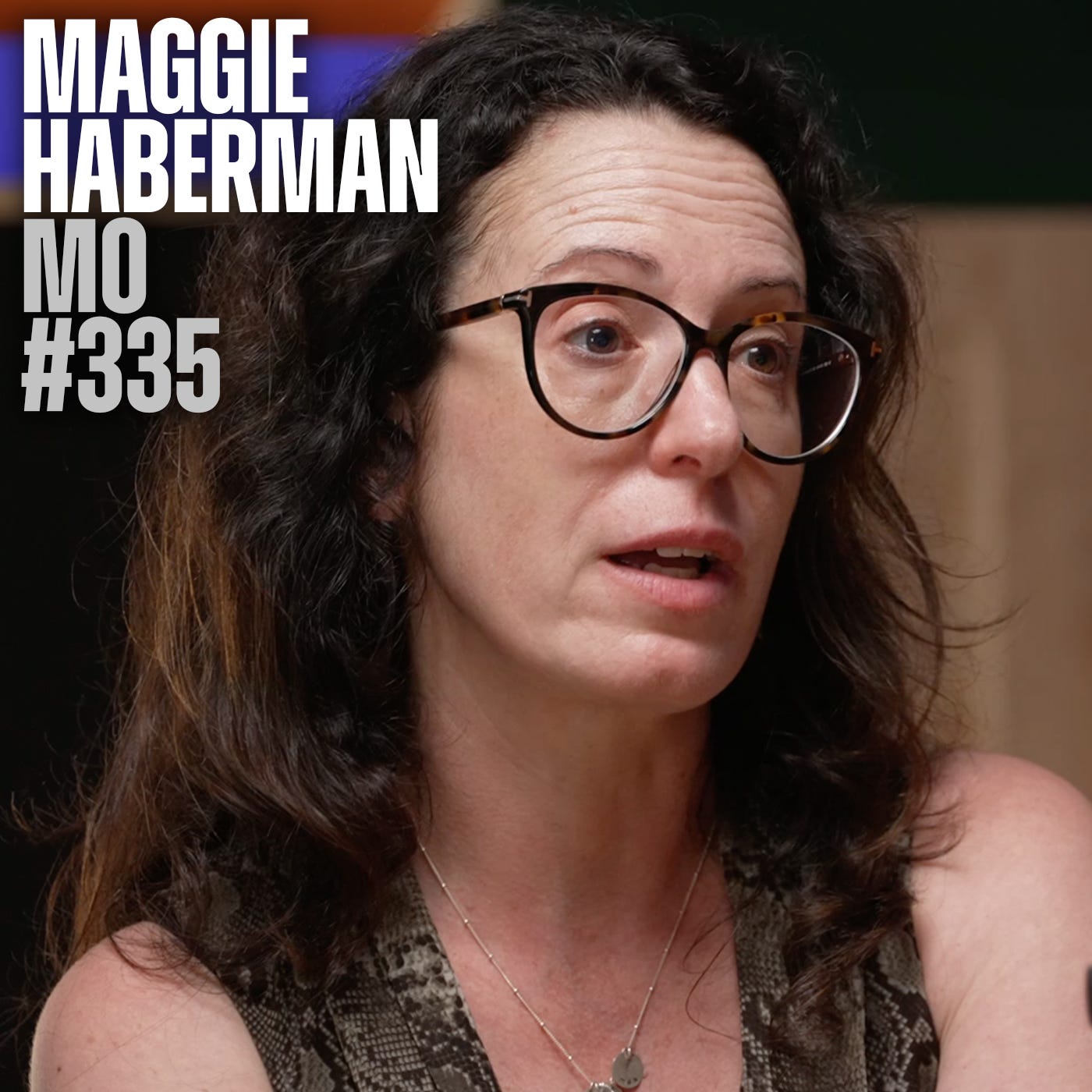
Loading summary
Transcript55 lines
- [00:00]
A
This book could be titled under, in different, more unscrupulous and perhaps headline chasing people. I would have maybe used nipple abuse in the Situation Room. I think would have been like, you've got material.
- [00:12]
B
I think we're going to have to explain what that is, since you just asked. Or not. Or you could buy the, People could buy the book and understand it.
- [00:19]
A
Exactly.
- [00:19]
B
But it was a pretty remarkable moment. We know of new methods of attack.
- [00:28]
A
Let me put this away.
- [00:29]
B
The Trojan horse. Yeah, no, it's good. We're fine.
- [00:35]
A
If the president gets you on the line, you gotta answer that.
- [00:37]
B
Don't, don't, don't think that I'm, don't think that I'm on his top call list right now.
- [00:43]
C
Anyway, who knows?
- [00:44]
A
Hi, everyone, it's your friend Matt. I'm flying solo here. One of the two other people is in Italy and then the other one is just, I think lazy is the word that we use it. But I am sitting at a desk with not just an author and a co author, but co author of kind of the number one book in the country in the month of July. How does that feel? Maggie Haberman of the New York Times.
- [01:10]
B
It feels better than the alternative. Thank you for having me.
- [01:15]
A
It's great that you can come on. The book is Regime Change Inside the Imperial Presidency of Donald Trump. And if you can't, Here it is. It's gold.
- [01:24]
B
It is gold.
- [01:25]
A
That's true. Just like he super glues. Oh, higher. Says producer Jason. There we go. Just like he super glues things to his mantle. Really, he superglues things to his mantle.
- [01:38]
B
Caroline Levitt walked in and she told colleagues that she found him super gluing a well with a gold applique and a tube of super glue, that he was affixing it to the mantel and the fireplace in the Oval Office, which makes you wonder about how usable that fireplace is now and just what he's
- [01:54]
A
doing with his time.
- [01:55]
B
I don't wonder about that. I think that we, I think we, we lay out pretty clearly in the book that Jonathan always says that if you, and thank you for having me, by the way. Jonathan always says that if you like have a pie chart of Donald Trump's brain, that it would be like, you know, this much would be the amount of time he's spending on his decoration projects and on monuments and beautification of D.C. and so forth.
- [02:20]
A
We have an overly literate audience despite the alcoholism of the co hosts and people who are kind of interested in the making of media. So if you don't mind, I wouldn't mind asking you a little bit about this. This book arose from your guys reporting in 2023 and 2024 of like how the Trump 2.0 is going to look like. Can you give us a sense of what the difference was between Your Reporting Project 2025 and all that kind of stuff that was ramping up? How different was the conclusions that you had then with what started happening in 2025 with Trump 2.0?
- [03:03]
B
So Jonathan joined the Times in, I think it was the end of 2022 or very early 2023. And Jonathan was a friend and a very irritating competitor, A very brilliant reporter
- [03:18]
A
who had done one of the best sit down interviews with the President.
- [03:21]
B
I think he did the best televised interview with Donald Trump of his presiden and so, and certainly so far for which he won an Emmy and endless memes, the eyebrows and so forth. It was great actually. Cause my children knew the meme generator, but they didn't realize that that was the Jonathan who they kept hearing me talk on the phone to.
- [03:39]
A
Suddenly he became interesting.
- [03:40]
B
Suddenly that. Well, no, he was oddly, he was interesting before that. But I think it was the accent, the Australian accent. Anyway, Jonathan came to the paper and we have very similar reporting styles, but complementary, overlapping but complementary source sets. And so we realized at some point in 2023 as Trump was facing all of these investigations, the first indictment's March 2023. It's unsealed in I think early April or that's when he was arraigned. He gets indicted federally two times in the summer of that year. And then there's a Georgia indictment that we were, we were covering. The last act of Trump, whatever that was going to be was, was 2024 going to end with him going to prison, which was a very, very real possibility at that point. You know, in 2023 when we signed this book deal, this presidential immunity ruling had not happened yet. That was July of 2024. Or were we going to be covering another term presidency? Because it did become clear to us that he had a more than even odds chance of becoming president. I should say. Actually Jonathan was always pretty hawkish that Trump was gonna be the president again. I was much less so. But it became quite clear in 2024 where this was going anyway. So that was how we began. And we spent so much time on the court cases and on his advisors mindsets and on the post Butler indictment and all of the security concerns around what was happening then. And then his conviction or before that, his conviction in A state court not far from where we are in Manhattan, and suddenly he gets elected. And it became pretty clear even during the transition, that we were going to have to jettison a fair amount of our reporting. And then we jettisoned almost all of it from the pre period.
- [05:40]
A
And the publisher was like, cool, fine. What you just sold us on, we paid you money for basically, yeah, we're not gonna do that.
- [05:45]
B
They were fine with it because it was very clear that we were heading into a presidency that was going to be clearly different than Trump 1.0. And to your question about Project 2025, the way we described it was Trump 2025 is how we were reporting on it. So Jonathan and another colleague of ours, Charlie Savage, and I, just a series in 2023 and 2024 about what Trump 2.0 would look like. Some of it was based on the work that resulted in Project 2025, which was this Heritage foundation overlap with Russ Vogt, who was Trump's then and current budget director. He was not formally Project 2025, but he wrote a significant chapter of it, a couple of significant chapters. Anyway. Jonathan had done a lot of work on that, in particular when he was still at Axios. And he brought with him this idea about a series of what it could look like, because Trump was talking about what he was going to do in office in 2023. If you looked at his home, his webpage, his campaign website, it was Agenda 47 is what they were calling it, but it overlapped very distinctly with some of Project 2025, not all of it, but it was the areas Trump cared about. It was weaponization of government, quote, unquote. It was trade, it was immigration. It was the deep state. It was a lot of what you are seeing now. And so we wrote about. We did a big interview with Stephen Miller and I think it was October of 2023, about Trump's immigration platform, which Miller is the dominant architect, if not the architect of. We wrote about Miller in particular's search for a certain kind of lawyer for the next term who would help Trump get to a yes. I mean, this is in the minds of Trump interregnum folks. The Federalist Society lawyers were squishes. These were not conservatives enough. And people who, you know, who were part of Leonard Leo's network. Leonard Leo, who's generally seen as Darth Vader by the left. They were squishes. So we wrote about that. We wrote about Schedule F, which was the effort to convert career appointees into political appointees so they could be Fired more easily and so forth and so on. So all of that formed our understanding of what Trump 2.0 was going to look like. But nothing was as sharp as the Trump retribution agenda, which he was very clear about, and we wrote about that, too. He began a rally at Bedminster right after one of his indictments, saying he was going to appoint a real special prosecutor. That was the phrase to go after the Biden family. And it was such a reminder of how, as unusual as Trump 1.0 was, and how norm shattering as it was, there were still a lot of systems that were left in place and that still held, and he had no interest in any of that at all. And so it became very clear to Jonathan and me as we were reporting on Trump 2.0, that we weren't covering a typical transition from one president to another, even in the manner in which that we saw, you know, Trump 1.0 turnover to Biden, which was hardly typical, but there was still a transfer of power. Trump left Biden a note which was surprising to a lot of people. Biden told aides that Trump was more gracious than he had expected he would be and so forth. This was a form of regime change in our own country in the sense that this was such a radical reimagining of the US Presidency. Which is not to say, as you know very well, that there has never been an expansion of executive power. There's been a mission creep on that front for some time. But this is just unlike anything that we had seen. And so did it surpass what we had expected? Yes. I mean, we knew there were going to be fundamental changes, but the speed and scale were pretty stunning.
- [09:36]
A
Your opening note on Sources reminded me a lot of Bob Woodward's classic books. Basically, we talked to a whole bunch of people on back background. These are the rules under which we used quotes, if we had notes or direct testimony, et cetera. Was thinking about that, and I was thinking about the usual drama that associates a new Bob Woodward book or books that are like this anyways, among people who are working reporters at prestigious institutions. Long way of saying, did you even have a book sabbatical? And how did you deal with the. Oh, shit, this one's really good.
- [10:08]
B
Right? This is the what goes in the paper, what doesn't question. I understand why people ask the question. I do. And Jonathan and I have been asked this question a lot. And I was asked this question when I did another previous book about Trump as well. Both of our impulses are to try to get anything in the paper as soon as possible. I mean, we're both very, very competitive, number one. But number two, there were things that took us. I think there's this misapprehension. I can't speak to bug word word. I can just speak to our process. But things that were of, you know, enormous timely consequence, like our reporting about how Trump took the country to war without ever really making a public case for it, without talking to Congress. We put that in the paper quite quickly. And that was one of the last pieces of reporting that we did for the book. That was, I think, April 7th is when that ran in the New York Times. We were five weeks into the war, basically at that point. Not even basically. I think we were five weeks into the war. So. And that's still, I think, the most full and descriptive account of what happened. It's not wasn't every single step but Bibi Netanyahu coming to the Situation Room. I couldn't find another example of a foreign leader making this kind of a sensitive intelligence presentation in the Situation Room to a US President before with the head of Mossad on the screen behind him and some other military figures on February 11 and the various discussions that followed and how everybody in Trump's world, maybe the exception of Pete Hegseth, did not support this. But because of the way Trump 2.0 is constructed, no one really said this to him in these group meetings except for J.D. vance. And maybe people had one off conversations with him, but he certainly was not the theme in these larger groups because, you know, they, the idea is he's the president and he wants this. And also if you talk to people around Trump, they will be quite clear that he intimidates people and dominates in these rooms. And it cost Vance anyway. So there was never a question in either of our minds that that needed to be in the paper as quickly as possible. There were other things that are less significant in terms of the world understanding of Trump, like super gluing gold appliques that just sticks.
- [12:40]
A
I understand certain details that just kind
- [12:42]
B
of like that is a Stay with youh Moment.
- [12:44]
A
J6 Prison Choir at Mar A Lago
- [12:47]
B
the text messages that he's showing off. Another one, though, I think there is this assumption that, you know, when you start a book, you talk to a bunch of people and then, you know, you put it in the book vault and then you're just sort of tightening it up. A good example of how that's not the case would be the chapter that we had about Trump coming very close to suspending habeas corpus for immigrants. And that actually was an episode that was public at the time. But in brief, it was the Trump made. Remember, Trump had this losing case that he was trying to make a winner where he was denied by the Supreme Court a free hand to just summarily expel migrants from the country. And this was after they had used, invoked Alien Enemies act, which actually surprised us that they did, because we had, in our reporting been under the impression that that was not going to be an immediate reach for action. But they were still looking for ways to get Trump what he wanted, which is to say, this person should not be here. They have to go. They do not have rights to due process. And habeas corpus is older than the Magna Carta. And so it is enshrined in the Constitution. And the President of the United States, as I'm hurting my microphone here, they're trying to hurt us, was very seriously just considering trying to summarily make this end. And that didn't happen. But that took us months, months and months and months to figure out what had happened. And then we finally got our hands on these memos that we had heard that Will Scharf, the staff secretary, who's again, not a squish, you know, he's a, he's a very, very radicalized lawyer who embraced the most radical elements of the president's agenda. But I think that this administration, if you take a. Stephen Miller, Stephen Miller just believes that executive power should be it. There are other members of this administration who still think that there are systems in place that the administration can't just blow through.
- [14:49]
A
Can't imagine there's a whole lot of them left.
- [14:51]
B
I didn't say there were a ton. It's a small group of people. But so, but something like that took us a very, very long time to get to a point where we felt comfortable reporting what we did. And I'm sure there's still more to learn about that episode. But all of that is to say that, look, I mean, these are judgment calls. This is, you know, we are going to do our best to put accurate information in the paper and in the book. And then for things that didn't make the book, which was mini, as we established some of them, we're still trying to report out. But, you know, there were things that just didn't. If we didn't feel confident about it, if we didn't have multiple sourcing on things, because, you know, we are, we are, our assumption is not, ah, yes, we are definitely being told the truth by everyone. We Are talking to here. It took a while.
- [15:38]
A
Did you. In reading this, I had a bunch of moments. I follow the news somewhat closely.
- [15:46]
B
You do?
- [15:47]
A
Where? I mean, I think we all feel like we all follow the news.
- [15:50]
B
We do closely.
- [15:51]
A
Especially if you didn't take a book sabbatical, which means you're writing.
- [15:54]
B
I did take. No, but I did take one. I took five and a half months, but I. But I was periodically working.
- [16:03]
A
Not one of these. Jim Tapper. I wake up at three o' clock in the morning to write my spy novels.
- [16:07]
B
I don't. Man, I don't have that kind of discipline. I wish I did.
- [16:10]
A
Don't know what he's doing. But reading this, I mean this will be and already is kind of the definitive TikTok of the first year. Right. Of the second administration. Other people will look at various things, but we kind of get everything. All of the controversies as they're going. And in reading it's like, oh, shit, I'd already forgotten about that. Did you have that?
- [16:33]
B
Yes, actually I did and we both did.
- [16:35]
A
You forgot about things that you reported on at the time and in fact reported on in the book. And then you're like, oh, yes.
- [16:41]
B
And that happened to both of us a number of times. I mean, Jonathan actually has a slightly better recall than I do on specific events. But yeah, there were a lot of moments where we would look back and oh, wait, we reported that. Oh wait, we wrote about this. Oh, I had forgotten that, you know, XYZ took place. A bunch of that was around Musk, for instance. Like I had forgotten until we were, you know, got up to that point in the reporting on Epstein. I had forgotten that Musk had done his. Whatever we call it now X post, formerly known as Twitter, about how Trump's in the. Trump's in the Epstein file. Yes. Which was a big one to forget. But I did.
- [17:22]
A
What I forgotten was, and it's interesting, the way you guys lay it out in the book is the reluctance when Israel started bombing Iran last summer. Is the US Involved? Is it not involved? Walk us through a little bit how that process went in Those sort of 12 days or however long it lasted.
- [17:45]
B
It's pretty remarkable. And it is an episode that in some ways cuts against what we now know about how Trump ended up taking this country to war, which was a theme that was reiterated for us. And this actually, this is other reporting that I had forgotten about, which was how Trump had had these interregnum conversations with Netanyahu in 2024 about how much tougher he was going to be on Iran that, you know, I didn't do everything that we wanted.
- [18:14]
C
Do we have enough?
- [18:15]
B
I don't know. I don't know if that's going to work.
- [18:18]
A
I don't care.
- [18:19]
C
All right, cheapos. You got as much as we're going to give you for free. It gets a lot worse from here.
- [18:24]
A
So much worse.
- [18:25]
C
There's going to be so many mispronounced words like architecture, which is a favorite of a friend of ours.
- [18:31]
A
Wait, that's not right.
- [18:33]
C
And a lot of fluffing, a lot of kerfluffs. And that will be three, sometimes nine syllables. But you can only find out if you take out that credit card, swipe it a couple times and subscribe. Why have you not done this already? So many of you send me emails that say, okay, I finally subscribed because Moynihan was pressuring me. The pressure's back, baby. Subscribe. Bye bye.