← The Foundr Podcast with Nathan Chan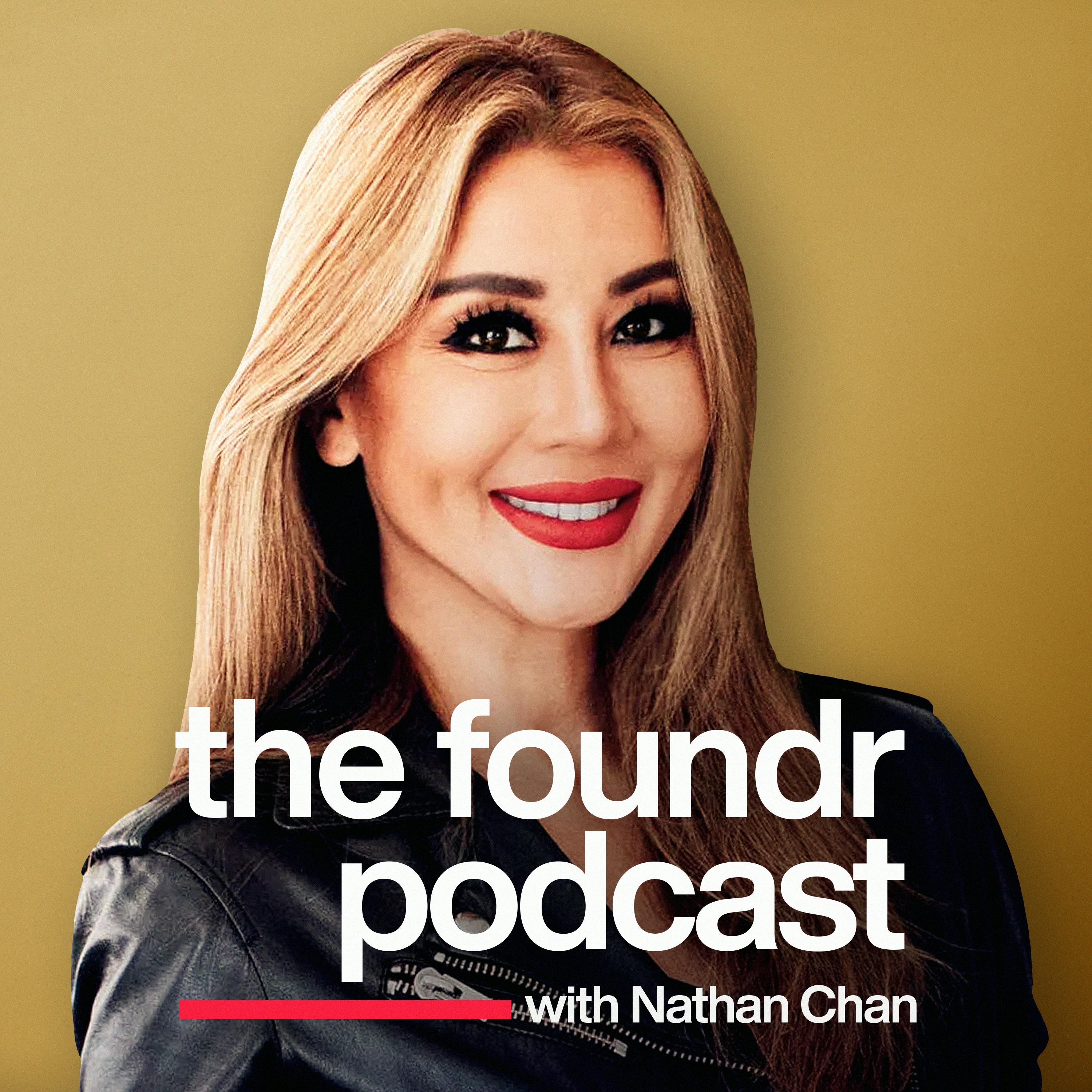
The Foundr Podcast with Nathan Chan
579: The Strategy That Made NYX a Household Name | Toni Ko (Best of Foundr)
00:46:08
Loading summary
Transcript50 lines
- [00:02]
Nathan Chan
Hey, founder fam. I want to talk to you about something super exciting. We're officially partnered with Omnisend, the email marketing and SMS platform built specifically for e commerce founders. We've been recommending Omnisend to founder students for a while now because it just works. Whether you're launching your first store or you're scaling to seven figures, it really helps you automate your marketing and get real results. Did you know, on average, OMNISEND customers make $68 for every $1 they spend, which is an insanely good return. And because you're part of the founder community, you get 50% off your first three months with the code. Founder50. Just head to omnisend.com founder without the e to get started. All right, now let's jump back into the show.
- [00:49]
Hey, founder fam. Nathan Chan here. And today's episode is one that I've been really excited to jump back into. I sit down with the incredible Tony Ko, who's the founder of NYX Cosmetics, who built a global beauty empire from absolute, absolutely nothing, literally starting out solo, doing everything herself, to eventually exiting to L' Oreal for a massive deal of $500 million. And in this episode, we get into the raw truth of building a business from scratch. What it's really like to go through a big exit and then the unexpected challenges of life after a major sale. This is a common thread that I hear right. It's really interesting, really cool to see how she bounces back, but also what happens. You think you've made it after you had this big sale. Plus, she also shares inspiring stories from her journ, how she went from moving boxes in high heels to making millions in her first year. So if you want to start a cosmetic brand, you want to get incredible exit for your E. Com brand. This is incredible. All right, there's so much gold here for you guys.
- [01:48]
Tony Ko
Let's jump straight in, hear the stories, learn the proven methods, and accelerate your growth and future through entrepreneurship. Welcome to the founder podcast with Nathan Chan.
- [02:03]
So really excited to speak with you today. The first question that we ask everyone that comes on is, how did you get your job? AKA how did you find yourself doing the work you're doing today?
- [02:14]
Oh, so when I first started my company, I was 25, going on 26. It was long, long time ago. Age of the dinosaurs. But it was 19. 1998. Going, going on 1999, and I was working in the family business for a very long time. And I decided to leave the family business and start something on my own. And Actually, in between that, I was actually going to get a job. And then I realized that I'm very stubborn and I don't like to take orders and I don't like the box to nine to five style. And I would probably make a horrible employee and probably get fired in three days. So I had to become an entrepreneur. I had no other option but to become an entrepreneur.
- [03:03]
Okay, and what did those early stages look like? Like bringing the company to life. Do you have a background in. In cosmetics or.
- [03:14]
Well, I have my background as being the consumer, the ultimate consumer, probably. But I worked in the family business like I said earlier, and our family business was in beauty supply, perfumes, and cosmetics. So we started as a retailer and then we moved on to become a distributor wholesaler. So I had that experience. But, you know, I'm not like, I'm not your HBs, like formally trained business person, but I could say that I'm a third generation entrepreneur in my family. And so my grandfather was an entrepreneur. He was in textile business. My. My father was an entrepreneur. My mom's an entrepreneur. So I just grew up in a very entrepreneurial family. And I spent a lot of time growing up with my son. Spent, like growing up. I spent a lot of time with my grandfather, who was an amazing business person, actually. And I think it just like this entrepreneurial spirit rubbed off on me. And I learned so much from being around my grandfather and my dad and my mom. My mom's an amazing businesswoman. I learned so much from her. Yeah. So that's how I got my first start at 25, 26, 23 years ago. And back in 1999, a young female just did not start a business. These days it's very common to see a lot of young entrepreneurs or female entrepreneurs or young female entrepreneurs. But this was very rare in 1999. But just like you don't know what you don't know. I've always seen my mother as an entrepreneur. She always worked, and it was just very natural to me.
- [05:00]
Yeah, I see. So can you take us back as well? So when you immigrated to America, you were 13. Like, what, what was on your vision board at that time? Like, what did the future look like for younger Tony?
- [05:14]
Oh, like at 13. Oh, my goodness. At 13. So innocent. So I was born and raised in Korea until I was 13 years old. And, and this is 1986. I'm talking about a long time ago. And back then in South Korea, there was no such a thing as sex ad or like, anything like that. So I was 13 I was so innocent. Like now I look back when I was 13 and like looking at the kids who are 13 these days and I can't believe what they know now. And I can't believe. But I didn't know back then, but vision board, wow. At 13 all I wanted to do was go to Disneyland. That was my vision board.
- [06:01]
So do you think that you had because of your family and, and the generational experiences as entrepreneurs, do you think that you were born to be an entrepreneur? And yeah, I'd love to hear. Do you think people are born to be entrepreneurs?
- [06:20]
Yeah, you know, of course there's the entrepreneurs by training later on the year. But I think like being an entrepreneur is kind of a talent, like hidden worn talent as well. Because at first, first of all, you know, you have to have a personality that is okay, taking a lot of risk and without any reward for a very long time. Because just because you start a business doesn't mean that you're going to turn profit immediately. So you get your, yourself into this situation where you're working 80, 90, 100, 120 hours. Like you hear about these stories, right? And you put your capital in while you're not producing any income. It may be all investment in the beginning and you have to wake up every day and be okay with it. So there's that personality, I think there's that inherent personality quality to be an entrepreneur. And I happen to be an eternal optimist. I just, and I come up with business ideas all the time. Like I walk around on the street and I start like just pulling ideas out of my head is like, oh my God. Like this would do great. Like just in a conversation or like, I don't know, just like random every day, everything. I am a very solution driven person. So if I'm eating something and I don't like how a salt shaker shakes or like, like just I try to fix every little thing and then like everything is like, oh my God. It's like I just go into like this mode of oh my God. Like if somebody launched this, it's gonna be do amazing. Like I'm just born an optimist. I, it's very hard for me to look for reasons not to or look for reasons why it cannot work. Maybe it's a quality that I lack that benefited me. But everything I look at, I, I tend to just jump immediately into why it's going to work. Is that why it's not going to work?
- [08:27]
I love it. So when you first started Nick's, you guys made $4 million in your first year, which is pretty impressive. Like what was the initial offering and how did you kind of get that kind of traction so quickly?
- [08:44]
Yeah, that was 4 million in retail value. So that was net a wholesale revenue of $2 million. 1999, I was 26 years old and I was a. The first year I started the business, I was, I made myself a self made millionaire. That's crazy. But, but I was a one woman company. It was me, myself and I, I say I had three employees. Me, myself and I, three of us did everything. And I had a small showroom in downtown Los angeles. It was 600 square feet. I think my rent was $1,200 or something. It was inside California Mart. And then I was renting without paying rent, a little bit of a warehouse space at my mom's business that was on the second floor, walk up, no elevator. And these boxes were 38 pounds each, I would never forget. And I was in my mid-20s. And I like, I love makeup, I love fashion, I love beauty. So I used to wear high heels almost every day. I still do almost every day. And I used to carry these 38 pound boxes up and down, up and down, up and down this year, all day long. And I was the receptionist, the secretary, the president, the designer, accounting person, customer service. I did everything myself. And now I look back, actually it was like one of the best, best, best years of my life.
- [10:22]
Yeah, it's a little bit like that. I, I hear that kind of common thread. People love the early days, looking back, where you don't have a care in the world, you don't have your team members to worry about, less responsibility. It's scary at the time, but you just kind of having fun and being free.
- [10:40]
Oh, absolutely. And you know, another thing is it's like you have nothing to lose and that just frees you from so much pressure and the responsibility that you have to have. Right? Because. So I've exited out of NYX Cosmetic. That was my first company in 2014. So ran the company for 15 years. And during the 15 years it came from like that, like three employees, me, myself and I to being 250 employees at the end. And the thing is, like when it was just myself, every decision that I made only affected me. Like it's not going to hurt anybody if anything goes wrong. So you know, there's that, that like I didn't, I did not have that pressure. But when you have 200, like 2, 3, 400 employees sometimes like your support, supporting, not the 2, 3, 400 employees. But their extended family members, you know, the salary that they take may pay for their children's college tuition. Put food on the table. So when you have all these variables that goes into your decision making, the pressure. This is why, like the pressure cooker. All entrepreneurs are under constant pressure cooker. That's guaranteed.
- [12:01]
Yeah. So let's go back. I'd love to kind of still explore those early days. So what, what products did you launch with to, to make yet like $2 million in sales in one year?
- [12:14]
Very simple cosmetic pencils, lip liners and eyeliners. That's all I had. I had in the liner, I had 12 colors. In the eyeliner, I had six colors. So combined it was 18 SKUs of product, but basically one item because they're cosmetic pencils. And I was wholesaling that at 55 cents apiece. So when you do the number, I sold close to 2 million pieces of these cosmetic pencil the first year I had launched. And the reason, like, and people go like, about how, how, like, how like it doesn't make sense. But because it was revolutionary at the time, the product that I was offering. Not revolutionary in a way where the formula was like nothing, nothing like it was out in the market. That's not true. There have been other formulas, like great formula like the one that I had, and there had been eyeliner categories that are in the price point that I was in. It's just that until I had started NYX Cosmetics, no one had married or merged the affordable pricing with the stylish packaging of a department store product. It was as simple as that. So when you went to like think about Chanel, simplest packaging ever. It's black and it's got a white logo. That's it. Right? And that's how it was in the department store. And then when you went to the lower tier budget line cosmetics, it was really gaudy. Like, you know, it was really gaudy. Hot pink, green, gold foil, like silver foil and like logos that are like, like out of proportion size logos. And I just did not. I wanted my product to look like department store products. Simple, chic and elegant. But sell it at a price that was at the mass market price point. And once I did that, these products like literally flew off the shelf. I have stories from like a retail like one store customer who are selling 60 pieces of these pencils each day. Yeah, it was, it was, it was revolutionary. So one thing that it had done, because the products were selling by itself, because it looked expensive, the quality was really good. And then price was really cheap. That's the best combination for any business. Right. Value. When you sell great product at a great price, like you're golden. Right. And that was what's going on. And so these products were selling so fast and so well. One thing I had never had to do was I had to like, I really have to sell. Like I went to trade shows and I get a lot of booth exhibitions, but it was more so the customers were coming, like looking for me and coming to me instead of me going to have to go to a store and open an account or something like that. And I'm so glad because I am good at a lot of things, but one thing I'm really not good at is sales. Yeah, I'm not a sales driven business owner or founder or CEO or like whatever you may call it.
- [16:00]
Yeah, I see. So what were some of the early challenges or biggest early challenges or was it just all flying?
- [16:09]
You know, like, as ridiculous as it sound, I really did not have a lot of challenges because the products were selling so well. I mean, I did have a little bit of a capital strain in the beginning because I had to pay my suppliers upfront cash, but I was giving credit to my customers. So between paying my suppliers up front and then issuing credits to my customer and collecting, so there was that little bit of a cash strain. But besides that, oh, I had to move very frequently. That was really stressful because we were. But on a good stress level because we're growing so fast. We had to move like every, every 18 to, to two years before the first four, five, four moves, I think. And then ultimately I said like, I don't want to do it. Like, I can't move around anymore. So I ended up buying a warehouse, a really large warehouse. And I actually stayed at that location until the exit of my company. But besides that, I, I mean, hard work, but I mean that's part of, that's a, that's a package deal. If you are an entrepreneur, if you are a business owner, like that is given. So I wouldn't even put that on their, on their stress.
- [17:33]
Yeah. So I'd love to explore something that you said before, which is very interesting to me. I've never heard this before. You said you're not a sales person. You don't, you're not very good at sales. You're not a sales driven entrepreneur. Can we go a bit deeper there? Because really, like, sales queue is all right. Like, and, and so. Yeah, let's talk about that a bit more.
- [17:58]
Yeah. So when you look at a lot of entrepreneurs, you will see that a lot of the entrepreneurs are actually very self driven business owners or entrepreneurs. I'm a creative person, so my specialty is in product design, product packaging, formulation, marketing. That's my specialty. And I cannot for the life of me go to somebody and say, will you buy this? I don't know, I just can't, I just can't. But I think what it is, is that I. What it is, is like for a person to become successful and run a successful company, number one important thing is to figure out what you are good at and what you're not good at. And a lot of the times a lot of the founding entrepreneurs want to do everything. And of course in the beginning you do have to do everything. But you know, as the company grows, the most important is to like really figure out okay, like my talent, this is what I'm really good at, this is not what I'm not good at. And hire the right people to take over the job that you're not really good at. And it's a, it's an, it's a admission. Like it's a, it's a, it's an acceptance that you have to give yourself. Like some people don't like the acceptance that they're not good at a certain job job categories. But you have to accept it and say you have to be able to accept it and you have to be able to let it go so you can find the right people to fill those positions for you.
- [19:51]
So it sounds like very quickly or even when you first started you had that self awareness. You knew like even starting that you weren't gonna, yeah like you were just gonna focus on product and marketing and.
- [20:02]
Yeah packaging and I, I did, I did sales as well in the beginning of course because it was just one like myself. And I think this is where the lock factor comes in. Like so I do think sometimes like what if I had started a company and the products were not flying off the shelf immediately and I had to go and sell these products. Me being not a, not an amazing salesperson, maybe it would have taken longer for the brand's brand to establish or maybe the brand may not have taken up the way it did. But these are the luck factors. Right? So luckily the products that I, that I, I was selling were good enough for the products to fly off the shelf. Thus I did not have to do a job that I was not good at.
- [20:52]
I really appreciate your openness and honesty. So the products were flying off the shelf. Like how did you know when to expand the range. And what did that scaling piece look like?
- [21:06]
Oh, I think the first two years we kept it very simple. I launched a second product category probably about two years later and then a third category about three years into the business. And from that point on we're just like constant role of launching new products. And then of course the company was growing so fast. We're growing double digits every year. And like my team was growing and everything after that was like the first three years. I call first three years the, what do they call it, the infant mortality years in like the investment world, I guess. So it's the first three years whether you make it or you don't make it. A lot of companies that go under, go under within three years. A lot of the company, majority of the companies that make it past three years end up being a stable company brand and then they really start expanding and growing. There's like a growth spur like at a three year mark. Yeah. So after three years like we started growing like really fast and it was, I really saw the growth spur in, in three year mark. Another one came at like a five year mark. Another one came at like a seven year mark. Like they're like, like there's like these like, like, like every couple, couple of years I would see a huge, huge skyrocketing of revenue growth and it was pretty steady. It was like every couple of years.
- [22:46]
Yeah, I see. So if you fast forward to now 2022, you know there's a lot of brands out there, so many products. What are the biggest mistakes that you see new brands making from all your experience?
- [23:05]
My God, it is, especially in my industry we are very highly over saturated. But even, even with the saturations, the brands that do really well do really well. Brands that don't do well don't do well. But some of the mistakes I see see is too much expense. And this is because I'm a classical entrepreneur, so to speak. I'm more about like live within your means kind of an entrepreneur. So I see other brands growing at a such a rapid pace without while sacrificing the profitability of the company. And the thing is, sometimes it works. And then a lot of the unicorn companies that we see have become unicorns with that method. But to every one unicorn we see, see there are 10 failures that we never hear about. So it's, I think it's a very risky move.
- [24:28]
So talk to us about the exit to L' Oreal and the sale that was 2014. What was that process like how did you know it was the right fit? You know, you gave up your baby talk. Talk to us about that.
- [24:45]
Well, I was ready. It was my. It was 2014. Oh my gosh. I can't believe it's been 80 years already. Oh my gosh. Yeah, it was 2014. So in 2009 I had brought on a minority investors and I raised capital for a growth capital. But you know, the company was. My company was doing really well and we're financially completely stable because of my, my method of living within the way the, the means and not overspending. I took the slower, like slower growth path. So we were financially okay. But the reason I brought in an investor is because I needed the, the smart money. I wanted to get into like these large national retail accounts and I was kind of like hitting a roadblock. I just, just didn't know how to get into in front of the buyers and really expand distribution nationwide. And so I wanted to partner with an investor who had that experience. And so I found an investor who had just gotten out of a hair care industry in the same retail account that I wanted to get into. So I sold 20% of my company to these investors. And when the investors come into your company, they all have a timeline. And at short end, really short is three year to really long is 10 years. But then the average is five to seven years exit for them. Right. So in 2009 when I brought online investor, it was at that moment the fate had been decided almost that there was going to be an exit of this company in the next five years, seven years and 2014. It was the winter of 2013. We started talking about the idea of possibly exiting the company and we started to interview bank investment bankers directors in our company. And I think the whole process took about eight to nine months from the beginning to the, to the, to the final completion. And it was really difficult. Oh my gosh. But that eight, nine month that we spent. Oh my God. What. Like it's that exhilaration that you get. I mean the, the highs and the lows and it is such a adrenaline driven. Yeah, I mean I had the best time and it was such an amazing experience and education, educational period for me too. I learned so much during that time. And we finally consummated the deal in July 30th of 2014. And actually, and what happened was like I got paid on July 30th of 2014. And you know like most people think that like we would go out and like pop champagne and party all night, but it Was nothing like that. I opened my computer that morning I went in. So I was still going into office every day. And that morning I went into my office, opened my computer and then got a call from my attorney to check my bank accounts. I goes on gone and I counted all the zeros and I'm like, okay, it's done. Like, okay, like, like it's really, like it's really sold. It's not mine anymore. And before you sell the company, about 30, like, about like 30 days before they ask you that, they asked me to make a list of all the items that I wanted to keep personally. So like my desk, so this desk right here, it's being refurbished several times along the way. But this desk is, is from 1999. Actually. This desk is a 23 year old desk that I have that I have moved around with me. Probably like it's been into like 10, 12 different offices with me. I, I will never get rid of this desk. I will retire with this desk. And yeah, so it was my desk, my chair. Like, you know, you make a list and of course like you can't, I can't take the desk with me. I had to hire a mover to come and take the desk. But I literally walked out with you know, those, what those mailer boxes, like those like ups, like UPS mailer box. I walked out of my office with like that one mailer box and I just said bye to my team and I walked out the door, got in my car, came home and it was really surreal because I'm just like, like this is it. 15 years of my life and some zeros in my bank account and a box, the files, that's all I had. And I actually crashed and I went to sleep as he had. Like, because you're coming off of such a high. I passed out and I think I slept for like 12, 13, 14 hour nonstop. I just slept the whole time. And the next morning I got up and I actually jump in shower and started shampooing my hair. Oh my God, I'm late. And like in the middle of shampooing my hair I just went, holy smokes. Like I don't have a work to go to.
- [30:26]
Wow. So was it, was it a time of like kind of. Did you feel lost after that or.
- [30:33]
Very, very, very. I got so depressed. Oh my gosh. It's something that it's, you know, it is a subject that not a lot of entrepreneurs are Business world did not talk about. But this is actually very common, especially amongst founding partners that a lot of People like me, after an exit, actually go through an ex. Existential crisis because we've buried like, I. Our identity, like our everything, life's purpose, mission, your identity, like your hours. Like you, like, like you baked yourself into the companies that you build and once that gets removed and you like, and then you go, wait a minute, who am I? Like, that's the first question, right? It starts with who am I? And then why am I here? What's my. Like, what's my what? Like, what's my next purpose like? And suddenly you have all these hours because you're so used to working all the time and you have like, all these, like, leisurely hours and you don't know what to do with the time. Like, I literally did not know what to do with my time. Yeah. So. And I actually fell into a deep, deep, deep depression. And it was, it was to a point where it was. I was clinically depressed and I was going to see a therapist. Nothing worked. And so to save myself, I started another company.
- [32:25]
Wow. And. And that really. That's what worked? Just starting something else.
- [32:30]
I wouldn't say really, like, it worked. It's like there's no, there's no magic wand that you could just, just wave around and, you know, have all your, Your crisis go away. It doesn't work that way. But, you know, it's a, it's. It takes your focus off one thing and then you could put your focus in something else. And I think I'm a very different case too, because majority of people, they would have families, right? So. And the majority of people have families and children. So a lot of people's focus can be reshifted to family life, the, you know, spending more time with their children. But I did not have that luxury. So, yeah, I was, I was really. I felt very lonely as well. That was, that was, that was huge. Like, feeling lonely.
- [33:27]
Yeah. I see. Oh, look. Thank you for sharing and. And being so vulnerable. So was your next business that you started? Bespoke Beauty Brands. And.
- [33:40]
This is my third company, so I had a sunglass company in between that I had for about three, three and a half years.
- [33:47]
Oh, and what happened there?
- [33:49]
Complete failure. Complete and utter failure. I had never experienced anything like that in my life. Lost a lot of money, but it was probably the best thing that had happened to me because it was, it was truly experiencing my ego death. And I'm very grateful. Like, I would pay, like, if I had to do it again, I would actually do it again so I could learn from that mistake. Because because what I learned from the mistake has, has taught me so much. So I am able to start my third business, apply the learnings that I had and make this company a success.
- [34:43]
We see. So can you tell us, you know, how did you start? Bespoke beauty brands.
- [34:48]
Bespoke beauty brands. This one is, started this. So after I, I've exited to l', Oreal I had a five years non compete and within those five years it was, it was really, really a strict non compete. So I wasn't able to invest, advise, sit on board or anything in the beauty space which included color cosmetics, skincare and male care. So I wasn't able to like I was completely locked out of the beauty business. But time, time passes time like it doesn't like time solves everything. So five years had passed. July 30, 2019, my non compete expired. So I started a new company on August 1, 2019. I took, I gave it a 24 hour window but I launched this company in August of 2019 and launched the first brand on October 18th of 2019. Little did I know that we were gonna go into a COVID lockdown like, like you never know what she's gonna throw at you.
- [36:19]
And what was the idea behind the brand? Can you go, I'd love to know a little more.
- [36:23]
Yeah, yeah. So over the five years I've seen, I seen, I've seen the market shift shift, I've seen the consumers consciousness shift, consumer behavior, this new generation of consumers, they're so brilliant and they're so smart and they're very unique and they like things that are very unique to themselves as well. So for instance, like my last company, like our thing was we have something for Everybody. We have 1,800 SKUs and it was hey, are you a, are you a punk rock star? Here's a product for you, are you a 65 year old? Here's a product for you. Are you a 18 year old college kid? Here's a product for you. Like we have something for everybody. Like that was our thing. But what I started to see was concept like that wasn't as popular as, as it used to be. Like people wanted something that is very, that spoke directly to them. Brand narrative like that authentic brand narrative was so important. So what I decided to do was I wanted to partner with different celebrities, influencers and launch a beauty products for the influencers and the celebrities and in a very specifically targeted demographic consumer base and just focus on that only. So the first brand that we launched is called Kimchi Shik. Beauty. So she is a Korean American drag queen. RuPaul's Drag Race Season 8 has 2 million follow about 2 million followers followers on Instagram. Hugely popular. Like, very adorable. Loved by everybody. No controversy, nothing. Everybody loves kimchi. This sweet. Like sweet, sweet, sweet, amazing drag queen. And so we're doing this brand and it's very specific. Like, our colors are, are, are pink and yellow and green and mint and um, it's very colorful. It's loud. Some of our, our item names can be a little obnoxious. Some people kind of like e. I don't know, like. So we have the, the eyeshadow palette that we had launched with was. The name of the palette is. Is Rainbow Shards. And at first everybody's like, are you sure? Like, you want to call an eyeshadow palette sharks? I'm like, yeah, let's do it. Like, if we're going to do. If we're going to use shards of any of the packaging or product, like this is it like. So it's very specific. It's like. And we have, currently we have close to 300,000 followers on our own brand Instagram page. And we're already doing multimillion dollars. We just rolled out to 200 CVS stores. We have a million amazing sales meeting lined up with. I can't say the name right now, but a lot of the other national chain retail accounts as well is doing really well. And so the second brand that we launched was with Jason Wu. He's a fashion designer. And so when you look at the two brands, so Jason Wu, we rolled it out with Target, so we are, we're in. Currently we're in close to 700 Target stores right now. And when you look at these two brands is so distinctively different. The look and feel, the color, the color scheme that each brand does not cross over. The consumer who buys Kim Chi Shik is not Jason wu's consumer. The consumer who buys Jason Wu product is not Kim Chi Sheikh consumer. So what we do is we, we launch a smaller, more boutique brands that's very specifically has brand narrative to the audience that we want to target.
- [40:42]
Yeah, it makes sense. That's really smart. So I'd love to tackle a little more on influencer marketing because it sounds like the strategy is, is you're finding influencers, partnering with them and creating basically you're operationalizing and commercializing their brand, their personal brand. So for any new brand, you know how important is influencer marketing in 2022?
- [41:09]
So I have a lot of mixed thoughts about this too. Mixed thoughts, mixed emotions. So here's the thing. The reality is it is not as effective as it used to be. 3, 4, 5, 6, 7, 8 years ago. Definitely not. Does it still carry some weight? Yes, it does. You can start a new company, launch something, and then open a Instagram account and you start with zero followers. Or you can partner with someone who has millions of followers. And because of their platform of having millions of followers already, when you launch your, the brand and then launch an Instagram account, you will at least, at ast minimum start 10, 20, 30,000 followers. So with Kimchi, the day we launched, we gained 60,000 followers. With Jason Wu the day we went live, I think we gained like 12,000 followers, so on and so forth. Like, it varies, right? But like, that is very powerful for you. For a brand with no follower, like zero following that, nobody knows, you know, how much money you have to spend these days to get that follower or to buy customers. So you bypass that. Right? But you cannot build an entire brand or a company just relying on a partnership with your influencer. What you have to do is you have to create products that is so good at an amazing price point that makes sense. And the brand, the products, and the brand has to sell to grow its own legs. It has to stand on its own. And then the influencer, the celebrity, like that, the glitz and glam of that is just a value add. And also it's just a kind of like that extra push in the beginning. It'll give you a little bit of that push in the beginning, but you, it's not going to build an entire company just based on the lane.
- [43:33]
Yeah, I see. And what are the biggest mistakes you see people making when it comes to, I guess, working with influencers? Whether it's partnering with, with an influencer to create a brand or just using influences in general to promote your brand?
- [43:47]
Oh my gosh. I don't know what the other brands are doing. Like, I'm not, like, I can't, like, I'm not an expert enough to answer that, answer what other companies are doing wrong. But I think, I think what it is, is you have to, you have to satisfy like, you're like an agent. Your company becomes an agent between the consumer and then the influencer. Right. And then of course, you know, as a company, you have what you want to do because obviously you want to run a profitable company. So is the having like constant conversation and the dialogue with your partner and really treating your influencer partner as your business partner and not just a brand, brand name or brand sake. Like really, like, like going deep dive and treating them as your, your business partner and getting them involved in the business as much as possible. So it's no answer to your. Your question. It's the answer. No answer to your question.
- [44:54]
That's all good. That's fine. I respect you. I respect. If you, if you, if you don't, if you don't think you can really articulate anything from your experiences and you're sharing your experiences, then that's fine.
- [45:06]
I'm being honest.
- [45:08]
Well, look, we will wrap there, but thank you so much, Tony. Like, this is an incredible interview. I really appreciate you just sharing your experiences openly, honestly. Congratulations on all your success and yeah, thank you so much for your time.
- [45:23]
Thank you so much.
- [45:24]
Nathan Chan
Hey, founder fam. Thank you so much for tuning in today and if you enjoyed this episode, please take the time to leave us a review and let us know what you think. This podcast is 100% free. We work so hard to go out and find the most successful entrepreneurs and founders in the world. Your feedback helps us grow, improve, and even bring on more incredible guests and insights. So if you have a second, please take a moment, leave us a review. It really makes a difference. Thanks again for listening and I'll catch you on the next show.